
Event Communication in Antwerp that keeps your message under control
INNOV'events supports executives, HR and communications teams with Event Communication in Antwerp, from 30 to 2,000+ attendees. We manage content, speaker coaching, stage & AV coordination, audience engagement and on-site comms so your message lands clearly—without operational stress on your teams.
Table of contents
In a corporate event, entertainment is not a “nice-to-have”: it is a communication lever. Used well, it increases attention, improves message retention, and protects leadership credibility by keeping the room energized at the right moments.
Organizations in Antwerp typically expect pragmatic execution: tight timing, bilingual or multilingual delivery when needed (EN/NL/FR), and a production level aligned with brand standards—without showiness that distracts from the message.
As an agency based in Brussels with a strong presence in Antwerp, INNOV'events brings field-proven methods: content architecture, technical production discipline, and operational anticipation (access, union rules, deliveries, rehearsals) to de-risk your event day.
Antwerp-proven delivery, backed by measurable experience
10+ years delivering corporate events in Belgium, including recurring programs in Antwerp.
Projects from 30 to 2,000+ attendees: leadership town halls, strategy kick-offs, employer branding events, client conferences, and hybrid broadcasts.
1 accountable project lead for your team (single point of contact), supported by specialised producers (content, AV, scenography, registration, on-site logistics).
Operational standards: formal run-of-show, cue sheets, speaker rehearsals, technical checks, and contingency planning (backups for mics, playback, connectivity).
How to organize a professional event in Antwerp?
- Define the objective (cohesion, announcement, fidelity, performance).
- Set date, format and size (20–1 000 people).
- Secure the venue and accommodation according to seasonality.
- Lock down technical, suppliers and logistics.
- Drive the day J (timing, scene, entrance, flow).
Which Antwerp organizations do you support year after year?
We support teams across the Antwerp region—often on recurring formats where consistency matters as much as creativity: quarterly leadership updates, annual results presentations, onboarding waves, safety moments, and customer briefings.
You mentioned providing company names for references; we can include them here exactly as supplied (logos optional, depending on approval). In practice, many Antwerp clients renew because they value the same things year after year: predictable delivery, disciplined show control, and a partner who respects internal validation cycles (legal, brand, works council, procurement).
If you share the names and what can be published, we will integrate them in this section in a compliant way (public reference, anonymised case, or “sector-only” mention).
We send you a first proposal within 24h.
Why invest in Event Communication for Antwerp leadership teams?
Event Communication is the moment where strategy becomes tangible. A well-built event turns slides into a shared narrative, gives leaders a stage that feels controlled (not risky), and gives employees or stakeholders the confidence that priorities are clear.
Reduce interpretation risk: when a strategy update is delivered via email only, people fill gaps with assumptions. A structured event aligns language, metrics, and tone—especially after reorganizations or M&A.
Protect executive credibility: a calm speaker, strong timing, and clean AV avoid the “we’re not ready” perception that can undermine trust in leadership.
Improve retention of key messages: we use deliberate peaks (interactive segments, short video stings, moderated Q&A, and light entertainment) to keep attention high when the most important messages are delivered.
Strengthen employer brand in a tight talent market: in Antwerp, competition for profiles can be intense. A professional internal event signals stability, investment in people, and modern leadership.
Enable two-way communication: we design Q&A systems and moderation so real questions are addressed without putting leaders on the spot or letting a meeting drift.
Support HR change programs: new policies, safety culture, values rollouts and performance frameworks land better when they are staged with clarity and human moments.
Antwerp has a results-driven, operational business culture. Events that work here feel concrete: clear data, clear next steps, and an execution that respects people’s time.
What do Antwerp stakeholders expect from corporate communication events?
When we deliver in Antwerp, we plan around a few realities that executives and comms teams know well:
Time discipline: leadership teams often want a sharp program (60–90 minutes for internal town halls, 2–4 hours for customer events), with zero “dead time” and fast transitions.
Multilingual clarity: English is common for international HQ audiences; Dutch is expected for local teams; French can be relevant for national audiences. We design language strategy early (live interpretation vs bilingual speakers vs subtitle workflows) because it impacts rehearsals and technical set-up.
Brand governance: many organizations have strict brand and legal review. We build a validation calendar (scripts, decks, videos, stage visuals) so your team is not stuck in last-minute approvals.
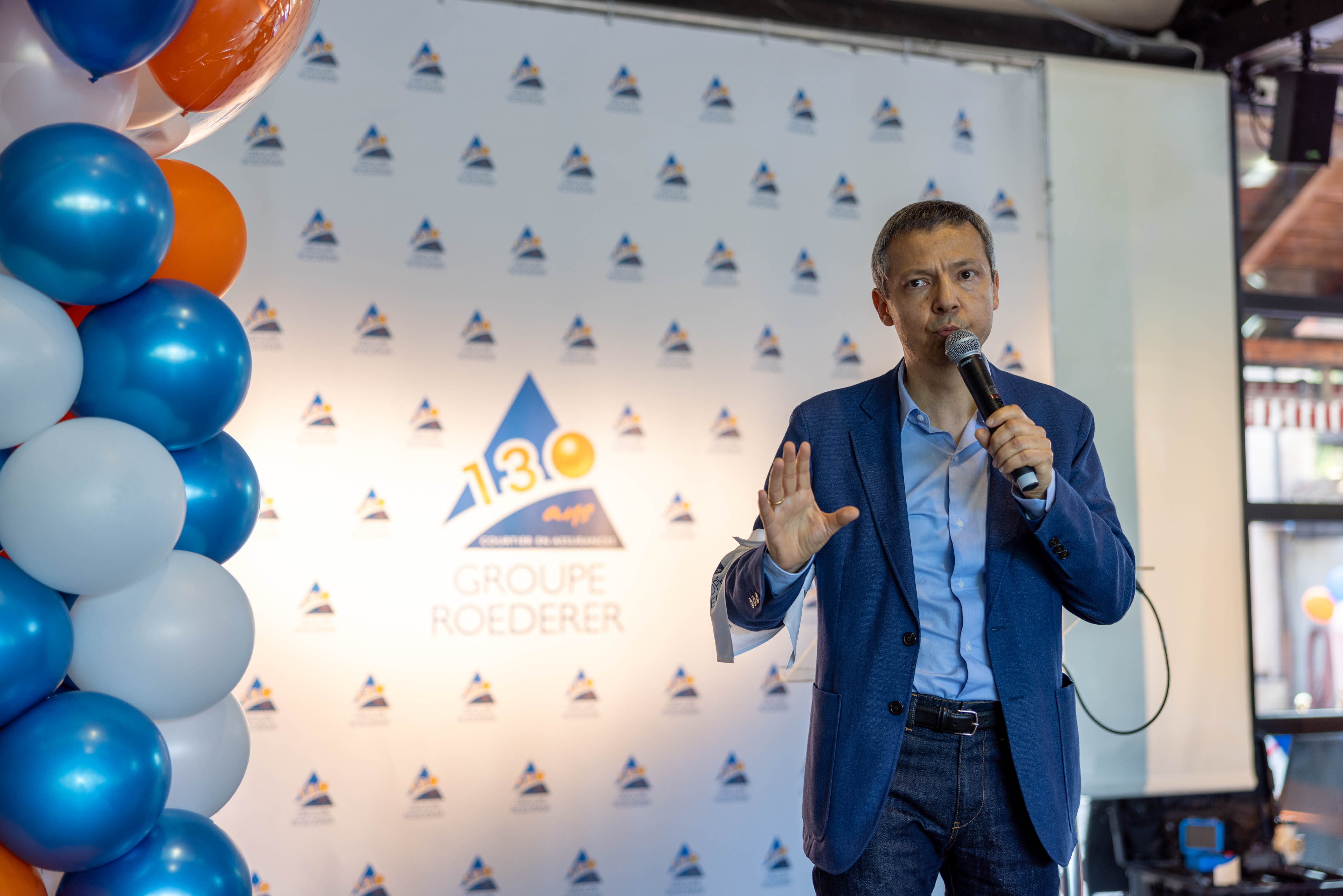
Production pragmatism: Antwerp audiences appreciate high standards, but not unnecessary spectacle. Entertainment must support the message (energy, pacing, human connection) and never compete with it.
Access and logistics: city centre loading restrictions, tight dock schedules, and venue rules can impact set-up time. We plan load-in/out, parking, and supplier access so production doesn’t become your internal headache.
This is where a disciplined communication build—content + technical + audience journey—makes the difference between a “nice event” and a leadership tool.
Which entertainment formats work for Antwerp corporate communication?
Entertainment is effective when it supports attention and credibility. In Antwerp, we typically use formats that are controlled, time-efficient, and aligned with brand tone. Below are options we often deploy around leadership messaging.
Interactive animations in Antwerp
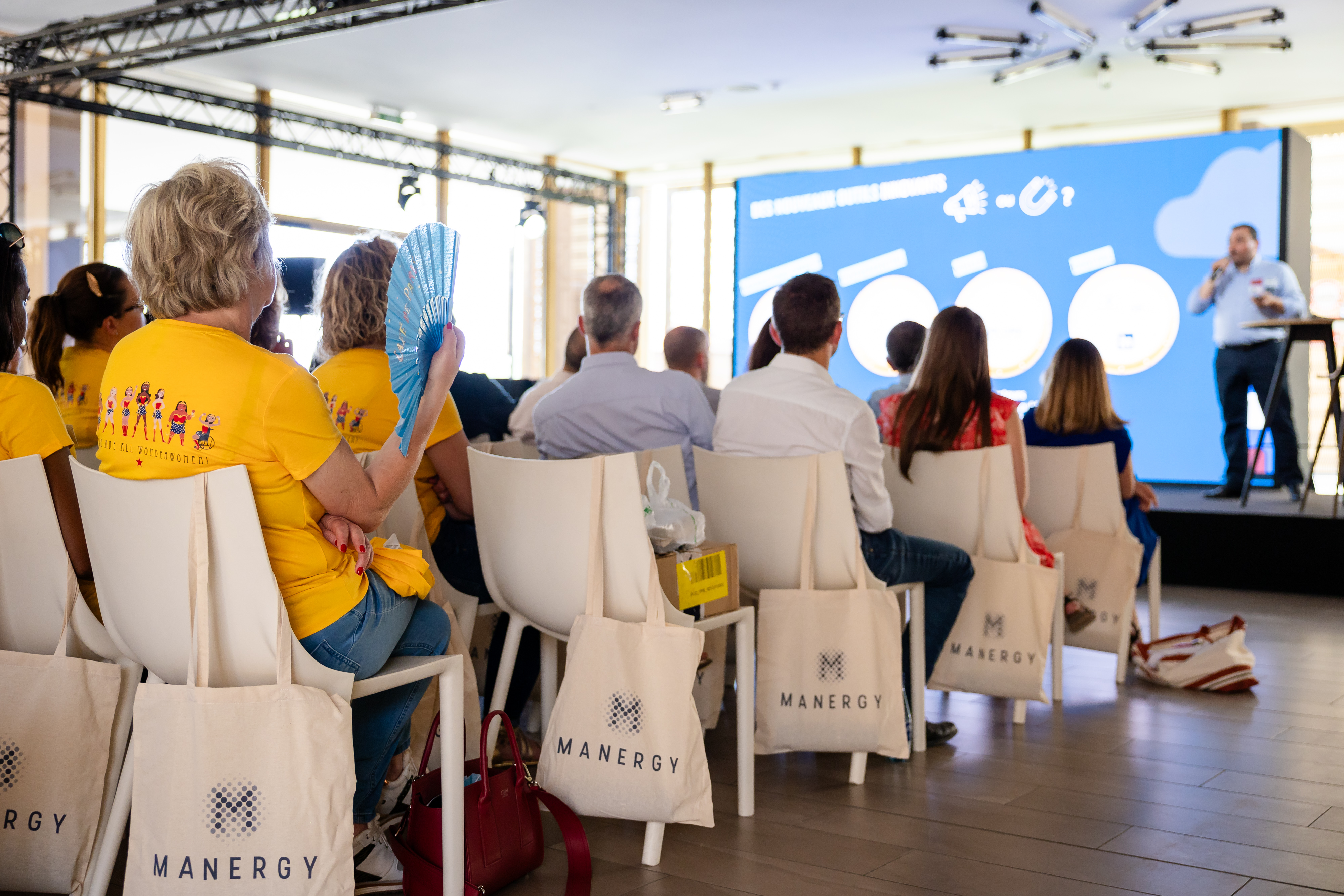
Moderated audience Q&A with smart filtering: questions collected via QR, categorised live by a moderator to protect time and ensure relevance. Works well for town halls and strategy updates.
Live polling for decision moments: short pulse checks (3–5 questions) to measure understanding or sentiment before and after a key segment. Useful for change communication when leadership needs a “read of the room”.
“Ask Me Anything” breakout corner: after the plenary, small-group slots with HR or leadership (15–20 minutes each) for practical questions. Reduces pressure on the main stage while increasing perceived openness.
Interactive content walls: a curated feed of key messages, commitments, or customer quotes. We moderate tightly to avoid reputational risk.
Art animations in Antwerp
Short, scripted opener (3–6 minutes): a professional performer or voice artist introduces the theme and anchors vocabulary. Effective when you want a strong first impression without stealing the show.
Musical interludes used as “reset” moments: 2–3 minute segments to manage energy between dense content blocks (results, compliance, strategic priorities). We keep it aligned with brand tone and venue acoustics.
Storytelling host/moderator: not a comedian doing random jokes, but a facilitator who can humanise data, manage transitions, and protect leaders during Q&A.
Innovative animations in Antwerp
Structured networking with food stations: rather than “free-for-all catering”, we create timing and zones (departments, projects, locations). This supports internal connection—especially after reorganisations.
Local product pairing: Antwerp-focused touches (local roasters, regional tasting formats) can be used as a hospitality cue for clients without turning the event into a food festival.
Gourmand animations in Antwerp
Hybrid studio segment: a high-quality broadcast block for remote teams, with in-room audience energy maintained via staging and screen content. Requires careful camera planning and script pacing.
Short-form leadership video capsules: filmed on-site the day of the event (controlled backdrop, sound, lighting) to extend message reach after the event. We plan it so it does not disrupt the live program.
Silent conference headsets for complex venues: useful in spaces with acoustic constraints or when you need bilingual audio tracks without heavy interpretation booths.
Whatever the format, we align entertainment and engagement with your brand posture: conservative, tech-forward, people-centric, or premium. The goal is always the same: reinforce the communication objective and protect leadership presence.
How to choose an Antwerp venue that supports Event Communication
The venue is part of your message. Ceiling height, acoustics, backstage access, and screen positions affect how authoritative your leadership looks and how comfortable the audience feels. In Antwerp, the right venue choice often reduces technical spend because you can work with the room instead of fighting it.
| Venue type | For which objective? | Main strengths | Possible constraints |
|---|---|---|---|
Conference hotel with plenary + breakouts | Leadership town hall, HR communication day, training + updates | Built-in meeting infrastructure, reliable power and load-in, easy catering flow | Room acoustics vary; branding can feel generic; AV upgrades may be needed for premium staging |
Industrial or warehouse-style venue (docklands / port-adjacent areas) | Brand repositioning, product narrative, client communication with strong staging | High impact, flexible layout, strong visual identity | More technical build (rigging, heating, sound); stricter safety planning; longer set-up and dismantle windows |
Corporate HQ or office atrium in Antwerp | Internal communication, culture programs, leadership Q&A | Authenticity, minimal travel, easier access for employees | Acoustics and sightlines often challenging; requires careful crowd flow, security, and on-site power management |
Dedicated theatre / auditorium | High-stakes keynote, results presentation, executive messaging | Excellent sightlines, professional stage, controlled lighting | Limited networking space; union/house rules can impact timing and costs; branding options may be restricted |
We strongly recommend a site visit before locking the concept and budget. In real projects, 30 minutes on-site often reveals the true constraints: loading routes, rigging points, ambient noise, screen visibility, and where your speakers can wait and focus before going on stage.
What budget range to plan for Antwerp event communication
Pricing for Event Communication in Antwerp depends on production level, technical complexity, and the amount of content support required. A “simple” internal town hall can become expensive if it requires hybrid streaming, interpretation, or heavy stage design. We prefer to build budgets transparently by line item so procurement and leadership can make informed trade-offs.
Attendee format (in-person, hybrid, multi-site): hybrid adds camera crew, streaming platform, connectivity redundancy, and rehearsal time.
Venue and technical baseline: some locations include screens, lights, and sound; others require a full build (and often additional labour time).
Content support: scriptwriting, deck redesign, video production, speaker coaching, moderator briefing. This is where many teams underestimate effort.
Language requirements: live interpretation (booths/headsets), subtitle workflows, bilingual hosts, or translated on-site signage.
Registration and audience comms: GDPR-safe registration tools, badge printing, check-in staff, and on-site wayfinding.
Entertainment and engagement: from a professional host to a short performance segment; pricing varies with artist profile, rehearsal, and technical riders.
Risk management: security, medical presence when required, contingency equipment, and insurance constraints depending on venue and audience.
ROI is not only attendance satisfaction. For executives, the return is measured in alignment speed, reduced rumour cycles, increased adoption of change, and the credibility of leadership communication. We can help define KPIs (participation, Q&A volume, post-event pulse metrics, video replay rates) before you spend.
Why work with a local partner in Antwerp (not a remote supplier)?
A local partner reduces friction. In Antwerp, small operational details can determine whether your show starts on time: loading constraints, neighbourhood access rules, venue technicians’ procedures, and local supplier availability. Working with a team that is used to these realities improves predictability—especially when leadership calendars leave no room for delays.
It also improves content relevance. We know the tone that tends to work with Antwerp audiences: direct, factual, respectful of operations, and clear on next steps. This affects how we script transitions, brief moderators, and integrate entertainment without damaging perceived seriousness.
If you are comparing options, you can also consult our Antwerp-specific capabilities via our event agency in Antwerp page.
- Faster site and technical checks to confirm constraints early and avoid last-minute budget creep.
- Reliable local supplier network (AV, staging, host talent, catering coordination) with known service levels.
- Better crisis response on event day: when something changes, local proximity helps solve it quickly.
- More realistic planning: set-up windows, access, and rehearsal scheduling based on how Antwerp venues actually operate.
ROI is not only attendance satisfaction. For executives, the return is measured in alignment speed, reduced rumour cycles, increased adoption of change, and the credibility of leadership communication. We can help define KPIs (participation, Q&A volume, post-event pulse metrics, video replay rates) before you spend.










Examples of Event Communication delivered in Antwerp formats
Our work spans multiple “communication moments” that executives typically need throughout the year:
Leadership town hall after reorganisation: we structured the narrative to answer the questions employees actually ask (role clarity, decision rights, timelines). We built a moderated Q&A with pre-categorisation to keep it candid but controlled, and we coached speakers to avoid inconsistent wording across departments.
Client briefing + product direction update: we built a program where the product story and commercial message were separated on purpose—so sales did not overtake the strategic positioning. Entertainment was used only as short “reset” segments to keep attention high between dense content blocks.
Hybrid communication for multi-site teams: we designed a run-of-show that works for both in-room and remote audiences (camera-aware staging, clear lower-thirds, remote Q&A flow, and a post-event video package). The key was rehearsing transitions so remote attendees did not feel like second-class viewers.
Employer branding and onboarding day: we combined HR messaging with operational realism: clear expectations, manager presence, and employee stories that were scripted enough to be safe but authentic enough to be credible.
Across these projects, our focus stays consistent: message clarity, timing discipline, and production quality that protects the brand and the leadership team.
Antwerp event communication risks to avoid on the day
Overloading the agenda: too many speakers and too many slides create fatigue. We typically recommend fewer segments with clearer transitions and timed Q&A.
Late content lock: when decks and videos are still changing 24 hours before, technical rehearsal becomes meaningless. We set a “content freeze” deadline and a controlled change process.
No clear ownership of show control: if nobody calls cues, everyone improvises. We assign a stage manager and define who says “go” for each cue.
Entertainment that fights the message: comedy or loud performances can undermine serious moments (results, safety, compliance). We position entertainment as attention management, not a distraction.
Underestimating Q&A dynamics: open mics can create reputational risk and timing drift. We propose moderation, filtering rules, and pre-briefing of leaders.
Hybrid without redundancy: one internet issue can break the experience. We plan connectivity checks, backups, and offline playback options.
Weak arrival experience: long queues, unclear signage, and confusion about seating immediately reduce confidence. We plan check-in staffing, badge logic, and wayfinding.
Our role is to prevent these risks through planning discipline: clear scope, early technical checks, formal rehearsal, and contingency plans that are realistic—not theoretical.
Why Antwerp clients stay with INNOV'events over time
Recurring clients typically come back for one reason: predictability under pressure. Many communication events are “high visibility, low tolerance for mistakes”. When leadership, HR and comms teams know the delivery will be controlled, they can focus on substance instead of logistics.
1 consolidated project plan shared with stakeholders (comms, HR, IT, procurement, venue), so everyone works from the same timeline.
2 rehearsal stages on most executive programs: content rehearsal (message + pacing) and technical rehearsal (full show cues).
15–30 minutes saved per transition on average when run-of-show and stage management are properly built—often the difference between ending on time and losing the room.

Loyalty is proof of quality because it means we performed when it mattered: under real constraints, with real stakeholders watching, and with no appetite for improvisation.
Our Antwerp delivery process for Event Communication
👉 Step 1 (Antwerp): Communication brief and stakeholder alignment
We start with a working session with leadership, HR and communications to clarify objective, audience, success metrics, sensitivities (legal, works council, brand), and decision-making. Output: a clear brief, an initial program structure, and a validation calendar that matches your internal reality.
👉 Step 2 (2000): Content architecture and run-of-show design
We build a narrative structure and translate it into a timed run-of-show: speaker order, transitions, interaction points, and entertainment placements that support attention. Output: run-of-show v1, moderation plan, and Q&A approach (open mic vs filtered vs curated).
👉 Step 3 (Antwerp): Venue and technical planning
We confirm venue constraints (load-in, rigging, power, acoustics, backstage, sightlines) and map them to an AV/stage plan. Output: technical specs, production schedule, staffing plan, and contingency approach (backup audio, playback, connectivity).
👉 Step 4 (2000): Supplier coordination and production build
We coordinate AV, staging, registration, signage, catering interfaces, and entertainment talent. Output: final production plan, cue sheets, on-site contact list, and safety notes. This is where we protect budget by avoiding last-minute rush fees.
👉 Step 5 (Antwerp): Rehearsals and show calling
We run speaker rehearsals (pacing, stage blocking, mic technique), then a full technical rehearsal following the real order of the show. On event day, we call cues through a designated show caller/stage manager so speakers and executives experience a controlled environment.
👉 Step 6 (2000): Post-event communication and measurement
We support post-event assets (highlight video, leadership recap email, intranet kit) and evaluate KPIs agreed upfront: attendance rate, Q&A volume, poll results, replay rates, and qualitative feedback from key stakeholder groups.
FAQ sur l'organisation Event Communication à Antwerp
What does Event Communication in Antwerp usually include?
Typically: message and program structuring, run-of-show, moderation plan, speaker coaching, AV/stage coordination, audience engagement (polling/Q&A), registration and on-site comms, and on-the-day show calling. We can cover the full scope or plug into your internal comms team where needed.
How far in advance should we book an Antwerp event?
For a standard executive town hall: 4–6 weeks is workable if content is ready. For a higher-production event (hybrid, large staging, multiple languages): plan 8–12+ weeks to secure venues, technical crews and rehearsal time without rush costs.
What budget should we plan in Antwerp for 200 people?
As a broad range, many corporate communication events for ~200 attendees land between $25,000 and $85,000+, depending on venue baseline, AV level, hybrid needs, and content production (video, branding, speaker support). We provide line-item budgets so you can adjust scope intelligently.
Can you handle bilingual communication in Antwerp (EN/NL/FR)?
Yes. We set the language strategy early: bilingual speakers, professional host, live interpretation (booths or headsets), and/or subtitles for videos. The right choice depends on audience mix, venue, and timing—interpretation adds staffing and rehearsal requirements, so we integrate it into planning from day one.
How do you keep a leadership Q&A controlled in Antwerp?
We use a moderated flow: questions collected via QR or cards, categorised live, merged to avoid duplicates, and time-boxed (for example 15–25 minutes). We agree escalation rules in advance (what can be answered live vs parked), and we brief leaders with likely themes to avoid inconsistent answers.
Request a quote for Antwerp Event Communication
If you are planning a leadership town hall, change communication moment, client briefing, or hybrid broadcast in Antwerp, contact INNOV'events early. The earlier we align on objective, audience and constraints, the easier it is to protect timing, budget and executive credibility.
Share your date window, estimated attendee count, venue shortlist (if any), and language needs. We will come back with a pragmatic proposal: scope options, timeline, and a production approach designed to keep your message clear and your event day under control.
INNOV'events Antwerp Agency
Justin JACOB is the manager of the INNOV'events Antwerp office. Reach out directly by email at belgique@innov-events.be or via the contact form.
Contact the Antwerp agencyAll our services & entertainment Antwerp, Belgique
Discover our event services
Discover our event entertainment available in the Belgique
- Event Hostess in Antwerp
- Escape Game in Antwerp
- MasterChef Cooking Workshop in Antwerp
- Magician in Antwerp
- Marquee Rental in Antwerp
- Color Analysis Workshop in Antwerp
- Inflatable Games in Antwerp
- Valet Parking Service in Antwerp
- Football Simulator in Antwerp
- LED Furniture Rental in Antwerp
- Light Branding in Antwerp
- Unique Dining Experience in Antwerp
- Light Painting in Antwerp
- Murder Mystery Party in Antwerp
- Prize Contest in Antwerp
- Promotional Displays (POS) in Antwerp
- Virtual Reality in Antwerp
- Molecular Gastronomy Workshop in Antwerp
- Halloween Entertainment in Antwerp
- Fireworks Show in Antwerp
- Giant Games Challenge in Antwerp
- Event Host / MC in Antwerp
- Photo Booth Animation in Antwerp
- Santa Claus Entertainment in Antwerp
- Kids Entertainment in Antwerp
- Guided Tour in Antwerp
- Urban Rally in Antwerp
- Ball Pit in Antwerp
- Flight Simulator in Antwerp
- Food Truck Rental in Antwerp
- World Record Challenge in Antwerp
- Surf Simulator in Antwerp
- Wine Casino in Antwerp
- Makeover Workshop in Antwerp
- Perfume Creation Workshop in Antwerp
- Acting Workshop in Antwerp
- CSR Activities in Antwerp
- Archery in Antwerp
- Security Staff in Antwerp
- Wine Tasting in Antwerp
- Mime Performer in Antwerp
- TV Game Show in Antwerp
- Funfair in Antwerp
- Crisis Management Workshop in Antwerp
- Crisis Negotiation Workshop in Antwerp
- Arcade Games in Antwerp
- Indoor Skydiving Simulator in Antwerp
- Ski Simulator in Antwerp
- Racing Circuit Experience in Antwerp
- Introductory Flight Experience in Antwerp
- Tasting Experience in Antwerp
- Build Your Own Foosball Workshop in Antwerp
- 2CV Rally in Antwerp
- LEGO Challenge in Antwerp
- Casino Night in Antwerp
- Interpreter / Translator in Antwerp
- Promotional Giveaways in Antwerp
- Shuttle Transport in Antwerp