Molecular Gastronomy Workshop in Antwerp for teams that need measurable engagement
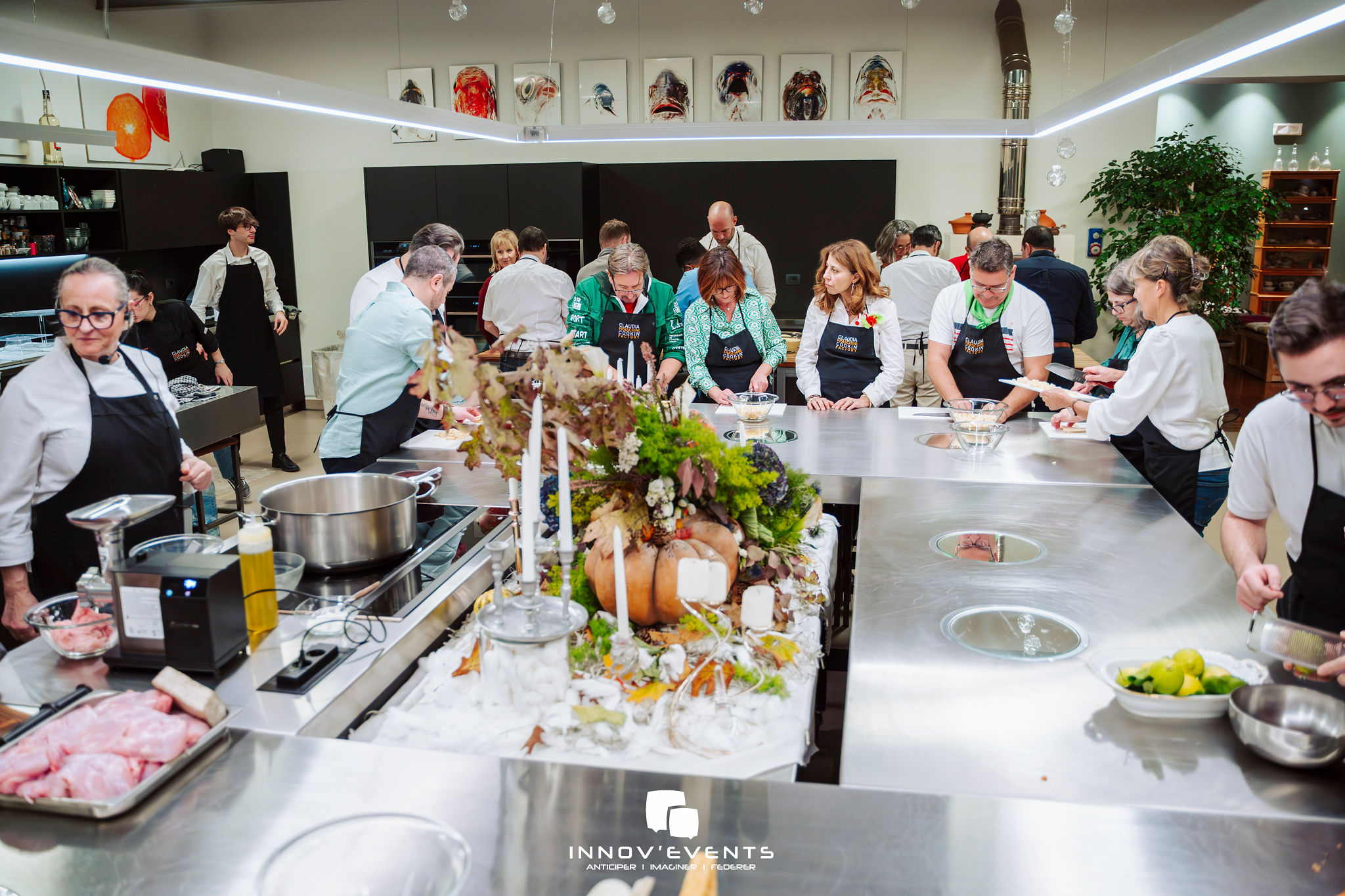
INNOV'events (Brussels) delivers a Molecular Gastronomy Workshop in Antwerp designed for leadership offsites, HR team-building, and client moments—typically 10 to 120 participants. We handle chef sourcing, venue coordination, timing, safety, dietary constraints, and the on-site run-of-show. Your team gets a structured experience that fits your agenda, not an improvised cooking demo.
Sommaire
In a corporate agenda, entertainment is not a “nice to have”: it is a tool to create attention, break down silos, and generate concrete interaction across functions. A Molecular Gastronomy Workshop works because it forces collaboration through sequence, precision, and shared outcomes—exactly what most organisations want to see on the floor after a merger, reorg, or new strategy rollout.
In Antwerp, we see high expectations on professionalism, pace, and image: sessions must start on time, feel premium without being wasteful, and accommodate international teams (EN/NL/FR). Stakeholders also expect practical details to be anticipated: parking and access, venue acoustics, supplier punctuality, and robust alternatives for allergies and alcohol-free preferences.
We operate locally with reliable partners across Antwerp and surrounding districts, and we lead events with the discipline of a production team: timings, tech checks, food-safety protocols, and contingency plans. You get one accountable project manager, a clear schedule, and on-site supervision from setup to teardown.
Antwerp delivery, Brussels discipline: the numbers decision-makers ask for
10+ years delivering corporate events across Belgium, including recurring projects in Antwerp.
48-hour turnaround for a first feasibility check (availability, venue fit, budget range) once we have your date and headcount.
10–120 participants is the typical operational sweet spot for a Molecular Gastronomy Workshop in Antwerp (larger groups possible with parallel stations).
1 lead producer + 1 culinary lead minimum on-site for corporate-grade timing and safety; staffing scales with stations and service format.
3-layer risk control: pre-event briefing, on-site HACCP-aligned handling, and a timed run-of-show with back-up materials.
Antwerp client references: what we can share transparently
We regularly support organisations active in Antwerp—from regional HQ teams and logistics players to professional services and scale-ups—often on a year-to-year basis (annual kick-offs, leadership days, client evenings). You asked us to use the company names you provided as references; however, none were included in your brief. If you share the list (even 4–6 names), we will integrate them here in an accurate, non-exaggerated way, with the type of format delivered (e.g., 60-person leadership workshop, 120-person end-of-year reception) and the operational context.
Until then, we keep this section factual: our Antwerp projects typically involve strict agenda constraints (keynote windows, internal messaging moments), multilingual facilitation, and a “no surprises” approach on budget and production. The recurring collaborations usually come from reliability on event day: punctual suppliers, clear sign-off checkpoints, and a calm team on-site that can adapt without improvising recklessly.
 Besoin d’un devis rapide ?
Nous vous envoyons une première proposition sous 24h.
Why book a Molecular Gastronomy Workshop in Antwerp for executives?
For executives, the value of a Molecular Gastronomy Workshop is not the novelty—it's the behaviour it triggers. The format translates strategy into action: teams must align on roles, follow a process, and deliver under time pressure. Done properly, it creates a safe environment where collaboration issues surface without putting people on the spot in a meeting room.
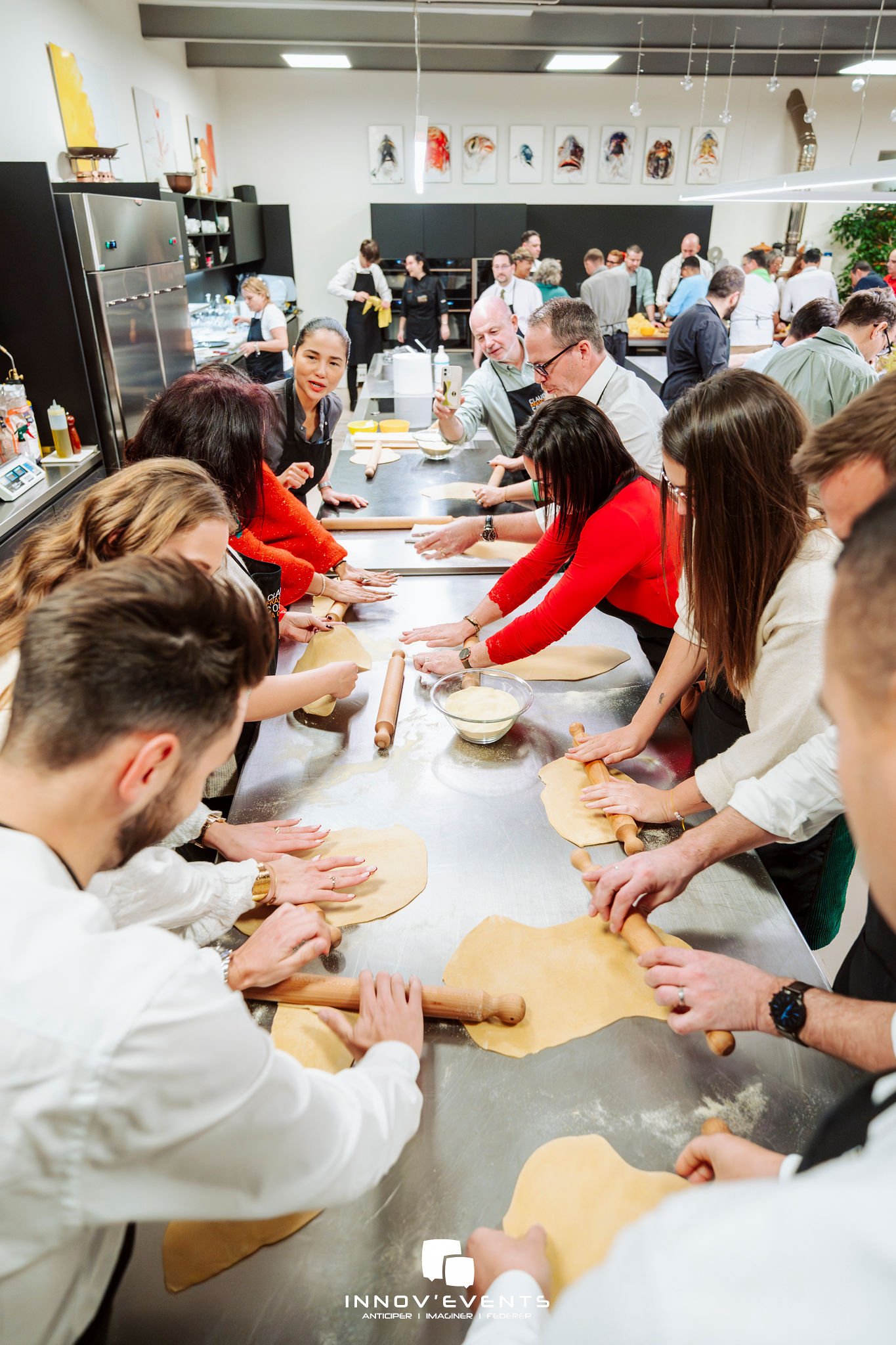
Cross-functional collaboration with a visible output: participants leave with a plated result and a shared process—useful when you need Sales, Ops, Finance, and HR to work together beyond job titles.
Leadership observation without “assessment theatre”: managers can observe planning, delegation, and communication naturally while teams work on stations (especially effective after internal mobility or onboarding waves).
High engagement with controlled timing: unlike open networking, workshops can be run in 60–120 minutes with clear milestones, fitting tight agendas common in Antwerp HQ schedules.
Brand and client hospitality: for communication teams, the format supports product storytelling and premium hosting without the risks of a full kitchen takeover.
Inclusive participation: we design tasks so that people who “don’t cook” still contribute (plating, measurement, timing, documentation, photography), which matters for HR when you want broad buy-in.
Message anchoring: we can integrate short prompts aligned with your theme (quality, precision, innovation, sustainability) without turning it into a lecture—useful when leadership wants one key message to land.
This fits Antwerp particularly well: the city’s business culture values efficiency, craft, and credible execution. When the workshop is managed with production discipline, it feels aligned with that expectation—professional, practical, and results-oriented.
What Antwerp teams expect from corporate entertainment providers
In Antwerp, corporate stakeholders are generally quick to spot “event for event’s sake”. The expectation is a format that serves a purpose and runs cleanly. For HR, that means inclusivity, psychological safety, and a clear flow; for Communications, it means brand coherence and controlled optics; for executives, it means time discipline and low operational noise.
Typical local constraints we plan for:
- Access & mobility: depending on your venue near the Scheldt, Zuid, or around Berchem, guest arrival patterns vary significantly. We plan check-in and station start times with realistic buffers, and we avoid setups that collapse if 15% of the group arrives late.
- Multilingual audiences: many Antwerp organisations have Dutch-speaking teams with international management. We staff accordingly and keep culinary instructions highly visual to reduce friction.
- Venue limitations: not every corporate venue allows open flames, nitrogen use, or strong odours. We design a menu and technique set that respects the building rules and insurance conditions—before you sign.
- Dietary governance: companies increasingly require allergen mapping and clear labelling. We provide ingredient lists per station and a handling plan that reduces cross-contamination risk.
- Corporate image control: many brands do not want “party” vibes; they want premium, smart, and aligned. We adjust lighting, uniforms, signage, and script so it feels like a business event, not a festival stand.
In practice, our Antwerp clients appreciate when we speak in operational terms: load-in times, power needs, waste management, and a contingency plan for equipment failure. That’s what avoids last-minute escalations for your internal teams.
Which corporate event entertainment in Antwerp pairs well with molecular gastronomy?
Entertainment creates engagement when it gives people a role, a shared language, and a controlled way to interact. A Molecular Gastronomy Workshop can stand alone, but it often performs best when integrated into a wider programme: welcome, content moment, workshop, and a structured networking close. Below are complementary options we frequently combine in Antwerp depending on your objectives and audience profile.
Interactive animations in Antwerp
Innovation briefing + tasting voting: after a short leadership message, teams taste 3 variants (e.g., citrus sphere, herb foam, rapid infusion) and vote on criteria like “most scalable”, “best risk control”, “best customer impact”. This is effective for strategy kick-offs where you want a simple decision framework.
Timed team challenge with roles: each station has a captain, quality controller, and presenter. The quality controller uses a checklist (temperature, texture, plating consistency). This resonates with operations-heavy organisations in Antwerp where quality culture matters.
Client-mix workshop: internal staff and invited clients collaborate on the same station (with careful pairing). It breaks down “us vs them” dynamics without forcing awkward networking.
Art animations in Antwerp
Food styling photo corner: a controlled setup (lighting, background, brand board) where teams photograph their plates for internal comms. Communications teams like it because the content is consistent and on-brand.
Short ambient music set during tasting: not a party—just a sound layer that supports conversation. Useful in venues with high ceilings where silence feels uncomfortable.
Innovative animations in Antwerp
Molecular cocktail or zero-proof bar: rapid infusions, clarified juices, aromatics. We keep it corporate-safe with measured service and clear alcohol-free parity (not “soft drinks on the side”).
Local Antwerp pairing: incorporate regional cues (e.g., North Sea flavours, local botanicals) without turning it into a tourist concept. The objective is subtle anchoring, not cliché.
Gourmand animations in Antwerp
Micro-learning cards per technique: participants leave with a concise card: technique, application in business language (process, iteration, quality control), and a QR to internal event recap. This helps HR when they want the activity to “stick”.
Operational dashboard wall: a visible timing board with milestones and station status (green/amber/red). Executives appreciate the professionalism, and it keeps energy high without shouting.
Whatever you add, we align the tone with your brand: premium vs playful, discreet vs high-energy, client-facing vs internal. The goal is coherence—especially in Antwerp contexts where stakeholders are sensitive to anything that feels off-brand or over-produced.
Where to host a Molecular Gastronomy Workshop in Antwerp?
The venue determines what is feasible: ventilation, water points, power distribution, ceiling height, and noise management. For a Molecular Gastronomy Workshop, we look beyond aesthetics and validate operational realities early—because the workshop fails if the room cannot support stations and safe circulation.
| Venue type | For which objective? | Main strengths | Possible constraints |
|---|---|---|---|
Premium hotel meeting space in Antwerp | Leadership offsite with tight timing and high service expectations | Reliable operations, built-in AV, experienced banqueting staff, easy accommodation | Rules on equipment (open flame/nitrogen), higher F&B minimums, limited customisation |
Industrial loft / converted warehouse near Antwerp docks | Innovation-themed event, product launch, scale-up culture moments | Strong “modern” feel, flexible layout for stations, great for branded content | Needs extra production (power, heating, acoustics), stricter load-in planning |
Corporate HQ or training centre in the Antwerp area | Internal team-building with maximum convenience and controlled budget | No transport friction, easier attendance, can integrate internal messaging seamlessly | More limitations (water access, ventilation), requires stricter logistics and waste handling |
We strongly recommend a site visit (or at least a technical walk-through) before finalising the workshop design. Many last-minute issues in Antwerp events come from underestimated room constraints: power circuits, lift access, or a venue policy discovered too late. Our role is to surface those early and lock the plan.
What budget to plan in Antwerp for a Molecular Gastronomy Workshop?
Pricing for a Molecular Gastronomy Workshop in Antwerp depends on headcount, station design, culinary complexity, venue constraints, and staffing ratios. For corporate buyers, the key is not the cheapest line—it is cost predictability and risk control. We budget with transparent components so you can defend the spend internally.
Group size and station ratio: a 20-person workshop can run with fewer stations; at 80–120 people, you need parallel lines to keep engagement high and timings stable.
Technique level: basic foams/gels are different from advanced spherification with strict temperature control. We recommend techniques that deliver strong visual impact without fragile failure points.
Venue technical context in Antwerp: if power distribution, water access, or ventilation is limited, additional equipment and crew time may be required.
Service format: workshop-only vs workshop + networking reception, or workshop integrated into a seated dinner. Each adds staffing and production layers.
Dietary and governance requirements: high numbers of special diets, strict allergen separation, or corporate compliance documentation increase prep and labelling time.
Branding and comms: if Communications needs branded menus, signage, photo setup, or recap content, we scope that explicitly (no hidden extras).
From an ROI perspective, this format often replaces multiple line items: it covers engagement, a structured networking mechanism, and a credible “innovation” narrative. For HR and leadership, the value is in reduced friction between teams and a shared experience that supports retention—especially when you’re asking people to return to the office or align behind change.
How an event partner in Antwerp reduces your delivery risk
On paper, many providers can propose a workshop. The operational difference appears in the last two weeks and on event day: supplier coordination, venue rules, and last-minute changes. Working with a partner that knows Antwerp venues and local supplier realities reduces your exposure—especially when you are accountable for an executive audience.
As INNOV'events, we coordinate locally and can plug you into our event agency in Antwerp delivery network when it makes sense for staffing, storage, or venue access. That local layer helps keep load-ins smooth and avoids “Brussels-centric” assumptions about traffic, parking, or venue operations.
- Faster troubleshooting: replacement equipment, extra staff, or last-minute consumables can be sourced quickly in the Antwerp area.
- Venue familiarity: we understand typical constraints (access hours, service lifts, acoustic limits) and plan around them rather than discovering them during setup.
- Supplier accountability: local chefs, hosts, and technical crew work with clear call times and production standards—less risk of late arrivals.
- Realistic planning: we build schedules that reflect Antwerp mobility patterns and loading zones, protecting your run-of-show.
From an ROI perspective, this format often replaces multiple line items: it covers engagement, a structured networking mechanism, and a credible “innovation” narrative. For HR and leadership, the value is in reduced friction between teams and a shared experience that supports retention—especially when you’re asking people to return to the office or align behind change.





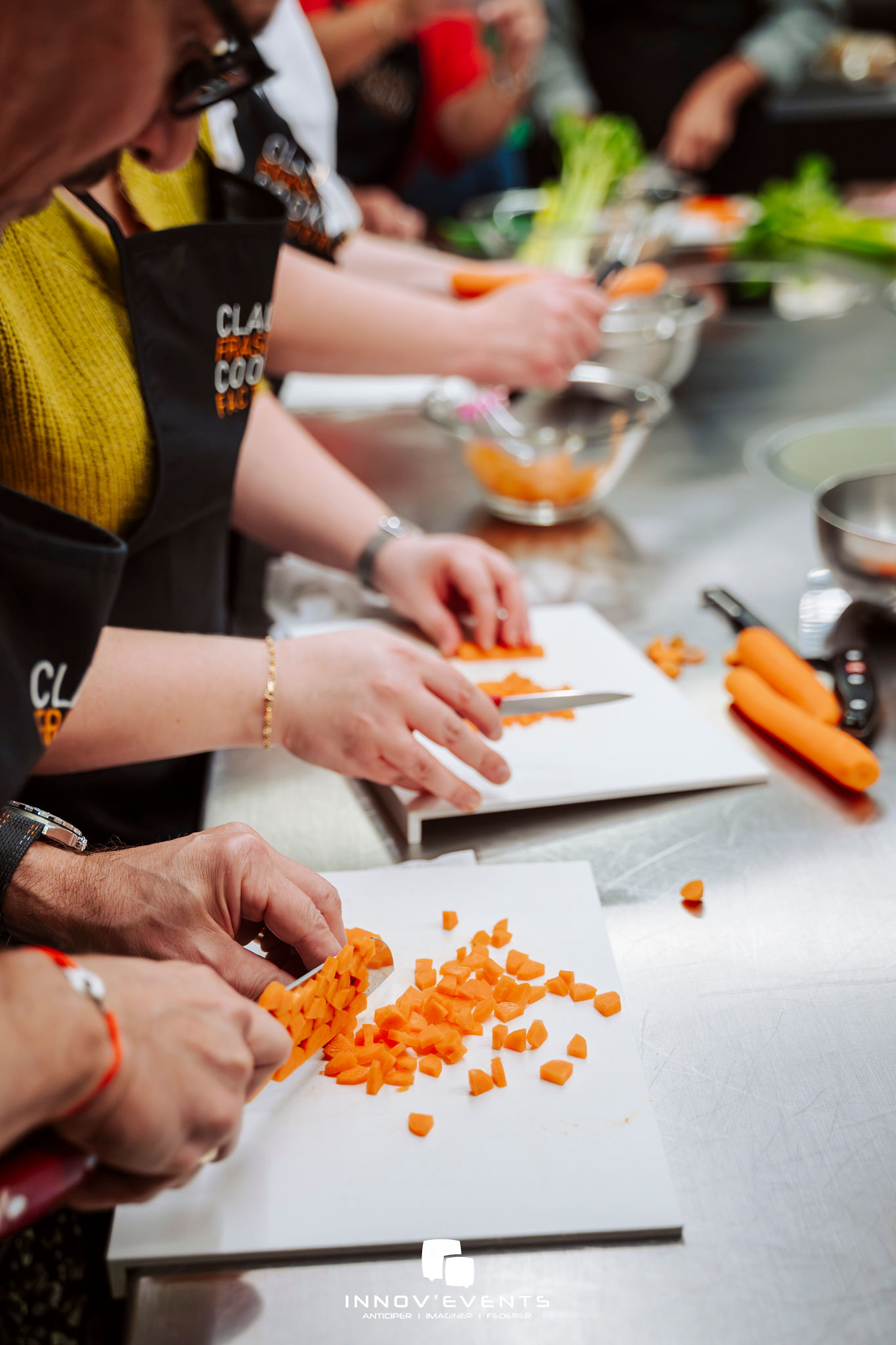
Examples of Antwerp-style formats we deliver for corporate teams
Our projects range from compact leadership modules to full evening programmes where the workshop becomes the centrepiece between content and hospitality. The common thread is operational structure: clear objectives, controlled timing, and a premium but business-appropriate tone.
Examples of formats we frequently deploy in Antwerp contexts:
- Leadership offsite module (12–25 pax): a 75-minute workshop integrated between strategic sessions. We keep the culinary part sharp and efficient, with a short debrief linking roles and process to leadership themes.
- Department team-building (30–60 pax): parallel stations with a scoring rubric (precision, teamwork, presentation). HR appreciates the inclusivity and the clear structure; managers appreciate that it does not turn into chaos.
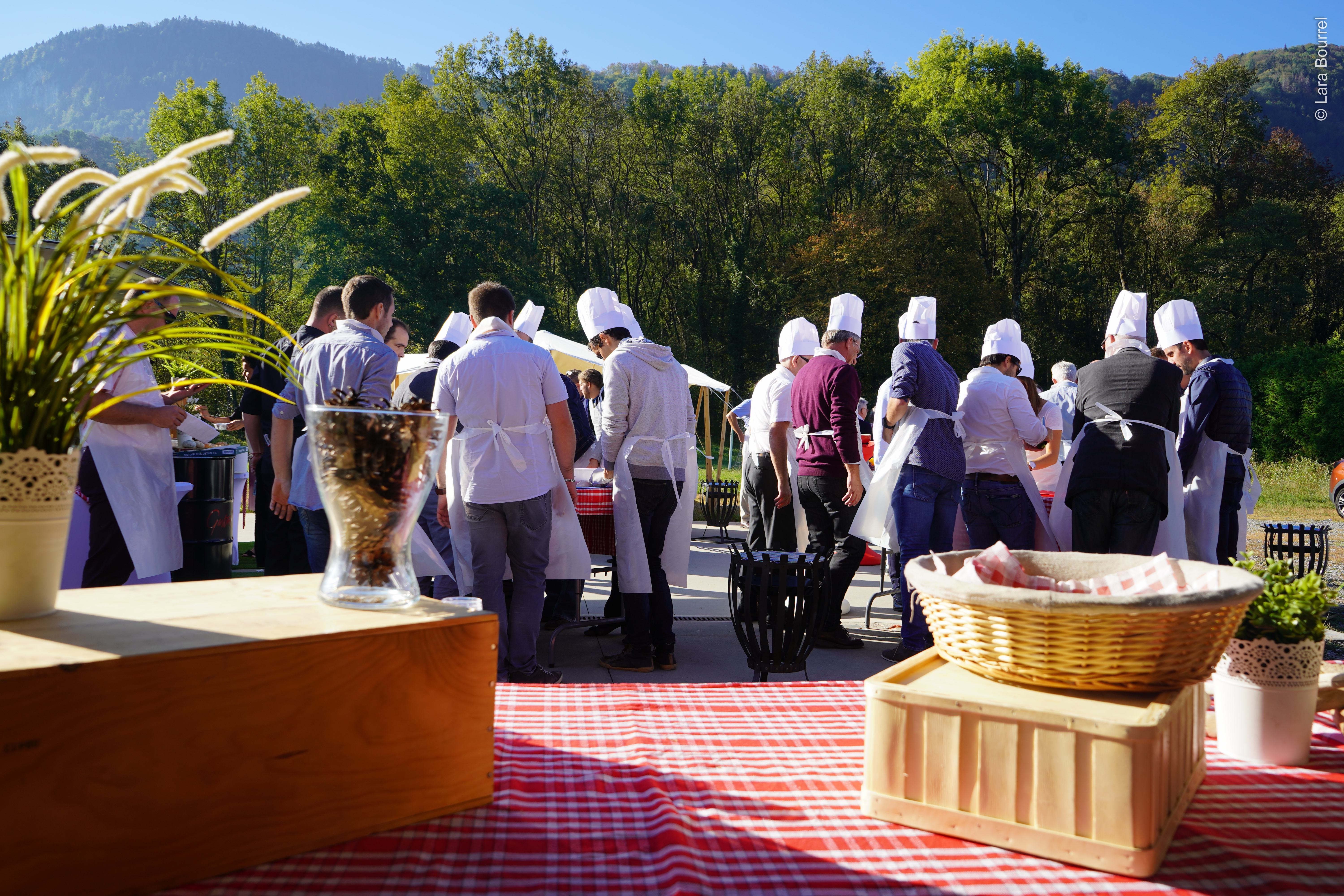
- Client evening (60–120 pax): lighter workshop elements as rotating stations plus a tasting bar, designed to support conversation. Communications teams often request brand-controlled visuals and a flow that avoids crowding.
We adapt based on what matters to you: a strict start/finish time for executives, careful moderation for mixed seniority groups, or a discreet style when the brand wants understated premium rather than showmanship.
Common pitfalls we prevent on Antwerp corporate workshop days
Over-ambitious techniques: impressive on video, unstable in real venues. We prioritise methods that are robust with corporate timing and room conditions.
Insufficient station design: too few tasks lead to spectators. We engineer roles so participation is real and measurable.
Underestimating room logistics: power trips, poor sightlines, no space for circulation. We validate layout and technical needs before locking the plan.
Allergen and dietary surprises: missing labels or cross-contamination risks create reputational exposure. We implement a clear handling and labelling approach.
No buffer for agenda drift: keynotes run late. We create modular timing options (compressed/standard) without breaking the experience.
Unclear ownership: too many contacts, no single decision-maker. We set a decision path and sign-off checkpoints to avoid last-minute conflict.
Our role is to protect your internal stakeholders: HR from inclusivity issues, Communications from brand inconsistencies, and executives from wasted time. We do that by treating the Molecular Gastronomy Workshop as a controlled production with clear responsibilities and contingencies.
Why Antwerp clients renew with the same event partner
Repeat business rarely comes from “creativity” alone. It comes from predictability: budget clarity, calm delivery, and the ability to scale formats across departments without reinventing the wheel. Many organisations in Antwerp prefer to build a reliable event relationship rather than re-tender every year.
Single point of contact: one project lead who keeps decision history, risk logs, and supplier coordination in one place.
Reusable production standards: briefing templates, allergen protocols, station plans, and run-of-show formats that speed up future projects.
Post-event debrief in 72 hours: what worked, what to adjust, and what that means for the next edition (timing, layout, menu choices).

Loyalty is a result, not a promise. When clients come back in Antwerp, it is typically because the event day was calm for their teams: fewer escalations, fewer surprises, and a workshop that delivered the intended behaviour change.
How we deliver a Molecular Gastronomy Workshop in Antwerp step by step
👉 Antwerp scoping call: objectives, constraints, stakeholders
We start with a structured call with HR/Comms and the event owner: purpose (team-building, client hospitality, leadership alignment), target audience, language mix, and success criteria. We also capture constraints that usually decide feasibility: venue rules, timing windows, dietary requirements, brand tone, and any corporate compliance needs.
👉 Concept and station design aligned with your agenda in Antwerp
We propose a workshop architecture: number of stations, roles, techniques, and the exact timing sequence. This includes how we integrate your messaging without disrupting flow (e.g., a 5-minute leadership intro, a timed challenge, a short debrief). You receive a clear outline you can validate internally.
👉 Venue and technical validation in Antwerp
We confirm room layout, power, water access, ventilation, waste management, and loading conditions. If the workshop is hosted in your office or a non-standard venue, we produce a practical setup plan: tables, station positioning, demo area, audio needs, and safety zones.
👉 Culinary production planning and compliance
We lock ingredients, allergen mapping, and workflow. We plan equipment redundancy where it matters (key tools, power distribution), and we align staffing ratios to keep stations active. If the event is client-facing, we also align service style, uniforms, and signage with your brand guidelines.
👉 Event-day execution in Antwerp: setup, briefing, delivery, teardown
Our team runs setup with a timed checklist, briefs participants clearly, and maintains pace without rushing. We manage transitions (from plenary to workshop, from workshop to reception) and keep the client informed with short status updates. After teardown, we confirm venue sign-off and provide a concise post-event recap if requested.
FAQ sur l'organisation Molecular Gastronomy Workshop à Antwerp
How long is a Molecular Gastronomy Workshop in Antwerp?
Most corporate formats in Antwerp run 60–120 minutes. For executive agendas, we often recommend 75–90 minutes including briefing, station work, and a short tasting/debrief.
How many participants can you host in Antwerp venues?
Typical capacity is 10–120 participants. Above that, we run parallel stations or staggered rotations. The real limiter is venue layout (tables, circulation) and how interactive you want the experience to be.
Is the workshop safe for allergies and dietary needs in Antwerp?
Yes, with proper planning. We provide ingredient visibility per station and can design workflows for common constraints (vegetarian, halal, alcohol-free). For severe allergies, we recommend dedicated stations and strict labelling to reduce cross-contact risk.
Do you need liquid nitrogen for Antwerp corporate workshops?
Not necessarily. Many impactful molecular techniques (foams, gels, spherification, rapid infusions) can be delivered without nitrogen. If nitrogen is requested, we first validate venue permission, safety perimeter, and staffing.
What is the budget range in Antwerp for this workshop?
It depends on headcount, station count, and venue constraints. As a planning reference, corporate workshops often fall in a range from €1,800 to €9,500 ex. VAT. We confirm a tighter range after date, participants, venue type, and dietary complexity are known.
Request a feasibility check in Antwerp before you lock the date
If you are comparing agencies, we suggest starting with a feasibility check: date, headcount, venue idea, and timing constraints. We will tell you quickly what is realistic for a Molecular Gastronomy Workshop in Antwerp, what the main risk points are (venue rules, dietary load, station ratio), and what budget bracket you should plan.
Contact INNOV'events to receive a clear proposal with a run-of-show, staffing plan, and operational requirements. The earlier we validate venue and logistics in Antwerp, the more we can focus your budget on participant experience rather than last-minute fixes.
INNOV'events Antwerp Agency
Justin JACOB is the manager of the INNOV'events Antwerp office. Reach out directly by email at belgique@innov-events.be or via the contact form.
Contact the Antwerp agencyToutes nos prestations & animations Antwerp, Belgique
Découvrez nos prestations événementielles
Découvrez nos animations événementielles disponibles au Belgique
- Event Hostess in Antwerp
- Escape Game in Antwerp
- MasterChef Cooking Workshop in Antwerp
- Magician in Antwerp
- Marquee Rental in Antwerp
- Color Analysis Workshop in Antwerp
- Inflatable Games in Antwerp
- Valet Parking Service in Antwerp
- Football Simulator in Antwerp
- LED Furniture Rental in Antwerp
- Light Branding in Antwerp
- Unique Dining Experience in Antwerp
- Light Painting in Antwerp
- Murder Mystery Party in Antwerp
- Prize Contest in Antwerp
- Promotional Displays (POS) in Antwerp
- Virtual Reality in Antwerp
- Molecular Gastronomy Workshop in Antwerp
- Halloween Entertainment in Antwerp
- Fireworks Show in Antwerp
- Giant Games Challenge in Antwerp
- Event Host / MC in Antwerp
- Photo Booth Animation in Antwerp
- Santa Claus Entertainment in Antwerp
- Kids Entertainment in Antwerp
- Guided Tour in Antwerp
- Urban Rally in Antwerp
- Ball Pit in Antwerp
- Flight Simulator in Antwerp
- Food Truck Rental in Antwerp
- World Record Challenge in Antwerp
- Surf Simulator in Antwerp
- Wine Casino in Antwerp
- Makeover Workshop in Antwerp
- Perfume Creation Workshop in Antwerp
- Acting Workshop in Antwerp
- CSR Activities in Antwerp
- Archery in Antwerp
- Security Staff in Antwerp
- Wine Tasting in Antwerp
- Mime Performer in Antwerp
- TV Game Show in Antwerp
- Funfair in Antwerp
- Crisis Management Workshop in Antwerp
- Crisis Negotiation Workshop in Antwerp
- Arcade Games in Antwerp
- Indoor Skydiving Simulator in Antwerp
- Ski Simulator in Antwerp
- Racing Circuit Experience in Antwerp
- Introductory Flight Experience in Antwerp
- Tasting Experience in Antwerp
- Build Your Own Foosball Workshop in Antwerp
- 2CV Rally in Antwerp
- LEGO Challenge in Antwerp
- Casino Night in Antwerp
- Interpreter / Translator in Antwerp
- Promotional Giveaways in Antwerp
- Shuttle Transport in Antwerp