Interpreter / Translator in Antwerp for executive-grade corporate events
INNOV'events supports executives, HR and communication teams with Interpreter / Translator solutions across Antwerp, from board-level meetings to multi-track conferences. Typical formats: 15 to 800 attendees, on-site, hybrid or fully streamed. We handle sourcing, briefing, booths and audio, run-of-show integration, and on-the-day coordination.
Sommaire
In a corporate event, language is not a “nice-to-have”: it protects your message, avoids contractual misunderstandings, and keeps decision-makers aligned in real time. A reliable Interpreter / Translator setup reduces friction, shortens Q&A, and helps you run a tighter agenda—especially when the room includes legal, finance or union stakeholders.
Organizations in Antwerp expect pace, clarity and discretion: port-related industries, pharma, logistics and international HQ teams operate with strict time slots, compliance constraints and multilingual audiences (NL/FR/EN/DE). The expectation is simple: no improvisation, no technical surprises, and a delivery that matches executive standards.
As an event agency based in Brussels with frequent operations in Antwerp, we work with a vetted network of interpreters, translators and AV partners used to high-pressure corporate environments. We bring field methodology: structured briefing, technical checks, speaker coaching, and a clear escalation plan for event day.
Operational benchmarks in Antwerp Province you can verify
48–72 hours: typical lead time to secure a senior interpreter for standard language pairs (NL/FR/EN) in Antwerp, subject to agenda and confidentiality checks.
2 interpreters per booth for sessions beyond 60–90 minutes, aligned with professional practice to maintain accuracy and reduce fatigue-related risk.
1 technical rehearsal recommended for hybrid or webcast formats; for complex panels we plan 2 run-throughs (sound + switching + interpretation routing).
0 “black box” pricing: you receive a quote split by interpreter fees, translation volumes, AV/booth rental, technician hours and project management.
Who we support across Antwerp and why they renew
In Antwerp, we regularly work with international-facing teams that cannot afford message dilution: leadership meetings where one misinterpreted nuance affects alignment, HR sessions with sensitive Q&A, or customer events where brand tone matters as much as content. Many clients renew year after year because the day runs smoothly and the internal team can focus on stakeholders rather than logistics.
To be transparent: you mentioned “company names you provided as references”, but none were included in your brief. If you share 5–10 names (even anonymised by sector), we will integrate them precisely and credibly. In the meantime, we can describe typical client profiles we serve in the Antwerp area: port and maritime services, chemical and pharma groups, logistics platforms, professional federations, and European or Benelux HQ functions that operate in NL/FR/EN daily.
What these organizations have in common is a demand for structured delivery: confidentiality, punctual starts, clear speaker handover, and a technical plan that is validated before anyone enters the room.
 Besoin d’un devis rapide ?
Nous vous envoyons une première proposition sous 24h.
Why add interpretation for a corporate event in Antwerp
Interpreting is not “extra production”; it is a risk-control and engagement lever. In a multilingual environment like Antwerp, the fastest way to lose the room is to split attention between languages or to rely on ad hoc summaries. A professional Interpreter / Translator setup keeps everyone in the same moment, which is what you need for decisions, buy-in and reputational consistency.
Executive alignment: board or steering committee decisions are made on nuance. Simultaneous interpretation prevents the “second-hand understanding” effect that comes with whispered summaries.
Sharper time management: with a disciplined interpreting workflow (speaker pacing, mic discipline, moderator cues), Q&A stays within the allocated window and avoids parallel conversations.
HR and change communication safety: during restructuring updates, policy rollouts or wellbeing topics, employees need to hear the message in their strongest language; it reduces misinterpretation and escalations after the event.
Commercial credibility: for customer and partner events in Antwerp, speaking the audience’s language signals respect and reduces “translation friction” during demos, negotiations or technical workshops.
Legal and compliance clarity: when content touches regulatory claims, safety instructions or contractual framing, professional interpretation and pre-translated materials reduce liability and ensure consistent wording.
Antwerp is built on international trade, logistics and cross-border decision-making. Events here often have a Benelux or EMEA footprint; interpretation is a practical tool to match the city’s economic culture: fast, international and execution-driven.
What Antwerp-based teams expect from interpreters on event day
Local decision-makers in Antwerp typically evaluate interpretation through three lenses: business impact, operational discipline, and reputational risk. They want to know how quickly the solution can be deployed, whether it will work with the venue’s acoustics and IT constraints, and how you guarantee confidentiality.
We often see a recurring pattern in Antwerp HQ and plant environments: multilingual speakers switch languages mid-sentence, slides are delivered late, and last-minute agenda changes happen due to operational issues. A robust Interpreter / Translator in Antwerp plan anticipates this: we structure speaker notes, enforce a final “interpreter pack” deadline, and define what happens if a keynote is replaced or moved.
Another local reality is security and access. In port zones or high-security sites, delivery time windows for booths and equipment are strict and badge procedures slow down set-up. We plan for earlier load-in, pre-approved equipment lists, and a technician roster that matches site rules. These are small details, but they decide whether you start on time.
Finally, Antwerp audiences are used to high production standards for business events. Even when budgets are controlled, the expectation is professional sound, clear sightlines, and a moderator who knows how to handle interpreted Q&A without awkward pauses.
Which bilingual formats work best for events in Antwerp
For corporate audiences, “entertainment” around language is not about spectacle; it is about attention management and interaction. The right formats increase participation without slowing the agenda. With a professional Interpreter / Translator layer, you can run more interactive sequences while keeping the message consistent across languages.
Interactive animations in Antwerp
Interpreted executive fireside chat: ideal for leadership roadshows in Antwerp. We script opening questions, align terminology, and run a mic plan so interpreters never lose a speaker.
Moderated Q&A with question capture: questions via app or cards, triaged by a moderator; interpreters receive the selected questions in advance for faster, cleaner answers.
Breakout workshops with bilingual facilitators: we place the right profile per room (industry familiarity), define outputs (3–5 decisions), and translate summaries live for plenary restitution.
Art animations in Antwerp
Voice-of-brand narration: a professional narrator (with translation) for product launches or anniversary films—useful when brand tone must stay consistent between NL/FR/EN.
Interpreted panel with strict timekeeping: we use speaker timers and a moderator cue system so the interpreted feed stays coherent and the panel remains sharp.
Innovative animations in Antwerp
Bilingual tasting brief: for receptions in Antwerp (often with international guests), we provide short translated tasting cards and a host brief so service teams deliver consistent explanations.
Chef’s table with consecutive interpretation: works for VIP clients; interpretation is done between courses to avoid talking over service.
Gourmand animations in Antwerp
Hybrid event with multi-language streaming: parallel audio channels (e.g., EN + NL) so remote attendees choose their language; we validate platform compatibility and latency constraints.
Terminology-driven translation workflow: for technical sectors (pharma, engineering), we build a glossary approved by your internal experts and reuse it across slides, scripts and handouts to avoid inconsistent wording.
Whatever the format, we align language choices with your brand and internal culture: how direct you want to be, which terms must remain in English, and what “tone” HR or leadership expects in Antwerp. Consistency is what protects your image.
Where to host interpreted meetings in Antwerp without technical stress
The venue decides whether interpretation feels seamless or becomes a constant compromise. In Antwerp, we look at ceiling height and reverberation, backstage space for booths, cabling paths, and where we can position interpreters for line-of-sight. We also verify power stability and whether the venue allows external AV or imposes preferred suppliers.
| Venue type | For which objective? | Main strengths | Possible constraints |
|---|---|---|---|
| Conference hotel in Antwerp | Townhalls, partner days, multi-language plenaries | Built-in meeting rooms, basic AV infrastructure, easy guest logistics | Sound isolation between rooms can be limited; external booth placement may be restricted |
| Corporate HQ meeting floors (Antwerp area) | Board meetings, steering committees, HR briefings | High confidentiality, controlled access, brand-controlled environment | Limited space for booths/technicians; network/security rules may complicate hybrid streaming |
| Industrial or port-proximate venues | Operational kick-offs, safety briefings, stakeholder sessions | Relevant setting for logistics/industry narratives, large capacities | Acoustics and noise; stricter access and load-in windows; higher AV requirements |
We strongly recommend a site visit (or at minimum a technical recce) in Antwerp for any event using simultaneous interpretation. Booth placement, sightlines and sound checks are not details—they decide whether the audience trusts the delivery.
Interpreter and translation costs in Antwerp: what drives the price
Pricing for a Interpreter / Translator in Antwerp depends on people, technical setup and risk level. A realistic budget conversation starts with your format (simultaneous vs consecutive), session length, number of languages, and whether you need booths and receivers or remote interpreting.
Number of languages: one additional language is not just one more person—simultaneous usually requires 2 interpreters per language for long sessions.
Duration and intensity: half-day vs full-day changes staffing; dense technical content increases preparation time.
Mode: on-site booths/receivers vs remote interpreting platform; hybrid events add routing and rehearsal needs.
Confidentiality requirements: NDAs, restricted document access, and secure file exchange can add coordination time.
Translation volumes: slide decks, speaker notes, scripts and signage; urgent turnaround (e.g., 24–48h) requires prioritisation and sometimes additional linguists.
Venue constraints in Antwerp: load-in rules, security badges, parking, and technician hours can affect cost more than clients expect.
We frame budget in terms of risk and outcome: if a leadership message is misunderstood, the cost is not the interpreter day rate—it is the downstream time spent correcting narratives. A controlled interpretation budget is typically a small percentage of the total event spend, with a disproportionate impact on clarity and stakeholder confidence.
When an event agency in Antwerp makes the difference
Choosing a partner with real operating habits in Antwerp reduces friction on the points that cause last-minute stress: venue tech rules, reliable AV teams, and access logistics. Interpretation is tightly linked to production; if the agency and AV teams do not speak the same operational language, you lose time and quality.
Our approach is to integrate interpreting into the production plan from day one—run-of-show, stage management, mic plan, streaming routing, signage and guest experience—so it remains invisible to your audience and effortless for your speakers.
If your project needs broader event support, you can also rely on our local ecosystem via our event agency in Antwerp coordination model, where interpretation is treated as a core deliverable, not an add-on.
- Faster technical decisions: we know which Antwerp venues have built-in IR systems, where RF is problematic, and how early load-in must happen.
- Interpreter matching that fits your sector: we prioritise profiles who have already handled similar jargon (logistics, pharma, engineering, finance) rather than “generalists”.
- Clear accountability: one owner for interpreters + AV + show calling, with an escalation plan if a speaker, slide deck or agenda changes.
We frame budget in terms of risk and outcome: if a leadership message is misunderstood, the cost is not the interpreter day rate—it is the downstream time spent correcting narratives. A controlled interpretation budget is typically a small percentage of the total event spend, with a disproportionate impact on clarity and stakeholder confidence.




What we deliver in Antwerp for multilingual corporate events
Our projects in Antwerp range from discreet executive meetings (consecutive interpreting, strict confidentiality) to high-attendance conferences with simultaneous booths and multi-room breakouts. We also handle hybrid scenarios where the CEO is on stage in Antwerp while regional teams join remotely and require separate language channels.
In real-life corporate conditions, the complexity often sits in the “in-between”: late slide updates, speakers who deviate from scripts, and panels where participants answer in different languages. We plan for that with a controlled document flow (versioning), an interpreter briefing that includes expected deviations, and a moderator playbook that keeps the audience experience clean.
We also support translation beyond the stage: bilingual invitations, registration paths, signage, on-screen lower thirds, and post-event recap documents—so your communication team does not fight inconsistencies across channels.
Common pitfalls we prevent for interpreted events in Antwerp
Assuming one interpreter is enough for a full day: fatigue impacts accuracy; we staff properly (often 2 per language for simultaneous) to protect quality.
Late delivery of slides and scripts: interpreters can handle surprises, but preparation reduces risk. We set a realistic cut-off time and manage updates with version control.
Poor microphone discipline: audience questions not repeated into the mic become “lost content” for interpretation and recordings. We brief moderators and place roaming mics accordingly.
Ignoring room acoustics: reverberant venues in Antwerp require different mic choices and speaker placement; otherwise the interpreted feed suffers.
Underestimating hybrid audio routing: without a validated signal path, remote attendees hear echo/delay or the wrong language channel. We test routing and record a short rehearsal segment.
Overlooking confidentiality: sensitive HR or M&A content demands NDAs, secure file exchange and controlled access to briefing materials.
Our role is to remove these risks before they become visible. On event day, interpretation should feel “obvious” to participants—because the work was done upstream.
Why Antwerp clients keep INNOV'events on their shortlist
Client loyalty in event production is rarely emotional; it is operational. Teams come back when they trust that the agency will protect their time, their reputation and their internal stakeholders. In Antwerp, we see repeat demand when we deliver the same three things consistently: predictable processes, transparent budgets, and calm execution under pressure.
1 single project owner from briefing to show calling, so your HR/Comms lead is not chasing multiple suppliers.
24h response target on quotes and technical questions during the decision phase (unless the scope changes materially).
1 consolidated production sheet covering interpreters, AV routing, session timings, and on-site responsibilities—shared with your internal stakeholders.

When clients renew, it is because they experienced fewer surprises: speakers felt supported, the board heard the same message in every language, and the internal team could focus on stakeholder management rather than troubleshooting.
Our delivery process for Interpreter / Translator in Antwerp
👉 Antwerp scoping call and stakeholder mapping
We confirm objectives, audience profile, sensitivity level (HR/legal/finance), languages and success criteria. We also identify who needs to approve terminology (often Legal, Medical, or Product) and who owns the run-of-show. Output: a clear scope note and a first technical recommendation (simultaneous vs consecutive, on-site vs hybrid).
👉 Interpreter and translator selection with sector fit
We shortlist profiles based on language pair, seniority, sector vocabulary and availability in Antwerp. For sensitive topics, we prioritise proven confidentiality habits and can implement NDAs. Output: named team proposal with roles (booth A/B, relay if needed) and a preparation plan.
👉 Technical design and venue alignment in Antwerp
We design the interpretation chain: booth type, receiver distribution, mic plan, routing to streaming platform if hybrid, recording needs, and backup options. We coordinate with the venue and AV supplier on load-in, power, cabling and placement. Output: a validated technical sheet and floor plan.
👉 Content preparation and terminology control
We collect slide decks, scripts and speaker notes with version control and deadlines. For technical domains, we build a glossary and validate it with your internal experts. We brief speakers on pacing, acronym usage and how to handle Q&A. Output: interpreter pack + speaker brief + moderator cues.
👉 Rehearsal, show calling and day-of coordination
We run sound checks and—if hybrid—routing tests to ensure each language channel is clean. On event day, we manage session starts, speaker transitions, Q&A flow and any last-minute changes. Output: a controlled event delivery where interpretation supports the agenda rather than slowing it down.
👉 Post-event wrap-up and re-usable assets
We debrief with your team: what worked, what to adjust, and which assets can be reused (glossary, bilingual templates, technical settings). If you need translated minutes, recaps or follow-up emails, we plan a structured turnaround. Output: a documented base that reduces cost and risk for your next Antwerp event.
FAQ sur l'organisation Interpreter / Translator à Antwerp
How many interpreters do I need in Antwerp for a full day?
For simultaneous interpretation, plan 2 interpreters per language for sessions longer than 60–90 minutes. For short executive sequences, it can be reduced, but we validate this based on intensity, technical jargon and breaks.
What is the typical cost of an interpreter in Antwerp?
It depends on language pair, seniority, duration and mode (simultaneous vs consecutive). As a practical range, corporate assignments in Antwerp often start from €900–€1,400 per interpreter per day, excluding booths/receivers, technicians and project management.
Can you provide interpretation booths and headsets in Antwerp?
Yes. We can supply booths (portable or full-size), receivers/headsets and technicians. We confirm early whether the venue has existing systems, whether frequencies are allowed, and how distribution/collection will be managed to avoid delays at room entry.
How fast can you secure a Translator in Antwerp for slide decks?
For standard corporate decks, we can often turn around within 24–72 hours depending on volume (e.g., 10–60 slides), language pair and how final the content is. For technical or regulated content, we recommend adding review time by your internal expert.
Do you handle confidential executive meetings in Antwerp?
Yes. We can work under NDA, restrict document circulation, and set secure file exchange. We also advise on room layout, interpreter positioning and scheduling to reduce exposure while keeping the discussion flowing.
Request an Antwerp quote with a clear technical plan
If you are planning a multilingual meeting, townhall or conference in Antwerp, involve us early—ideally 3–6 weeks before the event for optimal interpreter availability and a proper technical recce. Share your agenda, languages, venue (or shortlist), and whether the event is on-site or hybrid.
We will come back with a structured proposal: recommended mode (simultaneous/consecutive), staffing, technical requirements, content deadlines, and a transparent budget split. This is the fastest way for your executive sponsors and internal teams to approve with confidence.
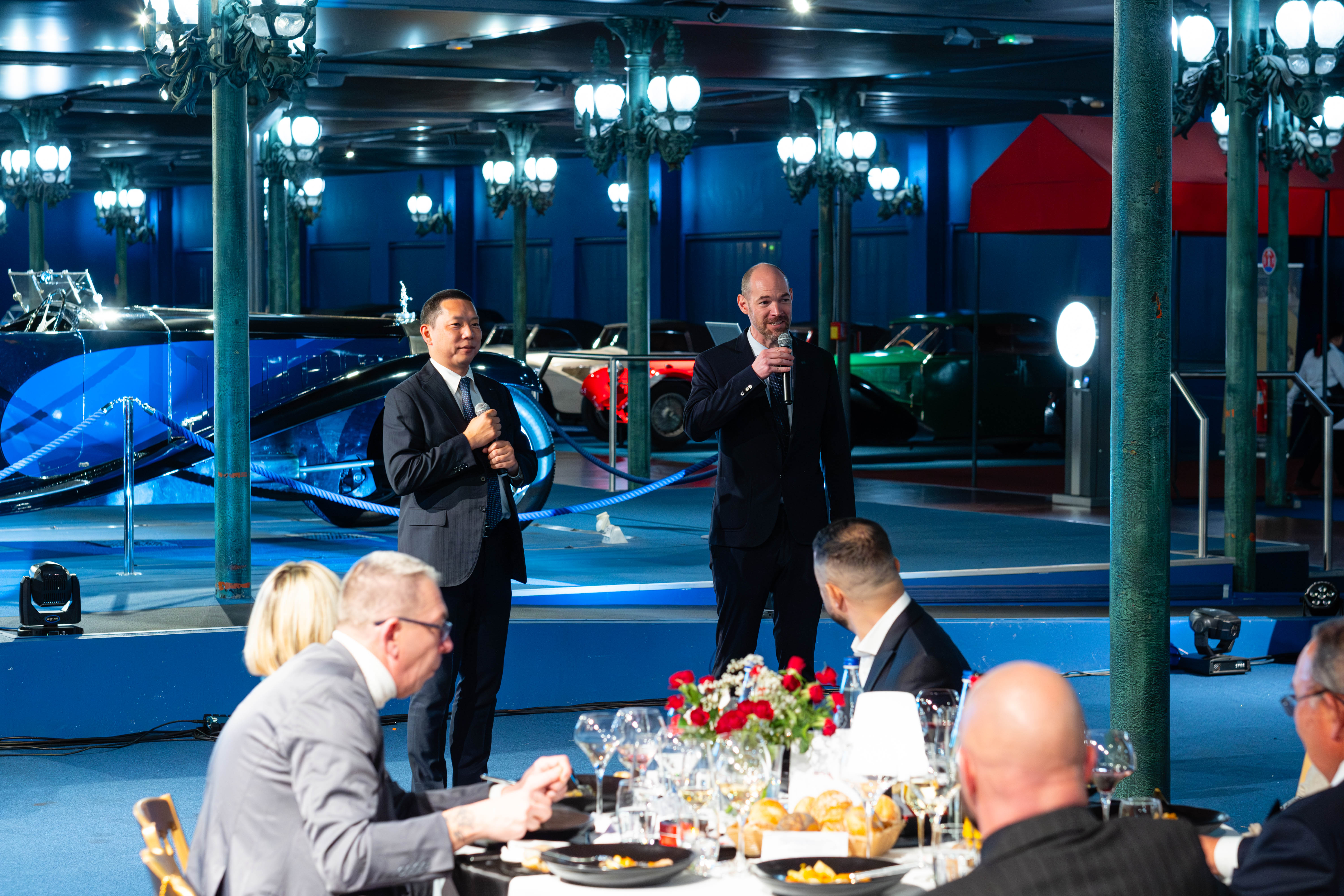
INNOV'events Antwerp Agency
Justin JACOB is the manager of the INNOV'events Antwerp office. Reach out directly by email at belgique@innov-events.be or via the contact form.
Contact the Antwerp agencyToutes nos prestations & animations Antwerp, Belgique
Découvrez nos prestations événementielles
Découvrez nos animations événementielles disponibles au Belgique
- Event Hostess in Antwerp
- Escape Game in Antwerp
- MasterChef Cooking Workshop in Antwerp
- Magician in Antwerp
- Marquee Rental in Antwerp
- Color Analysis Workshop in Antwerp
- Inflatable Games in Antwerp
- Valet Parking Service in Antwerp
- Football Simulator in Antwerp
- LED Furniture Rental in Antwerp
- Light Branding in Antwerp
- Unique Dining Experience in Antwerp
- Light Painting in Antwerp
- Murder Mystery Party in Antwerp
- Prize Contest in Antwerp
- Promotional Displays (POS) in Antwerp
- Virtual Reality in Antwerp
- Molecular Gastronomy Workshop in Antwerp
- Halloween Entertainment in Antwerp
- Fireworks Show in Antwerp
- Giant Games Challenge in Antwerp
- Event Host / MC in Antwerp
- Photo Booth Animation in Antwerp
- Santa Claus Entertainment in Antwerp
- Kids Entertainment in Antwerp
- Guided Tour in Antwerp
- Urban Rally in Antwerp
- Ball Pit in Antwerp
- Flight Simulator in Antwerp
- Food Truck Rental in Antwerp
- World Record Challenge in Antwerp
- Surf Simulator in Antwerp
- Wine Casino in Antwerp
- Makeover Workshop in Antwerp
- Perfume Creation Workshop in Antwerp
- Acting Workshop in Antwerp
- CSR Activities in Antwerp
- Archery in Antwerp
- Security Staff in Antwerp
- Wine Tasting in Antwerp
- Mime Performer in Antwerp
- TV Game Show in Antwerp
- Funfair in Antwerp
- Crisis Management Workshop in Antwerp
- Crisis Negotiation Workshop in Antwerp
- Arcade Games in Antwerp
- Indoor Skydiving Simulator in Antwerp
- Ski Simulator in Antwerp
- Racing Circuit Experience in Antwerp
- Introductory Flight Experience in Antwerp
- Tasting Experience in Antwerp
- Build Your Own Foosball Workshop in Antwerp
- 2CV Rally in Antwerp
- LEGO Challenge in Antwerp
- Casino Night in Antwerp
- Interpreter / Translator in Antwerp
- Promotional Giveaways in Antwerp
- Shuttle Transport in Antwerp