
CSR Activities in Antwerp that deliver real impact and team cohesion
INNOV'events is a Brussels-based event agency delivering CSR Activities for companies in Antwerp, typically from 20 to 800 participants. We handle partner selection, permits, safety, production, and on-site coordination so your teams can focus on the purpose—not the logistics.
Whether you need a half-day team action, a full company volunteering day, or a CSR sequence integrated into a conference, we build a plan that is operationally realistic, brand-safe, and easy to report to leadership.
Sommaire
In a corporate context, “entertainment” is not a party add-on; it is a mechanism to create attention, participation, and memory. In CSR Activities in Antwerp, the “engagement layer” must support the mission (community benefit, inclusion, environment) while staying compliant with your internal risk standards.
Organizations in Antwerp expect pragmatism: clear start/finish times, reliable partners, and no reputational risk. HR wants meaningful participation across profiles; Communications needs proof points and visuals that stand scrutiny; executives want a measurable output, not a nice story.
INNOV'events brings field experience across Belgium and a strong local network in Antwerp (venues, NGOs, suppliers, facilitators). We plan like operators: route sheets, contingency plans, safety briefings, and deliverables that your teams can use internally and externally.
Key figures that matter for Antwerp delivery
10+ years producing corporate events across Belgium, with CSR and purpose-led formats increasingly requested by HR and Comms.
Operational capacity from 20 to 800 participants, including multi-site deployment across Antwerp (e.g., port area + city center) with a single command structure.
A vetted network of local NGOs, social enterprises, and certified suppliers (catering, transport, AV, safety) to avoid “last-minute improvisation” on event day.
Standardized production tools: run-of-show, risk assessment checklists, briefing decks, signage plans, and impact reporting templates.
Who we support in Antwerp and the wider Antwerp province
We regularly work with international groups and Belgian companies active in Antwerp, especially around the port ecosystem, professional services, life sciences, and retail. In practice, CSR days are often initiated by HR (engagement), supported by Communications (reputation), and validated by Finance or Procurement (cost control). Our role is to align those stakeholders early so the project doesn’t stall after the first enthusiastic idea.
Several clients come back year after year because they need consistent delivery and predictable governance: the same level of safety standards, comparable reporting, and activities that can scale from one department to the entire site. We frequently build repeatable formats (e.g., “spring volunteering day” + “Q4 impact challenge”) that fit internal calendars in Antwerp and avoid peak operational periods for production and logistics teams.
On request, we share relevant, anonymized case examples and connect you with references where appropriate (depending on confidentiality and approvals). We are careful with brand association: in CSR Activities, credibility is lost quickly when claims are vague or partners are not properly validated.
 Besoin d’un devis rapide ?
Nous vous envoyons une première proposition sous 24h.
Why schedule CSR Activities in Antwerp for your leadership goals
In many companies, CSR is strong on paper but hard to translate into a shared experience. A well-designed CSR day turns “values” into visible behaviors: collaboration, accountability, and care for the local community. For leadership, it is also a controlled moment to demonstrate culture in a way employees can test in real conditions.
In Antwerp, where many teams work in operational environments (shift work, multi-site operations, strict safety rules), CSR formats must be realistic and inclusive. The right design ensures that office teams, field teams, and managers can all contribute without creating friction or exclusion.
Stronger cross-team collaboration: CSR tasks structured in small squads (6–10 people) force natural coordination beyond usual reporting lines. We often see “silent leaders” emerge during hands-on actions, which HR can leverage afterwards.
Employer branding with proof: Communications teams need content that is factual. We plan deliverables (before/after photos, short impact statements, partner quotes) that can be validated and used internally and externally without exaggeration.
Onboarding and retention: CSR days are effective to integrate new hires in Antwerp sites where social connection is difficult to build (hybrid teams, separate buildings, shift rotations). A shared mission accelerates belonging.
Management alignment: In practice, CSR initiatives often fail due to unclear decision rights. We run a short stakeholder alignment workshop (HR/Comms/HSE/Operations) to confirm scope, approval process, and non-negotiables.
Measurable outcomes: We design outputs that can be counted and reported (e.g., number of hygiene kits assembled, square meters cleaned, meals packed, training hours delivered) and we define what “credible impact” means with the partner.
The economic culture in Antwerp is pragmatic and performance-driven. When CSR is done well, it is not “soft”: it becomes a disciplined, well-managed project that employees respect—because it is as well executed as any operational initiative.
What Antwerp teams expect from a CSR day (and what they reject)
CSR projects in Antwerp are often judged by people used to robust operations: port logistics, industrial safety, strict planning, and measurable KPIs. That shapes expectations.
First expectation: operational discipline. If your teams arrive and the partner is not ready, materials are missing, or briefings are unclear, the initiative is perceived as “corporate theater.” We therefore confirm stock, set-up time, access rules, and safety responsibilities in writing. For outdoor actions near docks or busy urban areas, we define boundaries, supervision ratios, and weather alternatives.
Second expectation: real local relevance. People want to know who benefits in Antwerp: a neighborhood association, a social enterprise, a school, a community kitchen, a biodiversity project. We help you avoid the trap of generic causes disconnected from your employees’ reality. A strong local story increases participation without forcing it.
Third expectation: brand and compliance safety. Communications and Legal teams are cautious: claims must be accurate, images must respect consent, and partners must be reputable. We review partner governance, basic financial transparency (where possible), and ensure your messaging stays factual. If your company has HSE constraints, we integrate them like any other site activity: PPE policy, incident procedure, and emergency contacts.
Fourth expectation: inclusivity. In Antwerp, many organizations combine office roles with operational roles. CSR formats must accommodate physical limitations, language diversity, and time constraints. We propose parallel task stations (light/medium activity) and structured roles (team lead, quality check, logistics runner) to keep everyone involved.
Which CSR Activities work best in Antwerp for corporate teams
Engagement is not about noise; it is about structured participation. For CSR Activities in Antwerp, we design activities that keep teams active, safe, and aligned with your brand standards. Below are formats we deploy regularly, with practical notes that decision-makers care about: supervision needs, space requirements, and what can be measured.
Interactive animations in Antwerp
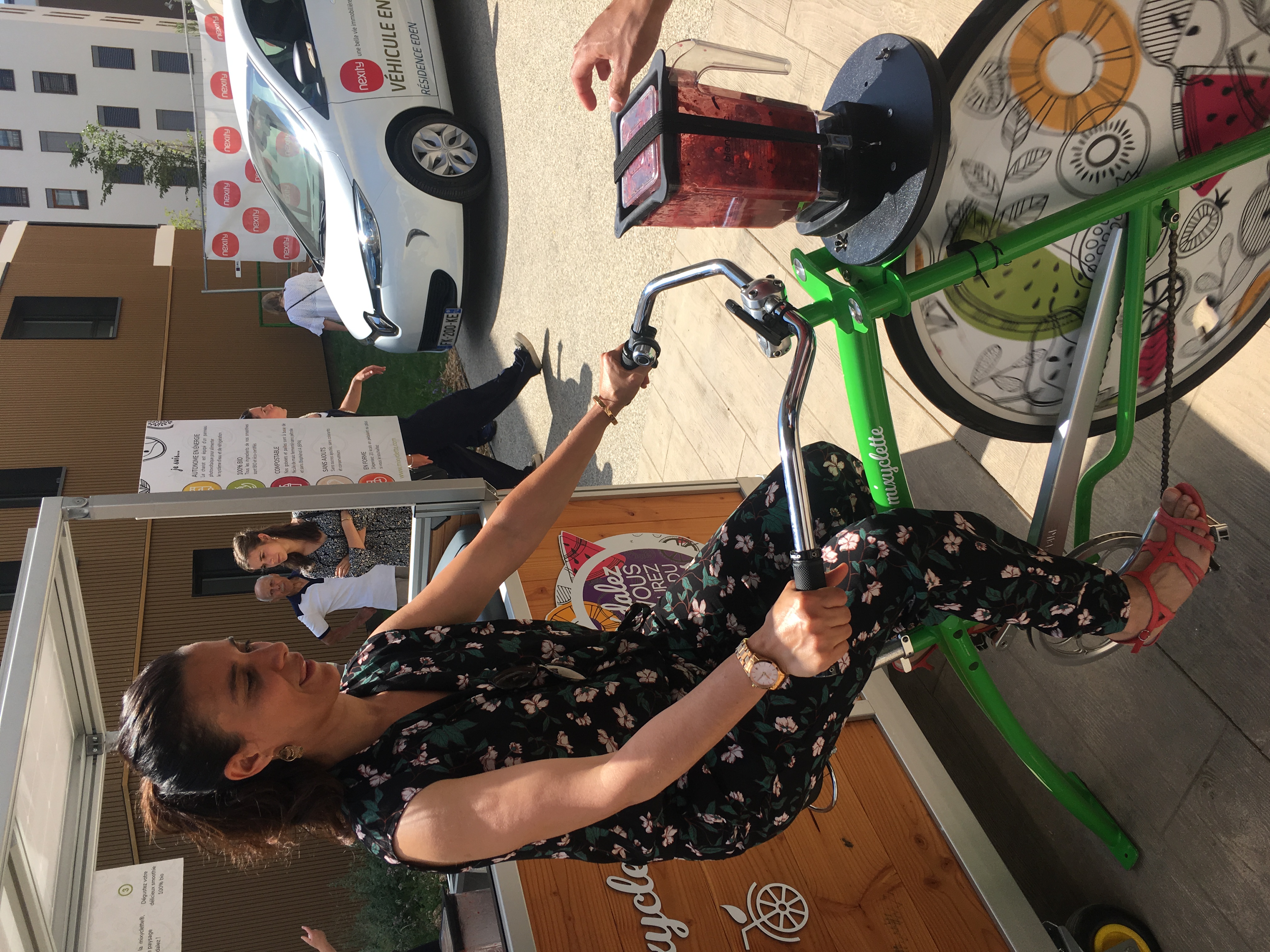
Impact build workshops (assembly lines with QA): teams assemble hygiene kits, school kits, or winter packs for local associations. We set up stations (packing, quality check, sealing, inventory) so the flow stays efficient. Measurable outputs are straightforward (e.g., 300–2,000 kits depending on time and participants). Works well in meeting rooms or warehouses in Antwerp with good loading access.
Skill-based micro-volunteering clinics: structured 30–45 minute sessions where employees support local jobseekers or social entrepreneurs (CV review, interview practice, LinkedIn basics, budgeting). This format suits professional services and HQ teams in Antwerp and requires careful matching and confidentiality rules.
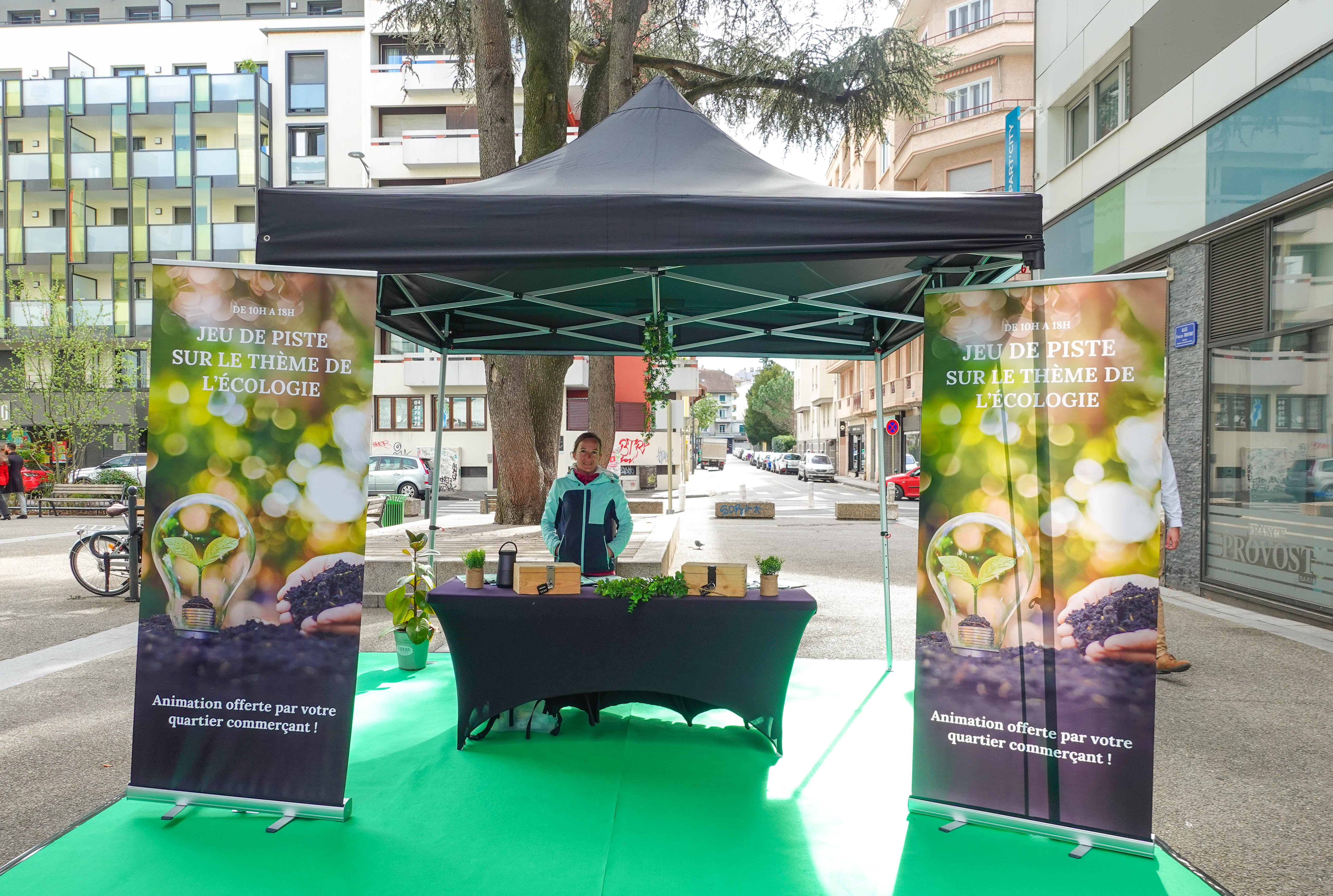
Responsible city challenge in Antwerp: a guided route with missions linked to local sustainability topics (circular economy, mobility, inclusion). We include brief partner interactions (social enterprise visit, local initiative) and ensure the content stays factual. A scoring system keeps energy high without turning it into a “game over purpose.”
Art animations in Antwerp
Community mural with a local association: teams contribute to a supervised mural or wall refresh at a community center. We handle permissions, design validation, and materials. This is brand-sensitive: we define what can appear (logos, slogans) and keep the message aligned with the host organization.
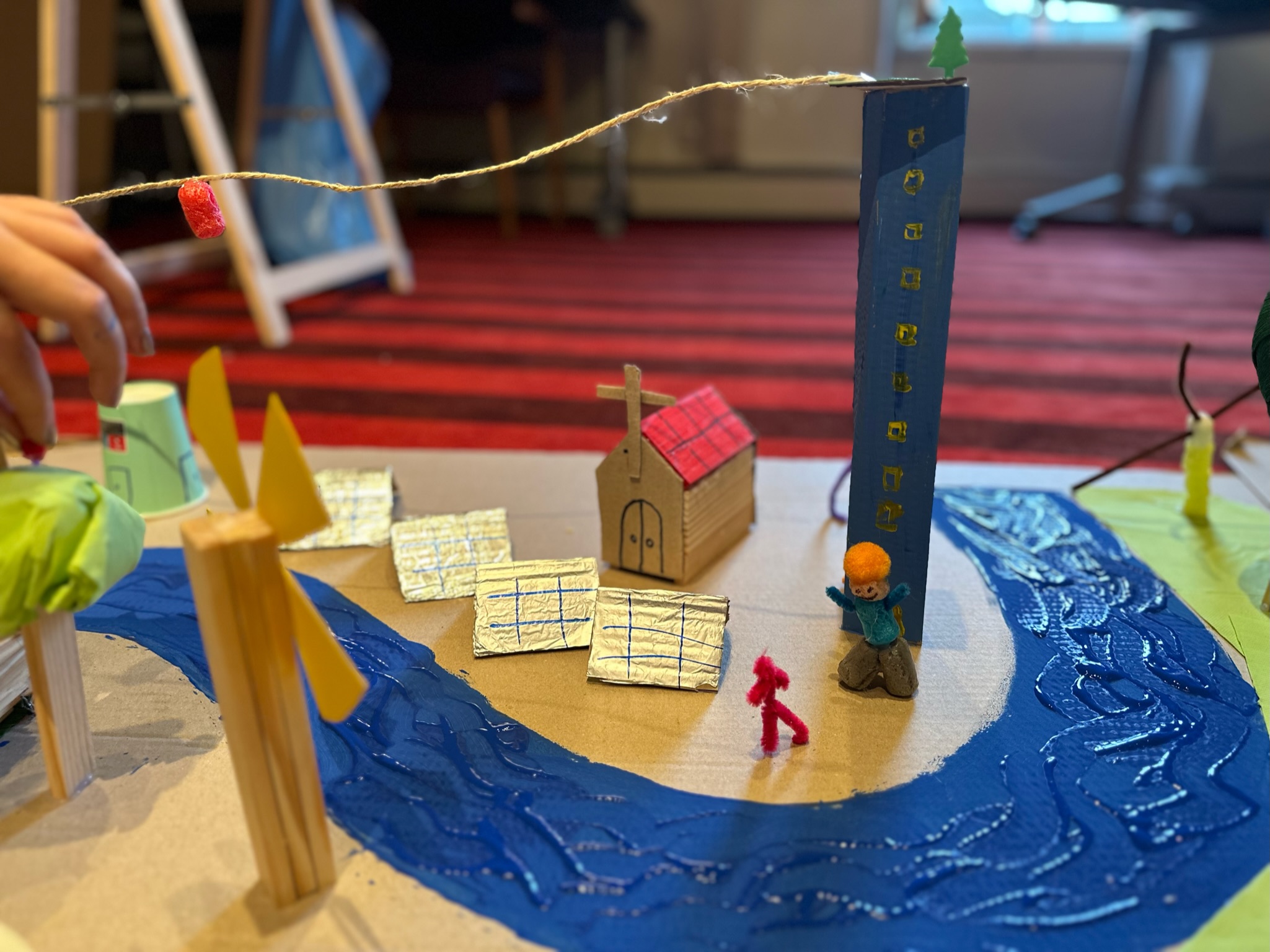
Upcycling workshop with a social enterprise: transforming recovered materials into useful items (e.g., tote bags, small furniture elements). In Antwerp, this links well to circular-economy narratives, but it needs solid facilitation and realistic output targets to avoid frustration.
Innovative animations in Antwerp
Meal packing with a local partner: efficient, inclusive, and easy to scale. We secure food safety requirements, gloves/hairnets, and ensure the partner can distribute quickly. Outputs are measurable (e.g., 500–5,000 meals depending on format). We also manage the optics: no staged “poverty tourism,” only respectful communication.
Solidarity cooking in a professional kitchen: teams cook with chefs and deliver to a community organization. This requires higher budgets and strict timing; we plan like a catering operation (mise en place, HACCP rules, delivery slots).
Gourmand animations in Antwerp
Carbon-smart logistics simulation (Antwerp port context): a facilitated workshop where teams redesign a supply chain scenario to reduce emissions and waste, then sponsor a local implementation partner. It is not “just a workshop”: we define learning objectives, bring real data ranges, and deliver an action memo your leadership can reuse.
Inclusive tech refurbishment drive: collection and refurb of laptops/phones with a certified social partner, including data wiping procedure and donation protocol. In Antwerp, this works well for companies with frequent device refresh cycles. We coordinate internal IT, chain-of-custody, and messaging to avoid security concerns.
Whatever the format, we ensure alignment with your brand image: what you do, what you claim, and what you show must match. In Antwerp, stakeholders are quick to challenge initiatives that look performative; we design your CSR Activities to withstand that scrutiny.
Where to host CSR Activities in Antwerp without logistical surprises
The venue is not a backdrop; it defines what is feasible, safe, and credible. In Antwerp, the best CSR locations are those that reduce transport complexity, allow clear supervision, and provide the right level of comfort for your audience (executives, mixed teams, or operational staff).
| Venue type | For which objective? | Main strengths | Possible constraints |
|---|---|---|---|
| Company site (office, warehouse, plant) in Antwerp | Max participation, minimal travel time, strict time windows | Highest attendance rates; easier shift planning; controlled safety environment; simple to integrate a leadership message | Requires internal approvals (HSE, security); space/loading constraints; needs careful separation from operational zones |
| Partner/NGO premises in Antwerp | Direct immersion and local legitimacy | Authentic context; direct interaction with beneficiaries/teams (where appropriate); strong internal storytelling with factual grounding | Limited capacity; accessibility and comfort vary; photo/consent rules; supervision must be confirmed |
| Neutral event venue in Antwerp (meeting center, industrial event space) | Large-scale assembly or multi-workshop CSR day | Good logistics (loading bays, power, breakout rooms); easy branding control; professional AV for kick-off and reporting | Higher rental cost; requires transport plan; less “on-the-ground” feel unless partner presence is built in |
| Outdoor public space in Antwerp (parks, riverbanks, neighborhoods) | Environmental action and visibility with local relevance | Strong team energy; tangible before/after results; easy to combine with a mobility/sustainability narrative | Weather risk; permits; waste handling; supervision ratios; requires robust safety briefings |
We strongly recommend a site visit or, at minimum, a technical call with photos and access details. Many “simple” CSR ideas fail because of small constraints: loading times, parking restrictions, limited toilets, or insufficient indoor backup in Antwerp.
What CSR Activities in Antwerp cost and how to budget correctly
Budgeting for CSR Activities in Antwerp is not about a single price per person. The cost depends on format complexity, partner capacity, supervision, transport, and the level of production you need (briefings, signage, reporting, photo/video). We build budgets that Procurement can validate and that your teams can actually execute.
As a working range, many CSR half-days in Antwerp land between €60 and €180 per person for 50–200 participants, depending on venue, materials, and facilitation. More complex or multi-site formats (with coaches, transport, or strict compliance requirements) typically fall between €180 and €350 per person. These are not “catalogue” prices; we confirm based on your constraints.
Partner model: donation-based vs service fee vs purchase of goods (kits/meals). We clarify what goes to the cause and what covers operational costs so your reporting is clean.
Participant volume and supervision ratio: hands-on activities often require 1 facilitator per 15–30 people depending on complexity and risk level.
Venue and logistics in Antwerp: transport (coaches, shuttles), parking, permits, loading access, and storage can move the budget significantly.
Safety and compliance: PPE, first-aid presence, extra signage, insurance requirements, and secure handling (e.g., IT refurbishment chain-of-custody).
Production level: leadership segment with AV, multi-language briefings, on-site branding, photography/video, and the depth of the impact report.
Timing: short lead times often increase supplier costs; we advise securing key partners 6–10 weeks ahead for mid-size groups, earlier for 300+.
ROI should be treated seriously: not as “PR value,” but as participation rate, internal sentiment, leadership visibility, and measurable outputs confirmed by the partner. We set those indicators upfront so your budget discussion is anchored in business outcomes.
Why a local event agency in Antwerp reduces CSR risk
CSR projects are exposed to a specific kind of risk: reputational, operational, and ethical. A local presence in Antwerp helps because it shortens decision loops and improves partner reliability. You benefit from people who know the practical realities: access constraints, supplier punctuality, and which partners can handle corporate volumes without compromising dignity or safety.
At INNOV'events, our Brussels team works hand-in-hand with local Antwerp resources to ensure the project is not designed “from a distance.” When you need quick re-routing because of weather, a last-minute shift change, or a venue constraint, local coordination is the difference between a controlled adaptation and visible confusion.
If you are comparing providers, ask how they validate partners, who is accountable on-site, and what happens in a disruption scenario. That is where experienced execution in Antwerp shows.
- Faster sourcing and realistic feasibility checks with Antwerp-based partners and venues.
- Better on-site responsiveness for transport adjustments, supplier delays, or safety-related changes.
- Stronger quality control through pre-visits and technical coordination with local stakeholders.
- More credible local impact storytelling, because partners and beneficiaries are rooted in Antwerp and can validate outputs.
ROI should be treated seriously: not as “PR value,” but as participation rate, internal sentiment, leadership visibility, and measurable outputs confirmed by the partner. We set those indicators upfront so your budget discussion is anchored in business outcomes.






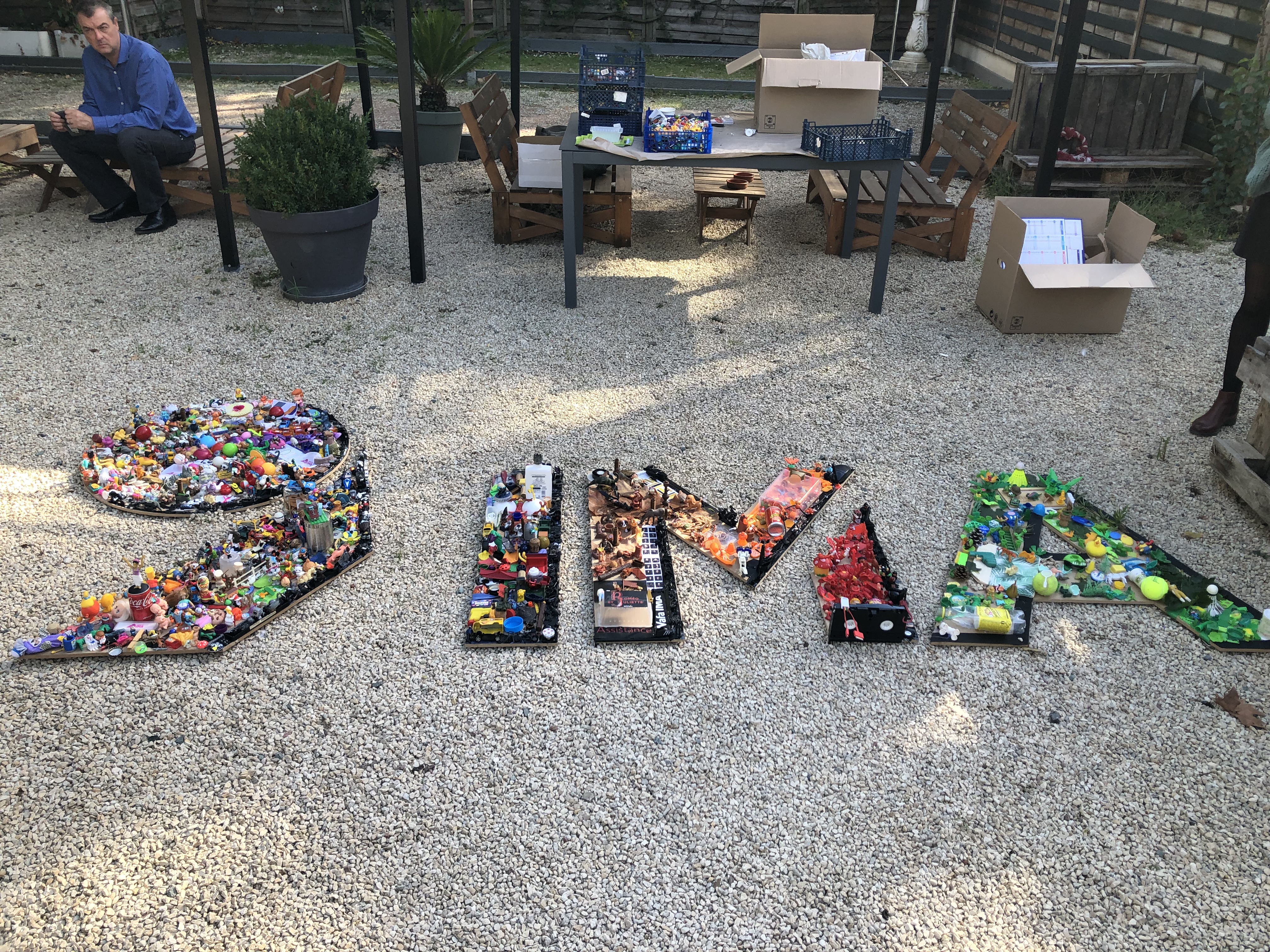
Examples of CSR Activities delivered around Antwerp
Our CSR projects in and around Antwerp typically fall into three categories, depending on your leadership objective.
1) High-participation, low-friction formats for sites with strict schedules: on-site assembly workshops, donation logistics, and meal packing. These work well when you need predictable timing and inclusive tasks. We plan the layout like a production line, with clear roles and a quality gate to avoid waste or rework.
2) Community-embedded formats for companies prioritizing local legitimacy: actions with neighborhood partners, social enterprises, or community kitchens. Here, success depends on respecting the partner’s operating rhythm. We limit group sizes per slot, brief participants on etiquette, and control what is communicated externally.
3) Learning + action hybrids for leadership teams: workshops connected to circular economy, supply chain emissions, or inclusion, followed by a concrete contribution (sponsoring materials, mentoring, refurbishment). Executives appreciate this because it links strategy to action and produces a short decision memo for next steps.
Across these scenarios, our added value is consistency: the same production discipline, the same governance, and documentation your HR and Comms teams can reuse. When the CEO asks “what did we actually achieve in Antwerp?”, you have an answer with numbers and partner validation.
Common mistakes with CSR Activities in Antwerp (and how we prevent them)
Choosing an NGO that cannot host corporate groups: the mission may be excellent, but the capacity is not there. We verify supervision, space, materials, and peak operational periods before confirming.
Underestimating Antwerp mobility and access: city traffic, limited parking, port-area constraints. We build transport and arrival waves, not a single “everyone comes at 09:00” plan.
Vague impact claims: communications that overstate outcomes can backfire internally and externally. We pre-define what is measurable and get partner confirmation.
One-size-fits-all activities: mixed teams need inclusive options. We design parallel tasks and roles so everyone can contribute without discomfort.
No contingency plan: weather, supplier delays, or lower attendance happen. We build backups (indoor option, alternate tasks, extra materials, revised flows) so the event remains controlled.
Poor on-site briefing: even a strong idea fails if instructions are unclear. We script the kick-off, assign team leads, and ensure facilitators are visible and trained.
Our role is not to “add creativity,” but to protect your project from predictable risks. A CSR day in Antwerp must be as professionally managed as any corporate operation—because your credibility is on the line.
Why Antwerp clients renew CSR Activities year after year
Repeat business in CSR is earned through reliability. Companies come back when the event is easy to approve internally, smooth to execute on the day, and produces a report that stands up to scrutiny. We treat renewal as a sign that the initiative has become part of your internal culture—not a one-off.
Most returning clients ask us to keep a consistent framework (governance, safety, reporting) while refreshing the content each year to avoid “CSR fatigue.”
For multi-department organizations in Antwerp, we often structure an annual plan with 2 to 4 moments (e.g., one volunteering day, one skills-based session, one collection drive), which improves participation and reduces planning stress.
Clients typically value predictable budgeting: we propose 2–3 validated options with clear trade-offs (impact depth vs participant volume vs production level).

Loyalty is the strongest proof in event production: it means the client trusted us again with their people, their brand, and their relationship with local partners in Antwerp.
Our CSR delivery process for Antwerp companies
👉 Step 1 (Antwerp): define constraints, stakeholders, and success metrics
We start with a short working session with HR, Communications, and the business owner (and HSE/Operations when relevant). We confirm non-negotiables (timing, safety rules, accessibility), define what “success” means (participation rate, measurable output, internal comms assets), and agree on decision rights.
👉 Step 2 (03): select partner(s) and validate feasibility
We propose a short list of partners and formats that fit your constraints. We validate capacity, supervision, materials, impact measurement, and photo/consent rules. If relevant, we check whether the partner can accommodate multilingual groups common in Antwerp-based organizations.
👉 Step 3 (Antwerp): design the participant journey and engagement mechanics
We design flows that keep groups active: team sizes, rotation plan, briefing scripts, roles, and leadership touchpoints (opening message, partner talk, closing). We pay special attention to inclusivity and practical comfort (what to wear, breaks, accessibility).
👉 Step 4 (03): produce and secure the logistics
We lock venue, transport, equipment, signage, and staffing. We deliver a run-of-show and an on-site coordination plan. This is also where we implement contingency plans (weather alternative, overflow handling, extra materials).
👉 Step 5 (Antwerp): on-site delivery and impact capture
Our team manages check-in, briefings, timekeeping, partner coordination, and incident management if needed. We capture validated impact numbers and ensure the partner confirms the output. If photo/video is planned, we manage consent and protect your brand standards.
👉 Step 6 (03): reporting and internal reuse
Within a defined timeframe (usually 3–7 working days), we deliver a concise impact recap: confirmed numbers, selected visuals, partner statement, and recommendations for next iterations. If you need to brief leadership, we provide a short slide-ready summary.
FAQ sur l'organisation CSR Activities à Antwerp
How far in advance should we book CSR Activities in Antwerp?
Plan 6–10 weeks ahead for 50–200 participants. For 300+ or multi-site formats in Antwerp, target 10–14 weeks. Shorter lead times are possible, but partner choice and venue availability become limited.
What budget range is realistic for CSR Activities in Antwerp?
Most half-day formats fall between €60–€180 per person for 50–200 people. More complex formats (multi-site logistics, high facilitation, strict compliance, photo/video) often land at €180–€350 per person. We provide 2–3 options with clear trade-offs.
Which CSR Activities in Antwerp work for mixed fitness levels?
Choose station-based formats: kit assembly with quality control, meal packing, tech refurbishment sorting, or skills-based mentoring. We design parallel tasks (light/medium) so 100% of participants can contribute without discomfort.
Can you integrate CSR into a conference day in Antwerp?
Yes. The most effective approach is a 60–120 minute CSR sequence (assembly or micro-volunteering) embedded between plenary moments. We handle room layout, timing, and impact capture so the conference agenda remains on track.
How do you ensure CSR claims are credible for Antwerp communications?
We define measurable outputs upfront, confirm them with the partner on-site, and avoid inflated equivalencies. We also manage photo/consent rules and provide a short factual recap (numbers, partner quote, context) that your Communications team can publish confidently.
Request a quote for CSR Activities in Antwerp
If you want CSR Activities in Antwerp that are operationally safe, locally credible, and easy to report, we can scope the project quickly. Share your participant range, preferred date window, time format (2 hours / half-day / full day), and any HSE or brand constraints.
We will respond with a structured proposal: recommended formats, partner options, a clear budget range, and a realistic timeline. For local coordination, you can also reach us via our event agency in Antwerp page to route your request to the right team.
Early planning gives you the best partner availability in Antwerp and avoids last-minute compromises that reduce impact.
INNOV'events Antwerp Agency
Justin JACOB is the manager of the INNOV'events Antwerp office. Reach out directly by email at belgique@innov-events.be or via the contact form.
Contact the Antwerp agencyToutes nos prestations & animations Antwerp, Belgique
Découvrez nos prestations événementielles
Découvrez nos animations événementielles disponibles au Belgique
- Event Hostess in Antwerp
- Escape Game in Antwerp
- MasterChef Cooking Workshop in Antwerp
- Magician in Antwerp
- Marquee Rental in Antwerp
- Color Analysis Workshop in Antwerp
- Inflatable Games in Antwerp
- Valet Parking Service in Antwerp
- Football Simulator in Antwerp
- LED Furniture Rental in Antwerp
- Light Branding in Antwerp
- Unique Dining Experience in Antwerp
- Light Painting in Antwerp
- Murder Mystery Party in Antwerp
- Prize Contest in Antwerp
- Promotional Displays (POS) in Antwerp
- Virtual Reality in Antwerp
- Molecular Gastronomy Workshop in Antwerp
- Halloween Entertainment in Antwerp
- Fireworks Show in Antwerp
- Giant Games Challenge in Antwerp
- Event Host / MC in Antwerp
- Photo Booth Animation in Antwerp
- Santa Claus Entertainment in Antwerp
- Kids Entertainment in Antwerp
- Guided Tour in Antwerp
- Urban Rally in Antwerp
- Ball Pit in Antwerp
- Flight Simulator in Antwerp
- Food Truck Rental in Antwerp
- World Record Challenge in Antwerp
- Surf Simulator in Antwerp
- Wine Casino in Antwerp
- Makeover Workshop in Antwerp
- Perfume Creation Workshop in Antwerp
- Acting Workshop in Antwerp
- CSR Activities in Antwerp
- Archery in Antwerp
- Security Staff in Antwerp
- Wine Tasting in Antwerp
- Mime Performer in Antwerp
- TV Game Show in Antwerp
- Funfair in Antwerp
- Crisis Management Workshop in Antwerp
- Crisis Negotiation Workshop in Antwerp
- Arcade Games in Antwerp
- Indoor Skydiving Simulator in Antwerp
- Ski Simulator in Antwerp
- Racing Circuit Experience in Antwerp
- Introductory Flight Experience in Antwerp
- Tasting Experience in Antwerp
- Build Your Own Foosball Workshop in Antwerp
- 2CV Rally in Antwerp
- LEGO Challenge in Antwerp
- Casino Night in Antwerp
- Interpreter / Translator in Antwerp
- Promotional Giveaways in Antwerp
- Shuttle Transport in Antwerp