
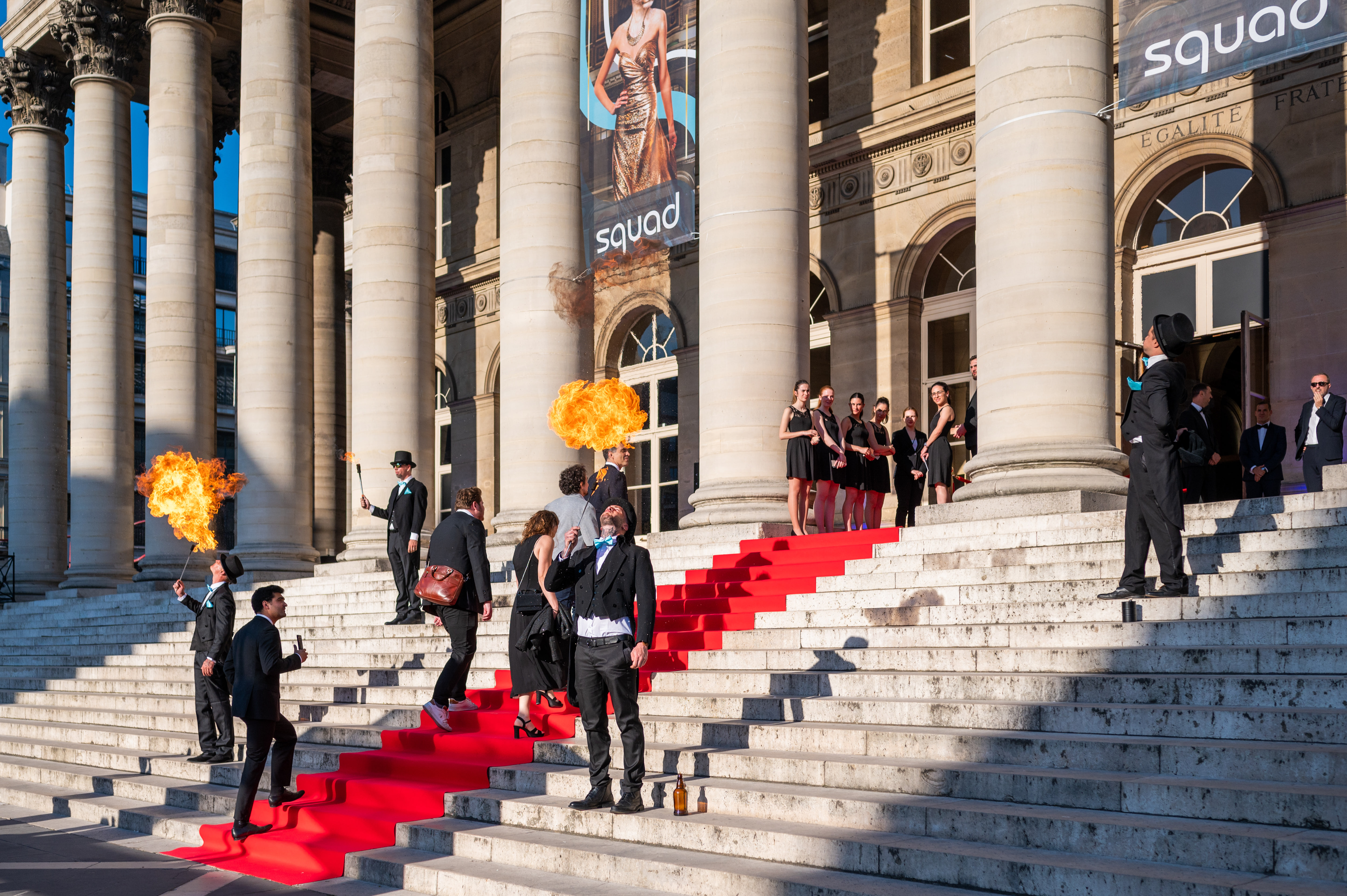
Event Security Guard in Antwerp for corporate events that cannot fail
INNOV'events secures corporate events in Antwerp from 30 to 3,000+ attendees, with a clear chain of command and measurable controls. We handle access control, backstage & VIP flows, incident prevention, liaison with venue teams and public services, and the operational briefing of all suppliers. Your executives keep focus on stakeholders while our security lead runs the floor.
Sommaire
In a corporate event, security is not a “nice-to-have”: it protects your people, your brand and your agenda. One uncontrolled entry, one bottleneck at check-in, or one supplier moving unbadged can turn a leadership moment into an operational incident.
Organizations in Antwerp expect discretion, fast decision-making, and zero friction for guests—especially when VIPs, media, or sensitive topics are involved. The security team must be visible where needed (entrances, crowd points) and invisible where it matters (C-level areas, private dining, press corners).
From our Brussels base, we work weekly in Antwerp and know the local venue realities, parking constraints, neighborhood regulations and supplier ecosystems. Our approach is field-driven: clear staffing plans, written post orders, test runs, and a single accountable security supervisor on site.
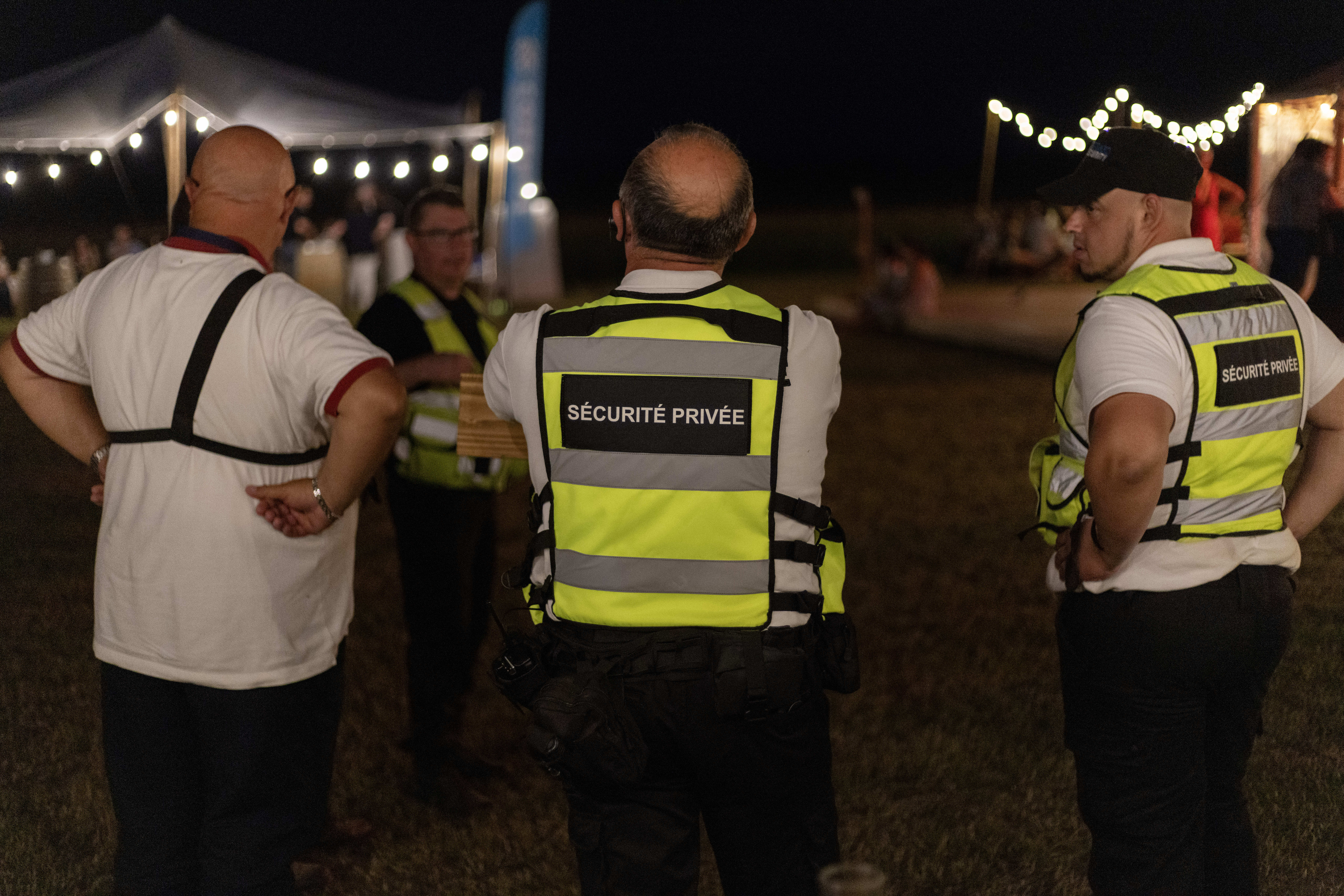
Security delivery in Antwerp backed by measurable operations
15+ years delivering corporate event operations across Belgium, with repeat assignments in Antwerp for internal communications, client events and executive offsites.
Typical deployment: 2 to 25 guards depending on venue, access points, VIP level and public exposure—always with a named on-site supervisor and written instructions.
24–72 hours is our realistic lead time for additional reinforcement in Antwerp when agendas change (extra guests, press attendance, higher risk profile).
Structured security files: risk assessment + access plan + staffing matrix + incident procedure shared with your HR/Comms contact before event day.
Corporate security support in Antwerp that teams renew year after year
We support companies and institutions active in Antwerp and its wider port-driven ecosystem, where events often combine stakeholder management, multilingual audiences and strict timings. Several clients renew because the same operational reflexes are applied every time: disciplined access control, reliable badge policy, supplier coordination, and calm incident handling.
You mentioned sharing client names as references; we can integrate them here exactly as provided and align wording with your internal approval rules. In practice, we frequently work with HR and Communication teams who need a security partner that understands corporate sensitivities: executive protection without “bodyguard theatre”, discreet handling of contentious attendees, and documented decisions for compliance.
Many of our Antwerp engagements repeat annually (kick-offs, partner days, employer branding evenings, year-end receptions) because security is treated as an operational process—not an add-on. The result is predictable: smoother guest flow, fewer last-minute escalations, and a clear single point of responsibility when pressure rises on event day.
 Besoin d’un devis rapide ?
Nous vous envoyons une première proposition sous 24h.
Why invest in an Event Security Guard in Antwerp for leadership events?
Executives rarely “feel” security when it is done well—yet they immediately feel the consequences when it is not. In Antwerp, many corporate events take place in high-traffic areas (city center, port-related locations, busy hospitality districts) and often mix internal and external audiences. That combination increases exposure: uninvited access attempts, privacy breaches, or simple crowd friction that damages the experience.
Protect people and duty of care: clear evacuation logic, trained response to medical issues, and prevention of aggressive behavior—especially important for HR when alcohol is served.
Protect confidentiality: controlled access to meeting rooms, stage/backstage discipline, and rules for photography/recording when strategy, financials or restructuring topics are discussed.
Safeguard brand and reputation: the right posture at entrances and VIP zones avoids scenes, arguments or visible “panic management” in front of guests.
Keep timings and agenda intact: a disciplined entry plan reduces queue time, prevents late seating, and keeps speakers on schedule—critical for C-level credibility.
Reduce operational load on internal teams: HR/Comms do not have to negotiate with vendors, redirect guests, or handle difficult attendees; the security supervisor owns these decisions.
Documented decisions for compliance: written post orders and incident logs support internal reporting if something happens (even if it’s “only” a near miss).
Antwerp is a results-oriented business environment: when stakeholders attend, the event must run with the same discipline as your operations. Security is the invisible framework that allows hospitality, content and networking to happen without risk or disruption.
What Antwerp-based organizations really expect from event security
In the Antwerp market, we see a recurring pattern: demanding guests, tight schedules, and venues that are excellent for atmosphere but complex for control (multiple doors, shared entrances, mixed public areas). Decision-makers want security that is firm without being confrontational, and structured without being bureaucratic.
Concrete local expectations we plan for:
- Fast, polite access flow in Dutch/English (often French as well), with guest list discipline and real-time problem solving (name not on list, plus-ones, last-minute VIP add-ons).
- Supplier management adapted to Antwerp logistics: loading bays with time windows, shared docks, and the reality that AV, catering and décor teams move in parallel. We control who enters where, and when.
- Discretion with high-visibility profiles: C-suite arrivals, board members, public figures, and sometimes sensitive union or community stakeholders. We plan arrival/departure routes, waiting points and buffer zones.
- Clear alcohol policy enforcement: not “moral policing”, but prevention of escalation—especially during receptions, award nights or after-party segments.
- Neighborhood and venue constraints: noise cut-offs, smoking zones, external queue management to avoid complaints, and coordination with venue security where applicable.
Most importantly: Antwerp clients want one responsible person who can make decisions quickly. We provide a security supervisor who coordinates the guards, briefs the venue, and keeps your internal contact informed with short, operational updates.
How to align security with corporate entertainment in Antwerp
Entertainment increases engagement, but it also changes the risk profile: crowd density shifts, alcohol consumption increases, and guest movement becomes less predictable. When we plan security for corporate event entertainment in Antwerp, we make sure the show enhances the event—without creating uncontrolled areas or bottlenecks.
Interactive animations in Antwerp
Badge + experience integration: when interactive stations (photo booth, VR, gaming corners) attract lines, we position staff to manage queue flow and prevent “line cutting” disputes. We also ensure equipment zones are protected from accidental damage.
Stage Q&A management: for town halls or leadership talks, we set microphone runner paths and define “no-access” lines to avoid guests stepping into technical zones or filming restricted content.
Art animations in Antwerp
Live acts and backstage discipline: performers bring additional crew, gear and changing needs. We control backstage access with a separate credential rule and keep emergency exits clear even when décor expands.
Sound and crowd energy: DJs or bands change crowd behavior. We plan visible presence at friction points (bar, exits, smoking area) rather than flooding the room.
Innovative animations in Antwerp
Open bar and tasting formats: we recommend service pacing and clear last-call procedures with catering. Security is briefed to de-escalate early and to protect staff if tensions rise.
Food flow: when stations create cross-traffic, we adjust circulation so that VIP/press areas remain calm and staff corridors remain functional.
Gourmand animations in Antwerp
Cashless and QR access: if you use QR invitations, we put redundancy in place (offline lists, manual verification rules) to avoid entrance paralysis if connectivity drops.
Hybrid elements: live streaming or recording requires perimeter rules around cameras and mixing desks. We protect the technical setup and enforce “no-camera” zones without confrontation.
Security should never fight your brand image. We align posture, dress code and guest interaction style with your corporate tone—discreet for executive dinners, more visible for public-facing launches—while keeping the same operational rigor in Antwerp.
Which Antwerp venue types make Event Security Guard planning easier?
The venue defines the security equation: number of entrances, shared public areas, loading access, and the realism of creating separate guest/staff flows. In Antwerp, many attractive locations were not designed for modern crowd logistics, so we plan the control points early—ideally during the site visit with your venue manager.
| Venue type | For which objective? | Main strengths | Possible constraints |
|---|---|---|---|
| Hotel conference & ballroom venues | Board meetings, town halls, client conferences | Professional reception infrastructure, controlled corridors, existing safety procedures | Shared entrances with other guests; loading schedules; limited space for queueing at peak arrival |
| Industrial/warehouse-style locations | Product launches, large staff events, brand experiences | Large volumes, flexible zoning, strong visual impact | Multiple access points to secure; temporary exits; higher need for signage, lighting, and perimeter control |
| Museum/cultural venues | VIP receptions, high-end partner evenings | Prestige factor, strong guest experience, clear room separation | Strict rules (equipment, catering, noise), sensitive assets requiring additional protection, limited backstage space |
We insist on a site visit in Antwerp when the setup is complex: we map doors, test radio coverage, validate emergency routes, and agree on who controls which keys and shutters. This is where most “event day surprises” are removed.
What does an Event Security Guard cost in Antwerp (2000) ?
Security pricing in Antwerp depends less on “hours” than on exposure and complexity: number of access points, VIP expectations, and how the venue is built. A low-risk internal meeting can be secured with a small team, while a high-visibility evening event with alcohol and multiple zones needs a structured deployment and supervision.
Headcount & profile: from a simple door team to a structure with supervisor, VIP liaison, backstage control and roaming presence.
Operating hours: including supplier move-in, guest arrival peak, main program, after-event dispersal, and load-out—many incidents happen during transitions.
Number of control points: main entrance, secondary door, VIP entrance, loading bay, backstage, parking access—each point changes the staffing matrix.
Risk profile: public visibility, press presence, sensitive topics, known tensions, alcohol intensity, and any cash handling.
Materials: barriers, stanchions, signage, radios, torches, and badge checks; sometimes additional lighting for exterior control.
Coordination level: liaison with venue security, building management, or public services where needed; plus documentation and reporting requirements.
Executives typically look at security as insurance. We frame it as operational ROI: fewer disruptions, protected stakeholder moments, and reduced internal workload. In Antwerp, where guest expectations are high and venues can be complex, the right security plan often saves money by preventing last-minute reinforcements, delays and supplier chaos.
Why use an event agency in Antwerp for security coordination?
Security does not operate in a vacuum. It must be coordinated with registration, catering, AV, venue management and the run-of-show. When an agency knows Antwerp operationally, decisions become faster: we understand typical loading constraints, neighborhood sensitivities, and how venues actually behave under peak arrival pressure.
When you work with INNOV'events, you also benefit from our broader event operations capability in the city. If you need a single partner to coordinate security with the rest of the event mechanics, you can rely on our local execution model via our event agency in Antwerp support.
- Shorter reaction time for reinforcement or plan changes: extra guests, a delayed VIP, a weather issue pushing people indoors.
- Venue-specific realism: we plan according to actual door usage, staff corridors, elevator capacity and fire exits—not a generic floor plan.
- Supplier discipline: Antwerp supplier ecosystems are efficient but busy; we enforce arrival slots and credential rules without slowing down build-up.
- Single operational ownership: one supervisor and one escalation path for your HR/Comms lead on event day.
Executives typically look at security as insurance. We frame it as operational ROI: fewer disruptions, protected stakeholder moments, and reduced internal workload. In Antwerp, where guest expectations are high and venues can be complex, the right security plan often saves money by preventing last-minute reinforcements, delays and supplier chaos.









What we secure in Antwerp: real corporate scenarios
Our Event Security Guard in Antwerp assignments cover very different realities, and the operational choices vary accordingly. For an internal town hall with 400 staff, the main risk is not “crime”—it is operational friction: queues that delay the start, unauthorized filming during sensitive segments, and crowding at exits during breaks. In that scenario, we focus on entrance pacing, clear signage, and discreet enforcement of no-camera zones, with a supervisor aligned to HR on escalation rules.
For client evenings with VIPs, the risk shifts to privacy and reputation: a guest who brings an unregistered plus-one, a contentious attendee who becomes disruptive after alcohol, or an influencer trying to record backstage. Here, we design a VIP arrival route, assign a dedicated VIP access point, and brief the team on polite but firm refusal scripts—so your executives never have to argue at the door.
For larger public-facing launches in Antwerp, crowd management becomes the core: we implement perimeter control, queue separation, and a clear plan for peak moments (doors opening, product reveal, end-of-event dispersal). We also protect technical areas (FOH, camera rigs, power) because a single accidental disconnection can stop your program more effectively than any protest.
Across these scenarios, the constant is structured preparation: written instructions, clear zoning, and decision-making on site that keeps the event moving.
Common security mistakes we prevent in Antwerp corporate events
No real access zoning: everyone ends up backstage “because they know someone”, which creates both safety and confidentiality issues.
Underestimating arrival peaks: two guards for 600 guests with QR checks creates queues, frustration, and a visible “mess” at the entrance.
Supplier doors left uncontrolled: the loading bay becomes the easiest entry route for unbadged people, especially during build-up.
Unclear escalation rules: internal teams hesitate to act, guards improvise, and incidents become public instead of being contained.
Ignoring dispersal: the end of the night (taxis, parking, smoking areas) is where tensions and accidents most often happen.
Mismatch of posture: overly aggressive security damages hospitality; overly passive security loses control. We define the tone in advance.
Our role is not only to place guards—it is to remove predictable failure points. In Antwerp, that means designing flow, documenting rules, and ensuring a calm, professional presence that protects your event without taking it over.
Why Antwerp clients keep the same security partner
Client loyalty in event security is usually earned in the moments you cannot rehearse: a VIP arrives early, a speaker requests privacy, a guest becomes aggressive, or a supplier misses the loading slot. Teams come back when they know the response will be controlled, documented, and discreet.
Repeat patterns we see with returning clients in Antwerp: a stable supervisor who knows the venue and the client’s internal culture, faster approvals because documentation is consistent, and fewer “last-minute surprises” because post-event debriefs translate into concrete improvements.
Operational indicators we track with clients: average queue time at first arrival wave, number of access exceptions handled without escalation, and incident count (including near misses). This gives HR/Comms something concrete to report internally.

Loyalty is the most reliable proof: when the same stakeholders attend year after year, you need a security team that becomes part of the event machine in Antwerp, not a variable you re-learn every time.
Our Event Security Guard process in Antwerp from brief to debrief
👉 Scope and risk framing in Antwerp
We start with a short call with your HR/Comms owner to map the event format, audience, VIP exposure, alcohol service, and any sensitivities. We confirm constraints specific to Antwerp: venue access points, neighborhood dynamics, and the timing of build-up and load-out.
👉 Site visit and access zoning in 2000
We walk the venue: entrances, emergency exits, backstage corridors, parking, smoking area, and loading dock. We define zones and badge logic, then translate this into a staffing matrix (who stands where, when, and why) with clear coverage during peaks.
👉 Operational file and supplier alignment in Antwerp
You receive a simple security file: risk assessment, access plan, post orders, and escalation rules. We align with catering, AV and reception so that supplier corridors and guest flows do not conflict. If needed, we plan barrier placement and queue layouts.
👉 Event-day execution with one chain of command in Antwerp
A named supervisor briefs the guards on-site and runs the operation via radio channels and a clear escalation ladder. We manage access exceptions, protect VIP areas, and coordinate with venue staff. Your internal lead gets short updates without operational overload.
👉 Debrief and improvements for the next Antwerp edition
Within days, we provide a concise debrief: what worked, what was adjusted live, and recommended improvements (entrance timing, staffing peaks, signage, badge rules). This is how recurring Antwerp events become smoother—and cheaper to run—over time.
FAQ sur l'organisation Event Security Guard à Antwerp
How many security guards do I need in Antwerp?
For corporate events in Antwerp, a common range is 2 to 12 guards. A 150-guest executive dinner may need 2–3 (entrance + roaming). A 800-person event with multiple zones often needs 8–12 (entrance team, backstage, VIP, loading bay, roaming) plus a supervisor.
Can you manage VIP arrivals discreetly in Antwerp venues?
Yes. We plan a separate route and timing window, assign one guard as VIP liaison, and keep a buffer zone near the entrance or lift. The goal in Antwerp is protection without spectacle: no crowd scenes, no shouting on radios, and a calm handover to your host.
What is the lead time to book security in Antwerp?
For standard corporate events in Antwerp, book ideally 3–6 weeks ahead to secure the right profiles and complete the site visit. For short-notice needs, we can often staff within 48–72 hours, but options are narrower and costs may increase.
Do you coordinate with venue security and local services in Antwerp?
Yes. We integrate with the venue’s own team (if present), align on doors/keys, emergency roles, and radio etiquette. If the risk profile requires it, we also prepare clear liaison points for local services in Antwerp—without overreacting or creating unnecessary visibility.
How do you prevent long queues at Antwerp event entrances?
We design the entrance as a process: pre-sorted guest lists, clear exception handling, sufficient scanners or manual check points, and a queue layout that avoids cross-traffic. For many Antwerp events, the difference is staffing the first 45 minutes properly—then scaling down once the wave is absorbed.
Request an Antwerp security plan and staffing quote
If you want a security setup that supports hospitality and protects your people without drama, we can build a clear proposal for your Antwerp event. Share your date, venue (or shortlist), expected headcount, and whether VIPs/press/alcohol are involved. We will come back with a staffing matrix, access zoning recommendations, and an actionable quote—so you can validate internally with confidence and avoid last-minute escalation on event week.
INNOV'events Antwerp Agency
Justin JACOB is the manager of the INNOV'events Antwerp office. Reach out directly by email at belgique@innov-events.be or via the contact form.
Contact the Antwerp agencyToutes nos prestations & animations Antwerp, Belgique
Découvrez nos prestations événementielles
Découvrez nos animations événementielles disponibles au Belgique
- Event Hostess in Antwerp
- Escape Game in Antwerp
- MasterChef Cooking Workshop in Antwerp
- Magician in Antwerp
- Marquee Rental in Antwerp
- Color Analysis Workshop in Antwerp
- Inflatable Games in Antwerp
- Valet Parking Service in Antwerp
- Football Simulator in Antwerp
- LED Furniture Rental in Antwerp
- Light Branding in Antwerp
- Unique Dining Experience in Antwerp
- Light Painting in Antwerp
- Murder Mystery Party in Antwerp
- Prize Contest in Antwerp
- Promotional Displays (POS) in Antwerp
- Virtual Reality in Antwerp
- Molecular Gastronomy Workshop in Antwerp
- Halloween Entertainment in Antwerp
- Fireworks Show in Antwerp
- Giant Games Challenge in Antwerp
- Event Host / MC in Antwerp
- Photo Booth Animation in Antwerp
- Santa Claus Entertainment in Antwerp
- Kids Entertainment in Antwerp
- Guided Tour in Antwerp
- Urban Rally in Antwerp
- Ball Pit in Antwerp
- Flight Simulator in Antwerp
- Food Truck Rental in Antwerp
- World Record Challenge in Antwerp
- Surf Simulator in Antwerp
- Wine Casino in Antwerp
- Makeover Workshop in Antwerp
- Perfume Creation Workshop in Antwerp
- Acting Workshop in Antwerp
- CSR Activities in Antwerp
- Archery in Antwerp
- Security Staff in Antwerp
- Wine Tasting in Antwerp
- Mime Performer in Antwerp
- TV Game Show in Antwerp
- Funfair in Antwerp
- Crisis Management Workshop in Antwerp
- Crisis Negotiation Workshop in Antwerp
- Arcade Games in Antwerp
- Indoor Skydiving Simulator in Antwerp
- Ski Simulator in Antwerp
- Racing Circuit Experience in Antwerp
- Introductory Flight Experience in Antwerp
- Tasting Experience in Antwerp
- Build Your Own Foosball Workshop in Antwerp
- 2CV Rally in Antwerp
- LEGO Challenge in Antwerp
- Casino Night in Antwerp
- Interpreter / Translator in Antwerp
- Promotional Giveaways in Antwerp
- Shuttle Transport in Antwerp