
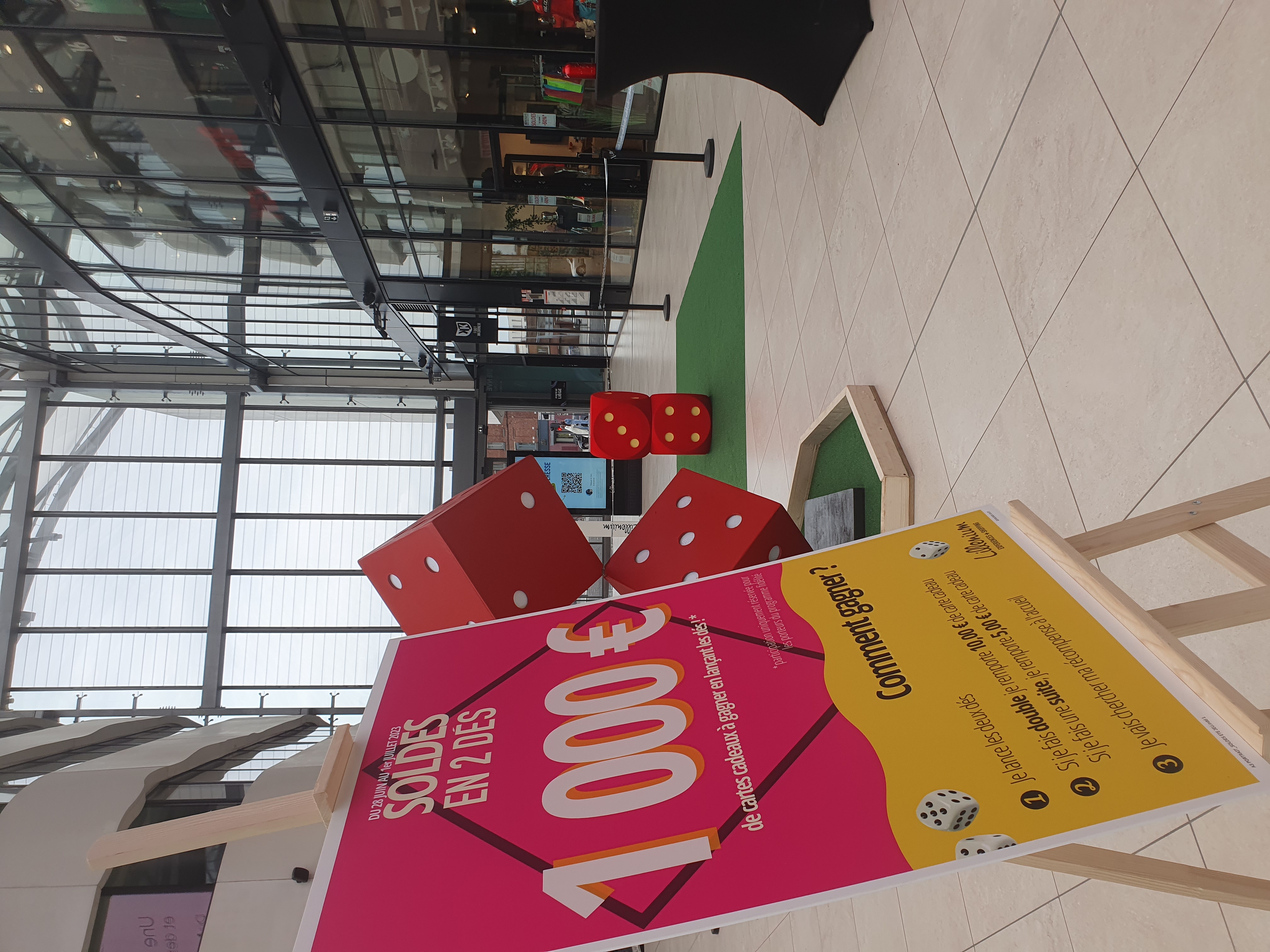
Shopping Mall Entertainment in Liege that drives traffic and protects operations
INNOV'events delivers Shopping Mall Entertainment for retailers and property teams in Liege, from 300 to 30,000+ visitors per day. We manage creative programming, technical production, compliance, and on-floor operations so your teams can stay focused on tenants and customer experience.
Whether your priority is footfall, dwell time, brand partnerships, or seasonal trade, we build entertainment that respects security rules, fire lanes, and commercial constraints—and we report on what happened, not just what looked good.
Table of contents
In a shopping centre, entertainment is not “nice to have”: it is a lever that changes traffic distribution, peak-time pressure, and conversion. Executives and mall management use it to support leasing value, tenant satisfaction, and calendar moments that matter (back-to-school, holiday trading, sales periods).
Organizations in Liege typically expect three things at once: visible impact without blocking circulation, zero incident tolerance (safety, child protection, crowd control), and clear collaboration with security, cleaning, and technical teams. If entertainment slows down trade or creates queues in the wrong place, the program is considered a failure.
From Brussels, INNOV'events operates on the ground in Liege with a production approach built for public venues: permitting, risk assessment, rehearsal discipline, and staff who know how to work alongside mall security and tenant teams. We plan like operators, not like stage promoters.
Liege-ready delivery, backed by proven volumes
15+ years in corporate and public-facing event delivery across Belgium, including high-footfall environments.
120–180 activations coordinated per year through our network (roadshows, retail campaigns, internal events, mixed public/private formats).
On complex days, we scale to 20–60 on-site staff (hosts, stage managers, technicians, security coordination) with a single chain of command.
Standard operating pack for malls: RAMS (risk assessment & method statement), signage plan, queueing plan, and incident log for your files.
How to organize a professional event in Liege?
- Define the objective (cohesion, announcement, fidelity, performance).
- Set date, format and size (20–1 000 people).
- Secure the venue and accommodation according to seasonality.
- Lock down technical, suppliers and logistics.
- Drive the day J (timing, scene, entrance, flow).
Who we support year after year in Liege
We regularly support organizations active in Liege and the wider province—property stakeholders, retail brands, and corporate teams that need entertainment with operational discipline. Several clients renew with us annually because they want continuity: the same production standards, the same documentation, and teams that already understand their constraints.
In practice, that continuity matters when you have tenant committees to brief, internal approvals to secure, and a fixed trading calendar. When a centre repeats a holiday program or a brand activation, we don’t start from scratch: we re-use what is validated (layouts, power requirements, safety perimeter), then optimize based on last year’s KPIs (queue length, engagement rate, sales uplift windows).
Share the names of the companies you want us to mention as local references, and we will integrate them here in a compliant way (logo/permission if needed, and wording aligned with your communication policy).
We send you a first proposal within 24h.
What Liege executives expect from shopping mall entertainment
For leadership teams and mall management, Shopping Mall Entertainment in Liege is a controlled investment. The goal is not “a show”; it is a program that protects trading while improving footfall quality, tenant confidence, and brand perception—without creating operational debt for your teams.
Footfall steering, not just footfall growth: we use entertainment to pull visitors toward under-visited wings, new tenants, or service zones (click & collect, food court) by placing “anchors” at the right nodes and setting time slots that distribute peaks.
Tenant alignment and reduced friction: we build programming with a tenant impact map (noise, sightlines, delivery access). This prevents the classic scenario where one flagship loves the activation while others file complaints.
Brand-safe public engagement: in a mall, families and minors are a core audience. We plan safeguarding rules (photo policy, wristbands where relevant, staff ratios) so your comms team is comfortable pushing the content.
Stronger partner value: if you work with banks, telecoms, or local institutions, entertainment provides an activation platform with clear deliverables (stage mentions, booth dwell time, data capture rules aligned with consent).
Operational predictability: a professional run-of-show, pre-briefs, and radio protocol reduce last-minute calls to your facility team and keep security in control.
Measurable outcomes: we define KPIs that a director can defend: target dwell time range, queue cap, engagement-to-sales window, and tenant feedback score.
Liege has a pragmatic business culture: results are expected, and stakeholders want proof. Our approach is built for that reality—clear objectives, controlled execution, and reporting that helps you justify the budget internally.
How Liege’s retail realities shape your entertainment plan
Entertainment in a shopping centre is always constrained by the site’s trading rhythm. In Liege, you often manage a mixed audience: local regulars, families, cross-border visitors, and peak surges tied to weather and weekend mobility. That means a program must be resilient: it cannot rely on one big “gathering moment” that blocks corridors.
We typically see three local constraints that must be designed into the plan from day one:
- Circulation and fire lanes: malls in the area are strict on clear widths, emergency exits, and access to technical rooms. A “beautiful” set-up that reduces corridor width by 30–50 cm can trigger a hard stop on site.
- Noise management: food courts and open atriums create echo. Without measured sound checks and speaker orientation, tenants will complain within 15 minutes—especially wellness, service, and premium retail. We plan decibel targets and quiet windows.
- Security posture: after any incident in Europe, centres tighten protocols. Your entertainment must fit into existing CCTV coverage, guard routes, and incident escalation procedures. We integrate with the security supervisor rather than trying to replace their rules.
Finally, local stakeholders often want community relevance. That does not mean “folklore”; it means using local talent responsibly, partnering with credible associations, and avoiding anything that could be interpreted as careless in a public family setting.
Which entertainment formats work best in Liege shopping centres
Entertainment creates engagement when it respects the mall’s primary mission: trading. We favour formats that are modular (easy to scale up/down), repeatable (multiple short sessions instead of one long crowd build-up), and operationally clean (quick reset, low mess, predictable staffing).
Interactive animations in Liege
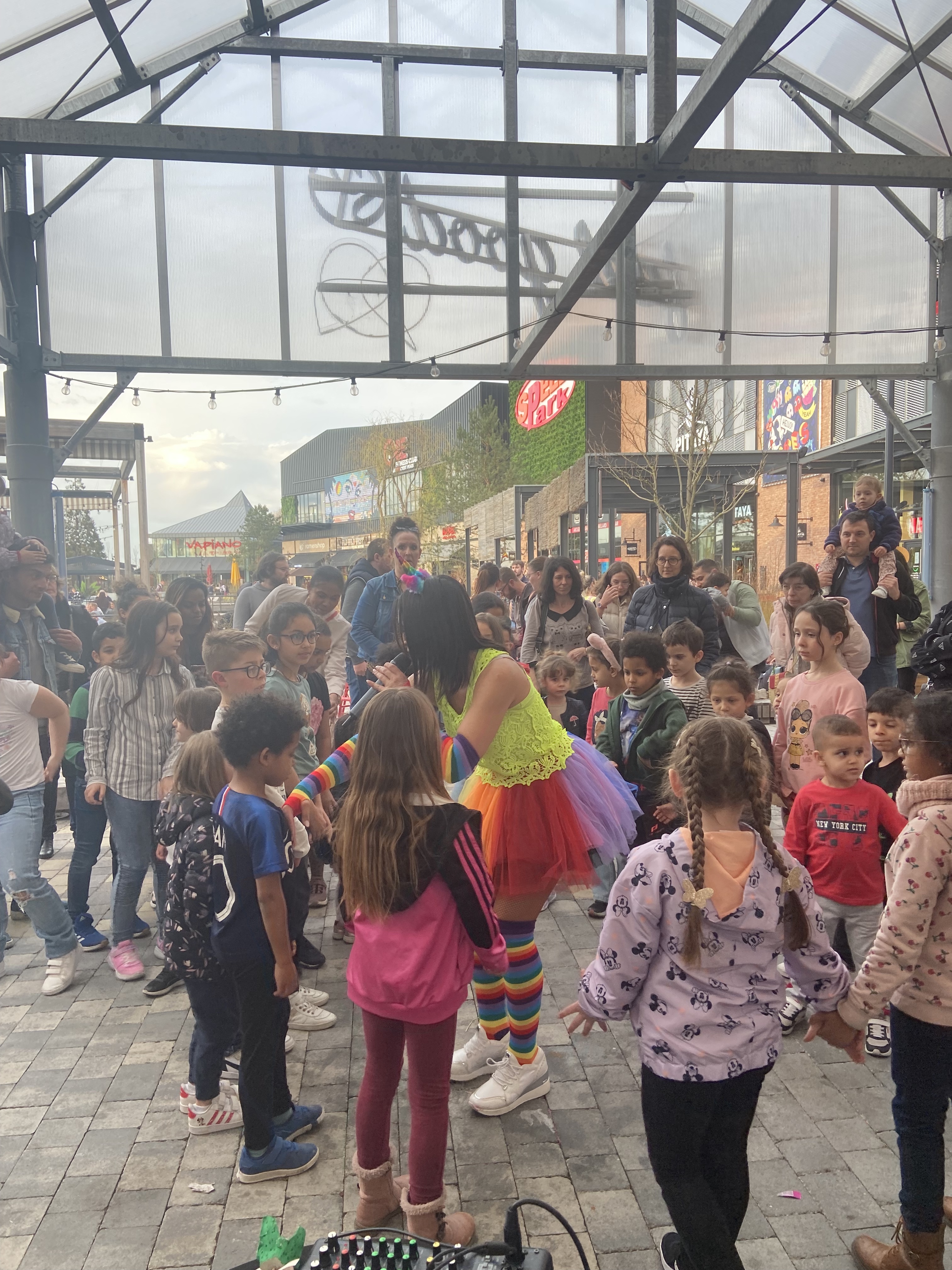
Hosted challenge stations (5–7 minutes per participant): reaction games, memory walls, or sports micro-challenges with instant scoring. Good for dwell time and sponsor integration. We cap queues (e.g., 20–30 people) and offer timed entry to avoid corridor spillover.
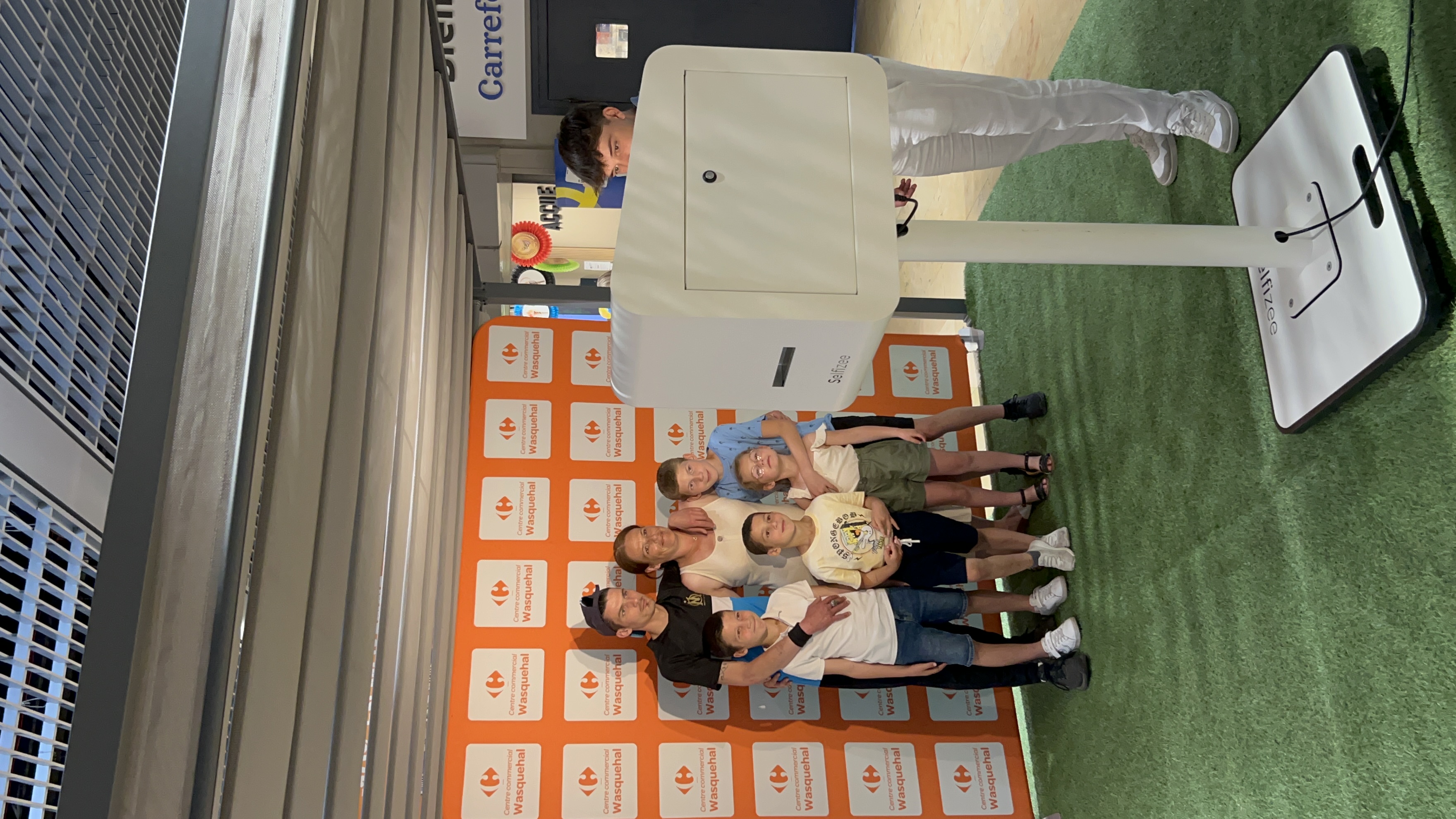
Photo-friendly but controlled content corners: branded sets with professional lighting and a host managing flow. Deliverables are clear for comms teams: pre-approved framing, consent signage, and a defined process for sharing content.
Family workshop loops: short craft or STEM micro-workshops run in 20–25 minute waves, with cleaning protocols and a defined material list. This avoids the “open table chaos” that overwhelms staff.
Tenant-linked treasure routes: a mapped trail that pushes visitors to specific stores for stamps or QR check-ins. We align with tenant willingness and avoid forcing high-end boutiques into participation they don’t want.
Art animations in Liege
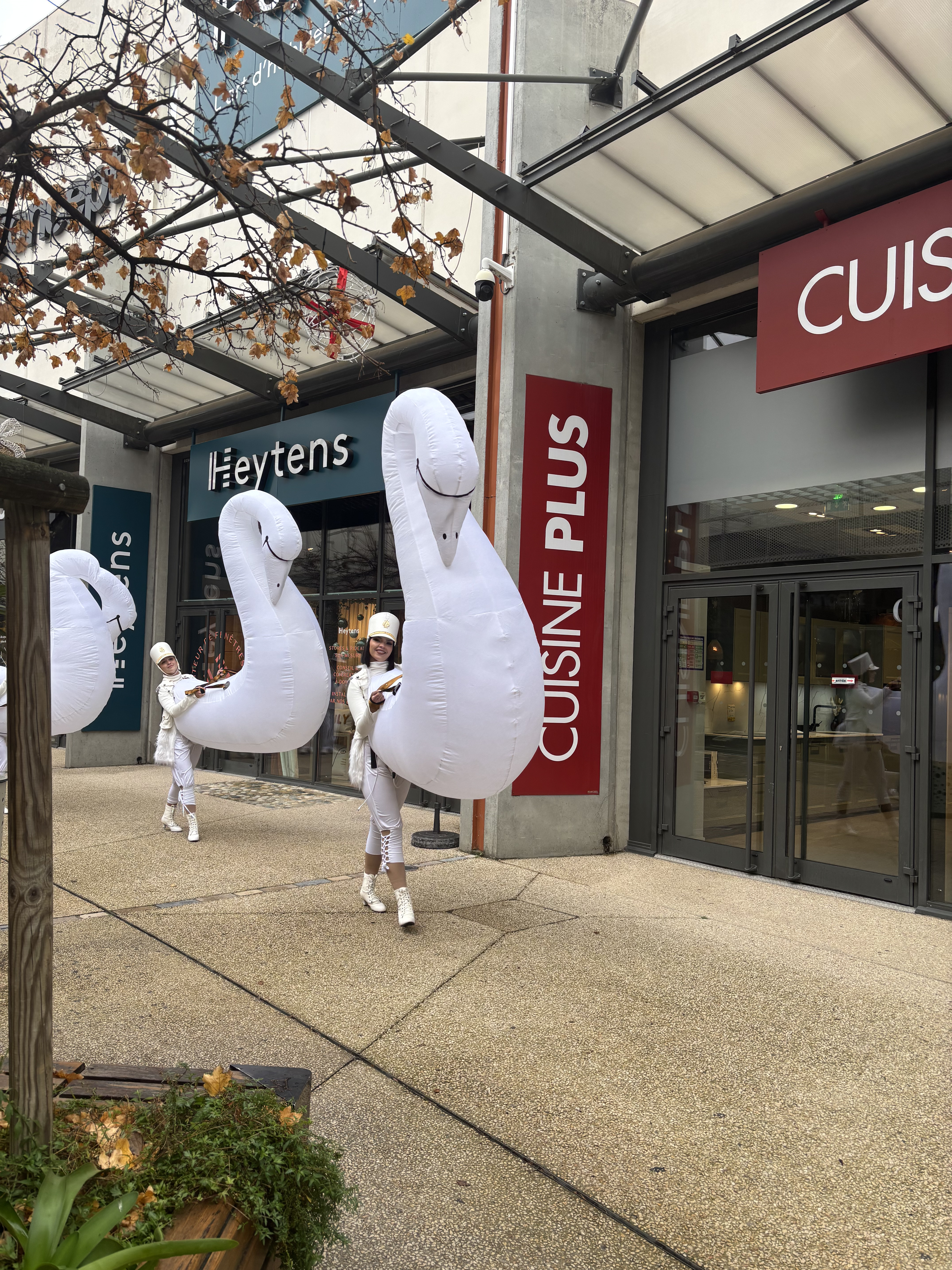
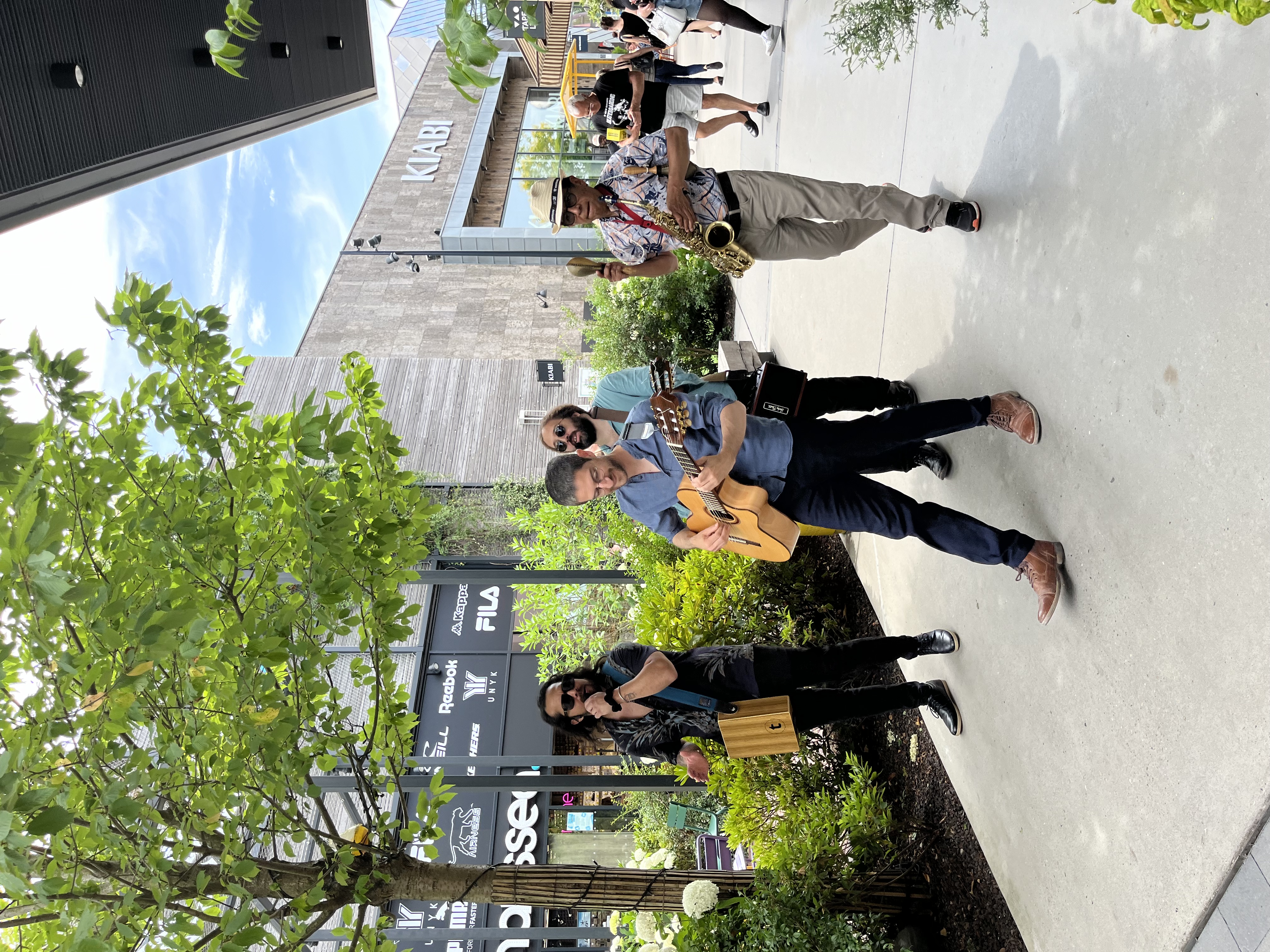
Acoustic roaming acts: duos, small ensembles, or character performers that can move without amplifying sound. Useful when you want atmosphere without stopping traffic.
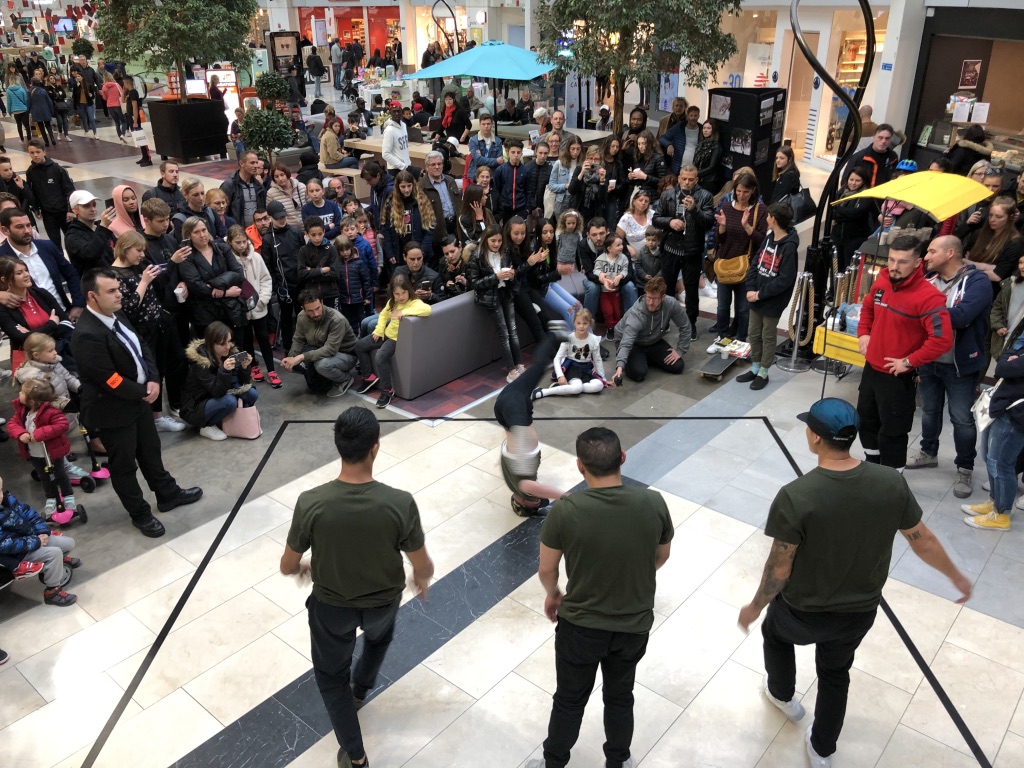
Short-form stage moments: 12–18 minute sets with clear start/stop times, built to avoid long standing crowds. We can include bilingual hosting where needed for Liege audiences.
Visual performance with low technical footprint: juggling, mime, or LED props. These formats often deliver high attention while keeping noise and rigging simple.
Innovative animations in Liege
Tasting bars with strict hygiene and waste control: portioned samples, closed-lid bins, and staff scripts for allergens. We coordinate with centre cleaning and define “no food beyond this point” lines where necessary.
Seasonal product theatres: short chef demos or mocktail bars designed for quick turnover. We plan extraction constraints and avoid smoke/odours that can trigger tenant complaints.
Local-producer spotlights: curated stands that bring credibility (not a random market). In Liege, this works when selection is disciplined and fits the centre’s positioning.
Gourmand animations in Liege
AR wayfinding mini-games: visitors scan markers across the centre to unlock content. This drives circulation without building a stationary crowd, and data capture can be implemented with consent-first flows.
Quiet tech experiences: VR seated pods or interactive tables with headphones to manage sound. We design staffing so devices are sanitized and supervised, avoiding the typical “broken headset after 2 hours” issue.
Live content production: a small studio corner that records short interviews with tenants or partners. It creates usable comms assets while the activation runs—provided release forms and moderation are planned.
Whatever the format, alignment with your brand image is non-negotiable. We translate brand guidelines into operational rules: acceptable language for hosts, wardrobe, music style, photo angles, and how staff handle sensitive situations. That’s how entertainment supports reputation rather than risking it.
Where to place entertainment in Liege for maximum impact
In a shopping centre, the “venue” is often an atrium, a corridor node, a food court edge, or an external forecourt. The choice directly affects perceived professionalism: if the set-up looks squeezed, noisy, or unsafe, visitors assume the centre is cutting corners. We select the zone based on footfall patterns, ceiling height, power access, and your security team’s ability to monitor the area.
| Venue type | For which objective? | Main strengths | Possible constraints |
|---|---|---|---|
Atrium or central plaza (inside) | High visibility launches, seasonal hubs, partner events | Natural gathering point, strong sightlines for branding, easier to brief security and cleaning on one zone | Echo/noise risk, crowd build-up must be capped, rigging and ceiling height rules vary |
Corridor node near anchor tenants | Traffic steering, supporting a new tenant or under-visited wing | Creates movement, helps distribute visitors, good for modular activations | Strict circulation widths, higher risk of queue spillover, tenant sensitivity to obstruction |
Food court edge | Increase dwell time during lunch peaks, family programming | Audience already seated, high dwell potential, easier to deliver short repeated moments | Cleaning coordination critical, odours/sound can irritate nearby tenants, waste management must be planned |
We strongly recommend a site visit in Liege before finalizing the concept. Ten minutes on the floor with your facility lead usually reveals the real constraints: which power points are reliable, where deliveries must pass, what the CCTV coverage looks like, and which zones trigger tenant complaints.
What shopping mall entertainment costs in Liege (and what drives it)
Budgeting for Shopping Mall Entertainment in Liege depends on scope and risk, not just “the idea”. A mall activation is closer to live operations than to a one-off stage show: staffing, safety, and timing drive cost. We provide structured quotes with clear options so you can arbitrate internally.
Format and staffing ratio: roaming acts may require 2–4 people; interactive zones with queue management often need 6–15 including hosts and supervisors.
Technical footprint: sound reinforcement, lighting, truss, LED screens, or special power distribution increases both equipment and labour hours (install, tests, strike).
Duration and repetition: a 4-hour activation is not half the cost of an 8-hour day if you still need full set-up, breaks, and peak coverage.
Compliance and security needs: depending on the site, you may need additional guards, barriers, first-aid presence, or stricter documentation.
Timing constraints: night installs, early access, or split shifts increase labour cost but can protect trading hours.
Content and IP: custom scenography, branded props, music licensing, or character rights can materially change the quote.
Reporting deliverables: if you want footfall counters, heat mapping, survey staff, or tenant feedback collection, we scope it explicitly.
We frame ROI in operational terms: incremental visits during target windows, dwell time lift, tenant satisfaction, and partner value. For many centres, preventing one poorly executed day (complaints, blocked access, negative social content) is already a measurable return compared to cutting production corners.
When a Liege-based partner is the safer choice
In shopping centres, locality is not about kilometres—it’s about execution speed and stakeholder access. A partner that operates comfortably in Liege can do early site checks, coordinate with your security supervisor, and react quickly if the centre changes a rule or zone allocation.
As INNOV'events, we combine Brussels-level production standards with real on-the-ground delivery in the region. If you need broader support beyond this activation, you can also rely on our dedicated page for event agency in Liege capabilities, which covers adjacent formats (internal corporate events, public activations, brand roadshows).
- Faster on-site decision-making: when a corridor must stay open or a tenant requests a last-minute adjustment, we can adapt without breaking the run-of-show.
- Supplier reliability: local technical and staffing resources reduce the risk of late arrivals and missed set-up windows.
- Better stakeholder management: we’re used to working with mall directors, facility managers, and security leads in the same room—so approvals are practical, not theoretical.
- Continuity across dates: seasonal calendars often require multiple weekends. Local coverage keeps quality consistent across all days, not just day one.
We frame ROI in operational terms: incremental visits during target windows, dwell time lift, tenant satisfaction, and partner value. For many centres, preventing one poorly executed day (complaints, blocked access, negative social content) is already a measurable return compared to cutting production corners.






Examples of Liege-style activations we deliver under pressure
Our projects range from compact, low-disruption formats to multi-zone programs with partners and stage content. What they have in common is an operational backbone designed to protect trading and reputation.
Typical scenarios we handle (because they happen in real centres):
- Seasonal campaign with strict trading constraints: install limited to early morning, silent set-up near premium tenants, and a requirement to keep two emergency routes fully open. We deliver a modular set that can be reset in 10–15 minutes between waves.
- Brand partnership weekend: a sponsor wants visibility, the centre wants family engagement, and tenants want traffic. We design a zoning plan: sponsor hub in the atrium, roaming content to avoid crowd saturation, and a tenant trail to distribute value.
- High-footfall day with risk of queues: we implement timed entry, clear queue caps, and a “close the line” protocol so security never has to improvise. We also plan a secondary activity to redirect visitors when the main station reaches capacity.
- Comms-driven activation: when your communication team needs usable content, we plan controlled photo points, consent signage, and a shot list so the day produces assets without disrupting operations.
If you share your centre profile and objectives, we’ll propose a program that fits your building and your governance—rather than forcing a template.
Common pitfalls in Liege mall entertainment (and how we prevent them)
Underestimating queue behaviour: a queue that seems “manageable” becomes a corridor blockage in minutes. We plan barriers, caps, and a visible host who controls pace.
Sound that irritates tenants: we do sound checks with decibel targets and speaker orientation, and we schedule quiet windows where needed.
Vague responsibilities: when something goes wrong, teams lose time debating who owns the decision. We document roles: mall security, our stage manager, facility contact, and escalation steps.
Concept-first, building-second thinking: beautiful concepts fail when power, storage, or rigging is not feasible. We confirm technical feasibility before locking creative.
Insufficient safeguarding for minors: family activations require clear rules (photo consent, staff behaviour, lost child protocol). We bring procedures that protect your brand.
Mess and cleaning overload: glitter, confetti, open food prep—these create tension with operations. We design low-mess formats, provide floor protection where needed, and coordinate with cleaning shifts.
Our role is to remove these risks before the first visitor arrives. That is what executives pay for: fewer surprises, faster decisions, and a day that runs like a controlled operation.
Why Liege clients renew with INNOV'events
Renewals happen when an agency makes life easier for internal teams. In malls and corporate environments, the best compliment is not “it was fun”; it’s “nothing went wrong, tenants were happy, and we have proof of impact”. That’s what we aim to deliver in Liege.
70–85% of our recurring programs (seasonal or multi-date) are renewed when we are involved from the early scoping stage, because we build reusable documentation and stable staffing.
On multi-day activations, we target a <10 minutes average reset time between waves to keep floor rhythm predictable.
For interactive zones, we typically design for 60–180 participant interactions per hour depending on complexity, to avoid long lines and frustration.

Loyalty is the most credible proof in our industry: it means we delivered under real constraints, protected reputations, and gave decision-makers a process they can rely on next time.
Our Liege delivery process from brief to reporting
👉 Liege brief alignment and constraints check
We start with a structured call or on-site walkthrough to confirm your objectives (traffic steering, seasonal trade, partner value), your non-negotiables (noise limits, restricted zones), and your approval path (mall director, security chief, tenant committee). We capture constraints that typically get missed: delivery hours, storage, power locations, and “no-go” tenant sensitivities.
👉 Concept proposal with operational options
You receive 2–3 program options with different operational footprints (light, standard, premium). Each option includes a zoning plan, staffing plan, technical list, and a clear visitor-flow approach. We highlight trade-offs so you can choose knowingly (e.g., higher engagement vs. lower queue risk).
👉 Compliance pack and stakeholder coordination in Liege
We deliver RAMS, insurance documents, artist contracts, and safeguarding notes where relevant. We align with your security team on barrier placement, emergency access, radio channels, and incident escalation. If tenants are impacted, we provide a simple tenant note: times, noise expectations, and contact point on the day.
👉 Production build, rehearsals, and run-of-show control
We schedule install and tests to minimize disruption, with clear sign-off moments (layout, sound, safety perimeter). On the day, our stage manager runs the clock, hosts follow scripts, and technicians handle fixes without pulling your team into problem-solving. We keep an incident log and decision trail for accountability.
👉 Post-event reporting and next-step optimisation
Within a defined timeframe (often 3–5 business days), we provide a concise report: what ran, volumes (estimated interactions, queue peaks), observations from the floor, and recommendations for the next date. This is the document executives use to defend the program internally and improve the next activation.
FAQ sur l'organisation Shopping Mall Entertainment à Liege
How far in advance should we book in Liege?
Plan 4–8 weeks for standard activations and 8–12 weeks for anything involving custom builds, significant tech, or multi-weekend schedules. For peak seasonal dates in Liege (November–December), earlier is safer because staffing and technical resources get booked out.
What budget range is typical in Liege shopping centres?
For Shopping Mall Entertainment in Liege, a professional, compliant activation often starts around €3,500–€7,500 for a compact format (roaming or small interactive zone). Multi-zone or stage-led programs commonly fall in the €10,000–€35,000+ range depending on staffing, tech, duration, and reporting requirements.
Can entertainment run during trading hours in Liege?
Yes—most programs do. The key is designing for trade: repeated short waves, controlled sound, and a queue plan that never blocks circulation. We also plan silent installs or early access when the centre requires it.
How do you manage queues and crowd flow in Liege?
We set a maximum queue length (often 15–30 people depending on the zone), use barriers and floor markings, and assign a queue host with authority to pause entries. For higher demand, we implement timed slots or token distribution so corridors stay clear and security remains comfortable.
Do you handle permits and safety documentation in Liege?
We handle the documentation package (RAMS, insurance certificates, method statements, staffing and layout plans) and coordinate with the centre’s safety and security leads. Final authorization remains with the venue/authority, but we do the heavy lifting to make approvals smooth and audit-ready.
Request a Liege quote with an operational plan attached
If you’re comparing agencies, ask for more than a concept: ask for a zoning plan, staffing plan, and queue/safety approach. That’s where mall entertainment succeeds or fails.
Contact INNOV'events with your Liege dates, expected footfall windows, and target zones. We’ll come back with 2–3 workable options, transparent budgets, and a delivery runbook you can validate internally—well before the pressure of the event day.
INNOV'events Liege Agency
Justin JACOB is the manager of the INNOV'events Liege office. Reach out directly by email at belgique@innov-events.be or via the contact form.
Contact the Liege agencyAll our services & entertainment Liege, Belgique
Discover our event services
Discover our event entertainment available in the Belgique
- Event Hostess in Liege
- Escape Game in Liege
- MasterChef Cooking Workshop in Liege
- Magician in Liege
- Marquee Rental in Liege
- Color Analysis Workshop in Liege
- Inflatable Games in Liege
- Valet Parking Service in Liege
- Football Simulator in Liege
- LED Furniture Rental in Liege
- Light Branding in Liege
- Unique Dining Experience in Liege
- Light Painting in Liege
- Murder Mystery Party in Liege
- Prize Contest in Liege
- Promotional Displays (POS) in Liege
- Virtual Reality in Liege
- Molecular Gastronomy Workshop in Liege
- Halloween Entertainment in Liege
- Fireworks Show in Liege
- Giant Games Challenge in Liege
- Event Host / MC in Liege
- Photo Booth Animation in Liege
- Santa Claus Entertainment in Liege
- Kids Entertainment in Liege
- Guided Tour in Liege
- Urban Rally in Liege
- Ball Pit in Liege
- Flight Simulator in Liege
- Food Truck Rental in Liege
- World Record Challenge in Liege
- Surf Simulator in Liege
- Wine Casino in Liege
- Makeover Workshop in Liege
- Perfume Creation Workshop in Liege
- Acting Workshop in Liege
- CSR Activities in Liege
- Archery in Liege
- Security Staff in Liege
- Wine Tasting in Liege
- Mime Performer in Liege
- TV Game Show in Liege
- Funfair in Liege
- Crisis Management Workshop in Liege
- Crisis Negotiation Workshop in Liege
- Arcade Games in Liege
- Indoor Skydiving Simulator in Liege
- Ski Simulator in Liege
- Racing Circuit Experience in Liege
- Introductory Flight Experience in Liege
- Tasting Experience in Liege
- Build Your Own Foosball Workshop in Liege
- 2CV Rally in Liege
- LEGO Challenge in Liege
- Casino Night in Liege
- Interpreter / Translator in Liege
- Promotional Giveaways in Liege
- Shuttle Transport in Liege