CSR Activities in Liege that engage teams and deliver measurable impact
INNOV'events supports executives, HR and Comms teams with CSR Activities designed for Liege: clear objectives, controlled logistics, and tangible deliverables. Typical formats range from 20 to 300 participants, in half-day or full-day modules. We handle scoping, partners, safety, facilitation, and post-event reporting so your internal teams can focus on leadership, messaging, and adoption.
Sommaire
In a corporate context, CSR Activities are not “nice-to-have entertainment”: they are a management tool to align teams, reinforce culture, and support employer branding without forcing a speech-heavy agenda. When the activity is well designed, it creates proof points your leadership can legitimately communicate—internally and externally—because the outcomes are documented and traceable.
Organizations in Liege typically expect CSR programs to be operationally smooth (no improvisation on the day), respectful of production constraints and shift schedules, and coherent with local realities (mobility, venues, multilingual teams, and strong union dialogue in some sectors). They also expect activities that do not feel like a “one-off”: they need something that fits into a broader CSR roadmap and can be repeated or scaled.
As an event agency based in Brussels, INNOV'events operates frequently in Liege and the province: we know local partner ecosystems, the pace of decision-making in industrial groups and public actors, and the level of compliance expected on-site. Our role is to translate your CSR intention into a structured program with clear responsibilities, tight run-of-show, and measurable outputs.
Key figures that matter for CSR programs in Liege
10–15 working days is the realistic lead time for a CSR activity in Liege involving external associations, waivers, and safety briefings; 3–5 weeks when you add permits, large groups, or multi-site logistics.
1 project lead + 1 field manager per 50–80 participants is the staffing ratio we typically budget to keep flows safe and punctual (arrival, briefing, distribution of materials, task rotation, and wrap-up).
80–95% of the success of CSR Activities is decided before the day: scoping, partner alignment, legal/safety checks, and a clean operational plan. That is where we invest most of our effort.
Typical corporate formats: half-day (3–4h) for team engagement; full-day (6–7h) when you want deeper collaboration and measurable output with reporting and a debrief.
Companies we support year after year in the Liege area
In Liege and across Wallonia, we work with organizations that need reliable execution and a strong compliance mindset: industrial groups, public stakeholders, education-linked institutions, and service companies with distributed teams. Several clients come back year after year because CSR programming is not a one-time “campaign”; it needs consistency, repeatability, and a partner who remembers what worked (and what to avoid) in your context.
Note: you mentioned “the company names I provided as references”, but none were included in your message. If you share the list, we will integrate them accurately and in a way that remains compliant with your communication rules (public references only, or anonymized case types if required).
What repeat clients typically value in CSR Activities in Liege is our ability to align internal realities—shift work, limited meeting time, safety requirements, multi-language facilitation—with external partner constraints (association availability, storage, access, permits) while keeping the experience meaningful for participants.
 Besoin d’un devis rapide ?
Nous vous envoyons une première proposition sous 24h.
What leadership gains from CSR Activities in Liege
For executives, HR, and Comms, a CSR activity is worth doing when it solves a real internal challenge: engagement after a reorganization, cross-site cohesion, onboarding a wave of new hires, or giving credibility to a CSR pillar that needs concrete actions. In Liege, where many organizations have a strong local footprint, teams are sensitive to authenticity: they quickly detect a “PR operation” with no substance.
Stronger alignment without more meetings: a well-facilitated CSR format creates shared vocabulary (impact, priority, ownership) and a lived experience that leaders can refer to later in management rhythms.
Employer branding with proof: instead of generic claims, you can communicate measurable outputs (kits assembled, hours contributed, waste collected, beneficiaries served) and the governance behind it (partners, traceability).
Cross-functional collaboration: CSR tasks can be designed to force constructive coordination between Finance, Ops, Sales, HR, and Comms—useful when silos slow down execution.
Risk-controlled visibility: you get a communication asset (photos, testimonials, impact numbers) without the reputational risks of greenwashing, because the activity is verified and documented.
Engagement beyond the event day: we often design a “next step” mechanism: volunteering slots, donation matching, internal challenge, or a follow-up workshop to embed the action in your CSR roadmap.
Liege has an economic culture that values pragmatism and contribution to the territory. When your CSR initiative is connected to local needs and executed professionally, teams feel proud because it is relevant to the community they live in—not a generic initiative imported from elsewhere.
How the Liege economic fabric shapes CSR event expectations
The Liege area combines industrial heritage, logistics corridors, higher education, and a dense network of local associations. This influences what decision-makers expect from CSR Activities:
- Operational realism: many companies operate with production or service continuity. Your CSR activity must respect time slots, shift constraints, and clear roles. We often design staggered starts, parallel stations, and a strict run-of-show to avoid overruns.
- Safety and compliance: even “simple” actions (clean-up, sorting, basic DIY) can become risky without a proper safety briefing, PPE where required, and insurance alignment. Local sites can have specific access rules and security protocols.
- Mobility constraints: depending on where participants come from (city centre, industrial parks, outskirts), transport and parking become critical. We plan for coach drop-offs, controlled walking routes, and buffer times, and we keep the last-mile simple.
- Multilingual facilitation: it is common to have mixed teams (French, English, sometimes Dutch). We prepare bilingual signage and short, action-oriented briefings to keep everyone aligned without slowing the group.
- Partnership credibility: local stakeholders want clarity: who benefits, how resources are used, and what impact is real. We select partners who can provide transparent reporting and who are comfortable with corporate formats.
In practice, the best CSR Activities in Liege are those where the activity design anticipates friction points: arrival flows, task repetition, fatigue, weather, and decision bottlenecks. That is what prevents a good intention from turning into a stressful day for your internal organizers.
Which CSR activities work best in Liege for corporate teams
Engagement comes from relevance and good facilitation, not from “spectacle”. The most effective CSR Activities in Liege are those where every participant understands the purpose in under two minutes, can contribute regardless of seniority, and sees the output at the end of the session.
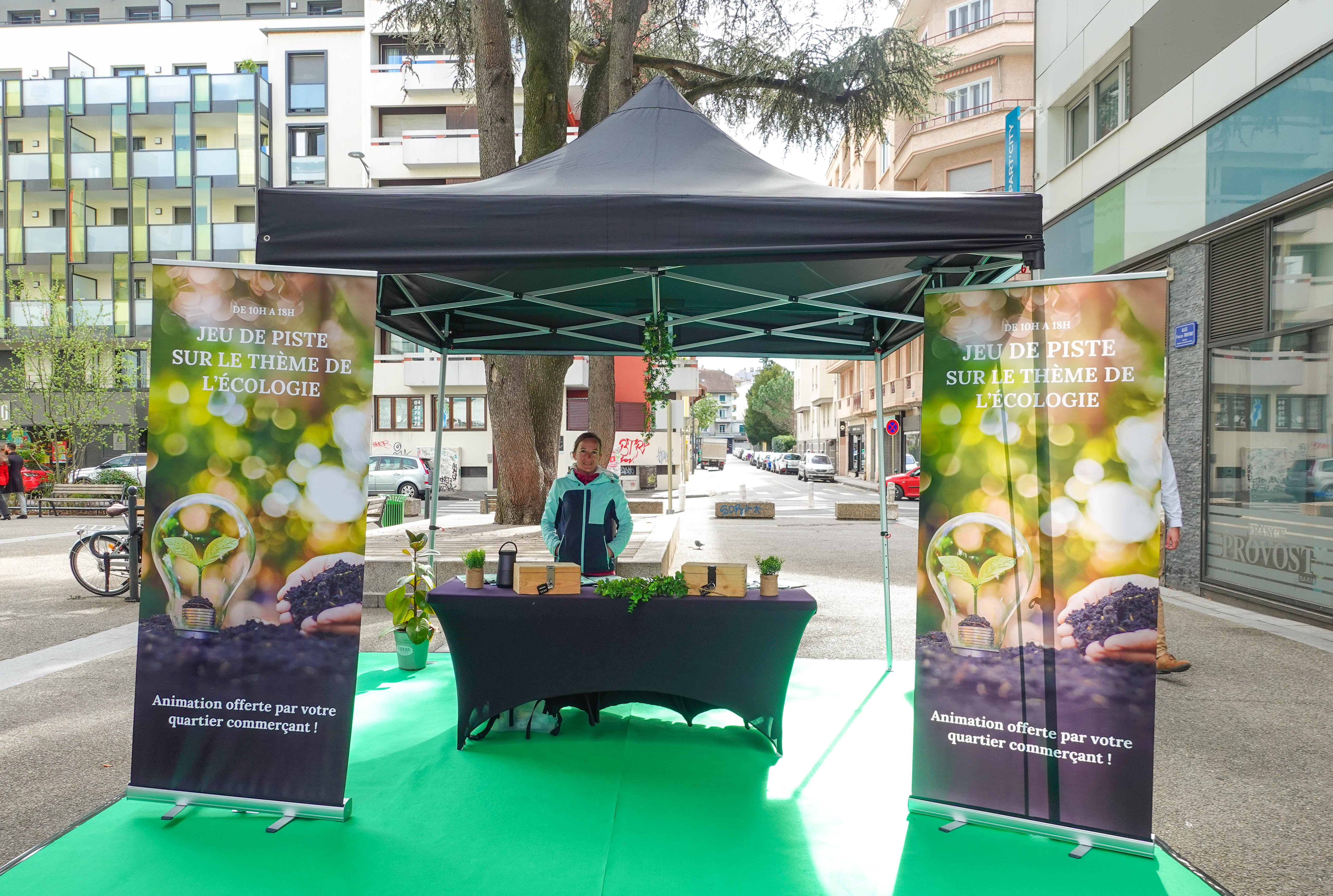
Interactive animations in Liege
Impact assembly lines (kits for local beneficiaries): participants rotate across stations (sorting, quality check, packing, labeling). This format is highly scalable for 30–300 participants and works well when you have mixed physical ability levels. We design a quality control step to avoid “good intentions” producing unusable outputs.
CSR hack sprint with local stakeholders: a 2–3 hour workshop where teams solve a concrete challenge proposed by a local association or city-linked actor (logistics, awareness, volunteer recruitment, digital visibility). We facilitate like a business workshop: problem statement, constraints, quick prototyping, and handover deliverable.
Responsible procurement challenge: teams audit a fictional purchasing scenario inspired by your reality (events, gifts, catering, travel) and must redesign it under constraints (budget cap, CO2 target, supplier criteria). This is effective for leadership teams and procurement-heavy organizations.
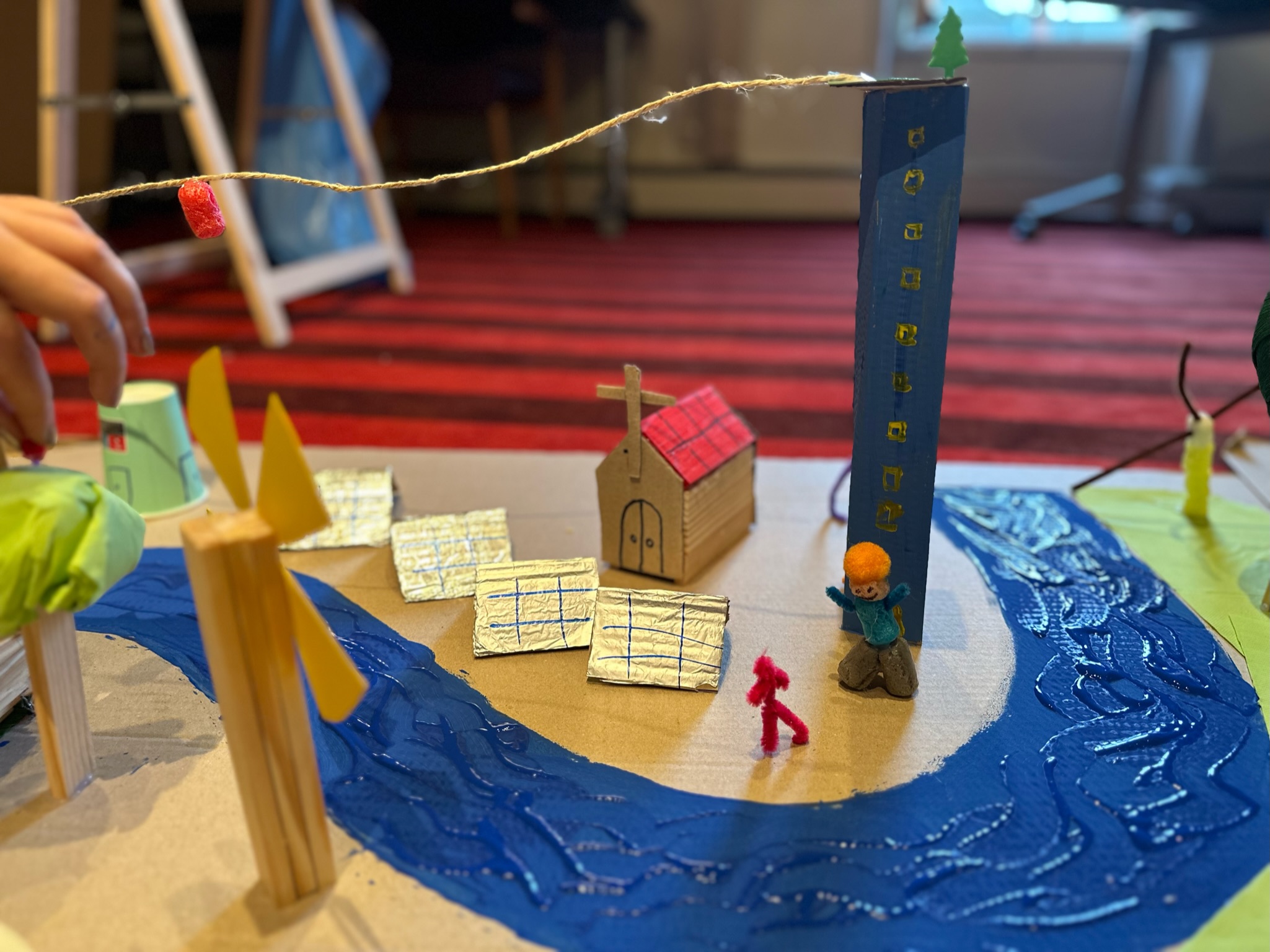
Art animations in Liege
Community art with a clear destination: co-creating modular pieces that are donated to a local community space (youth centre, social restaurant, care facility). The key is governance: who validates the design, where it is installed, and who maintains it. We secure agreements before inviting employees to build.
Storytelling portraits of local impact: participants collect short “impact stories” from vetted stakeholders (with consent and clear editorial rules) and create internal content capsules. This works when Comms needs authentic material but wants to avoid intrusive or exploitative approaches.
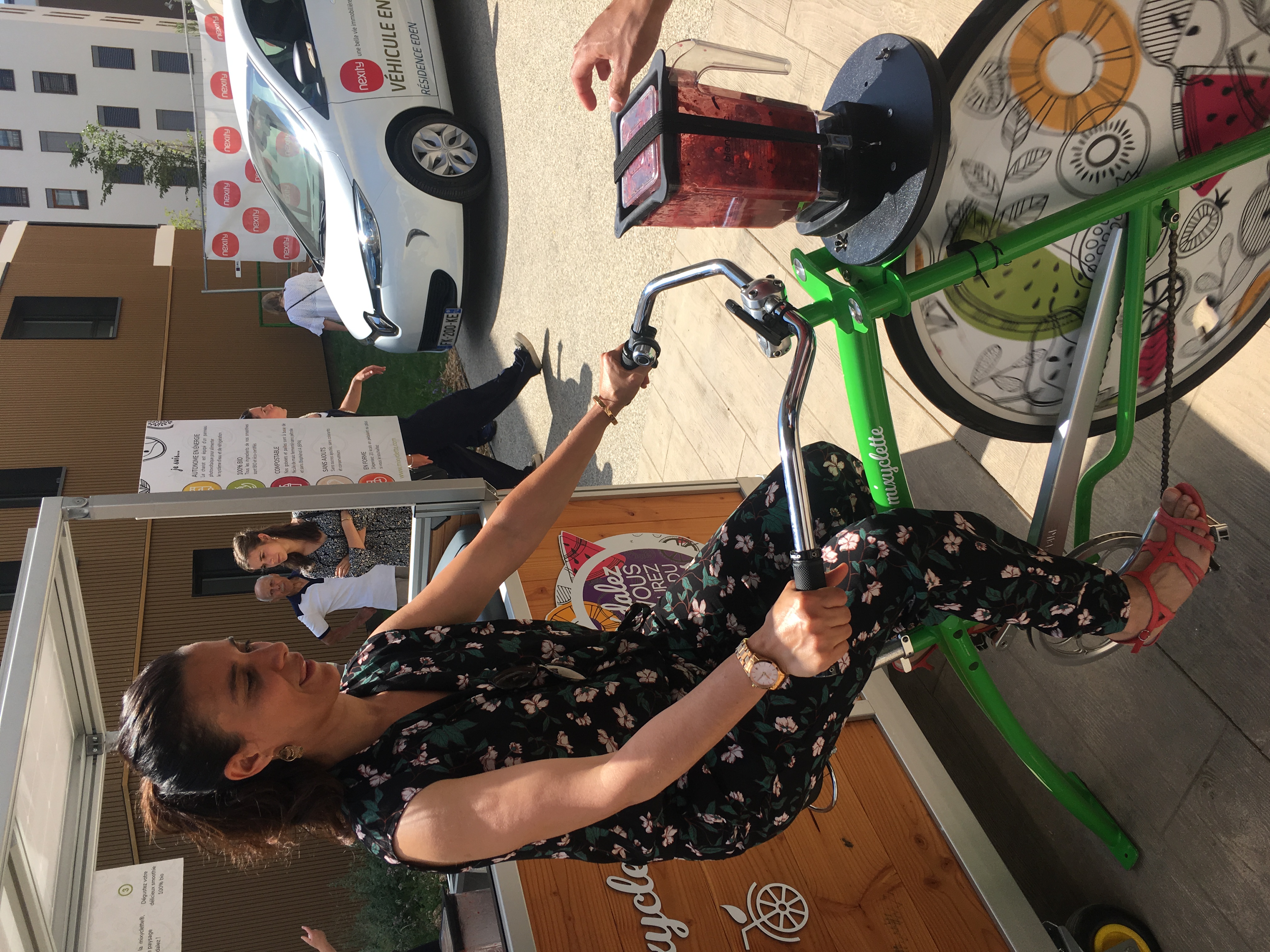
Innovative animations in Liege
Anti-waste cooking and redistribution: teams prepare meals from rescued ingredients with a professional chef and a partner organization. We plan strict hygiene protocols, cold chain management, and allergen labeling—non-negotiable for corporate risk management.
Local sourcing challenge: a workshop with tastings where teams compare supply chain choices (local vs imported, seasonal vs non-seasonal) and decide a “policy” that can realistically apply to your internal events in Liege.
Gourmand animations in Liege
Data-driven volunteering marketplace: we set up a structured matching between your employees’ skills and local needs (Excel, HR coaching, logistics planning, basic IT). The “innovation” is governance: defined missions, timeboxing, and reporting so it doesn’t become informal volunteering with no traceability.
Carbon and mobility clinic linked to your site reality: participants work on commuting patterns and business travel constraints, then build a practical action plan (carpooling rules, bike incentives, meeting policy). This is credible when tied to actual constraints around Liege mobility and your locations.
The deciding factor is alignment with brand image and internal culture. A regulated industrial player in Liege will not choose the same CSR format as a creative services company downtown. We help you select activities that match your risk tolerance, stakeholder expectations, and the message leadership wants to send—without drifting into performative gestures.
Where to host CSR activities in the 4000 area
The venue influences credibility. A CSR program hosted in a location that contradicts your message (accessibility issues, unclear safety, excessive waste) can weaken the internal reception. In and around Liege, we select settings based on logistics, brand fit, and the nature of the activity: workshop vs physical action vs hybrid.
| Venue type | For which objective? | Main strengths | Possible constraints |
|---|---|---|---|
| Corporate site (meeting rooms, warehouse corner, canteen) | Max participation, low travel time, strong internal adoption | Simple logistics, easy scheduling for shifts, brand control and safety familiarity | Requires clear zoning, risk assessment, and coordination with facility/security |
| Local association or social enterprise premises | Direct connection to beneficiaries and local legitimacy | High authenticity, clear impact narrative, partner-led storytelling | Capacity limits, accessibility/parking, strict respect of partner operations |
| City venue or neutral workshop space in Liege | Cross-department collaboration, leadership visibility, facilitation-heavy formats | Professional comfort, good AV, neutral ground for mixed teams | Budget and booking constraints, careful waste/catering planning required |
We strongly recommend a site visit (or at least a technical recce) when the activity includes material handling, stations, or external partners. In Liege, small access details—loading zones, elevator availability, nearby parking, noise constraints—often determine whether your program runs on time or starts with friction.
How to budget CSR Activities in Liege without surprises
Budgeting CSR Activities in Liege is straightforward when you separate what creates impact from what creates complexity. Price is rarely driven by “the idea”; it is driven by participant volume, logistics, and the compliance level required by your organization.
Participant count and format: 20–60 people is typically manageable with light staffing; 80–200 requires structured flows, more facilitators, and stronger timekeeping; above that, you often need parallel tracks and a dedicated field manager.
Venue and access: hosting on your site may reduce rental costs but increases coordination with facility/security. External venues can add rental and catering constraints but simplify flows.
Materials and quality control: CSR kits, tools, PPE, signage, and packaging are not trivial. We budget for overage (typically 5–10%) to avoid last-minute shortages, plus a QC step to ensure outputs are usable.
Partner costs and reporting: credible partners may request coordination time, supervision, and impact reporting. This is often the difference between a “feel-good” activity and one that is defensible in an ESG narrative.
Photo/video and consent management: if Comms needs assets, we plan a compliant capture protocol (briefing, opt-out process, usage scope). It’s a small line item compared to the value of clean content.
Contingency planning: weather alternatives, indoor backup, transport buffer, and substitution tasks. This is what keeps the day stable.
From an ROI perspective, the right question is not “how cheap can it be?” but “what do we need to achieve, and what risks must be controlled?” A well-scoped CSR event in Liege protects leadership time, reduces internal coordination cost, and produces measurable outputs your HR and Comms teams can actually use.
Why choose an event agency in Liege for CSR activities
When CSR is involved, local execution matters. A partner who regularly operates in Liege understands venue access realities, local supplier reliability, and how long it actually takes to coordinate with associations and municipal stakeholders. It also reduces day-of risk: fewer unknowns, faster solutions, and partners who show up on time with the right materials.
If your organization is comparing suppliers, the difference is rarely the slide deck; it is the field network and the ability to anticipate operational friction. This is why many teams prefer to work with an event agency in Liege ecosystem for on-the-ground execution, even when strategic coordination is handled centrally.
At INNOV'events, we bridge both: corporate-grade project management and practical local operations. That combination is what executives usually look for when the event is visible and time is limited.
- Faster sourcing and plan B options: when a partner cancels or a venue changes conditions, local alternatives can be activated quickly.
- More accurate timing and logistics: travel time assumptions, parking realities, loading access, and participant flows are planned with local precision.
- Higher credibility with stakeholders: local partners appreciate clear process, respectful scheduling, and realistic volumes.
- Better risk management: safety briefings, signage, and on-site governance are easier to standardize when the field team knows local constraints.
From an ROI perspective, the right question is not “how cheap can it be?” but “what do we need to achieve, and what risks must be controlled?” A well-scoped CSR event in Liege protects leadership time, reduces internal coordination cost, and produces measurable outputs your HR and Comms teams can actually use.





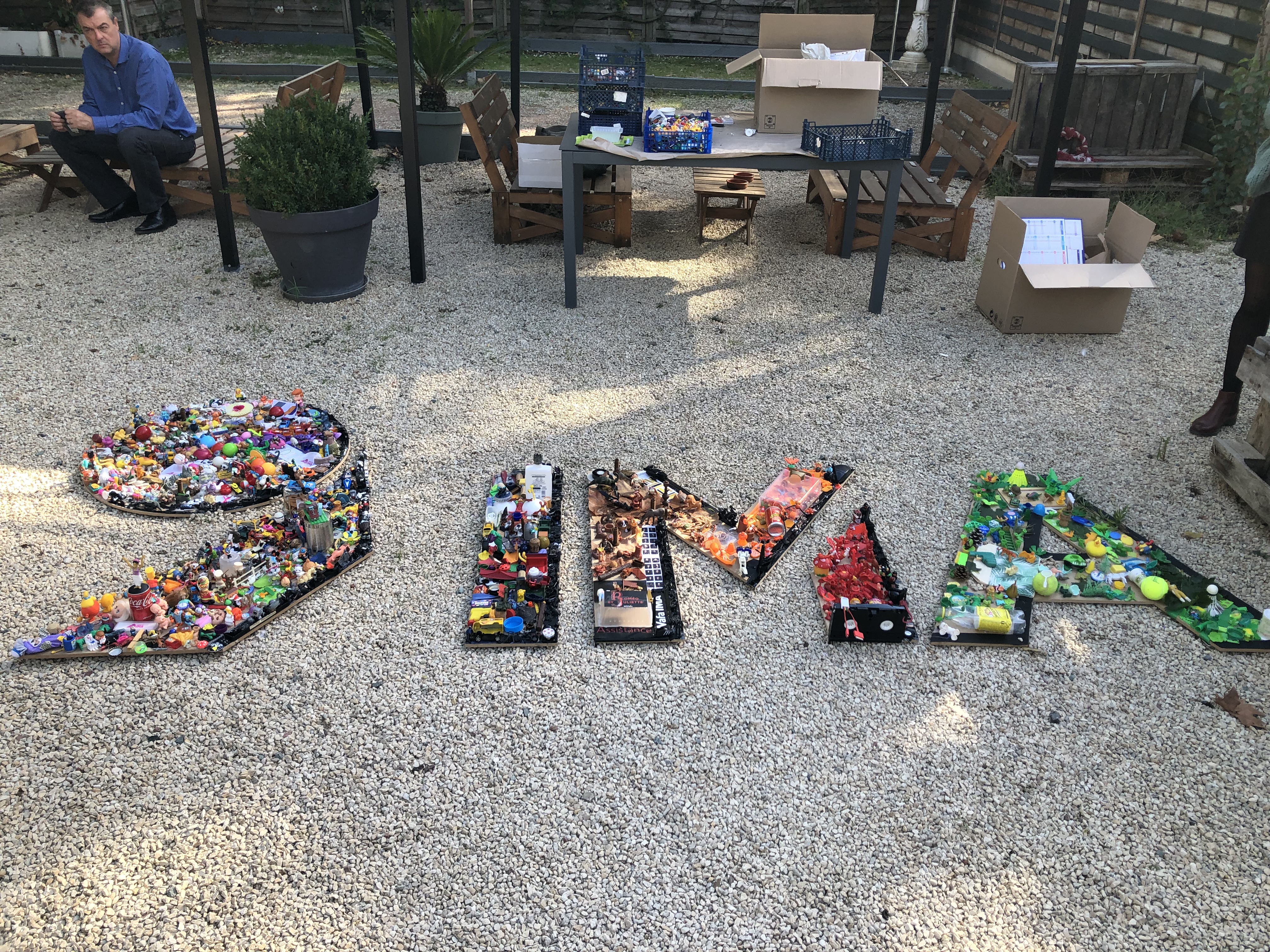
Examples of CSR formats delivered in Liege for demanding teams
Our deliveries in Liege typically fall into three categories, depending on your objectives and internal constraints.
- High-participation impact builds: a large group split into stations with strict timekeeping, output measurement, and a closing debrief tied to CSR pillars. This format is popular after company milestones (site anniversary, leadership visit, end-of-year gatherings) because it combines engagement and visible results without requiring everyone to be “creative” or extroverted.
- Leadership + managers CSR workshop: a smaller group (often 12–40) where the output is a concrete plan: decision log, messaging, and a short internal playbook. This is useful when leadership wants to avoid “activity for activity’s sake” and is looking for governance and alignment.
- Multi-site or staggered participation: common in operations-heavy organizations. We run the same CSR module across time slots so teams can participate without disrupting service. The operational complexity is higher, but adoption is better because participation feels feasible rather than imposed.
Across these formats, what we adapt is not only the content but the operational model: staffing, material preparation, briefing length, bilingual facilitation, and the level of documentation needed for internal and external communication.
Common pitfalls we prevent in CSR Activities in the 4000 area
Choosing an activity that conflicts with your internal reality: for example, proposing a physically demanding outdoor clean-up to a group where many participants have limited mobility, or scheduling a full-day format when shift constraints make it unrealistic.
Weak partner alignment: associations overwhelmed by corporate volumes, unclear expectations, or no defined supervision. Result: chaos, reputational risk, and disappointed participants.
No measurement or proof: teams feel good, but leadership cannot communicate responsibly because there is no verified impact data, no partner confirmation, and no structured recap.
Underestimating safety and insurance: missing PPE, unclear responsibility in case of incident, or inadequate briefing. Even low-risk activities require professional governance.
Logistics that create friction: late start due to parking, unclear meeting points, material shortages, or long briefing times. People remember operational stress more than good intentions.
Over-branding the cause: pushing corporate messaging too hard can backfire internally in Liege, where authenticity matters. We keep the narrative factual and respectful of beneficiaries.
Our role is to remove avoidable risks so your leadership and internal organizers can focus on the message, participation, and follow-through. That is what makes CSR Activities a safe choice even for highly visible events in Liege.
Why Liege clients renew CSR programs with the same partner
Renewal is rarely about “liking the activity”; it is about trust built through consistent delivery. When HR and Comms teams recommend repeating a CSR format, it usually means the day ran on time, participants understood the purpose, leadership got usable outputs, and no one had to firefight.
Repeatability: many organizations want a format that can be repeated annually with small improvements (new partner, new local cause, updated KPI). We document what worked and what should change.
Lower internal workload over time: the second edition is faster to prepare because templates, risk assessments, and stakeholder routines already exist. This matters when internal teams have limited bandwidth.
Better impact each cycle: when you keep the governance stable, you can raise ambition: clearer measurement, stronger follow-up, deeper partner collaboration.

In corporate events, loyalty is a strong signal: it means the agency delivered in conditions that are hard to simulate in a pitch—on-site pressure, last-minute constraints, and executive expectations. That is the standard we aim for in Liege.
Our process for CSR Activities in Liege from brief to reporting
👉 Clarify objectives and constraints in Liege
We start with a structured briefing: why you are doing this now, who must be convinced (leadership, unions, works council, managers), what you can and cannot communicate, and how much disruption is acceptable. We also map practical constraints: schedule windows, participant profile, language needs, and accessibility requirements.
👉 Select a credible CSR format and partners
We propose 2–3 formats that fit your constraints and your CSR narrative, with clear pros/cons. Then we validate partners based on capacity, supervision capability, transparency of impact reporting, and on-the-ground practicality in Liege.
👉 Build the operational plan and risk controls
We produce a run-of-show, staffing plan, materials list, signage plan, and safety briefing. When relevant: PPE, waivers, insurance checks, and a weather contingency. We also define the measurement method (counting, QC sampling, partner confirmation).
👉 Prepare internal communication and leadership messaging
We help HR/Comms with what participants need to know (dress code, timing, purpose) and what leadership should say (short, factual, aligned with CSR pillars). We avoid overpromising and ensure the message matches what will be delivered on the day.
👉 Deliver on site in Liege and capture proof
On the day, our team manages check-in, briefings, rotations, partner coordination, and timing. We capture agreed photo/video assets under a clear consent protocol and maintain operational calm—especially during transitions, which is where most delays occur.
👉 Report impact and propose next steps
Within an agreed timeline (often 3–7 days), we deliver an impact recap: participation numbers, outputs, partner confirmation, and a short narrative usable by HR and Comms. We also propose realistic follow-up actions to avoid the “one-and-done” effect.
FAQ sur l'organisation CSR Activities à Liege
How long does it take to plan CSR Activities in Liege?
For a standard format (20–120 people) with one partner, plan 10–15 working days. For larger groups, multi-slot participation, or public-space actions with permits, plan 3–5 weeks.
What budget range for CSR Activities in the 4000 area?
Most corporate formats land between €75 and €220 per participant depending on staffing, materials, venue, and reporting. A leadership workshop format (12–40 people) can be priced as a project package; high-volume impact builds scale better per participant.
Which CSR Activities in Liege work for 150 participants?
Station-based impact builds (kits, sorting, packing) and structured clean-up or renovation support with clear supervision are the most reliable. For 150 people, expect 3–6 stations, 6–10 facilitators, and a strong flow plan to avoid bottlenecks.
Can we measure impact from CSR Activities in Liege?
Yes—if measurement is designed upfront. Typical indicators include units assembled, kg sorted/collected, hours contributed, beneficiaries served, plus partner confirmation and QC checks to ensure outputs are usable.
How do you reduce greenwashing risk in Liege CSR events?
We use vetted local partners, define factual claims only (no inflated wording), document outputs, and ensure the activity matches your CSR strategy. We also validate photo and messaging rules so communications remain respectful and accurate.
Request a CSR Activities proposal for Liege
If you are planning CSR Activities in Liege, involve us early—especially when you have a fixed date, a mixed audience, or internal constraints (shifts, compliance, union dialogue). Early scoping is what keeps the program realistic and protects your internal team from last-minute operational stress.
Share your target date, estimated headcount, preferred duration (half-day or full-day), and any non-negotiables (venue, messaging, accessibility). We will come back with a short, structured proposal including format options, operational plan, and a transparent budget range.
INNOV'events Liege Agency
Justin JACOB is the manager of the INNOV'events Liege office. Reach out directly by email at belgique@innov-events.be or via the contact form.
Contact the Liege agencyToutes nos prestations & animations Liege, Belgique
Découvrez nos prestations événementielles
Découvrez nos animations événementielles disponibles au Belgique
- Event Hostess in Liege
- Escape Game in Liege
- MasterChef Cooking Workshop in Liege
- Magician in Liege
- Marquee Rental in Liege
- Color Analysis Workshop in Liege
- Inflatable Games in Liege
- Valet Parking Service in Liege
- Football Simulator in Liege
- LED Furniture Rental in Liege
- Light Branding in Liege
- Unique Dining Experience in Liege
- Light Painting in Liege
- Murder Mystery Party in Liege
- Prize Contest in Liege
- Promotional Displays (POS) in Liege
- Virtual Reality in Liege
- Molecular Gastronomy Workshop in Liege
- Halloween Entertainment in Liege
- Fireworks Show in Liege
- Giant Games Challenge in Liege
- Event Host / MC in Liege
- Photo Booth Animation in Liege
- Santa Claus Entertainment in Liege
- Kids Entertainment in Liege
- Guided Tour in Liege
- Urban Rally in Liege
- Ball Pit in Liege
- Flight Simulator in Liege
- Food Truck Rental in Liege
- World Record Challenge in Liege
- Surf Simulator in Liege
- Wine Casino in Liege
- Makeover Workshop in Liege
- Perfume Creation Workshop in Liege
- Acting Workshop in Liege
- CSR Activities in Liege
- Archery in Liege
- Security Staff in Liege
- Wine Tasting in Liege
- Mime Performer in Liege
- TV Game Show in Liege
- Funfair in Liege
- Crisis Management Workshop in Liege
- Crisis Negotiation Workshop in Liege
- Arcade Games in Liege
- Indoor Skydiving Simulator in Liege
- Ski Simulator in Liege
- Racing Circuit Experience in Liege
- Introductory Flight Experience in Liege
- Tasting Experience in Liege
- Build Your Own Foosball Workshop in Liege
- 2CV Rally in Liege
- LEGO Challenge in Liege
- Casino Night in Liege
- Interpreter / Translator in Liege
- Promotional Giveaways in Liege
- Shuttle Transport in Liege