
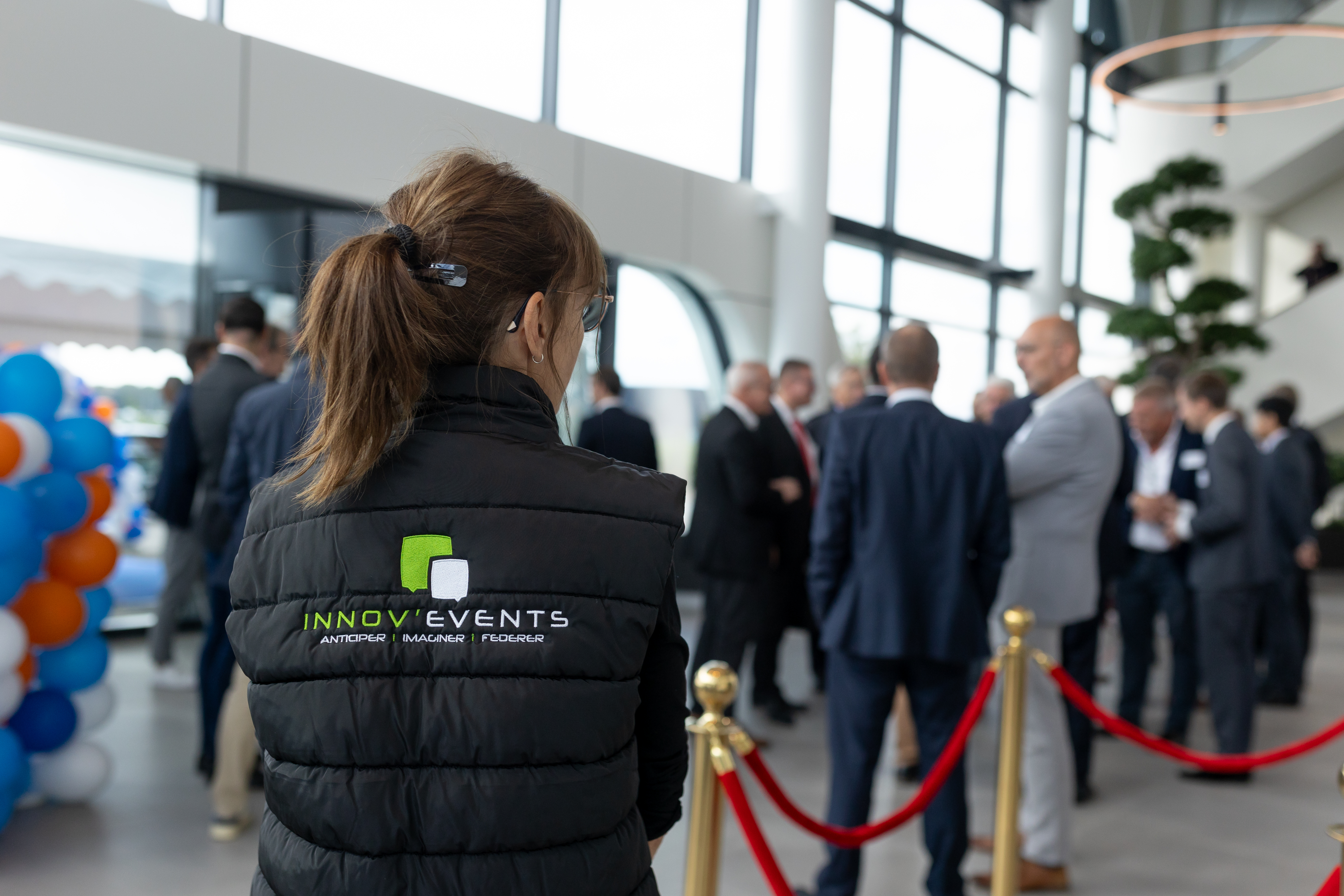
Event Hostess in Liege for corporate events that must run on time
Sommaire
In a corporate event, hospitality is not a “nice to have”: it is the operational layer that protects your schedule, your brand image, and the experience of decision-makers. A strong hostess team prevents queue build-up, missed VIP arrivals, and last-minute confusion at the doors—issues that executives immediately notice.
In Liege, organisations typically expect pragmatic execution: punctual teams, bilingual FR/NL (often EN), and the ability to handle mixed audiences (internal staff, external clients, public authorities, partners). The pressure is real when your CEO is on stage at 18:30 and the first keynote must start to the minute.
Based in Brussels, INNOV'events works regularly across the Liège area with a field approach: site checks, detailed briefs, and contingency plans. We deploy hostess teams who understand corporate codes, safety constraints, and the pace of live events.
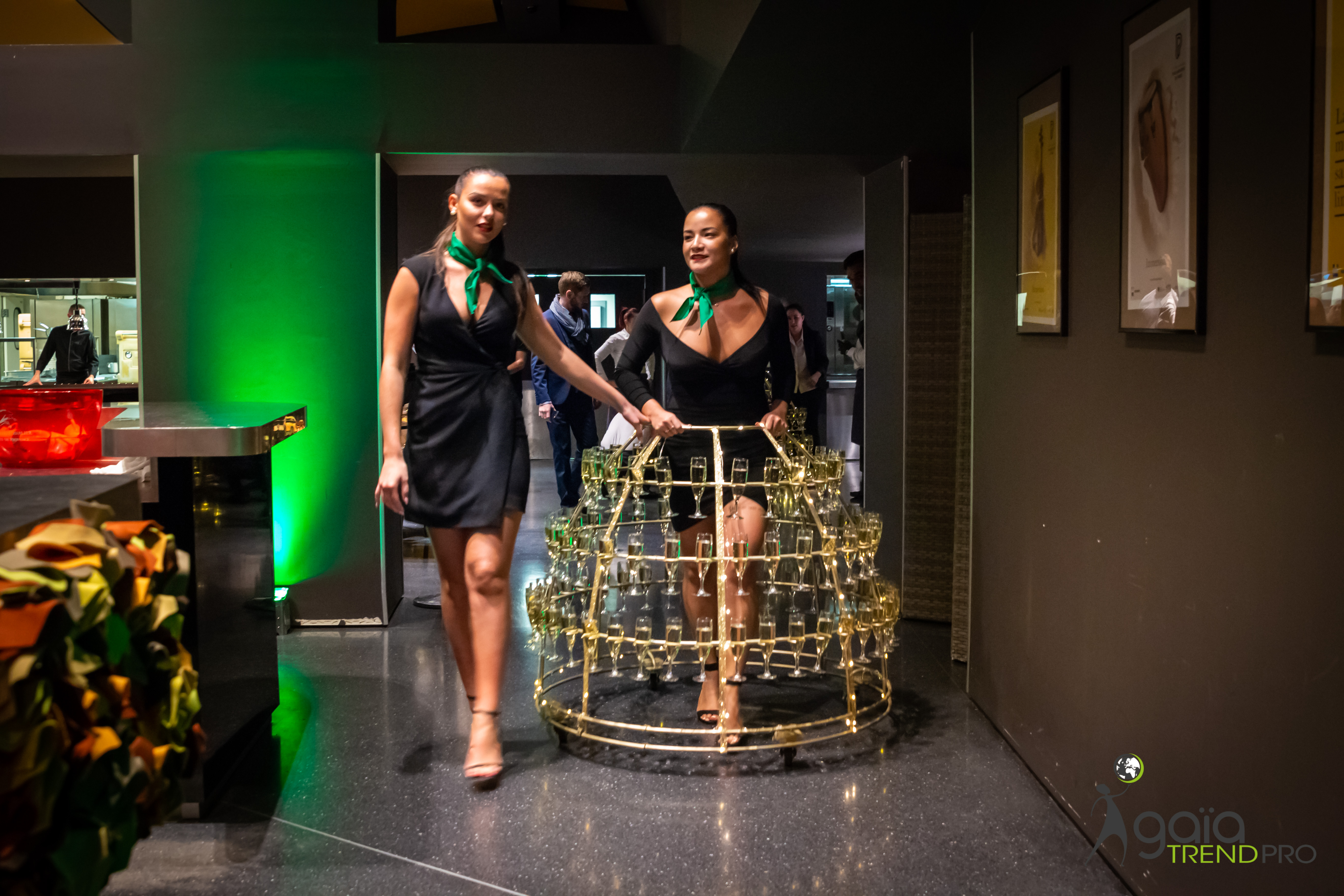
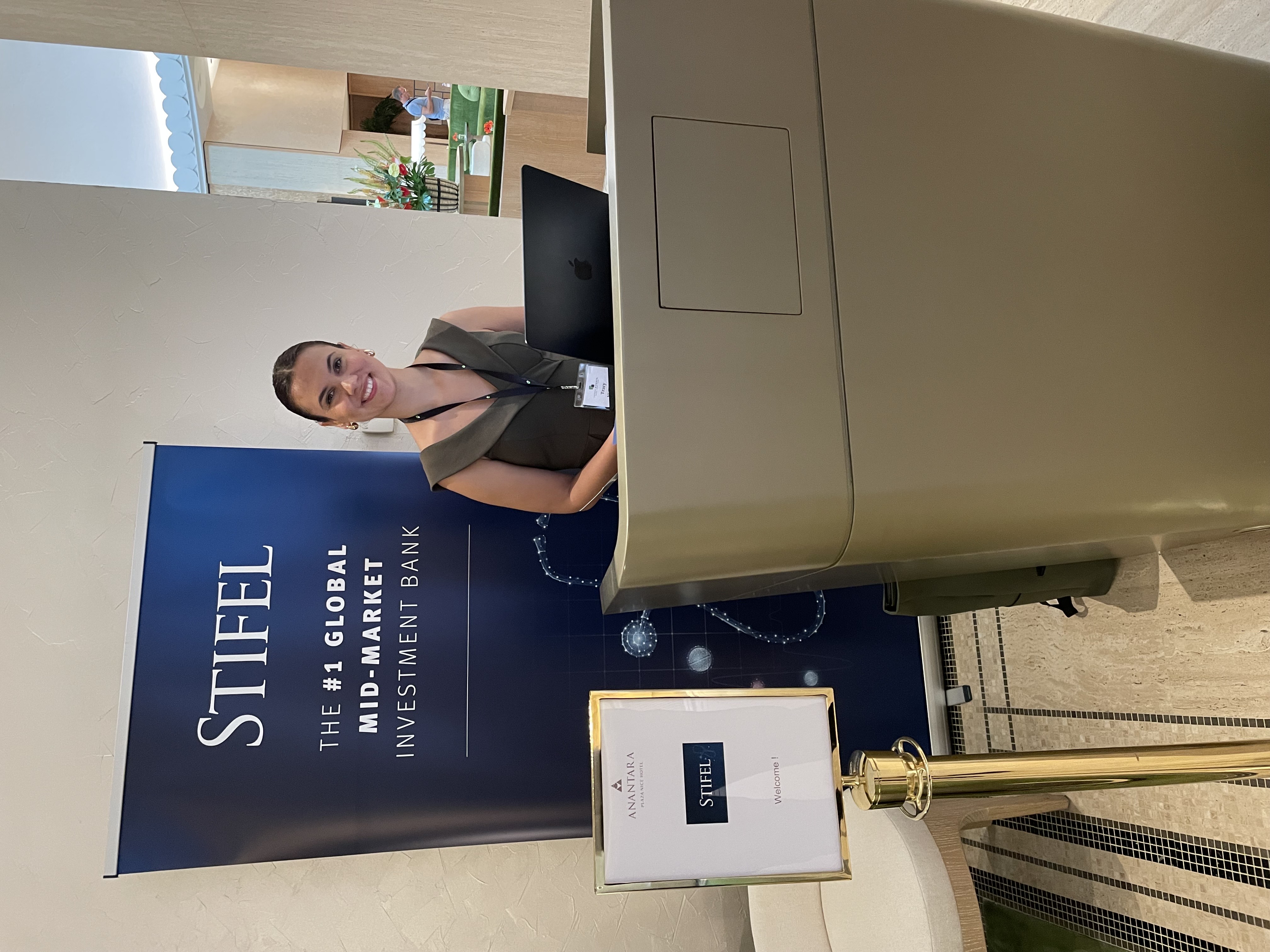
INNOV'events figures that matter in Liege operations
10+ years coordinating corporate hospitality and event staffing across Belgium, with repeat deployments in Liege and the province.
Operational capacity: scalable hostess pools for formats from 1 to 25+ hostesses, including team leaders and multilingual profiles.
Standard delivery includes: written briefing, role allocation, timing plan, and on-site supervision—so you’re not “managing people” on event day.
Compliance mindset: GDPR-aware guest list handling, access control discipline, and professional conduct aligned with executive environments.
Corporate hospitality references in Liege you can benchmark against
We support corporate and institutional organisers in Liege and the wider region for conferences, openings, internal town halls, and stakeholder events. Some clients come back year after year because they need the same outcome every time: reliable doors, calm VIP handling, and a front-of-house team that does not improvise.
You mentioned sharing company names as references; to keep this page accurate and compliant, we will integrate those exact names and event formats as soon as you provide them (e.g., annual partner evening, HR recruitment day, multi-track conference). In the meantime, our approach remains the same: we document what matters to your organisation (brand codes, security rules, agenda pressure points, VIP list), then staff and supervise accordingly in Liege.
If you require reassurance before a quote, we can also propose a short call to discuss comparable deployments (audience size, venue type, complexity level) and clarify what “good” looks like for your management team.
 Besoin d’un devis rapide ?
Nous vous envoyons une première proposition sous 24h.
What an Event Hostess team changes for Liege leadership teams
Executives and HR/Comms leaders rarely judge an event on décor; they judge it on control. Hospitality is the control function: how guests enter, where they go, how issues are solved without reaching the C-level table.
Protect the agenda: structured check-in, badge distribution, and proactive redirection reduce delays. When the first talk starts late, every subsequent moment becomes a negotiation; a disciplined front-of-house avoids that.
Reduce reputational risk: a hostess team trained on tone, dress code, and confidentiality prevents awkward interactions (press, VIPs, partners) and ensures coherent brand representation.
Improve stakeholder comfort: clear wayfinding, coat check management, seating support, and handling special needs (accessibility, dietary, late arrivals) increase satisfaction with minimal noise.
Free internal teams: HR and Comms should host, network, and manage leadership moments—not fix queue problems or solve badge issues. A supervised hostess team absorbs operational friction.
Better data discipline: controlled entry lists, on-the-fly corrections, and post-event attendance reconciliation help when you need proof of presence, segmented follow-up, or internal reporting.
Liege is a city where business relationships are concrete and long-term. When hospitality is handled professionally, the event supports that local culture: people feel welcomed, respected, and confident in your organisation’s seriousness.
Liege realities: what local venues and audiences require
Running hospitality in Liege often means dealing with practical constraints that don’t appear on PowerPoint. Access routes can change with city traffic, venue loading schedules are sometimes tight, and guest profiles can be mixed (corporate, institutional, academia, suppliers). We plan accordingly.
Common local expectations we see from organisers:
- Language coverage: FR is essential; NL is often requested for national groups; EN is frequently needed for speakers, EU-linked stakeholders, and international suppliers.
- Protocol awareness: for events involving public stakeholders or executives, you need discreet VIP handling (parking instructions, escorts, seat allocation, last-minute agenda changes) without over-formality.
- Security and access discipline: some sites in Liege require strict access control, badge colour coding, or pre-validated lists. A hostess team must respect those procedures consistently.
- Operational autonomy: organisers value teams that solve issues without escalating every micro-decision to the client. We build that autonomy through briefing and on-site leadership.
Our working assumption in Liege is simple: the event day will bring unexpected variables (late VIPs, missing names, seating changes, technical delays). The difference is whether your front-of-house stays calm and structured when it happens.
Which corporate event entertainment works best in Liege reception areas?
Entertainment is valuable when it serves a purpose: create conversation, reduce waiting-time friction, and support your message without competing with it. In Liege corporate events, we often position “light” activation in reception zones, then keep plenary moments focused on content.
Interactive animations in Liege
Live guest portrait or corporate caricature: effective during arrival waves; guests leave with a branded takeaway. Works well when you want networking starters without loud sound constraints.
Guided networking prompts (hostess-led): structured introductions by sector, role, or project theme. Particularly useful for partner days where people “should meet” but won’t initiate on their own.
Photo corner with brand discipline: not a gimmick—when designed correctly (lighting, backdrop, queue management), it creates controlled visibility and gives Comms usable assets.
Art animations in Liege
Discrete live music (duo/trio, controlled dB): placed to support cocktail flow, not to dominate. We coordinate set times around speeches and ensure technical requirements are compatible with the venue.
Short-format performance cues: 3–7 minute interventions between agenda blocks can reset attention without adding “dead time” to your schedule.
Innovative animations in Liege
Hostess-managed tasting stations: coffee/tea ritual, local beverage tasting, or dessert bar with portion control. The hostess role here is crucial: avoid bottlenecks, keep stations clean, manage allergens info, and maintain premium perception.
Service choreography for VIP tables: if you have key clients present, coordinated service and timing is part of hospitality—guests remember waiting too long more than they remember the menu.
Gourmand animations in Liege
Badge-linked micro-journey: scanning at 2–3 points (welcome, workshop entry, demo area) to measure engagement. Practical for HR and Comms reporting, but only if GDPR messaging and opt-in are managed properly.
Speaker support desk: a hostess-run help point for presenters (water, mic packs, timing reminders, slide checks). This is “innovation” in the sense of reducing stage risk—often more valuable than flashy activations.
Whatever the format, the rule is alignment: entertainment must reinforce the tone your leadership wants in Liege—innovative, institutional, premium, or recruitment-driven. We validate that alignment in briefing, then we deploy hostesses who can execute it without improvisation.
How to choose a venue in Liege that supports flawless hospitality
The venue dictates your guest flow. In Liege, the same number of attendees can feel effortless or chaotic depending on door width, cloakroom capacity, parking logic, and the distance between reception and plenary spaces.
| Venue type | For which objective? | Main strengths | Possible constraints |
|---|---|---|---|
| Conference centre / auditorium venue | Keynotes, multi-session conferences, stakeholder briefings | Seating capacity, AV infrastructure, clear room segmentation, strong operational rules | Strict schedules, limited branding flexibility, sometimes complex loading and access badges |
| Hotel with meeting rooms | Executive breakfasts, training + networking, smaller product presentations | Integrated catering, accommodation, predictable service standards, easy cloakroom logistics | Branding limits, shared spaces with other guests, parking constraints at peak times |
| Industrial / heritage venue (renovated) | Brand launches, partner evenings, internal celebrations with strong atmosphere | High perceived value, strong identity, large open spaces for reception areas | Acoustics, temperature control, limited built-in infrastructure, more reliance on temporary signage and staff guidance |
We strongly recommend a site visit in Liege with the person responsible for guest experience (Comms or event lead) and the hospitality supervisor. That is where we confirm entry points, queue placement, VIP path, and contingency routes if weather or timing changes.
Event Hostess pricing in Liege: what drives the cost
Budgeting for Event Hostess in Liege is not just about hourly rates. The real cost depends on the operational model: how many touchpoints, how long guests arrive in waves, what level of language and protocol is needed, and whether supervision is included.
Number of hostesses and role mix: standard welcome staff vs. senior profiles for VIP handling, speaker desk, or floor management.
Duration and schedule: short sharp windows (e.g., 90-minute arrival peak) can require higher staffing density than a steady flow. Early call times, late endings, and breaks also matter.
Complexity of check-in: QR scanning, badge printing on-site, wristbands, seating zones, controlled access lists, or multi-entrance management.
Language requirements: FR/NL/EN, and the need for confident stakeholder-facing communication (not just “basic English”).
Uniform and brand codes: specific dress code, branded elements, or higher-formality protocol for executive events.
Supervision and reporting: a team leader, incident log, attendance reconciliation, and post-event debrief reduce your internal workload.
Logistics in Liege: venue access rules, parking availability for staff, and the timing of setup/doors can influence staffing calls.
From an ROI perspective, hospitality is an operational insurance line: it protects the agenda, reduces escalations to your leadership team, and preserves brand perception. For many organisers in Liege, the cost of one visible failure (VIP mishandled, long queue, wrong access granted) is higher than the cost of proper staffing.
Why work with an event agency in Liege for hostess staffing
When the event is in Liege, proximity is not a slogan—it is operational leverage. A local or locally active agency can react faster, knows the venue habits, and can anticipate the “small” constraints that become big on event day.
At INNOV'events, we combine Brussels structure with frequent deployments in the Liège area. When relevant, we coordinate with local suppliers and venue teams, and we can quickly validate access routes, parking, staff arrival timing, and the best placement for check-in and signage. If you are comparing providers, look for evidence of on-site preparation and clear responsibility lines, not just a list of available profiles.
For broader support beyond staffing, our event agency in Liege page details how we manage full production and coordination when you need a single accountable partner.
- Faster incident response: if a hostess is delayed or a zone needs reinforcement, local coordination reduces downtime.
- Venue familiarity: understanding where queues naturally form, how security wants lists presented, and where VIP drop-off works in practice.
- Supplier coordination: smoother alignment with catering, AV, and venue management—critical when doors open and everything happens at once.
- More realistic planning: timing and staffing decisions grounded in local traffic patterns and venue constraints, not generic assumptions.
From an ROI perspective, hospitality is an operational insurance line: it protects the agenda, reduces escalations to your leadership team, and preserves brand perception. For many organisers in Liege, the cost of one visible failure (VIP mishandled, long queue, wrong access granted) is higher than the cost of proper staffing.






Examples of Event Hostess missions delivered in Liege contexts
Our hostess assignments in Liege cover a wide range of corporate realities, often with the same core objective: keep the organiser’s leadership team focused on stakeholders, not on operations.
Typical mission patterns we handle:
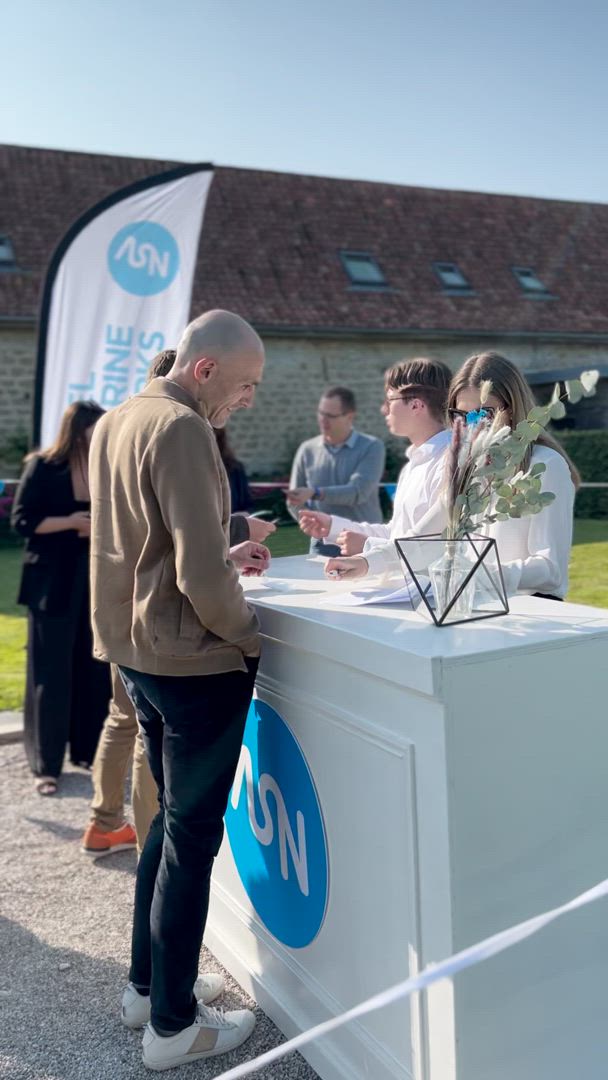
- Conference check-in with controlled access: splitting queues by registration status, handling name corrections, printing or distributing badges, and managing auditorium entry so sessions start on time.
- VIP and speaker handling: dedicated hostess for VIP arrivals, escort to reserved seating, coordination with protocol, and a separate desk for speakers to verify timing, slides, and stage entry.
- Product launch reception: structured guest flow from welcome to demo zones, managing capacity in key spaces, and keeping the brand tone consistent through dress code and language.
- HR recruitment or employer branding day: wayfinding across multiple interview rooms, schedule discipline, candidate reception with confidentiality, and managing sensitive moments discreetly.
- Partner evening: cloakroom and seating support, sponsor liaison for last-minute requests, and a calm front-of-house even when guests arrive in waves.
What these missions have in common is not “hospitality” in the abstract; it is execution: documented roles, on-site leadership, and the ability to absorb friction without pushing it back to your internal teams.
Liege event day mistakes a professional hostess team prevents
Underestimating arrival peaks: one desk too few creates a queue that blocks circulation and undermines first impressions within minutes.
No exception process at check-in: missing names, replacements, or walk-ins become conflicts at the door if hostesses are not trained and empowered to resolve them.
VIP handling improvised: “we’ll recognise them” fails in practice; we define who greets, where they wait, and how they move to seating discreetly.
Signage that looks good but doesn’t guide: beautiful boards placed in the wrong spot don’t reduce questions; we validate line-of-sight and decision points.
Unclear coordination with security and venue staff: conflicting instructions confuse guests and staff; we align scripts and responsibilities before doors open.
No on-site supervisor: without a team leader, small issues escalate to the client, consuming HR/Comms attention throughout the event.
Brand tone mismatch: overly casual or overly rigid attitudes can harm executive events; we brief on vocabulary, posture, and discretion expected in corporate settings.
Our role is to remove these risks through preparation and supervision in Liege. You should not have to “manage the welcome” on the day—you should be able to host your stakeholders.
Why Liege clients keep the same hostess partner over time
In corporate environments, loyalty is usually earned through predictability. Clients return when they know the welcome will be handled with the same discipline every time, even when the event format changes.
Repeat patterns we see with returning clients: the same event delivered annually with updated guest lists, evolving VIP protocols, and refined check-in tools—without having to rebuild the process from zero.
Operational continuity: keeping a core group of trained profiles and a consistent supervisor reduces your internal briefing load and improves on-site autonomy.
Continuous improvement: after each event in Liege, we capture what caused friction (arrival waves, signage, access rules) and implement corrections in the next edition.

When a client in Liege asks us back, it is rarely for creativity; it is because the event ran smoothly, leadership stayed focused on relationships, and the organisation’s image was protected from avoidable operational issues.
Our Event Hostess delivery process in Liege
👉 Liege scoping call and objective alignment
We clarify your event format (conference, launch, HR day), audience mix, VIP presence, and the level of access control. We also validate what “success” means internally: zero queues, on-time plenary, discreet VIP path, or clean attendance data for reporting.
👉 Guest journey design and staffing plan for Liege
We map the guest journey step-by-step: arrival, welcome, accreditation, cloakroom, wayfinding, room entry, transitions, and departures. Then we define the staffing model (number of hostesses per zone, seniority mix, team leader), languages required, and precise call times.
👉 Briefing pack and scripts for Liege front-of-house
We produce a practical briefing: roles, floor plan, timelines, dress code, brand tone, VIP list handling, escalation rules, and incident scenarios. Hostesses receive scripts for typical situations: missing name, media request, late VIP, restricted access, or sponsor demands.
👉 On-site setup and coordination with venue teams in Liege
Before doors open, we test the layout: queue barriers, desk placement, badge material, scanning tools, signage visibility, cloakroom flow, and communication channels. We align with venue management, security, catering, and AV on timing and access rules.
👉 Live supervision during the Liege event
A team leader manages real-time adjustments: reinforcing the busiest point, opening an extra check-in position, updating wayfinding, and ensuring VIP arrivals are handled discreetly. The goal is to keep issues away from your executives and organisers.
👉 Post-event debrief and operational improvements
We close with a short debrief: what worked, what caused friction, and concrete improvements for the next edition. When relevant, we reconcile attendance data and provide practical notes for HR/Comms follow-up.
FAQ sur l'organisation Event Hostess à Liege
How many event hostesses do I need in Liege?
As a practical baseline: 1 hostess per 75–120 guests for standard welcome. Add capacity if you have badge printing, multiple entrances, or a heavy VIP list. For a 300-person conference in Liege, we often deploy 4–6 hostesses plus 1 team leader depending on arrival peak and access control.
Can you provide bilingual hostesses in Liege events?
Yes. For Liege, FR is standard; we can staff FR/NL and FR/EN profiles, and build a team mix so key positions (VIP, speaker desk, registration lead) have the strongest language coverage. We validate language level during staffing—no “approximate English” on executive-facing roles.
What is the typical timing for hostess booking in Liege?
For small events, 2–3 weeks can work. For conferences, VIP-heavy formats, or peak periods (end-of-year, major trade dates), plan 4–8 weeks. This allows proper briefing, venue alignment, and the right senior profiles for Event Hostess in Liege.
Do you handle check-in tools and badge printing in Liege?
We can support check-in operations: list-based control, QR scanning, badge distribution, and coordination for on-site badge printing if required. The key is defining the exception process (missing names, replacements, walk-ins) so your reception desk in Liege stays calm and consistent.
What does an Event Hostess team leader do in Liege?
The team leader is your on-site operational buffer: briefs the team, coordinates with venue/security, reallocates staff as queues shift, validates VIP handling, and resolves incidents without escalating everything to you. For many corporate organisers in Liege, this role is what turns staffing into a controlled system.
Request an Event Hostess quote in Liege with clear staffing recommendations
If you are planning a corporate event in Liege, send us your date, venue (or shortlist), estimated attendance, agenda highlights, and any VIP or access-control constraints. INNOV'events will come back with a concrete staffing plan (roles, languages, supervision) and a transparent quote.
When schedules are tight or stakeholder visibility is high, early planning makes the difference: it secures the right profiles and gives time to design a check-in that protects your agenda. Contact us to align on your operational priorities and deploy the right Event Hostess team.
INNOV'events Liege Agency
Justin JACOB is the manager of the INNOV'events Liege office. Reach out directly by email at belgique@innov-events.be or via the contact form.
Contact the Liege agencyToutes nos prestations & animations Liege, Belgique
Découvrez nos prestations événementielles
Découvrez nos animations événementielles disponibles au Belgique
- Event Hostess in Liege
- Escape Game in Liege
- MasterChef Cooking Workshop in Liege
- Magician in Liege
- Marquee Rental in Liege
- Color Analysis Workshop in Liege
- Inflatable Games in Liege
- Valet Parking Service in Liege
- Football Simulator in Liege
- LED Furniture Rental in Liege
- Light Branding in Liege
- Unique Dining Experience in Liege
- Light Painting in Liege
- Murder Mystery Party in Liege
- Prize Contest in Liege
- Promotional Displays (POS) in Liege
- Virtual Reality in Liege
- Molecular Gastronomy Workshop in Liege
- Halloween Entertainment in Liege
- Fireworks Show in Liege
- Giant Games Challenge in Liege
- Event Host / MC in Liege
- Photo Booth Animation in Liege
- Santa Claus Entertainment in Liege
- Kids Entertainment in Liege
- Guided Tour in Liege
- Urban Rally in Liege
- Ball Pit in Liege
- Flight Simulator in Liege
- Food Truck Rental in Liege
- World Record Challenge in Liege
- Surf Simulator in Liege
- Wine Casino in Liege
- Makeover Workshop in Liege
- Perfume Creation Workshop in Liege
- Acting Workshop in Liege
- CSR Activities in Liege
- Archery in Liege
- Security Staff in Liege
- Wine Tasting in Liege
- Mime Performer in Liege
- TV Game Show in Liege
- Funfair in Liege
- Crisis Management Workshop in Liege
- Crisis Negotiation Workshop in Liege
- Arcade Games in Liege
- Indoor Skydiving Simulator in Liege
- Ski Simulator in Liege
- Racing Circuit Experience in Liege
- Introductory Flight Experience in Liege
- Tasting Experience in Liege
- Build Your Own Foosball Workshop in Liege
- 2CV Rally in Liege
- LEGO Challenge in Liege
- Casino Night in Liege
- Interpreter / Translator in Liege
- Promotional Giveaways in Liege
- Shuttle Transport in Liege