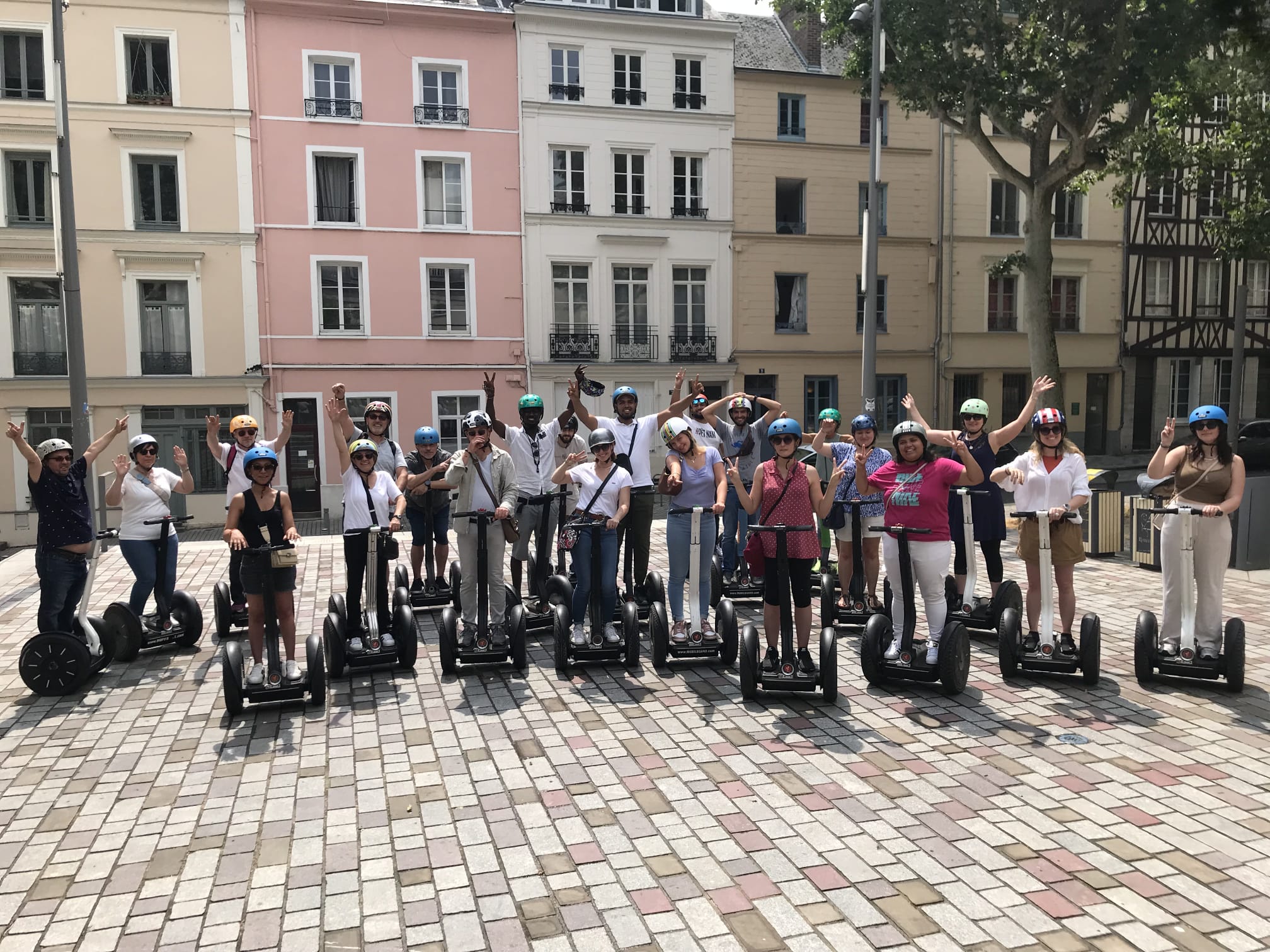
Urban Rally in Liege to align teams and energise a corporate day
INNOV'events is a Brussels-based event agency delivering Urban Rally formats for Liege, from 20 to 600 participants. We design the route, brief the teams, manage the game engine, and secure on-the-day operations (timing, safety, facilitation, back-up plans).
Whether you are running an onboarding day, a leadership offsite or a client event, we make sure the rally supports your HR and communication objectives—not just “activity for activity’s sake”.
Sommaire
In a corporate agenda, entertainment is only “useful” if it creates measurable behaviours: cross-silo cooperation, decision-making under time pressure, and a shared narrative that people reuse the next week in meetings. A well-structured Urban Rally gives you that—without needing a ballroom stage or heavy production.
Organisations in Liege typically expect operational realism: clear timing, bilingual facilitation when required, weather contingencies, and a format that respects shifts, client appointments and union-sensitive time slots. The rally must feel smooth, not improvised.
From Brussels, our teams operate frequently in Liege and know the city’s flow: pedestrian areas, constraints around bus access, and the practical realities of starting points near stations or central hotels. We plan like we will be judged on day-of execution—because you will be.
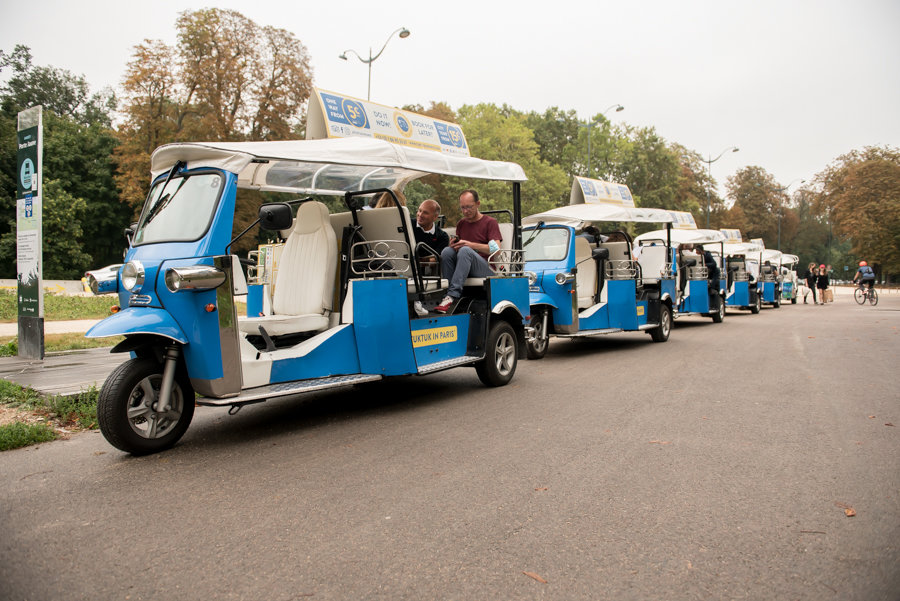
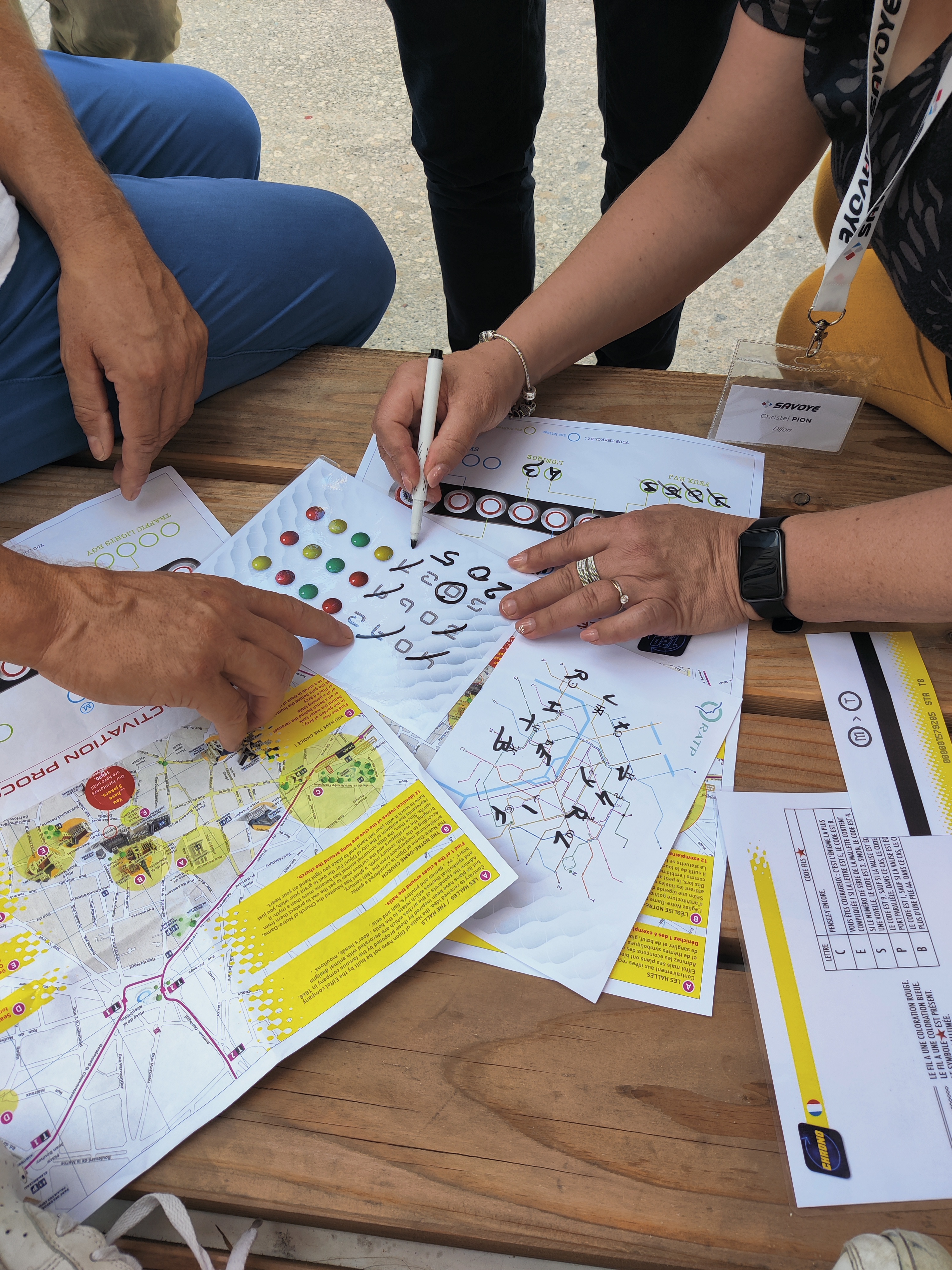
Operational benchmarks for Liege decision-makers
10+ years delivering corporate team activities across Belgium, with recurring HR and communication departments.
150+ corporate events/year managed within our network (team-building, client events, leadership offsites), with documented run-of-show and risk controls.
20–600 participants per Urban Rally in Liege through a scalable facilitation model (team captains, checkpoint staff, central control).
2-level back-up plan as standard: route alternates + indoor fallback challenges for weather or city constraints.
On-site production lead dedicated to stakeholders (HR/Comms/Executive sponsor) so you are not “chasing answers” during the event.
Companies we support in Liege and the 4000 area
We regularly work with organisations active in Liege and the wider province: industrial groups, public-interest organisations, service companies and HQ teams coordinating dispersed sites. Some clients rebook year after year because the format is dependable and easy to justify internally (clear objectives, controlled timing, predictable logistics).
You mentioned providing company names to use as references; we can integrate them exactly as soon as you confirm the list and the level of disclosure allowed (full name, sector-only, or “anonymised case”). In Belgium, many HR and procurement teams prefer a discreet approach—so we can also share references privately during a call or in a proposal, with contact permission where applicable.
What we can already commit to for a corporate event entertainment in Liege: realistic routes, facilitators who understand corporate codes, and a delivery that protects your brand image in public spaces.
 Besoin d’un devis rapide ?
Nous vous envoyons une première proposition sous 24h.
Why run an Urban Rally in Liege for your management goals
A rally is not a “nice moment”; it is a management tool when designed correctly. In Liege, where many organisations combine technical profiles, operations, and support functions, the rally becomes a controlled environment to observe and reinforce collaboration patterns—without putting people in an artificial classroom.
Executives and HR teams usually come with a clear expectation: “We need people to connect, but we also need the day to look professional and stay on schedule.” Our role is to structure the experience so it delivers both.
Break silos without forcing it: teams are mixed intentionally (functions, seniority, sites). Challenges are designed so no single profile dominates—analytical, relational and operational skills all count.
Reinforce leadership behaviours under mild pressure: time-boxed decisions, prioritisation, and delegation become visible. We can provide an observation grid for managers if you want to link the rally to leadership development.
Support employer branding in a credible way: when your company is seen in Liege behaving respectfully, organised and inclusive, it strengthens internal pride and external perception—especially for talent markets where word-of-mouth matters.
Create a shared story that survives the next quarter: teams remember specific “moments of truth” (a wrong turn, a clever shortcut, a conflict resolved). We capture those moments via photo challenges and structured debrief prompts, so the story doesn’t vanish after the closing drink.
Enable cross-site integration: for organisations with teams in different sites around the province, a centralised Urban Rally in Liege is a practical “neutral ground” that reduces travel inequity and helps onboarding cohorts meet the wider organisation.
Liege has a pragmatic business culture: people value authenticity and operational competence. A rally works here when it is well-briefed, well-facilitated, and anchored in real constraints (time, safety, accessibility)—not when it tries to be theatrical.
What companies in Liege expect from corporate entertainment
In our field experience, stakeholders in Liege ask the same core questions early—often more directly than in other cities: “Where do people park?”, “What if it rains?”, “Can we start right after a plenary?”, “Can we keep it inclusive for mixed fitness levels?” These questions are not details; they are adoption factors.
We design the Urban Rally to work with the city, not against it. That means planning around pedestrian flows, identifying comfortable regroup points, and avoiding bottlenecks where 30 teams would create noise or congestion. If your event includes VIP guests or client attendees, we also adapt the route to protect comfort and brand perception (less waiting, more guidance, better pacing).
Local constraints we address explicitly in proposal stage:
- Accessibility: starting points near Guillemins or central hotels; clear public transport guidance; drop-off points for coaches; step-free alternatives when necessary.
- Language & tone: English as working language is common for international groups, but bilingual facilitation (FR/NL) or FR/EN can be decisive depending on your workforce mix.
- Timing discipline: shift patterns, production cycles, and leadership agendas require minute-level planning (briefing, start wave, checkpoint windows, finish line).
- Weather resilience: a rally in Belgium needs real contingencies, not a sentence saying “we adapt.” We pre-validate indoor micro-challenges and covered regroup points.
For HR and communication, the most important expectation is that the activity is defendable: it must be safe, inclusive, and aligned with your internal messaging (values, transformation topics, customer promise).
Which Urban Rally challenges work best in Liege streets
Engagement comes from participation design. In a city-based format, people engage when they understand the rules quickly, feel safe moving in teams, and see a fair link between effort and outcome. Our Urban Rally challenge catalogue is built for corporate audiences: quick to brief, robust in public space, and adaptable to your brand and objectives.
Below are examples we commonly deploy in Liege, selected based on group size, timing and brand posture (serious corporate day vs. lighter end-of-year moment).
Interactive animations in Liege
Checkpoint negotiation: teams must “trade” clues with other teams under constraints (limited tokens, time window). Useful for sales/operations groups to surface negotiation styles without role-play discomfort.
Mission-based navigation: instead of “find X,” teams receive prioritised missions with limited time. They must choose a path, accept trade-offs, and justify decisions at debrief—very effective for leadership cohorts.
Observation sprint: a short zone where teams must capture specific details (symbols, numbers, patterns) to answer later. This tests attention and reduces pure speed advantage.
Stakeholder scenario cards: “Client changed scope”, “Budget cut”, “Safety constraint.” Teams adapt their plan and explain how they would communicate internally—relevant for transformation and project culture.
Art animations in Liege
Photo storytelling with brand guardrails: teams create 3–5 images based on prompts aligned with your values (e.g., safety, customer centricity, innovation). We provide clear rules to avoid risky public behaviour and ensure images are usable internally.
Micro-creation challenge: teams assemble a short “campaign pitch” (30–45 seconds) using found elements and a template. Good for communication teams who want to connect headquarters and field staff without putting anyone on a stage for too long.
Innovative animations in Liege
Tasting checkpoint with scoring rubric: rather than “eat and move on,” we structure it (sensory descriptors, team consensus). It becomes a collaboration task, not just a break.
Time-controlled refresh stop: planned to avoid crowding and delays; we coordinate with partners so service time is compatible with your run-of-show (important when you have a closing plenary or train departures).
Gourmand animations in Liege
Hybrid digital passport: QR-based validation and micro-questions reduce paper handling and speed up scoring. Works well for 100+ participants when you want a modern feel without complex app installs.
Live pulse questions: short in-game prompts (2–3) to collect feedback on collaboration, onboarding, or transformation themes. Results can feed your internal comms recap with real data, not only photos.
Accessibility-first route variants: parallel routes (standard + reduced mobility-friendly) with equivalent scoring. This avoids exclusion and prevents HR issues post-event.
Whatever the challenge mix, we align it with your brand image: if you are a regulated industry, we avoid anything that looks chaotic or disrespectful in public space; if you are a creative organisation, we can push storytelling further. The best corporate event entertainment in Liege is the one your internal stakeholders can proudly share on Monday.
Where to start and finish an Urban Rally in Liege
The venue is not just a meeting point; it sets the tone and dictates operational fluidity. For a Urban Rally in Liege, the best results come from a start location that supports briefing quality (audio, space, toilets), and a finish location that supports debrief and awards without chaos.
We typically advise clients to decide first on the “event spine”: plenary → briefing → rally waves → finish → drink/meal → wrap-up. Once that spine is fixed, we choose start/finish points that reduce transfer time and keep the group together.
| Venue type | For which objective? | Main strengths | Possible constraints |
|---|---|---|---|
| Hotel meeting space in central Liege | Leadership offsite, onboarding day, client-facing corporate day | Professional briefing conditions, AV, cloakroom, toilets, easy agenda control | Costs per room/coffee breaks; must manage group exits to avoid lobby congestion |
| Corporate office / HQ site (Liege area) | Culture & values day, internal change communication | Strong employer-brand anchor, minimal venue rental, easier control of security | Less “neutral ground”; may require transport planning and visitor access procedures |
| Central cultural or event venue near pedestrian zones | Large group rally with strong finish moment | Space for mass briefing/finish, easier awards ceremony, good photo opportunities | Availability, loading constraints, and sound limits depending on surroundings |
We insist on a site visit (or at minimum a detailed technical call with photos and access plans). In Liege, small logistical details—coach drop-off, regroup space, nearby works—can decide whether your start feels controlled or messy.
What does an Urban Rally in Liege cost for companies
Pricing for a Urban Rally in Liege depends on operational scope and the level of facilitation you require. A serious corporate delivery includes preparation time, route testing, staffing, materials, and on-day control—this is where quality differences between agencies usually appear.
To help procurement and HR, we structure budgets in transparent modules rather than a single opaque number.
Participants and wave management: 20–60 participants can run with a light facilitation team; 100–300 typically requires checkpoints and central control; 300–600 needs multi-wave starts and additional staff for safety and flow.
Duration and complexity: a compact 90-minute rally with standard challenges is different from a 3-hour format with debrief, live leaderboard, and branded content.
Customisation level: adding company-specific storyline, transformation themes, branded materials, or executive messages increases design time but improves strategic relevance.
Technology: paper-based is robust and cost-effective; QR validation or web-based scoring adds efficiency for large groups and reduces disputes.
Start/finish logistics: venue constraints, room set-up, sound equipment, and permissions can impact staffing and timing.
Risk management: additional marshals, medical standby, or stricter control points may be recommended depending on profile and public-space exposure.
From an ROI perspective, the question is not only “cost per head” but “cost per aligned interaction.” When a rally is designed to connect sites, functions and leadership layers, it reduces onboarding friction and improves internal cooperation—outcomes that matter far beyond the event day.
Why choose an event agency in Liege for an Urban Rally
For a city-based format, local execution capacity is not a nice-to-have; it is a risk control. Working with an event agency in Liege (or an agency with proven on-the-ground routines in the area) reduces uncertainty around routing, timing, and day-of reactivity.
In practice, local advantage shows in the small things that protect your event: knowing where groups can regroup without blocking foot traffic, anticipating which streets become congested, having tested indoor alternatives, and having reliable local suppliers for last-minute needs.
At INNOV'events, even when the project is steered from Brussels, we organise like a local operator: reconnaissance, route testing, and local partner coordination.
- Faster issue resolution: rerouting, adding a checkpoint, replacing a missing item—local network and local knowledge save minutes that matter.
- More accurate schedules: realistic walking times and regroup points prevent delays that can derail plenaries, meals, or train connections.
- Stronger stakeholder comfort: HR and executives feel the difference when the team is calm, prepared, and capable of making decisions on site.
- Brand protection in public space: local awareness helps avoid locations or behaviours that could create reputational risk.
From an ROI perspective, the question is not only “cost per head” but “cost per aligned interaction.” When a rally is designed to connect sites, functions and leadership layers, it reduces onboarding friction and improves internal cooperation—outcomes that matter far beyond the event day.



Urban Rally delivery examples in Liege-style corporate contexts
Our projects vary because corporate realities vary. We have delivered rallies for onboarding cohorts who needed to meet colleagues outside their department, for management teams who wanted a concrete team diagnostic, and for communication departments who needed content (photos, short interviews) without turning the event into a media circus.
Typical situations we plan for:
- Mixed populations: office + field staff, different fitness levels, different familiarity with the city. We create balanced teams and route variants so nobody feels “set up to fail.”
- Time pressure: when a CEO can only attend 60–90 minutes, we design a rally segment that still has a clear start, decision moment and finish.
- Client-facing sensitivity: for events with external guests, we tighten tone and operational control: clearer briefings, fewer “silly” tasks, and a finish debrief that reinforces business messaging.
- Data and reporting: for HR, we can provide a post-event recap including participation numbers, challenge outcomes, and key observations—useful when you need to report internally on engagement.
The common thread is adaptability without improvisation: we adjust the format, but we keep a disciplined production framework so the day remains predictable for stakeholders.
Mistakes to avoid when planning entertainment in Liege
Underestimating route testing: a route that looks fine on a map can fail in real life due to works, crowd flows, or regroup points that are too small. We physically test and time the route.
Briefing too long or too vague: corporate groups lose focus quickly if rules are unclear. We use a structured briefing (what to do, how to score, what not to do, what to do if lost).
One-size-fits-all intensity: if you push pace too hard, you exclude part of the group; if it’s too easy, you lose energy. We calibrate distance, complexity and time-boxes.
No real bad-weather plan: “we’ll adapt” is not a plan. We pre-define covered alternatives and switch criteria (rain threshold, wind, temperature).
Finishing without a debrief: without a short structured close (10–20 minutes), the rally becomes “just a walk.” We propose a debrief format aligned with your objectives.
Ignoring brand and public-space behaviour: loud props, unsafe crossings, or intrusive filming can damage reputation. We set behavioural rules and design challenges accordingly.
Our role is to prevent these risks through a disciplined production approach: reconnaissance, staffing plan, briefing quality, and clear on-day control. That is what executives pay for—reliability.
Why Liege clients rebook INNOV'events for corporate rallies
Repeat business rarely comes from the “concept.” It comes from how the agency behaves under pressure: clear communication, predictable delivery, and the ability to protect the internal sponsor’s credibility. That is why clients come back.
When HR or communication teams rebook, it is often because the first project removed friction: fewer internal emails, fewer last-minute surprises, and a day that ran according to the promised schedule.
24–72 hours: typical window to deliver a clear recap pack (key photos, results, and operational notes) after the event, depending on content volume.
1 single point of contact from briefing to event day, reducing stakeholder confusion between sales, production and facilitation.
Contingency planning included in delivery: route alternates, spare materials, and defined escalation paths.

Loyalty is the most practical proof of quality in our industry. If an internal sponsor rebooks, it means the event delivered outcomes and did not create internal risk.
How we build your Urban Rally in Liege from brief to delivery
👉 Liege scoping call and stakeholder alignment
We start with a 30–45 minute call with HR/Comms and, ideally, the executive sponsor. We clarify objective priority (integration, culture, leadership, client experience), constraints (timing, mobility, language), and success criteria. This avoids a common corporate problem: different stakeholders expecting different outcomes from the same activity.
👉 Route reconnaissance and operational design in Liege
We design 1–2 route options with timing, regroup points, and safety notes. We validate feasibility with a reconnaissance: walking times, bottlenecks, indoor fallback locations, and start/finish capacity. If needed, we propose wave starts to keep flow smooth for large groups.
👉 Challenge selection and brand alignment for Liege teams
We select challenges that fit your audience and brand posture, then define scoring and instructions. If your communication team needs content, we integrate photo prompts with clear usage rules (consent, brand tone). If your HR team wants learning value, we build a debrief structure and optional observation points.
👉 Production plan, staffing and stakeholder validation
You receive a clear run-of-show: briefing timing, staff roles, checkpoint plan, contingency triggers, and participant instructions. This is the document that reassures executives: it shows we have thought through the day operationally, not just creatively.
👉 Event-day delivery and control in Liege
We run the briefing, launch teams, manage checkpoints, support teams via hotline, and monitor timing. The production lead stays available to HR/Comms for quick decisions. We close with results and a short debrief, then coordinate the handover to your next moment (drink, dinner, plenary).
👉 Post-event recap for Liege stakeholders
We provide results, key learnings (if requested), and a concise operational feedback note. For internal comms, we can package a ready-to-share recap with selected photos and a short storyline that reflects your objectives—useful for intranet and leadership updates.
FAQ sur l'organisation Urban Rally à Liege
How long should an Urban Rally in Liege last?
Most corporate groups in Liege choose 90 to 150 minutes of rally time, plus 15 minutes briefing and 10–20 minutes wrap-up. If you have a plenary and a meal in the same agenda, we recommend keeping the full block within 2.5 to 3 hours door-to-door.
What group size works for an Urban Rally in Liege?
We typically run teams of 4–6 people. The format works from 20 to 600 participants with the right staffing model. For 100+, we usually add checkpoints and consider wave starts to keep public-space flow professional.
Can you run a Liege rally in heavy rain?
Yes, with a defined switch plan. We prepare route alternates and covered micro-challenges so you can continue without compromising safety or comfort. If conditions are extreme (e.g., strong wind advisories), we recommend moving to an indoor adaptation; we agree decision criteria with you in advance.
Do we need permits for an Urban Rally in Liege?
Most rallies operate without formal permits if teams move respectfully in small groups and do not block public space. Permits may be required if you plan fixed installations, amplified sound, or a large-scale start/finish occupying a public area. We flag these points during design and guide you on what is realistic.
How do you keep a Liege corporate rally inclusive?
We calibrate distance and pacing, propose route variants, and design challenges that don’t reward speed only. For mixed mobility levels, we can set an accessibility-first route with equivalent scoring. Inclusion also means tone: we avoid tasks that could embarrass participants or clash with corporate codes.
Request a quote for an Urban Rally in Liege
If you are comparing agencies, we recommend booking a short scoping call early—ideally 4 to 8 weeks before the date for best venue and staffing availability in Liege. We will challenge your assumptions (timing, route, audience mix) and propose a rally design that your executives can approve with confidence.
Send us your participant count, preferred date, start/finish location (if known), and your top two objectives (e.g., onboarding + culture, leadership + cross-silo). We will respond with a concrete concept, a staffing approach, and a transparent budget structure for your Urban Rally in Liege.
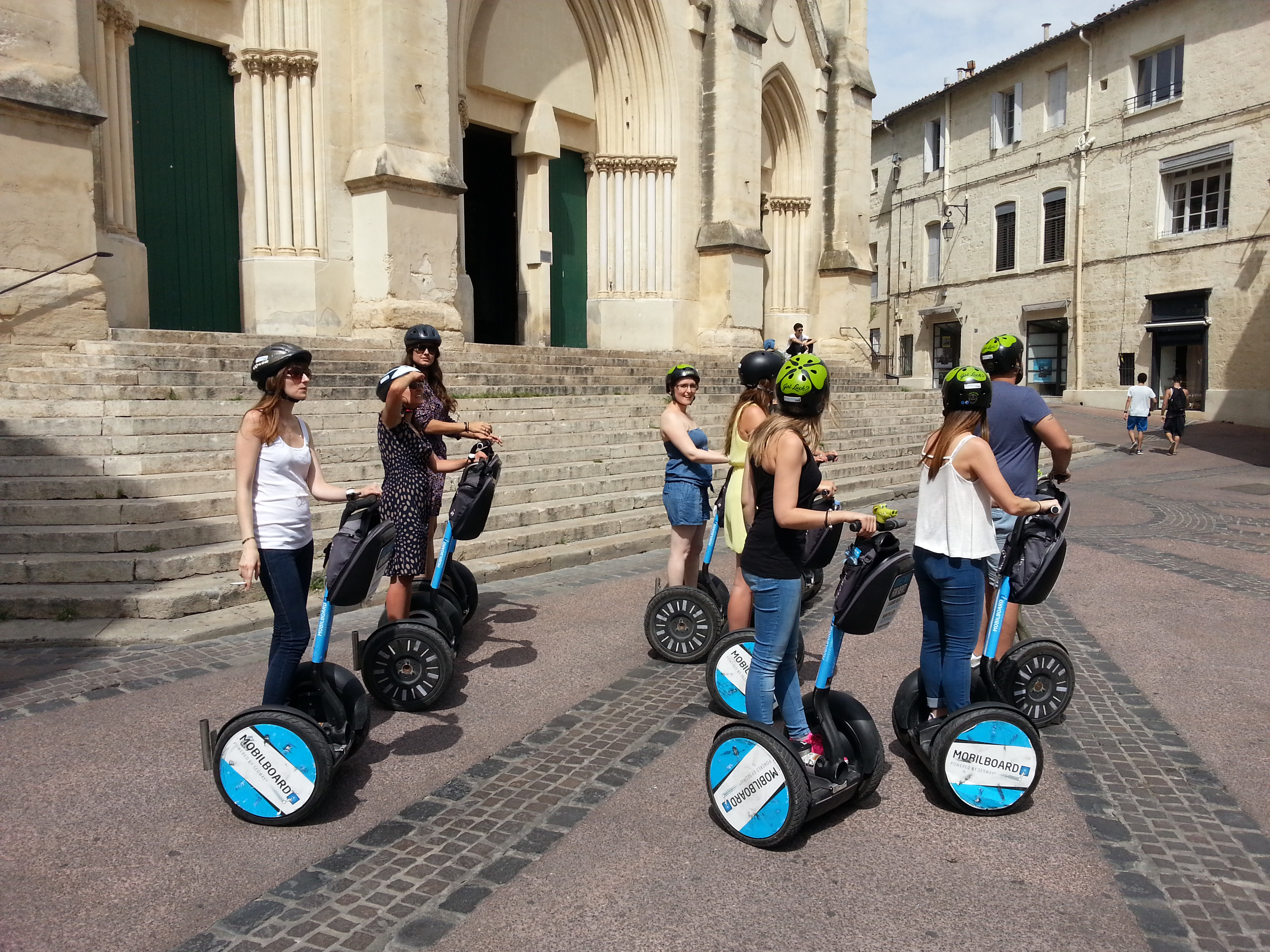
INNOV'events Liege Agency
Justin JACOB is the manager of the INNOV'events Liege office. Reach out directly by email at belgique@innov-events.be or via the contact form.
Contact the Liege agencyToutes nos prestations & animations Liege, Belgique
Découvrez nos prestations événementielles
Découvrez nos animations événementielles disponibles au Belgique
- Event Hostess in Liege
- Escape Game in Liege
- MasterChef Cooking Workshop in Liege
- Magician in Liege
- Marquee Rental in Liege
- Color Analysis Workshop in Liege
- Inflatable Games in Liege
- Valet Parking Service in Liege
- Football Simulator in Liege
- LED Furniture Rental in Liege
- Light Branding in Liege
- Unique Dining Experience in Liege
- Light Painting in Liege
- Murder Mystery Party in Liege
- Prize Contest in Liege
- Promotional Displays (POS) in Liege
- Virtual Reality in Liege
- Molecular Gastronomy Workshop in Liege
- Halloween Entertainment in Liege
- Fireworks Show in Liege
- Giant Games Challenge in Liege
- Event Host / MC in Liege
- Photo Booth Animation in Liege
- Santa Claus Entertainment in Liege
- Kids Entertainment in Liege
- Guided Tour in Liege
- Urban Rally in Liege
- Ball Pit in Liege
- Flight Simulator in Liege
- Food Truck Rental in Liege
- World Record Challenge in Liege
- Surf Simulator in Liege
- Wine Casino in Liege
- Makeover Workshop in Liege
- Perfume Creation Workshop in Liege
- Acting Workshop in Liege
- CSR Activities in Liege
- Archery in Liege
- Security Staff in Liege
- Wine Tasting in Liege
- Mime Performer in Liege
- TV Game Show in Liege
- Funfair in Liege
- Crisis Management Workshop in Liege
- Crisis Negotiation Workshop in Liege
- Arcade Games in Liege
- Indoor Skydiving Simulator in Liege
- Ski Simulator in Liege
- Racing Circuit Experience in Liege
- Introductory Flight Experience in Liege
- Tasting Experience in Liege
- Build Your Own Foosball Workshop in Liege
- 2CV Rally in Liege
- LEGO Challenge in Liege
- Casino Night in Liege
- Interpreter / Translator in Liege
- Promotional Giveaways in Liege
- Shuttle Transport in Liege