
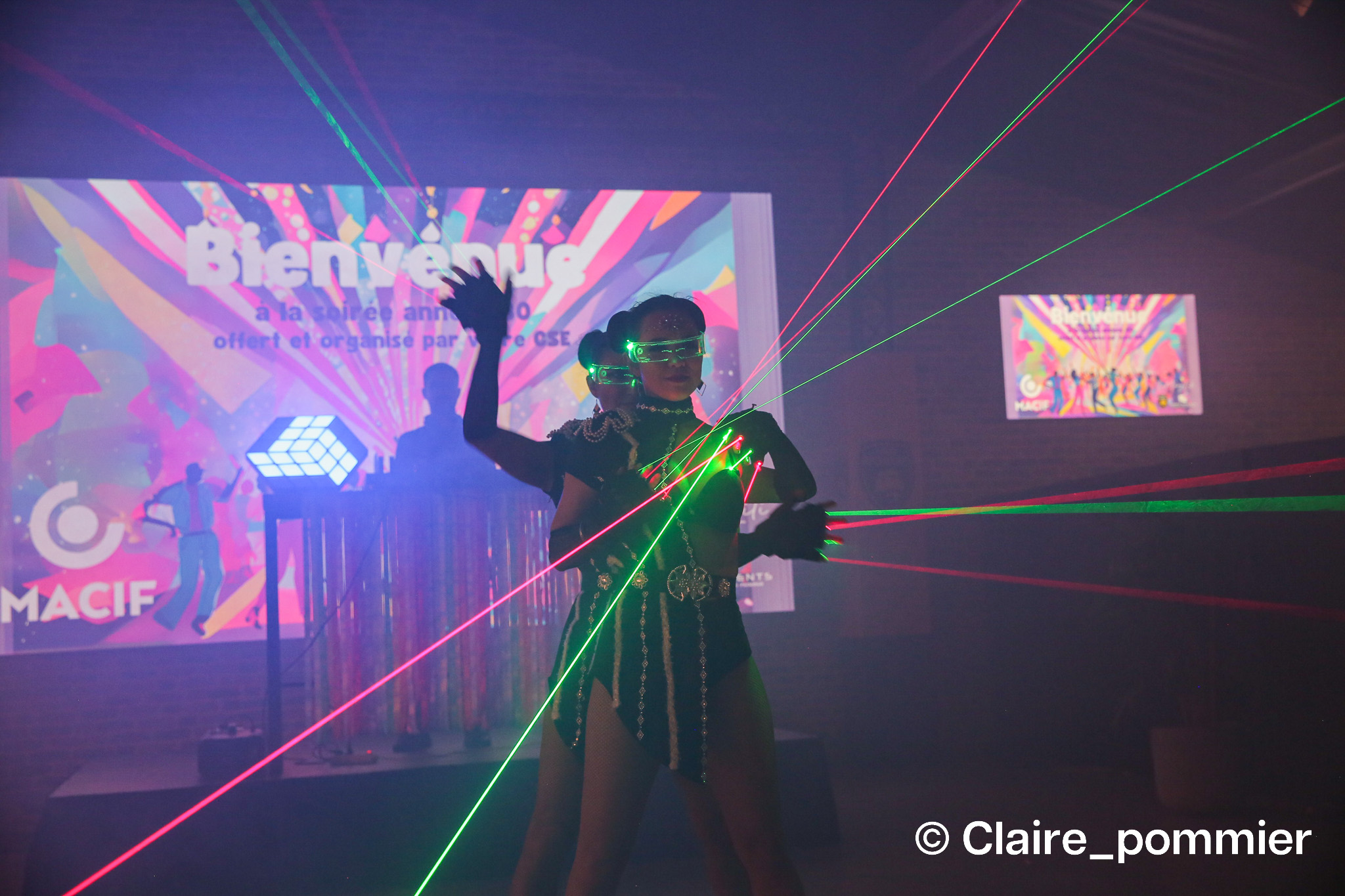
Sound & Lighting Production in Liege that protects your message and your timing
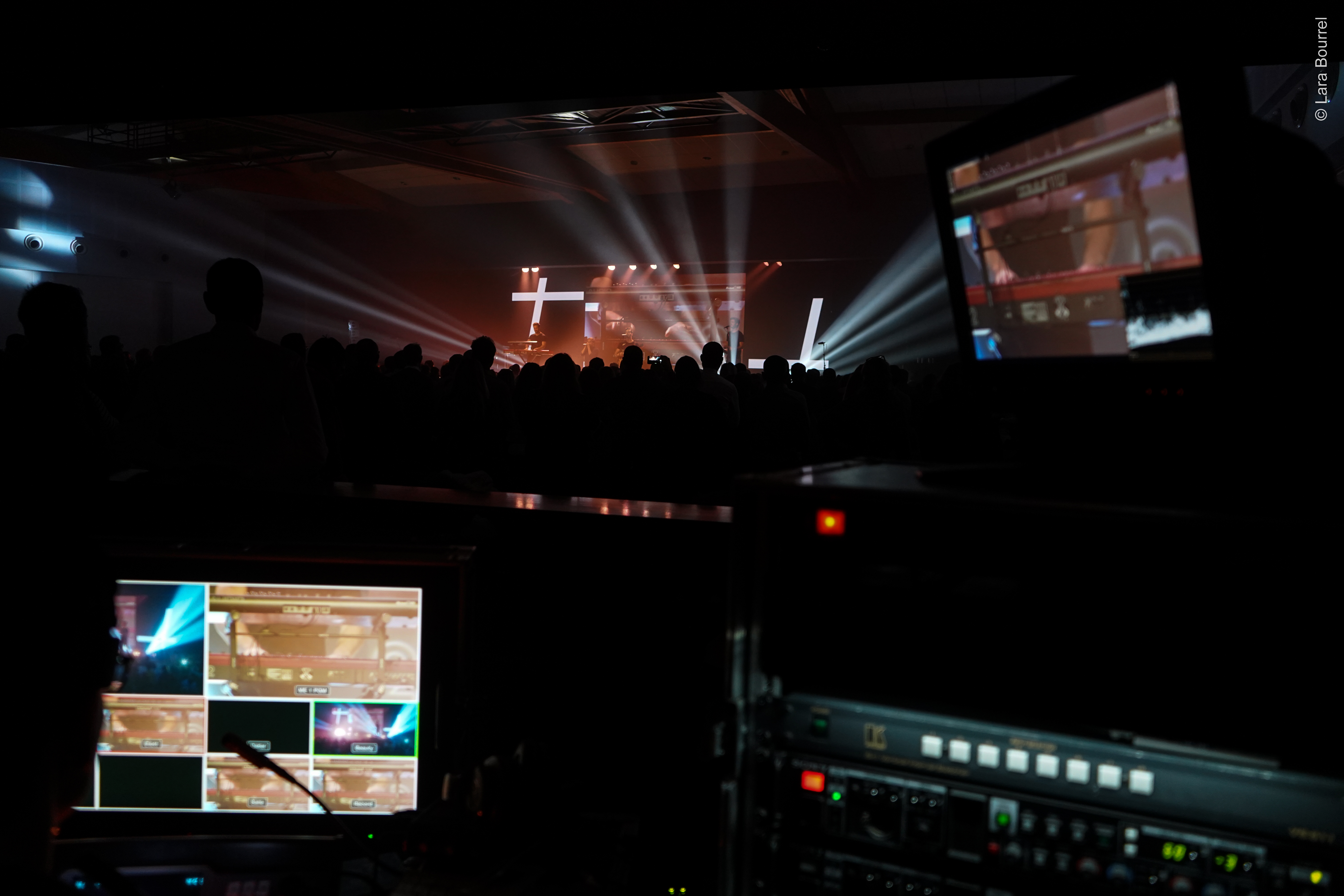
INNOV'events delivers Sound & Lighting Production for corporate events in Liege, from 30 to 2,000 attendees. We cover audio, lighting, video support, rigging coordination, and show-calling, so your speakers are heard, your brand looks consistent, and your agenda stays on track.
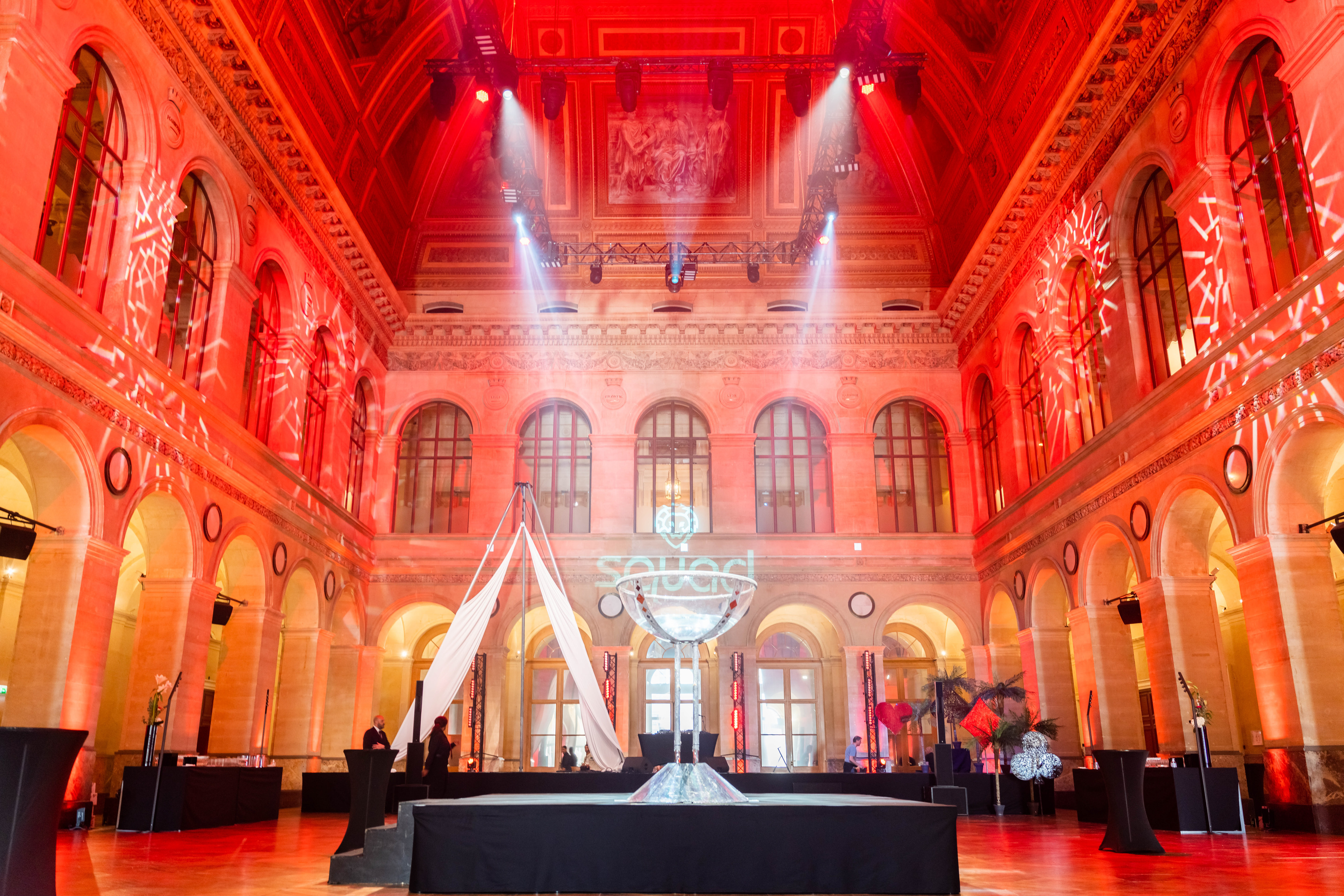
Whether it’s a town-centre venue, a converted industrial space, or a hotel ballroom, we plan for acoustic realities, power distribution, access, and rehearsals—before your leadership team steps on stage.
Table of contents
In a corporate event, sound and lighting are not “technical extras”: they directly influence leadership credibility, employee attention, and how clearly a strategy is understood. One microphone dropout during a CEO address can undo weeks of internal comms preparation.
Organizations around Liege typically expect a fast setup, strict safety, bilingual readiness (FR/EN when needed), and a technical partner who can work alongside venue teams without friction. They also expect realistic budget framing, not surprises at 18:00.
From Brussels, INNOV'events supports companies across Wallonia, with frequent deployments in Liege. We bring the right crew size, proven gear, and production discipline: site recce, patch plans, cue lists, and a show caller who owns timing.
What you can verify quickly in Liege before you shortlist us
10+ years coordinating corporate event production across Belgium, with repeat clients who require consistent delivery standards.
Typical deployments: 1 to 4 technician teams depending on complexity (audio, lighting, video support, stage management), with a single production lead accountable end-to-end.
Operational formats covered: town halls, awards nights, product reveals, plenaries, and multi-room breakouts, including rehearsals and speaker support.
Service scope: Sound & Lighting Production in Liege including stage patching, RF mic management, lighting programming, show-calling, and on-site troubleshooting.
How to organize a professional event in Liege?
- Define the objective (cohesion, announcement, fidelity, performance).
- Set date, format and size (20–1 000 people).
- Secure the venue and accommodation according to seasonality.
- Lock down technical, suppliers and logistics.
- Drive the day J (timing, scene, entrance, flow).
Liege references you can relate to (and why they matter)
We regularly support organizations operating in and around Liege—including groups with multiple sites, union representation, and a high bar for internal communications. Many of these teams come back year after year because they want a partner who remembers their room constraints, brand guidelines, and speaker profiles.
You mentioned sharing specific company names as references; once you provide them, we will integrate them here in a factual way (event format, typical audience size, and production scope) without breaching confidentiality. In the meantime, what we can state clearly is our working reality in Liege: tight load-in windows in city-centre venues, strict noise management for evening formats, and stakeholder coordination with venue technical managers, security, and catering.
For a director or HR lead, this translates into fewer operational escalations on event day: we arrive with an approved plan, labelled cabling, spare RF channels, and a cue-based run-of-show that aligns with your communications objectives.
We send you a first proposal within 24h.
Why leaders in Liege invest in sound and lighting, not just an “event”
When you gather people in person, you are buying attention. In a region like Liege, where many companies run shift work, multi-site operations, and change programs (safety, transformation, HR policy), attention is expensive and fragile. Production quality is what prevents distraction and protects the message.
Clarity of leadership communication: Proper microphone choice (headset vs handheld), clean PA tuning, and controlled stage lighting make executive messages intelligible and visually credible—especially when you have hybrid recording or press content to reuse.
Engagement without chaos: When Q&A is planned with RF hand mics, runners, and clear rules, you get participation while keeping timing. This matters for HR and comms teams who need interaction but cannot afford overruns.
Brand consistency: Lighting palettes, gobo placement, and stage look should match brand guidelines. In practice: the right colour temperature for your corporate blue, consistent logo legibility on camera, and no “nightclub look” during serious moments.
Risk control and duty of care: Safe cable routing, rigging checks, and power distribution reduce incidents. For employers, that’s part of responsible operations—especially in venues with mixed public access.
Better content capture: Even if you don’t run full video production, clean audio feeds and a well-lit stage allow usable recordings for intranet and onboarding. Many comms teams in Liege ask for “something we can reuse”; production makes that realistic.
Operational calm for your team: A structured production plan reduces last-minute decisions. Your HR/communications staff can focus on guests and stakeholders rather than chasing adapters and solving feedback issues.
Liege has a strong industrial and academic ecosystem, with practical expectations: people want straightforward delivery, visible preparation, and respect for time. Sound and lighting done properly fit that culture: efficient, safe, and outcomes-focused.
What Liege venues and corporate sites typically require from production
Delivering Sound & Lighting Production in Liege is often less about “bigger gear” and more about anticipating constraints that affect schedule and risk.
Access and load-in: City-centre venues can mean limited parking, specific loading bays, or time slots that overlap with guest arrival. On corporate sites, security gates, badge protocols, and dock availability can compress the setup window. We plan crew call times, vehicle sizes, and staging areas accordingly.
Acoustics and intelligibility: Many spaces used for corporate events—industrial halls, atriums, high-ceiling rooms—create reflections that kill speech clarity. Rather than simply “turning up the volume,” we look at speaker positioning, delay lines where needed, directional microphones, and PA aiming. For a town hall, intelligibility beats loudness.
Power realities: You cannot assume the room has clean, distributed power where you need it. We confirm available circuits, distance to power, and whether separate phases are required. This avoids the classic late discovery: audio shares a circuit with catering warmers.
Stakeholder coordination: In Liege, venue technical teams are often experienced and protective of their infrastructure. We work with them: advance calls, patch list exchange, rigging points validation, and a clear division of responsibilities. It keeps everyone aligned and reduces day-of friction.
Language and speaker profiles: It is common to have bilingual agendas or international presenters. We plan microphone technique coaching, podium setup, confidence monitors, and a short rehearsal so speakers do not fight the room. Executives notice the difference immediately.
Which corporate event entertainment works best in Liege with pro production
In corporate settings, entertainment is not about filling time; it is about managing energy. With good Sound & Lighting Production, entertainment becomes a controlled tool: keeping attention high, supporting transitions, and reinforcing brand tone without overshadowing content.
Interactive animations in Liege
Moderated Q&A with audience microphones: We set up 2–4 roaming RF mics, a stage monitor for the moderator, and clear rules (30–45 seconds per question). This keeps dialogue genuine while protecting timing—useful for HR town halls in Liege.
Live polling reveal with lighting hits: When results appear on screen, we use subtle lighting cues to “mark” moments. It sounds simple, but it keeps the room synchronized and avoids that awkward silence after a poll closes.
Panel discussions with proper mic strategy: Headsets for panelists, handheld for audience, and a dedicated audio operator riding levels. This prevents the typical problem: one soft speaker becomes inaudible beyond the first rows.
Art animations in Liege
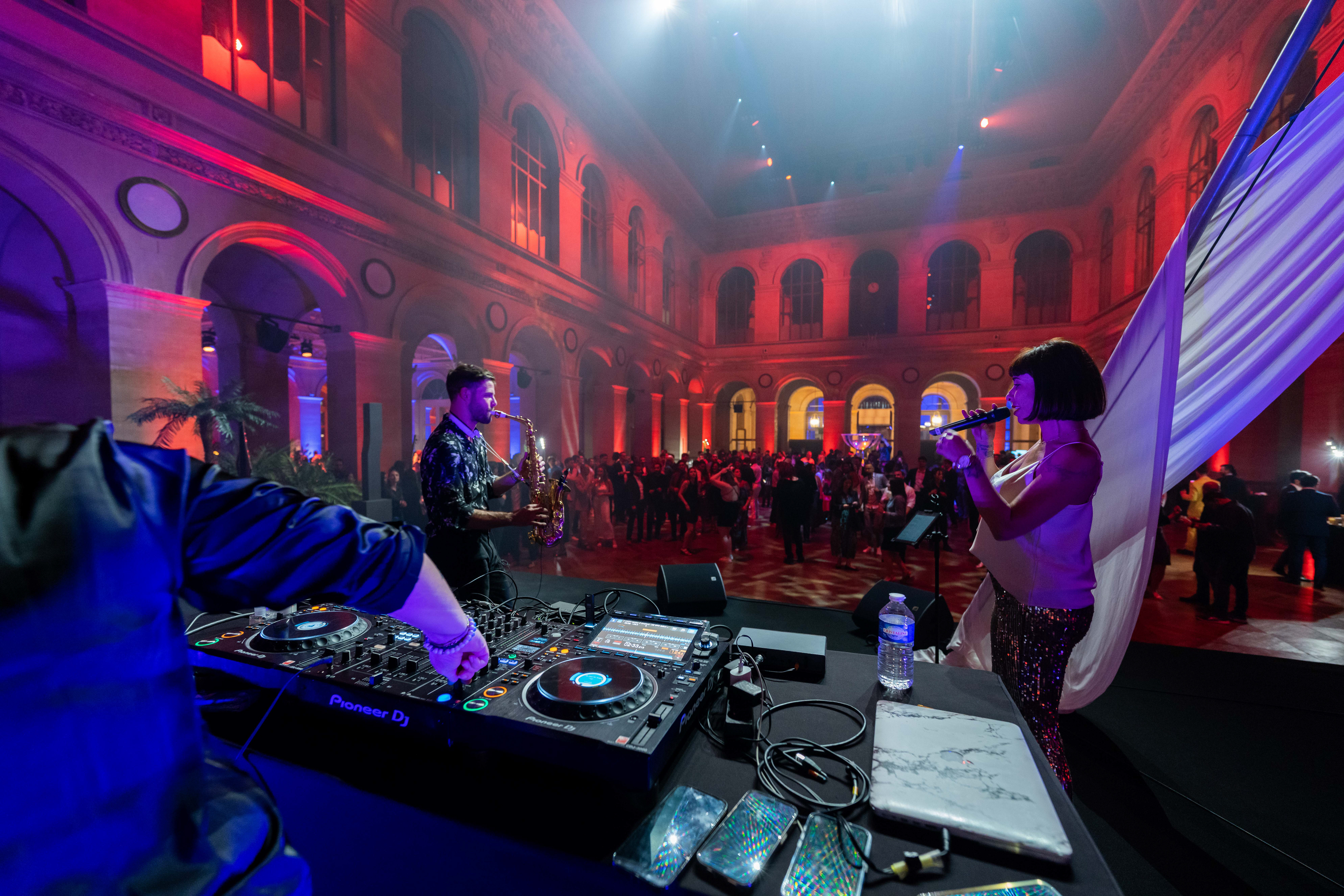
Compact live music for receptions: Jazz trio, acoustic duo, or a small band with controlled SPL. In many Liege venues, the goal is atmosphere without blocking conversation, so we tune for warmth and keep volume within agreed limits.
Branded awards stings: Short musical stings and lighting looks per category. It creates rhythm and professionalism without inflating the programme.
Voice-over + walk-on choreography: For product or strategy reveals, we script audio cues, stage lighting, and speaker entrances. This is often what executives mean by “make it look serious.”
Innovative animations in Liege
Chef moment with controlled lighting: If you bring a chef or a tasting station on stage, we light it properly (high CRI wash, no harsh shadows) and provide a discreet headset mic so the explanation is audible without shouting.
Structured networking soundtrack: A well-managed playlist with gradual tempo changes signals phases (arrival, mid-networking, closing). We keep SPL appropriate for conversation—especially important for B2B evenings in Liege.
Gourmand animations in Liege
Hybrid-ready audio feeds: Even without full streaming, we can provide clean audio outputs for recording or webcast teams. This is increasingly requested by communication departments who need replays for remote sites.
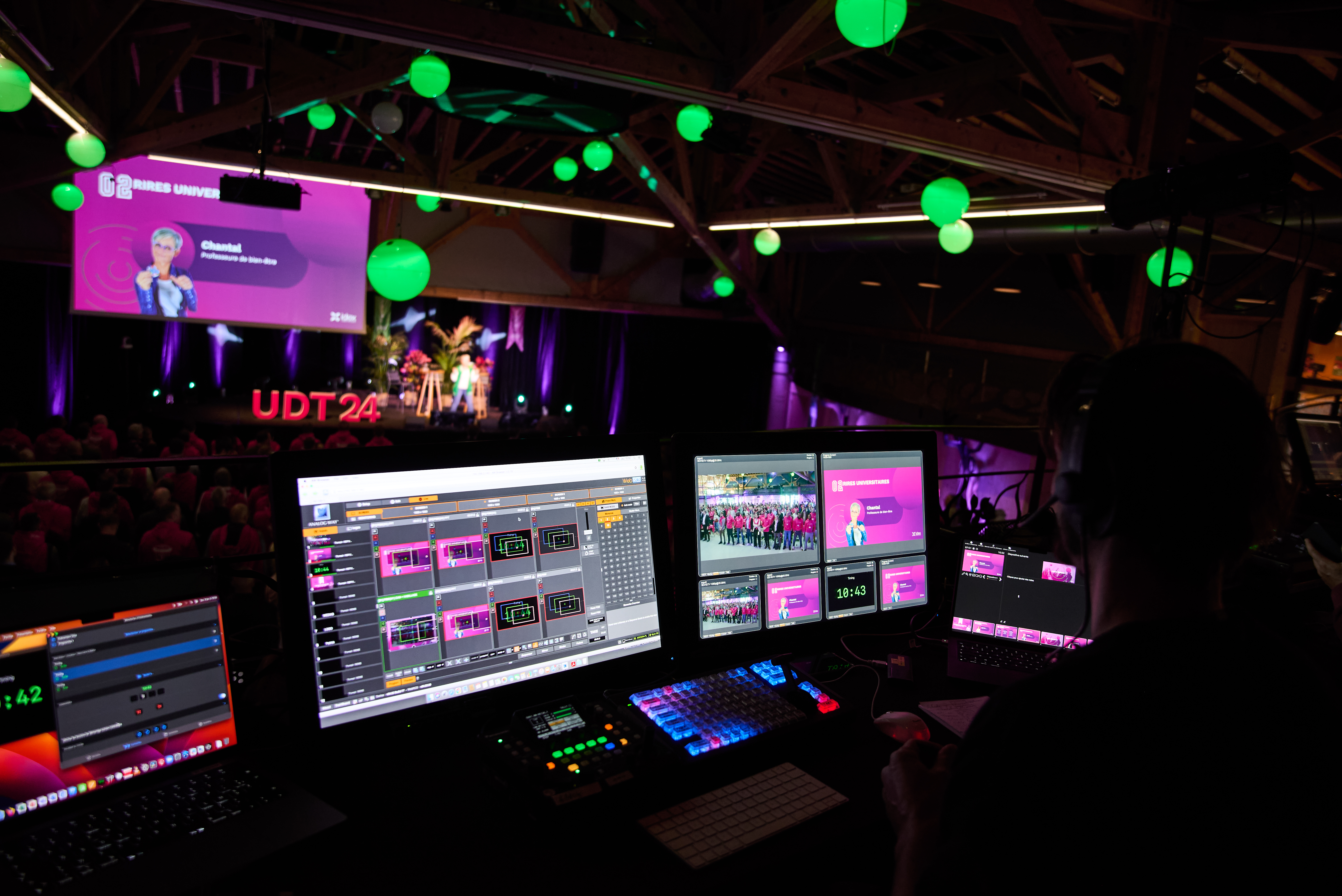
Scene-based lighting programming: Instead of manual “on/off,” we pre-program scenes: plenary, video, Q&A, awards, networking. It reduces errors and speeds transitions.
Silent demo zones: For multi-activity rooms, we can create separate audio zones (directional speakers or headphone-based demos) so demos don’t compete with speeches.
Whatever the format, the key is alignment with your brand image: tone, volume, pacing, and visuals must match the message. In Liege, audiences quickly detect when entertainment feels disconnected from the company’s reality—good production avoids that mismatch.
How to choose a Liege venue that won’t compromise production quality
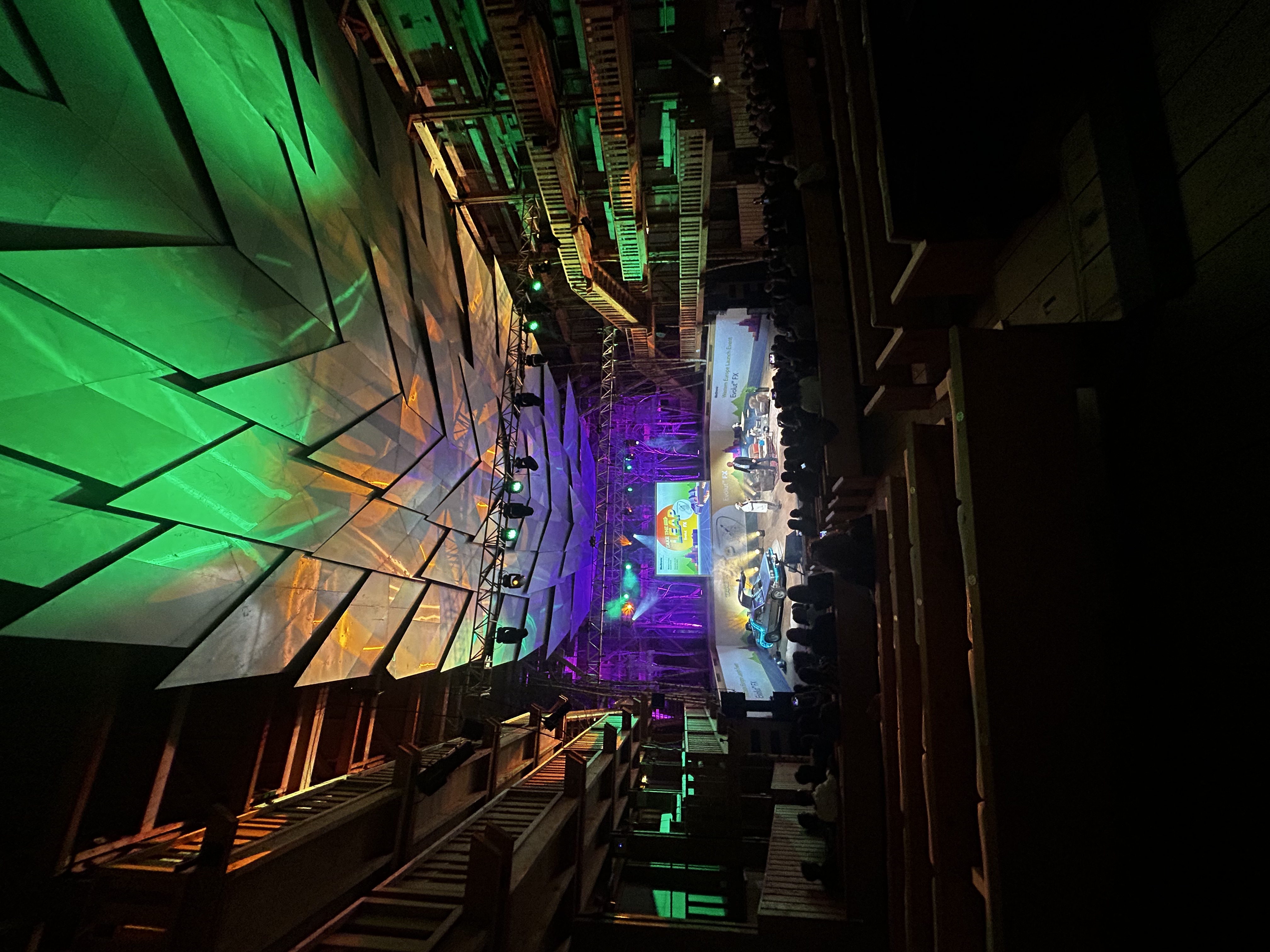
The venue determines what is realistically achievable with sound and lighting: rigging permissions, ceiling height, acoustic behaviour, power access, and curfew. Selecting the right type of space in Liege is often the difference between a smooth show and a day of compromises.
| Venue type | For which objective? | Main strengths | Possible constraints |
|---|---|---|---|
Hotel conference ballroom (Liege area) | Plenary, kick-off, awards with seated audience |
|
|
Industrial or heritage venue in the Liege district | Brand reveal, gala, large cocktail with “wow” staging |
|
|
Corporate site hall / warehouse near Liege | Internal town hall, safety milestones, operational celebrations |
|
|
We strongly recommend a site visit (or at least a detailed technical advance with photos and measurements). A 45-minute recce in Liege can avoid hours of rework and prevent budget creep caused by last-minute equipment changes.
What Sound & Lighting Production costs in the Liege area
Pricing for Sound & Lighting Production in Liege depends less on “event size” than on technical complexity, venue constraints, and rehearsal needs. A transparent quote should separate equipment, crew, transport, and optional services (show-calling, extra RF channels, extended hours).
Audience size and room geometry: A 200-person event in a difficult room can require more PA components than a 500-person event in a well-treated ballroom.
Agenda complexity: A single keynote is not the same as an awards night with walk-ons, stings, videos, and multiple presenters. Each transition adds programming and show-calling time.
Microphone plan: Typical corporate setups range from 2 to 12 RF channels (headsets, handhelds, lavaliers). More channels require RF coordination and monitoring.
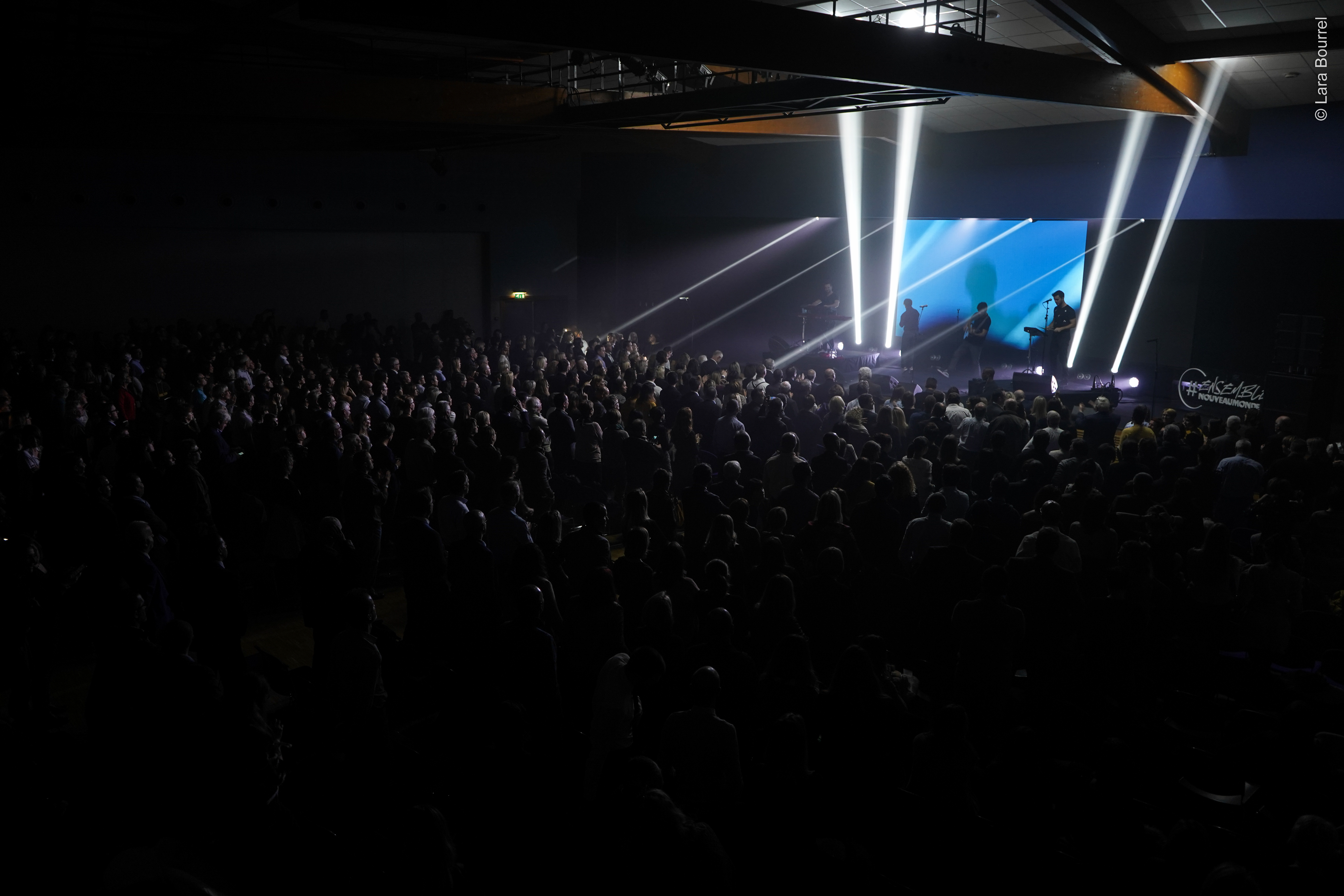
Lighting ambition: Basic stage wash vs. fully programmed looks (front wash + backlight + effects + architectural uplights). The second option increases fixtures, rigging time, and a dedicated lighting operator.
Venue constraints in Liege: Limited load-in, long cable runs, or no rigging points can add labour and additional structures (ground support, truss towers, cable ramps).
Rehearsal and on-site hours: Half-day vs. full-day setup, and whether you need a tech rehearsal for speakers. Overtime policies should be clear in advance.
Optional deliverables: Clean audio records, press-ready stage look, or support for an external video/streaming provider (feeds, timecode, comms).
From an ROI standpoint, production is a risk-reduction investment: fewer delays, clearer messaging, better content reuse, and a more credible leadership presence. For many employers in Liege, that is worth more than the cost difference between “basic AV” and a properly managed show.
When choosing an event agency in Liege is the safer operational choice
For executive and HR teams, the main value of a local partner is not proximity on paper—it is operational predictability. In Liege, that means knowing which venues have strict rigging policies, what access routes are realistic, and how to coordinate with local suppliers without losing time in email loops.
As part of INNOV'events, we coordinate production with a Brussels-based structure while operating frequently in the region; if you also need broader support beyond production, you can work with the same partner as your event agency in Liege for logistics, suppliers, and programme design.
Most importantly, local execution reduces day-of risk: faster response to venue requests, shorter turnaround for additional equipment, and crew familiarity with common site constraints.
- Faster technical advances: easier recce scheduling, quicker alignment with venue tech managers, and fewer assumptions.
- Better contingency options: local access to replacement gear, extra crew, and backup solutions if something changes (agenda, guest count, room layout).
- More accurate budgeting: fewer hidden costs related to transport time, parking, load-in constraints, and extended hours.
- Smoother stakeholder management: security, neighbours, curfews, and safety expectations are handled with the right local reflexes.
From an ROI standpoint, production is a risk-reduction investment: fewer delays, clearer messaging, better content reuse, and a more credible leadership presence. For many employers in Liege, that is worth more than the cost difference between “basic AV” and a properly managed show.






Production examples around Liege that reflect real corporate constraints
Our projects differ in size and sector, but the recurring challenge is the same: protecting message delivery under real-world constraints (tight schedules, executive availability, and venues not designed for broadcast-quality speech).
Example 1: Town hall with sensitive Q&A
A leadership team needed a structured Q&A with union representation present. We deployed multiple roaming mics, a dedicated moderator foldback monitor, and a strict cue-based approach so questions were audible, recorded cleanly, and the tone remained controlled. The result was not “flashy”—it was stable and respectful, which is what the company needed in that moment.
Example 2: Awards sequence with pacing pressure
For an internal recognition evening, the risk was dead time between winners. We built category stings, lighting looks per segment, and a show caller who managed walk-ons. This kept the programme within the planned runtime and avoided the typical “we’re 30 minutes late” situation that creates friction with venue staff and transport.
Example 3: Multi-room breakouts with a single plenary build
A communications team wanted a strong plenary look plus several smaller breakouts. We prioritised speech intelligibility and consistent mic behaviour across rooms, with clear labelling and a predictable handover process between sessions. These are the details that make an event feel professionally managed to participants—especially in Liege where people value efficiency.
Common sound and lighting mistakes we prevent in Liege venues
Underestimating room acoustics: a powerful PA cannot fix a reflective room without proper placement and tuning. We plan for intelligibility with speaker aiming, delays, and mic choice.
No RF plan: too many wireless mics without frequency coordination leads to dropouts. We coordinate channels and monitor RF health throughout the event.
Lighting that fights the brand: incorrect colour temperatures make people look tired on camera and can clash with brand visuals. We choose fixtures and settings to match the desired tone.
Missing rehearsal time: executives arrive late by nature of their schedule. A focused, planned rehearsal avoids issues like wrong clickers, unreadable confidence monitors, and mic handling problems.
Unclear responsibility split: venue AV, external technicians, and internal IT can overlap. We clarify who owns what (audio, projection, lighting, comms) before event day.
Power sharing with catering: it causes noise, tripped breakers, and emergency resets. We specify clean power circuits and distribution early.
Our role is to remove these risks before your audience enters the room. In Liege, where many events run on tight windows and fixed curfews, prevention is what protects both your brand and your schedule.
Why Liege clients renew with the same production partner
Repeat business in production is rarely about price; it is about predictability and trust under pressure. When your CEO is backstage and the room is filling up, you want a team that has already solved the typical failure points.
High repeat rate on annual formats: clients often rebook for recurring town halls, end-of-year events, or awards nights because the production file (plans, cue lists, preferences) can be reused and improved.
Standardized documentation: patch lists, stage plans, and run-of-show cues are archived and updated, reducing prep time and improving consistency year over year.
Incident-driven learning: when something unexpected happens (late speaker arrival, room change, added video), the fix becomes part of the next plan—so the same issue doesn’t repeat.

Loyalty is not a slogan; it is evidence that the event day was calm, the message landed, and the internal team did not have to “carry” technical stress. That is what we aim to deliver every time in Liege.
Our production process for Liege: from recce to show-calling
👉 Step 1 (Liege): Technical discovery and agenda reading
We start with your agenda and stakeholders: who speaks, what content (slides, video, live demos), and what the desired room dynamic is. Then we validate the venue’s technical reality: access, rigging, power, curfew, and in-house rules. Output: a clear scope and risk list, not a vague promise.
👉 Step 2 (Liege): Production design and equipment plan
We translate the programme into a technical design: PA layout, mic list, RF channel plan, stage monitoring, lighting scenes, and any uplighting for room branding. You receive a structured quote with options (for example: basic stage wash vs. programmed looks; 4 vs. 8 wireless channels).
👉 Step 3 (Liege): Advance coordination with venue and vendors
We coordinate with the venue technical manager and any third parties (screen provider, catering, security). We confirm load-in schedules, responsibilities, and safety requirements. Output: a consolidated schedule and a shared understanding of who does what.
👉 Step 4 (Liege): Setup, tuning, and rehearsals
On site, we build and test systematically: power distribution first, then rigging/stage, then audio patching and line check, then lighting focus and programming. We run rehearsals that matter: mic technique, walk-ons, video audio levels, and timing cues. Output: a stable show before doors open.
👉 Step 5 (Liege): Live operation and contingency management
During the event, the show caller manages cues and timing with the client point-of-contact. Audio and lighting are operated live, with RF monitoring and spare equipment ready. If something changes (speaker order, added announcement), we adjust without visible disruption.
👉 Step 6 (Liege): Load-out and post-event debrief
We load out safely and leave the venue clean. If relevant, we provide a short debrief: what worked, what to improve, and what to lock in for the next edition (equipment choices, cue adjustments, schedule tweaks). This is how production quality improves over time.
FAQ sur l'organisation Sound & Lighting Production à Liege
How early should we book sound and lighting in Liege?
For a standard corporate evening in Liege, plan 4–8 weeks ahead. For peak periods (June, September–December) or complex shows (awards, multi-room), plan 8–12 weeks to secure crew, venue recce time, and rehearsal slots.
What budget range is typical in Liege for production?
As a working range in the Liege area: €2,000–€5,000 for a simple speech setup (PA + 2–4 mics + basic stage wash), €6,000–€15,000 for a programmed corporate show (more RF, lighting scenes, show-calling), and €15,000+ for large-scale builds with rigging structures and complex staging.
How many wireless microphones do we need in Liege venues?
Most corporate formats in Liege use 4–8 wireless channels: 1–2 for hosts, 1–4 for speakers/panelists, and 2 for audience Q&A. If you have bilingual moderation, multiple panelists, or roaming Q&A, it can go up to 10–12. We confirm after reviewing your agenda.
Can you handle a last-minute venue change in Liege?
Yes, within limits. If the venue change happens 48–72 hours before the event in Liege, we can usually adapt the plan if we receive room dimensions, power info, access rules, and curfew immediately. The main impact is typically additional labour or extra structures if rigging/power differs.
Do we need a rehearsal for executives in Liege events?
For any leadership keynote in Liege, a rehearsal is strongly recommended. A focused 20–40 minutes is often enough to confirm clicker, confidence monitor position, mic choice (headset vs handheld), walk-on timing, and video audio levels. It prevents the most common on-stage issues.
Request a Liege quote with a production plan you can trust
If you’re comparing agencies, we can help you make a decision on facts: venue constraints, crew sizing, rehearsal needs, and a clear scope for Sound & Lighting Production. Share your date, venue (or shortlist), attendee count, and agenda draft, and we’ll return a structured proposal for Liege with options and transparent assumptions.
The earlier we lock the technical advance, the more we can protect your budget and your schedule—especially when executive availability is tight and the venue has limited load-in windows.
INNOV'events Liege Agency
Justin JACOB is the manager of the INNOV'events Liege office. Reach out directly by email at belgique@innov-events.be or via the contact form.
Contact the Liege agencyAll our services & entertainment Liege, Belgique
Discover our event services
Discover our event entertainment available in the Belgique
- Event Hostess in Liege
- Escape Game in Liege
- MasterChef Cooking Workshop in Liege
- Magician in Liege
- Marquee Rental in Liege
- Color Analysis Workshop in Liege
- Inflatable Games in Liege
- Valet Parking Service in Liege
- Football Simulator in Liege
- LED Furniture Rental in Liege
- Light Branding in Liege
- Unique Dining Experience in Liege
- Light Painting in Liege
- Murder Mystery Party in Liege
- Prize Contest in Liege
- Promotional Displays (POS) in Liege
- Virtual Reality in Liege
- Molecular Gastronomy Workshop in Liege
- Halloween Entertainment in Liege
- Fireworks Show in Liege
- Giant Games Challenge in Liege
- Event Host / MC in Liege
- Photo Booth Animation in Liege
- Santa Claus Entertainment in Liege
- Kids Entertainment in Liege
- Guided Tour in Liege
- Urban Rally in Liege
- Ball Pit in Liege
- Flight Simulator in Liege
- Food Truck Rental in Liege
- World Record Challenge in Liege
- Surf Simulator in Liege
- Wine Casino in Liege
- Makeover Workshop in Liege
- Perfume Creation Workshop in Liege
- Acting Workshop in Liege
- CSR Activities in Liege
- Archery in Liege
- Security Staff in Liege
- Wine Tasting in Liege
- Mime Performer in Liege
- TV Game Show in Liege
- Funfair in Liege
- Crisis Management Workshop in Liege
- Crisis Negotiation Workshop in Liege
- Arcade Games in Liege
- Indoor Skydiving Simulator in Liege
- Ski Simulator in Liege
- Racing Circuit Experience in Liege
- Introductory Flight Experience in Liege
- Tasting Experience in Liege
- Build Your Own Foosball Workshop in Liege
- 2CV Rally in Liege
- LEGO Challenge in Liege
- Casino Night in Liege
- Interpreter / Translator in Liege
- Promotional Giveaways in Liege
- Shuttle Transport in Liege