LEGO Challenge in Liege to align teams and deliver measurable collaboration
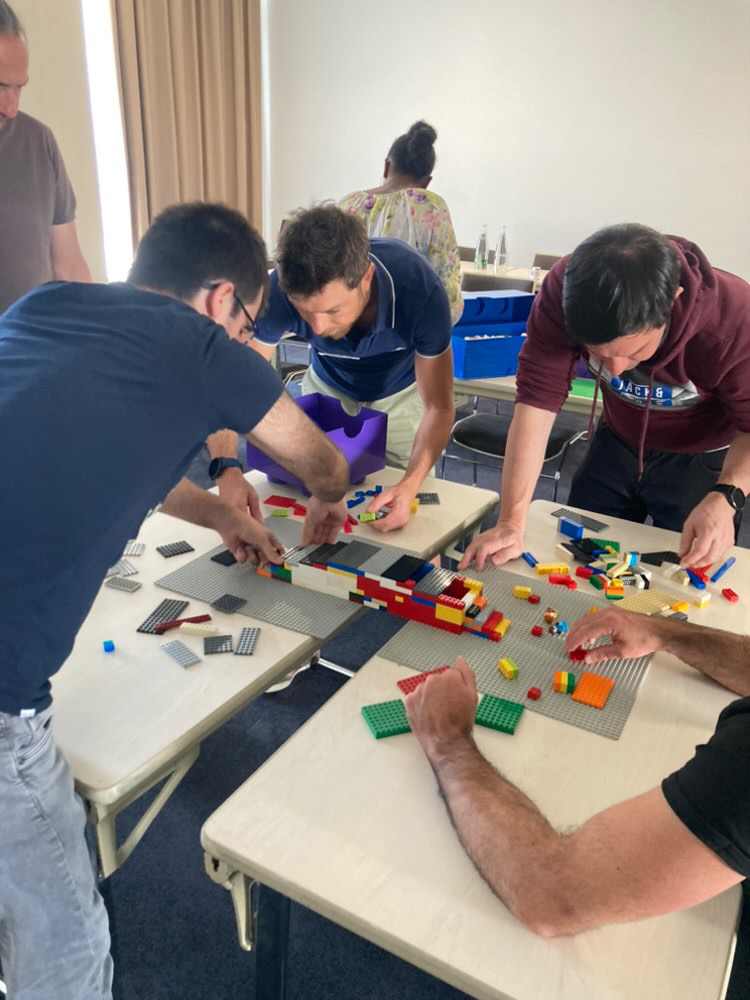
INNOV'events (Brussels) designs and delivers LEGO Challenge formats in Liege for 20 to 600 participants—on-site, in venues, or at your offices. We manage the full production: briefing, materials, facilitation, timing, scoring, and on-the-day coordination. Your teams get a structured experience; you get a clean run sheet, predictable flow, and executive-ready debrief.
Sommaire
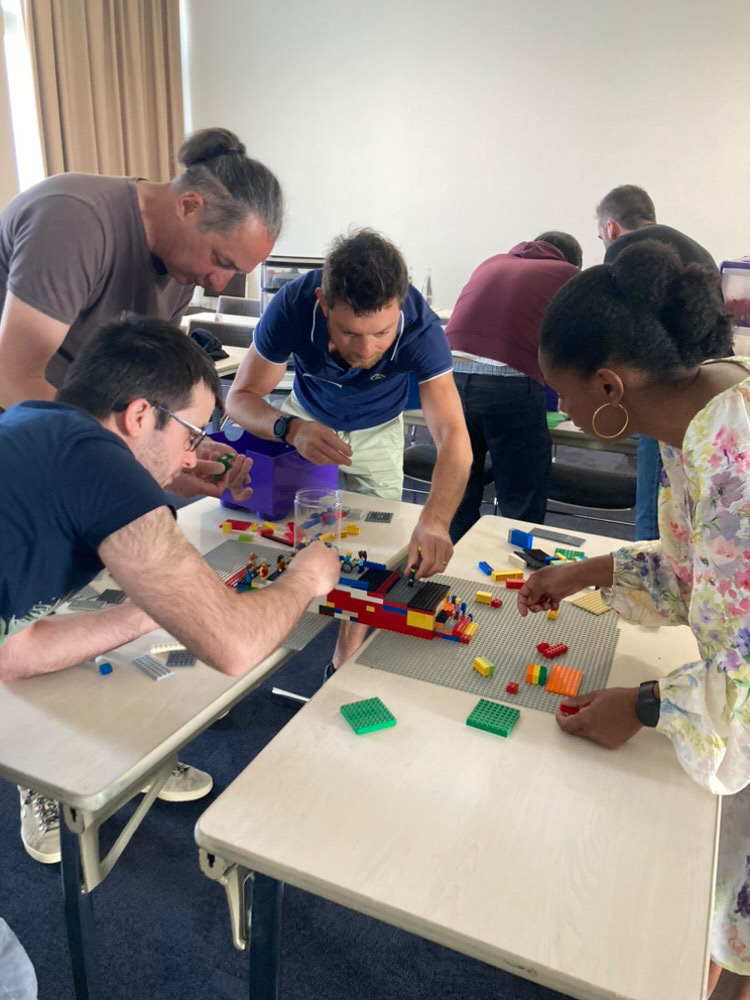
In a corporate day, entertainment is not “the fun part”; it is the controlled moment where silos either soften or harden. A well-run LEGO Challenge gives you a tangible working situation—planning, decision-making under time pressure, quality control—that reveals how people actually collaborate.
In Liege, organisations often want fast onboarding of mixed populations (HQ + operational sites), multilingual facilitation (FR/NL/EN), and a format that respects time constraints in production, logistics, and public-sector rhythms. They also expect logistics that do not disrupt the venue, the schedule, or the brand image.
We deliver in the region with a field-driven approach: pre-event alignment with your HR/Comms objectives, robust facilitation, and disciplined event-day execution. Our teams are used to tight load-in windows, unionised or regulated sites, and venue rules typical of the Liege area.
INNOV'events performance markers for Liege projects
10+ years delivering corporate team-building and event production in Belgium, including recurring rollouts across multiple sites.
20–600 participants per session for LEGO Challenge formats, with scalable facilitation ratios and parallel rooms when needed.
15–45 minutes typical setup window on venue floors when access is constrained (common in city-centre Liege venues); we plan for it with pre-packed kits and clear load-in paths.
0 “surprise” material purchases on event day: all bricks, boards, scoring sheets, signage, and backups are prepared and checked with an inventory list before departure.
Companies we support around Liege year after year
We regularly support organisations in and around Liege—from industrial groups in the Meuse valley to service companies and institutional stakeholders in the city centre. Many clients renew because they need consistent quality across different audiences: management committees, mixed staff populations, new hires, or cross-functional project teams.
You mentioned providing company names to use as references; they are not included in your message. If you share the list (even 3–6 names), we will integrate them here in a compliant way (e.g., “internal conventions”, “leadership offsites”, “safety days”) without disclosing sensitive details.
Our approach in the territory is pragmatic: we coordinate with local venues and suppliers, align with your internal communication calendar, and provide the level of documentation that executives and HR teams expect (run-of-show, responsibilities matrix, facilitation plan, and debrief points).
 Besoin d’un devis rapide ?
Nous vous envoyons une première proposition sous 24h.
Why run a LEGO Challenge in Liege for management outcomes
A LEGO Challenge in Liege works when it is treated as a management tool, not a game. In 60–120 minutes, you can create a controlled “mini-project” environment: limited resources, time-boxed delivery, stakeholder feedback, and quality constraints. That makes it ideal for HR and leadership teams who need observable behaviours, not opinions.
Cross-silo alignment you can see: teams must agree on a plan, roles, and interfaces. You quickly identify whether collaboration happens through structure (good) or through last-minute heroics (risky in real projects).
Leadership under constraints: managers practice delegation, prioritisation, and decision-making with incomplete information—common in transformation programmes or ERP rollouts.
Communication discipline: the build requires clarity of brief, internal handoffs, and short feedback loops—exactly what breaks down during reorganisations or multi-site operations.
Psychological safety in practice: participants can disagree, test ideas, and iterate without personal risk. This is particularly useful after mergers, restructuring, or a period of high turnover.
Immediate debrief value: we capture observable facts (timing, quality, change requests, stakeholder management) and translate them into a short executive readout—useful for HR or internal communications.
Liege has a strong culture of operational excellence—industry, logistics, engineering, public services—where teams respect what is concrete and measurable. The LEGO Challenge matches that mindset: it turns “team spirit” into a deliverable you can inspect, discuss, and improve.
What Liege organisations expect from corporate event entertainment
Decision-makers in Liege tend to be direct: they want an activity that respects the schedule, the venue constraints, and the participants’ reality. We see recurring expectations in the region:
- Operational timing: shift patterns, transport, and late arrivals are common. We design flexible start windows and clear re-entry rules (so the activity doesn’t collapse if 8 people arrive 10 minutes late).
- Mixed audiences: executives, engineers, frontline teams, and support functions may be in the same room. The activity must work without embarrassing anyone and without turning into a “school exercise”.
- Multilingual facilitation: FR is often dominant, but EN is required for international teams and NL appears in national groups. We provide facilitator scripts and instructions adapted to the room’s language reality.
- Venue discipline: many city venues in Liege have strict rules on noise, floor protection, and setup times. We plan for this with pre-packed tables kits, quiet briefing options, and clear cleanup responsibilities.
- Credible outcomes: HR and Comms teams increasingly ask: “What does this change on Monday?” We structure the debrief around concrete behaviours (planning, role clarity, escalation, feedback loops) rather than vague feel-good statements.
We also anticipate the practical issues that often appear in the province: parking and access for suppliers, narrow load-in paths in older buildings, and the need for clear signage when participants come from multiple sites (Herstal, Seraing, Flémalle, Ans, etc.).
Which LEGO Challenge formats work best in Liege venues
Entertainment creates engagement when it is designed as a collective challenge with a clear objective and fair rules. In Liege, we recommend formats that respect diverse profiles and produce a visible result quickly. Below are proven modules we combine depending on your objectives (team cohesion, leadership, innovation, safety culture, customer centricity).
Interactive animations in Liege
Project Sprint Build (60–90 min): teams receive a client brief and must deliver a build with constraints (budget tokens, quality gate, change requests). Ideal for transformation programmes and cross-functional alignment.
Lean Process Challenge (75–120 min): we introduce rework, defects, and handoff errors on purpose. Teams must redesign the workflow to improve throughput. Particularly relevant for industrial and logistics cultures common around Liege.
Bridge & Interface Challenge (60–90 min): sub-teams build separate parts that must connect. This makes dependencies visible—useful after reorganisations or when two departments struggle to collaborate.
Executive Stakeholder Rounds (optional): a small leadership group plays the role of “client” with structured feedback rounds. This creates visibility and a legitimate reason for executives to interact without taking over the activity.
Art animations in Liege
Brand Skyline Build (45–90 min): teams build a shared “city” reflecting your values and strategic pillars. We use this when Comms needs visual content for internal channels while keeping the exercise meaningful (not just decoration).
Storytelling through prototypes (60–120 min): teams translate a business message (e.g., safety, customer promise, innovation) into a physical prototype and pitch. Works well for town halls in Liege where you want participation, not passive listening.
Innovative animations in Liege
Build & Break networking during aperitif: short micro-challenges between courses (10–12 minutes each) to structure networking without forcing it. Effective for mixed populations where people tend to stay in their usual groups.
Table challenges paired with local catering rhythm: we coordinate with the caterer so the activity never blocks service. This matters in Liege venues where timing is tight and kitchens have fixed service windows.
Gourmand animations in Liege
Hybrid scoring and live dashboard: QR-based submissions and a live leaderboard to keep attention without turning the activity into a noisy game show. Useful for larger groups (150+) in plenary configurations.
Safety & quality overlays: we add non-negotiable “compliance” rules (PPE zones, inspection points, documentation). This resonates with regulated environments and makes the debrief more business-relevant.
Multi-room tournament: parallel sessions with a final showdown. Appropriate when your Liege venue has multiple rooms and you need to keep groups separated (e.g., different departments or confidentiality constraints).
Whatever the format, we align the challenge with your brand image and internal tone of voice. If your company culture in Liege is straightforward and performance-driven, we keep facilitation crisp and outcomes-focused. If you need a warmer internal communication moment, we adapt the storytelling and recognition sequence—without losing operational discipline.
How to choose a venue in Liege for a LEGO Challenge
The venue is not a background detail; it shapes flow, acoustic comfort, and the perceived level of professionalism. For a LEGO Challenge in Liege, we look at: ceiling height (sound), natural light (energy), loading access (materials), room geometry (team islands), and constraints like protected floors or fixed furniture.
| Venue type | For which objective? | Main strengths | Possible constraints |
|---|---|---|---|
| Hotel conference space in Liege | Leadership offsite, mixed plenary + breakout, reliable service | Strong AV support, predictable timing, easy catering coordination | Access windows can be strict; room layout sometimes fixed; parking capacity varies |
| Industrial/loft venue around Liege | Culture change, innovation days, cross-department events | High perceived impact, flexible layouts for large builds, strong “project” atmosphere | Acoustics and heating can be challenging; stricter safety and floor protection needs |
| Your own site (meeting rooms or canteen) | Operational teams, cost control, minimal travel time | High attendance, real-life context, easier internal logistics | Need clear rules for space sharing; limited storage; potential interruptions from operations |
| University or institutional spaces in Liege | Large plenary, learning-oriented programmes, employer branding | Capacity, classroom-style breakouts, academic environment fits training | Administrative procedures; fixed furniture; AV rules and access times |
We strongly recommend a site visit (or at minimum a technical call with photos and a floor plan). In older buildings in central Liege, one narrow staircase can change the whole setup plan. A 20-minute walkthrough prevents 80% of day-of friction.
What a LEGO Challenge in Liege costs and what drives price
Pricing for a LEGO Challenge in Liege depends on participant volume, facilitation intensity, and production requirements. We prefer transparent quotes: you see what is included (materials, staffing, travel, timing, debrief) and what is optional (branding, digital scoring, extra rounds, photos/video).
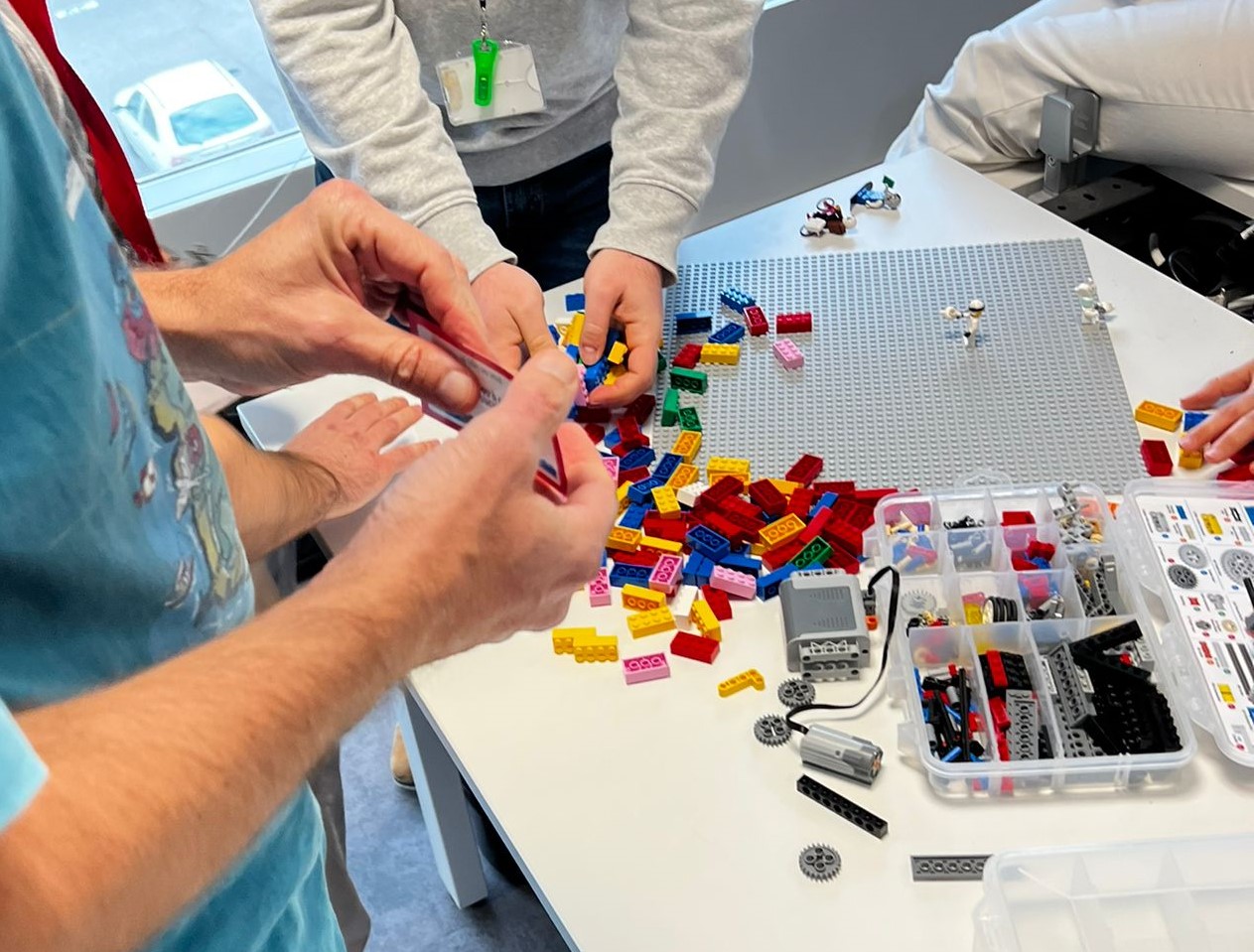
Number of participants: impacts brick inventory, number of kits, facilitation ratio, and room configuration. Typical tiers: 20–60, 61–150, 151–300, 300+.
Format duration and complexity: a 45-minute icebreaker is not priced like a 2-hour scenario with multiple checkpoints and stakeholder rounds.
Staffing and languages: adding a second language or a higher facilitator ratio increases cost but protects flow and fairness.
Venue constraints in Liege: limited load-in time, long carry distances, or restricted access may require additional crew or earlier setup windows.
Production options: branded boards, custom brief, digital scoring, on-site capture (photo/video), and an executive debrief pack.
Logistics: parking, distance, delivery plan, and whether the activity is in one room or spread across floors/rooms.
From an ROI perspective, the question is not “how much per person for an activity”; it is whether the session reduces friction in teamwork and accelerates decision-making after the event. When the debrief is used in follow-up (team agreements, meeting rules, escalation paths), the value persists well beyond the day in Liege.
When to choose an event agency in Liege for a LEGO Challenge
Even if INNOV'events is based in Brussels, we operate regularly in Liege and we know that local execution details decide the success of the day. Working with a team that is familiar with local venues, access constraints, and supplier realities reduces risk and protects your schedule. If you need a partner deeply embedded in the city, we can also coordinate with our local network; our priority is operational reliability, not “selling a concept”.
For organisations that want a single point of accountability, our model is straightforward: one project lead, one run-of-show, one escalation path. And when local knowledge is essential (specific venue access rules, municipal constraints, last-minute room changes), we mobilise the right resources quickly.
If you are comparing providers, review what they do beyond the activity itself: do they manage venue coordination, safety, timing, and executive debrief? That is where the difference between an animation supplier and a true event agency in Liege shows.
- Less operational risk: realistic setup plans, proper buffer times, and contingency thinking adapted to Liege venues.
- Faster decisions: we can propose venues, schedules, and formats that fit local constraints without long trial-and-error cycles.
- Stronger vendor coordination: catering rhythm, AV, room resets, and signage are aligned so the LEGO moment integrates cleanly into your overall agenda.
- Executive comfort: a professional flow reflects well on leadership; no one wants to apologise for chaos in front of guests or staff.
From an ROI perspective, the question is not “how much per person for an activity”; it is whether the session reduces friction in teamwork and accelerates decision-making after the event. When the debrief is used in follow-up (team agreements, meeting rules, escalation paths), the value persists well beyond the day in Liege.




What we have delivered in Liege-like contexts
We deliver LEGO Challenge programmes in contexts that resemble what many organisations in Liege face: multi-site operations, technical populations, and leadership teams who want tangible outputs. Typical scenarios we handle include:
- Post-merger integration: two groups with different ways of working. We design a build where interfaces fail unless governance is agreed early. The debrief then feeds concrete working agreements (who decides what, what needs consultation, how to escalate).
- Operational excellence days: teams used to KPIs and process discipline. We run a Lean-oriented challenge with measurable throughput and defect rates, then link observations to daily management routines.
- Leadership offsites: executives who dislike “games”. We keep the format short, high-pressure, and outcome-driven, and we use the debrief to address delegation, decision latency, and stakeholder alignment.
- Onboarding cohorts: new hires who need cross-network connections fast. We run shorter rounds with structured rotations so people meet outside their usual function, without awkward forced networking.
Across these projects, what clients value is not the bricks; it is the controlled environment that produces honest conversations—without personal tension—and the fact that the event stays on track operationally.
Common pitfalls we prevent in Liege LEGO Challenge events
Underestimating facilitation needs: one host for 200 people leads to noise, unclear rules, and unfair scoring. We size staffing to keep the room under control and the experience credible.
Choosing a venue layout that kills energy: long narrow rooms, fixed seating, or poor acoustics reduce collaboration. We request floor plans early and adapt the format (or recommend a different setup).
Over-complicating the scenario: too many rules makes people disengage. We keep complexity purposeful and ensure every constraint has a business link.
No clear timeboxing: if teams don’t feel the clock, the exercise loses its management value. We run structured checkpoints and hard stops.
Skipping the debrief: without a facilitated debrief, you get laughs but no learning. We include a debrief format that produces actionable takeaways for HR/Comms.
Poor material logistics: missing kits, mixed parts, or messy distribution creates frustration. We use labelled kits, backup inventory, and a clear distribution plan.
Our role is to remove these risks before the event in Liege—through preparation, venue coordination, and disciplined execution—so your leadership team can focus on the message and the people, not on operational firefighting.
Why Liege clients renew with INNOV'events
Renewal happens when the agency is predictable under pressure. Many clients come back after a first project because the activity integrated smoothly into their agenda, and because we made their internal coordination easier—not harder.
Recurring formats: clients often reuse the same LEGO Challenge with different departments over 6–18 months, which requires consistency in rules, scoring, and facilitation.
Multi-site rollouts: we can replicate the experience between Brussels and Liege with the same quality level and a comparable participant experience.
Executive-friendly deliverables: a concise debrief and a clean run-of-show reduce internal friction and make it easier for HR/Comms to justify the initiative.

Loyalty is not about novelty; it is about trust. When the stakes are high—town hall, leadership day, employer branding moment in Liege—clients choose the partner that consistently delivers without drama.
Our delivery process for Liege corporate events
👉 Clarify objectives and constraints in Liege
We start with a short working session with HR/Comms and the sponsor: audience profile, desired outcomes, sensitivities, languages, and constraints (timing, venue rules, safety, union or site access). We also confirm what success looks like: engagement, cross-team mixing, leadership visibility, or a specific learning objective.
👉 Design the LEGO Challenge scenario and facilitation plan
We translate your objectives into a scenario with the right level of pressure and realism: checkpoints, stakeholder rounds, quality gates, and scoring. We define facilitation ratios, roles, and scripts (including multilingual instructions when needed for Liege audiences).
👉 Venue and logistics alignment
We validate floor plans, access, load-in times, parking, and noise constraints. We produce a setup plan and a material distribution plan. If catering or AV is involved, we align the sequencing so the activity does not conflict with service or technical transitions.
👉 Production and pre-event checks
We prepare labelled kits, backups, signage, scoring sheets, and timing tools. A pre-departure inventory check prevents missing pieces on event day. For larger groups in Liege, we also plan room zoning and facilitator positioning.
👉 Event-day delivery and control
We arrive with a clear run-of-show, set up discreetly, brief participants, and manage time calls. Facilitators maintain fairness and momentum, handle questions, and protect the room’s energy. Our project lead coordinates with the venue and your internal point of contact so you are not pulled into operational details.
👉 Debrief and actionable follow-up
We run a structured debrief (team-level and plenary if relevant) and capture observations into business language. When requested, we provide a short written summary with key behaviours observed and practical follow-up suggestions (e.g., meeting rules, escalation paths, interface agreements) for teams in Liege.
FAQ sur l'organisation LEGO Challenge à Liege
How long should a LEGO Challenge session be in Liege?
Most corporate groups in Liege choose 60–120 minutes for the challenge plus 15–30 minutes for debrief. If it sits inside a dinner or town hall, a 30–45 minute “icebreaker” version can work, but you will get less behavioural insight.
How many participants can you manage for Liege events?
Typical formats run from 20 to 600 participants. Above 150, we usually plan parallel zones or multiple rooms, with a facilitator ratio around 1 per 25–40 depending on complexity and language needs.
Can you run the LEGO Challenge at our offices in Liege?
Yes, as long as we have enough space for team islands and circulation. For comfort, plan roughly 1.5–2 m² per person in the activity area. We also confirm access, setup time, and any site rules (security, safety, loading).
What budget range for a corporate LEGO Challenge in Liege?
As a realistic order of magnitude in Liege, budgets commonly start around €1,800–€3,500 for smaller groups (20–40) and can reach €6,000–€15,000+ for 150–400 participants depending on duration, staffing, scenario complexity, and production options (branding, digital scoring, photo/video).
What do you need from us to quote a Liege project?
We can quote with 6 inputs: date window, location/venue in Liege (or “TBD”), participant number range, languages, desired duration, and the objective (cohesion, leadership, onboarding, culture). If you have a draft agenda, we’ll integrate the activity without disrupting plenary timings.
Request a quote for a LEGO Challenge in Liege
If you want a LEGO Challenge that is run with the same discipline as the rest of your corporate agenda in Liege, we can help. Share your date, participant range, and venue context; we will come back with a clear proposal including format, staffing, logistics, and options.
For best availability—especially in peak periods (end-of-year, spring conventions)—plan 3–6 weeks ahead for standard formats and 6–10 weeks if you need a branded scenario, multi-room setup, or multilingual facilitation at scale.
INNOV'events Liege Agency
Justin JACOB is the manager of the INNOV'events Liege office. Reach out directly by email at belgique@innov-events.be or via the contact form.
Contact the Liege agencyToutes nos prestations & animations Liege, Belgique
Découvrez nos prestations événementielles
Découvrez nos animations événementielles disponibles au Belgique
- Event Hostess in Liege
- Escape Game in Liege
- MasterChef Cooking Workshop in Liege
- Magician in Liege
- Marquee Rental in Liege
- Color Analysis Workshop in Liege
- Inflatable Games in Liege
- Valet Parking Service in Liege
- Football Simulator in Liege
- LED Furniture Rental in Liege
- Light Branding in Liege
- Unique Dining Experience in Liege
- Light Painting in Liege
- Murder Mystery Party in Liege
- Prize Contest in Liege
- Promotional Displays (POS) in Liege
- Virtual Reality in Liege
- Molecular Gastronomy Workshop in Liege
- Halloween Entertainment in Liege
- Fireworks Show in Liege
- Giant Games Challenge in Liege
- Event Host / MC in Liege
- Photo Booth Animation in Liege
- Santa Claus Entertainment in Liege
- Kids Entertainment in Liege
- Guided Tour in Liege
- Urban Rally in Liege
- Ball Pit in Liege
- Flight Simulator in Liege
- Food Truck Rental in Liege
- World Record Challenge in Liege
- Surf Simulator in Liege
- Wine Casino in Liege
- Makeover Workshop in Liege
- Perfume Creation Workshop in Liege
- Acting Workshop in Liege
- CSR Activities in Liege
- Archery in Liege
- Security Staff in Liege
- Wine Tasting in Liege
- Mime Performer in Liege
- TV Game Show in Liege
- Funfair in Liege
- Crisis Management Workshop in Liege
- Crisis Negotiation Workshop in Liege
- Arcade Games in Liege
- Indoor Skydiving Simulator in Liege
- Ski Simulator in Liege
- Racing Circuit Experience in Liege
- Introductory Flight Experience in Liege
- Tasting Experience in Liege
- Build Your Own Foosball Workshop in Liege
- 2CV Rally in Liege
- LEGO Challenge in Liege
- Casino Night in Liege
- Interpreter / Translator in Liege
- Promotional Giveaways in Liege
- Shuttle Transport in Liege