Virtual Reality Experience in Liege that keeps your event on schedule
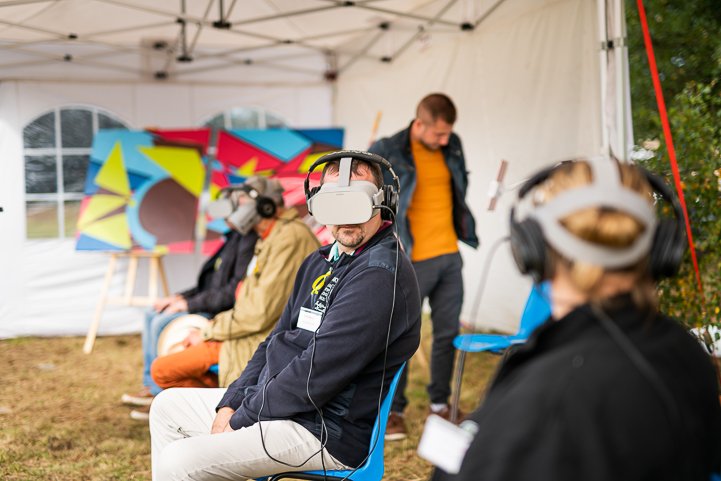
INNOV'events is a Brussels-based corporate event agency delivering Virtual Reality Experience activations in Liege for leadership events, HR initiatives and brand communications. We typically manage formats for 30 to 500 attendees, with structured guest flow, briefing, safety and on-site facilitation. You get one accountable partner for the VR content, hardware, staffing, logistics, and reporting.
Sommaire
At executive level, entertainment is not “extra”: it is a lever to protect attention, reduce passive time, and create shared reference points that make a message stick. A well-run Virtual Reality Experience helps you structure the agenda (arrival, breaks, transitions) and avoids the classic “networking drift” that creates delays and diluted takeaways.
In Liege, organisations expect operational seriousness: on-time setup, clear safety rules, bilingual facilitation when needed (FR/NL/EN), and zero disruption to the venue. Many of our clients also require measurable outcomes—participation rate, queue time, satisfaction pulse—because the event is linked to HR, change, or employer branding.
INNOV'events deploys VR experiences regularly across Wallonia and in the Liège area, with a methodology built for corporate constraints: risk assessment, flow design, IT/venue coordination and day-of-show control. We work as if we were an internal project team: transparent planning, realistic timings, and a clear run-of-show.
Operational proof points for Liege decision-makers
10+ years of corporate event delivery in Belgium, with recurring programmes for HR and communications teams.
30–500 participants is our most frequent range for Virtual Reality Experience in Liege, with queue management and throughput modelling included.
2 to 8 VR stations can be deployed on the same event, depending on content length and target participation rate.
1 single project lead accountable end-to-end (venue coordination, staffing, hardware, timing, contingencies).
Setup window: 90–240 minutes depending on number of stations, cable routing constraints, and venue access rules in Liege.
References and long-term partnerships in Liege
We support organisations operating in Liege and the wider province, including industrial groups, public services, scale-ups and professional federations. Several clients call us year after year because the reality is simple: once you have experienced the pressure of an event day, you keep the partner who is calm, structured, and reliable.
To be fully transparent: you mentioned “company names provided as references”, but none were included in your message. If you share the names you authorise, we will integrate them here in a compliant, factual way (e.g., type of event, audience size range, objective) without exaggeration or confidential details.
What we can already state credibly is our working mode with Liège-based stakeholders: coordination with venues and their technical teams, alignment with internal H&S expectations, and smooth collaboration with local suppliers (catering, AV, security) so that the VR activation fits the event rather than taking over the room.
 Besoin d’un devis rapide ?
Nous vous envoyons une première proposition sous 24h.
Why run a Virtual Reality Experience for your Liege teams now
A Virtual Reality Experience is particularly effective when you need people to “feel” a message rather than just hear it. In practice, our corporate clients use VR to accelerate onboarding, reinforce safety culture, support change management, or create a controlled wow-effect during a client event—without taking risks on the show floor.
In executive terms, VR becomes a management tool: it makes the intangible tangible, it creates a shared language across departments, and it gives communications and HR a format that people actually try (and talk about) during the event.
Control of attention and timing: VR runs in short, repeatable sessions. With the right throughput plan (session length + reset time + sanitation + briefing), you can predict participation and avoid agenda slippage.
Better message retention: immersive scenarios help teams remember processes and behaviours. We often see this used for safety reminders (PPE, risk recognition) and customer journey empathy exercises.
Cross-department engagement: VR naturally mixes audiences—operations, sales, IT, HR—because the experience is accessible. This helps leadership events where silos need to be softened without forcing “team-building games”.
Employer branding with substance: instead of a photo booth, VR can demonstrate your technologies, values, or training culture. For recruitment-oriented moments in Liege, that difference matters.
Measurable participation: we can provide a simple post-event dashboard (number of participants, peak times, average wait time, satisfaction pulse via QR) that helps justify budget and improve future editions.
Risk-managed innovation: VR feels modern, but the delivery is highly operational. With the right setup (clear zones, trained staff, safety brief), you get innovation without improvisation.
Liege combines industry, logistics, engineering and higher education—environments where practical, hands-on learning and credible demonstrations are valued. A VR activation fits that culture when it is deployed with discipline: clear objective, professional facilitation, and a format aligned with your internal standards.
What Liege organisations expect from corporate event entertainment
When we deliver corporate event entertainment in Liege, we see recurring expectations that are different from “festival-style” activations. First, venues can be technically constrained: protected floors, limited rigging points, specific access hours, strict noise limits, and shared loading docks. A VR setup must respect these realities—especially when the event includes a plenary with AV, a catering zone, and a VIP circulation plan.
Second, many Liège-based organisations operate with strong H&S frameworks (industry, energy, logistics, public institutions). That means: clear safety briefing, signage, controlled play area, optional seated mode, supervision for participants who may be prone to dizziness, and a structured approach to cleaning headsets. We plan these elements before we arrive on site, not during the first guest wave.
Third, local stakeholders value pragmatism. They will ask: “How many people can we run through per hour?”, “How much space do you need?”, “What happens if the Wi‑Fi is blocked?”, “Who is responsible if someone feels unwell?”. Our proposals answer these questions directly, with numbers and responsibilities, because that is what protects your reputation internally.
Finally, in Liege it is common to host mixed audiences (management + shopfloor + partners). We therefore design facilitation and guest flow so nobody feels excluded: clear onboarding language, quick learning curve, and an experience that works even for first-time VR users.
Which VR formats work best for corporate events in Liege
Entertainment creates engagement when it is designed as a tool: it helps people move, interact, and remember. With Virtual Reality Experience in Liege, the key is to choose a format that matches your audience profile (first-time users vs. tech-savvy), your brand image, and your event constraints (space, timing, sound, risk level).
Interactive animations in Liege
Guided VR challenges with scoreboard: short missions (4–6 minutes) where teams compare scores. Works well for internal conventions in Liege because it creates conversation without forcing people into extroverted activities. We manage fair play rules, throughput, and visibility of results.
VR onboarding or values journey: a narrated experience aligned with company culture (customer journey, sustainability choices, leadership behaviours). Particularly relevant for HR and employer branding; we can integrate a short post-experience questionnaire via QR to capture feedback.
Mixed reality demo corner: observers can see what the participant sees on a screen, which reduces perceived waiting time and helps communications teams capture content (photos/video) that actually explains the activation.
Art animations in Liege
Immersive art exploration: museum-style VR pieces where guests explore places or artworks. Good for evening receptions where you want a calmer tone and minimal physical intensity.
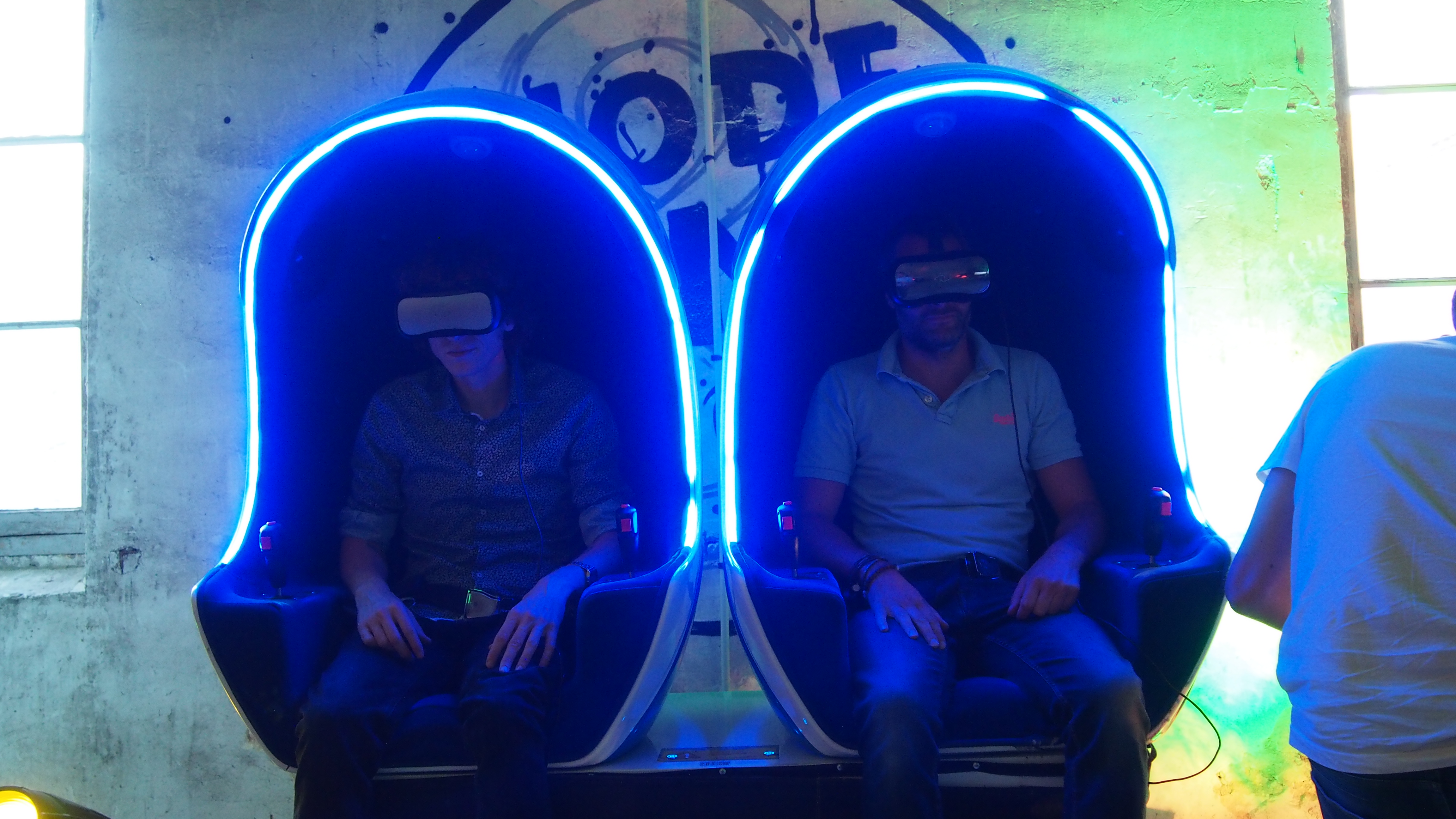
Sound-and-visual immersion pod: a seated VR format with controlled audio, suitable when the venue in Liege requires low noise and you want a premium, quiet experience.
Innovative animations in Liege
VR + tasting pairing: guests complete a short VR experience and then move directly to a themed tasting station (coffee, chocolate, local products). This works operationally because it creates a natural “exit path” and prevents queues from growing.
Training-style “sensory decision” scenario: for brands with product narratives, we can align a VR story with a guided tasting. The key is strict timing so catering service remains smooth.
Gourmand animations in Liege
Collaborative VR (2–4 people): small teams solve a problem together. Effective for leadership seminars because it reveals communication patterns quickly. We recommend this when you have enough time slots (it is less throughput-efficient than solo VR).
Safety and risk recognition simulations: widely used in industrial contexts around Liege. The value is credibility: it supports H&S culture without staging real hazards. We ensure the scenario is appropriate and the debrief is structured.
AI-driven photo-to-avatar experience: used carefully for internal events and with GDPR-friendly handling. We advise when it is relevant and when it is a risk for brand image or privacy perception.
The best choice is the one aligned with your brand and audience. A premium brand event in Liege needs a calm, high-quality experience and impeccable facilitation; an internal transformation programme needs a scenario that supports the message and provides a debrief hook. We help you select the format that strengthens your positioning rather than distracting from it.
Where to host a VR activation in Liege to avoid technical surprises
The venue influences everything: guest flow, acoustic comfort, the perceived quality of the setup, and the feasibility of multiple VR stations. For a Virtual Reality Experience, we focus on ceiling height (screens/rigging), power access, loading constraints, and the ability to create a controlled zone without blocking catering or emergency exits.
| Venue type | For which objective? | Main strengths | Possible constraints |
|---|---|---|---|
Conference hotels and business centres in Liege | Leadership seminars, plenary + break activations, client conferences |
|
|
Industrial or office sites (on-premise) in the province of Liege | Safety days, internal communication, employer branding |
|
|
Event venues and cultural spaces in Liege | Brand events, partner evenings, public-facing moments |
|
|
We strongly recommend a site visit (or at minimum a technical call with venue plans) before confirming the number of stations and the footprint. In Liege, access times and loading realities vary significantly; anticipating them is what keeps your event calm on the day.
What does a Virtual Reality Experience cost in Liege
Pricing for a Virtual Reality Experience in Liege depends less on “VR” and more on operational parameters: number of stations, type of content, staffing level, duration, and logistics constraints. For corporate buyers, the real question is the cost per engaged participant and the risk level you are willing to accept.
Number of VR stations (2–8): more stations reduce waiting time and increase participation, but require more staff and space.
Duration on site: a 2-hour activation during a cocktail is not the same as a full-day safety programme. Longer durations mean rotation planning, breaks, and additional consumables.
Content choice: licensing an existing scenario is typically more cost-efficient; a branded scenario or custom module requires design, testing and approvals.
Staffing and languages: bilingual facilitation (FR/NL/EN) and senior supervision increase reliability for executive events in Liege.
Technical integration: external screens, live mirroring, lighting, branded set elements, or photo/video capture can add meaningful value but must be planned.
Venue constraints: difficult loading, restricted access hours, long carry distances, or strict protection requirements add labour time.
H&S and hygiene measures: disposable face covers, cleaning process, optional seated mode, clear signage—small items, but critical for comfort and risk management.
We frame budget as return on objectives: if your target is 200 participants with a wait under 10 minutes, we build a configuration that hits that target rather than proposing “VR” as a single line item. This is how you protect your event reputation and avoid paying twice to fix a poorly designed activation.
Why choose an event agency in Liege for VR deployment
For VR, local presence is not a slogan; it is operational insurance. Venues in Liege often have specific access procedures, last-minute room changes, and technical constraints that only become clear when you are on site. A local-capable team reduces friction, reacts faster, and keeps your internal stakeholders reassured.
INNOV'events is headquartered in Brussels, but we operate frequently in Liege and plan deployments with local reality in mind. If you are comparing partners, ask a simple question: “Who is responsible if we need to reconfigure the zone one hour before doors?” The answer matters.
If you are looking for broader support beyond VR (full event production, staffing, AV, catering coordination), we also cover this via our event agency in Liege services, with the same project management discipline.
- Faster issue resolution: access changes, power problems, unexpected crowd peaks—handled on site without escalation loops.
- Venue and supplier coordination: we speak “venue tech”, align with house rules, and coordinate with local AV/catering to protect guest flow.
- Realistic planning: run-of-show built around Liège access times, loading constraints, and local staffing availability.
- Better risk management: clear safety perimeter, trained facilitators, and a documented process—important for HR and corporate governance.
We frame budget as return on objectives: if your target is 200 participants with a wait under 10 minutes, we build a configuration that hits that target rather than proposing “VR” as a single line item. This is how you protect your event reputation and avoid paying twice to fix a poorly designed activation.





What we have delivered with VR across Liege-type audiences
Our VR projects typically fall into three corporate realities that executives recognise immediately.
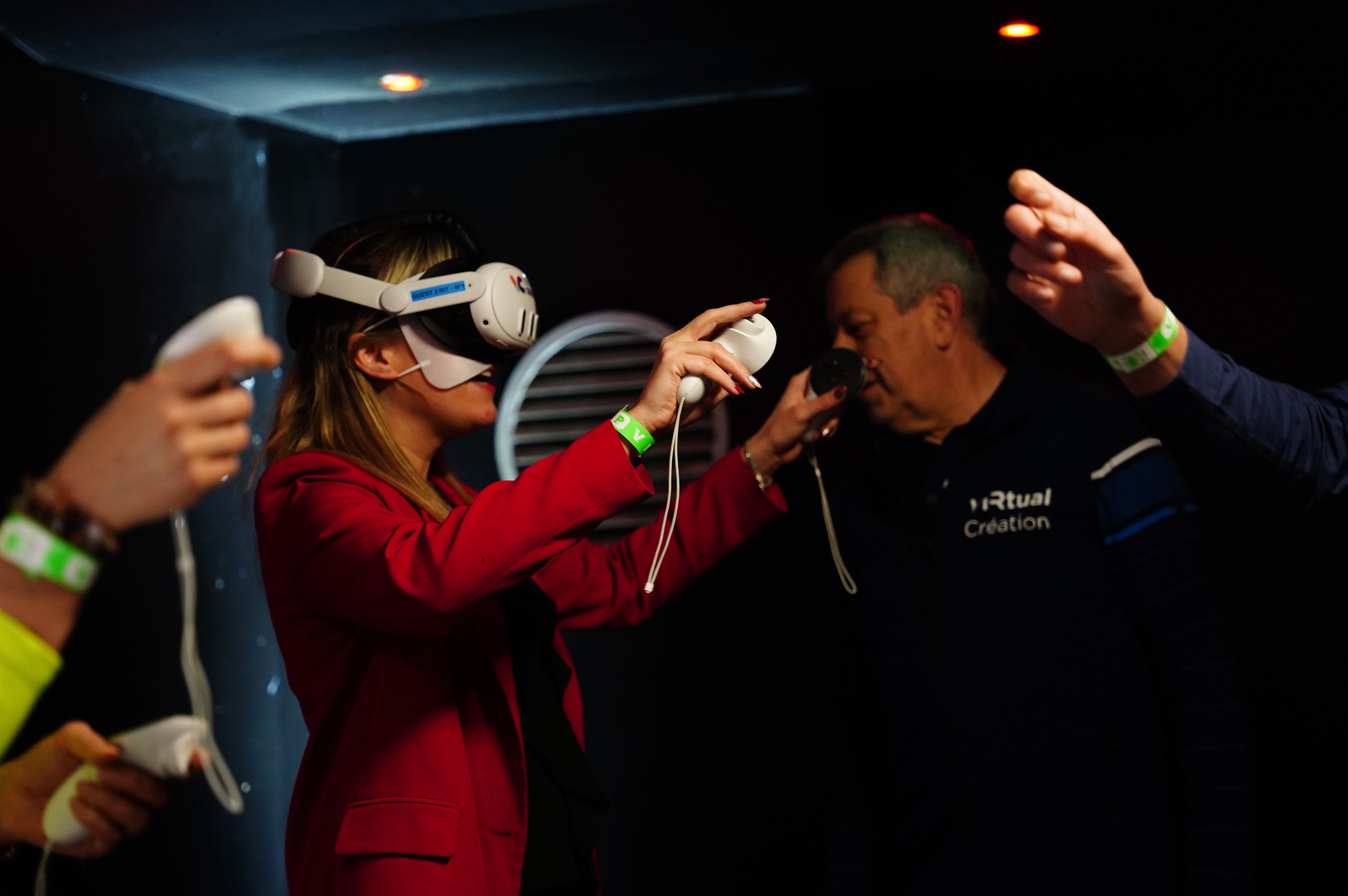
1) The leadership event where time is scarce. Example scenario: a half-day management meeting with a plenary, a guest speaker and a short networking moment. The VR activation must run in parallel without stealing attention from the main message. In these contexts, we deploy short sessions, visible screens for observers, and strict flow rules. The success criterion is usually: high participation without queues and without noise interference.
2) The HR/employer brand moment with mixed audiences. In Liege, it is common to have experienced staff, new hires, and external partners in the same room. We therefore avoid overly “gamer” content and focus on accessible scenarios with a clear narrative. We add a simple feedback capture that HR can reuse internally.
3) The safety or operational culture programme. These are the most demanding because credibility matters. We focus on disciplined facilitation, correct terminology, and a debrief that connects the experience to real-life behaviours. The objective is not entertainment; it is adoption of good practices and leadership alignment.
Across these formats, our role remains the same: protect your agenda, your brand image, and the comfort of every participant—while making VR a reliable tool rather than a risky gadget.
Common VR pitfalls we prevent in Liege events
Underestimating throughput: a 6-minute experience can become a 12-minute cycle once briefing and reset are included, creating queues and frustration.
Poor zone placement: putting VR next to catering or a narrow corridor creates congestion and damages the event’s perceived quality.
Insufficient staffing: “one person can manage it” is rarely true in corporate settings; facilitation and hygiene require hands.
No plan for sensitive participants: some guests will feel discomfort; we plan seated options, clear warnings, and a respectful exit flow.
IT assumptions: Wi‑Fi may be restricted or unstable; we prepare offline modes and avoid last-minute surprises.
Inadequate brand alignment: content that is too playful or too violent can conflict with your corporate culture and communications standards.
Missing compliance basics: data capture without clarity, unclear photo/video usage, or sloppy consent mechanisms can create internal issues.
Our job is to remove these risks before they appear on the event floor in Liege. That is why we insist on a short technical validation and a realistic flow plan, even for “small” activations.
Why Liege clients renew with INNOV'events
Renewal happens when an agency delivers predictability under pressure. Corporate event teams rarely have the luxury of trial-and-error: the CEO is in the room, the HR message is sensitive, and communication teams need content that reflects well on the brand.
Clients come back when they feel we manage the unglamorous parts: timing, safety, stakeholder alignment, and clear decision-making. VR is a good test of maturity because it combines tech, people flow and guest comfort.
One project lead from brief to on-site delivery, so decisions are not diluted between sales and operations.
Pre-event technical validation (remote or on-site) to confirm power, footprint, access, and flow.
Post-event debrief with practical learnings (participation peaks, queue observations, improvements for the next edition).

Loyalty is not about discounts; it is about confidence. When your next event in Liege is on the line, you choose the partner who has already proven they can deliver calmly and consistently.
How we run your VR project in Liege from brief to debrief
👉 Step 1 — Clarify the objective and constraints in Liege
We start with a short working call (usually 30–45 minutes) with HR/Comms/Event stakeholders. We confirm the event purpose, audience profile, languages, venue constraints, and your non-negotiables (brand tone, safety, privacy, timing). We then translate this into measurable targets: participation rate, acceptable wait time, and the role of VR in the run-of-show.
👉 Step 2 — Propose the right Virtual Reality Experience format
We recommend a format based on throughput and brand fit: number of stations, scenario type, session length, and whether observers will see mirrored screens. You receive a clear footprint requirement (m²), power needs, and staffing plan. If the event is in Liege city centre, we also factor in loading access and parking constraints early.
👉 Step 3 — Validate venue and technical plan (no surprises)
We run a technical validation with the venue: access times, elevator/loading routes, cable management rules, emergency exits, noise constraints, and any restrictions on adhesives/floor protection. For corporate environments, we align with internal H&S rules and confirm the on-site contact chain.
👉 Step 4 — Deliver on-site with controlled flow and facilitation
On the day, we arrive with a structured setup plan, zone signage, and a clear guest journey. Facilitators brief participants, manage comfort, clean equipment between uses, and keep the queue moving. A lead supervisor monitors throughput and adapts if a peak occurs (e.g., after a keynote).
👉 Step 5 — Close, report, and improve for the next Liege edition
After the event, we share a concise summary: participation volume, peak times, observed bottlenecks, and practical recommendations. If your goal includes HR/Comms reporting, we can integrate a short satisfaction pulse and provide aggregated insights, respecting privacy expectations.
FAQ sur l'organisation Virtual Reality Experience à Liege
How many guests can try VR during a Liege cocktail?
With a typical cycle time of 7–12 minutes per person (briefing + experience + reset), one station handles about 5–8 participants/hour. With 4 stations over a 2-hour cocktail, plan roughly 40–65 participants comfortably. If you need 100+ tries, we shorten sessions and increase stations.
How much space is needed for VR in Liege venues?
For a corporate setup, count about 8–12 m² per station including waiting and briefing micro-zone. A 4-station layout typically needs 40–60 m² to avoid queues spilling into catering or circulation. Exact footprint depends on seated vs standing mode and whether you add mirrored screens.
Is VR safe for all participants at a Liege event?
VR is safe when managed correctly: clear briefing, optional seated mode, supervision, and the right content (no extreme motion). We recommend warning participants who are pregnant, prone to motion sickness, or with certain medical conditions. In practice, with professional facilitation, discomfort cases remain limited and are handled discreetly.
Do we need Wi‑Fi for a Virtual Reality Experience in Liege?
Not necessarily. Many corporate venues restrict networks. We plan for offline operation whenever possible, and only require internet for specific content updates, live scoring systems, or analytics dashboards. If Wi‑Fi is uncertain, we adapt the technical design in advance.
What lead time should we plan for VR in Liege?
For a standard activation with existing content, plan 2–4 weeks to secure availability, validate the venue, and align on flow and staffing. For branded or custom scenarios, plan 6–10 weeks depending on approvals, testing, and any legal/privacy reviews.
Request a VR quote for Liege with a realistic flow plan
If you want a Virtual Reality Experience that supports your agenda (instead of creating queues and noise), we will propose a configuration based on your real constraints in Liege: audience size, timing, venue access, brand tone, and compliance requirements.
Share three elements and we can move fast: date, venue (or short-list), and guest count. We will come back with a practical recommendation (number of stations, footprint, staffing, schedule integration) and a clear budget range. The earlier we validate the technical realities, the smoother your event day will be.
INNOV'events Liege Agency
Justin JACOB is the manager of the INNOV'events Liege office. Reach out directly by email at belgique@innov-events.be or via the contact form.
Contact the Liege agencyToutes nos prestations & animations Liege, Belgique
Découvrez nos prestations événementielles
Découvrez nos animations événementielles disponibles au Belgique
- Event Hostess in Liege
- Escape Game in Liege
- MasterChef Cooking Workshop in Liege
- Magician in Liege
- Marquee Rental in Liege
- Color Analysis Workshop in Liege
- Inflatable Games in Liege
- Valet Parking Service in Liege
- Football Simulator in Liege
- LED Furniture Rental in Liege
- Light Branding in Liege
- Unique Dining Experience in Liege
- Light Painting in Liege
- Murder Mystery Party in Liege
- Prize Contest in Liege
- Promotional Displays (POS) in Liege
- Virtual Reality in Liege
- Molecular Gastronomy Workshop in Liege
- Halloween Entertainment in Liege
- Fireworks Show in Liege
- Giant Games Challenge in Liege
- Event Host / MC in Liege
- Photo Booth Animation in Liege
- Santa Claus Entertainment in Liege
- Kids Entertainment in Liege
- Guided Tour in Liege
- Urban Rally in Liege
- Ball Pit in Liege
- Flight Simulator in Liege
- Food Truck Rental in Liege
- World Record Challenge in Liege
- Surf Simulator in Liege
- Wine Casino in Liege
- Makeover Workshop in Liege
- Perfume Creation Workshop in Liege
- Acting Workshop in Liege
- CSR Activities in Liege
- Archery in Liege
- Security Staff in Liege
- Wine Tasting in Liege
- Mime Performer in Liege
- TV Game Show in Liege
- Funfair in Liege
- Crisis Management Workshop in Liege
- Crisis Negotiation Workshop in Liege
- Arcade Games in Liege
- Indoor Skydiving Simulator in Liege
- Ski Simulator in Liege
- Racing Circuit Experience in Liege
- Introductory Flight Experience in Liege
- Tasting Experience in Liege
- Build Your Own Foosball Workshop in Liege
- 2CV Rally in Liege
- LEGO Challenge in Liege
- Casino Night in Liege
- Interpreter / Translator in Liege
- Promotional Giveaways in Liege
- Shuttle Transport in Liege