Indoor Skydiving Simulator in Liege for a corporate event that delivers measurable engagement
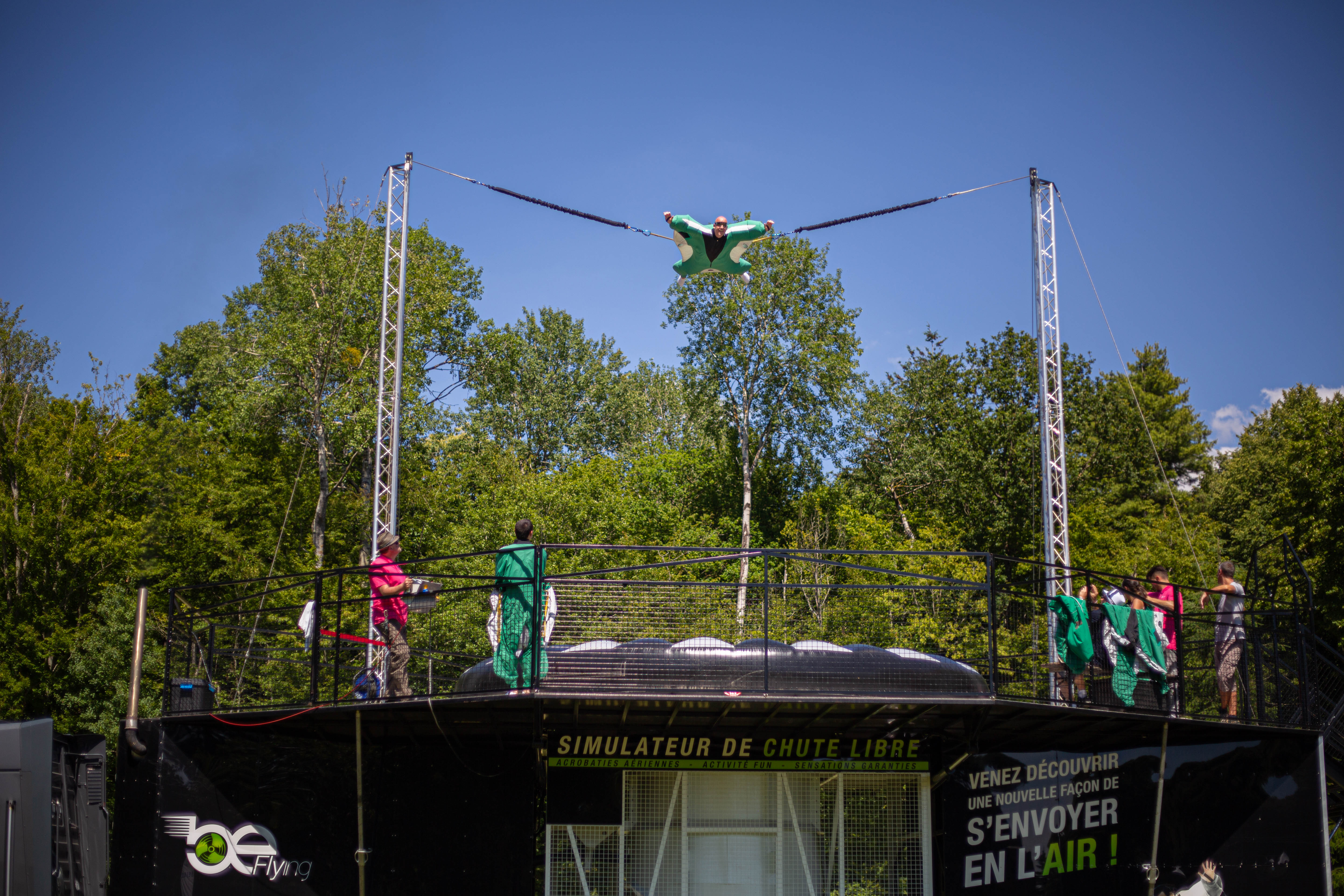
INNOV'events (Brussels) deploys the Indoor Skydiving Simulator for corporate events across Liege, from leadership offsites to large staff events. Typical formats: 30 to 800 attendees, with a controlled rotation so everyone participates without queue stress. We handle technical setup, safety briefings, staffing, timing, and integration into your event agenda.
Sommaire
In a corporate event, entertainment is not a “nice-to-have”: it is a management lever. A well-run Indoor Skydiving Simulator in Liege creates a shared peak moment that accelerates networking, breaks silos between sites, and gives HR a concrete tool to energize internal communication without forcing it.
Organizations around Liege typically expect operational seriousness: safety that is visibly managed, a flow that respects schedules, and a format that works for mixed audiences (executives, shopfloor, partners, unions, international guests). If the animation creates bottlenecks or uncertainty, it damages the event more than it helps.
Our role is to make the simulator look effortless on the day: pre-briefing with your stakeholders, clear participant journey, redundancy on critical points, and on-site command. We work with venues and suppliers across Liege and plan like we are accountable to your boardroom.
INNOV'events benchmarks you can audit in Liege
10+ years delivering corporate events in Belgium with repeat clients in HR, Comms and Executive Offices.
Operational formats from 30 to 2,000+ attendees nationwide, including multi-activity zones with timed rotations and access control.
1 single project lead responsible for your run-of-show, suppliers, and on-site coordination—no handoffs the week before.
Typical response time: 24–48 hours for a first budget range and feasibility check (venue, ceiling height, power, access).
Corporate teams we support in Liege year after year
In Liege, the best indicator of reliability is simple: companies renew because the event ran smoothly and the internal debrief was positive. We regularly support local and regional organizations that run recurring formats (annual staff gatherings, safety milestones, partner evenings, employer branding moments). Some collaborate with us year after year because we keep the same operational standards: clear production documents, realistic schedules, and supplier accountability.
If you have internal references to align with (procurement constraints, brand guidelines, security rules, union presence, international VIPs), we integrate them early. In practice, our clients in Liege appreciate that we challenge risky ideas before they become issues on the day—especially when the entertainment is technical like an Indoor Skydiving Simulator.
 Besoin d’un devis rapide ?
Nous vous envoyons une première proposition sous 24h.
Why choose an Indoor Skydiving Simulator for a Liege corporate agenda?
An Indoor Skydiving Simulator is a high-engagement device when you need participation without the downsides of extreme activities. Done well, it gives people a controlled sensation of “flight” in short sequences, with a safety framing that reassures executives and HR. The value is not the adrenaline; it is the structured collective experience you can design around it.
Fast engagement without alcohol dependency: in many corporate events, the “energy” relies on the bar. A simulator creates natural momentum earlier in the evening, which is useful for partner receptions, internal celebrations, or daytime programs.
Cross-hierarchy participation: we often see managers and technicians queue together when the experience is well moderated. That matters in Liege, where many companies operate multi-site and multi-shift realities and need a unifying moment.
Employer branding with content you can actually use: short flight sequences produce dynamic visuals. With the right consent process and an efficient media corner, Comms teams leave with usable material for internal channels within 24–72 hours.
Structured rotation = schedule control: unlike open-ended entertainment, the simulator can be run on a timed system (e.g., 6–10 minutes per participant including briefing), which protects your plenary, awards, or dinner timing.
Inclusivity by design: we plan variants (observer zone, photo spot, coaching role, shorter sequences) so guests who do not want to fly still feel involved, without being singled out.
Liege has a pragmatic business culture: people value experiences that are impressive but well-managed. When the simulator is embedded into a clear run-of-show and supported by strong staffing, it becomes a credible tool for leadership messages, not just a spectacle.
What companies in Liege expect from corporate entertainment
In Liege, many events mix different populations: headquarters teams, operational staff, external partners, sometimes public stakeholders. That changes the bar for entertainment: you need an activity that is easy to understand, fast to access, and managed with visible rigor. The Indoor Skydiving Simulator works when it is treated like a production module—not a gadget dropped into a room.
Concrete constraints we regularly plan for locally include: strict time windows due to shift changes; multilingual audiences (FR/NL/EN) requiring concise briefings; procurement rules demanding clear risk documentation; and venues with real limitations (loading access in the city center, sound restrictions, ceiling height, or power distribution).
Another local reality: decision-makers in Liege tend to be hands-on and will inspect the operational plan. We therefore provide clear deliverables: layout plan, participant journey, staffing matrix, safety file, and an hour-by-hour run-sheet that your internal team can validate.
What to combine with an Indoor Skydiving Simulator in Liege for higher participation
Engagement increases when people can choose between complementary formats. In Liege, we often build a multi-activity layout so every guest has a “yes” option, while keeping the simulator as the flagship. The key is to avoid competing sound zones and to maintain a clean participant flow.
Interactive animations in Liege
Timed challenge scoreboard: short “best technique” or “smooth landing” challenges with clear rules and no risky encouragement. Works well for inter-department dynamics and keeps the queue positive.
Leadership Q&A corner: while people wait for their slot, a moderated corner where managers answer 3–4 structured questions (strategy, safety, projects). This turns waiting time into useful internal communication.
Photo + consent workflow: a controlled media station (QR-based consent, badge scan, or wristband indicator) so Comms teams can publish content without legal uncertainty.
Art animations in Liege
Ambient DJ with volume discipline: sets energy without competing with briefing audibility. We define a maximum dB level and moments where volume drops for announcements.
Short-format host: a corporate-capable MC who can keep instructions crisp in FR/EN and maintain a professional tone aligned with your brand.
Innovative animations in Liege
Local tasting bar: curated products from the Liege region (non-alcoholic pairing options included). This is effective for mixed audiences and supports local anchoring without turning the event into a “folklore” theme.
High-throughput catering points: when the simulator draws crowds, you need food points designed for speed (pre-plated, multiple POS points), otherwise queues multiply.
Gourmand animations in Liege
Data capture without forcing it: optional participant registration that links to internal communities (wellbeing, innovation, safety). We keep it GDPR-sound and avoid aggressive lead-capture behavior.
CSR-linked mechanic: for each successful “flight”, the company funds a local initiative. The impact is stronger when you announce a fixed budget cap (e.g., €1,000–€5,000) to keep it credible and controllable.
Whatever you add, alignment with brand image matters more than quantity. For a listed company or a regulated sector in Liege, we prioritize clean design, controlled messaging, and a calm operational vibe—because your entertainment is part of your corporate reputation.
Which venues in Liege can host an Indoor Skydiving Simulator safely?
The venue is not a backdrop; it defines feasibility, perceived quality, and risk level. For an Indoor Skydiving Simulator in Liege, we assess access (truck route, loading dock), usable footprint, ceiling clearance, power distribution, emergency egress, and sound constraints. Choosing a venue that “almost works” typically creates hidden costs and day-of stress.
| Venue type | For which objective? | Main strengths | Possible constraints |
|---|---|---|---|
| Large event hall / expo space in Liege | Staff events, product launches, partner evenings with 200–800 guests | High ceilings, easy truck access, flexible zoning (briefing/queue/photo), strong power capacity | Rental can require minimum hours; acoustics may need additional sound treatment; branding setup time must be planned |
| Corporate HQ atrium / industrial site (authorized areas) in the Liege area | Internal milestones, safety days, employer branding with a “behind the scenes” narrative | Strong authenticity, no travel friction for teams, easy link to leadership messages | HSE approvals, limited access routes, stricter insurance and compliance checks; need robust crowd control |
| Hotel conference venue in Liege (large ballroom + prefunction) | Leadership offsite, client seminar with structured agenda and VIP comfort | On-site catering, integrated AV, accommodation, professional front-of-house teams | Ceiling height and footprint can be limiting; loading schedules tight; must protect guest experience in shared hotel areas |
We recommend a site visit when the venue is not a known “event factory” or when access is constrained. In Liege, a 30-minute technical walkthrough often prevents expensive last-minute adaptations and makes your internal validation (HSE, procurement, management) much easier.
What budget to plan for an Indoor Skydiving Simulator in Liege?
Pricing for an Indoor Skydiving Simulator in Liege depends on configuration, duration, and the level of production required. A realistic budget discussion starts with three questions: how many participants must fly, in what time window, and in what type of venue.
Duration on site: half-day vs full-day vs evening activation; longer windows often reduce pressure on participant flow but increase staffing and venue hours.
Throughput target: a setup designed for 60 participants is not the same as for 250+. Higher throughput needs additional staffing, stricter time-slotting, and sometimes additional equipment modules.
Venue access & logistics in Liege: city-center access, loading constraints, lifts, corridors, and setup time have a direct cost impact.
Safety and documentation: risk analysis, insurance coordination, and compliance requirements (especially for industrial clients) can add preparation time and on-site roles.
Branding & comms: custom scenic elements, branded backdrops, photo/video capture, consent management, and rapid content delivery.
Event-day supervision: adding an agency stage manager to run the complete run-of-show typically pays back by avoiding agenda drift and supplier misalignment.
We frame budget in ROI terms your leadership team can defend: participation rate, content output, and agenda reliability. A simulator that looks impressive but creates bottlenecks is not “good value”; a well-designed setup that processes the right number of people smoothly is.
Why work with an event agency in Liege for this activation?
A technical entertainment like an Indoor Skydiving Simulator is won or lost on local execution: access routes, venue rules, supplier punctuality, and the ability to solve problems on-site without escalating to your internal team. That is why partnering with an event agency in Liege (or one deeply operational in the area) is a pragmatic choice when your reputation is on the line.
In practice, local advantage means faster site checks, realistic scheduling based on venue habits, and a network that understands how Liege events run (from city constraints to industrial site protocols). It also means you are not paying for avoidable “learning curve” time.
- Faster feasibility validation: we can quickly confirm what works and what does not (ceiling, power, access, security) before you commit to a venue.
- Supplier coordination with accountability: a single operational lead who coordinates AV, catering, host staff, and venue teams with one run-sheet.
- Risk control: local responsiveness if a delivery is late, if an access point changes, or if weather impacts loading operations.
- Better stakeholder management: smoother collaboration with facility managers, security, and HSE teams—often the real gatekeepers in corporate settings.
We frame budget in ROI terms your leadership team can defend: participation rate, content output, and agenda reliability. A simulator that looks impressive but creates bottlenecks is not “good value”; a well-designed setup that processes the right number of people smoothly is.




What we’ve delivered around Liege: formats that translate to your reality
Our projects around Liege range from compact leadership moments to large-scale staff gatherings. The common denominator is production discipline: detailed pre-event documents, controlled supplier interfaces, and a calm on-site command structure.
Typical situations we handle:
- Leadership offsite: integrating a short simulator sequence between plenary blocks without creating noise conflicts, ensuring that VIP schedules are respected, and keeping the tone consistent with corporate governance.
- Multi-site staff event: designing rotations so teams arriving by bus can participate within a fixed time window; coordinating catering throughput so queues do not stack; and keeping briefings consistent across languages.
- Partner & client evening: balancing “wow” with brand risk control—clear dress code for staff, controlled content capture, discreet security, and a guest journey that feels premium rather than chaotic.
Because the simulator is technical, we also focus on the less visible details: where queues physically go, how to keep briefings audible, how to avoid a “crowd wall” near the entrance, and how to protect your plenary timing. This is where strong corporate event entertainment in Liege differs from a simple rental.
Common mistakes we prevent in Liege simulator events
Underestimating participant flow: the simulator becomes the bottleneck, and the event feels like waiting. We calculate throughput and propose time-slot systems when needed.
Choosing a venue that limits setup: ceiling height, narrow access, or insufficient power forces compromises on-site. We validate technical constraints early.
Briefings that are too long or inconsistent: guests lose patience, and HR becomes nervous. We standardize briefings and keep them concise and repeatable.
Unclear inclusion rules: guests with medical concerns or anxiety feel exposed. We plan opt-in mechanics and alternative engagement zones.
Comms capture without governance: photos/videos are taken but unusable due to consent issues. We implement a clear consent workflow and brand-safe backdrops.
No single point of command on the day: supplier questions escalate to your executives. We run a unified command structure with clear escalation paths.
Our role is to protect your agenda and your image. A simulator can be impressive, but only if it is run with the same seriousness you apply to your business operations in Liege.
Why Liege clients renew with INNOV'events
Renewal happens when the internal debrief is easy: no incidents, no surprises, and clear proof that the event supported the business message. In Liege, repeat clients often tell us the same thing: “It was under control, and our leadership could focus on people—not logistics.”
Single accountable project lead from briefing to on-site—reduces friction for HR and Comms teams.
Documented production: layouts, run-sheets, staffing plans, and risk documentation that procurement and HSE can validate.
Operational transparency: we flag constraints early (venue access, throughput limits) and propose solutions with clear budget implications.

Loyalty is not about sentiment; it is evidence of dependable delivery. When a client in Liege calls us again, it is because the previous event protected their time, their teams, and their reputation.
Our production process for Liege corporate events
👉 Feasibility call for Liege (20–30 minutes)
We confirm your objectives (HR engagement, client relationship, brand visibility), target headcount, time constraints, and venue shortlist. We ask practical questions: who must participate (VIPs, teams), what is non-negotiable (plenary timing, catering), and what compliance rules apply.
👉 Technical validation and risk file in Liege
We validate footprint, ceiling clearance, power, access route, and emergency egress. We prepare a risk overview for your internal stakeholders (HR/HSE/facility/procurement) with clear mitigation actions: staffing, barriers, briefing scripts, and participant criteria.
👉 Participant flow design and run-of-show
We design the queue, briefing zone, simulator area, and exit path. We propose either open access (small events) or time slots (medium/large events). We deliver an hour-by-hour run-sheet that integrates your speeches, awards, catering waves, and any parallel activities.
👉 Supplier coordination and pre-event alignment
We coordinate venue, simulator team, AV, catering, host staff, security, and optional photo/video. We run a pre-event alignment meeting to confirm arrival times, setup sequence, responsibilities, and escalation contacts. This is where we remove ambiguity before event day.
👉 On-site management in Liege and post-event debrief
On the day, we manage setup, safety checks, briefings, and timing. We monitor throughput and adjust in real time (extra briefing waves, queue splitting, schedule shifts). After the event, we debrief with you: what worked, what to improve, and what assets (photos/videos) are delivered and by when.
FAQ sur l'organisation Indoor Skydiving Simulator à Liege
How many participants can fly in Liege in one evening?
As a practical range, plan 40–120 participants for a typical evening slot, depending on briefing time and your program constraints. If you need 150–250+, we usually recommend a longer activation window and strict time-slotting to protect your agenda.
What space is required in Liege for the simulator setup?
Most deployments require a clear footprint plus buffer zones for briefing and queue management. As a working assumption, we plan a dedicated zone starting around 40–80 m² total including guest flow, then confirm after a venue check (access, ceiling clearance, emergency exits).
Is an Indoor Skydiving Simulator in Liege safe for corporate events?
Yes—when run with professional staffing, clear participant criteria, and a standardized briefing. We provide a visible safety setup (barriers, operator control, briefing script) and integrate your internal requirements (HR/HSE). The biggest safety risk is usually crowd flow, which we manage with zoning and staffing.
Can we use the simulator at a Liege hotel venue?
Often yes, but feasibility depends on ceiling height, access route, and power distribution. Hotels can work very well for leadership formats, but loading schedules are tight. We validate with a site check and coordinate with the hotel’s event and security teams.
How early should we book a simulator in Liege?
For prime dates (end-of-year, peak spring), secure the booking 6–10 weeks in advance. For smaller formats, 3–4 weeks can work if the venue is confirmed and access is straightforward. If your event has strict compliance steps, earlier is better.
Request a Liege quote with a realistic throughput plan
If you are comparing options for an Indoor Skydiving Simulator in Liege, we suggest starting with a short feasibility exchange: headcount, venue shortlist, and the time window you must respect. We will come back with a clear proposal: recommended configuration, staffing, participant flow, and a budget range you can defend internally.
Contact INNOV'events to lock the right date and avoid last-minute compromises on safety, schedule, or brand image—especially when your stakeholders in Liege expect operational excellence.
INNOV'events Liege Agency
Justin JACOB is the manager of the INNOV'events Liege office. Reach out directly by email at belgique@innov-events.be or via the contact form.
Contact the Liege agencyToutes nos prestations & animations Liege, Belgique
Découvrez nos prestations événementielles
Découvrez nos animations événementielles disponibles au Belgique
- Event Hostess in Liege
- Escape Game in Liege
- MasterChef Cooking Workshop in Liege
- Magician in Liege
- Marquee Rental in Liege
- Color Analysis Workshop in Liege
- Inflatable Games in Liege
- Valet Parking Service in Liege
- Football Simulator in Liege
- LED Furniture Rental in Liege
- Light Branding in Liege
- Unique Dining Experience in Liege
- Light Painting in Liege
- Murder Mystery Party in Liege
- Prize Contest in Liege
- Promotional Displays (POS) in Liege
- Virtual Reality in Liege
- Molecular Gastronomy Workshop in Liege
- Halloween Entertainment in Liege
- Fireworks Show in Liege
- Giant Games Challenge in Liege
- Event Host / MC in Liege
- Photo Booth Animation in Liege
- Santa Claus Entertainment in Liege
- Kids Entertainment in Liege
- Guided Tour in Liege
- Urban Rally in Liege
- Ball Pit in Liege
- Flight Simulator in Liege
- Food Truck Rental in Liege
- World Record Challenge in Liege
- Surf Simulator in Liege
- Wine Casino in Liege
- Makeover Workshop in Liege
- Perfume Creation Workshop in Liege
- Acting Workshop in Liege
- CSR Activities in Liege
- Archery in Liege
- Security Staff in Liege
- Wine Tasting in Liege
- Mime Performer in Liege
- TV Game Show in Liege
- Funfair in Liege
- Crisis Management Workshop in Liege
- Crisis Negotiation Workshop in Liege
- Arcade Games in Liege
- Indoor Skydiving Simulator in Liege
- Ski Simulator in Liege
- Racing Circuit Experience in Liege
- Introductory Flight Experience in Liege
- Tasting Experience in Liege
- Build Your Own Foosball Workshop in Liege
- 2CV Rally in Liege
- LEGO Challenge in Liege
- Casino Night in Liege
- Interpreter / Translator in Liege
- Promotional Giveaways in Liege
- Shuttle Transport in Liege