Open House Event in Liege that reassures visitors and protects your brand
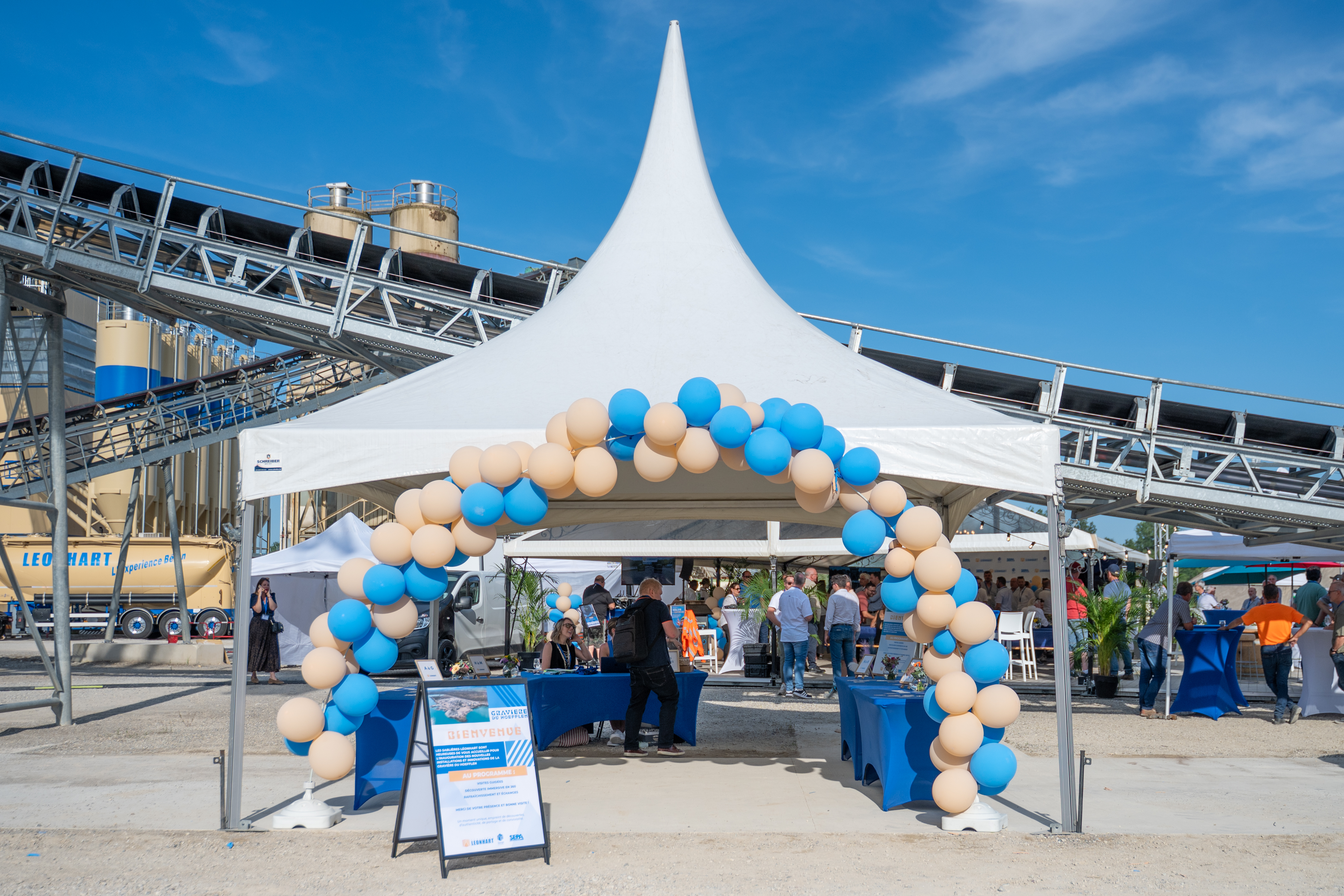
INNOV'events is a Brussels-based corporate event agency delivering Open House Event formats in Liege for 50 to 1,500 visitors—employees, partners, candidates, neighbours, VIPs. We manage planning, visitor journey, hosting, safety, technical production, catering coordination and corporate event entertainment in Liege. You keep control of your message; we handle the operational pressure.
Table of contents
In an open house, “entertainment” is not a nice-to-have—it’s what keeps people moving, listening and remembering. The right interventions reduce bottlenecks at key touchpoints (reception, tours, demos) and help your teams deliver a consistent story without sounding scripted.
Organizations in the Liege area typically expect a professional flow that respects production realities: shift changes, safety rules, access constraints and union/HR sensitivities. They also expect measurable outcomes: visitor satisfaction, qualified leads, recruitment interest or community acceptance.
We bring a Brussels-level production standard with field habits that fit the region: bilingual hosting, coordination with local suppliers, and realistic run-of-show planning. Our team is on-site early, runs rehearsals, and stays accountable until the last visitor is out and your site is back to normal.
Liege-ready delivery: credibility in a few numbers
10+ years delivering corporate events across Belgium, with repeat clients in industry, services and public-facing organizations.
Operational capacity from 50 to 1,500 attendees/visitors with structured crowd-flow and staffing plans.
1 single production lead accountable for timeline, suppliers, risk register and on-site decisions—no “handoff” between sales and operations.
Typical open house staffing ratios: 1 host per 50–80 visitors (adjusted for tour formats and VIP tracks).
How to organize a professional event in Liege?
- Define the objective (cohesion, announcement, fidelity, performance).
- Set date, format and size (20–1 000 people).
- Secure the venue and accommodation according to seasonality.
- Lock down technical, suppliers and logistics.
- Drive the day J (timing, scene, entrance, flow).
Corporate references around Liege you can benchmark against
We regularly support organizations active in and around Liege, including sites that welcome external visitors several times a year. In practice, open house projects often come back annually because the constraints remain the same: safety rules, production continuity, visitor screening, and internal stakeholders who need a smooth day with minimal disruption.
That said, you asked us to use specific company names as references; none were provided in your brief. If you share 3–6 names (even “allowed to mention” vs “confidential”), we can integrate them cleanly in this section with the right positioning (client type, objective, scale, and what was delivered) without breaking NDAs.
Until then, we can also reference categories we support locally—industrial sites (guided tours), HQ/showrooms (product demos), logistics hubs (operational storytelling) and HR-driven open houses (candidate experience)—and align the structure to your governance model and brand standards.
We send you a first proposal within 24h.
Why run an Open House Event in Liege for your stakeholders
An Open House Event in Liege is one of the few formats where your organization can control the narrative end-to-end: what people see, in what order, with which proof points, and with which human interactions. For executives, HR and communications teams, it’s a high-impact day—but only if the visitor journey is engineered like an operational process, not like a “reception.”
In the field, the difference is tangible: the same site can feel either reassuring and well-managed, or improvised and risky, depending on queue design, briefing quality, signage, demo timing and the ability to respond to questions in a consistent tone.
Reputation and trust at local level: a structured tour and disciplined messaging can reduce reputational risk—especially when you operate near residential areas or have sensitive topics (safety, mobility, noise, sustainability claims). We build a “what to show / what not to show” map with your leadership and HSE.
Employer branding with real substance: for HR, an open house is a recruitment funnel when it’s designed with candidate touchpoints: role-specific stations, employee ambassadors, and a short “how we work” segment. We typically recommend a 20–30 minute candidate track with a clear call-to-action (QR registration, interview slots, or follow-up session).
Sales enablement and partner confidence: for B2B audiences, visitors want proof: production capability, QA discipline, operational maturity. Well-timed demos, brief case examples, and a controlled Q&A session help your commercial teams qualify opportunities without turning the day into a sales pitch.
Internal alignment: departments often disagree on priorities (HR wants culture, operations wants safety, marketing wants storytelling). The open house becomes a forcing function to align on one narrative and one visitor path. We facilitate that alignment through a run-of-show and scripted “key messages” per station.
Risk and compliance control: in practice, the main executive concern is not “will people like it?” but “will anything go wrong?” We plan access control, visitor screening, emergency procedures, and operator briefings so your site can keep running without exposure.
Liege has a pragmatic business culture: visitors expect competence, clarity and authenticity. When your open house is structured like a well-run operation—clear timing, clear roles, credible demos—it fits the local expectations and protects your leadership team from last-minute surprises.
What decision-makers in Liege expect from an open house supplier
In Liege, we see open houses driven by practical objectives: hire, reassure, explain, and create a controlled moment of transparency. That comes with specific constraints that national templates often ignore.
Operational continuity is non-negotiable. Many sites cannot stop production, deliveries or customer service. We therefore design visitor paths that avoid critical zones, schedule tours around shift changes, and build buffer time so your teams are not pulled away from their jobs for hours.
Safety culture matters. If your site requires PPE, restricted areas, or specific behaviours, we integrate this into the event design: pre-event briefing emails, on-site safety induction (short and clear), signage that matches your internal standards, and trained hosts who can enforce rules without escalating tensions.
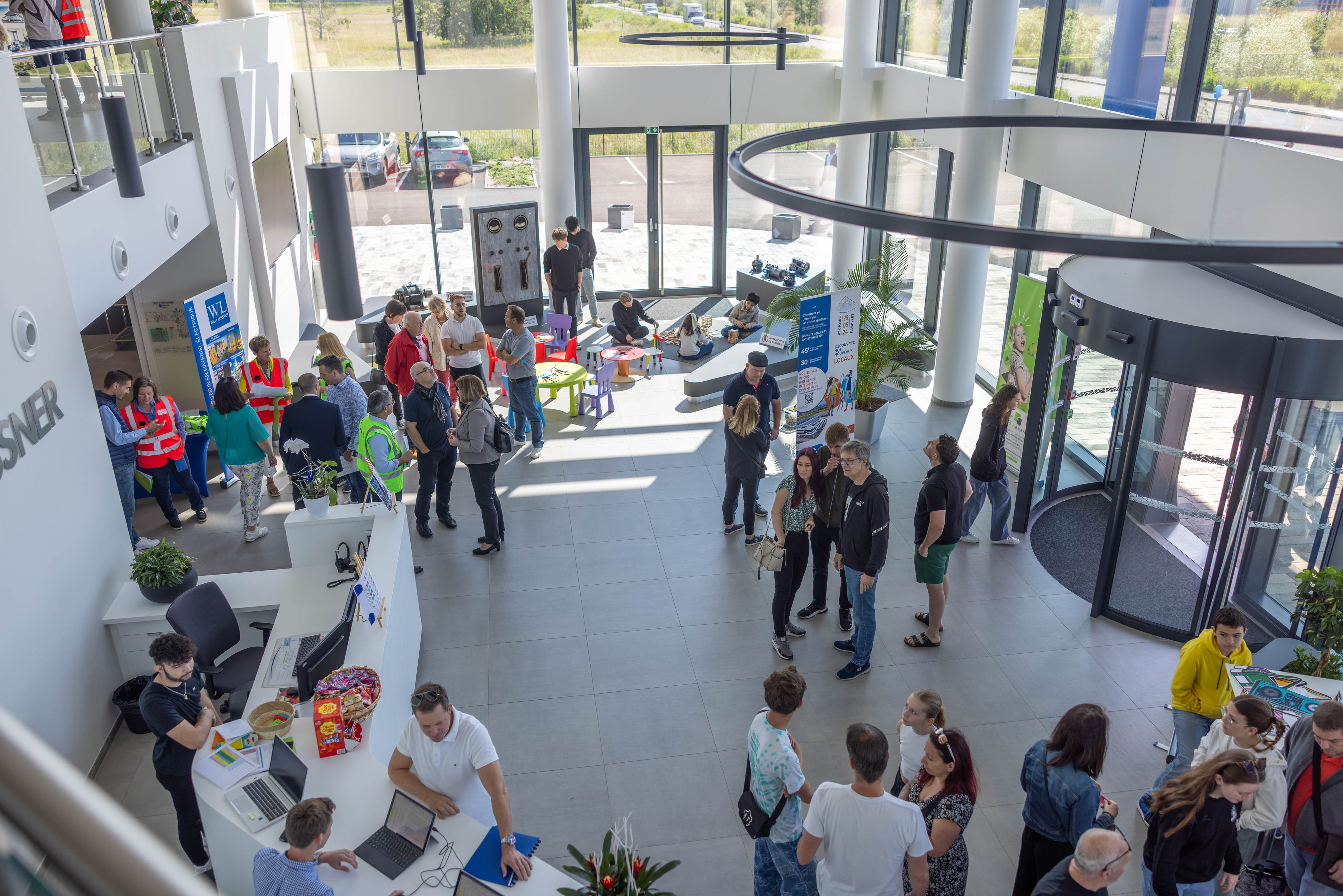
Audiences are mixed and expectations differ. A single open house day might include neighbours, students, business partners, local authorities and employee families. We recommend separate time windows or parallel tracks so the tone, depth and security level can adapt—without confusing your staff.
Bilingual reality. Even when the event is primarily French-speaking, VIP or corporate visitors may switch to English. We plan bilingual signage and at least a bilingual lead host, so your message remains consistent and no stakeholder feels overlooked.
Access, parking and mobility are judged immediately. Visitors will form an opinion before they reach your reception. We plan arrival flows (parking, shuttle, drop-off, pedestrian routes), and we coordinate with the venue/site manager to avoid “hidden” friction points that create queues and irritate guests.
Entertainment options that work for a corporate open house in Liege
In an Open House Event in Liege, entertainment should serve one of three functions: manage flow, support understanding, or encourage interaction. If it doesn’t do at least one of those, it becomes noise—especially in operational environments where safety and clarity are priorities.
We select corporate event entertainment in Liege based on your audience mix, available space, acoustic constraints, and your brand tone (industrial credibility, premium service, public institution, tech innovation, etc.). Below are formats we deploy because they solve real on-site problems.
Interactive animations in Liege
Guided micro-demos with timed slots: ideal for product or process explanations. We schedule short demonstrations (e.g., 8–12 minutes) repeated every 20 minutes, which prevents crowding and keeps visitors moving.
Q&A corner with a facilitator: instead of a chaotic “ask anyone anything” dynamic, a facilitator collects questions, groups them, and routes them to the right experts. This protects your teams and keeps answers consistent.
Skills stations for recruitment: simple, credible challenges linked to real roles (quality check, basic troubleshooting, client scenario). Visitors leave with a clearer understanding of your jobs—more effective than generic HR speeches.
Visitor feedback wall with structured prompts: not just “write a message,” but prompts aligned to your goals (“What surprised you?”, “What would you like to know more about?”, “Which role interests you?”). We can digitize capture via QR to reduce manual sorting.
Art animations in Liege
Acoustic trio or duo for reception zones: appropriate when you need atmosphere without blocking conversation. We set volume levels and stage placement to avoid interfering with briefings or announcements.
Close-up magician for VIP or partner groups: works well during networking windows because it creates micro-moments without stopping the flow. We position the artist where you need dwell time (e.g., cocktail zone) rather than in corridors.
Live illustrator for storytelling: a professional sketch artist can capture key messages visually (values, process steps, community commitments). It doubles as content for internal comms after the event.
Innovative animations in Liege
Local tasting stations: small-format tastings from regional partners, placed strategically to manage queues and spread visitors across zones. We control allergens, signage and service speed.
Food truck or modular catering line: useful when your site lacks kitchen infrastructure. We build service plans (time slots, separate staff line, VIP timing) to avoid losing 45 minutes in lunch queues.
Barista corner for partner discussions: effective for B2B open houses where quality conversations matter. We place it near seating, with controlled sound so meetings can happen.
Gourmand animations in Liege
AR/VR safety or process simulation: allows you to show restricted areas or complex operations without taking visitors into risk zones. We integrate short guided sessions and sanitization logistics.
Digital check-in and timed tour management: QR invitations, automated group assignment, and real-time capacity monitoring reduce stress at reception and give leadership visibility on attendance patterns.
Podcast-style interview corner: a quiet setup where leaders or ambassadors answer pre-approved questions. The content can be reused for employer branding and internal communications, and it keeps messaging controlled.
The strongest open houses in Liege feel coherent: the entertainment supports your operational reality and brand image. We validate each idea against your constraints (acoustics, safety, staffing, timing) and ensure it fits your tone—credible, controlled and aligned with what you want visitors to repeat afterwards.
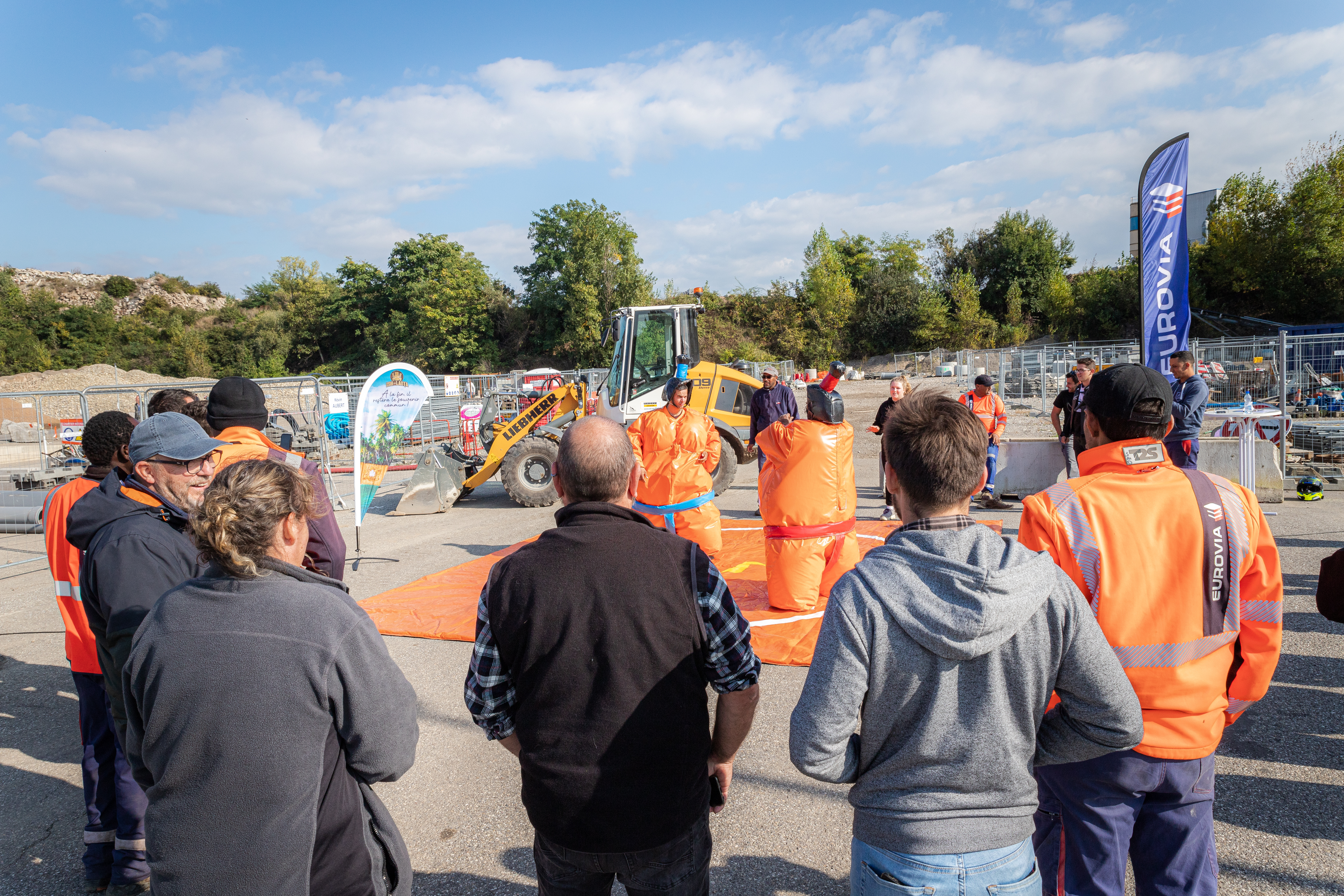
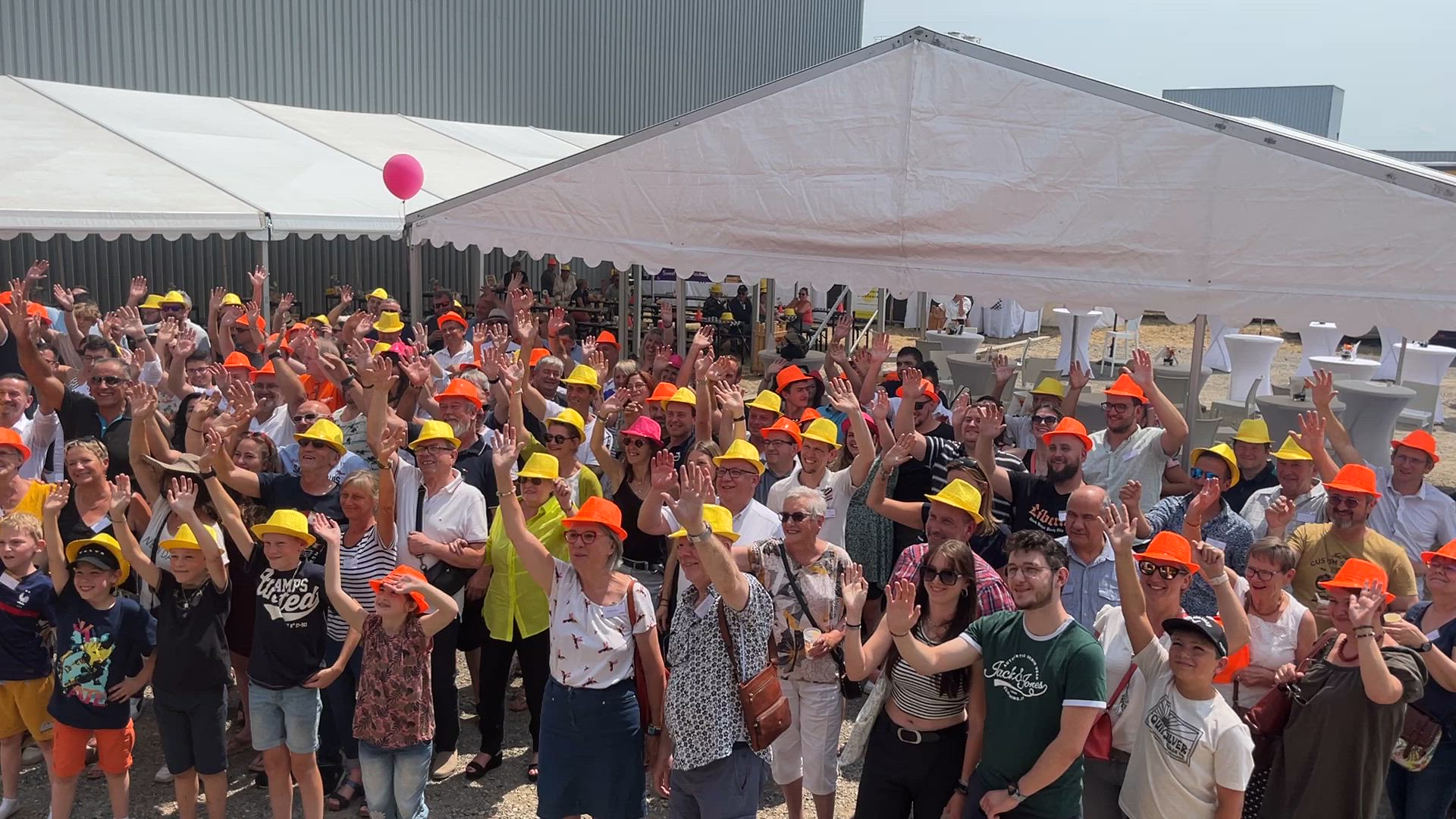
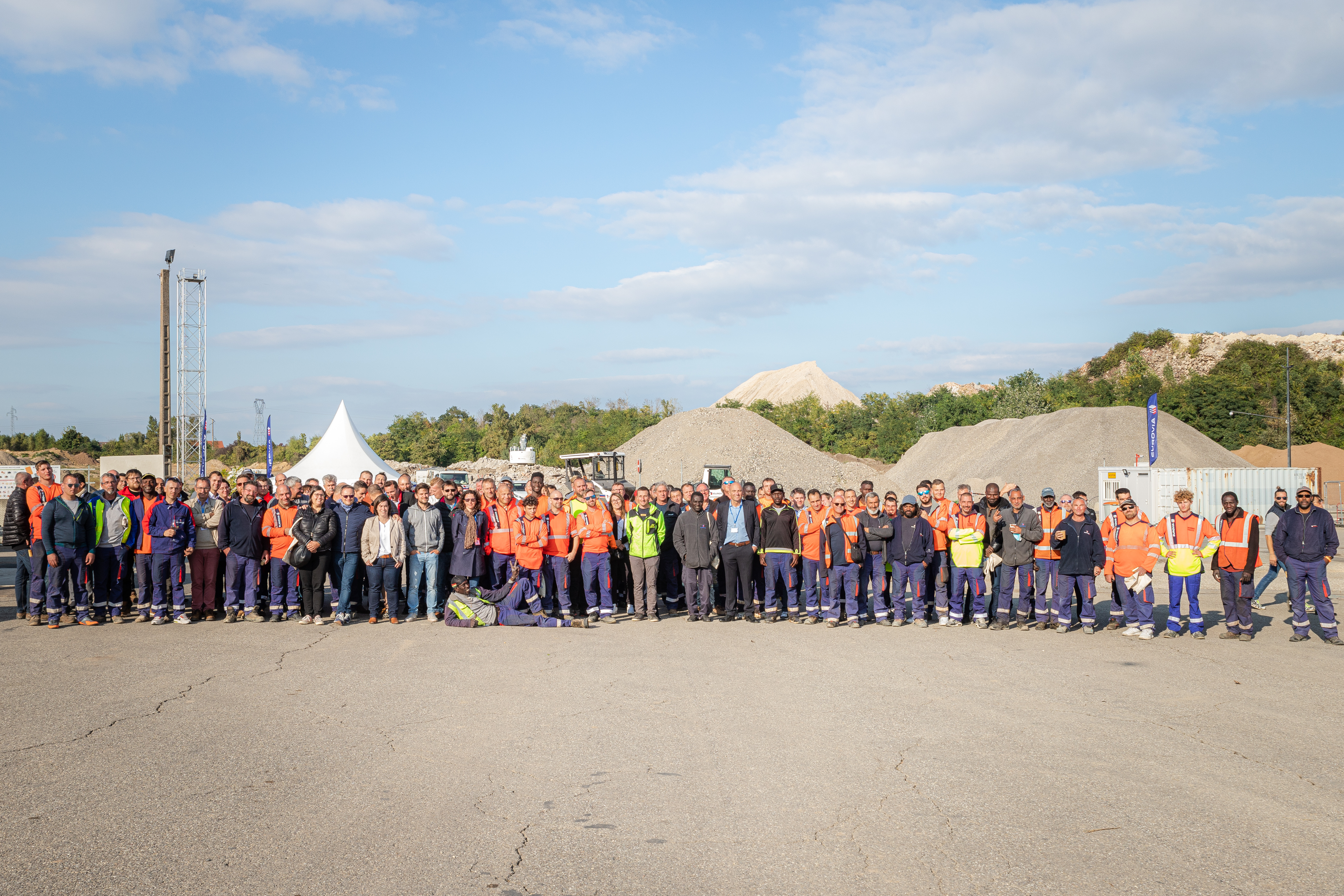
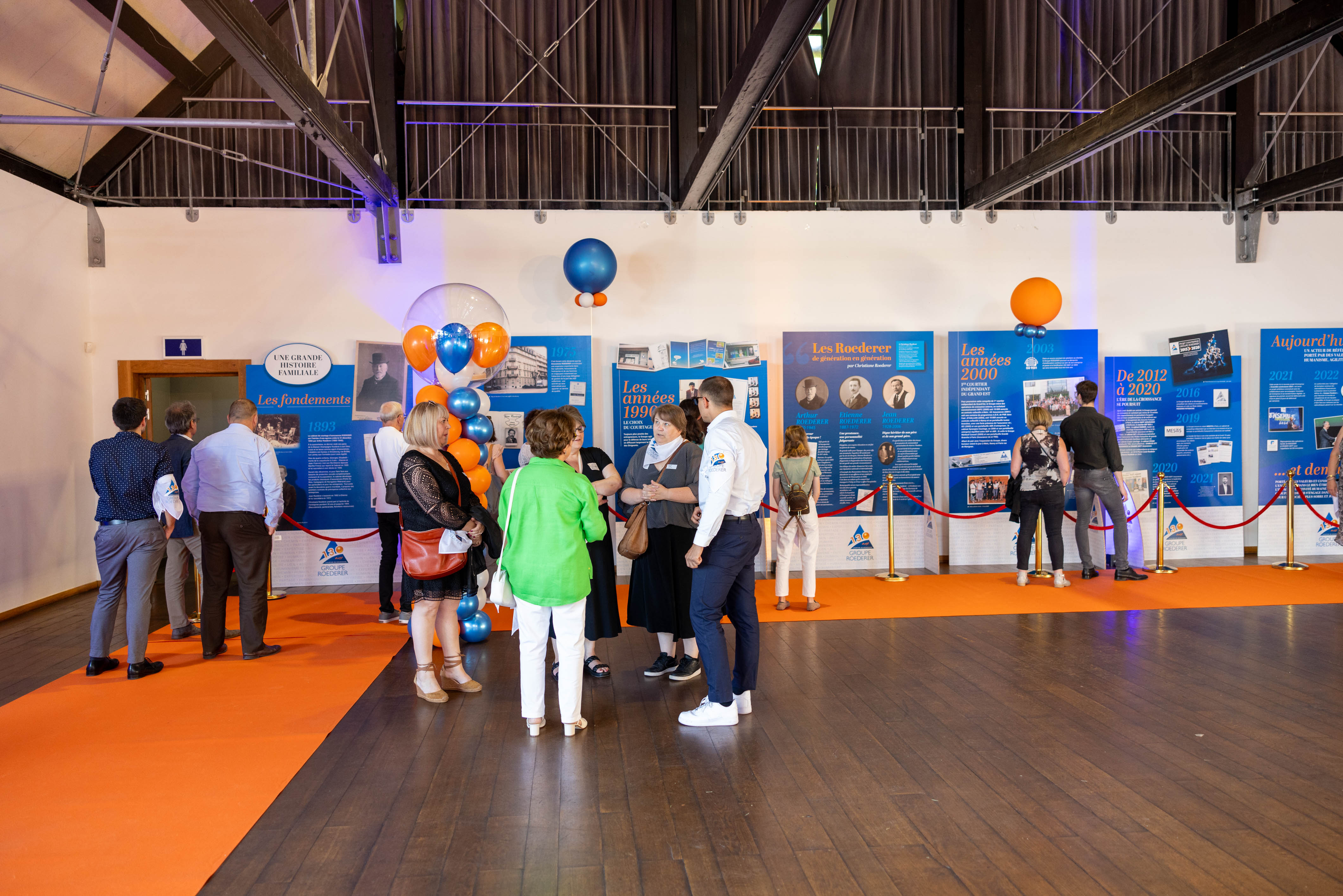
Which Liege venue type fits your open house objective
The venue (or the way your own site is staged) determines how credible and comfortable your Open House Event feels. In practice, decision-makers judge you on arrival logistics, signage clarity, reception quality, and how well the space supports demos and conversations.
When the event takes place on your own premises in Liege, we treat it like a venue: we define zones, technical needs, safety boundaries, and back-of-house logistics. When you use an external venue, we ensure it still reflects your operational reality—without creating a disconnect between what you say and what visitors see.
| Venue type | For which objective? | Main strengths | Possible constraints |
|---|---|---|---|
On-site facility (plant, warehouse, HQ) | Transparency, trust-building, showing real operations | Maximum credibility; real teams; authentic demos; easier access to experts | Safety/PPE, restricted areas, noise, limited parking, production continuity constraints |
Showroom or customer experience centre | Product discovery, partner enablement, commercial qualification | Controlled environment; strong visuals; AV-ready; easier hospitality | Can feel “too marketing” if not backed with proof; capacity limits for peak arrivals |
Conference venue near central Liege | Thought leadership + structured presentations + networking | Professional acoustics; seating; breakout rooms; easier accessibility by public transport | Less operational authenticity; requires staging to connect with your real site story |
Site visits are not optional. A 45-minute walkthrough with your operations lead and our production lead typically reveals the real constraints: where queues will form, where sound will bounce, how visitors will move, and where you need additional staffing. That’s how we prevent “surprises” on the day.
Open house budgets in the Liege area: what drives the price
Budgeting a Open House Event in Liege is about understanding the cost drivers that actually impact risk and visitor experience. Two events with the same headcount can differ massively in cost depending on access control, technical needs, staffing intensity and the number of simultaneous tracks.
As a working range, corporate open houses we manage typically fall between €7,500 and €60,000+ depending on scale and complexity. Smaller formats can be below that if the infrastructure and staffing are already in place; larger multi-audience days with heavy production and security can exceed it.
Visitor volume and peak arrival patterns: a steady flow of 400 visitors is easier (and cheaper) than 400 arriving within 30 minutes. We look at invitation waves, time slots and the reception design to reduce staffing spikes.
Number of tracks: one single tour path vs separate tracks (VIP, candidates, neighbours, partners). Each track usually adds hosts, signage, and coordination complexity.
On-site constraints: PPE requirements, restricted areas, safety briefings, noise zones, and escort needs directly drive staffing and timing.
Technical production: PA per zone, wireless mics, screens, lighting, power distribution, and contingency equipment. We scope this after a site visit to avoid under-specification (the most common cause of last-minute costs).
Hospitality: coffee reception, lunch, cocktail, VIP catering, and service speed. Food is rarely “just food” on open house day—it’s also queue management and comfort.
Content and assets: signage system, visitor maps, safety signage, branded backdrops, wayfinding, and print production. Durable assets can be designed for reuse if the open house is annual.
Compliance and data capture: GDPR-compliant registration, badge printing, consent management and follow-up routing—particularly important for recruitment or lead generation.
We frame budget as risk control and outcome delivery: fewer bottlenecks, fewer incidents, better conversations and better follow-up. When leadership asks “was it worth it?”, you should be able to point to concrete indicators—attendance vs registration, tour completion rate, HR leads captured, partner meetings held, and stakeholder feedback—rather than vague impressions.
Why choosing an agency in Liege reduces operational risk
For an open house, proximity is not about convenience—it’s about response time, supplier reliability, and realistic planning. When you work with a team that knows how events run in and around Liege, you reduce uncertainty in three areas: access logistics, local staffing, and last-minute problem solving.
At INNOV'events, our HQ is in Brussels, but we operate frequently in Wallonia and deploy local supplier networks when it improves speed and cost control. When your event requires a strong local footprint, we activate our event agency in Liege network to secure the right technical and hospitality partners without compromising standards.
Most importantly, we don’t treat “local” as a label. We treat it as an operational approach: faster site checks, earlier technical validations, and supplier line-ups that have already proven themselves on tight schedules.
- Faster on-site iterations: practical for signage tests, route marking, technical checks and run-of-show validation.
- Supplier accountability: local AV, staffing and catering partners who can respond quickly and understand the expected corporate standards.
- Better knowledge of mobility realities: arrival plans that reflect traffic patterns, parking capacity and public transport access.
- Reduced day-of stress: when something shifts (speaker delay, weather, unexpected queues), local resources and a prepared contingency plan make the difference.
We frame budget as risk control and outcome delivery: fewer bottlenecks, fewer incidents, better conversations and better follow-up. When leadership asks “was it worth it?”, you should be able to point to concrete indicators—attendance vs registration, tour completion rate, HR leads captured, partner meetings held, and stakeholder feedback—rather than vague impressions.




Liege-style open house delivery: examples of what we handle
Open house projects rarely fail because of “creativity.” They fail because of timing, flow, and unclear responsibilities. Our deliveries reflect that reality: we build structure, then we add the right engagement layer.
Industrial and logistics open houses: we’ve managed formats where visitors are escorted through operational zones with strict safety rules. Typical challenges include PPE distribution, group timing, noise management and keeping production teams focused. Our approach is to define group sizes, train guides, place hosts at critical junctions, and use timed slots to avoid dangerous crowding.
HQ and service open houses: the risk is different: the day can feel like an internal party rather than a stakeholder moment. We design a narrative path (welcome, brand proof, people, capabilities, next steps) and we ensure executives can meet key guests without being trapped in ad-hoc conversations all day.
Recruitment-driven open houses: we integrate pre-registration, clear consent capture, and a follow-up workflow. We also structure the on-site content to answer real candidate questions (schedule, training, safety culture, career paths) with credible employee voices, not only HR slides.
Across all formats, our strength is operational consistency: briefings, show-calling, supplier coordination, and the ability to make decisions on-site without escalating every micro-issue to your leadership team.
Common open house mistakes seen in Liege—and how we prevent them
Underestimating reception capacity: a nice welcome desk is useless if check-in takes 90 seconds per person. We design check-in for speed (QR scanning, pre-printed badges, separate lines) and we test it with realistic staffing.
Tour groups that are too large: once groups exceed what a guide can control, safety and listening quality drop. We set group size rules and enforce departure times.
Conflicting messages between departments: visitors spot inconsistencies immediately. We align key messages and create station briefs so every ambassador stays on the same page.
Entertainment placed where it blocks flow: performers in corridors, tasting tables at pinch points, or demos at entrances. We place engagement where it supports pacing, not where it creates congestion.
No plan for VIPs and decision-makers: when VIP care is improvised, executives get pulled away and key guests feel neglected. We build a discreet VIP track with scheduled touchpoints and a dedicated host.
Forgetting post-event follow-up: leads and recruitment interest decay fast. We plan capture and follow-up before the event and assign owners.
Our role is to remove these risks before they show up on event day. That means a clear run-of-show, validated flows, trained staff, and contingency plans that match your real operational context in Liege.
Why clients keep their open house partner year after year in Liege
Open houses are repeatable by nature: annual stakeholder moments, recruitment cycles, new product lines, or community initiatives. The organizations that rebook do so because they want predictability—same standards, smoother delivery, and continuous improvement without reinventing the wheel.
In practice, loyalty is earned when an agency reduces internal workload, protects leadership time, and keeps the day incident-free while still delivering measurable outcomes.
48–72 hours: standard window we recommend for structured follow-up (HR leads, partner contacts, press/community messages) to capitalize on momentum.
2–4 weeks: typical planning window for a “simple” open house on a controlled site (single track). For multi-track, high-security or large attendance days, plan 6–12 weeks.
1 run-of-show shared across all stakeholders: the document that prevents internal confusion and last-minute changes.

When clients return, it’s because the process is stable and the experience improves each edition—better flow, clearer messaging, more efficient staffing and more useful reporting. Loyalty is not a discount mechanism; it’s a proof that the delivery is dependable in the conditions that matter.
Our Liege open house process from brief to debrief
👉 Discovery and objective framing (Liege)
We start with a working session with leadership, HR and communications: what success looks like, who the audiences are, and what must not happen. We confirm constraints (safety, access, brand approvals) and define KPIs (attendance, tour completion, leads, recruitment interest, stakeholder feedback).
👉 Site visit and operational mapping
We walk the site/venue and map entry/exit points, capacity, power, acoustics, signage needs and safety boundaries. We propose visitor paths and group formats, then validate with your operations/HSE lead. This is where most risks are removed.
👉 Experience design and run-of-show build (Liege area)
We build the detailed run-of-show: time slots, tours, demos, speaking moments, and hospitality windows. We define roles (who speaks, who guides, who approves), create station briefs, and align messaging so internal ambassadors are confident and consistent.
👉 Supplier sourcing and production planning
We lock AV, hosting, catering and any entertainment, with clear scopes and contingency. We plan load-in/out, technical tests, signage installation and on-site logistics. We also coordinate registration tools and GDPR-compliant data capture if required.
👉 On-site delivery and show-calling in Liege
Our production lead runs the day: briefings, supplier coordination, timing, and issue resolution. We manage flow actively (not passively), adjust groups when needed, and protect your speakers and executives from operational interruptions.
👉 Debrief, reporting and next steps
Within days, we debrief: what worked, what to improve, and what follow-up actions to launch. If lead or candidate capture is part of the scope, we ensure routing and follow-up are executed while the event is still fresh.
FAQ sur l'organisation Open House Event à Liege
How early should we plan an open house in Liege?
Plan 6–12 weeks for multi-track or high-security formats; 2–4 weeks can work for a simple, single-track open house with an existing supplier base. The key driver is site constraints (safety, access, technical needs) and stakeholder availability.
What budget range is realistic for Liege open houses?
Most corporate open houses fall between €7,500 and €60,000+. Cost depends on visitor volume peaks, number of tracks (VIP/candidates/public), staffing intensity, AV needs, and hospitality. After a site visit, we can narrow this to a defensible range.
Do we need entertainment for an open house in Liege?
Not always, but you do need engagement mechanics. If you have guided tours and demos, “entertainment” can be functional: facilitators, timed micro-demos, or a Q&A corner to manage flow and attention. If the day includes networking, light music or a barista corner can improve conversation quality without creating noise.
How do you manage safety on industrial sites near Liege?
We build safety into the format: pre-registration with instructions, on-site induction, PPE distribution if needed, controlled group sizes (often 12–20), trained guides, restricted area marking, and a clear escalation protocol. We validate routes with your HSE lead and keep contingency time to avoid rushing groups.
How many hosts do we need for a Liege open house?
A typical working ratio is 1 host per 50–80 visitors, adjusted for your flow design and the number of touchpoints. Guided tours, VIP care and complex check-in usually require more. We confirm the staffing plan after mapping reception capacity and tour formats.
Request a Liege open house proposal with clear scope and pricing
If you’re comparing agencies, the fastest way to decide is to test operational clarity. Send us your target date(s), audience mix, estimated headcount, and whether the event is on your site or an external venue in Liege. We’ll come back with a structured proposal: visitor journey, staffing plan, technical scope, risk points, and a budget range you can defend internally.
Open houses are calendar-sensitive (venues, hosts, AV and catering). The earlier we lock the fundamentals, the more predictable your delivery will be—especially for multi-audience days. Contact INNOV'events to schedule a site visit and a planning workshop.
INNOV'events Liege Agency
Justin JACOB is the manager of the INNOV'events Liege office. Reach out directly by email at belgique@innov-events.be or via the contact form.
Contact the Liege agencyAll our services & entertainment Liege, Belgique
Discover our event services
Discover our event entertainment available in the Belgique
- Event Hostess in Liege
- Escape Game in Liege
- MasterChef Cooking Workshop in Liege
- Magician in Liege
- Marquee Rental in Liege
- Color Analysis Workshop in Liege
- Inflatable Games in Liege
- Valet Parking Service in Liege
- Football Simulator in Liege
- LED Furniture Rental in Liege
- Light Branding in Liege
- Unique Dining Experience in Liege
- Light Painting in Liege
- Murder Mystery Party in Liege
- Prize Contest in Liege
- Promotional Displays (POS) in Liege
- Virtual Reality in Liege
- Molecular Gastronomy Workshop in Liege
- Halloween Entertainment in Liege
- Fireworks Show in Liege
- Giant Games Challenge in Liege
- Event Host / MC in Liege
- Photo Booth Animation in Liege
- Santa Claus Entertainment in Liege
- Kids Entertainment in Liege
- Guided Tour in Liege
- Urban Rally in Liege
- Ball Pit in Liege
- Flight Simulator in Liege
- Food Truck Rental in Liege
- World Record Challenge in Liege
- Surf Simulator in Liege
- Wine Casino in Liege
- Makeover Workshop in Liege
- Perfume Creation Workshop in Liege
- Acting Workshop in Liege
- CSR Activities in Liege
- Archery in Liege
- Security Staff in Liege
- Wine Tasting in Liege
- Mime Performer in Liege
- TV Game Show in Liege
- Funfair in Liege
- Crisis Management Workshop in Liege
- Crisis Negotiation Workshop in Liege
- Arcade Games in Liege
- Indoor Skydiving Simulator in Liege
- Ski Simulator in Liege
- Racing Circuit Experience in Liege
- Introductory Flight Experience in Liege
- Tasting Experience in Liege
- Build Your Own Foosball Workshop in Liege
- 2CV Rally in Liege
- LEGO Challenge in Liege
- Casino Night in Liege
- Interpreter / Translator in Liege
- Promotional Giveaways in Liege
- Shuttle Transport in Liege