Build Your Own Foosball Workshop in Liege for teams who must deliver together
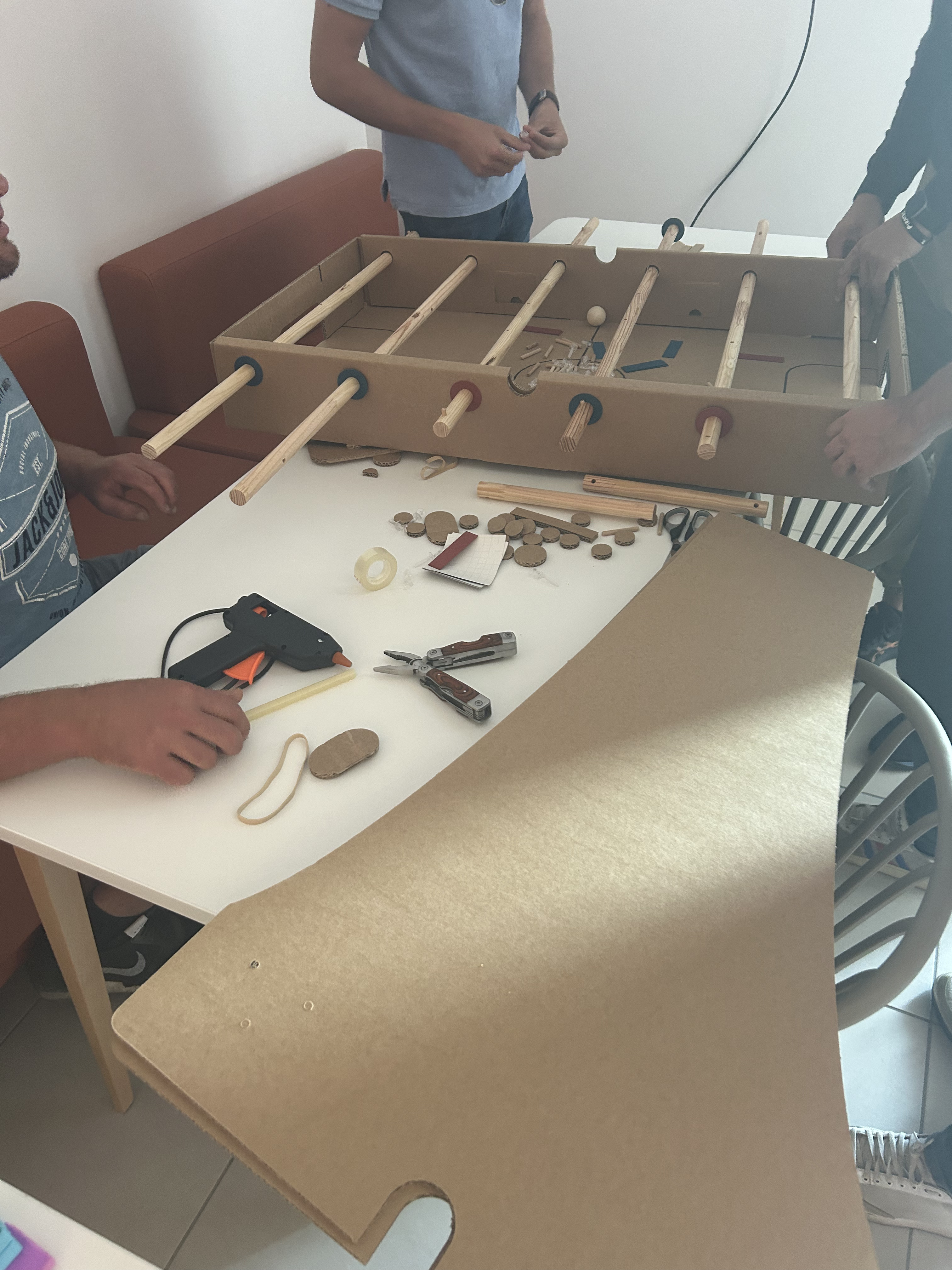
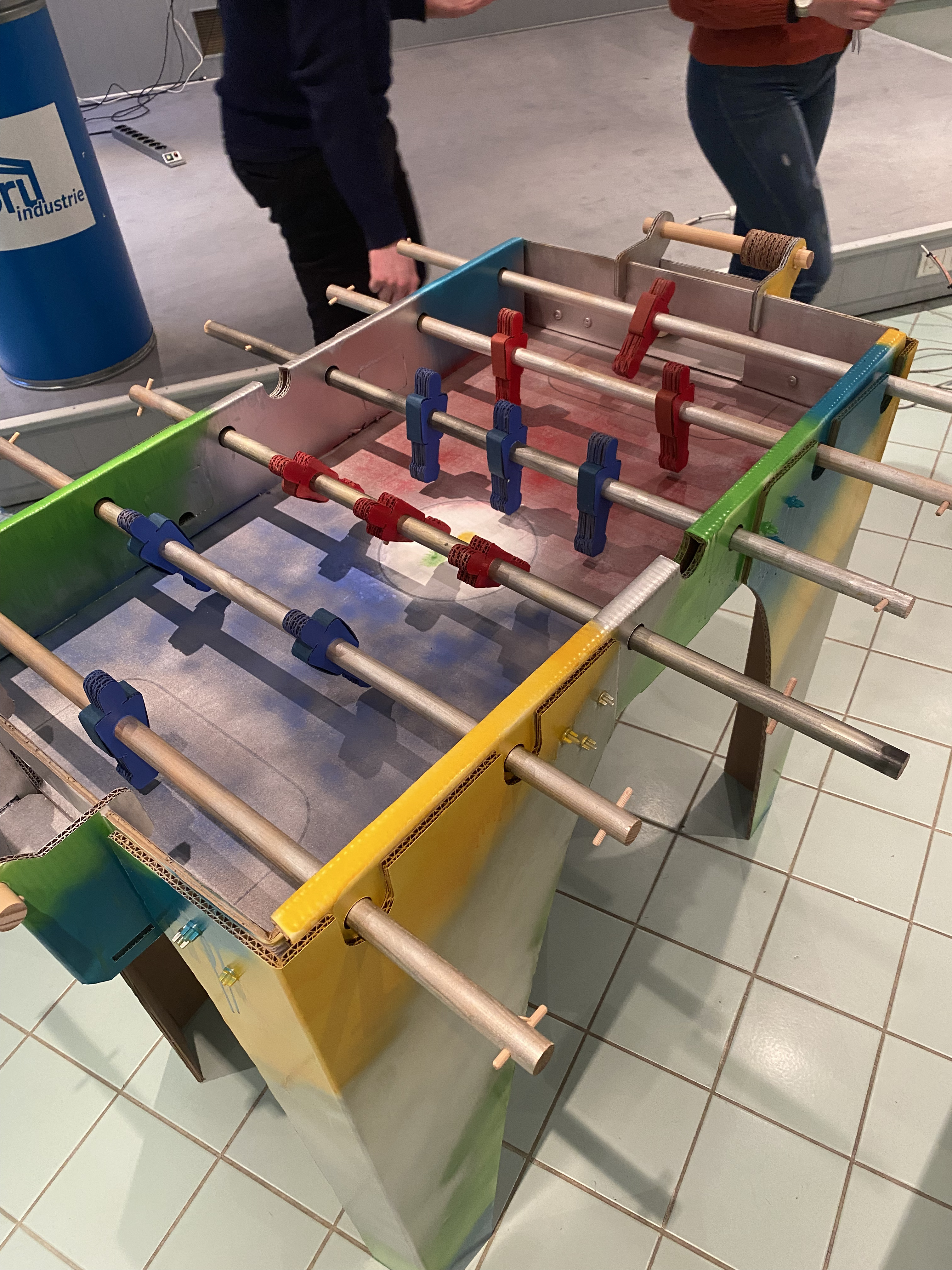
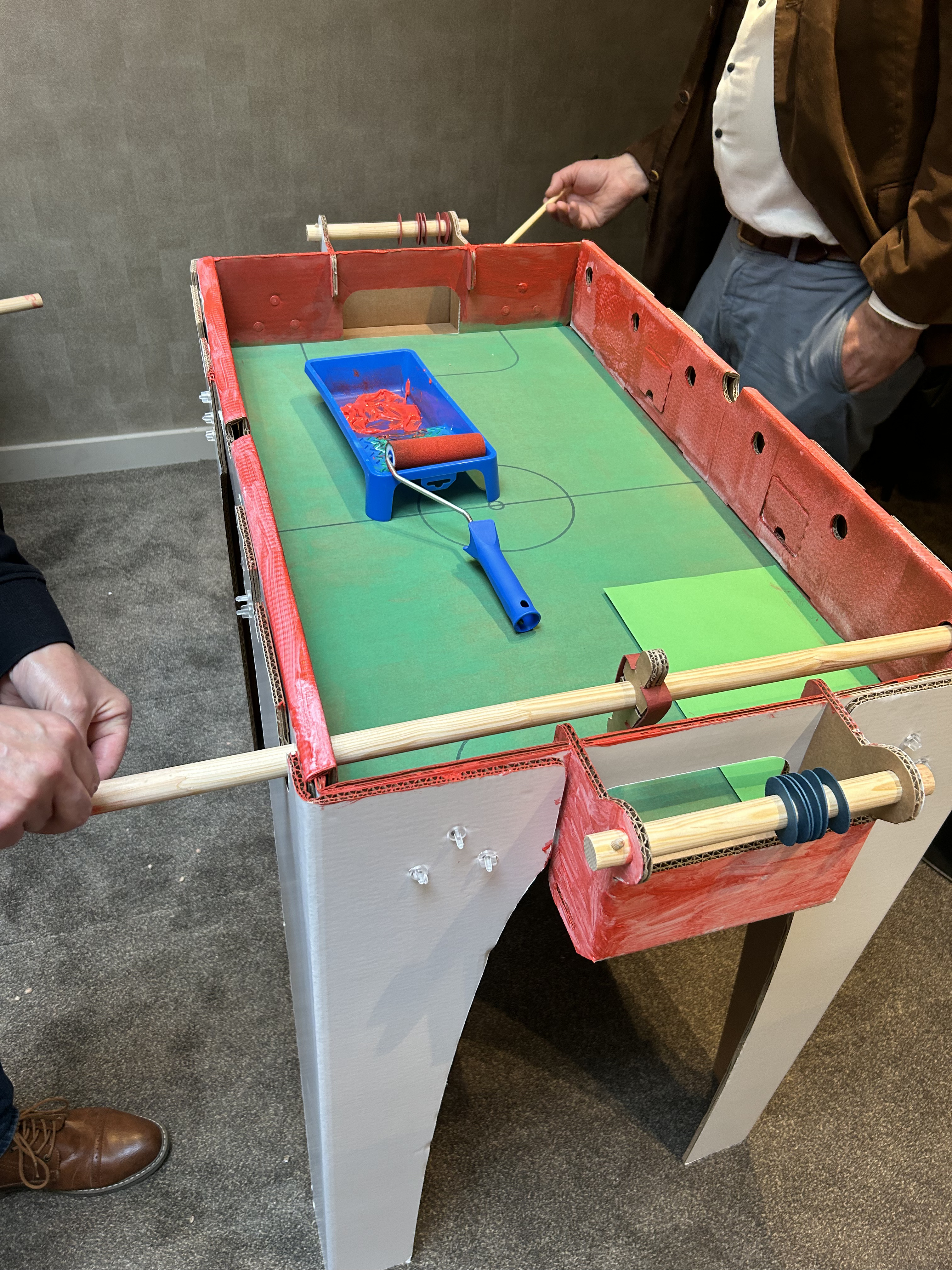
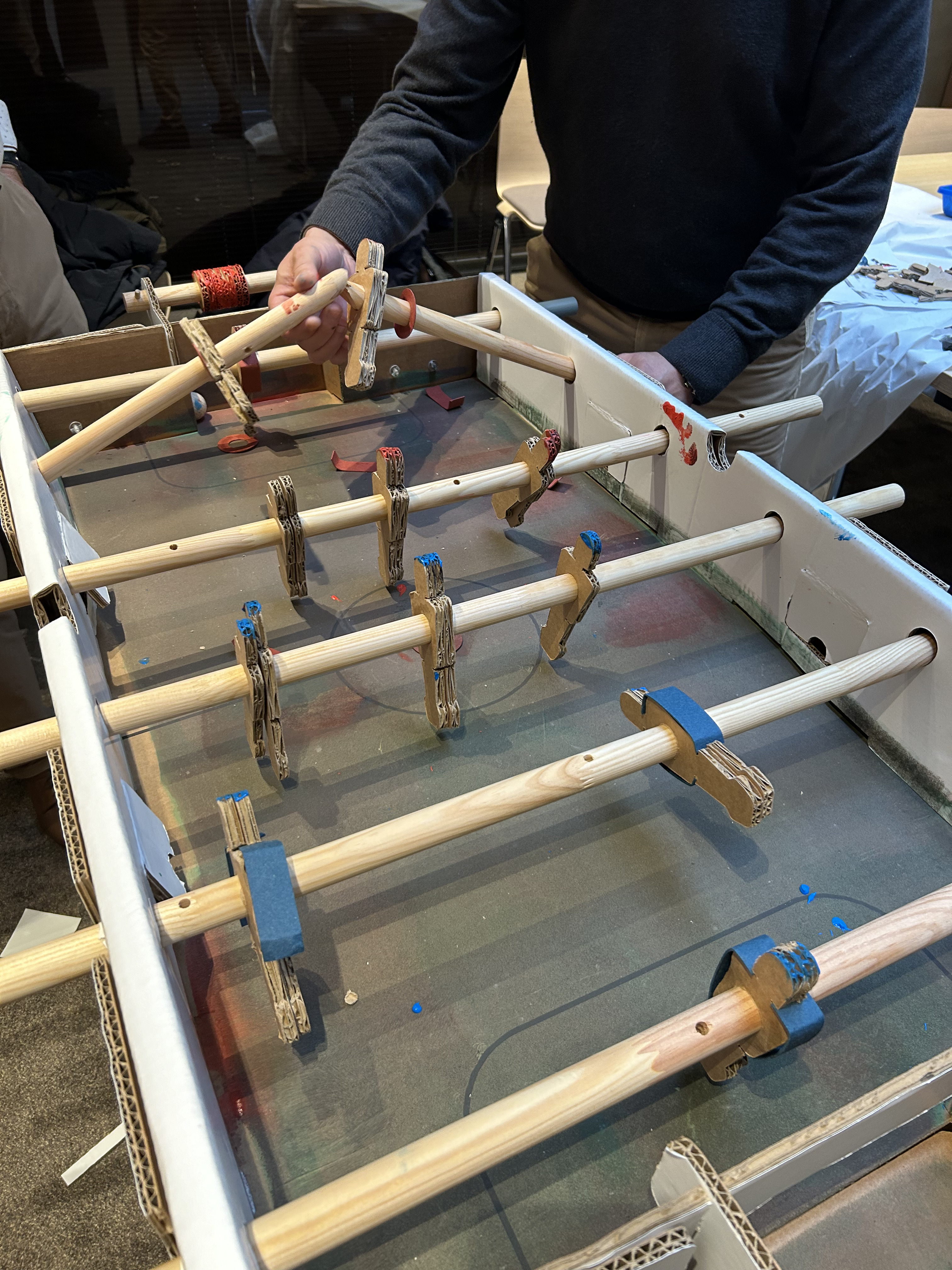
INNOV'events (Brussels) delivers the Build Your Own Foosball Workshop in Liege as a structured corporate format for 10 to 200 participants. We handle facilitation, materials, timing, transport, and on-site coordination so your teams stay focused on execution and collaboration. The result is a concrete deliverable (a playable foosball table) and a clear debrief you can reuse in HR or internal comms.
Sommaire
In a corporate event, entertainment is not a “nice extra”: it is a tool to create shared reference points, accelerate cross-team cooperation, and reset routines after intense delivery periods. A well-run workshop gives you observable behaviours (coordination, decision-making, role distribution) that matter to executives and HR.
In Liege, organisations typically expect practical formats: clear timing, tangible output, and a professional rhythm that respects production constraints and shift patterns. People engage quickly when the activity is hands-on, but they disengage just as fast if logistics or facilitation feel improvised.
We operate regularly across Wallonia and the Liège area with a field approach: pre-event scoping, venue constraints review, material checks, and a facilitation plan that keeps groups moving. You get one accountable project lead and an on-site team sized to your headcount.
INNOV’events delivery benchmarks in Liege
10–200 participants per session, with parallel sub-groups to protect pace and safety.
60–180 minutes typical runtime depending on the build complexity, brand customisation and debrief depth.
2–6 facilitators deployed on-site (rule of thumb: 1 facilitator per 20–25 participants) plus a production lead.
1 single project owner for client-side simplicity (HR/Comms/EA coordination, purchase order, insurance documents).
Nationwide delivery from Brussels with recurring operations in the Liège region (Venues, suppliers, transport routes, loading constraints).
Corporate teams we support around Liege
We regularly support organisations active in Liege and across the province: industrial sites, public institutions, fast-growing scale-ups, and service companies with multi-site operations. Many of our clients come back year after year because they need reliable execution, not just a concept.
You mentioned providing company names as references; to keep this page accurate and compliant, we only publish client names once we have written approval and the exact legal entity (e.g., Belgian HQ vs. plant). If you share the names you want displayed, we will integrate them in this section and align the wording with your brand and procurement requirements. In the meantime, we can provide case summaries on request (sector, headcount, objectives, constraints, KPIs) for projects delivered in the Liège area.
What directors appreciate most is predictability: clear run-of-show, realistic staffing, and a vendor who can adapt to last-minute constraints (venue access times, security rules, delayed speakers) without impacting the participant experience.
 Besoin d’un devis rapide ?
Nous vous envoyons une première proposition sous 24h.
Why run a foosball build workshop in Liege for leadership outcomes?
The Build Your Own Foosball Workshop works well in corporate settings because it forces teams to move from ideas to execution under time constraints, with real dependencies between roles. It becomes a safe mirror of daily operations: planning, handovers, quality control, and managing trade-offs.
Alignment without a heavy speech: executives often want a moment where people feel the strategy rather than hear it. The build phase creates a shared vocabulary (scope, priorities, definition of “done”) that can be linked to your operational reality.
Visible collaboration patterns for HR: you see who naturally coordinates, who ensures quality, who communicates risks early, and who stays silent. With the right facilitation, this remains constructive and never judgmental, but it gives HR concrete observations to feed leadership programs.
Cross-department bonding with a tangible output: unlike classic games, the table remains a usable object. Many clients place it in a break room or near a project space—making the event a lasting internal symbol.
Engagement across profiles: hands-on assembly reduces the “extrovert bias” of purely verbal activities. In mixed groups (production, finance, IT, sales), participants contribute through different strengths: precision, organisation, troubleshooting, communication.
Communication teams get strong content: photos of the build, team signage, and final match moments produce authentic internal comms assets. When planned properly, you also control brand exposure and privacy.
Liege has a strong operational and industrial culture: people value practicality, competence, and straightforward facilitation. When the workshop is run professionally, it resonates with that mindset and creates buy-in quickly—especially in organisations balancing performance pressure and retention challenges.
What companies in Liege typically expect from a corporate workshop
In our experience around Liege, corporate events are often squeezed between operational constraints: shift schedules, tight quarter-end deadlines, limited venue access windows, and strict safety rules—especially for organisations with industrial DNA or regulated environments. A successful workshop must therefore be designed like an operational project, not like a stage show.
Common expectations we hear from executives, HR, and internal comms in the area:
- Clarity on timing: start and end on time, with no “dead moments”. If you run this between two plenary sequences, you need a reliable format that fits the agenda.
- Professional facilitation: participants accept playful formats as long as the facilitation is structured and respectful (clear instructions, fast support, no infantilising tone).
- Risk control: safe tools, adequate supervision, protected floors, and clear rules. Venue managers in Liège are vigilant on noise, access, and damage risk.
- Procurement compatibility: a supplier who can provide documentation (insurance, VAT details, purchase order flow) and respond quickly to compliance questions.
- Local logistics realism: loading constraints in city-centre venues, limited lift access, parking and timing around the Meuse axis traffic—details that make or break the day.
We design the Build Your Own Foosball Workshop in Liege with these constraints in mind: realistic group sizes, pre-checked kits, and a facilitation plan that keeps participants productive from minute one.
Which corporate event entertainment works best in Liege today?
Entertainment creates engagement when it fits your organisation’s constraints and message. Around Liege, we see strong participation when the activity is tangible, time-boxed, and respectful of mixed seniority (operators, managers, directors). The Build Your Own Foosball Workshop can also be combined with short “micro-activations” to manage energy and transitions during the day.
Interactive animations in Liege
Team identity sprint: each group defines a name, values, and a 30-second pitch. Practical impact: it forces quick alignment and gives comms usable content.
Quality checkpoint challenges: at predefined times, teams must pass a control list (stability, rod alignment, ball return). Practical impact: introduces quality culture without jargon.
Mini-tournament with bracket logic: 3–5 minute matches to keep rhythm and avoid long waiting. Practical impact: easy to fit between plenary segments.
Art animations in Liege
Table customisation zone: discreet branding (company colours, slogans, values) applied via prepared templates. Practical impact: protects brand consistency while keeping the activity authentic.
Photo corner with build stages: controlled lighting and backdrop to avoid messy images. Practical impact: internal comms quality increases, and you reduce the risk of publishing unsafe tool shots.
Innovative animations in Liege
Liège-friendly break formats: coffee and local sweet options scheduled at key moments (mid-build and pre-tournament). Practical impact: fewer drop-offs and a smoother flow—especially when participants come from different sites.
Structured drink moment after delivery: planned after the final match, not during the build. Practical impact: reduces tool-related risk and keeps productivity high.
Gourmand animations in Liege
Operational KPI layer: teams receive “budget tokens” to spend on speed vs. quality checks. Practical impact: mirrors real executive trade-offs and creates meaningful debrief discussions.
Remote leadership integration: if some leaders are not on-site, we can run a short live check-in and final match viewing. Practical impact: keeps leadership visible without disrupting the agenda.
The deciding factor is alignment with your image: a bank, a public institution, and a manufacturing group will not use the same tone. We adapt facilitation, visuals, and debrief so the entertainment strengthens your credibility rather than looking “off-brand”.
Where to host a Build Your Own Foosball Workshop in Liege?
The venue shapes how the event is perceived. For a Build Your Own Foosball Workshop in Liege, you need enough surface for assembly zones, circulation, and a safe tool area—plus practical access for loading. A beautiful venue that cannot handle logistics will cost you time and stress on event day.
| Venue type | For which objective? | Main strengths | Possible constraints |
|---|---|---|---|
Hotel conference room in Liege | Leadership offsite, sales kick-off, mixed plenary + workshop | Predictable service levels, AV available, catering on site, easy agenda control | Loading limitations, noise constraints near guest rooms, limited storage |
Industrial/loft venue (renovated warehouse style) | Company anniversary, change moment, “hands-on” culture reinforcement | Large surfaces, robust floors, strong atmosphere for building activities | Access slots, heating/comfort depending on season, acoustic management needed |
Your own offices or plant training area (province of Liège) | Operational team engagement, multi-shift inclusion, cost control | Maximum accessibility for staff, no travel time, strong authenticity | Internal safety rules, space reconfiguration, need strict coordination with site manager |
We strongly recommend a site visit or a detailed venue technical check (access, lifts, floor protection, waste removal, power, storage). In Liege, small constraints like a narrow staircase or a strict delivery slot can change the entire setup plan—so we validate it early and lock the run-of-show.
What budget to plan in Liege for a foosball build workshop?
The cost of a Build Your Own Foosball Workshop in Liege depends on concrete parameters: headcount, table model and quantity, facilitation staffing, transport and access constraints, and the level of branding or debrief expected. We quote transparently so you can arbitrate between options rather than receiving a single “package price”.
Number of participants and tables: for engagement, we typically plan one build station per 10–20 participants depending on the complexity and the time available.
Duration: 60–90 minutes fits a seminar agenda; 120–180 minutes allows deeper build, testing, and a more meaningful debrief.
Facilitation and production staffing: more stations require more supervision to keep pace and safety. We size teams to avoid bottlenecks and waiting time.
Venue constraints in Liege: city-centre access, loading distance, lift availability, and setup windows can add production time and labour.
Branding and comms: discreet logo placement, team name plates, or photo deliverables can be included; we discuss what is actually useful for your internal comms, not what looks good on a proposal.
Risk and compliance: insurance documents, safety briefings, protective materials for floors/walls, and tool control are part of professional delivery.
From an ROI perspective, directors usually measure success through participation rate, cross-team connections created, and post-event momentum (internal comms engagement, manager feedback, retention signals). When the workshop is planned with your business objective in mind, it becomes a cost-efficient lever compared to formats that generate short-term excitement but no operational takeaways.
Why work with an event agency in Liege for this format?
Even when the concept is clear, execution is where corporate risk lives: access times, supplier coordination, staffing, and contingency management. Working with a team that knows Liege reduces uncertainty and protects your internal stakeholders (HR, Comms, EA, Operations) from last-minute surprises.
When we support clients in the area, we plug into local realities: venue constraints along the Meuse axis, typical delivery windows, and the practicalities of setting up in hotels, loft venues, or corporate sites. If you want to compare options and get local guidance, our page event agency in Liege gives a broader overview of how we operate across the territory.
- Faster problem-solving on site: knowing local venue habits and access constraints helps avoid delays that undermine the agenda.
- More predictable logistics: transport planning, loading routes, and realistic setup times reduce stress for organisers and venue managers.
- Supplier coordination: we can coordinate catering, AV, and room resets so the workshop integrates cleanly into your seminar flow.
- Better stakeholder management: you get structured documentation and a clear chain of responsibility—important for procurement and risk owners.
From an ROI perspective, directors usually measure success through participation rate, cross-team connections created, and post-event momentum (internal comms engagement, manager feedback, retention signals). When the workshop is planned with your business objective in mind, it becomes a cost-efficient lever compared to formats that generate short-term excitement but no operational takeaways.




Examples of corporate scenarios delivered around Liege
We deliver the Build Your Own Foosball Workshop in a variety of corporate contexts, and the scenario design changes significantly depending on your objective.
- Post-merger integration: two legacy teams must collaborate without forcing artificial “bonding”. We create mixed build squads with clear roles and neutral team identity prompts, then debrief on handovers and decision rules (who decides what, when).
- Operational excellence cycle: for organisations with strong production culture, we add structured quality gates and time-boxed sprints. Participants experience the impact of skipping checks, then connect it to real incidents (rework, client complaints, late deliveries).
- Leadership offsite: we use the build as a mirror of leadership behaviours: delegation, clarity, and managing ambiguity. The debrief is short, executive-friendly, and focuses on what to replicate on Monday.
- Employer branding / onboarding: new hires build with managers and mentors. The deliverable stays on site, reinforcing the idea of “we build things together” rather than “we talk about culture”.
Across these scenarios, our constant is operational control: realistic timing, robust materials, and facilitation that respects seniority and avoids forced humour. That is typically what differentiates a professional agency delivery from a DIY approach.
Mistakes we prevent in Liege on event day
Underestimating space and circulation: teams need room to assemble, test, and move safely. A tight room quickly becomes noisy and stressful, especially above 50 participants.
Wrong station sizing: too many people per table creates passive participants; too few tables creates waiting. We calibrate to your headcount and timeframe.
No tool control: missing tools or unclear responsibility stops the build. We set tool zones, spares, and quick troubleshooting routines.
Weak run-of-show integration: if plenary sessions run late, the workshop gets compressed and quality suffers. We build buffers and decision points (what to shorten without breaking the experience).
Brand and comms afterthought: uncontrolled photos, messy backgrounds, or unsafe tool shots can create internal comms risk. We set simple capture rules and “clean” angles.
Ignoring venue constraints in Liege: loading distance, lift size, access times, and noise rules can force last-minute changes. We validate these early.
Our role is to remove operational risk from your shoulders: we anticipate bottlenecks, secure the flow, and keep your stakeholders informed. That way, executives can focus on people and message—not on whether the screws are missing or the room reset will happen on time.
Why Liege clients renew with INNOV’events
Renewal is rarely about “a nice activity”. Clients come back because delivery is predictable and stakeholder management is easy: clear briefs, quick decisions, transparent budgets, and on-site autonomy. In corporate environments, that reliability matters more than novelty.
1 project lead from brief to event day, with escalation paths defined in advance.
24–72 hours typical turnaround for a first scoped proposal after a qualified call (depending on complexity and venue confirmation).
10–15 minutes maximum target to recover from on-site incidents (missing part, room reset delay) thanks to spares, checklists and staffing.

Loyalty is proof that the format delivers beyond the day itself: smoother collaboration, better internal narrative, and a team that remembers how it succeeded together. That is the standard we aim for in Liege and across Belgium.
Our delivery process for Liege corporate workshops
👉 Step 1 (Liege) — Objective and constraints call
We start with a 20–30 minute call with HR/Comms/EA and, when relevant, an operational sponsor. We clarify the business objective, the audience composition, the agenda constraints, the venue shortlist, and any sensitive context (reorg, merger, social climate). You receive a clear summary with assumptions so internal alignment is easy.
👉 Step 2 (Province of Liège) — Format design and staffing plan
We define group sizes, number of build stations, facilitation ratio, and the run-of-show. We also propose optional layers (branding, tournament bracket, debrief depth). This is where we prevent common issues: passive participants, bottlenecks, and timing drift.
👉 Step 3 (Liege) — Venue technical validation
We check access and loading, lifts, floor protection needs, storage, noise constraints, and room reset timing with the venue or facility manager. If a site visit is not possible, we use a structured technical questionnaire and request photos/measurements. This step protects your agenda and reduces day-of surprises.
👉 Step 4 — Production preparation and kit checks
We prepare and verify kits, tools, spares, protective materials, signage, and any custom elements. We also confirm staffing and transport. Internally, we run a checklist-based validation so the on-site team arrives with everything needed to deliver smoothly.
👉 Step 5 (Liege) — On-site delivery and coordination
We manage setup, participant briefing, facilitation, safety, pace control, and the transition to testing and matches. Your internal team should not have to “run after” suppliers. We coordinate with the venue for room resets and keep to the agreed timing.
👉 Step 6 — Debrief and post-event wrap
We close with a concise debrief aligned to your objective (light cultural wrap-up or more structured leadership takeaways). If requested, we provide a short post-event note: what worked, what to improve, and recommendations for the next internal moment in Liege or other sites.
FAQ sur l'organisation Build Your Own Foosball Workshop à Liege
How long does the workshop take in Liege venues?
Plan 60–90 minutes for a compact build + first matches. For deeper team dynamics and a structured debrief, plan 120–180 minutes. We confirm duration after validating your agenda and the number of build stations.
How many participants can you host in Liege?
We typically deliver from 10 to 200 participants. Beyond ~60 participants, we run parallel build stations and add facilitators to keep pace and avoid waiting time. The venue surface and access constraints are the two real limiters.
What space is needed in Liege for building tables?
As a rule of thumb, plan 10–15 m² per build station including circulation, plus a separate zone for matches and briefing. We validate the room plan with your venue because pillars, narrow doors, and fixed furniture often change what is feasible.
Is it safe to use tools during a corporate event in Liege?
Yes, with proper supervision and clear rules. We provide controlled tool zones, protective materials for floors, and a facilitator ratio adapted to headcount (commonly 1 per 20–25 participants). If your venue or company has specific EHS requirements, we integrate them into the briefing.
Can we add branding for a Liege internal communication plan?
Yes. Typical options include discreet logo elements, team name plates, and a simple photo plan. We recommend keeping branding functional and consistent with your corporate guidelines; we can align with your comms team on what is actually usable (intranet, LinkedIn, internal newsletter) and what should be avoided (faces without consent, unsafe tool shots).
Get a quote for a Build Your Own Foosball Workshop in Liege
If you are comparing agencies, the fastest way to decide is to align on constraints: headcount, agenda, venue, and the level of debrief you expect. Send us your date(s), location in Liege (or the province), estimated participants, and your objective (integration, leadership, celebration, change). We will return a structured proposal with staffing, timing, options, and a transparent budget breakdown.
For best availability—especially during peak seminar months—contact us early so we can secure the right facilitation team and validate venue logistics before your internal stakeholders are locked into an agenda.
INNOV'events Liege Agency
Justin JACOB is the manager of the INNOV'events Liege office. Reach out directly by email at belgique@innov-events.be or via the contact form.
Contact the Liege agencyToutes nos prestations & animations Liege, Belgique
Découvrez nos prestations événementielles
Découvrez nos animations événementielles disponibles au Belgique
- Event Hostess in Liege
- Escape Game in Liege
- MasterChef Cooking Workshop in Liege
- Magician in Liege
- Marquee Rental in Liege
- Color Analysis Workshop in Liege
- Inflatable Games in Liege
- Valet Parking Service in Liege
- Football Simulator in Liege
- LED Furniture Rental in Liege
- Light Branding in Liege
- Unique Dining Experience in Liege
- Light Painting in Liege
- Murder Mystery Party in Liege
- Prize Contest in Liege
- Promotional Displays (POS) in Liege
- Virtual Reality in Liege
- Molecular Gastronomy Workshop in Liege
- Halloween Entertainment in Liege
- Fireworks Show in Liege
- Giant Games Challenge in Liege
- Event Host / MC in Liege
- Photo Booth Animation in Liege
- Santa Claus Entertainment in Liege
- Kids Entertainment in Liege
- Guided Tour in Liege
- Urban Rally in Liege
- Ball Pit in Liege
- Flight Simulator in Liege
- Food Truck Rental in Liege
- World Record Challenge in Liege
- Surf Simulator in Liege
- Wine Casino in Liege
- Makeover Workshop in Liege
- Perfume Creation Workshop in Liege
- Acting Workshop in Liege
- CSR Activities in Liege
- Archery in Liege
- Security Staff in Liege
- Wine Tasting in Liege
- Mime Performer in Liege
- TV Game Show in Liege
- Funfair in Liege
- Crisis Management Workshop in Liege
- Crisis Negotiation Workshop in Liege
- Arcade Games in Liege
- Indoor Skydiving Simulator in Liege
- Ski Simulator in Liege
- Racing Circuit Experience in Liege
- Introductory Flight Experience in Liege
- Tasting Experience in Liege
- Build Your Own Foosball Workshop in Liege
- 2CV Rally in Liege
- LEGO Challenge in Liege
- Casino Night in Liege
- Interpreter / Translator in Liege
- Promotional Giveaways in Liege
- Shuttle Transport in Liege