Escape Game in Liege to align teams and leadership
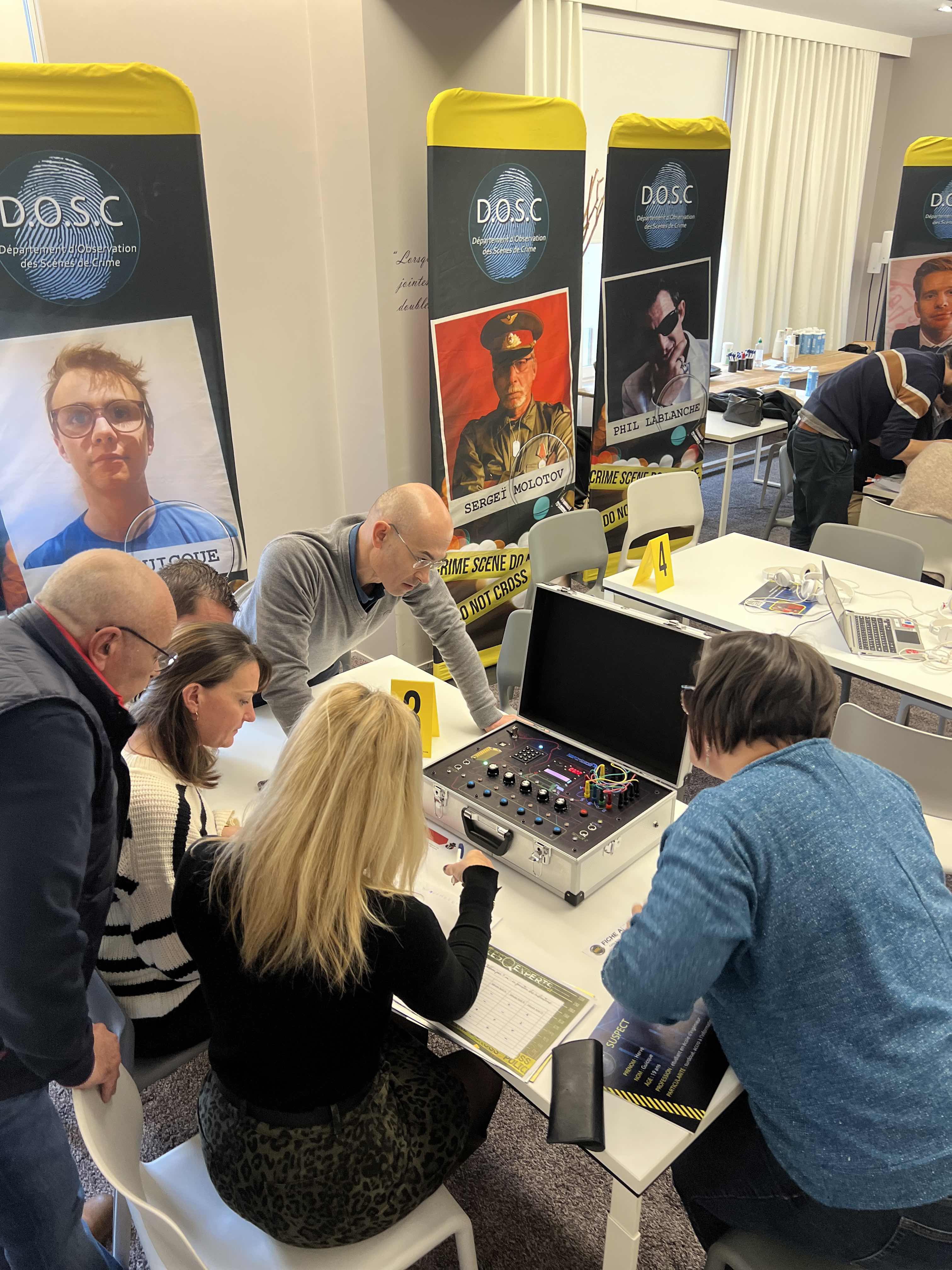
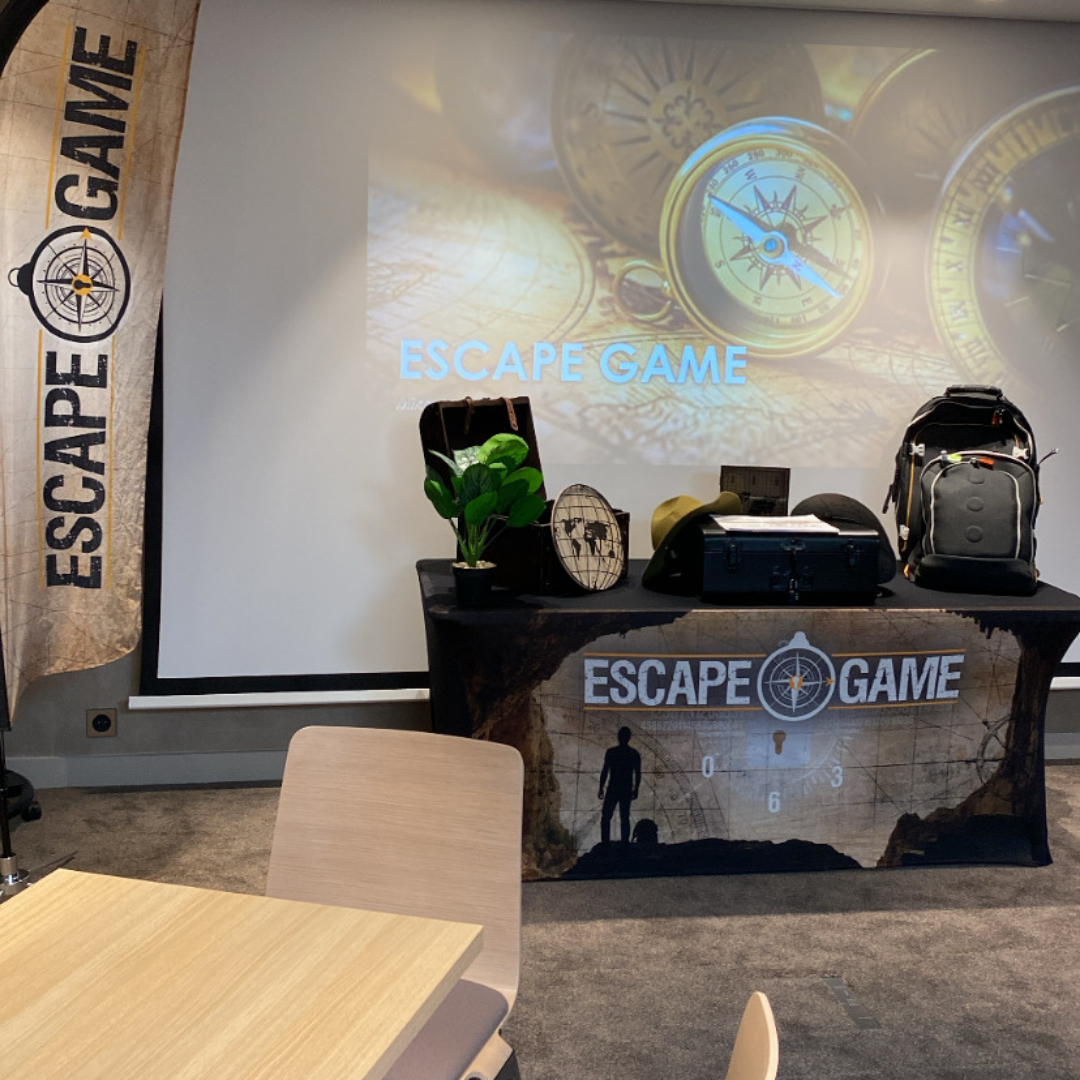
INNOV'events designs and runs Escape Game formats in Liege for executive committees, HR teams and communication departments, typically from 20 to 300 participants. We handle the scenario selection, logistics, facilitation, timing, safety, scoring, and the debrief that turns the game into managerial value. You keep control of objectives, agenda, and brand image.
Sommaire
In a corporate agenda, entertainment is not a “nice add-on”: it is a tool to create alignment fast. A well-run Escape Game in Liege gives you a shared experience that makes collaboration issues visible (decision-making, information flow, leadership posture) without putting individuals on the spot in a meeting room.
Organizations around Liege generally expect operational reliability: tight time slots between workshops, multiple languages on-site (FR/EN/NL depending on the group), and a format that respects governance and hierarchy while still engaging frontline teams. HR also expects measurable takeaways, not just applause at the end.
As an event agency based in Brussels and active weekly in Wallonia, we know the practical reality in Liege: venue constraints, access and parking, supplier lead times, and the pressure of event day. Our role is to make the Escape Game seamless, predictable, and aligned with your internal communication standards.
Key figures to secure your Escape Game in Liege
10+ years delivering corporate events in Belgium with executive-level requirements (timing, confidentiality, brand control).
50 to 120 corporate events/year within our Brussels-led network, with repeat clients across industries (public sector, pharma, finance, industrial groups).
Operational capacity to run 2 to 8 parallel game sessions in Liege on the same time slot, with a single run-of-show and centralized scoring.
Standard delivery includes risk assessment, on-site lead, facilitators, and a debrief framework usable by HR or managers the next day.
Local references and recurring teams in Liege
We regularly support companies and institutions working in and around Liege—from HQ teams to multi-site groups bringing together employees from the province for a single day. Many of our projects are renewed year after year because the format evolves with business reality: reorgs, new leadership layers, merger integration, or employer-branding needs.
You mentioned providing company names for references; to keep this page accurate and compliant, we will integrate them exactly as you confirm them (legal names + department + context). In the meantime, we can share case formats typically requested in Liege: leadership offsites with a structured debrief, onboarding days mixing serious messages and a collaborative activity, and communication events where the Escape Game is used as a narrative device to carry a key message (safety culture, compliance, customer obsession).
If you need reassurance beyond the concept, we can detail what we commit to contractually: staffing ratios, contingency plan, timing guarantees, and facilitation style—because this is what protects your reputation internally on the day of the event.
 Besoin d’un devis rapide ?
Nous vous envoyons une première proposition sous 24h.
Why schedule an Escape Game in Liege for management outcomes
When executives choose a Escape Game, the real goal is rarely “team fun”. The strategic value is to create a controlled situation where teams must cooperate under time pressure—exactly like a project delivery, a plant constraint, or a client escalation, but without operational risk.
Make decision-making visible: who decides, who waits, and who blocks. In an Escape Game in Liege, these patterns appear quickly and can be debriefed constructively.
Improve cross-department collaboration: the game forces information sharing. This is useful when Finance/Operations/Commercial rarely work together except in crisis mode.
Support change management: during a reorganization, the activity provides a neutral “third space” to rebuild trust without forced speeches.
Onboarding and culture: new hires experience expected behaviors (asking for help, escalating, documenting) rather than reading them on slides.
Internal communication: if you need people to remember a message, you attach it to a lived moment. We can integrate brand or project content lightly (not as an advertisement, but as cues and vocabulary).
Managerial debrief usable after the event: we deliver a short debrief kit (observations + questions) so team leads can continue the conversation in 1:1s or retrospectives.
Liege has a pragmatic economic culture: industrial roots, engineering talent, logistics and services, and a strong ecosystem of SMEs and international groups. Teams value activities that are concrete, well organized, and respectful of time. That is exactly the posture we take when we recommend a Escape Game in Liege: serious operational delivery, with real managerial benefits.
What companies in Liege expect from corporate entertainment
In Liege, the operational constraints are often very real: mixed populations (office + field + technical), shift schedules, limited flexibility on start and end times, and venues that may be close to business sites rather than in the city center. A corporate activity that ignores these constraints creates friction immediately—late starts, missing participants, or poor engagement.
HR and communication teams typically ask us three precise questions before approving an Escape Game:
- Will it work for all profiles? We design puzzles that do not depend on “gaming culture”, and we build roles so quieter profiles still contribute (observation, documentation, pattern spotting).
- Can we control the tone? Some companies want high energy; others want calm collaboration. We adjust facilitation, narrative and time pressure accordingly.
- Is it logistically safe and predictable? Access, parking, badges, emergency exits, insurance, and a clear chain of command on-site. In Liege, this is especially important when you host at a corporate site or a venue with strict security rules.
Finally, local groups often require bilingual delivery. We can run the same scenario in FR and EN in parallel sessions, with one scoring system, so you can mix international leadership with local teams without changing the experience quality.
Which Escape Game formats work best in Liege events
Entertainment creates engagement when it respects adult learning: clear objective, fair rules, meaningful collaboration, and a result you can discuss. An Escape Game is particularly effective because it combines problem solving, time management, and communication in a controlled setting—ideal for corporate audiences in Liege who value practicality.
Interactive animations in Liege
Classic indoor Escape Game (venue room or dedicated space): best for predictable timing and comfort. Works well for executive offsites where you cannot take risks with weather or transport.
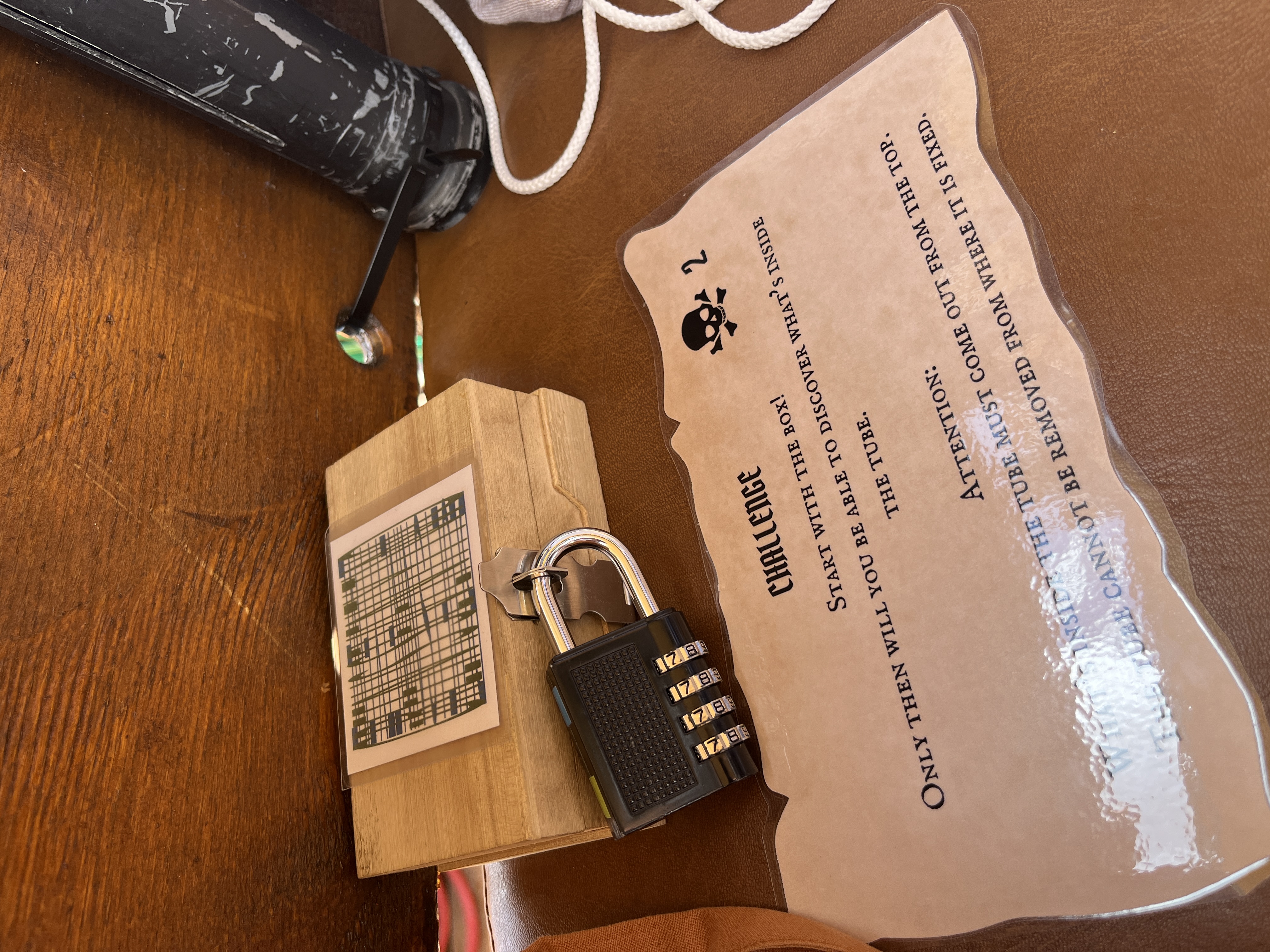
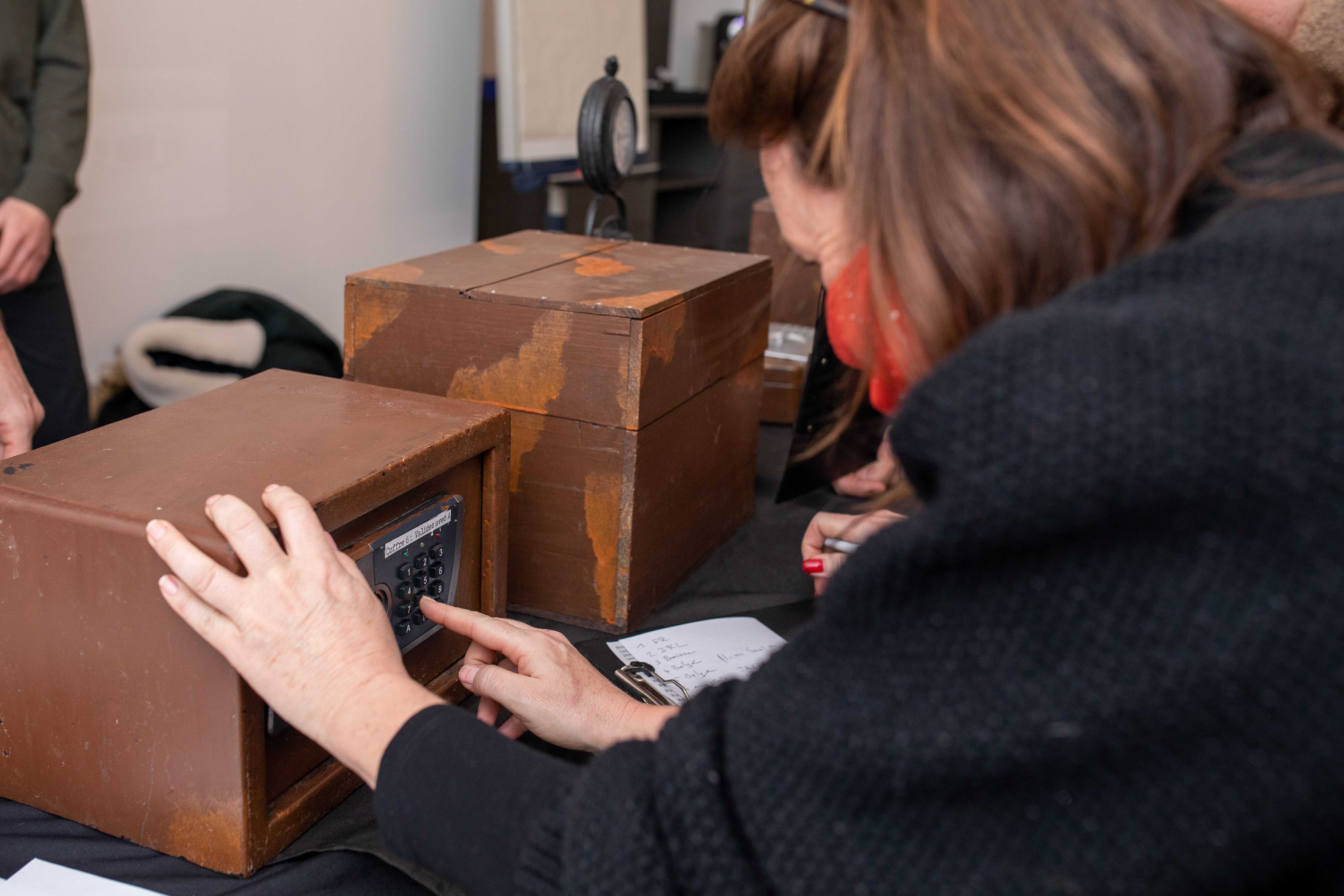
Table-top / “escape box” format: teams solve a sequence of physical puzzles at their table. Very efficient for a dinner setup or a conference day where you want minimal movement and controlled noise level.
Digital-assisted investigations: smartphones/tablets for clues, with a central scoreboard. Useful for larger groups in Liege when you want clear pacing and measurable performance indicators.
Art animations in Liege
Story-driven facilitation with professional hosts: not “actors for show”, but facilitators who can hold a room, brief executives, and keep energy consistent across sessions.
Immersive set design (light décor + props): used when the event’s brand image requires a premium look, for example for a client event hosted in Liege.
Innovative animations in Liege
Escape Game + tasting checkpoints: teams unlock small tastings (local chocolate, coffee, regional specialties). This works well in Liege when you want a social component without turning the activity into a “food event”.
Debrief around a standing lunch: we structure the end so leaders can circulate, recognize behaviors, and connect it to business priorities.
Gourmand animations in Liege
Outdoor investigation in Liege (city-based): suitable for mixed groups who want to discover the city while working in teams. We design routes that avoid bottlenecks and protect timing, and we plan indoor fallback options.
CSR or safety layer: add decision points linked to real topics (safety reflexes, quality mindset, compliance). The game stays a game, but the vocabulary and choices mirror your environment.
Multi-wave format for large headcounts: staggered starts with a central scoreboard and a unified final moment. This prevents chaos and keeps the experience consistent for everyone.
Whatever the format, the key is alignment with brand image and internal culture. For a regulated company, we keep it controlled and respectful. For a scale-up hosting international guests in Liege, we can make it faster-paced and more narrative—without losing operational rigor.
Where to host an Escape Game in Liege for the right impact
The venue is not a background detail: it changes participant behavior. In Liege, we often see the same pattern—if the venue is hard to access, too noisy, or poorly configured, the activity starts with frustration and the debrief becomes less constructive. We help you select a space that supports the scenario, the timing, and the image you want to send.
| Venue type | For which objective? | Main strengths | Possible constraints |
|---|---|---|---|
| Meeting venue / hotel conference rooms in Liege | Executive offsite, HR day, predictable agenda | Easy timing control, comfort, AV options for briefing and debrief | Need enough breakout space; sound isolation between teams |
| Company site (training room, cafeteria, warehouse zone) | Culture and internal communication, high participation rate | No transport friction, strong “we do this here” message | Security rules, access badges, safety constraints, limited décor options |
| City-center cultural venue in Liege (museum/event space) | Client event, employer branding, premium perception | Strong setting, memorable for external guests, good for photos | Strict setup times, limited storage, higher venue costs |
We recommend a site visit whenever possible, especially in Liege where room configuration and acoustics vary greatly. A 30-minute walkthrough avoids common failures: teams hearing each other’s clues, insufficient check-in space, or circulation problems that delay the whole run-of-show.
What budget to plan for an Escape Game in Liege
The price of a corporate Escape Game in Liege depends on concrete parameters: headcount, format (indoor/outdoor/table-top), number of parallel sessions, complexity of props, and facilitation intensity. We work with transparent ranges so you can validate feasibility early and avoid last-minute compromises.
Participants and team size: typically 6–10 per team. More teams means more facilitators and more material sets.
Duration: common formats are 60–90 minutes of game time, plus briefing and debrief. Shorter slots can work but require tighter design to avoid frustration.
Location constraints in Liege: access hours, loading, parking, security checks, and whether we can set up in advance.
Customization level: branding and message integration can be light (vocabulary, brief) or deeper (custom puzzles). The latter requires design time and testing.
Languages: bilingual delivery may require additional facilitators or duplicated materials to keep quality equal across sessions.
Production quality: from simple escape boxes to more immersive set dressing and technical elements. We advise based on audience expectations and reputational stakes.
From an ROI perspective, executives usually evaluate the activity on three criteria: participation rate (did everyone engage), transfer to work behaviors (did it create useful discussions), and organizational reliability (did the day run on time). Our job is to protect these three points so the budget translates into tangible managerial value—not just an invoice.
Why work with an event agency in Liege for an Escape Game
Choosing a local partner is less about geography than about operational control. In Liege, the difference is felt in the details: knowing realistic travel times and parking options, having quick access to backup suppliers, and understanding venue constraints that can affect setup windows. When the agenda is tight and leadership is in the room, these details become strategic.
As part of our local delivery approach, we coordinate with trusted partners and, when relevant, we activate our event agency in Liege network to secure staffing and logistics. This is particularly valuable for large headcounts or multi-language facilitation.
- Faster risk resolution: last-minute venue change, weather issue for outdoor formats, missing material—local presence shortens response time.
- Better venue fit: we recommend spaces that match the scenario and your audience profile, not just what looks good online.
- Supplier reliability: local production and transport reduce uncertainty and protect timelines.
- Executive-level delivery: one on-site lead accountable for the full run-of-show, aligned with your internal protocol and communication tone.
From an ROI perspective, executives usually evaluate the activity on three criteria: participation rate (did everyone engage), transfer to work behaviors (did it create useful discussions), and organizational reliability (did the day run on time). Our job is to protect these three points so the budget translates into tangible managerial value—not just an invoice.




What we have delivered in Liege across different corporate contexts
Our Escape Game projects in Liege vary because corporate realities vary. We have supported: leadership days where the debrief focuses on delegation and decision rights; onboarding cohorts where the game is used to connect people quickly across departments; and internal communication events where the activity acts as the “spine” of the afternoon to keep attention high between key messages.
Operationally, we are used to adapting to constraints that decision-makers recognize immediately: short setup windows, strict start times, simultaneous workshops in nearby rooms, and the need to keep noise controlled when other plenary sessions run in parallel. In some cases, we deploy a table-top format to avoid moving people around; in others, we build a multi-wave system to manage large groups without crowding.
What remains constant is our approach: define success criteria upfront, design the game architecture accordingly, and run the event with the discipline of a production schedule—because in the end, your reputation as organizer is measured on execution.
Common pitfalls when booking an Escape Game in Liege
Underestimating transitions: a 60-minute game can easily become a 90-minute slot if arrivals, briefing, and regrouping are not engineered. We lock a detailed run-of-show and assign responsibilities.
Too many participants per team: beyond 10–12, people disengage and the debrief becomes negative (“I didn’t do anything”). We structure teams to protect participation.
Ignoring venue acoustics: teams hearing each other’s clues kills fairness and immersion. We check sound leakage and adjust spacing or format.
No debrief: without a short, structured debrief, executives see it as a cost center. We facilitate or provide a debrief kit aligned with your objectives.
Over-customization too late: custom puzzles need testing. If the request arrives late, quality suffers. We propose a realistic customization level based on timeline.
Wrong facilitation posture: corporate audiences in Liege do not want childish animation. We brief facilitators to be energetic but professional, and to manage senior stakeholders with tact.
Our role is to prevent these risks before they become visible to your participants. You should not have to “manage the activity” on event day; you should be able to host, observe, and focus on your stakeholders.
Why Liege clients renew with INNOV'events
Repeat business is usually earned on operational reliability rather than creativity. Clients come back when they know the agency can protect the agenda, manage people respectfully, and deliver an experience consistent with the company’s image—even when something changes last minute.
Typical renewal patterns we see: annual team days, onboarding cycles every quarter, and leadership offsites that rotate between Brussels and Liege.
Most recurring clients ask for evolution rather than reinvention: same structure, new scenario layer, improved scoring, better debrief prompts, or integration into a broader communication plan.

Loyalty is the most concrete proof point in corporate events: it means the delivery was safe, the internal organizer looked good, and the format created real value for managers and teams.
How we prepare your Escape Game in Liege from brief to debrief
👉 Align on objectives and constraints in Liege
We start with a 30–45 minute working call with HR/Comms and the sponsor. We confirm audience composition, success criteria, timing constraints, languages, and sensitivities (post-merger context, social climate, compliance rules). We also validate the venue situation in Liege (or propose options) and the planned agenda around the activity.
👉 Select the right Escape Game format and session architecture
We recommend the format (indoor, outdoor investigation, escape boxes) and define team sizes, number of parallel sessions, rotation plan, and scoring method. This is where we protect engagement: correct team density, fair pacing, and a structure compatible with your plenary slots.
👉 Operational plan and run-of-show
We produce a detailed run-of-show: arrival flow, briefing script, facilitator assignments, setup timeline, material checklist, contingency plan, and handover points with the venue/catering/AV. For corporate sites in Liege, we integrate security access rules and emergency procedures.
👉 On-site delivery with a single accountable lead
On event day, you have one on-site lead who coordinates facilitators, timing, and stakeholders. We keep starts synchronized, manage energy levels, and ensure consistent rules across teams. If something shifts (late arrivals, room change), we absorb it without disturbing the rest of your program.
👉 Debrief and tangible outputs for executives
We close with a structured debrief: what behaviors drove success, what caused bottlenecks, and how to transfer lessons to projects. If you want, we provide a short written recap (non-personal, behavior-based) and a manager toolkit to extend the discussion after the event.
FAQ sur l'organisation Escape Game à Liege
How many people can join an Escape Game in Liege?
Most corporate setups in Liege work well from 20 to 300 participants. We typically plan 6–10 people per team and run parallel sessions or rotations depending on your agenda and venue capacity.
What duration should we plan for an Escape Game in Liege?
Plan 90 to 120 minutes total including briefing and debrief, with 60–90 minutes of game time. If your agenda is tight, we can build a 60–75 minute total slot, but we will simplify transitions and puzzle density to keep it satisfying.
Can you run a bilingual Escape Game in Liege?
Yes. We can run FR/EN (and sometimes NL depending on the format) either with bilingual facilitators per room or with dedicated language sessions. The key is to duplicate materials and keep scoring consistent so the experience quality remains equal across groups.
Is an outdoor Escape Game in Liege risky with weather?
It can be, which is why we always plan a fallback. Depending on the route and season, we propose either an indoor backup scenario or an “indoor-switch” version that keeps the same scoring. The decision rule is defined in advance (e.g., rain threshold and timing) to avoid last-minute confusion.
What budget range for a corporate Escape Game in Liege?
As a practical range, corporate deliveries in Liege often start around €1,500–€3,000 for small groups with a standard format, and can reach €6,000–€15,000+ for larger groups, multi-session setups, bilingual facilitation, premium production, or custom design. We quote after confirming headcount, venue, and desired level of customization.
Request a quote for your Escape Game in Liege
If you are comparing agencies, we suggest a simple next step: send us your date (or 2–3 options), estimated headcount, venue status (confirmed or not), and your objective (cohesion, onboarding, leadership, communication). We will come back with a clear recommendation for a Escape Game in Liege, a run-of-show outline, and a budget range that matches your constraints.
For best availability in Liege—especially for bilingual facilitation and parallel sessions—plan 3 to 6 weeks ahead where possible. When timelines are shorter, we can still deliver, but we will keep customization realistic to protect quality and execution.
INNOV'events Liege Agency
Justin JACOB is the manager of the INNOV'events Liege office. Reach out directly by email at belgique@innov-events.be or via the contact form.
Contact the Liege agencyToutes nos prestations & animations Liege, Belgique
Découvrez nos prestations événementielles
Découvrez nos animations événementielles disponibles au Belgique
- Event Hostess in Liege
- Escape Game in Liege
- MasterChef Cooking Workshop in Liege
- Magician in Liege
- Marquee Rental in Liege
- Color Analysis Workshop in Liege
- Inflatable Games in Liege
- Valet Parking Service in Liege
- Football Simulator in Liege
- LED Furniture Rental in Liege
- Light Branding in Liege
- Unique Dining Experience in Liege
- Light Painting in Liege
- Murder Mystery Party in Liege
- Prize Contest in Liege
- Promotional Displays (POS) in Liege
- Virtual Reality in Liege
- Molecular Gastronomy Workshop in Liege
- Halloween Entertainment in Liege
- Fireworks Show in Liege
- Giant Games Challenge in Liege
- Event Host / MC in Liege
- Photo Booth Animation in Liege
- Santa Claus Entertainment in Liege
- Kids Entertainment in Liege
- Guided Tour in Liege
- Urban Rally in Liege
- Ball Pit in Liege
- Flight Simulator in Liege
- Food Truck Rental in Liege
- World Record Challenge in Liege
- Surf Simulator in Liege
- Wine Casino in Liege
- Makeover Workshop in Liege
- Perfume Creation Workshop in Liege
- Acting Workshop in Liege
- CSR Activities in Liege
- Archery in Liege
- Security Staff in Liege
- Wine Tasting in Liege
- Mime Performer in Liege
- TV Game Show in Liege
- Funfair in Liege
- Crisis Management Workshop in Liege
- Crisis Negotiation Workshop in Liege
- Arcade Games in Liege
- Indoor Skydiving Simulator in Liege
- Ski Simulator in Liege
- Racing Circuit Experience in Liege
- Introductory Flight Experience in Liege
- Tasting Experience in Liege
- Build Your Own Foosball Workshop in Liege
- 2CV Rally in Liege
- LEGO Challenge in Liege
- Casino Night in Liege
- Interpreter / Translator in Liege
- Promotional Giveaways in Liege
- Shuttle Transport in Liege