
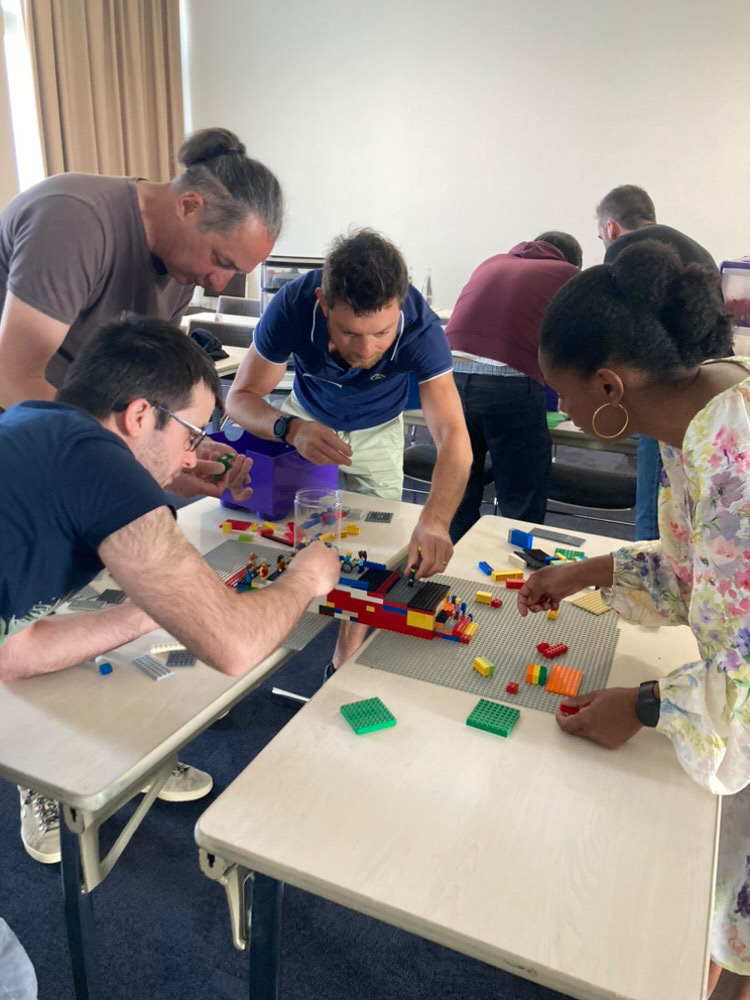
Sports Challenge – Giant Games in Liege for teams that need real cohesion
INNOV'events designs and runs Sports Challenge – Giant Games in Liege for executive committees, HR and communication teams looking for measurable engagement rather than “just an activity”. Typical formats range from 20 to 500+ participants, indoors or outdoors, with rotation, scoring and facilitation.
We handle the full operational chain: concept, venue constraints, staff briefing, transport, set-up, safety, timing, and results debrief—so your teams can focus on leadership presence and internal communication.
Sommaire
On a corporate day, entertainment is not “extra”: it’s the part that determines whether people talk about the event on Monday, whether silos soften, and whether leadership messages land. A well-run Sports Challenge – Giant Games gives you a structured moment to create interaction between departments without forcing awkward networking.
In Liege, organisations expect practical formats: clear timing, no wasted minutes, and activities that work with mixed profiles (production, office, field teams). HR typically asks for inclusion and safety; communication teams need strong visuals; executives want a plan that will not derail the day’s agenda.
As INNOV'events (Brussels-based with operational coverage in Wallonia), we deliver in Liege with local logistics habits: realistic load-in schedules, venue access checks, bilingual facilitation (FR/EN when needed), and a risk-managed approach shaped by real corporate constraints.
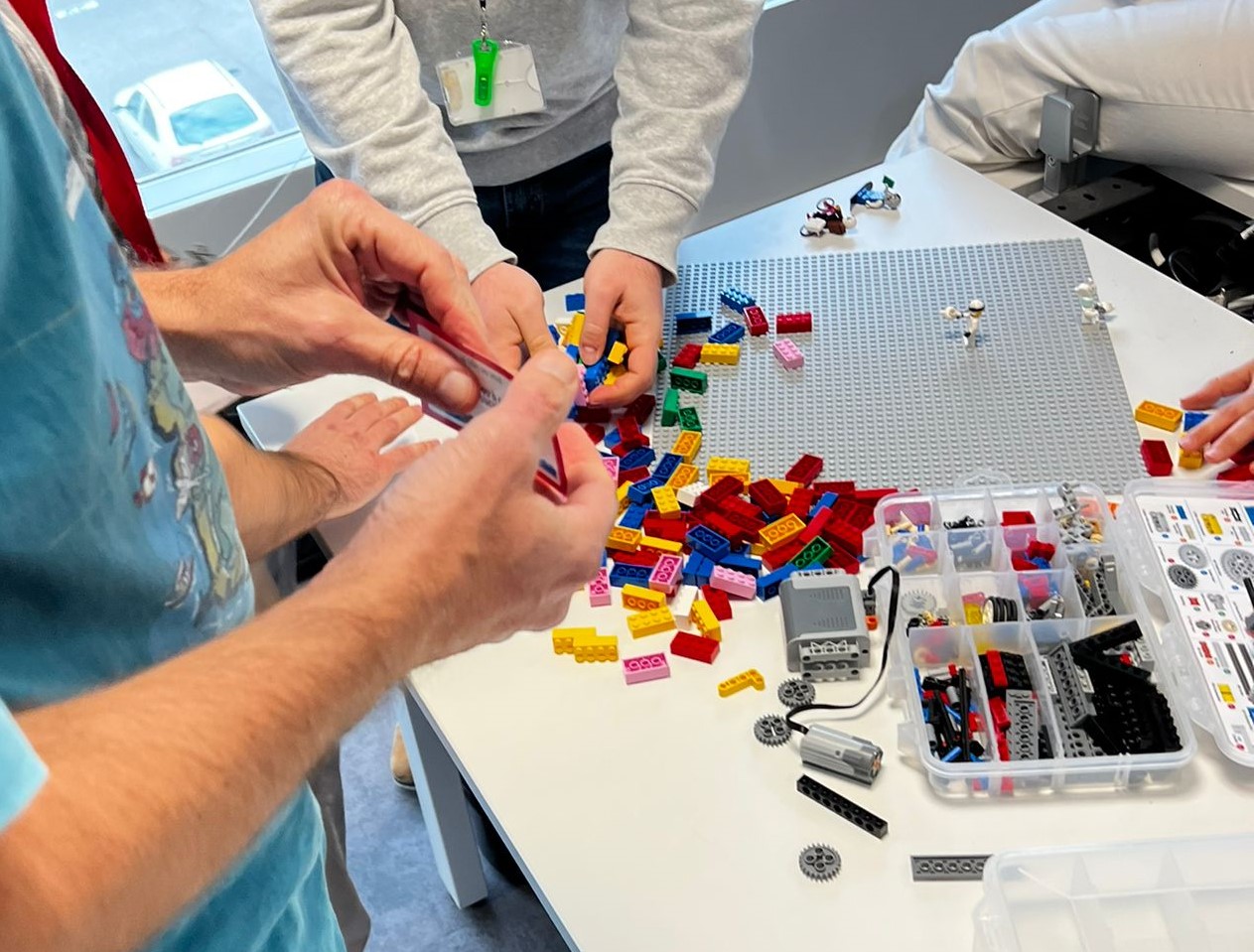
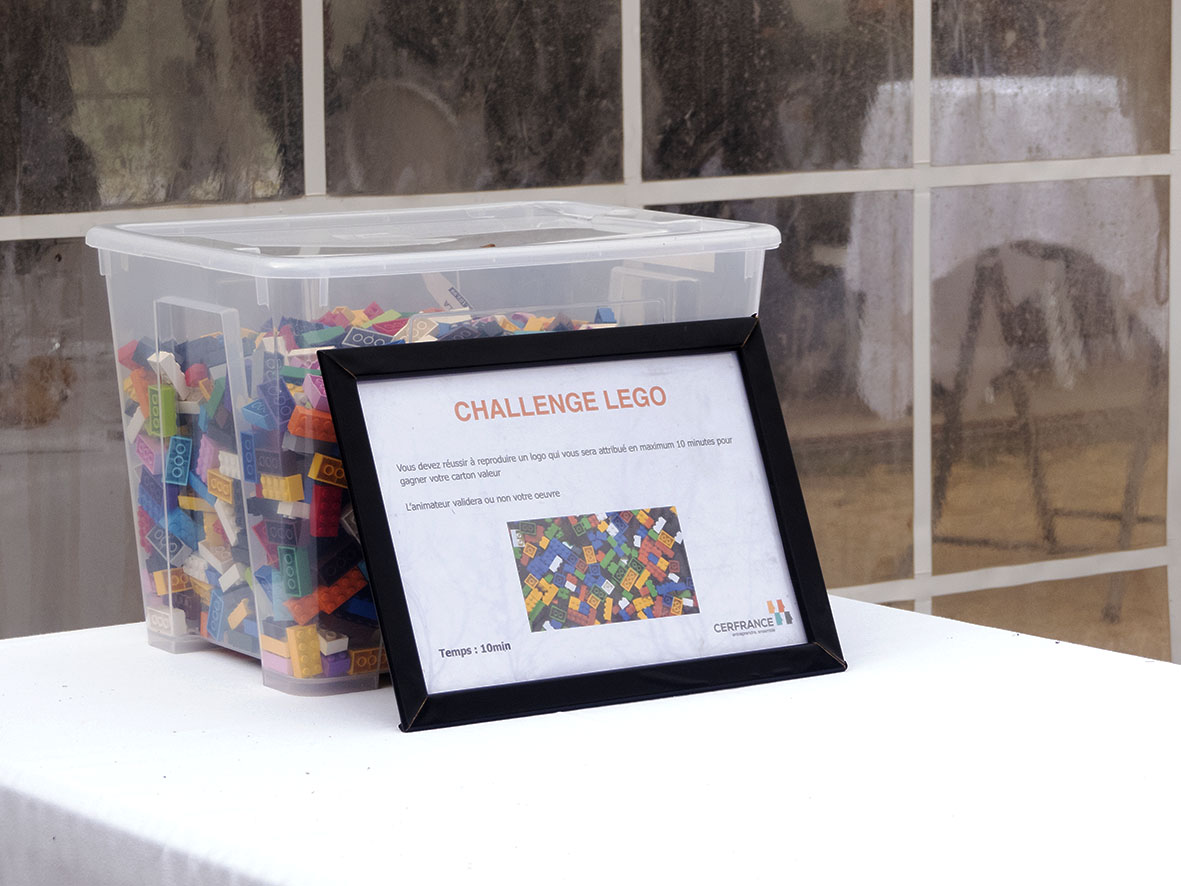
What you can count on for a Liege delivery
10+ years producing corporate events across Belgium, with recurring HR and internal comms clients.
1 single project lead accountable from brief to event day, to avoid “handover gaps” between sales and ops.
20–500+ participants supported through scalable staffing ratios (facilitators, referees, logistics).
Up to 8–12 game stations in parallel for large groups, with rotation grids and live scoring.
Safety-first operations: pre-event risk check, controlled zones, clear rules briefing, and incident protocol.
Companies we support around Liege year after year
We regularly support organisations with teams based in and around Liege, from industrial sites to service companies and public-interest structures. Many of these clients renew because they need a partner who understands internal constraints: shift changes, union-sensitive communication, compliance rules, and strict start/end times.
You mentioned providing company names to use as references; please send your list and we will integrate them exactly (spelling and legal entity) in this section. In the meantime, what we can state transparently is our operational reality: we are often called back for the same annual moments—summer family days, safety days, leadership offsites, end-of-year gatherings—because delivery quality is judged on the ground, not in a deck.
When a client renews, it is rarely for “creativity”; it’s because last year’s event started on time, the games ran without bottlenecks, the site remained clean, the results were shareable internally, and nobody had to manage suppliers from their phone during the event.
 Besoin d’un devis rapide ?
Nous vous envoyons une première proposition sous 24h.
What a Sports Challenge in Liege really changes for managers
A Sports Challenge – Giant Games in Liege is a management tool when it is designed with the same rigor as a project meeting: clear objectives, defined rules, controlled timing, and a facilitation style aligned with your culture. It creates a “neutral field” where people collaborate outside hierarchy—without losing structure.
Cross-department cohesion: by mixing teams on purpose (production + support functions, HQ + field), you create collaboration habits that last beyond the event. We design rotation grids so people meet a minimum number of new colleagues (e.g., 6–10 new contacts in one afternoon depending on format).
Leadership visibility without speeches: executives can participate in a controlled way (opening rules briefing, one station “drop-in”, awards moment) to signal proximity and fairness—without turning the day into a corporate show.
Inclusive engagement: giant games allow participation beyond athletic profiles. We include stations focused on coordination, precision, communication, and logic so that the “best team” is not simply the fittest team.
Internal communication content: comms teams get clean, readable moments—team flags, scoring board, finals, awards—making it easier to produce an intranet recap or LinkedIn post without staging.
Time discipline: with correct staffing and a tested rotation plan, you avoid the classic failure of “queues and dead time”. The event day stays aligned with your broader agenda (townhall, BBQ, meetings, transport back to sites).
Wellbeing narrative that feels credible: instead of generic “we care” messaging, you demonstrate it through safe, organised, respectful activities with real attention to participants’ comfort and constraints.
Liege has a pragmatic economic culture: people value events that are well-run, fair, and useful. When the sports challenge is structured, teams leave with concrete shared memories and a sense that the company invests in cohesion with professionalism.
What Liege organisations typically require from a corporate challenge
In Liege, we frequently work with companies balancing operational continuity and people engagement. That translates into specific expectations that influence how we design corporate event entertainment in Liege:
- Shift constraints and punctuality: when teams start early or must return to a production plan, the schedule cannot drift. We build a minute-by-minute run sheet (arrival, briefing, rotations, breaks, finals, awards) and keep buffer time where it matters.
- Mixed participant profiles: you rarely have a homogeneous group. We design stations with variable intensity and clear accessibility options. If you have participants with reduced mobility, we integrate adapted roles without creating a separate “special track”.
- Venue access realities: in and around Liege, some sites have limited loading zones, strict noise rules, or shared access with the public. We pre-check access times, lift availability, floor protection, and emergency exits so there is no surprise at 08:00.
- Bilingual needs: even for local groups, English may be required for leadership or international staff. We can run briefings and signage in FR/EN with concise rules to avoid confusion.
- Safety and liability: HR directors increasingly ask “what is the incident plan?” We answer with clear zone marking, station rules, supervision ratios, and a documented approach—not just a disclaimer.
These constraints are not obstacles; they are design inputs. When they are addressed upfront, the event feels effortless for participants and controlled for management.
Which Giant Games format works best in Liege for your audience?
Engagement happens when people understand what to do, feel safe doing it, and see the point of doing it together. Giant games are effective because they create immediate collaboration and visible progress—especially when scoring is transparent and the facilitation tone matches your company culture.
Interactive animations in Liege
Giant construction relay: teams build a structure with oversized pieces under time pressure. Good for emphasising planning, role allocation, and calm execution.
Precision & coordination circuit: stations where performance depends on communication (blindfold guidance, synchronized movement). Works well for mixed athletic levels.
Strategy scoring board: teams choose which stations to prioritise based on point value. Creates decision-making under constraints—often appreciated by executives.
Team identity kit: flags, armbands or simple colour coding to improve flow and visual coherence for internal comms photos.
Art animations in Liege
MC-facilitated opening and awards: not “showbiz”, but a clear voice that keeps timing and energy. Useful when you have large groups and want a controlled atmosphere.
Short percussion or brass interludes between phases (arrival, awards): effective outdoors to gather people without shouting. We keep it brief and compatible with venue noise rules.
Innovative animations in Liege
Hydration and recovery points: water, softs, fruit—positioned to support flow rather than create queues. In a sports format, this is both wellbeing and risk management.
Local catering coordination: if you plan a BBQ or street-food style service in Liege, we synchronise game timing with catering capacity to avoid “everyone arrives at once” congestion.
Gourmand animations in Liege
Live digital scoring (optional): results displayed on a screen or shared QR link, reducing disputes and making the awards moment credible.
Photo finish stations: one or two stations designed for strong visuals (without being childish), giving comms teams consistent content.
Manager challenge slot: a short, dedicated moment where leadership participates under the same rules—often powerful for culture and fairness messaging.
We always check alignment with brand image: a safety-driven industrial company will not use the same tone as a creative agency. The best Sports Challenge – Giant Games is the one that feels “natural” for your organisation—while being professionally executed.
Where to host a Sports Challenge in Liege without logistics headaches
The venue does more than provide space: it sets the perceived level of the event. For a Sports Challenge – Giant Games in Liege, we look at surface quality, access, power, noise constraints, parking, and wet-weather options before we validate a location. This is where many projects win or fail.
| Venue type | For which objective? | Main strengths | Possible constraints |
|---|---|---|---|
Corporate site (parking lot + green area) | Bring the event to teams, limit transport, reinforce “we invest on-site”. | Low travel friction, easy attendance, familiar environment; good for shift-based organisations around Liege. | Need strict zoning, safety perimeter, and coordination with operations; surface quality may limit some giant games. |
Urban park / public outdoor area | Create a relaxed atmosphere with strong visuals and open-air energy. | Large space, natural comfort, good for photo content and informal networking. | Permits, public cohabitation, noise limits, weather dependency, load-in restrictions. |
Sports hall / indoor arena | Guarantee continuity regardless of weather; run structured rotations. | Controlled surface, lighting, power access; predictable timing and safety. | Booking lead times; acoustic management; some stations require floor protection. |
We strongly recommend a site visit (or at minimum a technical call with photos and plans). In Liege, small access constraints—stairs, narrow corridors, limited unloading windows—can change the entire production plan. Checking them early is the easiest way to protect your agenda and your budget.
What budget to plan for Giant Games in Liege?
The price of a Sports Challenge – Giant Games in Liege depends less on “the games” than on production reality: staffing, transport, timing, venue constraints, and the level of facilitation expected. We build budgets that are readable for finance and defendable for HR.
Participant count and format: 20–60 people can run as a compact circuit; 150–500+ requires multiple station pods, additional facilitators and a scoring structure.
Number of stations and rotation time: more stations reduce waiting but increase equipment and staff. Typical ranges: 6 to 12 stations depending on group size.
Venue constraints in Liege: long carry distances, limited loading windows, stairs, or floor protection can increase setup time and staffing.
Indoor vs outdoor: outdoor can require additional safety zoning, weighting/anchoring, and weather plan B. Indoor can require floor protection and stricter noise management.
Facilitation level: from simple station supervision to an MC, branded briefing, live scoring and awards protocol.
Branding and comms deliverables: signage, team identity elements, photo/video coordination, and the time needed to produce usable content.
Schedule constraints: tight setup windows or early/late hours can change staffing cost more than the activity itself.
From a return-on-investment perspective, the key is not to minimise cost—it is to avoid “hidden costs” such as delays, low participation, or safety incidents. A well-produced challenge protects your employer brand, supports retention narratives, and saves internal time because your teams are not managing suppliers on the day.
Why choose an event agency in Liege for giant games?
For this type of format, proximity is operational. A partner used to delivering in Liege will anticipate access, weather patterns, local supplier lead times, and the practicalities of moving equipment through real venues—not theoretical ones. It also makes decision-making faster when something changes on site.
Even if INNOV'events is headquartered in Brussels, we operate repeatedly in the area and can deploy teams efficiently. If you specifically want a locally anchored partner, our page dedicated to an event agency in Liege explains how we structure local production and sourcing.
What matters for executives is accountability: who is on-site at 07:30, who has authority to adapt the plan, and who can solve issues with venues and suppliers without escalating every decision to you.
- Faster technical validation: access checks, storage options, power availability, and emergency routes assessed early.
- Local supplier reflexes: easier coordination for barriers, flooring, tents, sound, and last-minute logistics.
- Reduced risk on event day: shorter reaction time if weather shifts or a station must be adapted.
- Credibility with stakeholders: venues and partners respond better when they feel the agency understands local constraints and speaks their operational language.
From a return-on-investment perspective, the key is not to minimise cost—it is to avoid “hidden costs” such as delays, low participation, or safety incidents. A well-produced challenge protects your employer brand, supports retention narratives, and saves internal time because your teams are not managing suppliers on the day.










What we have delivered in Liege-type contexts
Our corporate field reality is diverse: leadership days where time is non-negotiable, family days where safety and crowd management dominate, and internal festivals where comms output is as important as participation. The Sports Challenge – Giant Games format is flexible enough to serve those contexts—if you engineer it correctly.
Examples of situations we regularly manage:
- Industrial or logistics teams: participants arrive in waves; we run staggered briefings and adapt the rotation grid so each wave experiences a complete circuit.
- Multi-site companies: teams from different sites around Liege meet for the first time; we create mixed teams and a scoring system that rewards collaboration (not just speed).
- International leadership groups: bilingual facilitation and rule cards, shorter but higher-quality stations, and a debrief moment that ties back to leadership themes (coordination, decision-making, risk-taking).
- Employer branding days: we design a visually coherent layout and ensure the activity produces “clean moments” for internal and external communication without staging participants.
Adaptability is not improvisation. It is having a tested operational framework that can be tuned to your people, your site constraints, and your communication objectives.
Which risks to avoid when planning giant games in Liege
Underestimating flow: a great game becomes a bad experience when 30 people queue and 10 play. Capacity planning and station count must match headcount.
Rules that are too complex: corporate groups disengage when they need five minutes to understand. We keep rules short, then increase challenge through timing and scoring.
No weather strategy: “we’ll see” is not a plan. In Liege, we define decision points and a clear indoor fallback when needed.
Weak facilitation: if facilitators cannot keep pace, explain rules, and arbitrate fairly, credibility drops quickly—especially with demanding audiences.
Ignoring safety basics: unclear zones, slippery surfaces, and lack of supervision create avoidable incidents and HR headaches.
Over-branding at the expense of operations: branding is useful, but not if it delays setup or creates clutter. We prioritise flow and clarity first.
Our role is to prevent these risks with structured preparation, a realistic production plan, and on-site leadership. That is what protects your schedule, your participants, and your internal reputation.
Why Liege clients renew with the same event partner
Loyalty in corporate events is earned on operational reliability. Many clients come back because they cannot afford an event day that consumes internal bandwidth. They want a partner who documents, improves, and delivers consistently—especially when the event becomes an annual ritual.
Recurring formats: annual team days, family days, leadership offsites—where we keep a production file and improve year over year.
Faster reactivation: when a client renews, we can reduce validation loops by reusing what worked (rotation grid, staffing ratios, safety perimeter) and updating only what needs updating.
Operational continuity: the same method and documentation reduce the “new agency learning curve” risk.

Client loyalty is the most practical proof: it means the event delivered against constraints, not just expectations. In a market like Liege, where people value pragmatism, that matters more than buzzwords.
How we build your Sports Challenge project in Liege
👉 Align objectives and constraints (Liege context)
We start with a short but precise discovery: objectives (cohesion, celebration, employer brand, integration), participant profile, languages, timing constraints, and non-negotiables. For Liege organisations, we also ask about shift patterns, site access, and internal rules (PPE areas, alcohol policy, photo consent). Output: a written summary and a first format recommendation.
👉 Design the game architecture and scoring
We propose the station mix (coordination, precision, strategy, light physical) and define the scoring system. We decide team size (often 6–10 people) and build the rotation grid so every team plays under comparable conditions. Output: station list, durations, staffing plan, and a draft run sheet.
👉 Venue validation and technical plan in Liege
We confirm surfaces, access, unloading, power, toilets, shelter, noise constraints, and emergency routes. We plan zones (briefing, stations, breaks, awards) and define wet-weather fallback. Output: a technical sheet and a site plan that your internal stakeholders can validate.
👉 Production, staffing and logistics
We lock equipment, transport, facilitators/referees, signage, and optional digital scoring. We brief staff with a clear chain of command and escalation rules. Output: final run sheet, staff call times, checklists, and contingency plan.
👉 Event day delivery and post-event wrap-up
On site, we manage setup, safety perimeter, briefing, rotation timing, scoring, and awards. After the event, we share results and a short debrief (what worked, what to improve, what to keep). Output: a clean closure that supports HR reporting and internal communication.
FAQ sur l'organisation Sports Challenge – Giant Games à Liege
How many people can join giant games in Liege?
Most formats work from 20 to 500+ participants. For 100–200, we usually run 6–10 stations in rotation. For 300+, we add parallel pods, more referees, and a stricter flow plan to avoid queues.
How long should a Sports Challenge in Liege last?
A typical efficient format is 1h30 to 3h including briefing and awards. If you combine it with catering or a townhall, we adapt station duration (often 8–12 minutes) to protect your overall agenda.
Can we run Giant Games in Liege if it rains?
Yes—if planned. We propose either an indoor venue or a weather fallback (covered area, tenting, or a shortened circuit). We set decision points (e.g., T-24h and T-6h) so everyone knows when the plan switches.
What safety measures do you apply in Liege venues?
We use a defined play perimeter, station-by-station rules, supervised execution, and surface checks (slip risks, obstacles). For corporate groups, we also clarify incident response and avoid stations that create uncontrolled contact. Staffing is scaled so supervision is real, not symbolic.
What is the budget range for giant games in Liege?
It depends mainly on headcount, number of stations, staffing and venue constraints. As a practical reference, many corporate projects fall between a few thousand euros for compact formats and five figures for large groups with extensive staffing, branding, and contingency planning. We provide a transparent quote with line items (equipment, staff, transport, options).
Request a Liege quote with a realistic operational plan
If you are comparing agencies, we suggest a simple approach: share your date window, headcount range, venue idea (or “not decided”), and your non-negotiables (timing, languages, indoor/outdoor, safety requirements). We will respond with a structured proposal for Sports Challenge – Giant Games in Liege: station architecture, staffing, rotation logic, and a clear budget framework.
Early planning matters because the best venues and the best facilitation teams are booked first—especially on peak Thursdays and Fridays. Contact INNOV'events to secure a slot and get a plan you can validate internally without guesswork.
INNOV'events Liege Agency
Justin JACOB is the manager of the INNOV'events Liege office. Reach out directly by email at belgique@innov-events.be or via the contact form.
Contact the Liege agencyToutes nos prestations & animations Liege, Belgique
Découvrez nos prestations événementielles
Découvrez nos animations événementielles disponibles au Belgique
- Event Hostess in Liege
- Escape Game in Liege
- MasterChef Cooking Workshop in Liege
- Magician in Liege
- Marquee Rental in Liege
- Color Analysis Workshop in Liege
- Inflatable Games in Liege
- Valet Parking Service in Liege
- Football Simulator in Liege
- LED Furniture Rental in Liege
- Light Branding in Liege
- Unique Dining Experience in Liege
- Light Painting in Liege
- Murder Mystery Party in Liege
- Prize Contest in Liege
- Promotional Displays (POS) in Liege
- Virtual Reality in Liege
- Molecular Gastronomy Workshop in Liege
- Halloween Entertainment in Liege
- Fireworks Show in Liege
- Giant Games Challenge in Liege
- Event Host / MC in Liege
- Photo Booth Animation in Liege
- Santa Claus Entertainment in Liege
- Kids Entertainment in Liege
- Guided Tour in Liege
- Urban Rally in Liege
- Ball Pit in Liege
- Flight Simulator in Liege
- Food Truck Rental in Liege
- World Record Challenge in Liege
- Surf Simulator in Liege
- Wine Casino in Liege
- Makeover Workshop in Liege
- Perfume Creation Workshop in Liege
- Acting Workshop in Liege
- CSR Activities in Liege
- Archery in Liege
- Security Staff in Liege
- Wine Tasting in Liege
- Mime Performer in Liege
- TV Game Show in Liege
- Funfair in Liege
- Crisis Management Workshop in Liege
- Crisis Negotiation Workshop in Liege
- Arcade Games in Liege
- Indoor Skydiving Simulator in Liege
- Ski Simulator in Liege
- Racing Circuit Experience in Liege
- Introductory Flight Experience in Liege
- Tasting Experience in Liege
- Build Your Own Foosball Workshop in Liege
- 2CV Rally in Liege
- LEGO Challenge in Liege
- Casino Night in Liege
- Interpreter / Translator in Liege
- Promotional Giveaways in Liege
- Shuttle Transport in Liege