Flight Simulator in Liege for a corporate event that delivers measurable engagement
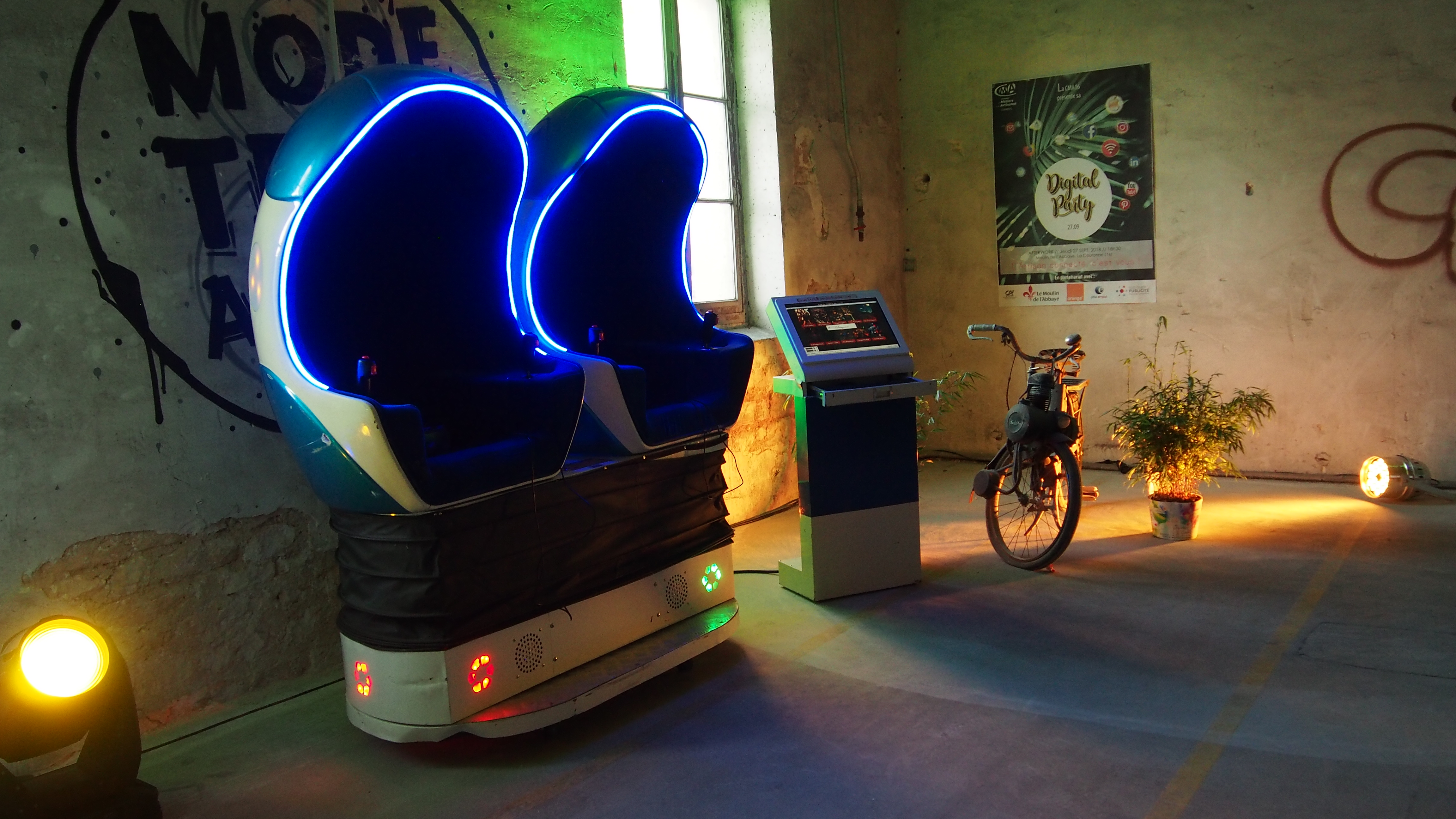
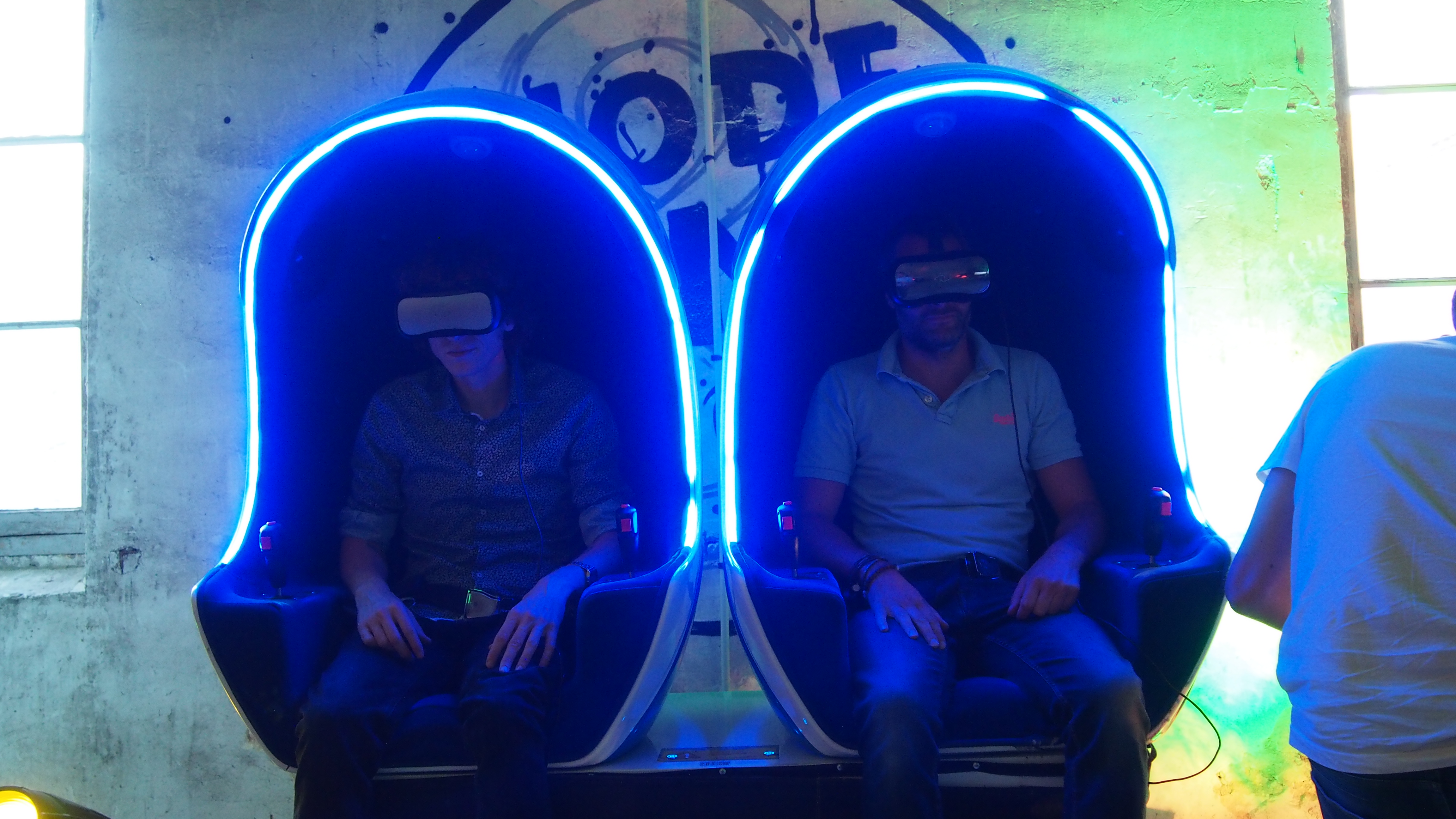
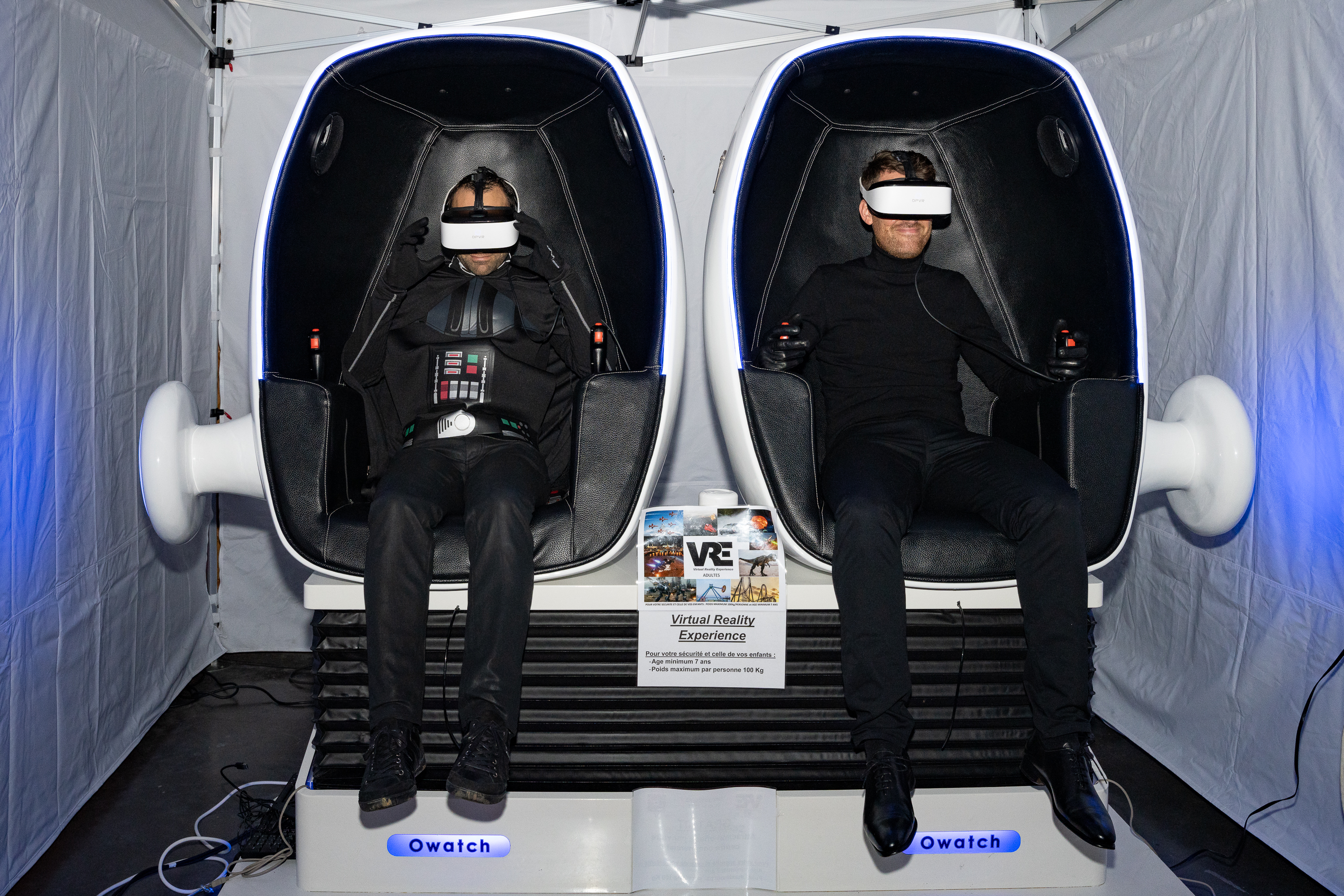
INNOV’events is a Brussels-based agency delivering Flight Simulator in Liege for corporate events from 20 to 500 attendees. We manage logistics, technical integration, staffing, safety, and the on-site flow so your teams can focus on hosting and message delivery.
Whether it’s a leadership offsite, an HR engagement day, or a client evening, we position the simulator as a structured experience: clear throughput, branded touchpoints, and an MC-friendly rhythm.
Sommaire
In a corporate agenda, entertainment is not “a plus”: it’s a tool to create attention, regulate energy levels, and give people a shared reference point that makes your key messages stick. A Flight Simulator is particularly effective because it combines challenge, focus, and immediate debrief potential—useful for executives who want more than passive fun.
In Liege, organisations typically expect operational rigor: realistic timings, tight room management, and a guest journey that works even with late arrivals from the E25, a factory shift change, or a client group landing later than planned. The simulator has to run like a production line—without feeling like one.
We deploy in Liege with local technical partners, bilingual staffing (FR/EN), and proven floor plans for common venues in the province. Our role is to secure the experience (power, access, safety, throughput) and protect your brand image on the day.
Key figures for Liege decision-makers who need predictability
10+ years delivering corporate entertainment and event production across Belgium, including repeated deployments in Liege and the wider province.
48 hours average to return a structured quote (equipment, staffing, transport, options) once we have venue constraints and attendee volumes.
20–500 participants managed on event days with calibrated flows: time slots, queue design, and parallel activities to avoid bottlenecks.
1 dedicated project manager + 2–6 on-site staff (depending on configuration) to run briefings, guest handling, and technical supervision.
0 surprises approach: power checks, access plans, and venue validation are done upstream with written technical sheets and on-site rehearsal when needed.
Who we support year after year in Liege and the province
We regularly support organisations based in and around Liege—from industrial groups and logistics players to service companies and public stakeholders—where event delivery is judged on reliability and guest experience, not on slogans.
Many of our collaborations are renewed because internal teams do not want to “relearn” the operational basics each year: venue constraints, access windows, union or security rules on certain sites, and the expectation that everything is ready before the first guest arrives.
You mentioned company references to include; to keep this page accurate and compliant, we only publish client names once we have explicit approval and the exact legal entity. If you share the list (and whether we can disclose them), we will integrate them in this section in a professional, factual way (format: sector, objective, scale, and what we delivered).
 Besoin d’un devis rapide ?
Nous vous envoyons une première proposition sous 24h.
Why choose a Flight Simulator for an internal event in Liege?
Executives and HR teams in Liege often face the same reality: engagement is harder to build than it used to be, and “one more speech” won’t change behaviours. A Flight Simulator creates a credible context for focus, decision-making under pressure, and short debrief loops—exactly the kind of experiential format that can support leadership messages, safety culture, or collaboration goals.
Structured engagement, not random entertainment: the simulator can be scheduled in 8–12 minute slots, with a briefing and a quick debrief, which fits well into a plenary + workshop agenda.
Natural bridge to management themes: we often link the experience to “briefing quality”, “role clarity”, “stress management”, or “decision escalation”. It works especially well for leadership offsites and change programmes.
Employer branding with substance: for HR and recruitment events, it attracts participation without feeling gimmicky—useful in a competitive talent market around Liege (engineering, logistics, tech operations).
Client experience that respects senior time: for communication and sales teams, it provides a premium, time-boxed activity that can be integrated between networking sequences and product demos.
Operational simplicity when well engineered: compared to complex multi-activity zones, one simulator station can deliver high impact—if throughput, staffing, and queue management are planned professionally.
Liege is a territory of industry, logistics and applied innovation; people value competence and execution. A simulator format resonates because it is concrete, technical, and performance-oriented—provided it is delivered with the same rigor your audience expects in their own operations.
What Liege companies expect on the day (and why it matters)
When we deploy a Flight Simulator in Liege, the success criteria are rarely about “wow”. They are about flow, punctuality, and the absence of friction for guests and internal stakeholders. Several recurring expectations are specific to the local corporate fabric.
Timing discipline: many events in the province include shift-based teams, production constraints, or multi-site participants. A simulator that creates a 25-minute queue becomes a problem for HR and site management. We therefore design throughput around your agenda: expected arrivals, peak times (often right after plenary), and fallback options.
Pragmatic safety culture: audiences with industrial or engineering backgrounds will immediately notice if safety is treated lightly. We implement clear rules (seat/controls handling, motion sensitivity screening, age/health disclaimers when relevant) and keep a visible, calm operator presence.
Language reality: events in Liege often mix French-speaking teams with international leadership or clients. We plan bilingual briefings (FR/EN), signage, and a script that remains professional without sounding like an attraction park.
Venue constraints: in the region, we frequently deal with older buildings, limited freight access, narrow staircases, and power distribution that was not designed for high-load AV. Our technical validation is not optional: it protects your event and the venue relationship.
Brand and reputation: local stakeholders know each other; a poorly executed corporate event entertainment in Liege circulates quickly. This is why we document responsibilities, access times, and on-site escalation paths in advance—so your team is never “exposed” on the day.
Which corporate event entertainment works best in Liege with a Flight Simulator?
A Flight Simulator performs best when it is not isolated. In Liege, we often combine it with complementary experiences that maintain energy, reduce queue stress, and create touchpoints for HR or communication messages.
Interactive animations in Liege
Timed slots + digital registration: QR-based booking by team or department to avoid friction. Particularly useful for sites with shift schedules or multi-department participation.
Scoreboard challenge: landing accuracy, stability, or checklist compliance. We define fair scoring to avoid “gaming” and keep it inclusive for non-gamers.
Facilitated debrief cards: short prompts used by managers or HR partners (e.g., “What helped you under pressure?”). This turns a fun moment into a leadership micro-workshop without adding heavy facilitation.
Executive/VIP sequence: reserved windows (e.g., 15–20 minutes) with a deeper briefing and a photo moment, so leadership participation is visible without creating frustration for other guests.
Art animations in Liege
Corporate-friendly MC: a bilingual host (FR/EN) who can animate without overdoing it, align with your communication tone, and manage transitions between plenary and activation zones.
Ambient sound and light design: aviation-style lighting cues around the simulator zone to signal “this is a feature area” while respecting venue constraints and avoiding nightclub effects that rarely fit corporate audiences.
Innovative animations in Liege
Queue-friendly catering: handheld formats placed near (but not inside) the simulator zone to keep the area clean and safe: mini wraps, local charcuterie cones, alcohol-free pairings for daytime corporate schedules.
Local touchpoints: a small tasting corner with products from the Liege area can work well for client events—when integrated with clear service timing so it doesn’t compete with the simulator throughput.
Gourmand animations in Liege
Brand-aligned photo output: branded backdrop and instant digital delivery (GDPR-compliant), with opt-in capture and a clear retention policy—important for corporate communication teams.
“Safety & checklist” mini-module: for industrial audiences, we can structure the experience around checklist discipline (pre-flight checks) to echo operational excellence themes.
Hybrid content capture: short interview snippets after the flight (“what surprised you?”) for internal comms, recorded in a controlled corner to avoid noise and ensure consent.
The best choice is the one that supports your brand image and internal culture. In Liege, audiences respond well to experiences that feel competent and purposeful; we therefore align tone, staffing, signage, and pacing with your corporate standards—not with consumer entertainment codes.
How to choose the right venue in Liege for a Flight Simulator setup?
The venue is not a neutral container. For a Flight Simulator in Liege, the room determines feasibility (access, ceiling height, power) and also perception (premium vs. improvised). We advise based on guest profile, agenda structure, and technical constraints.
| Venue type | For which objective? | Main strengths | Possible constraints |
|---|---|---|---|
Hotel conference space in Liege | Leadership offsite, client evening, HR day with plenary + breakouts | Built-in AV, staff used to corporate timings, easy catering flow, clear access rules | Freight access sometimes limited; power distribution must be confirmed; noise management if multiple rooms run in parallel |
Industrial or warehouse venue (province of Liege) | Brand storytelling, innovation themes, large-scale internal gatherings | Space for queue design and multiple zones, strong “operations” fit for industrial audiences | Heating/acoustics can be challenging; temporary infrastructure (power, drape, signage) often required |
Company site (headquarters or production-adjacent) in Liege | Town hall, safety days, family day, internal engagement with minimal travel | High participation potential, strong employer branding, easy integration into internal programmes | Security procedures, access windows, and HSE requirements; strict load-in routes; need to protect operational areas |
We strongly recommend a site visit (or a detailed technical walkthrough) before confirming. In Liege, many venues have specific access hours and loading constraints; validating them early avoids last-minute compromises that affect guest flow and brand perception.
What budget to plan in Liege for a Flight Simulator activation?
Pricing for a Flight Simulator in Liege depends less on “the simulator” and more on the operational conditions: access, staffing, duration, and the throughput you need to achieve. We quote with line-by-line clarity so procurement, HR, and communications can validate quickly.
Duration on site: half-day vs. full-day vs. evening. Longer windows increase staffing and sometimes venue constraints (load-in/out hours).
Throughput requirement: a 60-person leadership event and a 350-person staff gathering do not use the same scenario length, staffing ratio, or queue design.
Configuration level: standard station vs. branded area (backdrop, lighting, signage, photo output, scoreboard screen).
Staffing: operator(s), host/MC, bilingual support (FR/EN), and a floor manager when the simulator is part of a larger multi-zone event.
Logistics in the Liege area: truck access, distance, parking, elevator availability, stairs, and time needed for build/strike.
Technical requirements: power distribution, cable protection, safety barriers if needed, and integration with existing AV.
Insurance and compliance: public liability, venue requirements, and documentation for corporate sites with strict HSE rules.
From an ROI perspective, a simulator works when it supports a clear objective: participation rate, leadership visibility, client retention, or internal communication reach. We help you translate the experience into measurable indicators (slots filled, engagement rate, content captured, feedback) so the budget is defensible beyond “entertainment”.
Why work with an event agency in Liege for this activation?
On paper, you can rent equipment from anywhere. In reality, corporate events in Liege are won or lost on operational details: who coordinates with the venue, who manages access windows, who solves the unexpected without escalating to your executives.
As part of our local deployment model, we mobilise vetted partners and crew in the region and we plan realistically around Liege constraints: traffic patterns, venue loading rules, bilingual audiences, and the practicalities of installing technical equipment in buildings not designed for it.
If you need a broader scope than a single activation, we can also act as your event agency in Liege for the full programme: plenary production, catering coordination, branding, host/MC, and risk management—under one accountable project lead.
- Faster troubleshooting: local resources and short supply lines reduce the impact of last-minute changes (room swap, access delay, power limitation).
- Venue familiarity: we anticipate constraints that don’t show on floor plans (loading dock rules, noise limitations, security protocols).
- Credible staffing: operators and hosts who understand corporate codes and can handle executives, clients, and internal stakeholders appropriately.
- Cleaner governance: one run sheet, one escalation path, one accountable partner—important for HR and communications teams on the day.
From an ROI perspective, a simulator works when it supports a clear objective: participation rate, leadership visibility, client retention, or internal communication reach. We help you translate the experience into measurable indicators (slots filled, engagement rate, content captured, feedback) so the budget is defensible beyond “entertainment”.






What we have delivered in Liege: formats, scales, constraints
Our work in Liege typically falls into three recurring corporate scenarios, each with specific constraints that we plan for explicitly.
1) Leadership and management events (20–80 people): here, the simulator is used as a high-quality activation between plenary sequences. The challenge is to keep the tone premium and the timing precise. We plan reserved slots, deeper briefing, and a debrief script aligned with leadership themes. We also coordinate with the MC so the simulator becomes part of the narrative rather than a side activity.
2) HR engagement and employer branding days (100–400 people): the operational focus is throughput and fairness. We implement time-slot logic, clear signage, and parallel micro-activities so no one feels stuck in a queue. We also pay attention to inclusion: not everyone is comfortable with motion or gaming—so we provide alternative participation roles (navigator, checklist reader) and simple scenario options.
3) Client and partner events (50–250 people): the simulator becomes a conversation catalyst. We ensure the activation does not cannibalise networking time by integrating it into the agenda: arrival wave, structured network break, or post-dinner feature. We can also support communication teams with controlled photo moments and consent-driven content capture.
Across these formats, our consistent value is operational clarity: capacity planning, safety, and a guest journey that protects your brand on the day.
Common mistakes to avoid with a Flight Simulator in Liege venues
Underestimating throughput: running “long realistic flights” looks great on paper, but at corporate scale it produces queues and frustration. We calibrate scenarios to your headcount and agenda.
Poor placement in the room: placing the simulator near a loud bar or directly in a main corridor creates safety and experience issues. We design a zone with clear entry/exit and controlled noise.
No power/access validation: assuming standard power and easy load-in is a classic cause of delays. We confirm power availability, cable routing, and access constraints before event day.
Inadequate staffing: one operator trying to brief, manage queue, troubleshoot, and handle VIPs will fail. We staff for the real flow, not the optimistic one.
Ignoring corporate compliance: on company sites in Liege, security and HSE rules can be strict. Missing documentation or arrival lists can block load-in.
Weak communication to guests: unclear instructions (who can participate, how long, where to queue) increases friction. We use simple signage and host scripts.
Our role is to prevent these risks through technical validation, realistic planning, and on-site governance. That is what protects your internal team—and your leadership—from having to manage operational problems in front of guests.
Why Liege clients renew with INNOV’events
Renewal happens when internal teams feel safe: safe that the supplier will show up on time, safe that the event will run without improvisation, and safe that problems will be solved without noise. In Liege, this is often more valued than “creative surprises”.
High repeat rate on corporate accounts: many clients keep the same partner because they cannot risk relearning logistics and vendor coordination each year.
Operational continuity: we keep technical files, venue constraints, and run-sheet lessons learned so each edition improves (build times, queue management, signage clarity).
Stakeholder comfort: HR, Comms, and executive assistants appreciate having one accountable project lead and a clear escalation path.

Loyalty is not a slogan; it’s the outcome of predictable delivery. If you are comparing agencies in Liege, ask how they plan throughput, access, staffing, and contingency—those elements are what your guests will feel, even if they don’t see them.
Our delivery process for Liege: from brief to event day control
👉 Step 1 (Liege) — Scope the objective and success metrics
We start with your objective (HR engagement, leadership alignment, client experience, employer branding) and translate it into operational targets: expected participation volume, time window, desired level of realism, and what “success” looks like (e.g., 120 flights completed, 70% participation, content capture needs, VIP sequencing). We also map stakeholders: who approves branding, who validates HSE, who owns the run of show.
👉 Step 2 (Liege) — Validate venue feasibility and technical requirements
Before locking the plan, we validate access (truck routes, elevators, stairs), set-up area dimensions, ceiling height, sound environment, and power. We issue a concise technical sheet to the venue and confirm load-in/out times. If the event is on a corporate site, we integrate security/HSE requirements (arrival lists, PPE if needed, restricted zones).
👉 Step 3 (Province of Liege) — Design throughput, сценарio length, and queue flow
We design the guest journey: registration or open queue, briefing points, simulator time, exit and debrief. We set slot durations (often 8–12 minutes per participant depending on format) and define how to avoid peak congestion (staggering, reserved windows for teams, parallel micro-activities). This is where many activations fail if not planned.
👉 Step 4 (Liege) — Build a run sheet and assign responsibilities
We produce a run sheet with timings, contacts, and escalation rules. We clarify who speaks to the venue, who manages the bar/catering interface, and who approves on-site adjustments. For communication teams, we confirm the content capture plan (opt-ins, signage, file delivery timeline).
👉 Step 5 (Liege) — On-site execution and real-time control
On event day, we arrive with enough buffer to build, test, and rehearse. We run “go/no-go” checks before doors open (power stability, visuals, signage, staff briefing). During the event, we monitor throughput and adjust scenario length if needed to protect the overall agenda. After strike, we provide a short debrief: what worked, what to improve, and key numbers (participants, peak times, incidents if any).
FAQ sur l'organisation Flight Simulator à Liege
How many participants per hour for a Flight Simulator in Liege?
Plan 6–10 participants/hour per simulator station as a realistic corporate range. With shorter scenarios and a tight briefing, it can go slightly higher; with deeper coaching and VIP handling, it can be lower. We size the setup from your agenda and peak arrival times.
How much space is needed in Liege venues for the simulator?
As a practical baseline, reserve 15–25 m² for the simulator zone, plus 10–20 m² for a waiting/briefing area if you expect continuous flow. Exact needs depend on the cockpit footprint and whether you add branding, barriers, or a scoreboard screen.
Can you run a Flight Simulator on a company site in Liege?
Yes, provided we validate access and compliance upfront. For company sites in Liege, we typically need a confirmed load-in route, power availability, a designated event area away from operations, and any security/HSE documentation (arrival lists, rules, insurance). We integrate these constraints into the run sheet.
What lead time should we plan in Liege for booking?
For a standard activation in Liege, plan 2–4 weeks to secure equipment, staff, and venue validation. For high-attendance dates (end-of-year events, peak conference periods) or complex venues, 4–8 weeks is safer.
Is the Flight Simulator suitable for mixed audiences in Liege?
Yes, if the experience is designed for inclusion. We offer adjustable difficulty, short scenarios, and optional roles (pilot/co-pilot/checklist) so non-gamers can participate comfortably. We also apply clear comfort guidelines (motion sensitivity, breaks) and provide alternatives when needed.
Get a quote for a Flight Simulator in Liege with an operational plan
If you need a Flight Simulator in Liege that runs professionally—clear throughput, safe installation, corporate-level hosting—send us three elements: date, venue (or shortlist), and estimated headcount. We will respond with a structured proposal (configuration options, staffing, timings, and a clear budget breakdown) so you can validate internally without guessing.
For demanding agendas (plenary + workshops + activation), we recommend planning early: it allows proper venue validation and avoids day-of compromises that impact brand image and executive comfort.
INNOV'events Liege Agency
Justin JACOB is the manager of the INNOV'events Liege office. Reach out directly by email at belgique@innov-events.be or via the contact form.
Contact the Liege agencyToutes nos prestations & animations Liege, Belgique
Découvrez nos prestations événementielles
Découvrez nos animations événementielles disponibles au Belgique
- Event Hostess in Liege
- Escape Game in Liege
- MasterChef Cooking Workshop in Liege
- Magician in Liege
- Marquee Rental in Liege
- Color Analysis Workshop in Liege
- Inflatable Games in Liege
- Valet Parking Service in Liege
- Football Simulator in Liege
- LED Furniture Rental in Liege
- Light Branding in Liege
- Unique Dining Experience in Liege
- Light Painting in Liege
- Murder Mystery Party in Liege
- Prize Contest in Liege
- Promotional Displays (POS) in Liege
- Virtual Reality in Liege
- Molecular Gastronomy Workshop in Liege
- Halloween Entertainment in Liege
- Fireworks Show in Liege
- Giant Games Challenge in Liege
- Event Host / MC in Liege
- Photo Booth Animation in Liege
- Santa Claus Entertainment in Liege
- Kids Entertainment in Liege
- Guided Tour in Liege
- Urban Rally in Liege
- Ball Pit in Liege
- Flight Simulator in Liege
- Food Truck Rental in Liege
- World Record Challenge in Liege
- Surf Simulator in Liege
- Wine Casino in Liege
- Makeover Workshop in Liege
- Perfume Creation Workshop in Liege
- Acting Workshop in Liege
- CSR Activities in Liege
- Archery in Liege
- Security Staff in Liege
- Wine Tasting in Liege
- Mime Performer in Liege
- TV Game Show in Liege
- Funfair in Liege
- Crisis Management Workshop in Liege
- Crisis Negotiation Workshop in Liege
- Arcade Games in Liege
- Indoor Skydiving Simulator in Liege
- Ski Simulator in Liege
- Racing Circuit Experience in Liege
- Introductory Flight Experience in Liege
- Tasting Experience in Liege
- Build Your Own Foosball Workshop in Liege
- 2CV Rally in Liege
- LEGO Challenge in Liege
- Casino Night in Liege
- Interpreter / Translator in Liege
- Promotional Giveaways in Liege
- Shuttle Transport in Liege