Funfair Event in Liege that keeps your teams engaged—and your schedule under control
INNOV'events is a Brussels-based agency delivering Funfair Event formats for companies in Liege, from 80 to 2,000 attendees. We manage the full chain: concept, venue fit, suppliers, permits, safety, crowd flow, and on-site production—so your teams can focus on hosting, not firefighting.
Sommaire
In a corporate context, entertainment is not “nice to have”: it is a management tool. A well-produced Funfair Event in Liege creates a shared reference point, lowers hierarchy barriers in a controlled way, and gives HR and Comms a concrete moment to reinforce culture—without forcing people into awkward formats.
Organizations around Liege typically expect three things on event day: punctuality, safety, and a guest journey that works for mixed audiences (blue-collar/white-collar, multilingual, families, VIPs). The fun must be visible; the operational complexity must stay invisible.
We work with local operators and production partners across Liege and Wallonia, with a Brussels-level production rigor. That combination matters when you have a tight loading window, strict noise constraints, or a CEO arrival you cannot delay by five minutes.
Key figures for Liege decision-makers who need proof
10+ years delivering corporate events in Belgium, including recurring formats in Liege and the province.
Operational capacity from 80 to 2,000+ participants, including family days, staff parties, and stakeholder events.
24/7 event-day supervision with a named producer, plus documented run-of-show and supplier call sheets.
Supplier network covering rides, booths, catering, power, fencing, security, and first aid—so you don’t have to coordinate 12 vendors internally.
Production habits aligned with corporate requirements: insurance, risk assessments, permits follow-up, and incident escalation.
Liege anchoring: working with local teams and repeat clients
In Liege, what makes an event succeed is rarely the idea—it is the execution: access routes, who signs off on what, how you handle neighbors, and how you keep people moving without creating frustration. We regularly support companies and institutions active in and around Liege, and a meaningful share of our projects are renewed year after year because internal teams want a predictable partner.
If you have internal references you want us to align with (procurement lists, preferred caterers, union rules, site-specific security procedures), we integrate them early. That is typically what differentiates a smooth internal event from a stressful one: fewer surprises, clearer responsibilities, and decisions made before the trucks arrive.
We also collaborate with local technical crews when it makes sense (especially for rigging, power distribution, and site logistics), which reduces transport time, improves responsiveness, and keeps the budget focused on guest experience rather than avoidable mileage.
 Besoin d’un devis rapide ?
Nous vous envoyons une première proposition sous 24h.
Why a Funfair Event in Liege is a managerial decision
A Funfair Event is one of the rare formats that works across age groups, functions, and seniority levels—without needing a “team-building buy-in.” In Liege, many companies operate with mixed operational realities (shift teams, field staff, HQ teams). A funfair format lets you host everyone fairly, with flexible attendance windows and clear safety boundaries.
For executives, the strategic question is not whether it is fun. It is whether the event delivers measurable outcomes: participation rate, internal engagement, employer brand, and a credible statement that leadership invests in people—while keeping operational disruption limited.
Higher participation without forcing interaction: rides, booths and games create natural micro-moments. People talk because they are doing something together, not because a facilitator told them to.
Controlled “wow factor” with predictable logistics: unlike a complex gala, a Funfair Event in Liege can be designed with modular zones and time slots, which helps HR handle peaks and reduces waiting lines.
Better cross-team mix: we deliberately place attractions to encourage movement (e.g., food on one side, games on the other) and we plan queue management so teams do not stay “in their corner” all day.
Comms content that looks real: funfair visuals are naturally strong for internal comms, recruitment pages, and CSR storytelling—without looking staged. We plan photo angles, branded touchpoints, and a consent-aware photo protocol.
Family inclusion with clear rules: when you open to families, you reduce “us vs. them” between work and personal life. We define wristband logic, child-safe zones, and minimum height rules so it stays responsible.
Recognition without a long speech: awards can be integrated as short, well-timed moments (e.g., before dessert) with proper sound coverage and a scripted run-of-show—effective, not theatrical.
Liege has a pragmatic business culture: people appreciate events that feel generous but remain well organized. A funfair format fits that mindset when it is produced with discipline: a clear guest journey, safe operations, and respectful neighbor management.
What companies in Liege expect on event day (and why)
In Liege, we often see three recurring constraints when planning a corporate funfair: (1) sites with real industrial or campus realities (limited access points, security gates, loading restrictions), (2) mixed audiences with different schedules, and (3) a strong sensitivity to safety, noise, and local rules.
From an HR and internal communications perspective, “fairness” is a major expectation: equal access for day and night shifts, clear registration rules, and a format that does not disadvantage employees who cannot stay late. We typically propose staggered windows (e.g., 16:00–19:00 and 19:30–22:30) or two half-days, depending on operations.
From an executive angle, the expectation is risk control with no drama: clear supplier contracts, appropriate insurance, and an on-site chain of command. In practice, that means we define decision owners before the event (who can stop an attraction, who validates a schedule change, who addresses an incident) and we keep that structure simple.
Finally, in and around Liege, neighbors and local authorities can be sensitive to noise and traffic. A funfair can be festive without being disruptive: we design sound orientation, limit peak SPL levels when needed, and coordinate arrivals to avoid a “single rush” that blocks access roads.
Which funfair entertainment works best in Liege corporate settings
Entertainment creates engagement when it respects adult audiences, time constraints, and brand context. In Liege, we often see strong participation when attractions are varied (quick wins + longer experiences), when queues are managed, and when there is a clear “why” behind the selection (family friendly, innovation angle, Belgian terroir, safety-first).
Interactive animations in Liege
Skill-based game booths (ring toss, basketball shot, strength tester) with corporate scoring: ideal for friendly competition between departments without turning it into a mandatory team-building.
Token or wristband systems: reduces cash handling, controls consumption, and gives HR a simple lever (e.g., 5 tokens per guest + extra for award winners).
Photo setups with operational logic: not just a backdrop—an assisted photo booth with queue markers, instant prints, and a consent process for internal sharing.
Family track: a dedicated children’s zone with age-appropriate games, clear boundaries, and visibility for parents—crucial when you invite families in Liege.
Art animations in Liege
Stilt walkers or roaming characters on timed rotations: better than a constant presence, because it creates moments without blocking circulation.
Small brass or acoustic bands with defined sets: keeps sound levels controlled and fits sites with noise constraints.
Short-format stage moments (10–15 minutes): leadership messages or awards that do not hijack the event. We plan sound coverage and sightlines so it feels professional.
Innovative animations in Liege
Classic fair food with corporate-grade service: waffles, fries, popcorn, cotton candy—supported by proper throughput planning (two service points, pre-batching, allergen signage).
Local Walloon touches: collaborations with regional producers, Liège-style specialties, and non-alcoholic craft options for inclusive policies.
Drink service built around control: token bar, ID checks if needed, alcohol-free cocktail bar to match HR policies and reduce incident risk.
Gourmand animations in Liege
Cashless gamification via QR codes: participants collect points across booths and redeem prizes—useful for internal comms objectives and participation measurement.
AR mini-games on site: lightweight, works on smartphones, supports sponsor or employer brand storytelling without heavy infrastructure.
Eco-designed funfair: reusable signage, waste sorting with clear stations, vendor commitments on packaging—important when your CSR narrative must be credible.
The best selection is the one that matches your corporate image: a conservative financial organization in Liege will not choose the same intensity level as an industrial plant celebrating a safety milestone. We help you pick attractions that deliver the right energy while protecting your brand, your people, and your neighbors.
Where to host a Funfair Event around Liege
The venue impacts perception and operational control. In Liege, the right setting is often a trade-off between accessibility (parking/public transport), noise tolerance, and the ability to secure a perimeter. We start with a practical question: do you want a “closed private site” feel (easier control) or a more prestigious/urban environment (stronger image, sometimes more constraints)?
| Venue type | For which objective? | Main strengths | Possible constraints |
|---|---|---|---|
Company site (parking lot, yard, campus) in Liege | Internal cohesion, family day, shift-friendly participation | Simple access control, strong employer-brand authenticity, reduced guest travel | HSE rules, industrial traffic, power distribution planning, neighbor noise limits |
Event hall / covered venue in the Liege area | Weather-proof funfair, winter events, hybrid with speeches | Controlled acoustics, stable power, easier compliance and emergency routing | Ceiling heights for structures, loading dock timing, higher rental costs, branding restrictions |
Outdoor green space with private booking near Liege | Relaxed family-oriented experience with food village | Natural ambiance, space for zones and circulation, strong photo content | Weather plan needed, ground protection, generator needs, permits and noise management |
We insist on a site visit (or at minimum a technical recce) before locking the layout. In Liege, a small detail—like the turning radius for trucks, a single gate for entry/exit, or a neighbor-sensitive façade—can change the entire production plan.
How to budget a Funfair Event in Liege without hidden costs
The budget of a Funfair Event in Liege is driven by infrastructure and risk control as much as by entertainment. Two events with the same “number of attractions” can have very different totals depending on power needs, site constraints, staffing ratios, and operating hours.
To help you benchmark, many corporate funfair projects in Liege fall into these ranges (excluding VAT, depending on scope): €15,000–€35,000 for a compact on-site funfair (80–250 guests), €35,000–€80,000 for a mid-size event (250–800 guests) with multiple zones and catering, and €80,000–€180,000+ for large-scale family days (800–2,000 guests) with rides, significant staffing, and complex logistics.
Attendance and audience type: employees-only vs. families changes staffing, safety, and throughput needs.
Attraction mix: mechanical rides, inflatables, and game booths have different power, supervision, and insurance implications.
Power strategy: using site power vs. generators, cable runs, distribution boards, and backup power for critical zones.
Site constraints in Liege: access windows, ground conditions, fencing requirements, and security gate procedures.
Operating hours: longer opening means more staffing, more consumables, and higher wear on equipment.
Food & beverage throughput: number of service points, staffing ratio, menu complexity, and allergen compliance.
Safety and crowd management: first aid, security, fire lanes, signage, lighting, and night-time visibility.
Weather contingency: tents, covered areas, flooring, heating, or alternate indoor options.
Branding and comms: signage production, stage design, content capture (photo/video), and internal communication assets.
Agency production fee: covers planning time, supplier coordination, documentation, rehearsals, and on-site management.
From a return-on-investment angle, we encourage clients in Liege to link the event to one or two measurable objectives (participation rate, eNPS pulse, recruitment referrals, safety milestone communication). A funfair can be “just a party,” but the best budgets are those justified by clear people and culture outcomes.
Why choose an event partner connected to Liege suppliers
For a Funfair Event, local execution matters: transport timing, technical crews, last-minute replacements, and knowledge of venue constraints. Even when the strategy is defined from Brussels, the operational reliability comes from local coordination in Liege.
At INNOV'events, we combine a structured production approach with hands-on local deployment. When you compare agencies, look at who actually manages the day on site, how they handle compliance, and how they secure suppliers with real backup plans. If you want to explore our broader capabilities locally, see our page about event agency in Liege and how we structure production in the region.
- Faster problem-solving on the ground: sourcing a replacement booth operator, an extra generator, or additional barriers is easier with local networks.
- More realistic scheduling: loading plans that account for local traffic patterns, access roads, and venue-specific rules in Liege.
- Better cost control: less transport overhead, fewer unnecessary hotel costs, and more competitive local procurement.
- Authority coordination: smoother follow-up for permits, neighborhood considerations, and safety requirements where applicable.
From a return-on-investment angle, we encourage clients in Liege to link the event to one or two measurable objectives (participation rate, eNPS pulse, recruitment referrals, safety milestone communication). A funfair can be “just a party,” but the best budgets are those justified by clear people and culture outcomes.



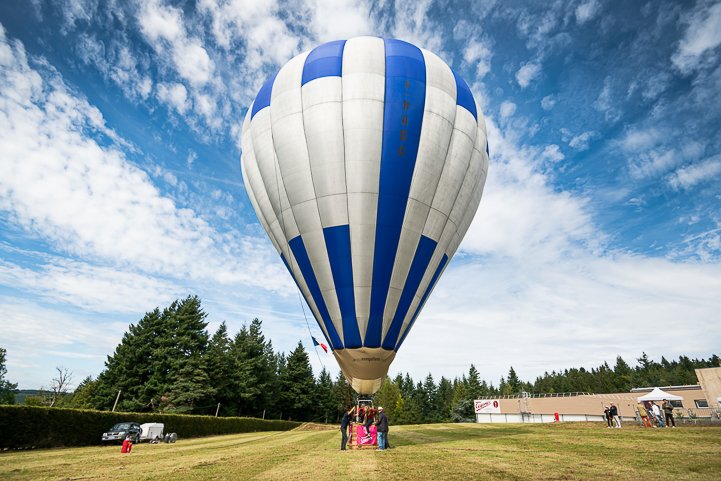
Examples of Funfair Event formats delivered in Liege contexts
Our experience with Funfair Event production covers different corporate realities: industrial sites with strict HSE rules, office campuses requiring discreet set-up, and mixed audiences where families join employees. The funfair format is adaptable, but only if the production is engineered to match the site.
For example, in a company-site configuration in Liege, we often create a “loop” layout: entry & welcome (wristbands + tokens), games zone (high throughput), food village (multiple service points), then a calmer family area. This prevents the classic issue where everyone queues at the first visible booth and the rest of the site feels empty.
For stakeholder events (clients/partners included), we design a more curated selection: fewer high-noise elements, stronger hospitality touchpoints, and an MC schedule that respects networking. In these cases, branding is handled with restraint—clear signposting, consistent visual language, and staff briefing—so the event reads as corporate, not as a public fair dropped into a parking lot.
Across projects, what remains constant is our production discipline: documented run-of-show, defined decision chain, safety checks, and an on-site producer who coordinates suppliers while your HR/Comms team focuses on hosting.
Common mistakes we prevent on Liege corporate funfairs
Underestimating power needs: too few distribution points, unsafe cable runs, or no backup—leading to attraction downtime.
Queue mismanagement: a great attraction becomes a negative experience if wait times exceed 15–20 minutes without alternatives.
Insufficient staffing ratios: not enough booth operators, bar staff, or stewards, which increases safety risk and frustrates guests.
No weather plan: last-minute tent rental is expensive and often unavailable. We plan Plan A/B from the start.
Ignoring site HSE constraints: forklifts, delivery routes, restricted zones, and mandatory PPE rules on company sites in Liege.
Overpromising families without guardrails: unclear age rules, no child-safe zoning, or inadequate first-aid visibility.
Sound and neighbor issues: speakers facing the wrong direction or no monitoring—creating complaints and forced shutdowns.
Weak supplier coordination: staggered arrivals with no marshalling plan can block access and delay opening.
Our role is not only to bring attractions—it is to engineer the conditions where the event runs smoothly in Liege: clear responsibilities, safe operations, and a guest journey that feels effortless.
What keeps Liege clients renewing with the same agency
Corporate teams come back when the agency reduces internal workload and protects reputational risk. In practice, that means your HR and Comms teams are not chasing suppliers, your leadership sees a calm control room, and your participants experience an event that simply works.
We build loyalty through predictable delivery: the same documentation every time, the same production rhythm, and transparent budgeting. Repeat clients also value that we capture learnings—what peaked at what time, which attraction underperformed, where queues formed—and we use that data to improve the next edition.
Typical planning lead time for a smooth Funfair Event in Liege: 8–12 weeks (shorter is possible, but choice and pricing narrow).
Typical attraction throughput planning target: keep average wait times under 10–15 minutes during peak hours.
On-site structure: 1 lead producer + zone managers depending on scale (often 2–6 supervisors for mid/large events).

Loyalty is not about habit; it is a consequence of reduced risk and reduced internal effort. When a leadership team in Liege knows the agency will manage safety, timing, and suppliers without noise, renewal becomes the rational choice.
Our production process for Liege funfair events
👉 Liege discovery call and objective framing
We clarify the non-negotiables: audience mix, desired energy level, HR policies (alcohol, families, inclusivity), operational constraints (shift times, access), and what success looks like for leadership. You receive a first feasibility view within a few days, including early risks specific to your Liege context.
👉 Site recce and technical feasibility
We check access, truck routes, ground conditions, power availability, emergency lanes, and neighbor sensitivity. We then propose a practical layout: zones, entry/exit, fencing lines, first aid position, and service points designed for throughput.
👉 Concept, attraction mix, and supplier locking
We design the attraction portfolio based on your brand and audience. We secure operators, define staffing, and confirm documentation (insurance, inspection requirements). We also validate timing: load-in, safety checks, opening, peak management, and closing procedures.
👉 Permits, safety documentation, and internal alignment
Depending on the set-up in Liege, we prepare the necessary files: risk assessment, emergency plan, security brief, and signage needs. We align with your internal stakeholders (HSE, facilities, HR, Comms) so decisions are made before the final week.
👉 Event-day production and supplier orchestration
We run the load-in, control safety checks, brief staff, and manage the run-of-show. Your team gets a single point of contact and escalation path. We monitor queues, adjust flow when needed, and ensure the event remains compliant and on schedule.
👉 Debrief and improvement plan for the next edition
Within days, we debrief: attendance, peak times, incidents (if any), supplier performance, and improvements. For recurring Liege events, this is where the format becomes stronger each year, not just repeated.
FAQ sur l'organisation Funfair Event à Liege
How early should we book a Funfair Event in Liege?
Plan for 8–12 weeks to secure the best attractions and operators. For peak summer dates in Liege, 12–16 weeks is safer. Rush projects in 3–6 weeks are possible, but choice, pricing, and contingency options will be tighter.
What budget range for a corporate funfair in Liege?
Most corporate projects in Liege fall between €15,000 and €80,000 depending on attendance and infrastructure. Large family days with multiple rides and significant staffing often land at €80,000–€180,000+. The biggest cost drivers are power, staffing, safety setup, and operating hours.
Can we host a funfair on our company site in Liege?
Yes—many of the best Funfair Event in Liege projects happen on company sites because access control is easier and attendance is higher. We’ll validate truck access, ground resistance, HSE constraints, and power availability, then design fencing, emergency lanes, and a guest journey that keeps operational areas protected.
How do you manage safety for rides in Liege events?
We work with professional operators and verify documentation (insurance, inspection evidence where applicable), define clear operating rules, and schedule safety checks before opening. On site, we organize fencing and stewarding, set stop rules (e.g., wind thresholds for inflatables), and ensure a visible first-aid presence scaled to attendance.
What if it rains on the day of our Liege funfair?
We plan a weather scenario from the start: covered zones (tents or indoor fallback), ground protection where needed, and attraction choices that remain operational in light rain. If severe weather hits, we execute a pre-agreed Plan B (partial closure, schedule shift, or indoor migration when feasible) to keep safety and guest experience under control.
Request a quote for your Liege funfair event
If you are comparing agencies for a Funfair Event in Liege, we can provide a clear proposal with: attraction mix options, site layout logic, staffing plan, safety approach, and a transparent budget breakdown. Share your date, estimated headcount, and whether families are included, and we’ll come back with a realistic plan—not a generic package.
For best supplier availability in Liege, contact us as soon as the date is tentatively approved. Early planning is what gives you choice (attractions, food concepts, and contingencies) while keeping procurement and internal approvals manageable.
INNOV'events Liege Agency
Justin JACOB is the manager of the INNOV'events Liege office. Reach out directly by email at belgique@innov-events.be or via the contact form.
Contact the Liege agencyToutes nos prestations & animations Liege, Belgique
Découvrez nos prestations événementielles
Découvrez nos animations événementielles disponibles au Belgique
- Event Hostess in Liege
- Escape Game in Liege
- MasterChef Cooking Workshop in Liege
- Magician in Liege
- Marquee Rental in Liege
- Color Analysis Workshop in Liege
- Inflatable Games in Liege
- Valet Parking Service in Liege
- Football Simulator in Liege
- LED Furniture Rental in Liege
- Light Branding in Liege
- Unique Dining Experience in Liege
- Light Painting in Liege
- Murder Mystery Party in Liege
- Prize Contest in Liege
- Promotional Displays (POS) in Liege
- Virtual Reality in Liege
- Molecular Gastronomy Workshop in Liege
- Halloween Entertainment in Liege
- Fireworks Show in Liege
- Giant Games Challenge in Liege
- Event Host / MC in Liege
- Photo Booth Animation in Liege
- Santa Claus Entertainment in Liege
- Kids Entertainment in Liege
- Guided Tour in Liege
- Urban Rally in Liege
- Ball Pit in Liege
- Flight Simulator in Liege
- Food Truck Rental in Liege
- World Record Challenge in Liege
- Surf Simulator in Liege
- Wine Casino in Liege
- Makeover Workshop in Liege
- Perfume Creation Workshop in Liege
- Acting Workshop in Liege
- CSR Activities in Liege
- Archery in Liege
- Security Staff in Liege
- Wine Tasting in Liege
- Mime Performer in Liege
- TV Game Show in Liege
- Funfair in Liege
- Crisis Management Workshop in Liege
- Crisis Negotiation Workshop in Liege
- Arcade Games in Liege
- Indoor Skydiving Simulator in Liege
- Ski Simulator in Liege
- Racing Circuit Experience in Liege
- Introductory Flight Experience in Liege
- Tasting Experience in Liege
- Build Your Own Foosball Workshop in Liege
- 2CV Rally in Liege
- LEGO Challenge in Liege
- Casino Night in Liege
- Interpreter / Translator in Liege
- Promotional Giveaways in Liege
- Shuttle Transport in Liege