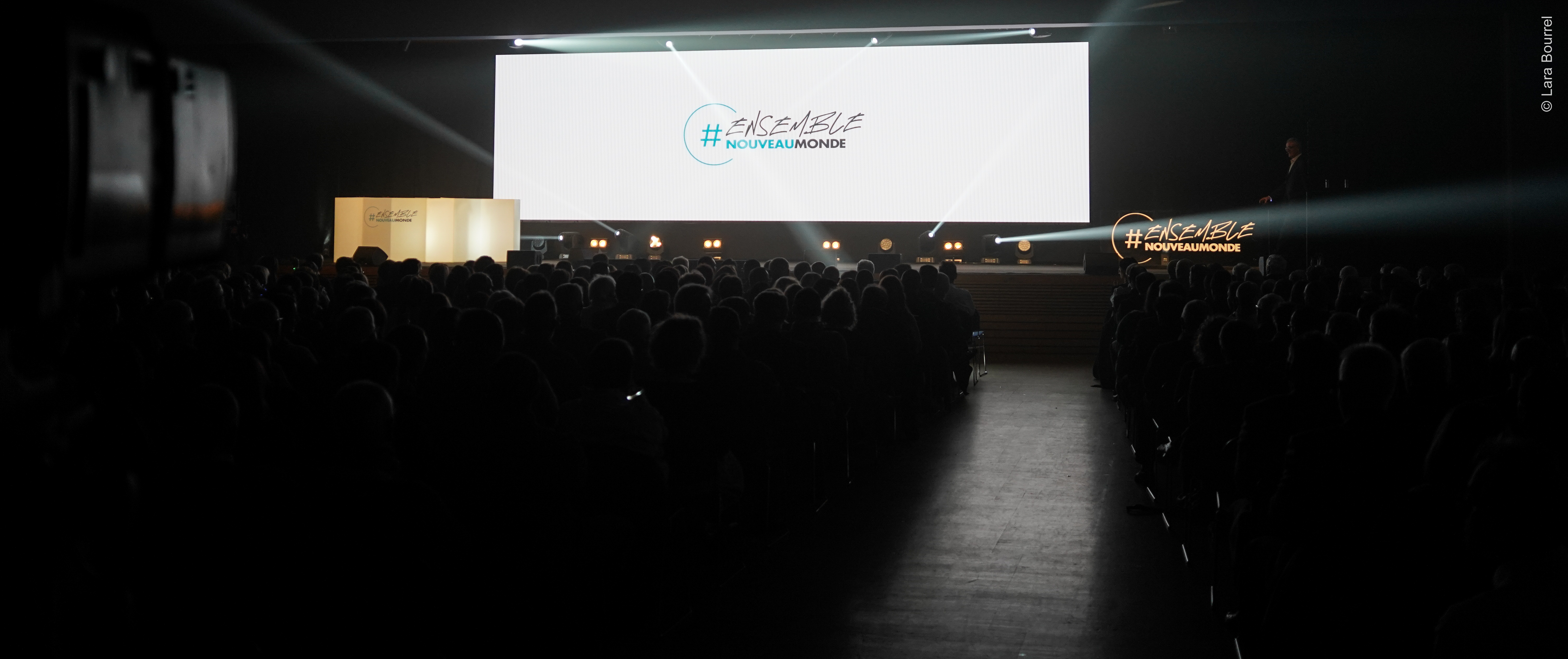
Annual General Meeting in Brussels with a governance-ready setup
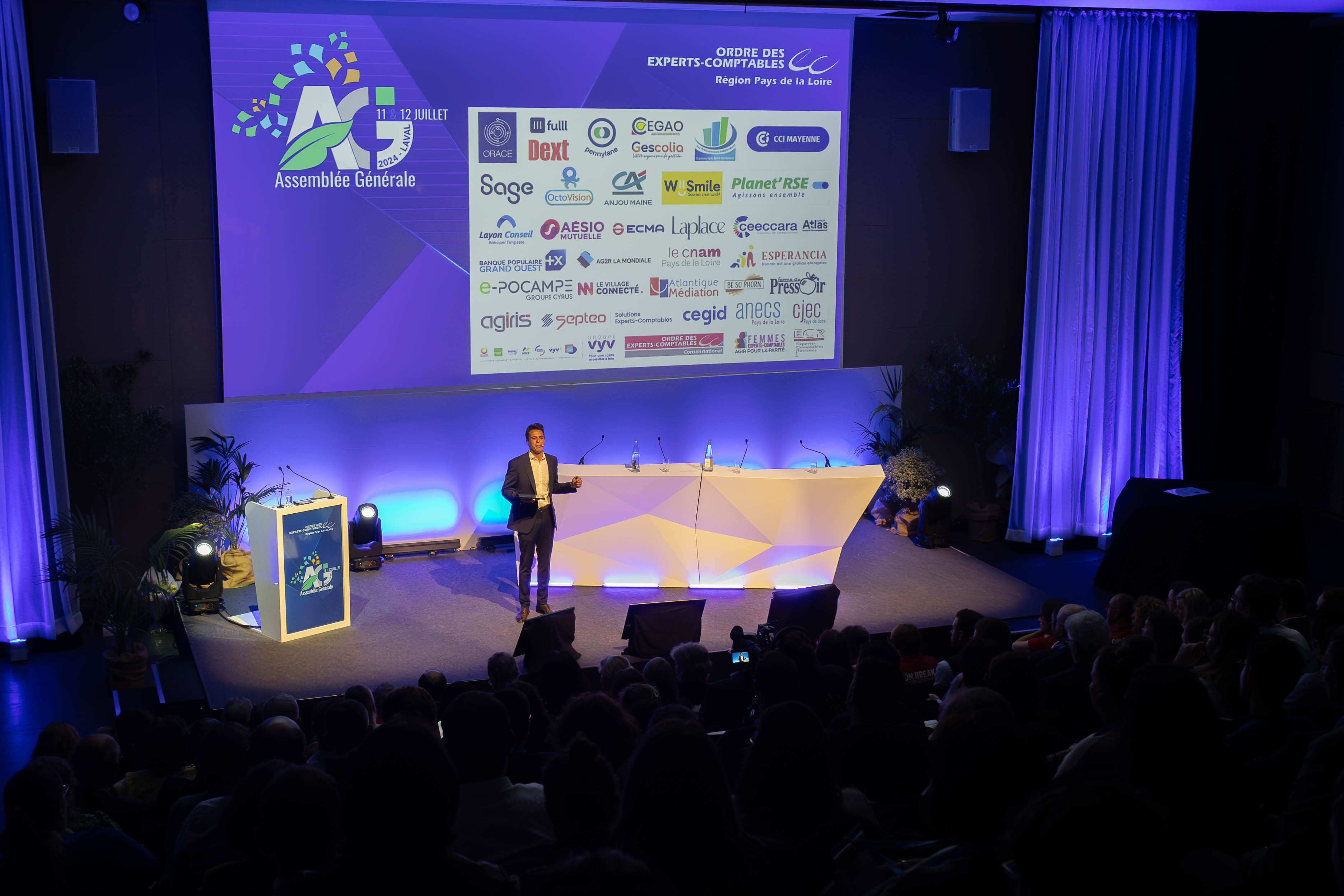
INNOV'events supports listed groups, family-owned firms, associations, and scale-ups for a compliant, well-paced Annual General Meeting in Brussels, typically from 50 to 1,500 attendees. We manage the end-to-end run: venue, registration, AV, stage direction, interpretation, voting, security, and on-site coordination—so your Board and executive team can focus on decisions, not logistics.
Table of contents
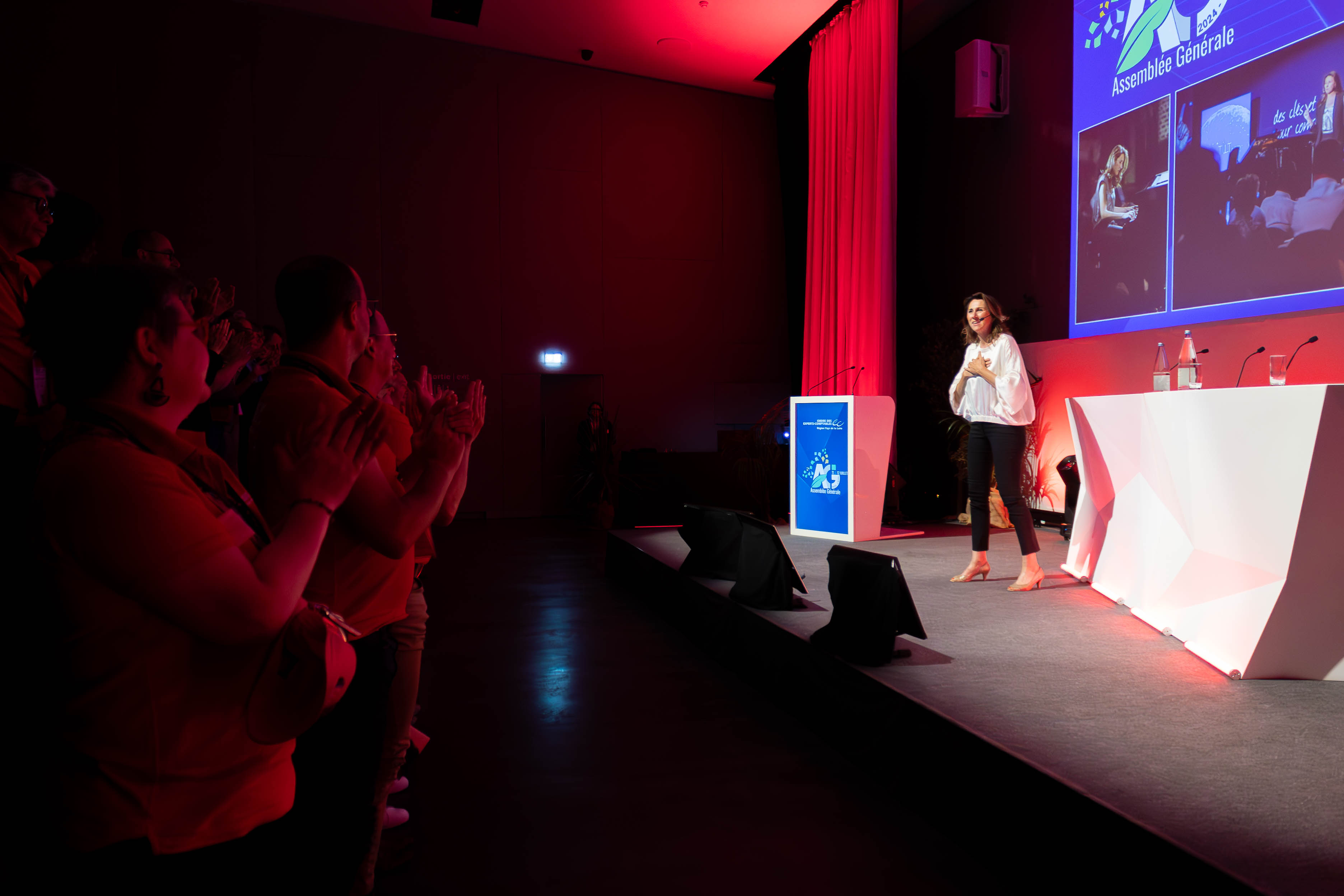
In an Annual General Meeting, “entertainment” is not about spectacle—it’s about keeping attention and control. Short, well-produced segments (brand film, executive Q&A formats, moderated transitions) reduce drop-off, prevent room noise, and protect the credibility of votes and governance moments.
In Brussels, organisations expect bilingual or multilingual delivery, punctuality that respects legal agenda constraints, and a shareholder experience that feels neutral and secure. They also expect a seamless hybrid option, because many stakeholders join from outside the city or internationally.
As an event agency rooted in Brussels, we work with local venues, AV crews, and security teams used to executive-level standards. Our approach is operational: clear run-of-show, risk controls, and a controlled atmosphere from first badge scan to the final vote.
INNOV’events performance metrics for Brussels governance events
12+ years supporting corporate and institutional events, including governance-heavy formats.
150+ events/year delivered through our Brussels-based delivery team and trusted supplier network.
24–48h for a first structured budget range and feasibility feedback (venue, AV, staffing).
98% of projects delivered with the originally approved agenda timing (based on our internal post-event reporting).
2 dedicated on-site roles minimum for AGMs: stage manager + operations lead (in addition to host/MC if needed).
How to organize a professional event in Brussels?
- Define the objective (cohesion, announcement, fidelity, performance).
- Set date, format and size (20–1 000 people).
- Secure the venue and accommodation according to seasonality.
- Lock down technical, suppliers and logistics.
- Drive the day J (timing, scene, entrance, flow).
Brussels delivery experience that clients renew year after year
We support organisations that operate in and around Brussels—from corporate HQ teams to federations and international associations. Many of our AGM and governance clients renew because they value consistency: the same operational leads, the same production standards, and documentation that can be re-used the following year (timelines, floor plans, risk register, cue sheets, supplier specs).
You did not provide specific company names to reference. If you share 4–8 names you are authorised to mention (or anonymised sectors: “Belgian bank”, “European trade federation”), we will integrate them cleanly as local proof points without overstating what can’t be verified.
In practice, Brussels clients often ask for stability more than novelty: predictable registration flows, a quiet and controlled Q&A process, and clear stakeholder segmentation (shareholders vs guests vs press vs staff). Our team is used to building those boundaries without making the event feel “over-secured”.
We send you a first proposal within 24h.
Why run an Annual General Meeting in Brussels now
A well-run Annual General Meeting is a governance checkpoint and a reputation moment. It can either confirm that the organisation is in control—or expose friction: unclear reporting, weak meeting discipline, or an executive team struggling with Q&A pressure. In a city like Brussels, where many stakeholders are used to formal proceedings, the tolerance for improvisation is low.
Beyond the legal requirement, the AGM is one of the few moments where you can align shareholders, employees, and leadership around facts: performance, outlook, and the rationale behind key resolutions.
Board and executive credibility: a controlled pace, professional staging, and clean audio make leaders look prepared—especially during sensitive Q&A or when votes are close.
Risk reduction: tight access control, documented vote procedures, and a rehearsed crisis plan reduce exposure (technical failure, disorderly interventions, reputational incidents).
Stronger message clarity: a structured run-of-show avoids “slide fatigue” and keeps the audience attentive for financial and governance points that actually matter.
Stakeholder trust: transparent information design (agenda clarity, clearly announced voting steps, visible timing) reduces tension and prevents rumours.
Operational efficiency for HR and Comms: one integrated plan for invitations, registration, signage, speakers, press/recording rules, and post-event deliverables.
Brussels is a governance capital: stakeholders often include multilingual profiles, international investors, and experienced observers. When you plan the AGM with that reality in mind, you protect both compliance and brand reputation in one move.
What Brussels stakeholders expect from an AGM experience
Working in Brussels means working with mixed audiences and mixed expectations. In the same room, you may have long-standing shareholders, institutional representatives, employee delegates, and international guests. The event must feel fair and neutral while still being welcoming and efficient.
Common Brussels-specific constraints we plan for include:
- Bilingual delivery (often English/French, sometimes Dutch): signage, slides, speaker briefs, and stage cues must match the language plan—no last-minute “we’ll translate it live”.
- Hybrid attendance as a default: remote shareholders expect reliable streaming, a secure voting pathway, and a Q&A mechanism that does not disadvantage them versus the room.
- Security and access control that remains discreet: badge categories, controlled entrances, and clear rules for photography/recording.
- Time discipline: in Brussels, many attendees have tight schedules; overruns signal poor leadership control.
- Venue logistics: traffic, limited loading windows, and strict venue rules require precise production planning (especially for morning AGMs).
We build the plan around those realities: not as “options”, but as the baseline. The goal is a meeting that feels calm, fair, and under control—even under questioning.
Entertainment options in Brussels that fit an AGM’s tone
For an Annual General Meeting, the right “entertainment” is actually structured engagement: it keeps the room attentive without undermining the seriousness of the agenda. In Brussels, the strongest formats are sober, high-production, and clearly linked to the organisation’s strategy.
Interactive animations in Brussels
Moderated Q&A with structured intake: questions collected via app/QR for remote and in-room attendees, grouped by theme, with a visible process (what will be answered now vs later).
Live agenda timing display: subtle on-stage timer cues to keep speakers disciplined, especially when multiple executives present.
Shareholder “info points”: staffed desks before/after the meeting for practical topics (dividends, documentation, investor relations), reducing disruptive questions during formal proceedings.
Art animations in Brussels
Short opening sting (30–60 seconds): a brand film designed for clarity (not hype), used to settle the room and mark the meeting’s official start.
Executive walk-on music cue: restrained audio branding that supports pacing and avoids the awkward silence between speakers.
Professional voice-of-God announcements: neutral and bilingual to guide attendees (phones, exits, voting instructions) without tension.
Innovative animations in Brussels
Timed coffee reception: a tight 20–30 minute window aligned with registration capacity to prevent late arrivals and noise during opening formalities.
Post-AGM networking lunch: useful when leadership wants controlled access for key shareholders and partners; we design seating and flows to avoid crowding the stage area.
Dietary-labeled catering: in Brussels, mixed international audiences expect clear allergen signage and efficient service lines.
Gourmand animations in Brussels
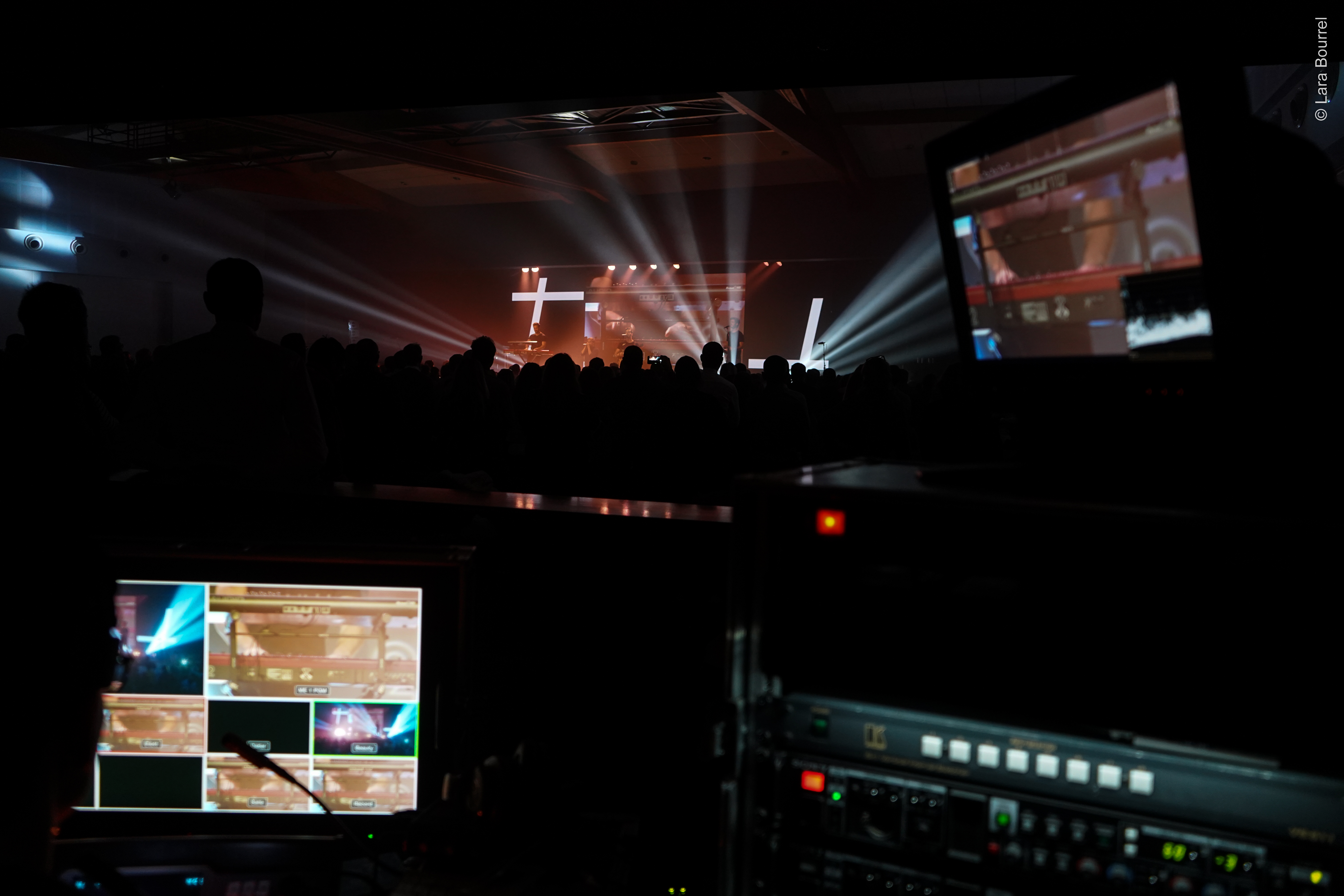
Hybrid studio-style setup: clean camera framing, dedicated lighting, and a separate audio mix for the stream so remote participants hear clearly (often the missing piece in “hybrid”).
Secure digital voting workflows: where appropriate, we can integrate a voting provider and ensure the on-site process mirrors the remote process, with clear verification steps.
Real-time captioning: a practical accessibility layer, also helpful for multilingual attendees and for improving stream comprehension.
Every format must reinforce the organisation’s image: neutral, transparent, and in control. We only propose corporate event entertainment in Brussels that respects governance tone and supports meeting discipline.
Which Brussels venues work best for an Annual General Meeting
The venue shapes the meeting’s authority and operational stability. For an Annual General Meeting in Brussels, we select venues based on room acoustics, rigging limits, backstage circulation, loading constraints, and the ability to separate flows (shareholders, staff, VIP, press).
| Venue type | For which objective? | Main strengths | Possible constraints |
|---|---|---|---|
Conference centre / auditorium | Formal statutory meeting with strict timing and clear sightlines | Built-in acoustics, professional seating, technical infrastructure, easier stage authority | Limited branding flexibility; fixed room layout; strict technical/union rules in some sites |
Hotel conference floor | Mid-size AGM with catering and breakouts on the same site | Efficient guest experience, accommodation options, controlled reception areas | Sound isolation can be weaker; load-in windows; column obstructions in some rooms |
Corporate HQ / large boardroom conversion | Restricted attendance, high confidentiality, strong executive control | Security, privacy, brand control, minimal travel for leadership | Capacity limitations; emergency exits compliance; extra work for broadcast-quality AV |
We strongly recommend a site visit with your secretariat/legal and production leads: seating geometry, microphone logistics, and backstage access are the details that decide whether the chair feels in control on the day.
Brussels AGM budgeting: what drives cost (and what does not)
AGM budgets vary widely because requirements are not purely “per attendee”. The main cost drivers are governance constraints, technical reliability, and staffing density. We provide a structured budget with options (good/better/best) so you can make trade-offs without risking compliance or executive comfort.
As a reference, in Brussels, a professionally produced AGM often starts around €25,000–€45,000 for smaller formats with solid AV, and can reach €80,000–€250,000+ for large, hybrid, multi-language meetings with complex voting and high production standards.
Hybrid production level: number of cameras (typically 2–5), streaming platform, separate audio mix for remote, redundancy lines, and recording deliverables.
Interpretation and languages: simultaneous interpretation booths, receivers, technician support, and bilingual show calling.
Voting method: simple show-of-hands vs electronic keypads vs secure online voting integration; the more controlled the process, the higher the setup and staffing.
Security and access control: badge categories, controlled entrances, discreet guards, and potential liaison with venue security.
Venue constraints: rigging limits, mandatory in-house suppliers, overtime rules, and restricted loading windows in the city centre.
Speaker readiness support: rehearsal time, teleprompter (if needed), presentation clean-up, and stage management.
Content assets: filming/editing of a short results video, motion graphics for resolutions, and bilingual slide versions.
We look at ROI in governance terms: fewer disruptions, shorter overruns, clearer decisions, and a lower reputational risk footprint. In practice, investing in audio quality, stage management, and a disciplined run-of-show prevents the costly “failure points” that can’t be fixed once the room is live.
Why choose a Brussels event agency for your AGM
For an Annual General Meeting, proximity is not a comfort—it’s a risk-control tool. A team established in Brussels can secure venue holds faster, coordinate on-site technical checks without extra travel cost, and mobilise proven crews who know the local constraints (loading, parking, access, security protocols).
It also improves decision speed: when your CEO’s office asks for a rehearsal slot or your legal team changes the voting sequence, you want an operations lead who can adapt the production plan immediately and get eyes on the venue if needed.
If you are comparing providers, look at how they document the event (run-of-show, floor plan, risk register) and whether they can provide a dedicated stage manager. That’s the difference between “organised” and “controlled”.
Learn more about how our event agency in Brussels supports governance and executive events with a production-first approach.
- Faster on-site troubleshooting: immediate access to replacement equipment and technicians if a critical item fails.
- Vendor accountability: we work with Brussels crews we can brief and supervise directly.
- Venue familiarity: knowing what is realistically possible in each site avoids late technical surprises.
- Cost control: fewer travel days, fewer unknowns, and cleaner negotiation with local suppliers.
We look at ROI in governance terms: fewer disruptions, shorter overruns, clearer decisions, and a lower reputational risk footprint. In practice, investing in audio quality, stage management, and a disciplined run-of-show prevents the costly “failure points” that can’t be fixed once the room is live.




Brussels casework: formats we deliver for governance-heavy events
Our AGM and governance portfolio covers a range of realities, because no two organisations have the same stakeholder pressure.
- Listed-company style AGM: high scrutiny, formal chairing, strict agenda, and an audience used to challenging Q&A. We focus on microphone logistics, Q&A moderation rules, and a clear voting sequence with visible confirmations.
- Family-owned group AGM: fewer people, but higher sensitivity. The challenge is neutrality and confidentiality, with discreet security and a polished yet restrained production.
- Federation or association AGM: many motions, delegates, and procedural votes. We design the room for flow: voting instructions, delegate seating logic, and a stage plan that avoids bottlenecks.
- Hybrid international AGM: multilingual stakeholders, remote interventions, and a strong need for stable streaming. We build a broadcast-oriented setup with dedicated streaming audio, rehearsal, and contingency measures.
Across these formats, the constant is operational discipline: a chair who can keep the room, executives who can hear and be heard, and a production that supports governance rather than competing with it.
Common AGM pitfalls we prevent in Brussels
Underestimating audio: insufficient roaming mics, weak speaker monitoring, or no backup channels—leading to disorderly Q&A and loss of authority.
Hybrid as an afterthought: one laptop “stream” without a proper audio mix, causing remote frustration and reputational damage.
Unclear voting choreography: attendees not knowing when/how to vote, or staff not prepared to handle exceptions (late arrivals, credential issues).
Registration bottlenecks: queues that push late arrivals into the first agenda item and disrupt opening formalities.
Stage management gaps: speakers arriving late, wrong slide versions, or no cue discipline—causing overruns and visible stress.
Over-branding or “show” elements: anything that makes governance look secondary can irritate stakeholders and weaken trust.
Our role is to remove these risks before they become public. We do it through documented processes, rehearsals on critical moments, and an on-site team empowered to make quick operational decisions without bothering your executives.
Why Brussels clients keep INNOV’events for annual cycles
Most organisations do not want to re-invent their Annual General Meeting every year. They want an approach that improves year over year: same governance backbone, better timing, smoother Q&A, and cleaner hybrid delivery. That’s where long-term collaboration makes a measurable difference.
Year-over-year playbooks: we maintain and update your run-of-show templates, signage packs, and staffing plans.
Post-event debrief within 5 working days: what worked, what didn’t, what to change next year—documented and actionable.
Speaker continuity: we keep technical preferences and stage habits per executive to reduce rehearsal time next cycle.
Supplier stability: using the same proven Brussels crews reduces the learning curve and on-site friction.

Loyalty is not about comfort; it’s about reliability under pressure. When the room is full and votes are on the line, a team that already knows your governance rhythm is the safest option.
Our Brussels delivery process for AGM-grade events
👉 Step 1 — Scoping call and governance constraints (Brussels)
We start with your non-negotiables: agenda structure, voting method, languages, stakeholder categories, and level of confidentiality. We clarify who owns what internally (secretariat, legal, IR, HR, Comms) and map approval gates. Output: a written scope, key risks, and a first budget range.
👉 Step 2 — Venue shortlist, site visit, and technical feasibility
We shortlist Brussels venues that match your capacity, security needs, and technical constraints. During the site visit, we validate: stage sightlines, FOH position, loading path, registration area, microphone logistics, interpretation placement, and emergency exits. Output: floor plan draft and technical assumptions.
👉 Step 3 — Production design and supplier locking
We confirm AV specs (sound, screens, cameras), staffing (stage manager, host if needed, registration team, security), interpretation, and catering timing. We also define signage and access control rules (badge categories, check-in process, late arrival handling). Output: confirmed production plan and supplier confirmations.
👉 Step 4 — Content and speaker readiness
We help structure presentations for clarity and timing: slide clean-up, bilingual consistency, cue points for videos, and practical speaker notes (where to stand, which mic, what to do in Q&A). Output: final show file, cue sheet, and speaker brief.
👉 Step 5 — Rehearsal, event-day execution, and contingency
We run a technical rehearsal focused on high-risk moments (opening, first vote, Q&A switch, hybrid handoffs). On the day, we operate with a clear chain of command and escalation path. We also plan contingencies: backup microphones, spare playback, redundant stream options where required. Output: a calm meeting with controlled timing.
👉 Step 6 — Post-event deliverables and debrief
We deliver agreed outputs (recording links, attendance/export files where applicable, incident log if any) and run a debrief within 5 working days. We capture improvements for the next cycle so the AGM gets easier, not harder, year after year.
FAQ sur l'organisation Annual General Meeting à Brussels
How much does an AGM cost in Brussels?
Most Brussels AGMs we see fall between €25,000 and €250,000+. The range depends mainly on hybrid production (cameras/streaming), interpretation, voting method, venue constraints, and staffing density.
How early should we book an AGM venue in Brussels?
Plan for 8–16 weeks for standard formats, and 4–6 months if you need a prime date, large capacity, full hybrid production, or multi-language interpretation. Brussels venues with strong auditoriums and strict load-in rules book up quickly.
Do we need simultaneous interpretation for Brussels shareholders?
Often yes. If your audience includes both French- and Dutch-speaking stakeholders, or international investors, simultaneous interpretation protects clarity and reduces tension in Q&A. Expect 2–4 interpreters depending on languages and meeting duration, plus booths and receivers.
What’s the safest hybrid setup for an AGM in Brussels?
A reliable setup typically includes 2–5 cameras, a dedicated audio mix for the stream, a stable wired internet solution, rehearsal time, and a clear remote Q&A/voting process. “One laptop on a table” usually fails on audio clarity and governance fairness.
Can you manage registration and access control in Brussels?
Yes. We set up badge categories, check-in desks sized to your arrival curve, late-arrival rules, and discreet security coordination. For larger meetings, we recommend multiple check-in points and a controlled flow into the room to protect the opening formalities.
Request an AGM quote in Brussels with a clear delivery plan
If you are planning a Annual General Meeting in Brussels, the earlier we lock the venue and production assumptions, the fewer surprises you face in the final two weeks. Share your date range, expected attendance, languages, and whether you need hybrid participation and voting support.
INNOV’events will come back with a structured proposal: venue approach, staffing plan, technical architecture, and a budget with options—so your executive team can decide quickly and confidently. Contact us to schedule a working call and receive a first estimate within 24–48h.
INNOV'events Brussels Agency
Justin JACOB is the manager of the INNOV'events Brussels office. Reach out directly by email at belgique@innov-events.be or via the contact form.
Contact the Brussels agencyAll our services & entertainment Brussels, Belgique
Discover our event services
Discover our event entertainment available in the Belgique
- Event Hostess in Brussels
- Escape Game in Brussels
- MasterChef Cooking Workshop in Brussels
- Magician in Brussels
- Marquee Rental in Brussels
- Color Analysis Workshop in Brussels
- Inflatable Games in Brussels
- Valet Parking Service in Brussels
- Football Simulator in Brussels
- LED Furniture Rental in Brussels
- Light Branding in Brussels
- Unique Dining Experience in Brussels
- Light Painting in Brussels
- Murder Mystery Party in Brussels
- Prize Contest in Brussels
- Promotional Displays (POS) in Brussels
- Virtual Reality in Brussels
- Molecular Gastronomy Workshop in Brussels
- Halloween Entertainment in Brussels
- Fireworks Show in Brussels
- Giant Games Challenge in Brussels
- Event Host / MC in Brussels
- Photo Booth Animation in Brussels
- Santa Claus Entertainment in Brussels
- Kids Entertainment in Brussels
- Guided Tour in Brussels
- Urban Rally in Brussels
- Ball Pit in Brussels
- Flight Simulator in Brussels
- Food Truck Rental in Brussels
- World Record Challenge in Brussels
- Surf Simulator in Brussels
- Wine Casino in Brussels
- Makeover Workshop in Brussels
- Perfume Creation Workshop in Brussels
- Acting Workshop in Brussels
- CSR Activities in Brussels
- Archery in Brussels
- Security Staff in Brussels
- Wine Tasting in Brussels
- Mime Performer in Brussels
- TV Game Show in Brussels
- Funfair in Brussels
- Crisis Management Workshop in Brussels
- Crisis Negotiation Workshop in Brussels
- Arcade Games in Brussels
- Indoor Skydiving Simulator in Brussels
- Ski Simulator in Brussels
- Racing Circuit Experience in Brussels
- Introductory Flight Experience in Brussels
- Tasting Experience in Brussels
- Build Your Own Foosball Workshop in Brussels
- 2CV Rally in Brussels
- LEGO Challenge in Brussels
- Casino Night in Brussels
- Interpreter / Translator in Brussels
- Promotional Giveaways in Brussels
- Shuttle Transport in Brussels