
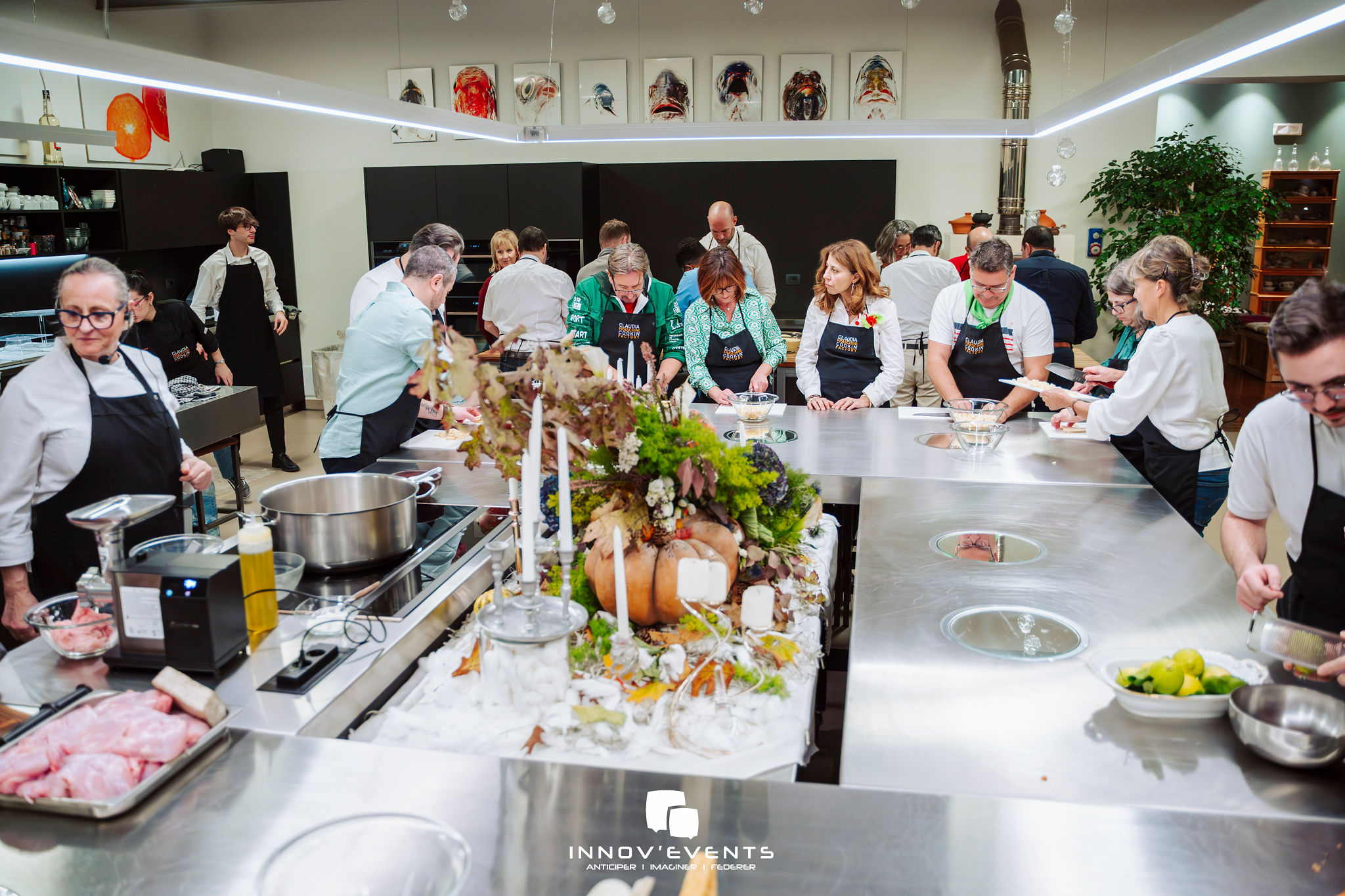
MasterChef-Style Cooking Workshop in Brussels that aligns teams fast
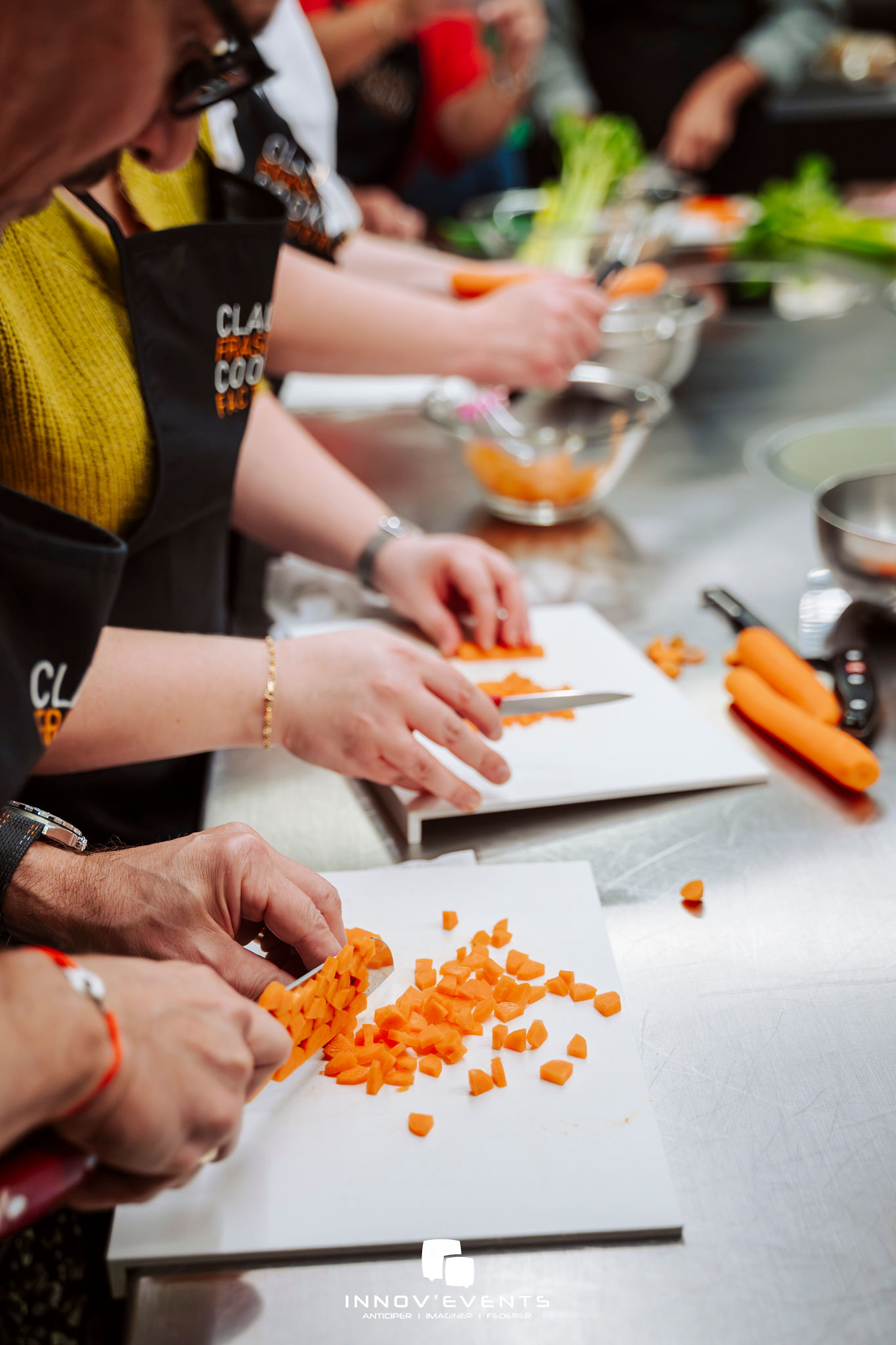
INNOV’events is a event agency in Brussels specialized in corporate culinary challenges inspired by a MasterChef-Style Cooking Workshop. We typically deliver formats for 10 to 200 participants, from executive offsites to large HR team-buildings.
We handle the full operational chain: concept, chef casting, venue options in Brussels, procurement, dietary constraints, timing, facilitation, scoring, and on-site production so your leadership team can focus on culture and outcomes.
Sommaire
In a corporate agenda, entertainment is not “a nice extra”: it is a tool to accelerate cooperation, create cross-functional contact, and generate concrete post-event behaviors. A MasterChef-Style Cooking Workshop in Brussels works when it is designed like a project sprint: clear roles, pressure calibrated to the group, and measurable deliverables.
Organizations in Brussels expect a format that respects time, brand image, and diverse teams (multilingual context, dietary constraints, hybrid work habits). They also expect flawless logistics: start on time, food safety controlled, and a facilitation style that fits both executives and operational teams.
Our team works week after week in Brussels venues and corporate sites, with chef-partners used to business audiences. We plan with the same rigor as a product launch: run-of-show, risk plan, supplier SLAs, and on-site coordination under one accountable producer.
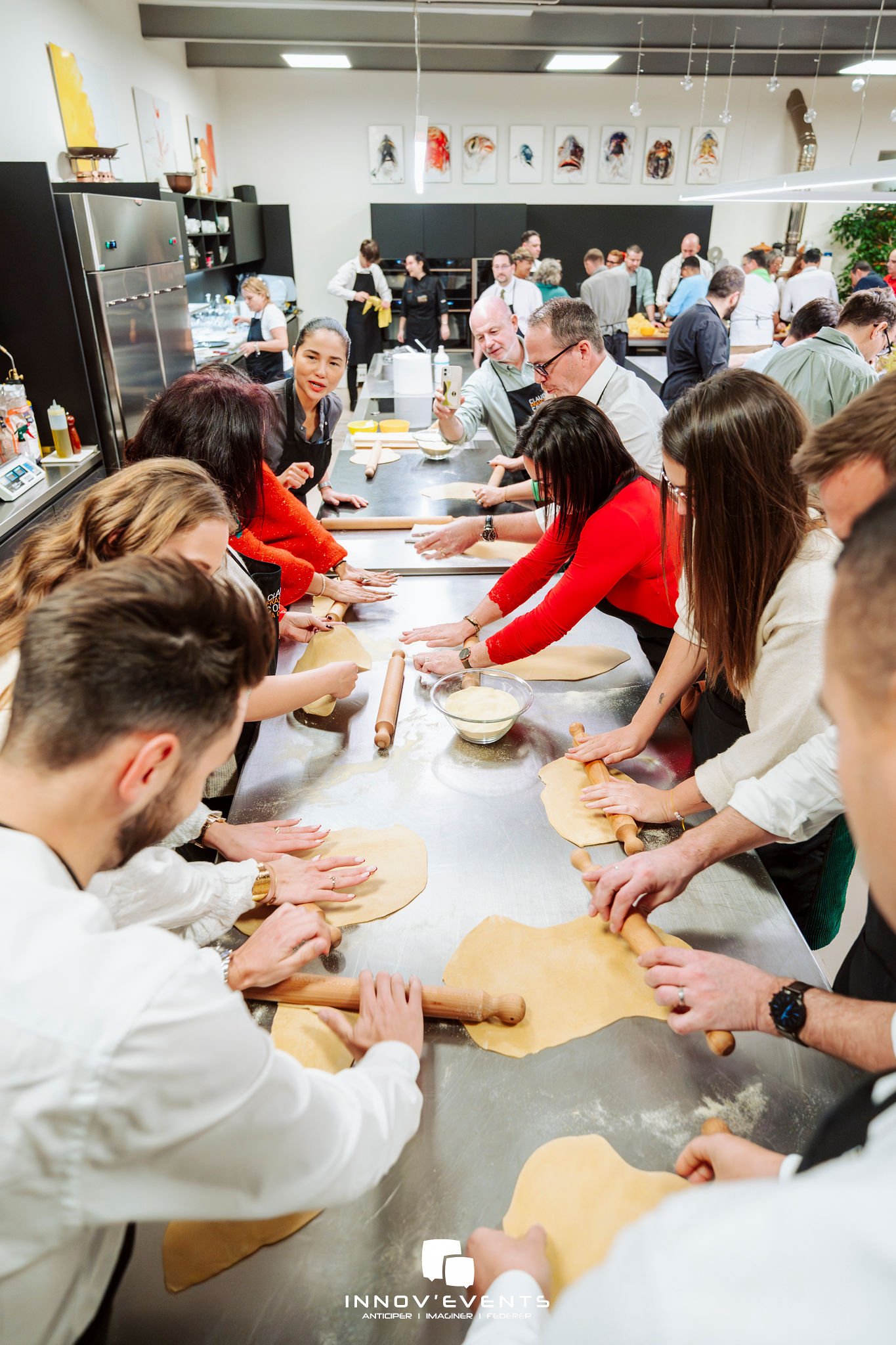
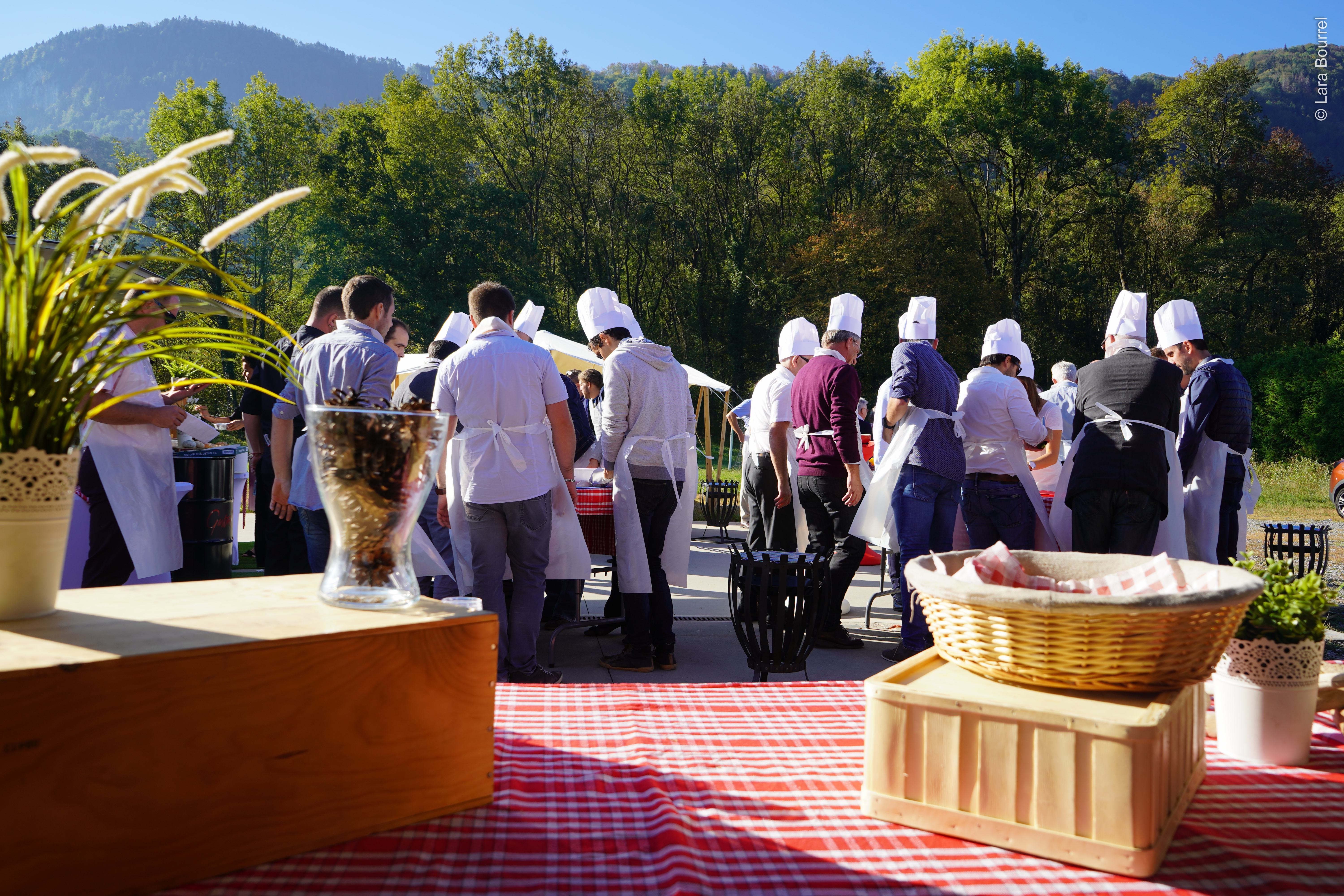
Operational benchmarks we commit to in Brussels
10–200 participants per session, with scalable staffing ratios (typically 1 chef per 15–25 participants depending on complexity and language needs).
24–48h to return a first budget range and scenario options after a qualified briefing (objectives, headcount, date windows, venue constraints).
2–3 validated venue options in Brussels presented with pros/cons (access, noise limits, kitchen capacity, alcohol policy, parking, delivery access).
1 single accountable producer on event day, with a documented run-sheet and supplier call times (chefs, venue, rentals, AV, photographers).
0-surprise policy on dietary constraints: allergen mapping, separate utensils, labeling, and service protocol aligned with the venue’s HACCP standards.
Companies we support in Brussels year after year
We regularly deliver corporate activations and team experiences for organizations with a real footprint in Brussels—including headquarters teams, regional leadership groups, and international departments visiting the capital for strategic moments.
Many of our clients renew because the operational quality remains stable even when internal stakeholders change (new HRBP, new communications lead, new executive sponsor). In practice, that means: we keep your event file updated, we document what worked (and what didn’t), and we can replicate a successful format while adapting to the new business context.
If you share the company names you want us to cite as local references, we will integrate them precisely in this section with the correct scope (team size, objective, and type of venue) while respecting your internal confidentiality rules.
 Besoin d’un devis rapide ?
Nous vous envoyons une première proposition sous 24h.
Why a MasterChef workshop works for leadership teams in Brussels
A MasterChef-Style Cooking Workshop is not about teaching people to cook; it is about creating a controlled environment where collaboration, decision-making, and execution become visible in under two hours. For executives and HR in Brussels, it is a practical way to test and strengthen ways of working without the heaviness of a formal training module.
Accelerate cross-silo collaboration: teams must negotiate a menu, allocate tasks, and manage dependencies (prep, cooking, plating) under a fixed deadline—similar to real project work.
Reveal leadership behaviors in a safe setting: who clarifies priorities, who listens, who takes over, who empowers. This is especially useful during post-merger integrations or after re-orgs where roles are still fluid.
Create a shared language for performance: we can translate what happens in the kitchen into business language (briefing quality, delegation, escalation, timeboxing, QA checks), which makes debriefing actionable rather than emotional.
Support employer branding and internal comms: the format is visually strong (ingredients, action, plating) while remaining professional. We can structure short content moments (team portraits, scoring board, winners) without disrupting the flow.
Include diverse profiles: with the right recipes and facilitation, the activity works for mixed seniority, mixed languages, and varying cooking confidence. Success is designed around teamwork, not culinary expertise.
Deliver a concrete output: the meal itself becomes the closing moment—useful for companies that want to link “team-building” with a real shared experience (lunch, cocktail, or dinner).
Brussels is a city of international teams, tight schedules, and high image sensitivity. A well-produced culinary challenge matches this economic culture: pragmatic, multicultural, and results-oriented.
What Brussels companies expect from a cooking workshop supplier
In Brussels, stakeholders tend to be demanding for three reasons: many teams are international, the event calendar is dense, and the standards for venues and catering are high. In concrete terms, this translates into non-negotiables we plan for from day one.
Time discipline is the first expectation. Executive agendas rarely allow “flexible” starts. We design the workshop with a precise run-of-show: arrival buffer, briefing, cooking blocks, plating window, judging, and closing. If your group arrives from meetings in the European Quarter or from Zaventem, we build a realistic check-in and coat handling plan to avoid losing 20 minutes at the start.
Multilingual facilitation is often required. We can staff bilingual (FR/NL) or add EN as the main language with local support, depending on the audience. This matters in a kitchen: instructions must be clear, safety rules must be understood, and the scoring criteria must be consistent for perceived fairness.
Dietary complexity is now standard: vegetarian/vegan, halal, allergies (nuts, shellfish), and “no alcohol” policies for some corporate cultures. We don’t treat this as an afterthought. We map constraints at registration, propose menu variants, and label everything on-site—because one incident can harm trust far beyond the event.
Brand and compliance alignment is also typical for Brussels-based institutions and regulated sectors (finance, pharma, public affairs). We can keep the tone sober, ensure no risky humor, control signage, and coordinate photography consent. The goal is for your communications team to feel safe with what will be shared internally or on LinkedIn.
Which MasterChef-style options to choose in Brussels
Engagement is created when participants feel ownership and when the rules are transparent. In Brussels, we see better outcomes when the workshop is built with optional layers: competitive or collaborative, with or without a brand brief, and with deliverables adapted to your internal communication needs.
Interactive animations in Brussels
Secret ingredient briefing: each team receives a common base basket plus one “curveball” ingredient. It drives creativity and forces quick alignment on priorities—useful for teams that struggle with decision-making.
Time-boxed milestones: we run a visible countdown with checkpoints (prep completed, cooking started, plating begins). This improves rhythm and reduces last-minute chaos, especially with larger groups.
Peer judging matrix: each team rates another team on predefined criteria. It increases attention and keeps the tone professional because the criteria are written and consistent.
Art animations in Brussels
Plating and storytelling coaching: a short segment on how to present the dish like a product pitch. This resonates with sales, consulting, and marketing teams in Brussels.
Food photography corner: controlled light and a simple backdrop for fast team photos and dish shots. It gives your comms team usable content without turning the event into a photo shoot.
Innovative animations in Brussels
Belgian-inspired basket: we can integrate local references (seasonal vegetables, Belgian endive, speculoos twist) while keeping recipes accessible for international teams.
Non-alcoholic pairing: curated kombucha/tea pairing for companies with strict alcohol policies, common in certain Brussels institutions.
Zero-waste scoring: bonus points for minimizing waste and using trims creatively. This makes sustainability concrete instead of a slogan.
Gourmand animations in Brussels
Brand brief simulation: teams receive a “client brief” with constraints (budget, dietary, sustainability, timing). They must deliver a dish plus a 60-second pitch. This is particularly effective for cross-functional product teams.
Hybrid content capture: short structured moments (kick-off, mid-point, final plating, awards) recorded in a lightweight way so remote colleagues can follow a recap internally.
Executive judging panel: if leadership wants visibility, we choreograph it to be respectful of their time (10–15 minutes), with prepared scoring sheets and clear speaking cues.
The key is alignment with your brand image: a law firm in Brussels will not choose the same tone, visuals, or competition intensity as a scale-up. We advise on the right level of showmanship so it supports your culture instead of contradicting it.
Where to host a cooking workshop in Brussels
The venue determines more than comfort: it drives punctuality, energy level, and how “premium” the experience feels. For a MasterChef-Style Cooking Workshop in Brussels, the most important technical criteria are kitchen capacity (stations, ovens, extractor), acoustics for briefing, and logistics (deliveries, parking, public transport access).
| Venue type | For which objective? | Main strengths | Possible constraints |
|---|---|---|---|
Professional cooking studio in Brussels | High-control challenge with reliable equipment and a strong “show” effect | Designed for groups, good station flow, easy scoring setup, consistent hygiene standards | Fixed layout, limited branding options, popular dates book fast |
Hotel with event kitchen / banqueting support | Combine workshop + meeting + dinner in one location | AV-ready spaces, professional service, predictable access and cloakroom management | Less “hands-on” kitchen space depending on the hotel, stricter timing slots |
Corporate office kitchen / onsite cafeteria area | Internal culture-building with minimal travel time | Convenient for after-work, easier attendance, strong internal feel | Often not designed for simultaneous cooking, requires stricter safety management and extra equipment rentals |
Industrial/creative venue with temporary kitchen install | Brand-forward event with a strong atmosphere | Visual impact, flexible staging, can combine with awards and DJ/cocktail | Higher production needs (power, water, ventilation), more risk points to manage |
We strongly recommend a site visit (or at minimum a technical walk-through) before locking the venue in Brussels. It allows us to validate circulation, noise, and exact kitchen capacities—details that directly affect the pace and perceived professionalism on the day.
How to budget a cooking team-building in Brussels
Pricing for a MasterChef-Style Cooking Workshop in Brussels depends on operational reality: staffing, venue, food costs, and the complexity of the scenario. We prefer to give transparent ranges early, then lock a detailed budget once the key parameters are confirmed.
Headcount and staffing ratio: as a reference, planning often starts at 1 chef per 15–25 participants, plus a producer and kitchen assistants depending on the venue and service style.
Venue costs in Brussels: cooking studios and premium venues price by time slot and capacity. Venue availability can drive budget more than the concept itself for peak dates (Thu evenings, end-of-year).
Menu and ingredient basket: local/seasonal baskets can be cost-efficient, while premium proteins, special dietary lines, or a multi-course format increase procurement and prep time.
Format duration: a compact 2h–2h30 workshop is operationally different from a 4h format that includes meeting time, debrief, and seated dinner.
Audio-visual and branding: microphones for briefings, a visible timer, scoring screens, photo/video capture, and signage add value but should be selected based on comms objectives.
Risk and compliance requirements: higher constraints (regulated sectors, strict privacy rules, alcohol restrictions) require additional planning, staff briefings, and sometimes adapted venues.
From an ROI perspective, clients typically justify the spend when the workshop supports a concrete HR or leadership objective: post-merger integration, onboarding of a new department lead, retention initiatives, or rebuilding transversal collaboration. We can structure the event so the “fun” is a vehicle for measurable outcomes (participation rate, feedback, and clear behavioral takeaways).
What a Brussels-based agency changes on event day
For a culinary format, local presence is not a branding argument; it is a risk-management advantage. In Brussels, traffic, venue access rules, and supplier schedules can shift quickly. A local agency reduces friction because we know how venues operate in reality, not just in brochures.
We also maintain a practical network of chef-facilitators, kitchen assistants, rental partners, and venues that are used to corporate standards: punctual set-up, clean back-of-house, and clear invoicing. When something changes last minute (participant count, dietary list, room switch), speed and local coordination decide whether the group notices.
- Faster troubleshooting with local suppliers (replacement equipment, extra staff, last-minute ingredient sourcing).
- Better venue fit thanks to lived knowledge: extractor limits, noise constraints, delivery access, and realistic capacity.
- On-site accountability: one producer who can take decisions immediately and protect the client’s internal stakeholder from operational pressure.
- Cost control: avoiding unnecessary transport fees, overstaffing, or incorrect technical assumptions.
From an ROI perspective, clients typically justify the spend when the workshop supports a concrete HR or leadership objective: post-merger integration, onboarding of a new department lead, retention initiatives, or rebuilding transversal collaboration. We can structure the event so the “fun” is a vehicle for measurable outcomes (participation rate, feedback, and clear behavioral takeaways).





Examples of MasterChef-style scenarios delivered in Brussels
Our projects in Brussels vary because corporate realities vary. A format that works for a 12-person executive committee is not the same as one for a 120-person department.
Executive offsite (10–18 pax): we run a compact workshop focused on role clarity and decision velocity. The scenario includes a “client brief” with constraints and a short debrief moderated in business language. Output: a shared vocabulary around prioritization and delegation, plus a relaxed dinner moment.
HR integration after re-organization (40–80 pax): we build mixed teams intentionally (functions, seniority, language). We use visible checkpoints and a peer-judging matrix to keep the tone fair. Output: participants meet outside their usual circles and leave with a clear “how we work together” narrative for internal communications.
Communications-driven internal event (80–160 pax): we structure the experience to allow content capture without disrupting operations: short moments for team photos, branded scoring board, and a clean awards moment. Output: internal content that reflects collaboration, not forced celebration.
In each case, the non-negotiable is production discipline: timings, safety, and the ability to absorb last-minute changes without shifting stress onto your internal sponsor.
Common mistakes we prevent in Brussels cooking workshops
Choosing a venue that looks good but cannot handle volume: insufficient stations, poor ventilation, or limited ovens leads to waiting time and disengagement.
Underestimating dietary constraints: collecting information too late creates last-minute scrambling and increases allergy risk.
Overly complex recipes for corporate groups: complexity increases failure probability and can create frustration rather than cohesion.
Weak facilitation: a chef can be technically excellent but not equipped to manage group dynamics, senior profiles, or multilingual instructions.
Unclear scoring and awards: if the rules feel arbitrary, the competitive layer becomes awkward, especially with executives present.
No plan for arrivals and coat handling in Brussels: late starts cascade into rushed cooking and a stressful finish.
Forgetting the debrief: without a short closing loop, the activity stays “nice” but does not translate into workplace takeaways.
Our role is to protect your internal sponsor (HR, comms, executive assistant, office manager) from these predictable risks through rigorous pre-production, supplier coordination, and on-site control.
Why Brussels clients renew with INNOV’events
Renewal is rarely about novelty. Clients come back because the event day runs without friction and because internal stakeholders feel supported—especially when the pressure is high and visibility is strong.
In practice, we work like an extension of your team: we ask the operational questions early (access, timing, privacy, dietary constraints), we write things down, and we keep decision-making simple with clear options and trade-offs.
1 dedicated project lead from briefing to event day, ensuring continuity for HR and communications.
3 planning checkpoints that reduce risk: concept validation, technical validation, final run-of-show + participant constraints freeze.
Up to 2 scenario variants proposed when constraints change (venue limitation, headcount swing, policy constraints).

Loyalty is a proxy for reliability: when teams in Brussels repeat the format, it is because the activity delivers both engagement and operational security, not because it relies on hype.
Our production process for Brussels corporate cooking events
👉 Briefing in Brussels with decision criteria
We start with a 20–30 minute briefing focused on decision-making: objective (team cohesion, integration, leadership), headcount range, audience profile, preferred language(s), date windows, and constraints (alcohol policy, privacy, dietary complexity, accessibility). We then propose 2–3 formats with clear trade-offs (competition intensity, duration, deliverables).
👉 Venue and kitchen feasibility check in Brussels
We confirm kitchen capacity and flow: number of stations, ovens, ventilation, briefing area, and service possibilities (sit-down meal vs cocktail). We also validate logistics typical to Brussels: delivery access times, parking, public transport proximity, and neighborhood noise constraints if relevant.
👉 Chef casting and facilitation design
We select chef-facilitators based on the audience: executive-friendly posture, multilingual ability, and experience with corporate timing. We finalize the scenario (mystery box, client brief, peer judging) and write the facilitation script: what is said when, and what participants need to do at each checkpoint.
👉 Menu build, procurement, and dietary plan
We define recipes that fit the venue and the desired difficulty. We collect dietary constraints with a clear deadline, build variants, and prepare an allergen matrix. On event day, we label stations and brief staff on separation procedures to reduce risk.
👉 Run-of-show, staffing, and event-day coordination
We deliver a detailed run-sheet: call times, set-up sequence, safety briefing, cooking blocks, judging, awards, and wrap. A single producer leads on-site coordination, supported by chefs and assistants. Your internal sponsor is free to host and network instead of solving operational issues.
👉 Debrief and optional communications package
We close with a short debrief (10–15 minutes) to translate the experience into workplace takeaways. If needed, we provide a simple communications deliverable: curated photo selection, key moments recap, and a short internal text aligned with your tone of voice.
FAQ sur l'organisation MasterChef-Style Cooking Workshop à Brussels
How long is a MasterChef workshop in Brussels?
Most corporate formats in Brussels run 2h to 3h (including briefing and judging). If you add a seated meal and a facilitated debrief, plan 3h30 to 4h30.
How many participants can you host in Brussels venues?
Depending on the kitchen infrastructure, we typically host 10 to 200 participants in Brussels. For 80+ groups, we design station rotation or parallel kitchens to keep everyone active and avoid waiting time.
What budget range for a cooking team-building in Brussels?
Budgets vary by venue, menu, and staffing, but many projects in Brussels fall between €120 and €250 per person for a structured corporate workshop. Premium venues, complex dietary requirements, or additional AV/photo can move the range upward.
Can you manage allergies and halal requests in Brussels?
Yes. We collect constraints in advance, build menu variants, and apply an allergen-control protocol on-site (separate utensils, labeling, and staff briefing). For halal, we align sourcing and preparation rules with the selected venue in Brussels.
Do you offer bilingual facilitation in Brussels (FR/NL/EN)?
Yes. In Brussels, we commonly deliver EN-led workshops with FR/NL support, or fully bilingual FR/NL depending on the audience. We confirm language needs during the briefing and staff accordingly (chef-facilitators + producer).
Request a Brussels quote and lock the right date
If you are comparing agencies, the fastest way to assess fit is a short briefing call. Share your headcount range, preferred date window, language needs, and any policy constraints (dietary, alcohol, privacy). We will reply with clear format options for Brussels, realistic venue directions, and a transparent budget range.
For peak periods (Thursday evenings, September–December), we recommend securing venue and chef availability early. Contact INNOV’events to plan your MasterChef-Style Cooking Workshop in Brussels with a production plan that protects your internal sponsor and meets executive standards.
INNOV'events Brussels Agency
Justin JACOB is the manager of the INNOV'events Brussels office. Reach out directly by email at belgique@innov-events.be or via the contact form.
Contact the Brussels agencyToutes nos prestations & animations Brussels, Belgique
Découvrez nos prestations événementielles
Découvrez nos animations événementielles disponibles au Belgique
- Event Hostess in Brussels
- Escape Game in Brussels
- MasterChef Cooking Workshop in Brussels
- Magician in Brussels
- Marquee Rental in Brussels
- Color Analysis Workshop in Brussels
- Inflatable Games in Brussels
- Valet Parking Service in Brussels
- Football Simulator in Brussels
- LED Furniture Rental in Brussels
- Light Branding in Brussels
- Unique Dining Experience in Brussels
- Light Painting in Brussels
- Murder Mystery Party in Brussels
- Prize Contest in Brussels
- Promotional Displays (POS) in Brussels
- Virtual Reality in Brussels
- Molecular Gastronomy Workshop in Brussels
- Halloween Entertainment in Brussels
- Fireworks Show in Brussels
- Giant Games Challenge in Brussels
- Event Host / MC in Brussels
- Photo Booth Animation in Brussels
- Santa Claus Entertainment in Brussels
- Kids Entertainment in Brussels
- Guided Tour in Brussels
- Urban Rally in Brussels
- Ball Pit in Brussels
- Flight Simulator in Brussels
- Food Truck Rental in Brussels
- World Record Challenge in Brussels
- Surf Simulator in Brussels
- Wine Casino in Brussels
- Makeover Workshop in Brussels
- Perfume Creation Workshop in Brussels
- Acting Workshop in Brussels
- CSR Activities in Brussels
- Archery in Brussels
- Security Staff in Brussels
- Wine Tasting in Brussels
- Mime Performer in Brussels
- TV Game Show in Brussels
- Funfair in Brussels
- Crisis Management Workshop in Brussels
- Crisis Negotiation Workshop in Brussels
- Arcade Games in Brussels
- Indoor Skydiving Simulator in Brussels
- Ski Simulator in Brussels
- Racing Circuit Experience in Brussels
- Introductory Flight Experience in Brussels
- Tasting Experience in Brussels
- Build Your Own Foosball Workshop in Brussels
- 2CV Rally in Brussels
- LEGO Challenge in Brussels
- Casino Night in Brussels
- Interpreter / Translator in Brussels
- Promotional Giveaways in Brussels
- Shuttle Transport in Brussels