Virtual Reality Experience in Brussels for corporate events that need measurable engagement
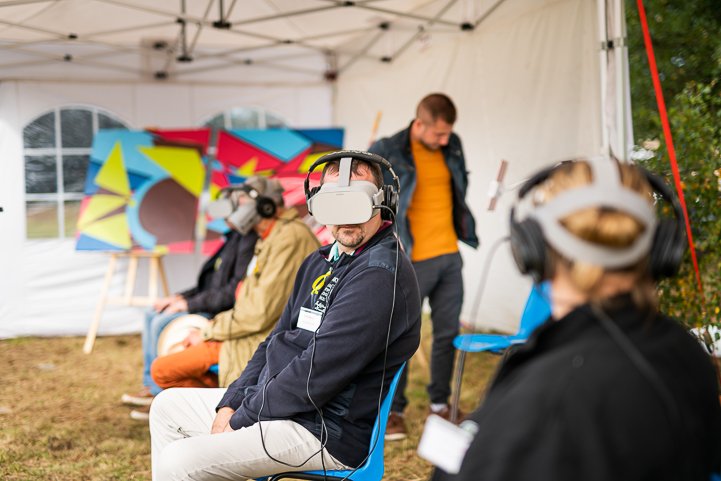
INNOV'events delivers Virtual Reality Experience activations in Brussels for executive events, HR moments and internal communications—typically from 20 to 800 attendees. We handle concept selection, venue constraints, hardware, staffing, flows, safety, and on-site production so your program stays on time. You get a reliable format with clear KPIs (participation, throughput, feedback) and a controlled brand image.
Sommaire
In a corporate agenda, entertainment is not a “nice extra”: it is a lever to protect attention, create informal conversations across silos, and give people a reason to stay on site after the plenary. A well-run Virtual Reality Experience in Brussels supports your message by transforming it into a concrete action (challenge, collaboration, discovery) rather than a passive moment.
Brussels-based organisations expect precision: strict run-of-show, multilingual facilitation (FR/NL/EN), and a format compatible with tight venue rules (noise, power, insurance, access windows). They also expect inclusivity—alternatives for non-VR participants—and a realistic throughput so the activation doesn’t become a queue.
As an event agency in Brussels, INNOV'events works week after week with venues, AV teams, and security desks across the city. We know how to integrate VR into a broader corporate production: badge scanning, data capture compliant with internal policies, and a smooth guest journey from welcome to closing networking.
Brussels VR activation: operational proof points
10+ years of corporate event production across Belgium, with repeated deployments in Brussels and the wider region.
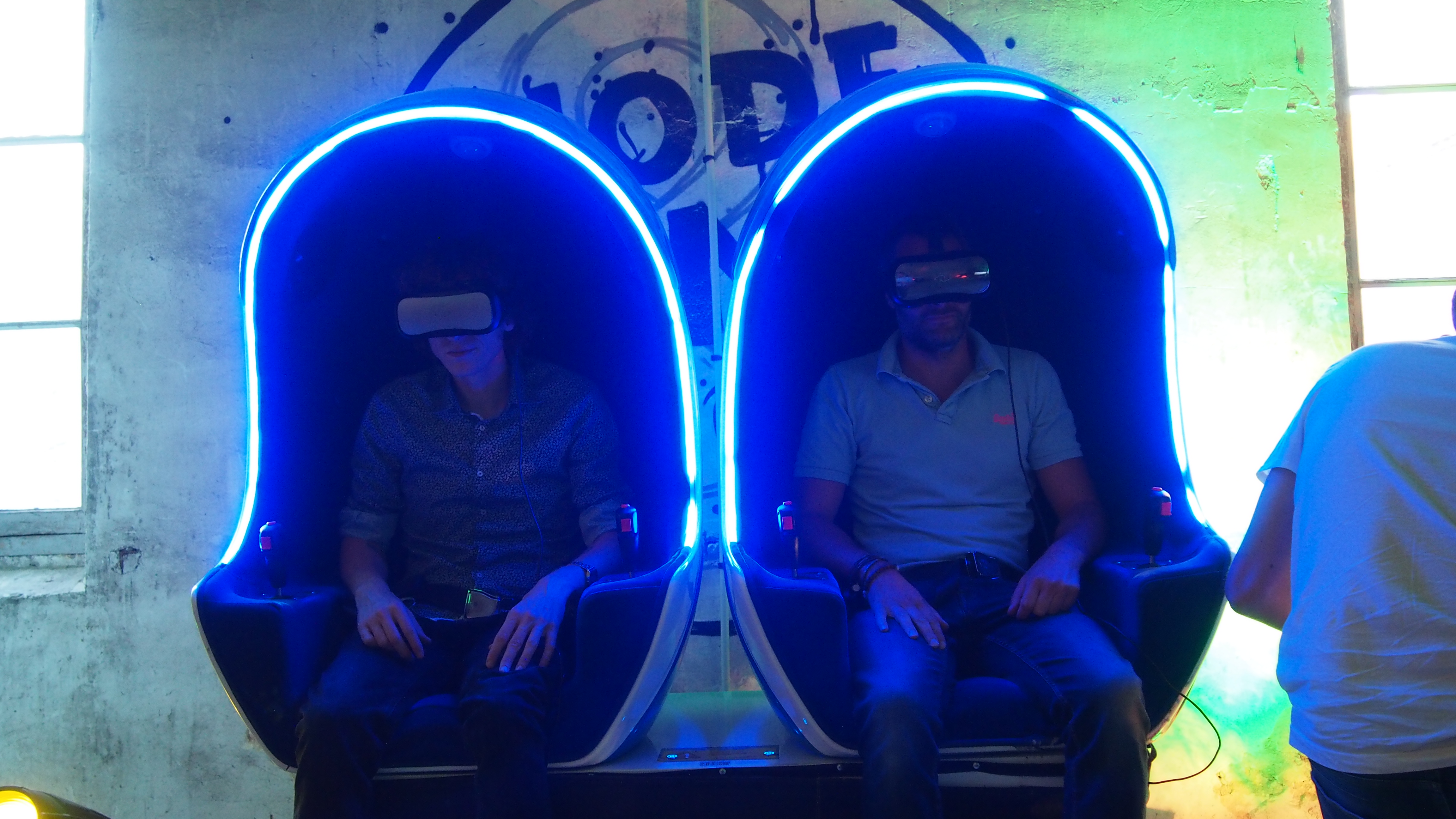
VR setups scaled from 2 to 20+ headsets with a controlled throughput of 40–180 participants/hour depending on the scenario and briefing time.
On-site staffing ratio typically 1 facilitator per 2 headsets (plus 1 flow manager) to keep hygiene, coaching and timing professional.
Safety and continuity plans included: spare headsets/controllers, offline fallback content, and a tested reset procedure between sessions (60–120 seconds).
Who we support in Brussels year after year
In Brussels, many of our clients come back because they need predictability: the same level of execution whether it’s a 60-person leadership offsite or a 600-person end-of-year gathering. We support EU-facing organisations, professional services, tech, life sciences and public-interest stakeholders who operate under high visibility and strict governance.
Typical situations we handle: a communications team needing an activation aligned with a campaign narrative; HR organising a wellbeing or onboarding day with inclusive participation; an executive committee wanting an experience that energises the room without diluting brand standards. When teams collaborate with us year after year, it’s usually because the operational load stays off their shoulders—vendor coordination, venue restrictions, safety briefings, and on-time delivery remain consistent.
If you want references relevant to your sector and venue type in Brussels, we can share a short curated list during a call (format, headcount, constraints, KPIs), subject to client approval and confidentiality.
 Besoin d’un devis rapide ?
Nous vous envoyons une première proposition sous 24h.
What a Virtual Reality Experience changes for teams in Brussels
A Virtual Reality Experience is valuable when it serves a managerial purpose: create cross-team interaction, provide a shared challenge, or deliver a “safe simulation” that would be impossible or expensive in real life. In Brussels, where teams are often multi-site and multilingual, VR can create a common reference point quickly—without needing long explanations.
Increase participation in mixed audiences: VR creates a clear “call to action” even for participants who don’t naturally network (new joiners, introverts, international colleagues). We structure the activation so people can join in under 2 minutes and still feel successful.
Support leadership and culture messages: we map the scenario to what your executives need to reinforce—collaboration under pressure, decision-making, customer orientation, innovation mindset—then translate it into simple mechanics (teams, scoring, debrief prompts).
Deliver measurable engagement: we can report attendance, participation rate, average session time, and qualitative feedback captured via a short survey or QR flow. For internal communication teams, this helps justify budget beyond “it was fun”.
Offer a safe innovation signal without production risk: VR looks innovative, but only works if logistics are tight. We handle power planning, space zoning, headset hygiene, and queue management so the experience enhances your brand rather than creating friction.
Create a shared moment across languages: many VR scenarios are language-light. When briefings are needed, we provide FR/NL/EN facilitation and signage to avoid excluding anyone.
Brussels is a relationship-driven economy: people meet repeatedly across institutions, suppliers and partners. A well-designed VR activation gives your guests a concrete reason to talk to each other—about performance, teamwork, or the story behind the experience—rather than defaulting to small talk.
Brussels constraints to anticipate before booking VR entertainment
In Brussels, the success of a VR activation depends less on the game choice than on operational fit. Many venues have strict load-in slots, limited storage, and specific rules on cable routing, floor protection and emergency exits. We plan the setup to pass venue checks smoothly: taped cable paths, clean zoning (briefing zone, play zone, reset/hygiene zone), and clear signage.
Corporate audiences here are often international and time-poor. That means you need a realistic throughput calculation, not a “best case” promise. For example, a 5-minute scenario can easily become 7–8 minutes once you include fitting, briefing, and reset. We build your schedule with conservative assumptions to avoid queues that spill into catering or speeches.
Data and brand protection are also typical Brussels priorities. Some clients restrict photo/video capture, others want controlled content for LinkedIn. We define what is filmed, where it is filmed, and how consent is handled. If you need lead capture (partner events, employer branding), we propose a compliant method aligned with internal policies—often a simple opt-in form separate from the VR flow to keep participation frictionless.
Finally, inclusivity matters. We always propose a parallel experience for people who cannot or do not want to wear a headset (motion sensitivity, glasses comfort, personal preference): spectator screens, tablet/PC mode, or a collaborative “mission control” role so nobody feels sidelined.
Which corporate VR formats work best in Brussels events?
Entertainment creates engagement when it is easy to join, easy to understand, and visibly well managed. In Brussels corporate environments, we see the best results when VR is positioned as a structured activation with clear flow—not as a gadget in the corner. Below are formats we regularly deploy depending on your objective.
Interactive animations in Brussels
Timed VR challenge with live leaderboard: ideal for end-of-year events and internal celebrations. We use short sessions (3–6 minutes) and display ranking on a screen to attract spectators while keeping the queue moving. Works well when you want energy without forcing everyone to participate.
Team-based VR relay: teams of 3–5 rotate through a mission; those not wearing the headset support as “coaches”. This is effective for leadership offsites and cross-department gatherings because it creates collaboration rather than individual performance.
VR discovery zone with guided narration: for communication teams who need a calmer pace (brand story, innovation narrative). We schedule guided slots and keep walk-ins for off-peak moments.
Art animations in Brussels
Immersive art in VR: curated experiences (virtual galleries, 360° cultural pieces) that fit premium receptions in Brussels where atmosphere and discretion matter. We complement with a large screen mirroring the experience to avoid “isolated headset silence”.
Sound-and-light VR corner: subtle scenic design (lighting, acoustic panels, clean branding) to integrate VR into gala settings without turning the room into an arcade.
Innovative animations in Brussels
VR + tasting pairing: a short immersive journey (origin story, travel sequence, thematic environment) followed by a guided tasting (chocolate, coffee, mocktails). This works well for clients hosting international guests in Brussels who expect a local touch without clichés.
Sequenced flow with catering: we time the VR sessions between courses so queues never hit the bar. This is particularly useful in seated dinners where pacing is critical.
Gourmand animations in Brussels
Mixed Reality (MR) demos for innovation days: pass-through headsets allowing users to see the real room with digital overlays—strong for product or process storytelling. We define strict demo scripts so the message stays clear and the experience doesn’t become a technical showcase.
VR training simulation teaser: a short “sample module” (safety, customer interaction, compliance) used during HR or learning events. It is not a full training deployment, but it helps leadership understand the value of immersive learning.
Multi-user VR collaboration: two to six participants in the same virtual space. Powerful but more sensitive operationally (networking, calibration). We recommend it for controlled groups rather than open walk-in crowds.
Whatever the format, we align the activation with your brand image: a law firm will not use the same visual language, competitive mechanics, or sound profile as a tech scale-up. In Brussels, where reputations travel fast between sectors, we pay particular attention to how the experience looks from the outside: queue behaviour, staff posture, signage quality, and cleanliness of the zone.
Where to host a VR activation in Brussels without logistical surprises
The venue shapes how your Virtual Reality Experience is perceived: premium, playful, or chaotic. In Brussels, we shortlist spaces not only for aesthetics but for practical VR needs: ceiling height, power availability, load-in routes, and the ability to control light and sound. Below are venue types that tend to work well.
| Venue type | For which objective? | Main strengths | Possible constraints |
|---|---|---|---|
Hotel conference spaces (central Brussels) | Leadership offsites, hybrid-friendly plenaries with a VR break zone | Reliable infrastructure, predictable security, easy catering integration | Strict load-in windows, limited storage, noise management near plenary rooms |
Corporate HQ / office atrium | Employer branding, internal comms days, onboarding and culture moments | Brand-controlled environment, easier access for employees, lower venue costs | Power distribution planning, circulation conflicts, building safety rules and desk protection |
Industrial or event halls | Large-scale end-of-year events, family days, partner gatherings | High capacity, flexible zoning, can scale to many headsets and spectator screens | Acoustics, heating/ventilation, longer setup time, need for additional scenic design |
We strongly recommend a site visit (or at minimum a technical recce) for Brussels VR activations. It is the fastest way to validate ceiling fixtures, power locations, cable routes, and where queues will form—before those details become last-minute problems on the event day.
What does a Virtual Reality Experience cost in Brussels?
Pricing for a Virtual Reality Experience in Brussels depends on throughput, staffing, venue constraints and the level of production you need. For decision-makers, the key is to budget based on the number of participants you want to actually pass through the experience—not simply total attendance.
Number of headsets and expected throughput: a small setup (2–4 headsets) works for a 50–150-person event; larger events often need 6–12 headsets to keep queues acceptable. Throughput targets directly impact cost.
Scenario type: off-the-shelf premium content is efficient; bespoke branded VR content is a different budget category and timeline (script, 3D production, testing). We help you decide when custom content is justified.
Duration on site: a half-day activation vs. a full evening changes staffing and wear management (battery cycles, hygiene, break planning). Multi-day events require a different maintenance plan.
Staffing level: professional facilitation is not optional in corporate contexts. Typical staffing is 2–8 facilitators depending on scale, plus a production lead.
Venue technical constraints in Brussels: complex load-in routes, strict security checks, or limited parking/loading may require earlier setup times and additional logistics.
Branding and reporting: signage, screen overlays, photo/video capture, and KPI reporting can be added without overproducing—useful for communication teams needing proof of impact.
From an ROI perspective, we frame budget against outcomes: participation rate, time-on-activation, and the quality of interactions it generates. For many Brussels clients, the best value comes from a well-staffed, well-zoned activation that keeps the event schedule intact—because delays and crowding cost more than the technology itself.
Why choose a Brussels agency for VR event production?
With VR, most failures are operational: late setup because access was underestimated, queues blocking catering, insufficient staffing leading to hygiene shortcuts, or a sound environment that conflicts with speeches. A team established in Brussels reduces those risks because we know the practical realities of local venues, delivery constraints, and the pace of corporate events here.
We coordinate directly with your venue contact, AV supplier, and security desk, and we can adapt quickly if the room plan changes. That local reactivity is particularly valuable when your audience includes executives, partners, or stakeholders for whom “waiting around” is a reputational issue.
- Faster technical alignment with Brussels venues: access hours, power limits, fire lanes, and rigging rules.
- Reliable staffing: facilitators briefed to corporate standards (discretion, language, guest care) rather than consumer-event behaviour.
- Better schedule protection: we plan conservative throughput and manage peak moments so your plenary and catering remain on time.
- Consistency for recurring events: once the format is validated, we can replicate it across your annual calendar with predictable outcomes.
From an ROI perspective, we frame budget against outcomes: participation rate, time-on-activation, and the quality of interactions it generates. For many Brussels clients, the best value comes from a well-staffed, well-zoned activation that keeps the event schedule intact—because delays and crowding cost more than the technology itself.




What we have delivered with VR in Brussels corporate contexts
Our VR projects in Brussels span different realities: executive leadership sessions, HR engagement days, partner receptions, and end-of-year events with complex staging. What changes from one project to another is not only the content, but the operating model.
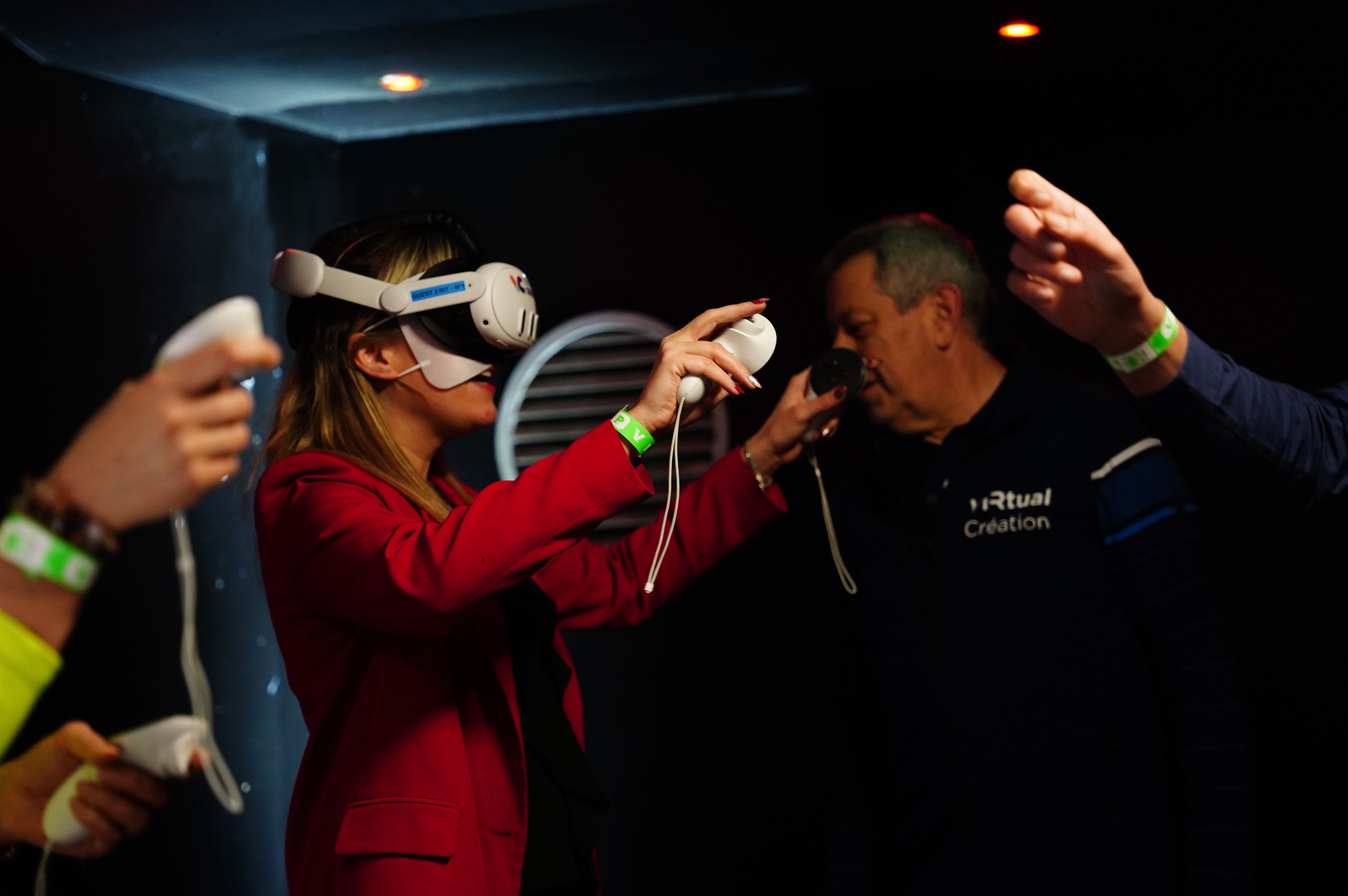
For a leadership offsite, we may run a low-volume, high-quality collaborative scenario with a structured debrief: what decisions were made, who took the lead, how the team communicated under time pressure. For a large celebration, we prioritise flow: short sessions, strong coaching, a visible leaderboard, and a spectator screen so the activation is entertaining even for people not wearing a headset.
We also adapt to constraints that are common in the city: tight load-in timing in central areas, multilingual audiences, and strict brand requirements. In practice, this means clean scenic integration, discreet staff, and a precise run-of-show that respects speeches and VIP movements.
Which VR mistakes we prevent in Brussels events
Underestimating throughput and ending up with a 30-minute queue that frustrates guests and disrupts catering.
Not designing for non-participants, creating a “VIP toy” effect and harming inclusivity.
Inadequate staffing: one person trying to manage too many headsets leads to rushed briefings, hygiene shortcuts, and higher dropout rates.
Poor zoning: cables crossing circulation paths, VR play areas too close to walls, or reset zones missing—creating safety and quality issues.
Technical dependency risks: relying on unstable Wi‑Fi or a single headset without spares; we plan redundancy and offline options.
Brand mismatch: content that feels childish, violent, or visually inconsistent with your corporate tone—especially risky with executive or institutional audiences in Brussels.
Our role is to anticipate these risks before the event, document the plan, and execute it calmly on site. In Brussels, that discipline is what protects your reputation with leadership and guests.
Why Brussels clients renew with INNOV'events
Repeat business is rarely about novelty; it is about reliability under pressure. Clients return to us in Brussels because we make the activation predictable: the same quality of facilitation, the same level of production control, and the same ability to integrate with an event program that has no margin for delays.
Typical planning lead time: 3–8 weeks for standard VR activations; faster turnarounds possible depending on venue and availability.
Typical satisfaction drivers mentioned by clients: clear throughput planning, discreet staff behaviour, and proactive coordination with venue/AV.
Operational KPI targets we commonly set: 70–90% of interested participants successfully completing a session, depending on event format and duration.

Loyalty is a practical signal: it means the client’s internal workload went down, the day ran on time, and the experience matched the corporate image expected in Brussels.
How we build your VR activation in Brussels step by step
👉 Brussels needs assessment and objective framing
We start with a short working session with HR/Comms/Event owners: audience profile, languages, venue, timing, and what you want VR to achieve (networking, culture, celebration, learning, partner engagement). We also clarify constraints: privacy rules, filming permissions, accessibility expectations, and any sensitive brand topics to avoid.
👉 Scenario and format selection for Brussels audiences
We propose 2–3 VR formats with clear pros/cons: session length, intensity, inclusivity, and throughput. We confirm whether you want competitive mechanics (leaderboard) or a calmer discovery approach. For executive settings, we often recommend short, premium experiences with a high success rate and minimal onboarding.
👉 Throughput planning, staffing, and guest flow design
We translate your attendance and time window into a realistic operating plan: number of headsets, facilitators, session cadence, queue strategy, and how to integrate with your run-of-show. We define “peak moments” and how to avoid congestion (booking slots, team rotations, or timed waves after plenary).
👉 Technical preparation with the Brussels venue and suppliers
We validate space, power, access times, and any venue H&S requirements. We coordinate with AV for spectator screens, sound levels, and cabling. If needed, we provide a simple technical sheet for venue approval and ensure the VR zone respects emergency routes and room capacities.
👉 On-site delivery and real-time adjustments
Our team arrives for setup, tests all units, and runs a rehearsal of the guest flow. During the event, we manage coaching, hygiene, and timing. If schedules shift, we adjust session length, staffing allocation, or queue policy to protect the overall program.
👉 Post-event reporting for Brussels stakeholders
When relevant, we deliver a short wrap-up: estimated participants, peak times, observed friction points, and recommendations for next edition (more headsets vs. shorter sessions vs. different zoning). For communication teams, we can also structure the best moments into a usable internal recap plan.
FAQ sur l'organisation Virtual Reality Experience à Brussels
How many VR headsets do we need in Brussels?
As a rule of thumb in Brussels: 2–4 headsets suit 50–150 guests; 6–10 headsets suit 200–500 guests if you want reasonable queues. The final number depends on session length and how many people you want to actually rotate through.
What throughput can a VR activation reach in Brussels?
Expect 40–180 participants per hour depending on the scenario, briefing time and number of headsets. A “5-minute experience” often becomes 7–8 minutes including fitting and reset, which is why flow design matters.
Is VR suitable for executive events in Brussels?
Yes—if the content is appropriate and the operation is discreet. For executive audiences in Brussels, we prioritise premium visuals, short sessions (3–6 minutes), minimal noise, and a facilitator-led flow so participation feels smooth and professional.
Can we run VR in a Brussels office building?
Yes, provided we validate space, circulation and power. We typically need a clear zone of 3×3 m per play area (depending on the scenario), safe cable routing, and agreement on hygiene and building rules. We can also add a spectator screen to involve non-participants.
How far in advance to book VR in Brussels?
Plan 3–8 weeks ahead for the best choice of content and staffing in Brussels. For peak periods (end-of-year, major trade weeks), earlier is safer. Rush projects are sometimes possible if venue access and supplier availability align.
Request a Brussels quote with a realistic throughput plan
If you want a Virtual Reality Experience in Brussels that supports your agenda (not disrupts it), let’s align on three points: your objective, your time window, and the number of participants you want to process. We will come back with a concrete proposal: recommended headset count, staffing plan, space requirements, and a clear budget range.
The earlier we validate venue constraints and guest flow, the more we can protect your run-of-show and brand image on event day. Share your date, venue (if known), and estimated headcount, and we will propose a short call to structure the right format.
INNOV'events Brussels Agency
Justin JACOB is the manager of the INNOV'events Brussels office. Reach out directly by email at belgique@innov-events.be or via the contact form.
Contact the Brussels agencyToutes nos prestations & animations Brussels, Belgique
Découvrez nos prestations événementielles
Découvrez nos animations événementielles disponibles au Belgique
- Event Hostess in Brussels
- Escape Game in Brussels
- MasterChef Cooking Workshop in Brussels
- Magician in Brussels
- Marquee Rental in Brussels
- Color Analysis Workshop in Brussels
- Inflatable Games in Brussels
- Valet Parking Service in Brussels
- Football Simulator in Brussels
- LED Furniture Rental in Brussels
- Light Branding in Brussels
- Unique Dining Experience in Brussels
- Light Painting in Brussels
- Murder Mystery Party in Brussels
- Prize Contest in Brussels
- Promotional Displays (POS) in Brussels
- Virtual Reality in Brussels
- Molecular Gastronomy Workshop in Brussels
- Halloween Entertainment in Brussels
- Fireworks Show in Brussels
- Giant Games Challenge in Brussels
- Event Host / MC in Brussels
- Photo Booth Animation in Brussels
- Santa Claus Entertainment in Brussels
- Kids Entertainment in Brussels
- Guided Tour in Brussels
- Urban Rally in Brussels
- Ball Pit in Brussels
- Flight Simulator in Brussels
- Food Truck Rental in Brussels
- World Record Challenge in Brussels
- Surf Simulator in Brussels
- Wine Casino in Brussels
- Makeover Workshop in Brussels
- Perfume Creation Workshop in Brussels
- Acting Workshop in Brussels
- CSR Activities in Brussels
- Archery in Brussels
- Security Staff in Brussels
- Wine Tasting in Brussels
- Mime Performer in Brussels
- TV Game Show in Brussels
- Funfair in Brussels
- Crisis Management Workshop in Brussels
- Crisis Negotiation Workshop in Brussels
- Arcade Games in Brussels
- Indoor Skydiving Simulator in Brussels
- Ski Simulator in Brussels
- Racing Circuit Experience in Brussels
- Introductory Flight Experience in Brussels
- Tasting Experience in Brussels
- Build Your Own Foosball Workshop in Brussels
- 2CV Rally in Brussels
- LEGO Challenge in Brussels
- Casino Night in Brussels
- Interpreter / Translator in Brussels
- Promotional Giveaways in Brussels
- Shuttle Transport in Brussels