
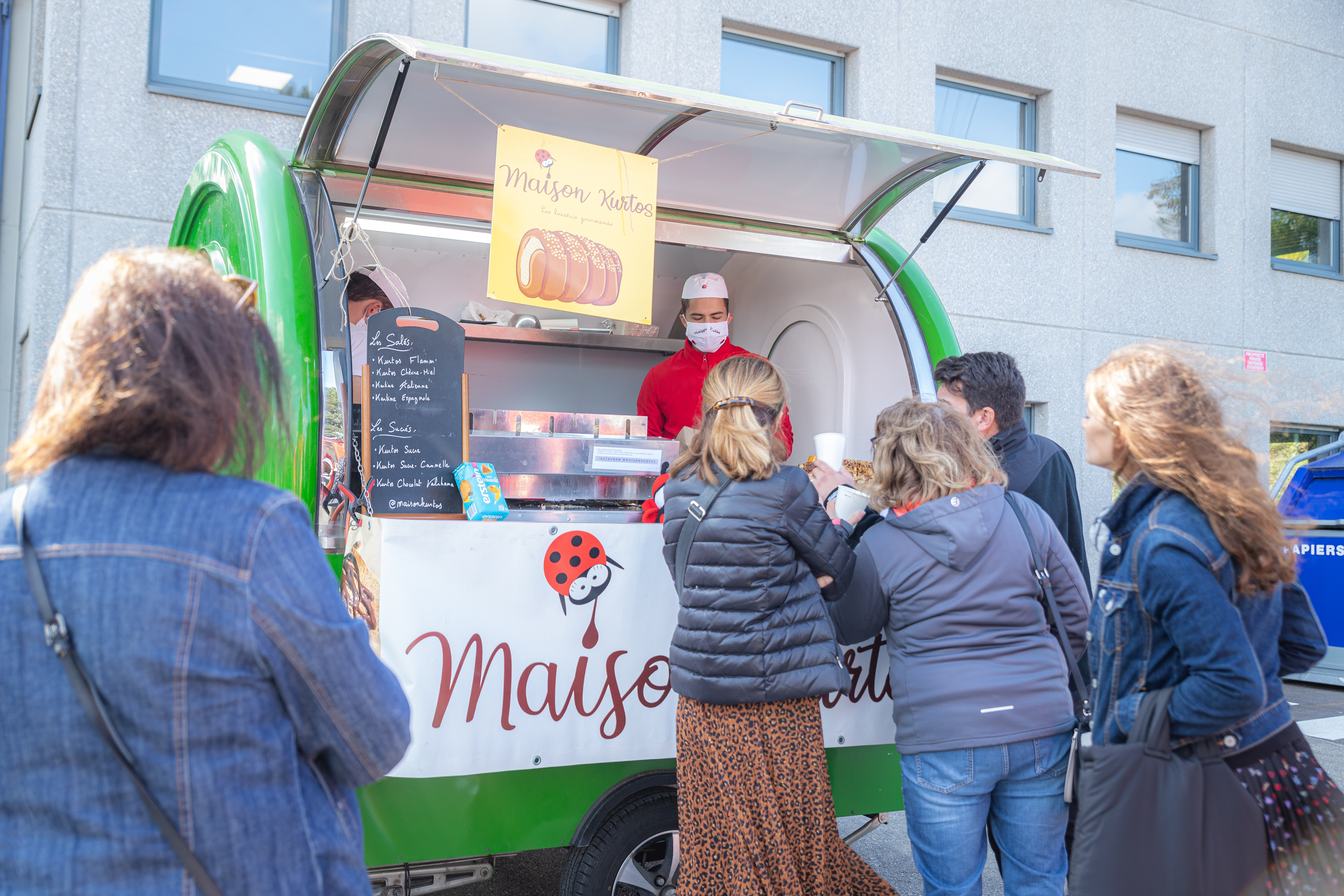
Food Truck Rental in Brussels for corporate events that run on time
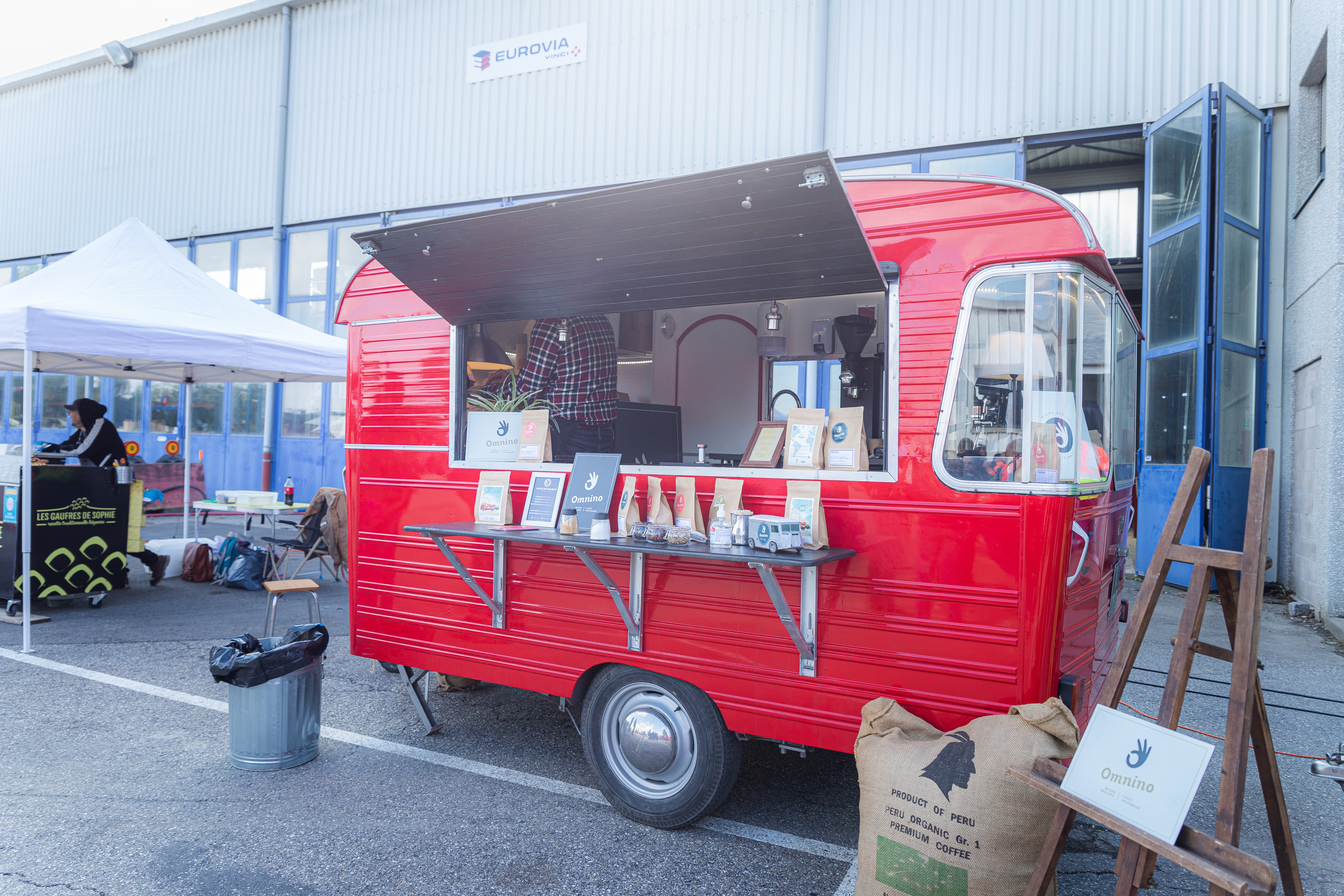
INNOV'events is a Brussels-based event agency managing Food Truck Rental for corporate formats from 50 to 2,000 attendees. We secure the right trucks, coordinate access and power, plan service flows, and keep your brand and HR objectives intact on event day.
Whether you’re hosting staff, clients, or partners, we handle the operational details that usually create friction: permits, site constraints, supplier timing, and contingency plans.
Sommaire
In a corporate agenda, food is not a “nice-to-have”: it is one of the few levers that can reliably improve attendance, time-on-site, and informal cross-team conversations. A well-run Food Truck Rental in Brussels supports your employer brand and reduces the risk of a fragmented event where people leave early or queue instead of networking.
Brussels organisations expect precision: strict schedules (train commutes, international meetings), multilingual guest flows, and venues with real constraints (limited loading bays, shared courtyards, noise rules). Executives and HR teams also expect controlled messaging: sustainability, inclusivity, and duty of care are judged quickly by employees and guests.
From our base in Brussels, we work weekly with venues, municipalities, and trusted food partners across the Region. Our role is to deliver a professional service standard: clear run sheets, realistic throughput calculations, and on-site coordination so the food moment strengthens—rather than complicates—your event.
Key figures for Brussels decision-makers
10+ years managing corporate events with complex logistics in Brussels and across Belgium.
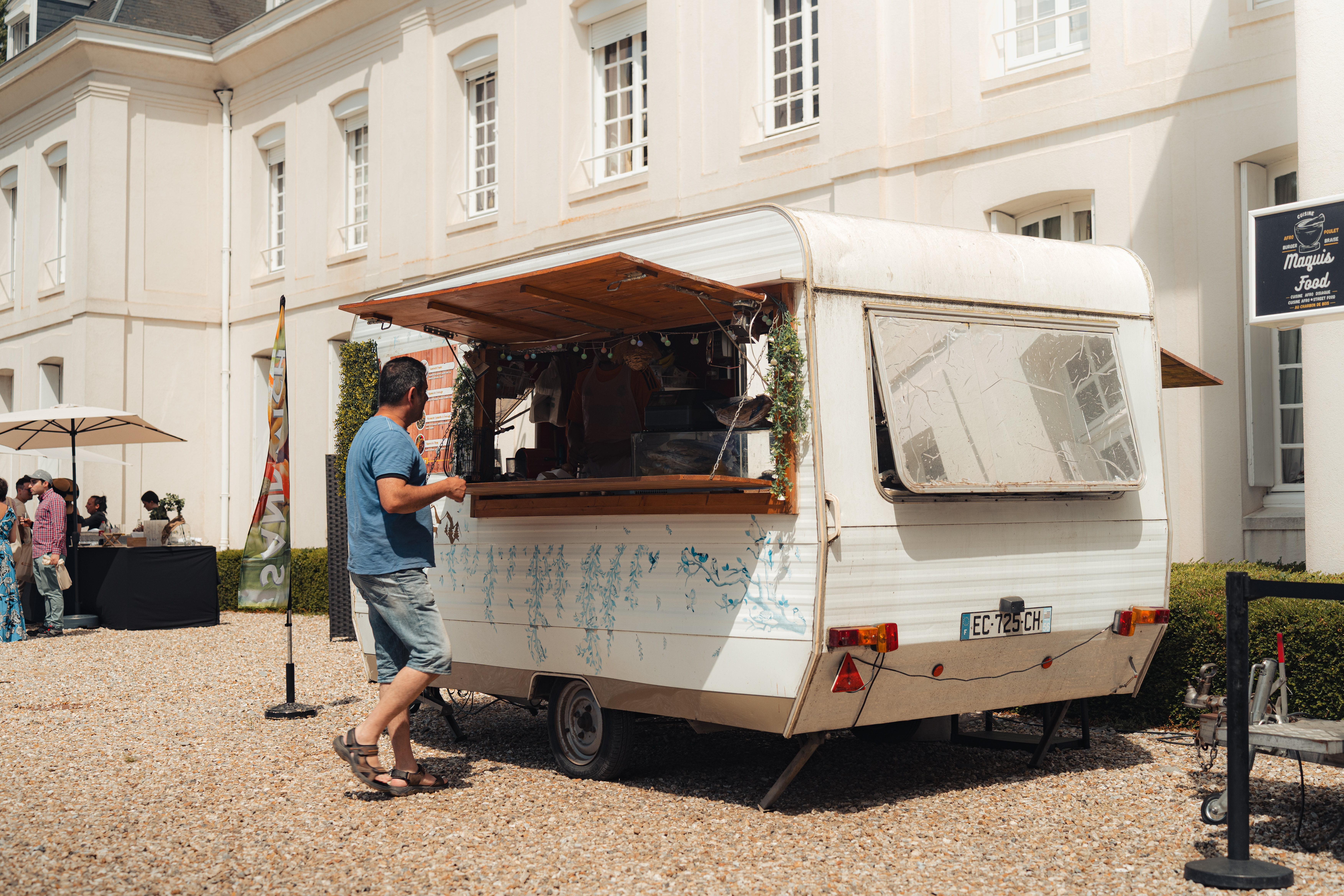
A curated network of 40+ vetted food truck partners (Belgian & international cuisines) with verified insurance, hygiene documentation, and professional staffing.
Operational capacity: simultaneous service lines for up to 2,000 guests, with queue management and staggered catering windows.
Typical planning lead times in Brussels: 2–6 weeks for standard formats; 6–10 weeks when permits, street access, or high-profile venues are involved.
Who we support in Brussels year after year
We regularly support Brussels-based headquarters, European teams, and fast-growing scale-ups that need predictable delivery—especially when internal stakeholders are many (HR, Comms, Procurement, H&S, Facility). For confidentiality reasons, we only share client names on request and with approval, but our portfolio includes recurring collaborations with organisations active around the European Quarter, the canal area, and the airport corridor.
What “year after year” means operationally: we keep your preferred suppliers on file, we document venue-specific constraints (loading routes, power points, noise thresholds, security protocols), and we refine service flows based on post-event feedback. This is how Food Truck Rental becomes a repeatable internal format rather than a one-off improvisation.
 Besoin d’un devis rapide ?
Nous vous envoyons une première proposition sous 24h.
Why book a food truck experience in Brussels for your teams
In Brussels, corporate events compete with a dense calendar: institutional schedules, international travel, and hybrid work routines. A food truck format works when it is designed as a managed “moment” in your event—not as a last-minute catering alternative. It can carry a strategic message (culture, integration, celebration, performance) while remaining operationally simple for guests.
Stronger attendance and punctuality: when the food offer is clear and timed, guests plan around it. We often see improved on-time arrival when the first service window is positioned right after a keynote or town hall.
Lower friction for HR and Facilities: compared to indoor catering, trucks can reduce pressure on kitchen infrastructure, dishwashing capacity, and indoor cleaning—provided power, waste, and access are planned correctly.
Better inclusion: with the right selection, you can cover vegetarian, vegan, halal, gluten-free, and allergen-aware options without making one kitchen handle everything. We define signage and service protocols so guests feel safe and respected.
Conversation and networking by design: queues can be a problem, but managed queues create structured mixing. With 2–4 service points, staggered waves, and clear routing, the “waiting time” becomes a social buffer instead of a complaint.
Brand narrative you can explain: local Brussels partners, seasonal menus, and waste-reduction choices are tangible proof points for ESG communication—far more credible than generic claims.
Brussels has a pragmatic business culture: people value operational credibility. When your food moment is well-executed—timed, clean, and inclusive—it signals seriousness and respect for attendees’ time.
What Brussels venues and municipalities require for food trucks
Planning Food Truck Rental in Brussels is rarely just “parking a truck and serving food”. The city context creates recurring constraints that executives usually only hear about when something goes wrong—so we address them early.
Access and loading: many corporate sites in Brussels have limited loading windows, security checkpoints, or shared service roads. We confirm turning radiuses, maximum vehicle height, and where trucks can safely idle without blocking emergency routes.
Power and noise: some venues require silent service (especially near residential areas or institutional buildings). We evaluate whether trucks can run on external power (32A/63A) and whether a generator is allowed. If a generator is needed, we plan placement and sound mitigation to avoid complaints.
Permits and approvals: depending on location (public space vs private site), you may need municipal authorisation, a location plan, and proof of insurance. Even on private grounds, security teams may request supplier documents, vehicle details, and staff lists in advance.
Waste, hygiene, and duty of care: Brussels corporate audiences are attentive to cleanliness and sustainability. We set up sorting stations, define back-of-house waste routes, and align with your internal policy (single-use rules, reusable cups, deposit systems). We also define allergen communication and contingency for weather (heat, rain, wind).
Which food truck concepts work best for Brussels corporate events
A food truck is already a format, but it becomes a real engagement tool when you choose the right concept for your audience and schedule. For executives, the priority is control: predictable service, brand coherence, and a guest experience that supports conversation rather than distracting from it.
Interactive animations in Brussels
Token or time-slot system: guests receive service slots (e.g., by department or table). This reduces queue peaks and protects your agenda—useful for Brussels HQs with tight time windows.
Build-your-bowl stations (run as a truck + satellite): high perceived choice with controlled operations. We predefine components to keep service fast and manage allergens clearly.
Pairing corners: small tasting stations (local beers/0.0, kombucha, mocktails) managed with ID and policy compliance. Works well for afterwork formats where alcohol rules are strict.
Art animations in Brussels
Live plating or chef finishing: a chef finishes dishes in front of guests (torch, herbs, sauces). It adds premium perception without slowing service when positioned as a separate “show” line.
Visual branding on trucks: discreet co-branding, menu naming linked to your internal themes (values, project names). We keep it tasteful to respect corporate brand guidelines.
Innovative animations in Brussels
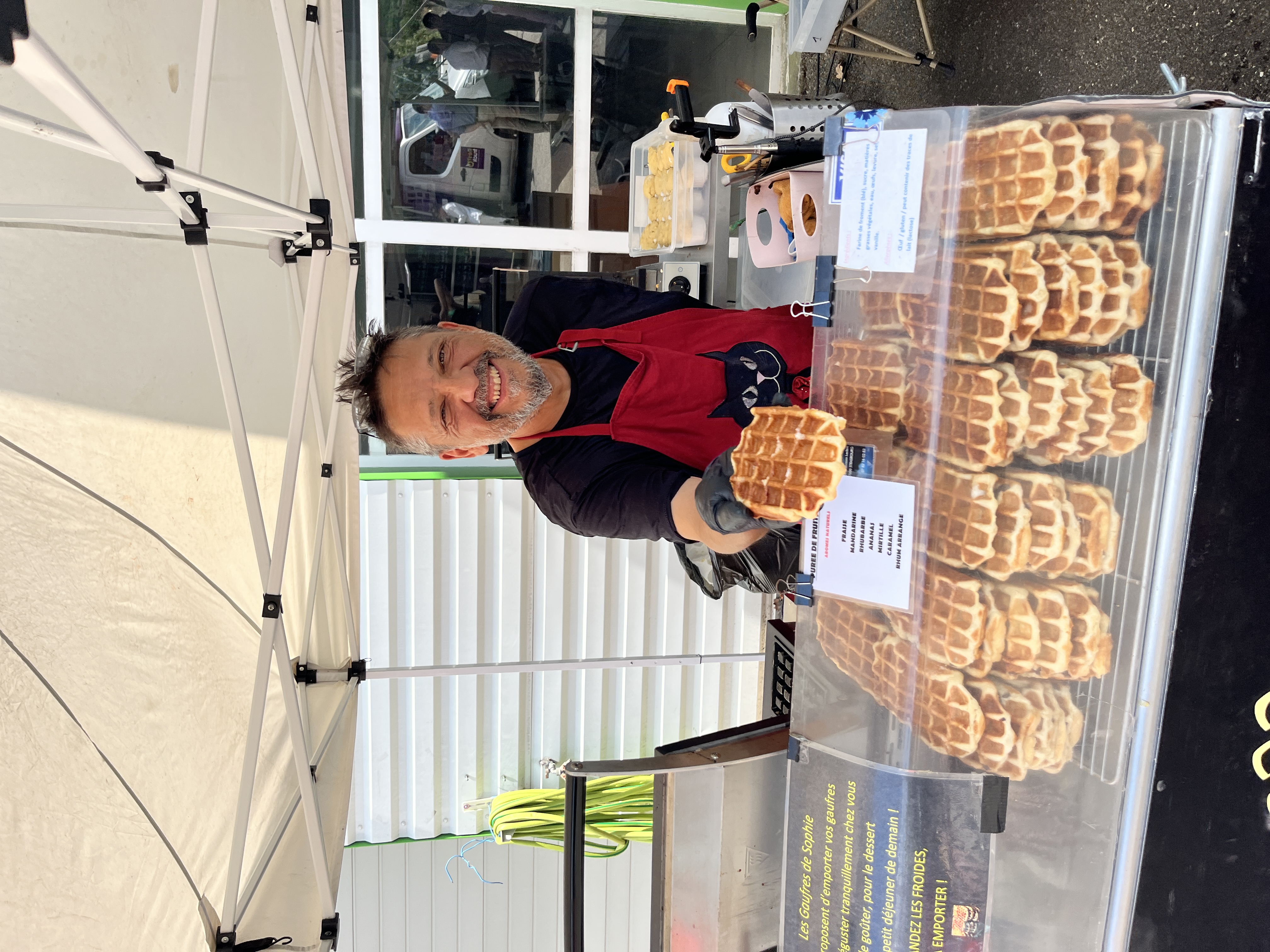
Belgian classics done professionally: quality fries with controlled batching, Belgian waffles with fast toppings, croquettes, or stoemp bowls—popular with international teams in Brussels when executed at a consistent standard.
Dietary-inclusive street food: halal-friendly grills, vegan comfort food, gluten-free options that are not “afterthoughts”. We validate cross-contamination practices with each vendor.
Dessert and coffee trucks: ideal for conferences and daytime corporate events; they extend the networking moment without the complexity of a full meal service.
Gourmand animations in Brussels
Cashless ordering with QR: reduces queue friction and supports spend control. We set the right expectation: QR works best when the venue has reliable connectivity and when you provide clear on-site instructions.
Data-driven catering: pre-event preference collection (dietary choices, meal type) to reduce waste and improve satisfaction. Useful for Brussels audiences where sustainability scrutiny is high.
Hybrid indoor-outdoor service: trucks outside for cooking + indoor pickup stations for comfort in winter. Requires tight coordination but dramatically improves flow during cold months.
Whatever the concept, we align choices with your brand image: if your organisation communicates on sustainability, we will propose realistic measures (portion forecasting, reusable solutions, local sourcing) and document them so Comms can report credibly.
Where to host a food truck setup in Brussels without logistics surprises
The venue is not a backdrop; it defines what is feasible. For Food Truck Rental, the key questions are access, surface, power, neighbour constraints, and guest comfort. In Brussels, a quick site check often prevents expensive last-minute fixes.
| Venue type | For which objective? | Main strengths | Possible constraints |
|---|---|---|---|
| Corporate HQ courtyard / parking area | Internal celebration, afterwork, town hall meal | Low transfer time; easier attendance; security already in place | Access height barriers; limited turning radius; noise rules; need to protect paving and plan waste routes |
| Event venue with terrace in Brussels | Client reception, partner evening, employer branding | Professional infrastructure; better comfort; built-in rain plan options | Fixed supplier policies; restricted setup windows; power distribution rules |
| Industrial or creative space (Canal area style) | Product launch, innovation day, mixed indoor/outdoor | Large surfaces; strong atmosphere; flexible layout for multiple trucks | Permits and neighbours; limited on-site facilities; extra lighting/heating often required |
We recommend a short site visit (or a detailed technical call with photos and measurements) before confirming trucks. In Brussels, the difference between a smooth setup and a stressful one is often one detail: a gate width, a slope, a power point location, or a last-minute security rule.
How to budget Food Truck Rental in Brussels (what drives the price)
Pricing is not only “per truck”. In Brussels, the true budget depends on service duration, number of guests, access complexity, and the level of coordination needed to protect your schedule. We build budgets that procurement can validate because each cost line maps to a real operational requirement.
Guest count and service window: 300 guests over 2 hours is not the same as 300 guests in 45 minutes. Throughput requirements can add extra trucks or staff.
Menu complexity: made-to-order items slow service; simplified menus increase speed and reduce risk. We balance perceived quality and queue management.
Number of trucks / service points: typical corporate formats in Brussels use 2–6 trucks depending on guest volume and dietary segmentation.
Site technical needs: external power (distribution boards, cables, safety covers), generator rental (if allowed), lighting, floor protection, and weather cover.
Permits, security, and staffing: security checks, access badges, on-site coordinator, queue management staff, waste management staff.
Service model: prepaid (host covers all), consumption-based, token system, or capped open bar approach. Each has different financial controls and guest behaviour impacts.
From an ROI perspective, a well-designed Food Truck Rental in Brussels often replaces several cost centres at once (catering + staff canteen support + cleaning + engagement activity). The best value comes from right-sizing the service capacity so you don’t pay for idle trucks—or, worse, lose trust due to long queues.
Why choose a Brussels-based partner for food truck logistics
On paper, many suppliers can deliver trucks. In practice, corporate events in Brussels require coordination across Facility, Security, and often external stakeholders (venue management, neighbourhood constraints, sometimes municipal rules). A local partner reduces uncertainty because we know what typically blocks a setup—and we speak the operational language of Brussels venues and corporate sites.
As your event agency in Brussels, we don’t only “book vendors”: we run the project. That includes technical checks, service flow design, realistic timing, and on-site arbitration when decisions must be made quickly.
- Faster risk identification: we flag common Brussels issues early (access restrictions, noise constraints, power limits, weather exposure).
- Supplier reliability under pressure: our network is built on repeat performance—punctuality, staffing discipline, and consistent quality.
- On-site control: a single point of contact coordinating trucks, venue, and internal stakeholders, so executives are not pulled into operational decisions.
- Procurement-friendly documentation: clear quotes, insurance checks, and compliance information to speed up internal validation.
From an ROI perspective, a well-designed Food Truck Rental in Brussels often replaces several cost centres at once (catering + staff canteen support + cleaning + engagement activity). The best value comes from right-sizing the service capacity so you don’t pay for idle trucks—or, worse, lose trust due to long queues.







What we deliver in Brussels across different corporate formats
Food truck events are not one-size-fits-all. We regularly manage formats such as:
- HQ afterworks where staff arrive in waves between 17:30 and 19:00, requiring staggered service and careful noise management for neighbours.
- Conference lunches where timing is non-negotiable and the key KPI is “everyone back in the room in 60 minutes”—often solved with multiple service points and pre-defined menus.
- Client receptions where brand perception is critical: premium trucks, clean set-up, discreet signage, and service staff trained to keep the area immaculate.
- Family days where duty of care matters: clear allergen labelling, child-friendly options, safe queue routing, and weather protection.
Across these projects in Brussels, our added value is consistency: the same discipline in planning, supplier briefing, and on-site coordination regardless of event size.
Common mistakes with food trucks in Brussels (and how we prevent them)
Underestimating queues: choosing one truck for 250 guests in a short window creates dissatisfaction and knocks the agenda off track. We size service capacity using throughput logic.
Assuming power will be easy: “There is a socket” is not a technical plan. We confirm amperage, cable runs, protection, and backup options.
Ignoring access constraints: a truck that cannot enter due to height barriers or tight corners will not magically fit. We validate routes and turning space in advance.
No weather plan: Brussels rain and wind are predictable risks. We plan shelter, flooring, and indoor alternatives when needed.
Vague dietary handling: “We have vegan” is not enough. We implement clear signage, separation practices, and a method for answering allergen questions.
Waste management overlooked: without a plan, bins overflow and the site looks unmanaged. We design waste points, collection timing, and cleaning responsibilities.
Our role is to turn these risks into checklists and decisions taken early—so your event day stays focused on people and messaging, not troubleshooting.
Why Brussels companies renew their Food Truck Rental with us
Renewal happens when an internal sponsor can defend the choice easily: predictable delivery, clean reporting, and no reputational risk. We work with recurring clients who need an event format that can be repeated with minimal internal workload.
Single point of contact from briefing to on-site coordination, reducing stakeholder noise for HR and Comms.
Documented playbooks per venue: access plan, power plan, vendor contacts, timing templates—so each edition improves.
Post-event debrief with operational metrics: service time ranges, peak queue moments, consumption estimates—useful for future budgeting.

Loyalty is not about routine; it is about repeatable quality under real Brussels constraints. When teams come back, it’s because the process holds even when the venue, weather, or guest profile changes.
How we manage Food Truck Rental in Brussels from brief to cleanup
👉 Brussels scoping call and stakeholder alignment
We clarify objectives (HR engagement, client hosting, internal celebration), constraints (timing, site, budget cap), and success criteria (queue time target, dietary coverage, sustainability requirements). We also identify decision-makers early: HR, Comms, Facility, Security, Procurement.
👉 Menu and truck curation with operational sizing
We propose a short list of trucks that match your brand and your throughput needs. We confirm service rates, staffing, menu feasibility, and dietary options. If needed, we split the offer across multiple trucks to avoid bottlenecks (e.g., one dedicated vegetarian/vegan line).
👉 Site check in Brussels and technical plan
We validate access routes, setup area dimensions, power availability (amperage and connection points), neighbour constraints, and emergency paths. We produce a technical note: truck placement, cable routing, waste points, signage, and a weather plan.
👉 Permits, documentation, and internal approvals
We collect insurance certificates, hygiene documentation, vehicle details, and staff lists when required. We support your internal approval process with clear quotes and a single consolidated plan that Procurement and Facility can validate.
👉 Event-day coordination and supplier management
We coordinate arrivals, setup, testing (power, lighting, POS/QR), and service timing. We monitor queues and adjust service waves if needed. One lead coordinates with your internal host so executives stay out of operational decisions.
👉 Breakdown, waste removal, and debrief
We supervise breakdown, ensure the site is left clean, and confirm waste removal and sorting. After the event, we share a debrief with what worked, what to improve, and practical recommendations for the next edition.
FAQ sur l'organisation Food Truck Rental à Brussels
How many food trucks do we need in Brussels for 300 guests?
For a 90-minute service window, plan 3–4 service points (e.g., 3 trucks or 2 trucks + 2 satellite pickup stations), depending on menu complexity. For a 2-hour window, 2–3 trucks can be enough if menus are simplified and staffing is strong.
What is the typical budget for Food Truck Rental in Brussels?
For corporate events in Brussels, a common range is €25–€45 per guest for food (depending on menu), plus technical/logistics costs when needed (power distribution, tents, coordinator). For 200 guests, many projects land between €6,000 and €12,000 all-in, depending on constraints.
Do we need a permit for food trucks in Brussels?
It depends on whether you use public space or private grounds. On private company property, permits are often not required, but venue/security approvals and documentation checks still apply. On public space, municipal authorisation is typically needed, and lead time can be several weeks.
Can food trucks operate at corporate sites in Brussels without generators?
Yes, if the site can provide sufficient power (often 32A per truck line; sometimes more). We verify amperage, distance to the trucks, and safety protections. If external power is not feasible, we check whether a generator is allowed and how to manage noise and placement.
How do you manage vegan, halal and allergens in Brussels events?
We plan dedicated options and clear signage, and we brief vendors on separation practices. For higher-risk allergens, we recommend a dedicated service point and scripted staff answers. Practically, we aim for at least 20–30% of portions to be vegetarian/vegan on mixed audiences in Brussels, then adjust based on your headcount data.
Request a Food Truck Rental quote in Brussels with a clear plan
If you need a Food Truck Rental in Brussels that protects your schedule and your brand, share three details and we’ll respond with a concrete proposal: date, estimated headcount, and venue or neighbourhood. We’ll come back with a realistic truck count, a service-flow recommendation, and transparent budget lines.
For Brussels sites with access or power constraints, involving us early (even before you confirm the venue layout) is the easiest way to avoid last-minute costs and day-of stress.
INNOV'events Brussels Agency
Justin JACOB is the manager of the INNOV'events Brussels office. Reach out directly by email at belgique@innov-events.be or via the contact form.
Contact the Brussels agencyToutes nos prestations & animations Brussels, Belgique
Découvrez nos prestations événementielles
Découvrez nos animations événementielles disponibles au Belgique
- Event Hostess in Brussels
- Escape Game in Brussels
- MasterChef Cooking Workshop in Brussels
- Magician in Brussels
- Marquee Rental in Brussels
- Color Analysis Workshop in Brussels
- Inflatable Games in Brussels
- Valet Parking Service in Brussels
- Football Simulator in Brussels
- LED Furniture Rental in Brussels
- Light Branding in Brussels
- Unique Dining Experience in Brussels
- Light Painting in Brussels
- Murder Mystery Party in Brussels
- Prize Contest in Brussels
- Promotional Displays (POS) in Brussels
- Virtual Reality in Brussels
- Molecular Gastronomy Workshop in Brussels
- Halloween Entertainment in Brussels
- Fireworks Show in Brussels
- Giant Games Challenge in Brussels
- Event Host / MC in Brussels
- Photo Booth Animation in Brussels
- Santa Claus Entertainment in Brussels
- Kids Entertainment in Brussels
- Guided Tour in Brussels
- Urban Rally in Brussels
- Ball Pit in Brussels
- Flight Simulator in Brussels
- Food Truck Rental in Brussels
- World Record Challenge in Brussels
- Surf Simulator in Brussels
- Wine Casino in Brussels
- Makeover Workshop in Brussels
- Perfume Creation Workshop in Brussels
- Acting Workshop in Brussels
- CSR Activities in Brussels
- Archery in Brussels
- Security Staff in Brussels
- Wine Tasting in Brussels
- Mime Performer in Brussels
- TV Game Show in Brussels
- Funfair in Brussels
- Crisis Management Workshop in Brussels
- Crisis Negotiation Workshop in Brussels
- Arcade Games in Brussels
- Indoor Skydiving Simulator in Brussels
- Ski Simulator in Brussels
- Racing Circuit Experience in Brussels
- Introductory Flight Experience in Brussels
- Tasting Experience in Brussels
- Build Your Own Foosball Workshop in Brussels
- 2CV Rally in Brussels
- LEGO Challenge in Brussels
- Casino Night in Brussels
- Interpreter / Translator in Brussels
- Promotional Giveaways in Brussels
- Shuttle Transport in Brussels