
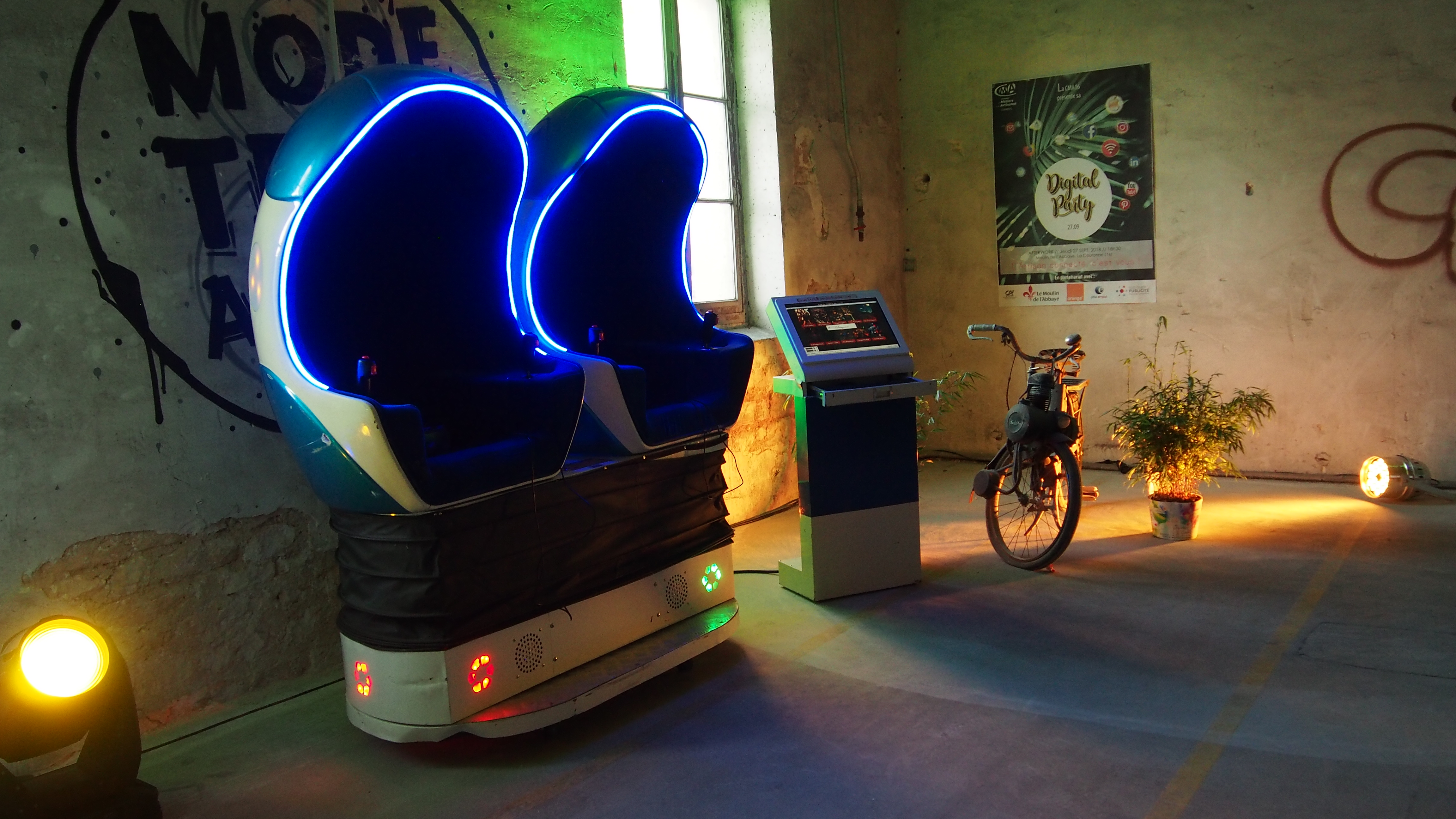
Flight Simulator in Brussels for corporate events that need measurable engagement
INNOV'events delivers Flight Simulator activations in Brussels for executive events, HR programs and brand moments, typically from 30 to 500 attendees. We handle venue fit, technical setup, briefing, on-site operations, and the flow needed to keep a corporate agenda on time.
You get a realistic production plan (space, power, staffing, schedule), clear budget ranges, and one accountable team for the day-of delivery.
Sommaire
In a corporate agenda, entertainment is not a “nice-to-have”: it is a tool to regulate energy, accelerate networking and give people a shared reference point for the rest of the program. A well-run Flight Simulator activation creates interaction without hijacking your content, provided queueing, timing and hosting are engineered like any other operational stream.
In Brussels, organisations tend to be demanding on protocol, brand image and multilingual communication. Guests often arrive from different offices or institutions with tight schedules; the entertainment must be quick to understand, safe, and compatible with a venue where space and access constraints are real.
INNOV'events is an event agency in Brussels with field experience across corporate venues in the Region. We plan flight sessions like a production line: throughput targets, host scripts, safety checks and contingency options so executives, HR and comms teams can focus on their stakeholders.
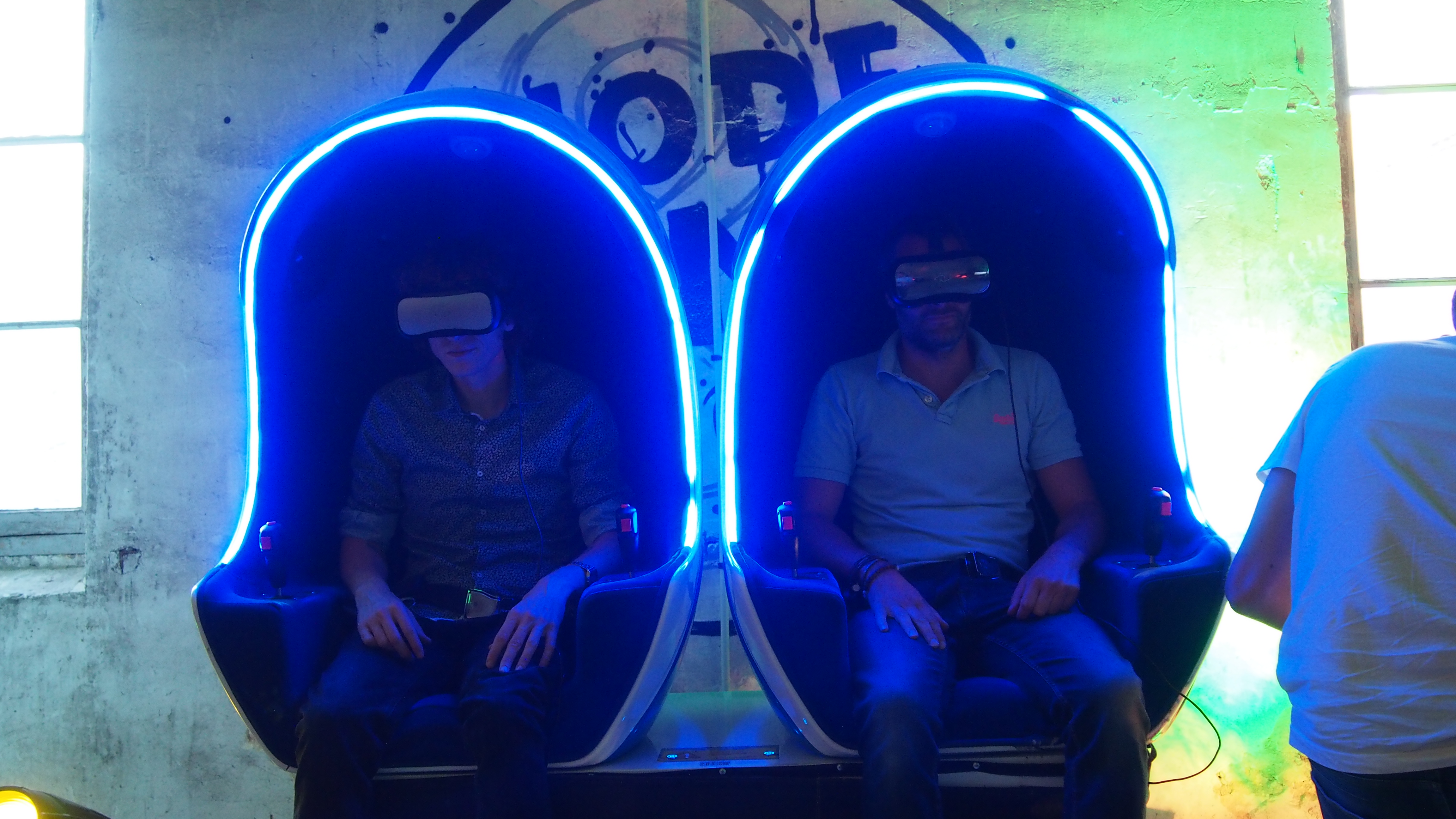
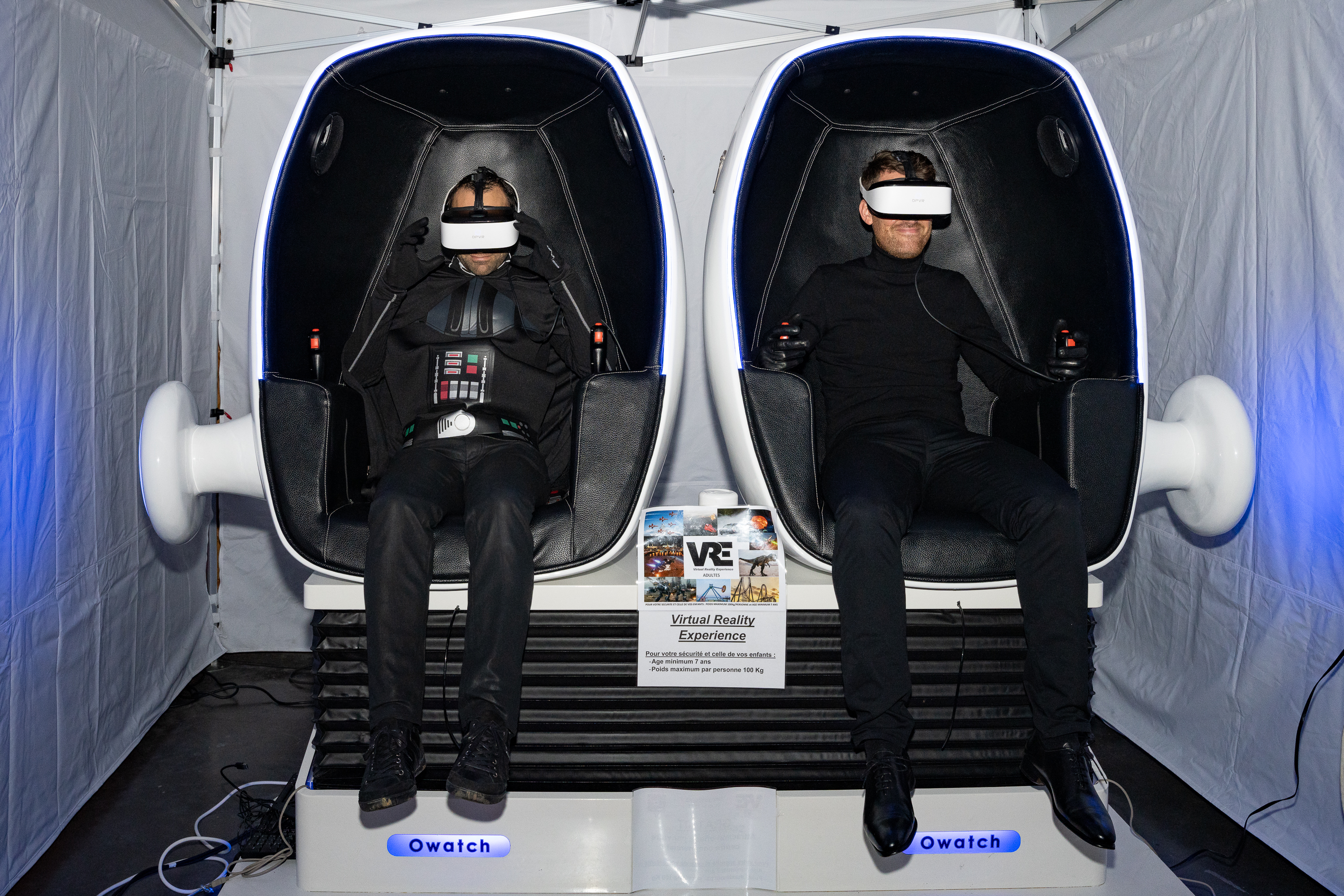
Key figures for Brussels decision-makers who need predictability
12+ years delivering corporate activations in Brussels and across Belgium, with production standards aligned to executive and institutional environments.
200+ corporate events/year supported within our partner network (technical, staging, hosts, catering interfaces), which reduces last-minute sourcing risk.
30–500 participants is our usual operational range for corporate event entertainment in Brussels, with scalable staffing and queue management.
1 single production lead on-site for your event day, accountable for timing, safety, and coordination with venue and AV teams.
Brussels-rooted delivery, built for repeat corporate formats
We support companies and institutions active in Brussels where the event is not an isolated moment but part of a yearly rhythm: town halls, leadership offsites, client nights, internal awards, onboarding waves, and end-of-year gatherings. In practice, we often work with the same stakeholders year after year because the constraint set repeats: venue limitations, strict agenda windows, brand rules, and a need for predictable execution.
Our work in the region frequently involves coordinating with building management, security desks, loading schedules and AV partners already embedded in the venue. That local coordination is what prevents common friction points: late deliveries, blocked access to service elevators, insufficient power distribution, or an activation that visually clashes with a corporate stage design.
If you share the company names you want us to cite as references, we will integrate them here in a compliant, professional way (format used: sector + type of event + scope of our delivery) without oversharing confidential details.
 Besoin d’un devis rapide ?
Nous vous envoyons une première proposition sous 24h.
Why add a Flight Simulator to a Brussels corporate event agenda?
Executives and HR teams rarely look for “fun”; they look for outcomes: attention, attendance, connections, and a positive shared memory that supports change or recognition. A Flight Simulator in Brussels works when it is designed as a structured touchpoint that fits your run-of-show, not as a standalone attraction.
Creates immediate cross-team interaction: people who would not naturally network (finance with sales, HQ with field teams) start talking because the experience provides a neutral entry point.
Supports recognition and employer branding without long speeches: leaderboards, themed missions, or “captain briefings” give HR a simple framework for participation and visibility.
Maintains agenda discipline: when designed with timed sessions (e.g., 4–6 minutes per flight plus reset), you keep the event flowing instead of building queues and frustration.
Works for mixed seniority: a simulator can be positioned as a serious skills challenge (precision, decision-making) or a light shared experience; the tone is adjustable to leadership audiences.
Delivers measurable engagement: participation rates, throughput, average wait times, and optional post-event feedback can be reported to comms/HR as concrete KPIs.
Brussels has a strong culture of international teams, tight calendars and high expectations for professionalism. When the experience is managed with the same rigour as staging and sound, it becomes an operationally safe way to bring energy into a corporate format without diluting the message.
What Brussels organisations expect from corporate entertainment providers
In Brussels, many events happen in buildings with strict access rules: limited loading slots, security checks, controlled service corridors and noise constraints depending on neighbouring tenants. For a Flight Simulator, that means we plan logistics early: delivery time windows, elevator dimensions, floor protection, and clear responsibilities with the venue’s technical contact.
Another reality is multilingual audiences. A simulator activation that relies on complex instructions will slow down throughput and create awkwardness. We design a short host script in English and can support French/Dutch briefing when needed, with clear visual signage: how to join, session duration, safety notes and what “success” looks like.
Brussels corporate formats also often combine stakeholders: internal staff, clients, partners, sometimes public-sector guests. The activation must respect brand and protocol: no excessive noise, no low-quality décor, no “carnival” look in a premium setting. We integrate the simulator zone into the event design (lighting, barriers, branding surfaces) so it reads as a deliberate part of the experience rather than a vendor corner.
Finally, decision-makers here expect predictability. They want to know before signing: how many people can pass per hour, what happens if a participant feels dizzy, what the power draw is, what we need from the venue, and what the back-up plan is if the schedule shifts. That is exactly the level of operational detail we provide.
Which Flight Simulator formats work best in Brussels corporate events?
A Flight Simulator can be positioned as competition, discovery, or brand storytelling. In Brussels, what works best is usually a format that respects time, space and audience diversity: clear rules, quick onboarding, and a visual setup that matches a professional venue.
Interactive animations in Brussels
Timed landing challenge (4–6 minutes): participants attempt the same approach and landing scenario; results are recorded for a leaderboard. Ideal for cocktails because it is easy to explain and creates repeat conversation.
Team relay by departments: HR-friendly format where each team nominates pilots; reduces random queues and ensures broad participation, especially when attendance is uneven across business units.
Executive “first slot” protocol: we often reserve the first 10–15 minutes for leadership/clients so they experience the activation without crowd pressure, then open it to all.
Emcee integration: short stage call-outs (“next pilots”) keep flow smooth. We keep it restrained to match Brussels corporate tone.
Art animations in Brussels
Ambient sound design instead of loud FX: in premium venues, subtle soundscapes maintain immersion without disturbing speeches or networking.
Brand-consistent visual dressing: clean truss/lighting accents, discrete barriers, and signage aligned to corporate guidelines (fonts, colours, tone of voice). This matters when communications teams protect brand image.
Photo-ready “pilot briefing” corner: a controlled photo spot with correct lighting and background avoids low-quality social images that can undermine comms objectives.
Innovative animations in Brussels
“Pilot lounge” pairing: a small adjacent bar or coffee station keeps the waiting line productive and reduces perceived waiting time. It also improves circulation by spreading guests across zones.
Timed service coordination: we align the busiest simulator slots with catering waves so queues don’t peak at the same time as the bar. This is a frequent issue in Brussels venues with limited service points.
Gourmand animations in Brussels
Scenario linked to your message: for example, “precision under pressure” for transformation programs, or “safe landing” metaphors for compliance and risk culture—kept subtle and credible, not gimmicky.
Data capture without friction: optional QR check-in to track participation rates by department or invite segment, useful for HR and comms reporting while remaining GDPR-conscious.
Hybrid add-on: for dispersed teams, we can structure a simple remote leaderboard entry (e.g., a second station in another office) if your internal communications want a unified campaign.
Whatever the format, we validate alignment with brand image: tone of hosting, visual integration, and how “competitive” the experience should feel. For executive audiences in Brussels, the best results come from restraint, clarity and flawless operations rather than spectacle.
Where to install a Flight Simulator in Brussels for maximum impact
The venue determines whether a Flight Simulator feels like a premium activation or an afterthought. In Brussels, the main variables are ceiling height, power availability, noise tolerance, loading access, and how the simulator zone interacts with networking flows. We help you choose a setting where the simulator can be visible, accessible, and operationally safe.
| Venue type | For which objective? | Main strengths | Possible constraints |
|---|---|---|---|
Hotel conference venue in Brussels | Leadership offsite, client dinner, town hall with cocktail | Professional technical contacts, controlled acoustics, easy integration with catering | Loading slots can be tight; space in pre-function areas must be validated early |
Corporate HQ atrium / office floor (1000–1180) | Employer branding, internal celebration, onboarding week activation | Strong cultural impact for staff; minimal guest travel; easy comms capture | Building security, elevator dimensions, floor protection, neighbour noise constraints |
Industrial / event hall in the Brussels area | Large attendance, product launch, multi-activity evening | High capacity, flexible layout, strong visual staging potential | More production needed (power distribution, lighting, heating); longer build times |
We strongly recommend a site visit (or at minimum a technical call with photos and floorplans) before confirming a Flight Simulator in Brussels. The difference between a smooth operation and a day-of compromise is usually hidden in access routes, power points and circulation widths.
What does a Flight Simulator cost in Brussels for a corporate event?
Pricing for a Flight Simulator in Brussels depends on the configuration and the operating model, not only on “renting a machine”. In corporate settings, the main cost drivers are staffing, throughput targets, logistics constraints and the level of integration expected by communications teams.
Number of stations and throughput requirements: a single station can be perfect for 60–120 guests; for 200–500 guests you typically need multiple stations or a hybrid flow to avoid excessive waiting.
Event duration and service window: a 2-hour cocktail activation is priced differently from a full-day internal program because staffing and technical supervision scale with hours and reset cycles.
Venue constraints in Brussels: difficult loading, long carry distances, limited elevator access, or strict delivery times increase labour and planning time.
Staffing level: minimum is usually one operator/host per station; premium setups add a queue host, an MC touch, and a production lead for overall coordination.
Branding and content: custom signage, branded overlays, scenario choices, photo corner integration and post-event reporting can be added when comms teams need polished outputs.
Technical interfaces: power distribution, lighting accents, barriers, and coordination with your AV provider can affect the total production cost.
We frame budget discussions in ROI terms: participation rate, quality of interaction, and reduced operational risk. In Brussels, the value is often in avoiding agenda disruption and protecting brand image as much as in the experience itself.
Why choose a Brussels-based agency for Flight Simulator production
On paper, a simulator can be delivered from anywhere. In reality, corporate events in Brussels are shaped by access rules, venue relationships and the need for fast decisions on the day. A local agency adds value where it matters: coordination, compliance and speed of execution.
We operate with local technical partners and understand how Brussels venues run: service entrances, loading calendars, security protocols and the practical constraints of city traffic. This reduces the risk of last-minute compromises such as shrinking the activation footprint, lowering safety standards, or missing the first guest wave because the build started late.
- Faster technical validation: we can quickly assess a floorplan, power availability and access route and tell you what will or won’t work.
- Better day-of coordination: a Brussels on-site lead who can negotiate with venue teams, adjust timing and protect your agenda.
- Reliable staffing: hosts and technicians briefed to match executive audiences and multilingual contexts.
- Controlled supplier chain: less dependency on long-distance logistics that can be disrupted by traffic, strikes or tight delivery windows.
We frame budget discussions in ROI terms: participation rate, quality of interaction, and reduced operational risk. In Brussels, the value is often in avoiding agenda disruption and protecting brand image as much as in the experience itself.








Examples of Flight Simulator use cases delivered in Brussels environments
Our Flight Simulator activations in Brussels typically fall into a few repeatable corporate scenarios. For leadership events, we often install the simulator in a pre-function area with a controlled flow so networking continues uninterrupted. The key success factor is restraint: short sessions, quiet hosting and a clean visual setup that matches the stage environment.
For HR and employer branding, we frequently deploy the simulator at HQ or in a venue close to major transport nodes to maximise attendance. In these cases, the operational challenge is building access and safety: protecting floors, managing elevators, and ensuring the activation remains compliant with internal HSE expectations. We plan these projects with a documented method statement and a precise schedule so internal facilities teams are comfortable.
For client events and partner nights, the simulator is often used as a structured conversation starter: a simple challenge, a curated photo moment, and a leaderboard that can be referenced during speeches without taking over the evening. Communications teams appreciate that the content is “controlled”: lighting, background and brand placement are planned so visuals can be used internally without embarrassment.
Across these projects, our role is the same: translate an attractive idea into an operationally safe, time-disciplined activation that serves the event objectives.
Common mistakes with Flight Simulator rentals in Brussels (and how we avoid them)
Underestimating queue time: without throughput planning, a simulator becomes a frustration generator. We calculate realistic sessions/hour and design entry rules.
Poor placement in the venue: putting the simulator near bottlenecks or exits creates crowding and safety concerns. We design the zone with clear circulation and barrier plans.
Ignoring power and cabling: last-minute extensions across guest pathways look unprofessional and create trip hazards. We plan power distribution and cable management upfront.
Overcomplicating instructions: complex briefings slow everything down, especially with multilingual guests. We standardise briefing scripts and signage.
No plan for participant discomfort: motion sensitivity happens. We implement stop rules, calm hosting, and a setup that reduces discomfort risk.
Brand mismatch: a flashy activation in a premium Brussels setting can feel off. We align design, sound level and staff behaviour with your brand.
Our job is to remove these risks before event day. That means technical checks, a clear operating plan, and an on-site lead empowered to make decisions quickly in Brussels venues.
Why Brussels clients rebook INNOV'events for simulator activations
Repeat business in corporate events is rarely about novelty; it is about reliability under pressure. When a leadership team is present and timing is non-negotiable, clients return to partners who deliver the same standard every time.
High rebooking rate in Brussels corporate accounts driven by predictable run-of-show control and consistent staffing quality.
Reduced incident rate through pre-event technical validation (access, power, flow) and day-of operational discipline.
Shorter internal coordination time for HR and comms teams thanks to reusable documents: layouts, schedules, host scripts and signage templates.

Loyalty is a by-product of operational comfort: your stakeholders see that the experience is controlled, safe and aligned with brand standards. That is what we aim for on every Flight Simulator in Brussels project.
How we deliver a Flight Simulator project in Brussels from brief to show
👉 Brief and success criteria in Brussels
We start with concrete parameters: event type, audience mix, venue shortlist, agenda constraints, languages, branding rules and what “success” means for you (participation volume, VIP experience, content capture, or pure networking support). We also clarify operational non-negotiables: end time, speech moments, access times and security constraints in Brussels.
👉 Technical validation and layout for Brussels venues
We request floorplans, access details and power information, then propose a scaled zone: simulator footprint, waiting area, entry/exit, barriers, signage and any adjacent “buffer” activity to keep engagement high. If needed, we do a site visit to validate elevator dimensions, loading routes and the exact placement that will not disrupt catering or stage sightlines.
👉 Operating plan and staffing for the Flight Simulator
We define session length, briefing script, queue rules (open vs time slots), and staffing: operators, hosts, and a production lead. We establish throughput targets (participants/hour) and align them with your agenda. This is where we prevent the most common corporate pain point: a great idea that becomes a queue.
👉 Branding, comms and reporting in Brussels
If communications deliverables matter, we plan the visual environment: branded panels, clean backgrounds, lighting, and photo angles. We can also propose lightweight reporting: participation numbers, peak times and qualitative feedback to support internal comms or HR debriefs.
👉 Build, show-time management and dismantle in Brussels
On event day, we manage load-in with the venue, set up safely (cables, barriers, signage), run tests, brief hosts and coordinate with AV and catering. During the event, our lead monitors queue time, adjusts the pace when speeches occur, and ensures the activation remains consistent with the venue’s standards. Post-event, we dismantle within agreed windows and leave the space compliant with venue requirements.
FAQ sur l'organisation Flight Simulator à Brussels
How many guests per hour can a Flight Simulator handle in Brussels?
Plan 10–14 participants/hour per simulator station with 4–6 minute sessions plus reset and briefing. For 200+ guests in a short cocktail window, we usually recommend multiple stations or a structured booking/relay system to avoid long waits.
What space is needed for a Flight Simulator setup in Brussels venues?
As a working guideline, allocate 15–25 m² per station including safe circulation, plus a small queue area. The exact footprint depends on the simulator model and whether you add branding panels or a photo corner; we validate this against your Brussels venue floorplan.
Is a Flight Simulator safe for corporate events in Brussels?
Yes, when run with proper hosting and stop rules. We brief participants, manage seating and controls, and stop immediately if someone feels discomfort. We also plan cable management, barriers and clear entry/exit to meet typical Brussels venue safety expectations.
Can we brand a Flight Simulator activation for a Brussels client event?
Yes. Common options include branded signage around the zone, a leaderboard screen, and a controlled photo backdrop. We recommend keeping branding clean and aligned with your corporate guidelines so it looks premium in Brussels venues and in internal communications.
How far in advance should we book a Flight Simulator in Brussels?
For standard dates, allow 3–6 weeks to secure equipment, hosts and technical validation. For peak periods (September–December) or complex venues with strict access rules, aim for 6–10 weeks so we can lock loading slots, staffing and the final layout.
Request a Brussels quote with a clear production plan
If you are comparing options for a Flight Simulator in Brussels, we can provide a practical quote built around your constraints: venue, agenda, expected attendance, and the participation rate you want to achieve. Share your date, approximate guest count, venue (or shortlist), and timing window; we will respond with a proposed setup, staffing plan, throughput estimate and the key technical requirements.
For Brussels venues with restricted access and tight schedules, early validation is what protects your event day. Contact INNOV'events to secure a realistic plan before the rest of your production is locked.
INNOV'events Brussels Agency
Justin JACOB is the manager of the INNOV'events Brussels office. Reach out directly by email at belgique@innov-events.be or via the contact form.
Contact the Brussels agencyToutes nos prestations & animations Brussels, Belgique
Découvrez nos prestations événementielles
Découvrez nos animations événementielles disponibles au Belgique
- Event Hostess in Brussels
- Escape Game in Brussels
- MasterChef Cooking Workshop in Brussels
- Magician in Brussels
- Marquee Rental in Brussels
- Color Analysis Workshop in Brussels
- Inflatable Games in Brussels
- Valet Parking Service in Brussels
- Football Simulator in Brussels
- LED Furniture Rental in Brussels
- Light Branding in Brussels
- Unique Dining Experience in Brussels
- Light Painting in Brussels
- Murder Mystery Party in Brussels
- Prize Contest in Brussels
- Promotional Displays (POS) in Brussels
- Virtual Reality in Brussels
- Molecular Gastronomy Workshop in Brussels
- Halloween Entertainment in Brussels
- Fireworks Show in Brussels
- Giant Games Challenge in Brussels
- Event Host / MC in Brussels
- Photo Booth Animation in Brussels
- Santa Claus Entertainment in Brussels
- Kids Entertainment in Brussels
- Guided Tour in Brussels
- Urban Rally in Brussels
- Ball Pit in Brussels
- Flight Simulator in Brussels
- Food Truck Rental in Brussels
- World Record Challenge in Brussels
- Surf Simulator in Brussels
- Wine Casino in Brussels
- Makeover Workshop in Brussels
- Perfume Creation Workshop in Brussels
- Acting Workshop in Brussels
- CSR Activities in Brussels
- Archery in Brussels
- Security Staff in Brussels
- Wine Tasting in Brussels
- Mime Performer in Brussels
- TV Game Show in Brussels
- Funfair in Brussels
- Crisis Management Workshop in Brussels
- Crisis Negotiation Workshop in Brussels
- Arcade Games in Brussels
- Indoor Skydiving Simulator in Brussels
- Ski Simulator in Brussels
- Racing Circuit Experience in Brussels
- Introductory Flight Experience in Brussels
- Tasting Experience in Brussels
- Build Your Own Foosball Workshop in Brussels
- 2CV Rally in Brussels
- LEGO Challenge in Brussels
- Casino Night in Brussels
- Interpreter / Translator in Brussels
- Promotional Giveaways in Brussels
- Shuttle Transport in Brussels