Crisis Negotiation Workshop in Brussels for leaders who must stay calm under pressure
INNOV'events designs and delivers a Crisis Negotiation Workshop in Brussels for executives, HR and communication teams who manage high-stakes conversations.
Typical format: 10 to 60 participants, from a focused 2-hour session to a full-day workshop with role-players and structured debriefs.
We handle the full operational chain: scenario design, facilitation, role-play casting, venue logistics in Brussels, and post-session action plans your leadership team can actually use.
Sommaire
In a corporate setting, “entertainment” is not about distraction; it is a controlled way to create engagement and realism. A negotiation workshop that feels authentic changes behaviour faster than a slide deck—especially when the topic is crisis decision-making and reputational exposure.
Brussels organisations expect precision: multilingual facilitation, discretion, and formats that respect executives’ calendars. They also require psychological safety, clear rules of play, and scenarios aligned with real risks (media pressure, employee tensions, regulator calls, supply disruption).
As an agency based in Brussels, we work with leadership teams who cannot afford improvisation on the day. We bring field-tested facilitation, robust timing, and realistic role-play mechanics—so your participants leave with reflexes, not just impressions.
What you can expect from INNOV'events in Brussels in numbers
10+ years delivering corporate workshops and high-pressure formats (executive offsites, crisis simulations, stakeholder role-plays).
30–120 minutes typical scenario cycles (briefing → negotiation → escalation → debrief), adaptable to your agenda and attention span.
2 facilitators recommended for groups above 20 participants to maintain pace, observe behaviours and run parallel rooms.
3 languages commonly delivered in Brussels contexts: English, French, Dutch (single-language or mixed groups with clear rules).
24–72 hours turnaround for a first proposal after an initial scoping call (timelines depend on validation and access to internal context).
Brussels delivery: the kind of organisations we support year after year
In Brussels, crisis negotiation is rarely theoretical. It is connected to real ecosystems: EU institutions and public affairs, regulated sectors, international HQs, and complex social dialogue. We regularly support organisations who run recurring leadership workshops because they see tangible benefits in consistency: common language, repeatable decision routines, and stronger alignment between HR, Comms, Legal and Operations.
You mentioned you have company names to use as references; share the list and we will integrate them accurately in this section (without exaggeration and with a level of detail that remains compliant with confidentiality). In the meantime, our local reality is clear: Brussels clients typically ask for discretion, tight timing, and a facilitator who can challenge executives without undermining authority in the room.
Our work often starts with a simple question from a CEO or HRD: “If this happens tomorrow—an incident, a leak, a sudden conflict—do we have the right people able to negotiate under pressure, and do they coordinate instead of stepping on each other’s roles?” This page is built for that question.
 Besoin d’un devis rapide ?
Nous vous envoyons une première proposition sous 24h.
Why run a crisis negotiation workshop in Brussels for leaders
A Crisis Negotiation Workshop in Brussels is a leadership tool: it tests how people think, communicate and decide when the stakes are high and time is short. It is especially relevant for executives and communication teams because the negotiation itself is often inseparable from reputation management, employee trust, and regulatory exposure.
In practice, we see three common triggers in Brussels companies: (1) a reorganisation or sensitive HR matter that can escalate externally, (2) an incident impacting customers or public services, and (3) a public-affairs situation where a statement, a leak or an activist narrative forces immediate negotiation with multiple stakeholders.
Sharper executive posture under stress: participants learn to separate “position” from “interest”, slow down escalation, and protect decision bandwidth when emotions rise.
Better alignment between HR, Comms, Legal and Operations: the workshop makes role boundaries explicit (who speaks, who decides, who documents, who monitors media), reducing contradictory messaging.
Practical negotiation tools you can reuse: opening scripts, anchoring strategy, concession planning, and “walk-away” thresholds—applied to your real context, not generic cases.
Reduced reputational and social risk: we train participants to recognise triggers that push a counterpart to go public, and how to propose off-ramps before the situation becomes binary.
Operational readiness: you leave with a simple, implementable playbook (contact chain, message discipline, negotiation roles, and escalation gates).
Brussels is a city where information travels fast—internally and externally—and where stakeholders can be highly professional (unions, regulators, journalists, institutional partners). Running this workshop locally ensures the scenarios reflect the rhythm and constraints of the Brussels environment.
What Brussels companies require from a crisis negotiation format
Brussels is not only a “capital city” label; it changes how crises unfold. Many organisations here operate in multilingual settings, with international hierarchies and multiple decision centres. That creates negotiation risks: delayed approvals, parallel messaging, and cultural misunderstandings (direct vs. indirect communication styles, different comfort levels with confrontation, different expectations of formality).
From an HR and communications perspective, we often see Brussels-specific constraints such as:
- Multilingual dynamics: a crisis discussion may start in French, shift to English for HQ, and end in Dutch with an operational team. Our workshops set clear language rules, and we can run split-role rooms when needed.
- High sensitivity to reputation: Brussels is close to institutions, associations, and press ecosystems. A single misstep can become a “Brussels narrative” quickly. We train message discipline under negotiation pressure.
- Complex stakeholder maps: in addition to a counterpart, there may be a regulator, a client, a subcontractor, a union delegate, and a social media audience. We design scenarios that force prioritisation and sequencing.
- Discretion and confidentiality: executive teams want realistic practice without internal exposure. We put guardrails in place (confidentiality rules, scenario anonymisation, debrief protocols) so people can participate honestly.
Finally, Brussels agendas are dense. Formats must be efficient: we often structure the workshop into high-intensity cycles (20–40 minutes) followed by focused debriefs, so you get behavioural change without losing the room to fatigue.
Which crisis negotiation workshop formats work best in Brussels
Engagement is created when participants feel the negotiation is real, when they have something to lose (within safe limits), and when they receive immediate, actionable feedback. Below are formats we commonly deploy in Brussels corporate environments, depending on your objectives and risk profile.
Interactive animations in Brussels
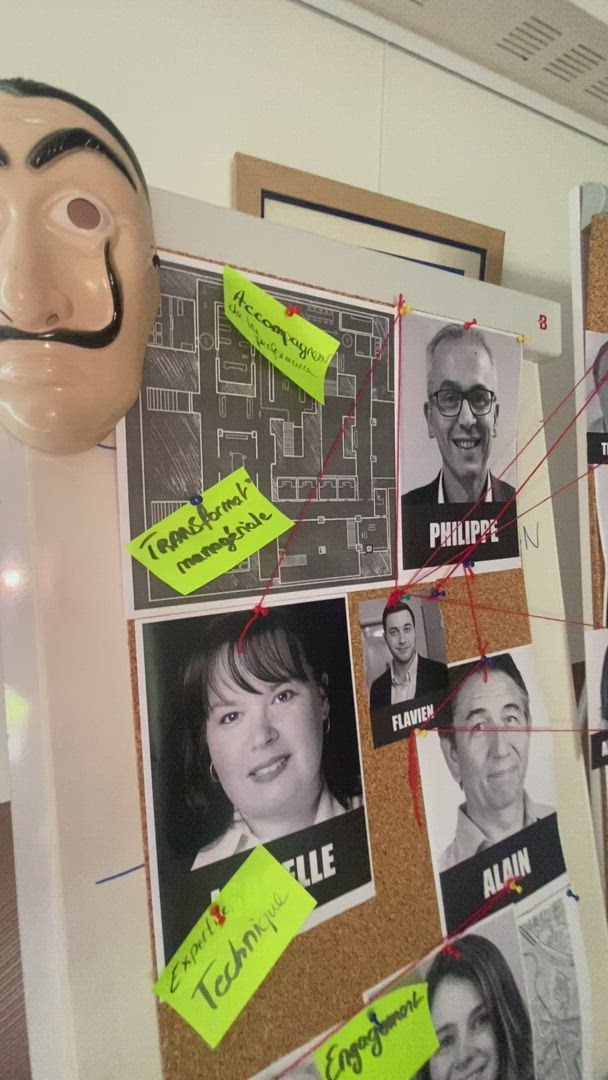
Stakeholder mapping sprint: participants build a map in 20 minutes (power/interest/visibility), then choose sequencing and negotiation order. Useful when leadership teams struggle with “everyone is priority”.
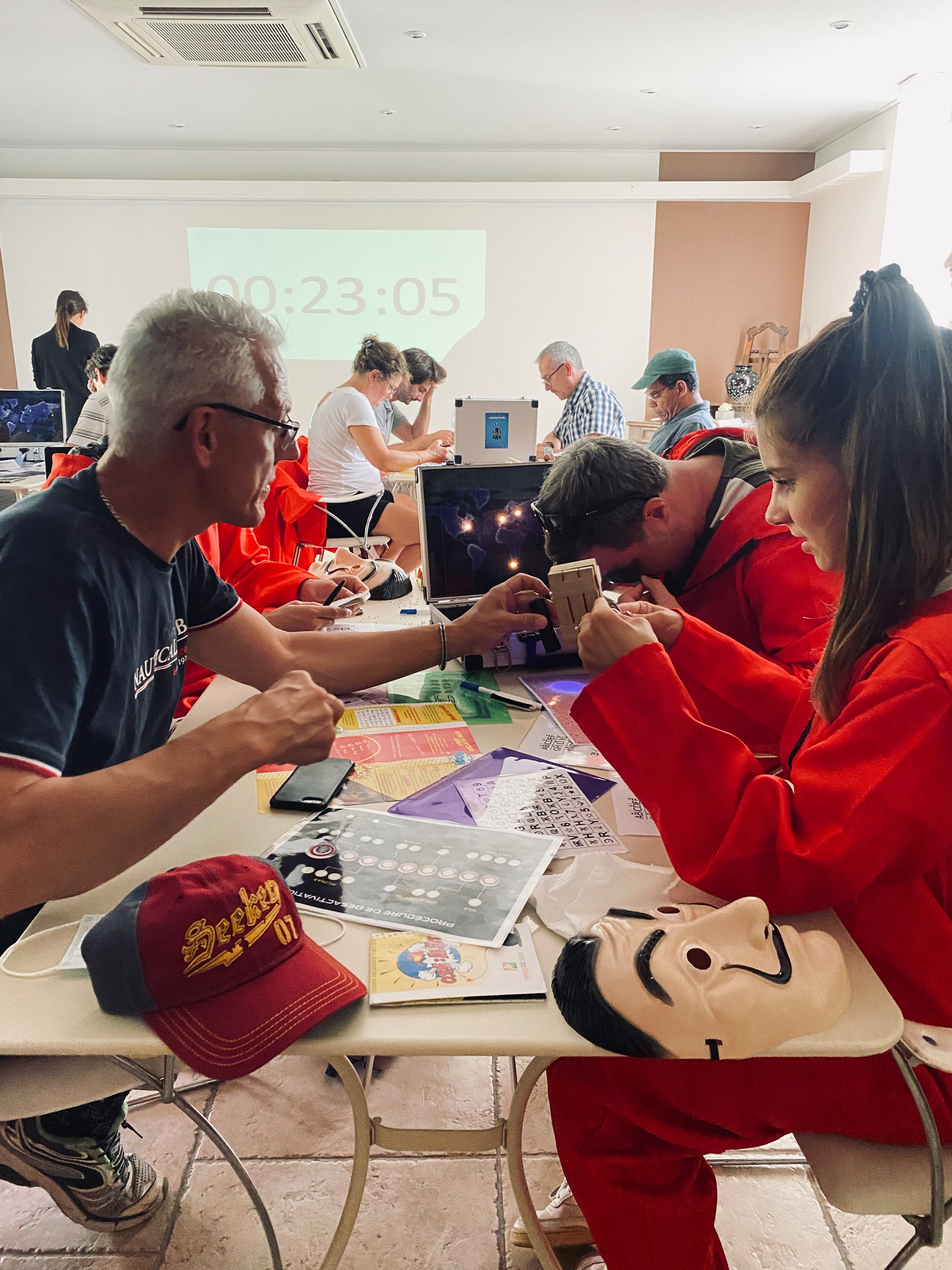
Live negotiation role-play with timed escalations: a counterpart calls, sends an email, or enters the room. Escalation cards introduce pressure (leak, regulator request, customer ultimatum). Participants must maintain posture and message discipline.
Red-team messaging drill: one team drafts a holding statement while another team tries to break it (ambiguity, admissions, legal exposure). This is highly relevant for communication teams in Brussels.
Caucus management exercise: participants practise requesting a pause, regrouping internally, and returning with a consistent position—often where real negotiations fail.
Art animations in Brussels
Professional actors as counterparts: trained role-players create realistic tension without going off-script. This is not theatre for fun; it is controlled behavioural pressure with repeatable learning.
Voice and presence coaching for spokespersons: short modules focusing on pace, silence, and framing—useful for executives who must negotiate and communicate in the same hour.
Innovative animations in Brussels
Working lunch with structured prompts: in Brussels, we often integrate a discreet lunch format to keep senior attendees present while maintaining confidentiality. Prompts focus on “what we would do differently Monday morning”.
Break design to reduce cognitive overload: hydration, timing, and calm spaces matter in high-pressure simulations; we plan breaks as part of performance, not as an afterthought.
Gourmand animations in Brussels
Multi-room “crisis cell” simulation: Comms drafts, HR manages internal impact, leadership negotiates, and a control cell injects updates. Ideal for 25–60 participants and for testing coordination, not only negotiation technique.
Digital injects (Teams/WhatsApp-style): controlled messages simulate real-life noise. Participants practise prioritisation and avoid reactive statements.
Negotiation scorecard: we use a simple scoring grid (listening, framing, concession discipline, escalation control, documentation). It turns feedback into measurable behaviours.
Whatever the format, we align it with your brand and leadership standards: how you speak under pressure is part of your employer brand and public credibility. A negotiation workshop should reinforce your organisational culture—calm, precise, responsible—not contradict it.
Where to host a crisis negotiation workshop in Brussels
The venue shapes behaviour. In a Crisis Negotiation Workshop, room geometry, privacy and sound control directly affect outcomes: participants negotiate differently in a boardroom layout than in a theatre setup. In Brussels, the right setting also reduces logistical friction (access, security, confidentiality).
| Venue type | For which objective? | Main strengths | Possible constraints |
|---|---|---|---|
| Private meeting rooms in a business hotel (Brussels centre/EU quarter) | Fast executive access; discreet half-day workshop | Soundproof rooms, reception support, reliable AV, easy catering | Less flexibility for multi-room simulations; costs vary strongly by day/time |
| Company HQ boardroom + breakout rooms (Brussels Region) | Work with real governance, real tools, and actual stakeholders | Highest relevance; minimal travel; easier to integrate internal documents | Confidentiality and interruptions; requires strict access control and room booking discipline |
| Dedicated training centre with modular rooms (Brussels periphery) | Full-day simulation with parallel cells and observers | Space for multi-room setups, whiteboards, controlled flow for injects | Transport planning; participants may leave earlier if commute is complex |
We strongly recommend a short site visit (or at least a detailed tech and layout check) before confirmation. It prevents the classic issues that damage the workshop: poor acoustics, insufficient breakout space, or a room layout that makes negotiation dynamics artificial.
What a crisis negotiation workshop costs in Brussels
Budget depends on the level of realism, the number of participants, and how much custom scenario work is needed. In Brussels, the biggest cost drivers are usually facilitation time, role-player staffing, venue privacy requirements, and the preparation needed to reflect your real risk landscape.
To be transparent, most corporate programmes fall within a few common ranges (excluding VAT):
- €2,500–€5,500 for a short format (2–3 hours) with one facilitator, light customisation, and a single scenario cycle.
- €6,000–€12,000 for a half-day to full-day workshop with two facilitators, deeper scenario build, structured debrief, and deliverables (scorecards, action plan).
- €12,000–€25,000+ for a full simulation with multiple rooms, professional role-players, multi-stakeholder injects, and pre/post coaching for executives.
Number of participants and rooms: above 20 people, you typically need parallel rooms or structured rotations to keep everyone active.
Custom scenario design: building a scenario around your sector (regulated, public-facing, B2B) requires interviews, alignment, and a clean storyline.
Role-players and escalation control: professional actors increase realism and allow consistent learning across groups.
Languages: bilingual or trilingual delivery may require additional facilitation capacity and tighter scripting.
Deliverables: scorecards, playbooks, and post-workshop leadership debriefs add value but require time to produce well.
Venue and confidentiality constraints in Brussels: privacy, security, and noise control can affect venue choice and price.
We approach budget from a risk-and-readiness perspective: a workshop is worth it when it reduces one avoidable escalation, one contradictory statement, or one delayed decision in a real crisis. The ROI is rarely “feel-good”; it is operational stability, reputational protection, and faster leadership alignment.
Why choose a Brussels agency for a crisis negotiation workshop
When the topic is crisis negotiation, execution quality matters as much as design. Having a team on the ground in Brussels reduces operational risk and improves realism: we know the venues, the access constraints, the typical executive expectations, and the pace at which decisions are validated in Brussels-based organisations.
It also improves responsiveness. Last-minute changes are common: an executive joins for only 45 minutes, the legal team requests a scenario adjustment, or confidentiality requirements change. Local coordination makes those changes manageable without diluting the learning objectives. If you are comparing providers, ask who will actually be onsite, who controls role-players, and who owns the debrief quality.
As your event agency in Brussels, we integrate workshop design with event-grade logistics: tight run-of-show, room management, timekeeping, participant flow, and calm troubleshooting.
- Faster venue and supplier mobilisation in Brussels, with realistic lead times and contingency options.
- Better participant experience through smooth arrival, secure check-in if needed, and room setups aligned with negotiation dynamics.
- Local discretion: fewer intermediaries, clearer accountability, and tighter control over sensitive information.
- Onsite control: facilitators and producers coordinating in real time so executives can focus on decisions, not logistics.
We approach budget from a risk-and-readiness perspective: a workshop is worth it when it reduces one avoidable escalation, one contradictory statement, or one delayed decision in a real crisis. The ROI is rarely “feel-good”; it is operational stability, reputational protection, and faster leadership alignment.


Examples of crisis negotiation scenarios we run in Brussels settings
Confidentiality prevents us from naming specific cases without your approval, but we can describe the types of scenarios we frequently build for Brussels-based organisations. The goal is always the same: replicate pressure points that leaders actually face, then translate observations into repeatable behaviours.
Typical scenario families include:
- Employee relations escalation: a sensitive HR case becomes public, a union representative requests immediate negotiation, and internal messaging leaks. We test how HR and Comms coordinate and what executives authorise in real time.
- Customer-impact incident: service disruption with contractual penalties and social media attention. Negotiation includes a key account, an internal operations lead, and a spokesperson under time pressure.
- Regulatory and institutional pressure: a call from an authority or an institutional partner requiring fast commitments. We train leaders to negotiate while preserving compliance boundaries.
- Supplier conflict: a critical subcontractor threatens to stop delivery, creating cascading operational impact. Participants practise anchoring, concessions, and alternative options without bluffing.
- Reputation and media exposure: a journalist requests comment with partial information, while a counterpart uses the media as leverage. We train the team to negotiate without feeding escalation.
Across these scenarios, we observe recurring executive-level pitfalls: overpromising to “buy time”, speaking without internal alignment, confusing empathy with concession, and failing to define walk-away thresholds. The workshop is designed to surface those issues safely and correct them with concrete alternatives.
Common pitfalls we prevent on workshop day in Brussels
Overly theatrical role-play that entertains but does not teach. We keep role-play disciplined, with clear objectives and observation criteria.
Scenarios disconnected from your real risk profile. We scope with leadership so the time spent is defensible to a CEO and useful to HR/Comms.
No psychological safety, leading to defensive behaviour and low learning. We set rules, confidentiality, and debrief discipline from the first minute.
Too many participants in one room, where only the loudest speak. We design rotations, parallel rooms or clear roles so everyone practises.
Debriefs that stay at “what happened” instead of “what to do next time”. We translate observations into scripts, checklists and behavioural alternatives.
Logistics that break immersion: wrong room layout, noise, interruptions, poor timekeeping. We run the workshop with event-level production standards.
Our role is to remove avoidable risk: not only reputational risk in the scenario, but also operational risk in the delivery. Executives should leave saying, “I know what to do differently,” not “That was interesting.”
Why Brussels clients renew these workshops over time
Repeat engagements happen when the workshop becomes part of governance, not a one-off. In Brussels, organisations often renew because teams change, risks evolve, and leaders want a consistent negotiation language across departments and business units.
We structure renewals around progression: baseline skills first, then more complex stakeholder maps, then full crisis-cell simulations. This keeps the programme credible for senior participants who have limited patience for repetitive exercises.
2–3 waves is a common rhythm: an initial leadership cohort, then managers, then cross-functional crisis-cell practice.
1–2 realistic scenarios per session is usually optimal for depth; beyond that, learning drops unless you extend to a full day.
30–45 minutes debrief per scenario is where most value sits; we protect that time in the agenda.

Loyalty is not about habit; it is proof that the format withstands scrutiny and produces operational improvements leaders recognise.
Our delivery process for Brussels crisis negotiation workshops
👉 Step 1 (Brussels): rapid scoping with HR, Comms and a sponsor
We run a 30–45 minute call to define objectives, participant profile, languages, and constraints (confidentiality, legal boundaries, internal sensitivities). We also agree what “good” looks like: decision speed, message discipline, de-escalation behaviours, or negotiation outcomes.
👉 Step 2: scenario design based on your real pressure points
We draft a scenario with a clear storyline, stakeholder objectives, and escalation triggers. We validate realism without exposing sensitive internal details: we can anonymise names, locations and products while keeping the dynamics true to your environment.
👉 Step 3 (Brussels): venue, room layout and run-of-show
We confirm room requirements (boardroom vs. breakout), privacy, AV, timing, and participant flow. We build a minute-by-minute run-of-show so the workshop stays paced: briefing, negotiation cycles, caucuses, injects, and debrief windows.
👉 Step 4: delivery with controlled pressure and observation
Facilitators run the session, manage tempo, and ensure everyone practices. We observe specific behaviours (framing, listening signals, threat language, concession patterns, documentation). Pressure is calibrated; we avoid humiliation and keep learning the priority.
👉 Step 5: debrief, action plan and optional leadership recap
We produce a concise output: what worked, what escalated the situation, and concrete alternatives (scripts, checklists, role clarity). For executive sponsors, we can run a short recap focused on governance improvements and next-step recommendations.
FAQ sur l'organisation Crisis Negotiation Workshop à Brussels
How long is a crisis negotiation workshop in Brussels?
Most Brussels programmes run 2–4 hours for a focused module, or 1 full day for multi-scenario practice with role-players and deeper debriefs. If you want cross-functional coordination (HR/Comms/Legal/Operations), a half-day is usually the minimum.
How many participants work well in Brussels workshops?
The sweet spot is 10–24 participants in one room with active rotations. For 25–60, we recommend parallel rooms or a crisis-cell simulation with roles, otherwise participation becomes passive.
Can you run a bilingual workshop in Brussels offices?
Yes. We can run English/French or English/Dutch formats onsite in Brussels. The key is setting language rules upfront (single language per scenario cycle, or split-role rooms) to avoid loss of pace and uneven participation.
What budget should we plan in Brussels for this workshop?
Typical budgets (excl. VAT) range from €2,500–€5,500 for a short module, €6,000–€12,000 for a half/full-day with deeper customisation, and €12,000–€25,000+ for multi-room simulations with professional role-players.
How soon can you deliver in Brussels after approval?
With quick validation, a standard workshop can often be delivered within 2–4 weeks. For high customisation (multiple scenarios, role-players, complex stakeholder maps), plan 4–8 weeks to keep preparation and internal approvals clean.
Request a Brussels proposal for your crisis negotiation workshop
If you are evaluating providers, we suggest a practical first step: a short scoping call with HR/Comms and an executive sponsor. In Brussels, where stakeholders are sophisticated and reputational exposure is real, the difference is in preparation quality and delivery control.
Send us your preferred dates, participant count, languages, and the type of situations you want to train (employee relations, customer incident, regulatory pressure, supplier conflict). We will come back with a clear workshop design, recommended setup, and a transparent budget range—so you can decide quickly and defensibly.
INNOV'events Brussels Agency
Justin JACOB is the manager of the INNOV'events Brussels office. Reach out directly by email at belgique@innov-events.be or via the contact form.
Contact the Brussels agencyToutes nos prestations & animations Brussels, Belgique
Découvrez nos prestations événementielles
Découvrez nos animations événementielles disponibles au Belgique
- Event Hostess in Brussels
- Escape Game in Brussels
- MasterChef Cooking Workshop in Brussels
- Magician in Brussels
- Marquee Rental in Brussels
- Color Analysis Workshop in Brussels
- Inflatable Games in Brussels
- Valet Parking Service in Brussels
- Football Simulator in Brussels
- LED Furniture Rental in Brussels
- Light Branding in Brussels
- Unique Dining Experience in Brussels
- Light Painting in Brussels
- Murder Mystery Party in Brussels
- Prize Contest in Brussels
- Promotional Displays (POS) in Brussels
- Virtual Reality in Brussels
- Molecular Gastronomy Workshop in Brussels
- Halloween Entertainment in Brussels
- Fireworks Show in Brussels
- Giant Games Challenge in Brussels
- Event Host / MC in Brussels
- Photo Booth Animation in Brussels
- Santa Claus Entertainment in Brussels
- Kids Entertainment in Brussels
- Guided Tour in Brussels
- Urban Rally in Brussels
- Ball Pit in Brussels
- Flight Simulator in Brussels
- Food Truck Rental in Brussels
- World Record Challenge in Brussels
- Surf Simulator in Brussels
- Wine Casino in Brussels
- Makeover Workshop in Brussels
- Perfume Creation Workshop in Brussels
- Acting Workshop in Brussels
- CSR Activities in Brussels
- Archery in Brussels
- Security Staff in Brussels
- Wine Tasting in Brussels
- Mime Performer in Brussels
- TV Game Show in Brussels
- Funfair in Brussels
- Crisis Management Workshop in Brussels
- Crisis Negotiation Workshop in Brussels
- Arcade Games in Brussels
- Indoor Skydiving Simulator in Brussels
- Ski Simulator in Brussels
- Racing Circuit Experience in Brussels
- Introductory Flight Experience in Brussels
- Tasting Experience in Brussels
- Build Your Own Foosball Workshop in Brussels
- 2CV Rally in Brussels
- LEGO Challenge in Brussels
- Casino Night in Brussels
- Interpreter / Translator in Brussels
- Promotional Giveaways in Brussels
- Shuttle Transport in Brussels