
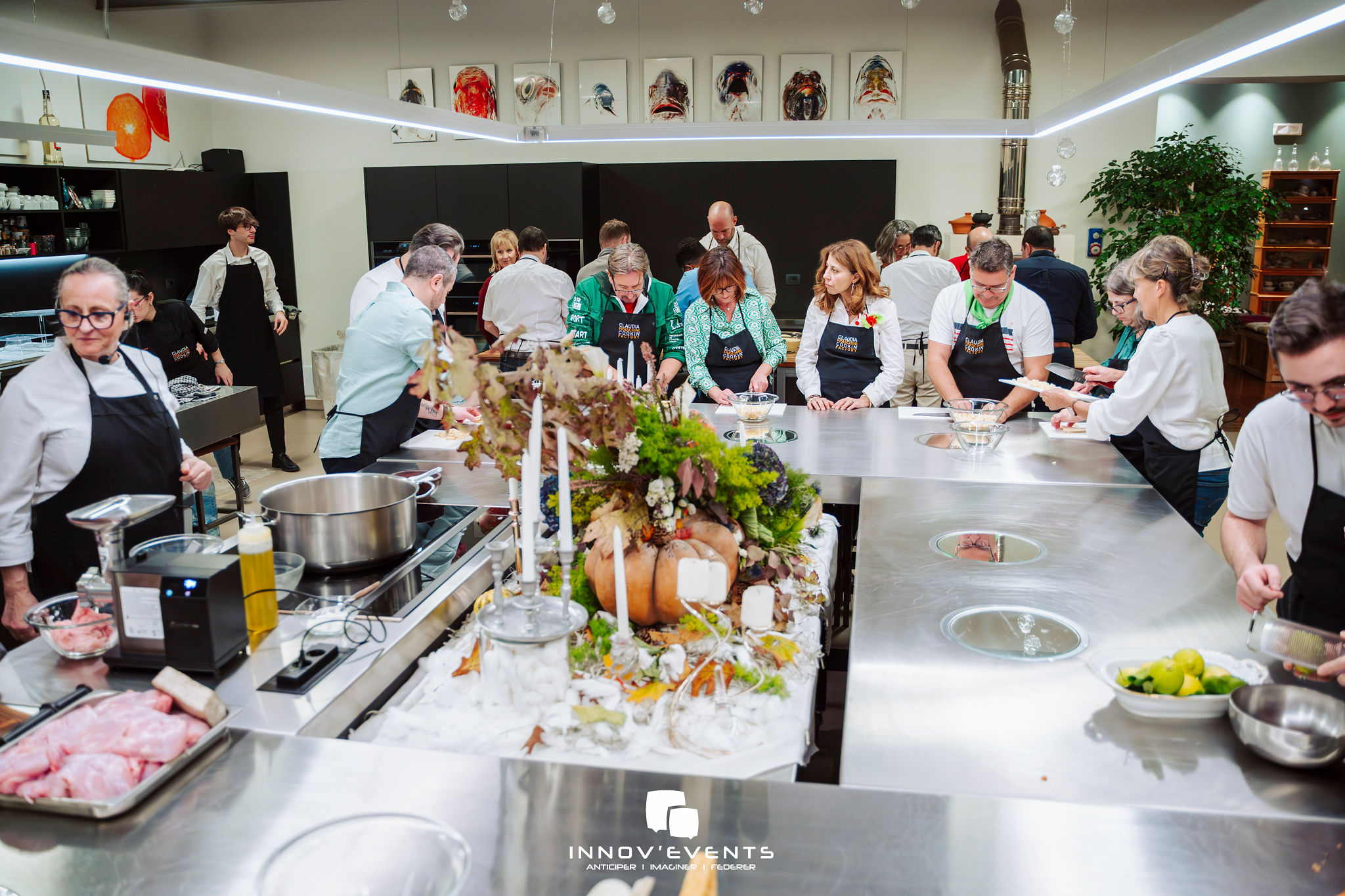
Molecular Gastronomy Workshop in Brussels for teams that need a serious, engaging format
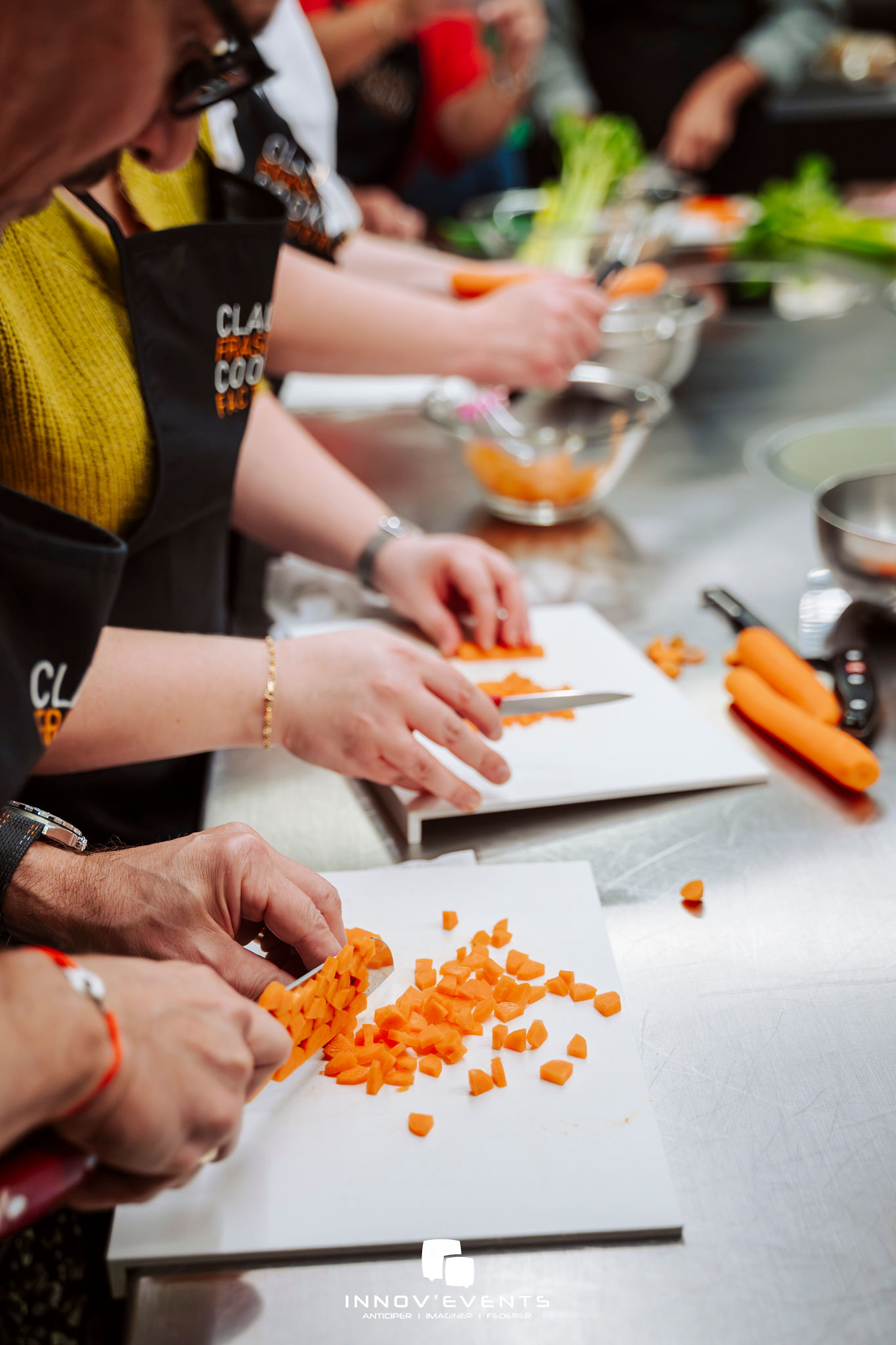
INNOV'events designs and runs Molecular Gastronomy Workshop formats in Brussels for executives, HR and communication teams—typically 10 to 200 participants. We manage the chef team, food safety plan, equipment, venue constraints, timing, and guest flow so your agenda stays on track.
Whether you need a high-energy team moment after a plenary or a structured workshop aligned with leadership messages, we deliver a controlled experience: clear run-of-show, measurable participation, and a finish that respects corporate standards.
Sommaire
In a corporate event, entertainment is not a “nice-to-have”: it is a lever to increase attention, connection between departments, and the quality of informal conversations where decisions actually move forward. A Molecular Gastronomy Workshop works when it is framed like a business tool—timed, facilitated, and linked to what your teams need to achieve.
In Brussels, organizations typically expect bilingual facilitation, strict time discipline (train schedules and EU meeting calendars), and a level of hosting compatible with brand and compliance. They also expect zero surprises on allergens, alcohol policy and venue rules—especially in HQ buildings and conference centers.
INNOV'events is a event agency in Brussels with operational teams on the ground. We know the local supplier ecosystem, the real constraints of Brussels venues (loading, elevators, waste management, neighbors), and the pressure of “event day” when C-levels and stakeholders are in the room.
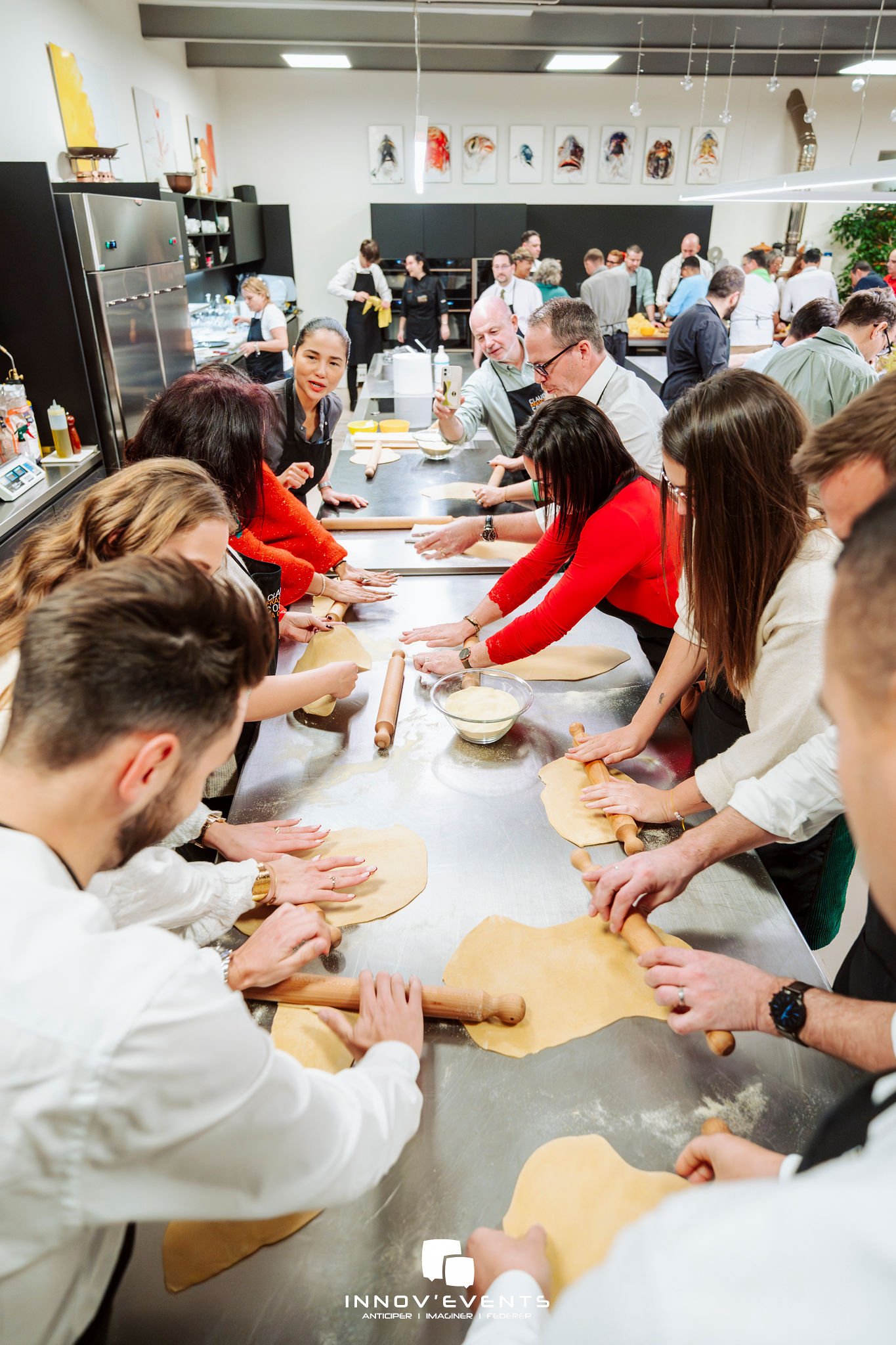
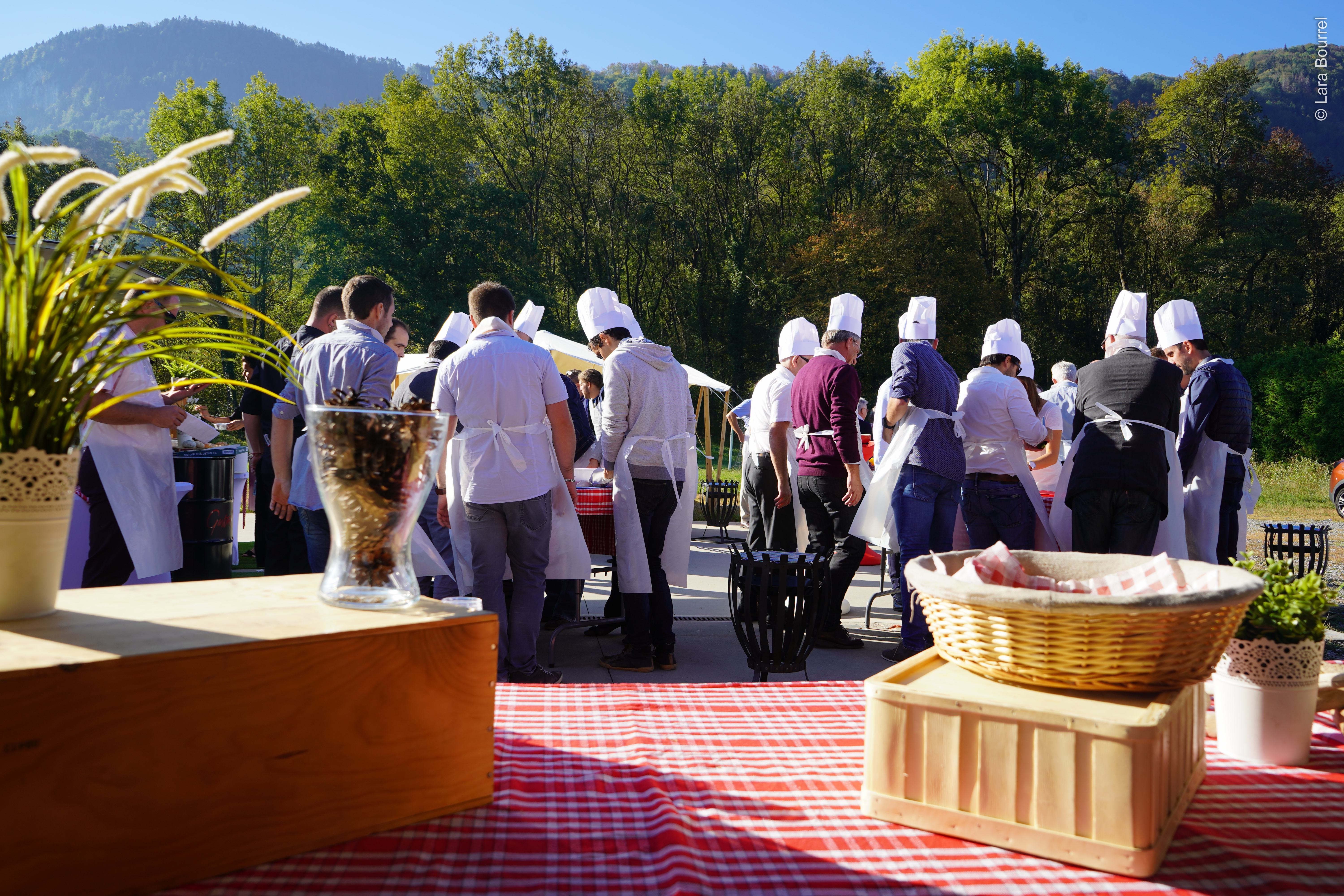
Operational proof points in Brussels you can audit
12+ years delivering corporate events across Belgium, with recurring programs in Brussels for HQ teams and regional leadership groups.
200+ corporate activations/year across our network (team-building, conferences, client events), with standardized planning templates and on-site checklists.
10–200 participants is our most frequent range for Molecular Gastronomy Workshop in Brussels; scalable via stations and multiple chef teams.
98% on-time start target on run-of-show items (workshop kick-off, tasting moments, awards) thanks to pre-briefing, rehearsal slots and contingency buffers.
Brussels anchors: repeat programs and long-term collaboration
In Brussels, many teams run the same annual rhythms: leadership kick-offs in Q1, employer-branding moments in spring, and end-of-year celebrations that must satisfy both internal culture and external image. That is why we prioritize long-term operating models over one-off “wow effects”.
We regularly support Brussels-based departments—HR, Internal Comms, Executive Assistants and Procurement—who need a partner able to handle: last-minute agenda changes, strict building rules, and stakeholders with different expectations (local management, international leadership, works councils, and sometimes external guests).
If you share company names you want us to mention, we can integrate them as local references in this section in a compliant way (e.g., “Brussels HQ of X”, “European office of Y”), and adapt wording to your legal/brand constraints. In the meantime, our approach remains the same: plan like a production, not like a “workshop”, and document every decision so you can validate internally.
 Besoin d’un devis rapide ?
Nous vous envoyons une première proposition sous 24h.
Why schedule a Molecular Gastronomy Workshop in Brussels now?
A well-run Molecular Gastronomy Workshop is a practical way to create collaboration under constraints—time, process, quality expectations—exactly the conditions your teams face daily. The value comes from how it is structured: roles, instructions, and a deliverable (a tasting sequence) that forces coordination.
Cross-functional alignment without forced “icebreakers”: pairing Finance with Sales or IT with Operations becomes natural when teams must execute a sequence (foam, spheres, gels) in a fixed order and timing.
Leadership presence without awkwardness: executives can participate at one station (or do a 10-minute “walk-through” tasting) while keeping their schedule—useful in Brussels where calendars are tight and VIPs often leave early for EU or client commitments.
A safe format for mixed seniority groups: molecular techniques create curiosity and level the playing field; it is easier to engage new hires and senior managers around a shared “test-and-adjust” process.
Message anchoring: we can map the workshop to your themes (quality control, innovation, compliance, customer journey). Example: a station’s brief can include a “quality gate” step to echo your internal transformation program.
Employer branding with substance: internal comms teams use photos and short clips of plating, nitrogen fog moments (when permitted), and tasting reactions—content that feels professional because the execution is clean and the setting is controlled.
Brussels is built on international collaboration and high standards. When the format respects those standards—timing, multilingual facilitation, and compliance—it becomes a credible, business-compatible team moment rather than “just an activity”.
What Brussels-based HR and Comms teams typically require
In Brussels, we frequently work with organizations balancing Belgian operational reality and international governance. This affects how a Molecular Gastronomy Workshop must be delivered.
Language and inclusivity are non-negotiable: English-only can be fine for EU/international audiences, but many companies require EN + FR (sometimes NL). We plan signage, station briefs, and facilitation accordingly, so no participant feels “outside the room”.
Food safety and traceability matter more than in a casual cooking class. HR and HSE teams often ask for allergen lists, ingredient sourcing, and clear separation rules (nuts, gluten, alcohol). We build a written allergen matrix per menu, label station containers, and manage the serving sequence to reduce cross-contact risks.
Venue restrictions in Brussels are real: limited loading bays, narrow service elevators, shared kitchens, no open flames, or strict waste and recycling rules. We adapt with induction hobs, sealed transport, and a back-of-house workflow that works in corporate buildings, hotels, and conference venues.
Brand and reputation: corporate comms teams are careful about visuals (uniforms, table dressing, cleanliness, signage). We treat the workshop as a branded production: consistent look, discreet staff behavior, and a photo-friendly setup without clutter.
Which corporate entertainment works best in Brussels alongside gastronomy?
Engagement increases when entertainment supports your event objective: networking, team cohesion, leadership accessibility, or brand positioning. Around a Molecular Gastronomy Workshop, we often combine complementary formats that keep the rhythm professional.
Interactive animations in Brussels
Station-based team challenge (Brussels-friendly timing): teams rotate every 12–15 minutes with a visible scoreboard based on technique accuracy, presentation, and hygiene discipline—useful for organizations that value process and quality.
Ingredient “mystery box” aligned with brand values: curated ingredients reflecting your CSR or local sourcing policy, with a short brief on constraints (sugar limits, alcohol-free, vegan station) to reflect real-life decision frameworks.
Executive tasting jury with structured criteria: avoids awkward “talent show” dynamics; executives evaluate based on predefined points and deliver a short closing message tied to business priorities.
Art animations in Brussels
Live plating aesthetics corner: a food stylist demonstrates composition and color balance. This works particularly well for brand and marketing teams in Brussels who need content that looks premium in internal channels.
Soundscape or discreet DJ designed for conversation: we define decibel limits and timing so the workshop remains social but not chaotic—especially important in hotel venues and conference centers.
Innovative animations in Brussels
Alcohol-free pairing bar: crafted infusions and non-alcoholic cocktails, often requested by HR in Brussels for inclusivity and policy reasons. Pairings are matched to the workshop bites for a cohesive experience.
Belgian touch without clichés: subtle use of local elements (e.g., speculoos texture, chocolate aeration) handled with restraint, so it feels appropriate for international audiences.
Gourmand animations in Brussels
Data-driven engagement: quick QR feedback at the end (2–3 questions) to help HR and Comms report participation quality and satisfaction—useful when leadership wants evidence, not anecdotes.
Low-impact production: waste-minimization plan (portioning, reusable serviceware where venue allows, sorting brief for staff). In Brussels, sustainability requirements are increasingly written into event briefs.
The strongest programs are those that protect your brand image: clean execution, appropriate tone, and a format that matches your organization’s culture—whether you are a regulated sector, a scale-up, or a European HQ in Brussels.
Where to host a Molecular Gastronomy Workshop in Brussels
The venue influences everything: perceived quality, noise level, service flow, and even what techniques are allowed (ventilation, open flame policies, kitchen access). In Brussels, we select venues based on logistics first, aesthetics second—because operational issues are what derail timing and guest experience.
| Venue type | For which objective? | Main strengths | Possible constraints |
|---|---|---|---|
Hotel meeting space with banqueting support | Board dinners, leadership offsites, client-facing events | Professional service, reliable back-of-house, controlled lighting and sound, easy add-on of reception and dinner | Rules on external chefs/equipment, timing limits, potential costs for kitchen access and staffing |
Corporate HQ or office in Brussels (multi-purpose area) | Internal team-building after townhall, onboarding cohorts | Zero transfers for participants, strong employer-branding signal, easy leadership drop-in | Loading and elevator constraints, strict building policies (waste, smells, security), limited water points |
Conference center or event venue with modular rooms | Large groups (80–200), multi-activity programs | Space for multiple stations, clear flow management, AV integration for instructions and timing | Shared access with other events, fixed catering partners, sound bleed between rooms |
We strongly recommend a site visit (or at minimum a technical call + floorplan review). In Brussels, small details—service lift dimensions, power circuits, or waste collection windows—decide whether the workshop runs smoothly or becomes a logistical exercise.
How to budget a Molecular Gastronomy Workshop in Brussels
Pricing for a Molecular Gastronomy Workshop in Brussels depends on participant volume, the number of stations, venue constraints, and the level of culinary ambition. To help procurement and HR plan, we structure budgets in transparent cost blocks rather than a single line item.
As a working range, corporate workshops in Brussels typically start around €1,800–€3,500 for small groups (10–20) and can reach €7,000–€18,000+ for larger groups (60–200) with multiple chef teams, enhanced set-up, and complex logistics. Final figures depend on your menu, venue and staffing rules.
Participant count and station ratio: to avoid queues, we plan capacity (e.g., 1 station per 12–18 guests) and scale chef/facilitator staffing accordingly.
Menu and techniques: spheres, foams, gels, dehydrations, and smoke effects do not have the same equipment and prep needs. We recommend a “corporate-safe” menu that is impressive but stable under event constraints.
Venue limitations in Brussels: power availability, kitchen access, water points, loading, and waste handling often drive additional staffing or equipment (e.g., extra induction units, transport cases, protection mats).
Service format: tasting-only, cocktail flow, or seated dinner integration. The more you integrate with catering, the more coordination is required (and the more critical timing becomes).
Compliance and documentation: allergen matrix, labeling, staff briefing, and—if required—proof of insurance and risk assessments aligned with corporate policies.
Branding level: apron branding, signage, photo corner, bilingual station cards, and content capture can be added in a controlled way.
We approach budget as ROI: the right investment is the one that protects your agenda, your safety obligations, and your image—while delivering real interaction between teams and stakeholders in Brussels.
Why work with a Brussels agency for this workshop
A local partner is not about geography for its own sake; it is about risk reduction and speed of execution. In Brussels, venue rules and supplier access can change quickly (security procedures, delivery windows, union rules in some settings). We operate with local habits, not assumptions.
We also know what decision-makers typically need internally: a clear proposal that procurement can compare, a safety and allergen plan that HR can validate, and a run-of-show that assistants can lock into calendars.
- Faster technical alignment with Brussels venues: power, loading, kitchen access, and on-site rules checked early to avoid last-minute renegotiations.
- Reliable staffing: chef teams and facilitators accustomed to corporate audiences (tempo, language, discretion, dress code).
- Supplier redundancy: backup options for equipment and consumables—critical when you have one fixed date and senior stakeholders attending.
- On-site leadership: a single accountable production lead who coordinates venue, catering, and workshop teams in real time.
We approach budget as ROI: the right investment is the one that protects your agenda, your safety obligations, and your image—while delivering real interaction between teams and stakeholders in Brussels.










What we’ve delivered in Brussels: formats and constraints handled
Our Brussels projects range from compact executive moments to large-scale internal events. What changes is not only the number of guests, but the constraints: security access, timing, and stakeholder expectations.
Example 1: Post-plenary team activation (120 pax). The client needed an energizer after a strategy update, with participants split across functions and languages. We built 8 stations, bilingual briefs (EN/FR), and a tight rotation schedule with visible timing cues. The key success factor was throughput: every guest produced and tasted something within the first 20 minutes to prevent “spectator mode”.
Example 2: Leadership offsite (18 pax). The brief was to create a controlled, high-quality experience aligned with a leadership theme on “precision and accountability”. We designed three technique steps with explicit quality gates and a short debrief. The client valued that we kept it elegant, not theatrical—appropriate for a Brussels senior group with limited tolerance for gimmicks.
Example 3: HQ building constraints. In corporate offices, we often face strict no-odors/no-open-flame policies and limited sink access. We adapt with induction-only workflow, sealed ingredient transport, and a sanitation runner. The result is an experience that feels premium without stressing Facilities or Security teams.
Common issues we prevent for Brussels corporate workshops
Underestimating venue power and logistics: too many devices on one circuit leads to delays. We map circuits and distribute loads.
Queues and dead time: a workshop becomes frustrating when 30 people watch 5 people act. We engineer station capacity and rotation timing.
Allergen ambiguity: “we’ll manage on the day” is not acceptable in corporate Brussels environments. We provide a written allergen matrix and on-site labeling.
Mismatch between tone and audience: what works for a start-up may not work for a regulated sector. We align facilitation style with your culture.
Overly complex recipes that fail under event pressure: we select techniques that are impressive but stable, with tested prep and backups.
No ownership on-site: without a production lead, small issues escalate. We assign a clear point of command and escalation path.
Our role is to remove these risks before they become “event day” problems—so you can focus on your stakeholders and the business outcomes in Brussels.
Why Brussels clients rebook INNOV'events
Repeat business is usually driven by one thing: predictability. HR and Comms teams come back when the planning is clean, approvals are easy, and the event runs without operational surprises.
60–70% of our corporate projects are from returning clients or internal referrals (typical annual variation depending on project mix).
1 production lead assigned from briefing to on-site delivery, reducing handover errors and keeping accountability clear.
2 levels of validation built into our process: a concept validation (format/menu) and a technical validation (venue, safety, run-of-show).

Loyalty is not about discounts; it is about execution quality and governance. In Brussels, where stakeholders are demanding and schedules are tight, that reliability is the real differentiator.
Our delivery process in Brussels from brief to on-site
👉 Brussels scoping call and stakeholder mapping
We start with a 20–30 minute call to understand: audience profile, objectives (team cohesion, networking, leadership visibility), constraints (languages, alcohol policy, allergies), and the event architecture (plenary, dinner, awards). We identify who must approve what—HR, Procurement, HSE, Facilities—and set a validation path that avoids last-minute blocks.
👉 Concept and menu proposal with operational notes
You receive a proposal that includes: station design, timing, staffing plan, equipment list, and a draft allergen approach. We also flag “typical Brussels constraints” early (loading, security access, parking, waste policy) so the quote is realistic rather than optimistic.
👉 Venue technical check and floorplan engineering
We review floorplans, power availability, water points, guest flow and storage. When needed, we do a site visit with the venue manager. We translate this into a station map (front-of-house/back-of-house), a setup timeline, and a loading plan that respects Brussels delivery windows.
👉 Compliance pack: allergens, insurance, risk controls
We compile allergen matrices, labeling rules, and hygiene workflow. We align with your corporate requirements (insurance certificates, supplier forms, security lists). This is where many agencies lose time; we prepare it as standard so your internal teams can validate quickly.
👉 Event-day production and escalation management
On the day, we run setup, staff briefing, station tests, and participant onboarding. A dedicated production lead manages timing, solves venue frictions, and coordinates with your internal point of contact. We keep transitions tight so your plenary schedule remains intact, and we close with a clean handover of the space.
👉 Post-event debrief for Brussels corporate reporting
When useful, we provide a short debrief: what worked, participation observations, and practical recommendations for your next Brussels event (timing, capacity, venue considerations). For HR and Comms, this makes reporting easier and supports continuous improvement.
FAQ sur l'organisation Molecular Gastronomy Workshop à Brussels
How long is a Molecular Gastronomy Workshop in Brussels?
Most corporate formats in Brussels run 60 to 90 minutes excluding arrival drinks. A common structure is 10 minutes briefing, 45–60 minutes stations, and 10–15 minutes tasting + wrap-up.
How many participants can you host in Brussels venues?
We typically deliver 10 to 200 participants in Brussels. For 80–200, we use multiple stations and chef teams to keep waiting time low (target: <5 minutes per rotation).
Is it safe for allergies and dietary needs in Brussels?
Yes, when managed properly. We provide an allergen matrix per menu, on-station labeling, and separation rules. We can include vegetarian/vegan and alcohol-free options; severe allergies require early disclosure so we can adapt recipes and workflows.
Can we do the workshop at our Brussels office?
Often yes. We check power, water access, waste rules, security procedures and any “no open flame / no odors” policies. We can run induction-only setups and bring protective flooring and sanitation equipment to keep Facilities comfortable.
What budget range should we plan in Brussels?
As a working range in Brussels: €1,800–€3,500 for 10–20 participants, and €7,000–€18,000+ for 60–200 depending on stations, staffing, venue constraints, and menu complexity. We quote with transparent cost blocks for procurement clarity.
Request a Brussels quote with a realistic run-of-show
If you are comparing agencies, we recommend starting with three concrete inputs: your guest count, your preferred date/time, and the venue shortlist (or whether it must be in your Brussels office). With that, we can propose a Molecular Gastronomy Workshop format that is feasible on the ground—staffing, safety, timing and budget included.
Contact INNOV'events to receive a clear proposal and a technical checklist within a few working days. Early planning matters in Brussels: venue access windows, supplier availability and internal approvals are easier to secure before calendars fill up.
INNOV'events Brussels Agency
Justin JACOB is the manager of the INNOV'events Brussels office. Reach out directly by email at belgique@innov-events.be or via the contact form.
Contact the Brussels agencyToutes nos prestations & animations Brussels, Belgique
Découvrez nos prestations événementielles
Découvrez nos animations événementielles disponibles au Belgique
- Event Hostess in Brussels
- Escape Game in Brussels
- MasterChef Cooking Workshop in Brussels
- Magician in Brussels
- Marquee Rental in Brussels
- Color Analysis Workshop in Brussels
- Inflatable Games in Brussels
- Valet Parking Service in Brussels
- Football Simulator in Brussels
- LED Furniture Rental in Brussels
- Light Branding in Brussels
- Unique Dining Experience in Brussels
- Light Painting in Brussels
- Murder Mystery Party in Brussels
- Prize Contest in Brussels
- Promotional Displays (POS) in Brussels
- Virtual Reality in Brussels
- Molecular Gastronomy Workshop in Brussels
- Halloween Entertainment in Brussels
- Fireworks Show in Brussels
- Giant Games Challenge in Brussels
- Event Host / MC in Brussels
- Photo Booth Animation in Brussels
- Santa Claus Entertainment in Brussels
- Kids Entertainment in Brussels
- Guided Tour in Brussels
- Urban Rally in Brussels
- Ball Pit in Brussels
- Flight Simulator in Brussels
- Food Truck Rental in Brussels
- World Record Challenge in Brussels
- Surf Simulator in Brussels
- Wine Casino in Brussels
- Makeover Workshop in Brussels
- Perfume Creation Workshop in Brussels
- Acting Workshop in Brussels
- CSR Activities in Brussels
- Archery in Brussels
- Security Staff in Brussels
- Wine Tasting in Brussels
- Mime Performer in Brussels
- TV Game Show in Brussels
- Funfair in Brussels
- Crisis Management Workshop in Brussels
- Crisis Negotiation Workshop in Brussels
- Arcade Games in Brussels
- Indoor Skydiving Simulator in Brussels
- Ski Simulator in Brussels
- Racing Circuit Experience in Brussels
- Introductory Flight Experience in Brussels
- Tasting Experience in Brussels
- Build Your Own Foosball Workshop in Brussels
- 2CV Rally in Brussels
- LEGO Challenge in Brussels
- Casino Night in Brussels
- Interpreter / Translator in Brussels
- Promotional Giveaways in Brussels
- Shuttle Transport in Brussels