
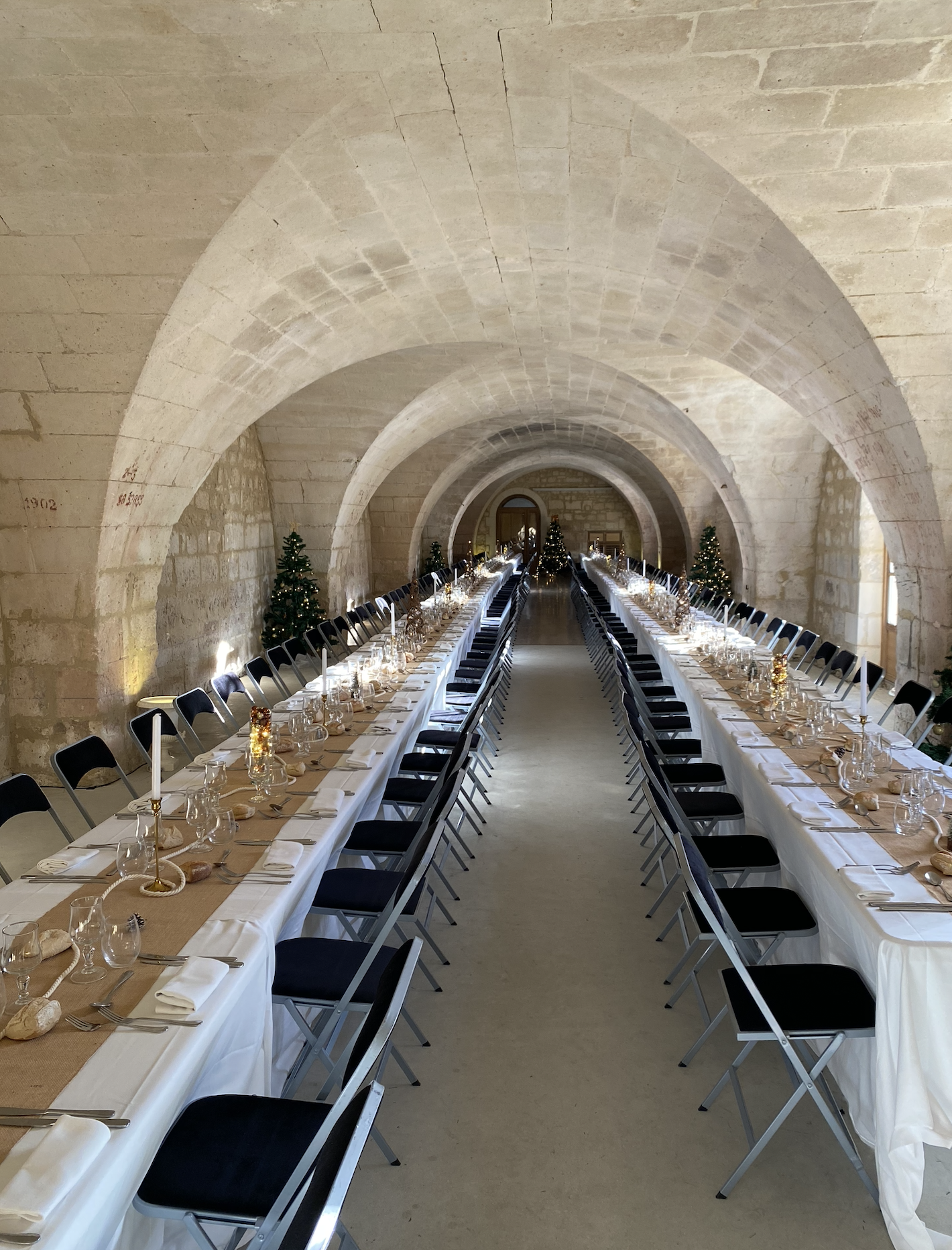
Event Venue Rental in Brussels for corporate teams that cannot afford surprises
INNOV'events supports executives, HR and communications teams with Event Venue Rental in Brussels, from 20-person leadership offsites to 1,000+ guest brand and client events. We secure the right venue, negotiate the contract, and coordinate technical, catering, access, and on-site operations. You keep control of the message, the budget, and the day-of pressure.
Table of contents
Venue choice is not a “nice-to-have”: it directly affects attendance, punctuality, acoustics, brand perception, and the flow of your agenda. A room with poor sightlines or weak sound instantly undermines a town hall, awards moment, or CEO keynote—no matter how strong the content is.
In Brussels, organisations expect fast access by public transport, bilingual signage, strict timing (back-to-back calendars), and predictable service levels for VIPs and stakeholders. The venue must also accommodate security protocols, GDPR-safe registration flows, and clear responsibilities in the contract.
As an event agency based in Brussels, INNOV'events works with local venues and suppliers weekly. We know where loading bays cause delays, which sites require specific insurance clauses, and how to plan around peak traffic, EU quarter constraints, and neighbourhood regulations.
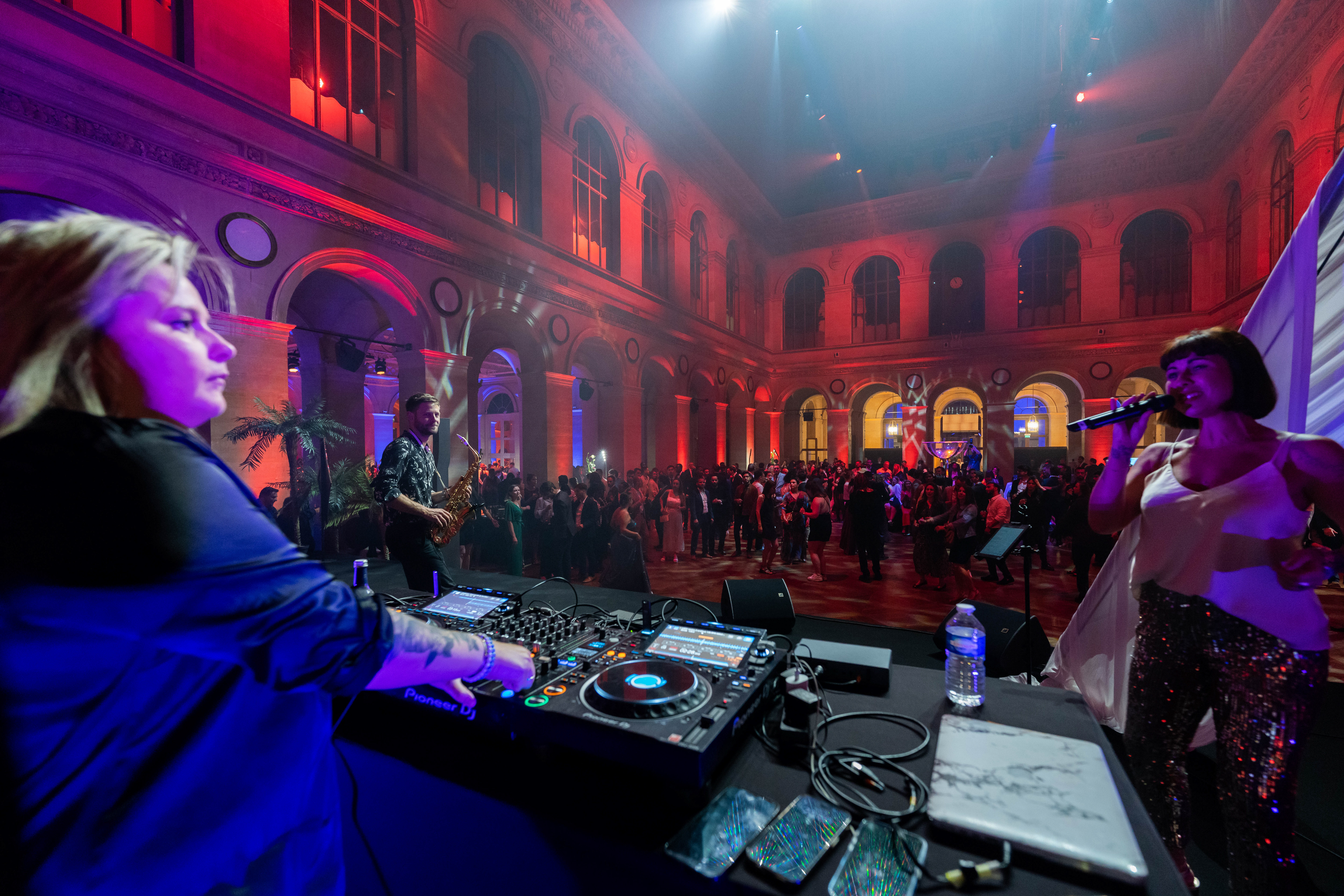
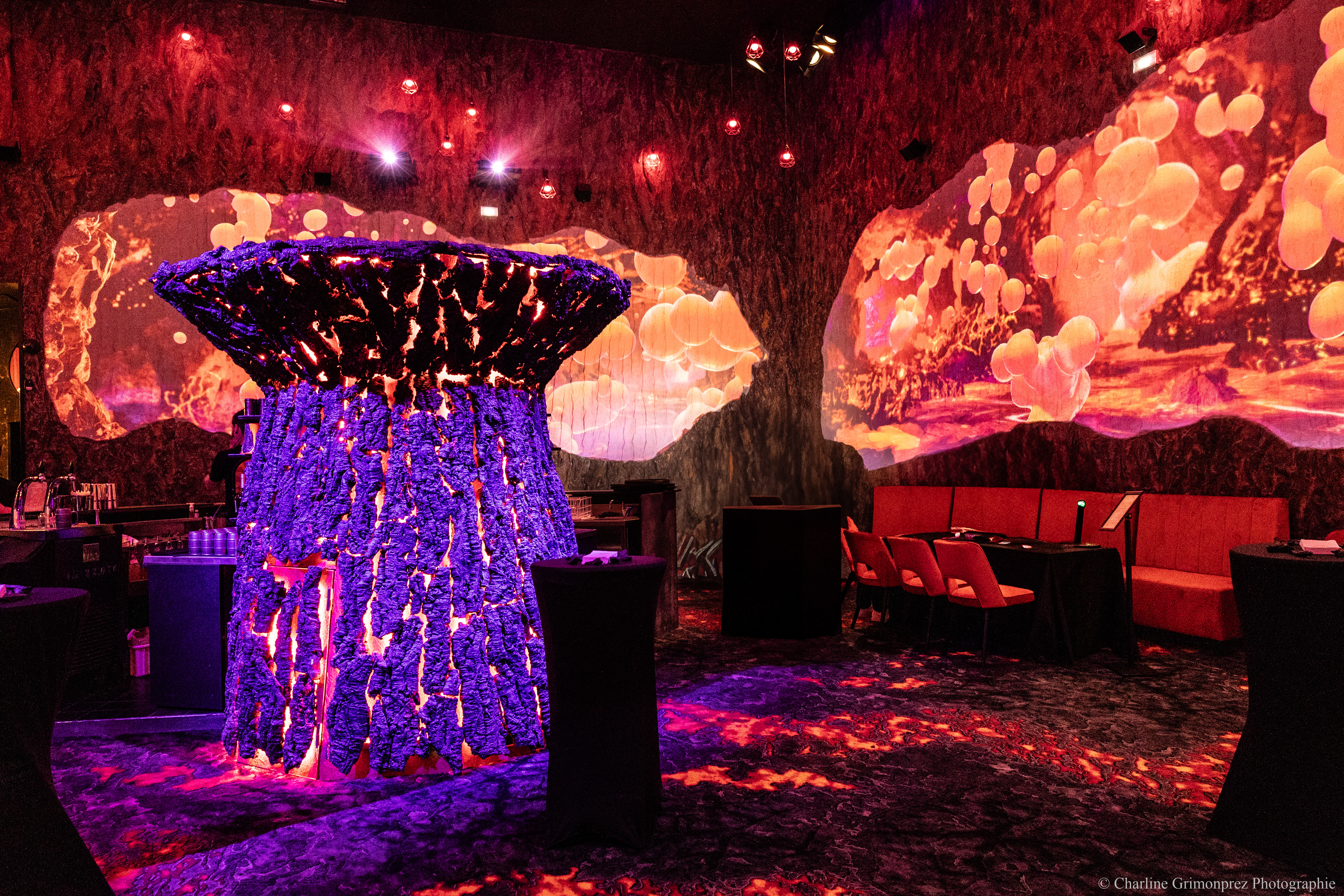
Brussels delivery capacity, backed by measurable experience
10–1,200 attendees covered regularly across meetings, conferences, dinners and brand activations in Brussels.
2–6 venue options shortlisted per brief, typically within 5 business days (availability dependent).
8–12 key risk checks applied during venue qualification (access, acoustics, power, rigging, permits, insurance, cancellation terms, security, neighbour constraints).
Operational coverage with a single point of contact and a documented run-of-show, including supplier call times and contingency triggers.
How to organize a professional event in Brussels?
- Define the objective (cohesion, announcement, fidelity, performance).
- Set date, format and size (20–1 000 people).
- Secure the venue and accommodation according to seasonality.
- Lock down technical, suppliers and logistics.
- Drive the day J (timing, scene, entrance, flow).
Companies in Brussels that run events year after year
We support organisations active in Brussels—from headquarters teams to regional offices—who need consistent delivery across multiple internal and external events. Many clients return year after year because the venue selection is handled with the same discipline as procurement: clear comparables, transparent trade-offs, and contracts that protect your agenda.
If you want references tied to your sector (professional services, pharma, public affairs, tech, retail), we can share relevant examples on request, aligned with confidentiality constraints and procurement rules.
We send you a first proposal within 24h.
Why book a venue in Brussels instead of “using the office”
For leadership, HR, and communications, a venue is a management tool. The right setting helps you control attention, pace, and messaging—especially when you need alignment across departments, or when you are speaking to external stakeholders where brand standards matter.
Protect executive airtime: a venue with reliable AV, proper staging, and controlled access prevents last-minute technical firefights that pull leaders into operations.
Increase attendance and punctuality: near hubs like Central, Schuman, or Gare du Midi (depending on your audience) reduces late arrivals and agenda drift.
Create a neutral “decision space”: offsite venues reduce internal noise and interruptions—useful for reorg announcements, strategic planning, or sensitive leadership discussions.
Reinforce employer brand: for onboarding days, culture events, and recognition ceremonies, the venue communicates seriousness and care more than a slide deck does.
Support hybrid realities: proper connectivity, camera sightlines, and acoustic treatment are mandatory if remote colleagues must feel included.
Control risk: venues built for events manage safety, crowd flow, and food service better than ad-hoc office setups—especially for 150+ attendees.
Brussels is a compact but complex corporate ecosystem (EU institutions, multinationals, associations, and fast-growing scale-ups). The expected standard is high: professional execution, clear governance, and zero disruption to stakeholders. Choosing the right venue is the first operational decision that supports that culture.
What Brussels decision-makers expect from venue rental
In Brussels, venue decisions are rarely just “capacity and price.” We routinely see three layers of expectations that need to be reconciled.
1) Logistics and access: your guest mix often includes commuters from Antwerp, Ghent, Liège, or international visitors via Zaventem. That means thinking in terms of transport nodes, taxi drop-off feasibility, parking scarcity, and realistic transfer times. A venue that looks perfect on paper can fail if coaches cannot stop, if loading requires street permits, or if guests must cross busy junctions at peak hours.
2) Bilingual and multicultural delivery: many corporate events require English-French (and sometimes Dutch) touchpoints: reception, signage, stage prompts, and safety instructions. The venue’s in-house team must be comfortable operating in that environment—especially during high-pressure moments like late speaker arrivals or agenda changes.
3) Governance and compliance: procurement wants comparable quotes, finance wants predictable terms, and legal wants clarity on liability and cancellation. We frequently negotiate clauses around force majeure, partial cancellation, minimum spend, and who owns the risk if a technical element fails. A venue partner in Brussels must accept this level of scrutiny without slowing the project down.
Our role is to translate your internal constraints into an actionable venue brief—then filter options based on what will actually work on event day, not just what photographs well.
What entertainment formats work best in Brussels corporate venues
Entertainment is effective when it supports the objective: energising attention during a dense agenda, encouraging cross-team interaction, or creating a credible brand moment for clients. In Brussels, where audiences are often diverse and time-conscious, formats should be short, well-paced, and technically robust.
Interactive animations in Brussels
Hosted networking prompts: a trained host uses structured questions and time-boxed rotations (10–12 minutes) to connect departments that rarely collaborate. Works well for 80–250 people where “free networking” can become siloed.
Live polling with moderated Q&A: ideal for town halls and change communications. We recommend a moderator to filter questions and protect leadership time while maintaining transparency.
Team-based mini-challenges aligned with business themes (quality, customer journey, safety, innovation): done in 20–35 minutes, designed to be inclusive for mixed mobility and mixed language groups.
Art animations in Brussels
Short opening act (5–7 minutes) to reset attention: music or movement works best when staged with proper sound checks and a clear cue to transition into executive content.
Signature moment between plenary blocks: a compact performance used as a “chapter break” helps you keep energy without extending the programme. We align it with stage design, lighting, and brand tone (formal vs. celebratory).
Visual storytelling (live illustration or digital sketching projected on screen): supports keynote messaging and gives communications teams post-event assets they can actually reuse.
Innovative animations in Brussels
Curated tasting stations designed for flow: rather than a single buffet line, we plan multiple points to reduce queues at 150+ guests. This matters in Brussels venues where space is premium.
Chef-led finishing touches (plating, garnish, dessert station): creates a premium feel without needing a full “show cooking” setup, and is easier to execute within venue constraints.
Non-alcoholic pairings for inclusivity: we propose options that feel intentional (infused waters, mocktails, specialty coffee) rather than “soft drinks in the corner.”
Gourmand animations in Brussels
Hybrid-ready content capture: multi-camera recording and a short post-event cut (60–90 seconds) for internal comms, planned from the venue’s camera positions and lighting—not improvised on the day.
Quiet zones and focus pods: for long programmes (half-day or full-day), dedicated spaces reduce fatigue and support neurodiversity and accessibility expectations.
Data-safe badge scanning for attendance by session: useful for training events and compliance-driven programmes, with clear communication to attendees.
Whatever format you choose, we align it with your brand and audience maturity. A regulated industry event in Brussels requires different pacing, tone, and risk tolerance than a sales kick-off or employer branding night. The venue must support that alignment with the right acoustics, lighting, and backstage logistics.
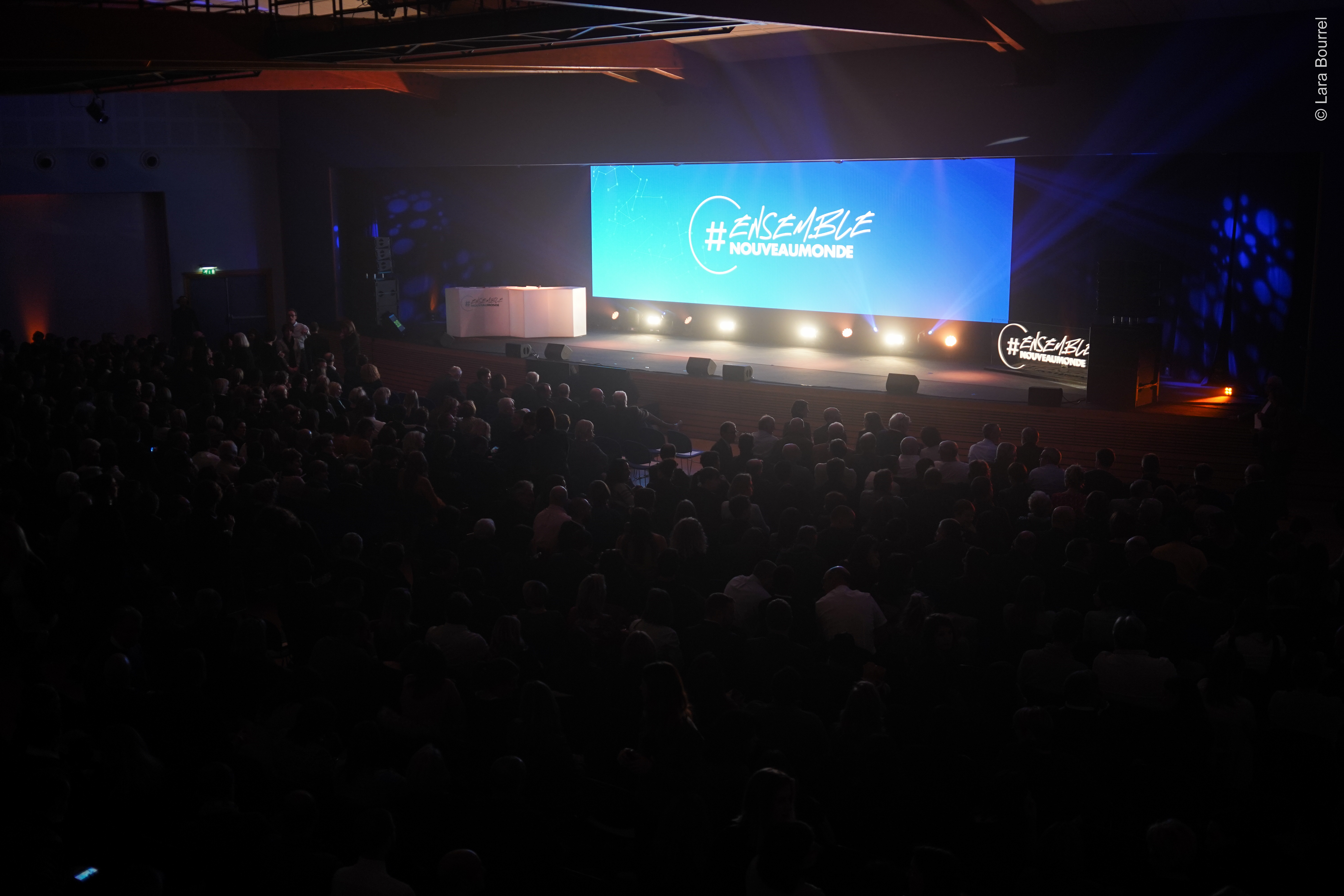
Which Brussels venue type fits your event objective?
The venue changes how your message is received. A shareholder-style update, a leadership offsite, and a client reception can all happen in Brussels—but the “right” venue type is different because it influences authority, intimacy, and operational control.
| Venue type | For which objective? | Main strengths | Possible constraints |
|---|---|---|---|
Conference venue / auditorium | Town hall, keynote, multi-speaker plenary (150–1,200) | Built-in AV, seating comfort, stage sightlines, professional front-of-house | Supplier restrictions, fixed seating, limited networking space depending on site |
Hotel meeting space | Leadership offsite, workshops, training (20–250) | All-in-one (rooms, catering, breakout rooms), easy contracting, predictable service | Ballroom acoustics can be challenging; branding and exclusivity depend on the hotel |
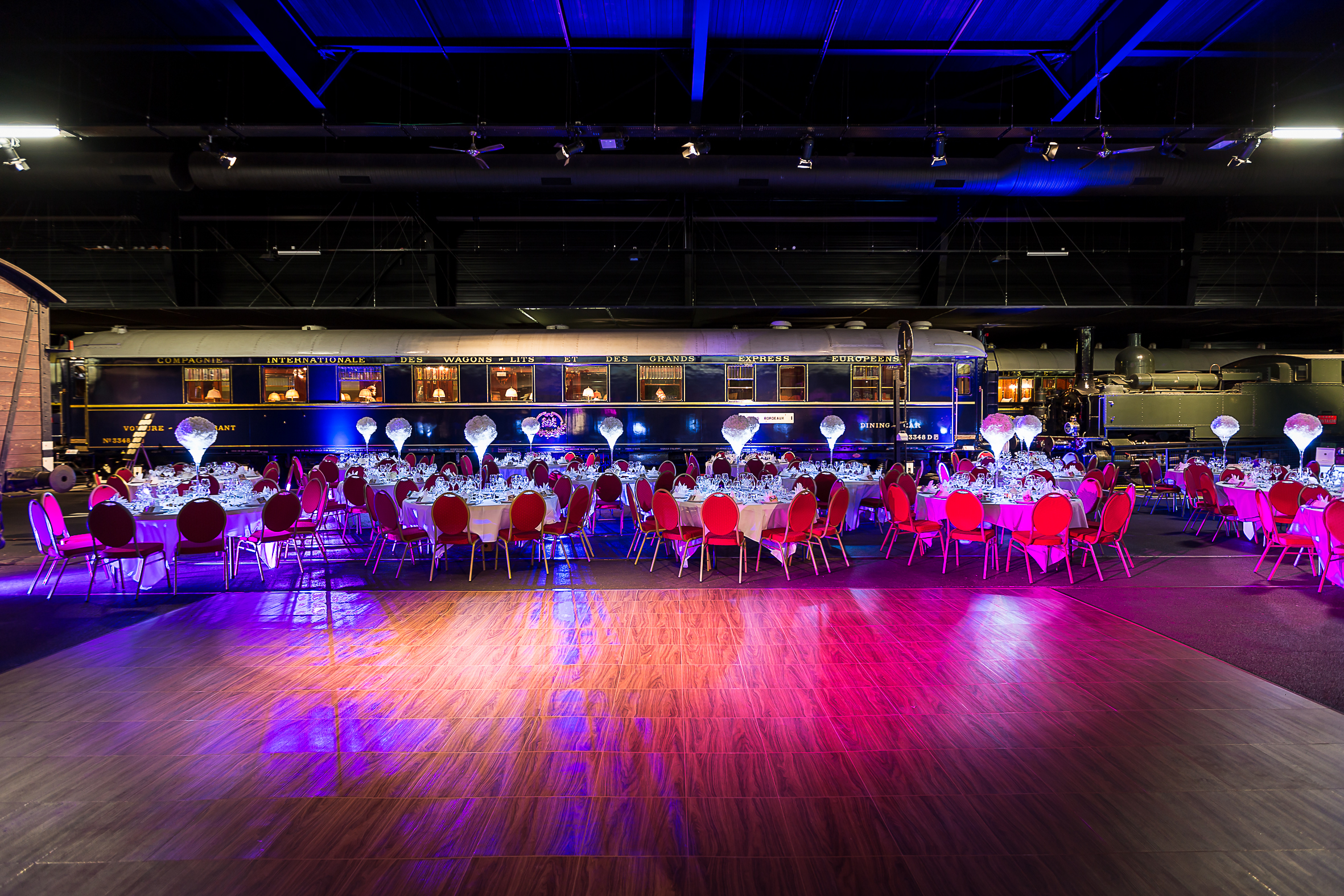
Industrial / contemporary event space | Brand launch, client evening, internal celebration (80–600) | Strong atmosphere, flexible layouts, impactful staging possibilities | Requires more production (heating, power, acoustics); load-in and permits can be complex |
We strongly recommend a site visit (and a technical recce for anything beyond a simple reception). In Brussels, two venues with the same capacity can behave very differently once you add registration, cloakroom, catering, staging, and security checks.
What does Event Venue Rental in Brussels typically cost?
Venue pricing in Brussels varies widely because it is driven by constraints, not just square metres. A venue that looks more expensive can be cheaper overall if it includes AV, staffing, and the right infrastructure. We build budgets in “total event cost” logic, so finance can compare like-for-like.
Date and time window: weekday daytime is often priced differently than evening; peak periods (end-of-year, Thursdays) reduce negotiation leverage.
Guest count and format: theatre vs. cabaret vs. standing reception changes staffing, furniture, and safety requirements.
Inclusions: some venues include basic AV and technicians; others require external providers. This is a major driver of variance.
Catering model: coffee breaks and lunch are not just “per head”; they also drive room turnover timing, service staff, and space planning.
Branding and privacy: exclusivity (private hire vs. shared site) affects price and security.
Contract terms: cancellation policy, minimum spend, deposit schedule, and liability clauses can materially change financial risk.
Accessibility and compliance: if you need additional infrastructure for accessibility, interpretation booths, or enhanced security screening, that must be planned and priced early.
From an ROI perspective, the venue is where operational risk either disappears or multiplies. The goal is not to “find the cheapest room,” but to secure a setting that protects your agenda, prevents reputational friction, and avoids costly last-minute production fixes.
Why work with a Brussels agency for venue sourcing
Venue rental becomes difficult when internal stakeholders need speed, procurement demands comparables, and leadership expects flawless delivery. A local agency reduces friction because we operate with real-time market knowledge and on-the-ground coordination.
INNOV'events is not a directory. We qualify venues as operational partners, negotiate contracts with your risk profile in mind, and manage suppliers so your team does not spend evenings chasing floor plans and tech specs. When there is a last-minute change—speaker delay, weather issue, transport disruption—local presence is what keeps the programme stable.
For broader support beyond venue sourcing, our event agency in Brussels team can also cover production, registration, content support, and on-site staffing under a single project governance.
- Faster feasibility checks through local relationships with venue managers and technical teams.
- Cleaner negotiations on deposits, attrition, minimum spend, and cancellation clauses—aligned with corporate procurement expectations.
- Operational realism: we know what load-in looks like in Brussels streets, what timing is realistic, and where bottlenecks appear.
- Supplier ecosystem: AV, staging, hosts, catering upgrades, security—coordinated with one run-of-show.
From an ROI perspective, the venue is where operational risk either disappears or multiplies. The goal is not to “find the cheapest room,” but to secure a setting that protects your agenda, prevents reputational friction, and avoids costly last-minute production fixes.








Examples of Brussels projects we can deliver
Our venue work spans very different corporate realities in Brussels, which is why we start with objectives and constraints rather than a pre-set shortlist.
Leadership offsite (25–40 people): boardroom setup, strict confidentiality, extended working session with two breakout spaces, and a dinner that supports discussion without being too noisy. Key success factor: a venue that can change room setups quickly without disturbing the group.
Internal town hall (200–600 people): stage management, multi-speaker microphone plan, controlled Q&A, and reliable streaming for remote teams. Key success factor: acoustics and sightlines—plus enough foyer space to avoid congestion at arrival and breaks.
Client reception (120–300 people): brand-forward atmosphere, curated catering flow, and clear VIP routing. Key success factor: guest journey design, security posture, and the ability to run a tight programme without “hotel ballroom” feeling.
Training day (80–180 people): multiple breakouts, punctual catering, and a room plan that supports learning (not just sitting). Key success factor: sufficient breakout inventory and quiet environment.
Across these formats, our core value is consistency: same level of planning detail, same control documents, same on-site discipline—regardless of whether the event is a celebration or a high-stakes corporate communication moment.
Common Brussels venue rental mistakes (and how we prevent them)
Signing before a technical check: discovering too late that the venue cannot support your screen size, lighting, or power needs, forcing expensive last-minute rentals.
Underestimating access constraints: loading is blocked, coaches cannot stop, or VIP drop-off creates delays; this quickly becomes visible to attendees.
Choosing on capacity alone: the room “fits” but networking becomes cramped, break lines are too long, and the event feels poorly managed.
Assuming Wi-Fi is event-grade: corporate audiences expect stable connectivity; weak networks break polls, QR check-in, and hybrid participation.
Unclear responsibilities: the venue expects you to manage security, furniture changes, or tech staffing; you assume it is included—resulting in day-of conflict.
Contract blind spots: cancellation terms, overtime rules, and minimum spend can create unplanned exposure if leadership changes the agenda late.
Our job is to prevent these risks before they become visible to your guests. We document assumptions, confirm feasibility with the venue’s technical team, and build a run-of-show that protects your programme under real conditions in Brussels.
Why Brussels teams renew with the same venue strategy
When a venue process works, clients tend to standardise it. Many Brussels organisations want repeatable delivery: predictable contracting, consistent guest experience, and the ability to scale up or down depending on the moment (town hall vs. leadership retreat vs. client night).
1 brief → a reusable venue scorecard: once we formalise your criteria (access, AV baseline, privacy, catering standards), selection becomes faster across future events.
2–3 preferred venue categories identified for most organisations: typically one “plenary-heavy” site, one workshop-friendly site, and one evening reception site.
Single governance pack reused across events: run-of-show template, supplier call sheet, risk register, and production schedule—reducing internal workload.

Loyalty is not about routine—it is about control. When your leadership expects professional delivery every time, a stable venue strategy in Brussels is one of the strongest proofs of quality.
Our Brussels process to secure the right venue and deliver safely
👉 Step 1 (Brussels): Translate your objective into a functional venue brief
We start with a working session (30–60 minutes) with HR/comms and the project owner: audience profile, agenda logic, language needs, accessibility, security posture, and brand constraints. Output: a functional brief with non-negotiables, nice-to-haves, and budget boundaries—usable for procurement and internal sign-off.
👉 Step 2 (Department 1000): Build a comparable shortlist and budget scenarios
We source and pre-qualify venues, then present a shortlist with consistent comparables: capacity by setup, included services, technical baseline, access notes, and contract highlights. We usually provide 2–3 budget scenarios (lean / standard / enhanced) so leadership can make a decision without rework.
👉 Step 3 (Brussels): Site visit and technical recce with decision owners
We organise a site visit focused on operational truth: guest flow, cloakroom, loading, backstage, breakout acoustics, signage points, and emergency access. For complex events, we run a technical recce with AV to confirm power, rigging, and camera positions before contract signature.
👉 Step 4 (Department 1000): Contracting, responsibilities, and supplier lock-in
We negotiate key terms (deposit schedule, cancellation, overtime, exclusivity, minimum spend) and confirm responsibilities in writing: who provides technicians, security, furniture moves, cleaning, and on-site supervisors. This is where many corporate events either become smooth—or become risky.
👉 Step 5 (Brussels): Production planning and day-of control
We create the run-of-show, supplier call sheet, and contingency triggers. On event day, we manage venue coordination, technical cues, speaker flow, and timing—so your executives and internal teams stay focused on content and stakeholder relationships.
FAQ sur l'organisation Event Venue Rental à Brussels
How early should I book a venue in Brussels?
For 100–300 attendees, plan 8–16 weeks ahead. For peak dates (Thursdays, end-of-year) or 400+ guests, aim for 4–9 months. If you have a fixed keynote speaker, lock the venue first—availability drives everything else.
What budget range is realistic for Brussels venue rental?
For corporate events, venue hire in Brussels can range from €1,500–€6,000 for smaller spaces, and €6,000–€25,000+ for larger venues or exclusive hire. Catering, AV, staffing, and security typically add more than the room fee, so we budget total cost per format, not per square metre.
Which Brussels areas work best for international guests?
For international-heavy audiences, areas with direct public transport and hotel density work best (often around Central/Schuman/Luxembourg or near major rail links). The right choice depends on your arrival pattern: train vs. airport vs. local commuters. We map guest origins before shortlisting venues.
Do Brussels venues include AV and technicians by default?
Not always. Many venues include a basic package (screen, projector, 1–2 microphones), but larger plenaries, hybrid needs, or multi-speaker panels often require upgrades. We confirm exact inclusions (equipment list, operator hours, rehearsal time) before you sign, to avoid last-minute surcharges.
Can you secure a Brussels venue with strict procurement rules?
Yes. We provide comparable options, written scope, and clear commercial terms so procurement can validate the decision. We also flag contract risks early (cancellation, minimum spend, liability), which speeds up legal review and prevents late-stage renegotiations.
Request a Brussels venue shortlist and a clear quote
If you are planning a leadership offsite, town hall, training day, or client event, contact INNOV'events early. Venue availability in Brussels is often the critical path, and the right contract structure can reduce both cost and risk.
Share your target date(s), guest count range, and event objective. We will come back with a qualified shortlist, realistic budgets, and the operational implications—so you can decide quickly and deliver with confidence.
INNOV'events Brussels Agency
Justin JACOB is the manager of the INNOV'events Brussels office. Reach out directly by email at belgique@innov-events.be or via the contact form.
Contact the Brussels agencyAll our services & entertainment Brussels, Belgique
Discover our event services
Discover our event entertainment available in the Belgique
- Event Hostess in Brussels
- Escape Game in Brussels
- MasterChef Cooking Workshop in Brussels
- Magician in Brussels
- Marquee Rental in Brussels
- Color Analysis Workshop in Brussels
- Inflatable Games in Brussels
- Valet Parking Service in Brussels
- Football Simulator in Brussels
- LED Furniture Rental in Brussels
- Light Branding in Brussels
- Unique Dining Experience in Brussels
- Light Painting in Brussels
- Murder Mystery Party in Brussels
- Prize Contest in Brussels
- Promotional Displays (POS) in Brussels
- Virtual Reality in Brussels
- Molecular Gastronomy Workshop in Brussels
- Halloween Entertainment in Brussels
- Fireworks Show in Brussels
- Giant Games Challenge in Brussels
- Event Host / MC in Brussels
- Photo Booth Animation in Brussels
- Santa Claus Entertainment in Brussels
- Kids Entertainment in Brussels
- Guided Tour in Brussels
- Urban Rally in Brussels
- Ball Pit in Brussels
- Flight Simulator in Brussels
- Food Truck Rental in Brussels
- World Record Challenge in Brussels
- Surf Simulator in Brussels
- Wine Casino in Brussels
- Makeover Workshop in Brussels
- Perfume Creation Workshop in Brussels
- Acting Workshop in Brussels
- CSR Activities in Brussels
- Archery in Brussels
- Security Staff in Brussels
- Wine Tasting in Brussels
- Mime Performer in Brussels
- TV Game Show in Brussels
- Funfair in Brussels
- Crisis Management Workshop in Brussels
- Crisis Negotiation Workshop in Brussels
- Arcade Games in Brussels
- Indoor Skydiving Simulator in Brussels
- Ski Simulator in Brussels
- Racing Circuit Experience in Brussels
- Introductory Flight Experience in Brussels
- Tasting Experience in Brussels
- Build Your Own Foosball Workshop in Brussels
- 2CV Rally in Brussels
- LEGO Challenge in Brussels
- Casino Night in Brussels
- Interpreter / Translator in Brussels
- Promotional Giveaways in Brussels
- Shuttle Transport in Brussels