
CSR Activities in Brussels that deliver real team and brand outcomes
INNOV'events designs and delivers CSR Activities for executive, HR and communication teams in Brussels, from 15 to 600+ attendees. We manage the full chain: partner sourcing (NGOs/social enterprises), safety, logistics, facilitation, reporting, and on-brand communications.
Whether you need a half-day impact workshop after a leadership offsite or a full-day action programme across multiple sites, we keep the experience credible, operationally safe, and easy to validate internally.
Sommaire
In a corporate event, CSR Activities are not “entertainment”: they are a managerial tool to align teams, demonstrate priorities, and create a visible proof-point for stakeholders—without turning the day into a PR exercise.
In Brussels, organisations expect strict timing, multilingual facilitation, compliance-ready partner selection, and a format that works for mixed audiences (HQ, EU affairs, field teams, remote joiners).
As an event agency in Brussels operating year-round, we coordinate local venues, social partners and suppliers with realistic lead times, and we document outcomes so HR and Comms can stand behind the results.
Brussels delivery facts decision-makers ask for
10+ years delivering corporate events and CSR Activities in Brussels for Belgian and international organisations.
Formats tested from 15 to 600+ participants, including multi-language facilitation (EN/FR/NL) and split groups across sites.
48–72h typical turnaround for a first concept note + budget range once objectives, headcount and constraints are clear.
1 single project lead accountable end-to-end (partners, venue, logistics, risk assessment, run-of-show, reporting).
Reporting delivered within 5–10 business days after the event (impact metrics, photos with consents, supplier attestations when relevant).
CSR Activities in Brussels with repeat local clients
We support organisations that operate in Brussels—headquarters, regional offices, EU-facing teams and multi-site Belgian groups—who need reliable delivery and internal-proof documentation. Many clients come back year after year because their internal stakeholders (HR, Procurement, Comms, Legal) know what they will receive: a clean plan, partners screened for credibility, and a programme that runs on time.
We regularly work with corporate groups, public-interest organisations and associations that must protect brand reputation and ensure compliance. In practice, that means: transparent partner selection, clear division of responsibilities, and deliverables that can be validated in advance (briefing notes, risk controls, participant communications, and post-event reporting).
If you have internal reference requirements (preferred suppliers, framework agreements, invoice coding, PO process), we integrate them early—this is often what makes or breaks timelines in Brussels.
 Besoin d’un devis rapide ?
Nous vous envoyons une première proposition sous 24h.
Why plan CSR Activities in Brussels for leadership and HR goals
When executives ask for CSR Activities, the underlying objective is rarely “doing good” in the abstract. It is usually about leadership credibility, employer branding, and team cohesion—under real operational constraints. The most successful programmes are designed with clear behavioural outcomes and measured deliverables, not vague intentions.
In Brussels, where many teams are international and mission-driven (public affairs, policy, finance, professional services, NGOs), participants are quick to detect token actions. The format must be coherent with your company narrative and respectful of local partners’ realities.
Leadership alignment without slides: a structured activity creates shared language and visible role-modelling. We often place executives in facilitation roles (kick-off, reflection prompts, debrief) while keeping the activity safe and professionally guided.
HR value you can evidence: onboarding integration, engagement, cross-team collaboration. We design moments where participants work in mixed groups with defined roles (timekeeper, quality checker, liaison), which HR can reuse in internal programmes.
Reputation protection through credible partners: we avoid “charity tourism” formats. We work with vetted NGOs and social enterprises and define what is helpful to them (output, quality standards, timing, storage/transport, privacy rules).
Communication content with governance: photo permissions, messaging guidelines, and impact facts are anticipated. Comms gets usable material without improvising on the day.
Procurement-friendly budgeting: split lines (facilitation, venue, catering, donations/in-kind, logistics) and options for 2–3 budget tiers so you can arbitrage quickly.
Operational discipline: clear run-of-show, group rotations, contingency plans for weather and traffic, and safety supervision—essential for central Brussels sites.
Brussels is a city where organisations are scrutinised: by employees, institutions, partners and sometimes media. A well-built CSR programme becomes a credible proof of values—provided it is designed with the same rigour as any strategic corporate initiative.
What companies in Brussels expect from CSR Activities
Delivering CSR Activities in Brussels requires practical knowledge of the city’s constraints. Travel times can be short on paper and long in reality; venue access rules vary widely; and many participants work in hybrid setups with fixed calendars. We design programmes that respect these constraints rather than fighting them.
Typical expectations we handle in Brussels:
- Multilingual delivery: not only translation, but facilitation that works across cultural communication styles. We provide bilingual materials and brief facilitators on tone and inclusive participation.
- Strict timing windows: many teams can only release staff for 2–3 hours. We build formats with a “core” module (90–120 minutes) plus optional extensions (debrief, networking, keynote, partner Q&A).
- Compliance and reputational risk: we validate partner legitimacy, insurance expectations, data/privacy rules for photos, and any restrictions around political neutrality (common for EU-facing organisations).
- Accessibility and duty of care: step-free access, quiet areas, clear signage, dietary constraints, and safe roles for all physical abilities. We propose alternatives so nobody is sidelined.
- Transport reality: coordination around public transport, limited coach access in certain zones, and staggered arrivals. For dispersed offices, we design multi-hub starts or a single central meeting point.
Finally, there is a cultural expectation: in Brussels, corporate audiences are generally well-informed about sustainability. They respond to transparency (what we do, why it matters, what it does not claim) rather than grand statements.
Which CSR Activities in Brussels engage teams and stay credible
Engagement comes from clarity: participants understand who benefits, what success looks like, and how their effort fits into a local ecosystem. In Brussels, the most effective formats are hands-on, well facilitated, and connected to local realities (housing, food insecurity, inclusion, circular economy, urban biodiversity).
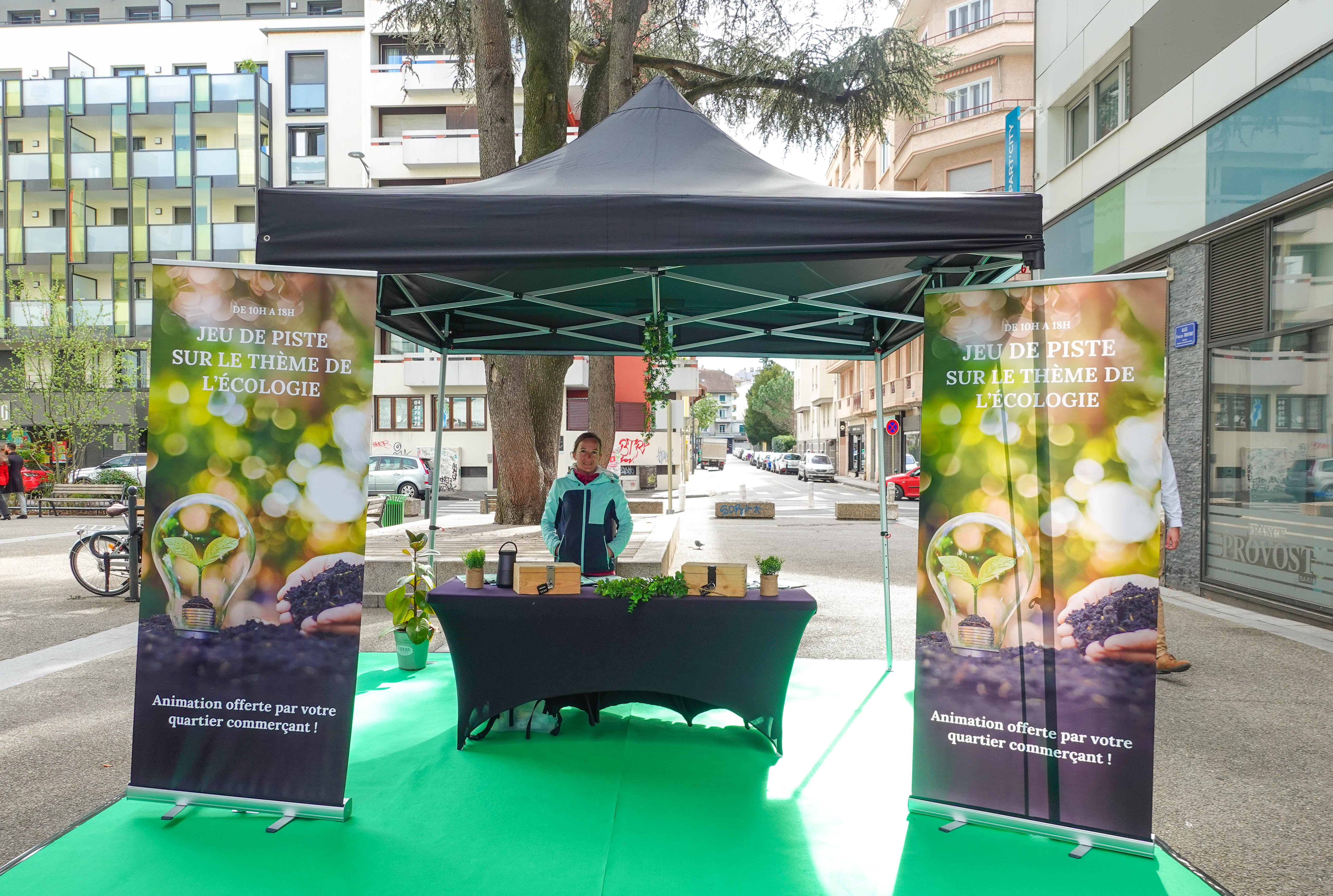
Interactive animations in Brussels
Impact Sprint workshop (90–150 min): teams solve a real operational problem presented by a local NGO/social enterprise (e.g., volunteer onboarding, donation logistics, communication clarity). Output is a structured deliverable (process map, messaging kit, KPI dashboard outline). Works well for consulting, finance, tech and policy teams.
CSR procurement challenge: participants work with a list of Brussels-based social economy suppliers and design a “switch plan” for one internal spend category (catering, gifts, printing). We add a governance layer (approval workflow, quality criteria) so it is usable after the event.
Inclusive design lab: guided exercises with accessibility constraints to redesign an internal touchpoint (event invitation, intranet page, onboarding journey). Good for HR/Comms; produces concrete improvements and awareness without being performative.
Art animations in Brussels
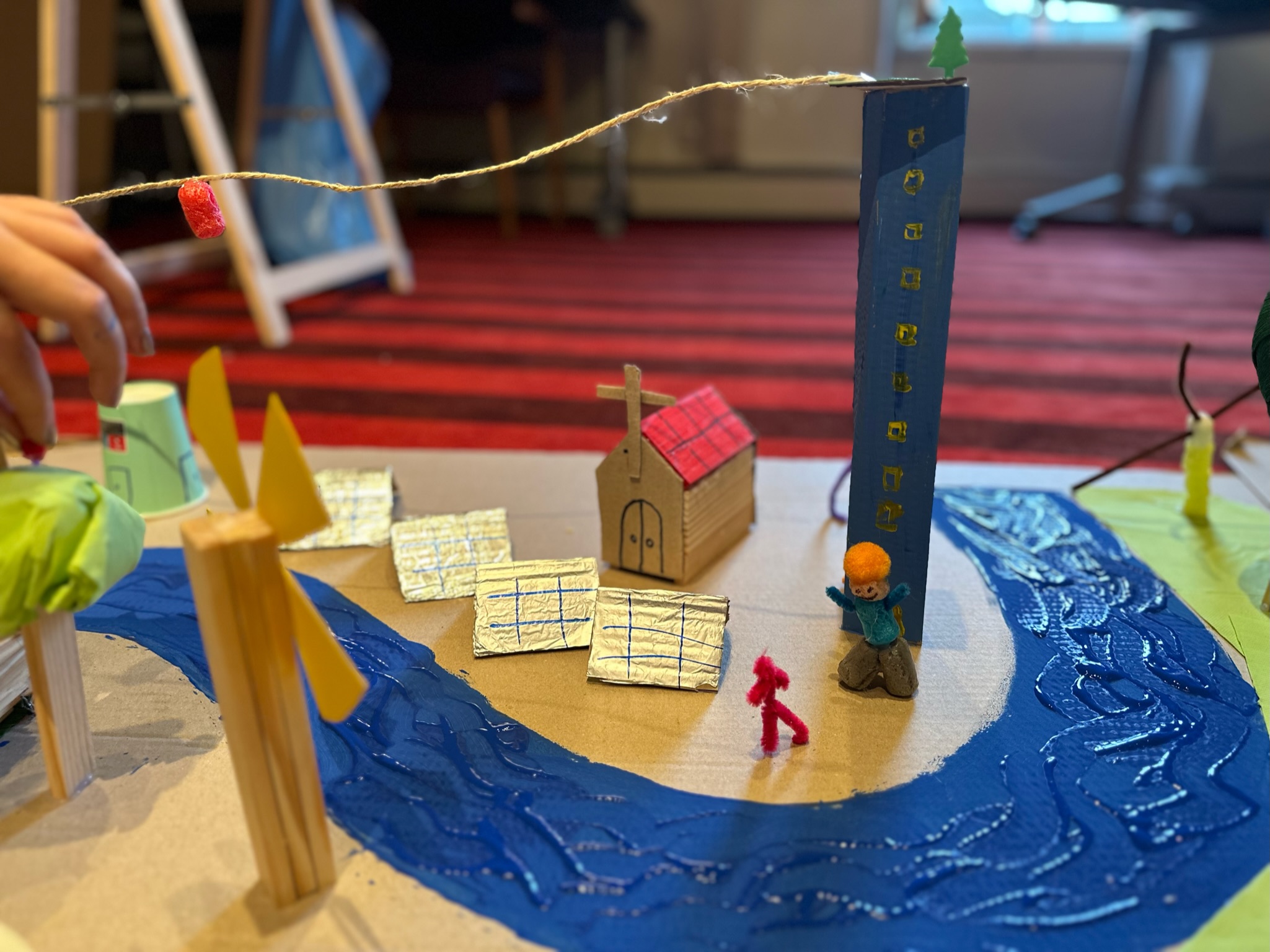
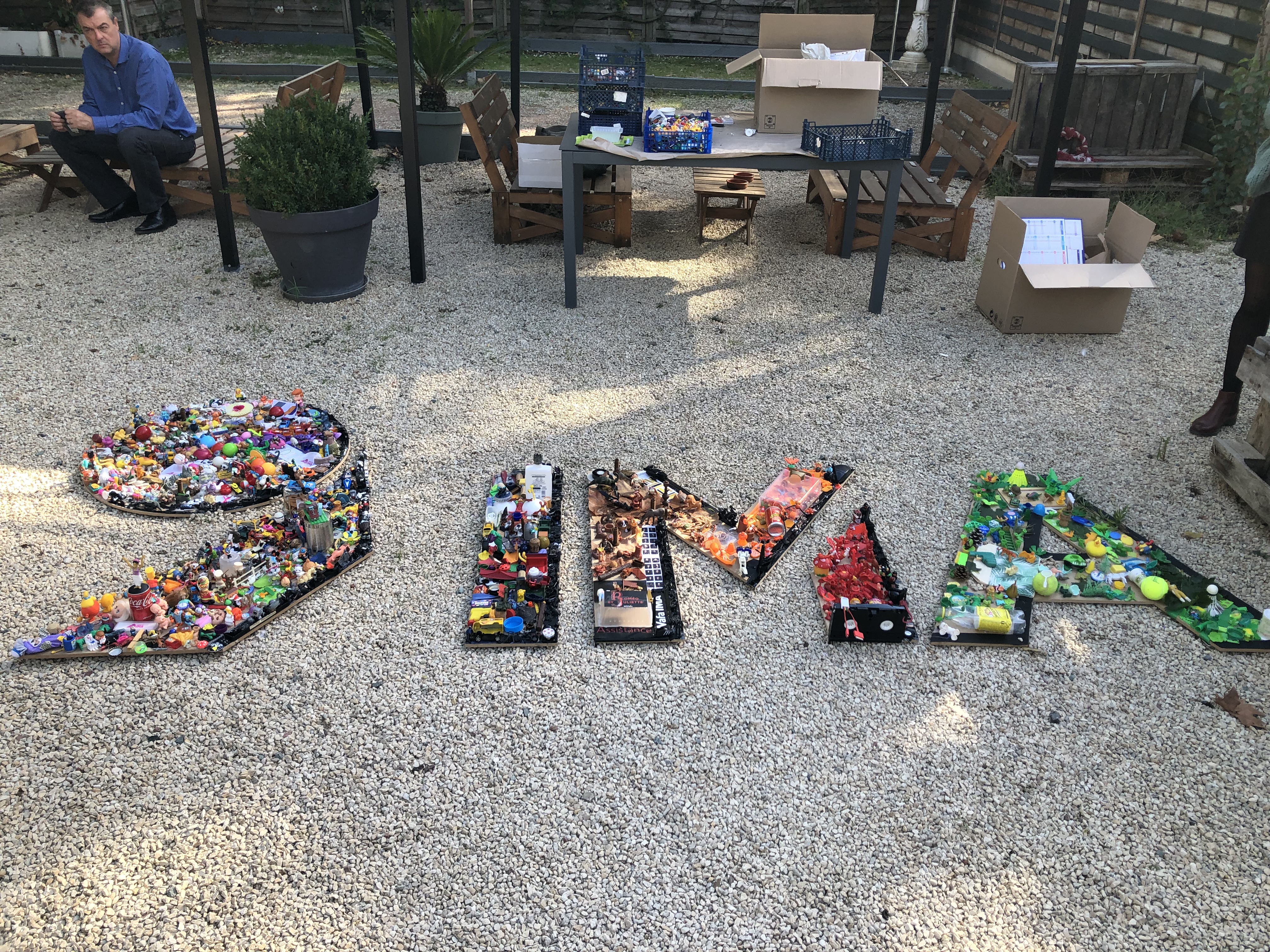
Community mural / collective artwork with a social partner: a facilitated creation that will be displayed in a partner location (or your office with a joint narrative). We define the message, approvals, and rights of use in advance to avoid misunderstandings.
Storytelling studio with beneficiaries’ consent framework: small groups create short written or audio stories based on anonymised real cases provided by the partner. Strong for internal engagement; we keep strict boundaries to protect dignity and privacy.
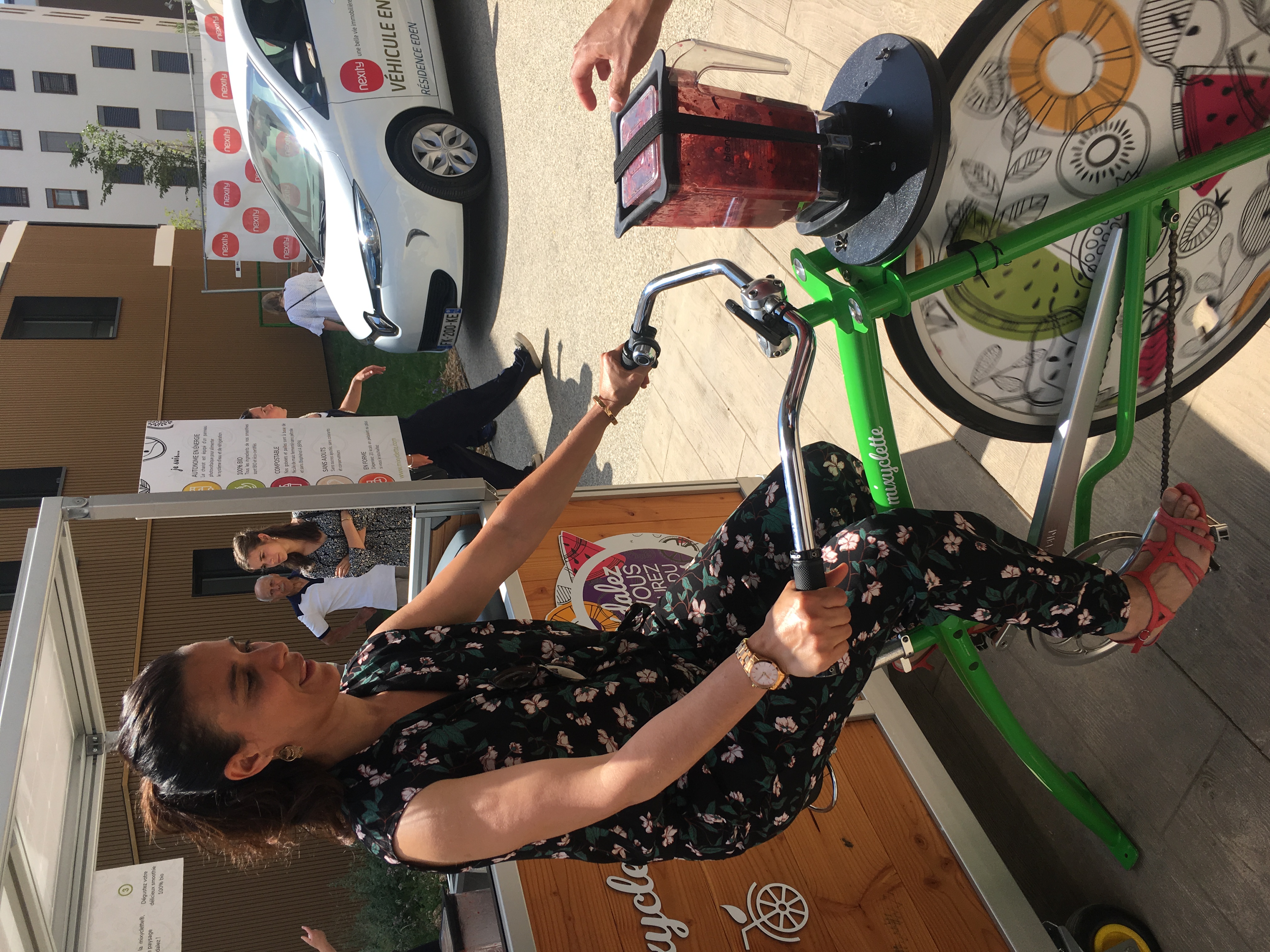
Innovative animations in Brussels
Solidarity meal production (indoor): teams prepare or assemble meals/snack packs with a Brussels partner. We control food safety, labelling, allergens and distribution timing. This format is operationally demanding, so we plan staffing and transport precisely.
Food-waste reduction challenge: a structured activity where participants audit an event menu, propose waste reduction levers, then implement on-site (portioning, signage, donation logistics). Good for companies wanting measurable operational learning.
Gourmand animations in Brussels
Circular economy build: upcycling workshops (e.g., refurbished IT accessories kits, repaired items for reuse). We ensure quality control so the output is actually usable and not symbolic.
Urban biodiversity action with data capture: planting or habitat actions combined with simple monitoring (before/after photos, species checklist, maintenance plan). We avoid “one-off planting” by including aftercare responsibilities and partner validation.
Skills-based volunteering marketplace (curated): short, high-quality missions (2–4 hours) matching participants’ skills (HR, finance, digital) with partner needs. We limit the number of missions to ensure real follow-through and avoid dilution.
Whatever the format, we align the activity with your brand image and governance: what you can credibly claim, what you should not claim, and how to involve leadership without turning the day into corporate theatre. In Brussels, that alignment is what protects trust.
Where to host CSR Activities in Brussels: choosing the right setting
The venue influences how participants perceive the seriousness of the initiative. A polished corporate venue can support executive presence and clear logistics; a community-based venue can increase authenticity—if it is appropriate and not disruptive to the partner’s operations. For CSR Activities in Brussels, we select settings based on accessibility, capacity, and what the partner can realistically host.
| Venue type | For which objective? | Main strengths | Possible constraints |
|---|---|---|---|
| Corporate meeting space in Brussels (HQ or business centre) | Executive-led kick-off + structured impact workshop | Controlled AV, confidentiality, easy governance, efficient timing | Less “field” feel; requires strong facilitation to avoid being abstract |
| Partner NGO/social enterprise site in Brussels | Hands-on action with direct operational relevance | High authenticity, immediate understanding of local realities | Capacity limits, access rules, duty-of-care constraints, must not disturb core operations |
| Neutral event venue with production space (workshop + assembly lines) | Large group action (100–600) with high throughput | Space for stations, catering integration, strong group management | Requires transport/storage planning; higher production costs |
| Outdoor urban site in Brussels (park/green corridor) with indoor fallback | Biodiversity or clean-up actions + team cohesion | Visible action, energising, simple participation | Weather contingency mandatory; permits and waste handling must be planned |
We insist on a site visit or at minimum a technical recce (access, loading, storage, washrooms, safety). In Brussels, this prevents the classic issues: blocked deliveries, underestimated walking times, and last-minute restrictions from building management.
How to budget CSR Activities in Brussels without hidden costs
Pricing for CSR Activities in Brussels depends less on “the idea” and more on operational parameters: people flow, supervision, materials, venue constraints and reporting requirements. A credible budget is one that separates production costs from impact contributions, and that anticipates the real logistics of the city.
As a practical reference, for many corporate groups in Brussels:
- 15–40 participants: often €2,500–€7,500 depending on partner fees, facilitation, venue and materials.
- 40–120 participants: often €6,000–€18,000 due to staffing ratios, station duplication and logistics.
- 120–600 participants: often €15,000–€60,000+ depending on venue production, safety, transport, and complexity.
These ranges become more precise once we confirm your headcount, venue situation and partner model.
Headcount and group management: number of facilitators, station leads, and supervision ratios.
Venue and technical needs: workshop rooms, assembly space, loading access, AV for briefings, power points, furniture.
Materials and quality control: kits, protective equipment, labelling, printing, packing standards.
Partner economics: some partners need a contribution to cover staff time; we clarify what is a donation vs. a service fee.
Transport and storage: delivery windows, temporary storage, distribution to beneficiaries, waste removal.
Compliance and documentation: photo consent management, impact reporting, attestations, and internal documentation for ESG or HR files.
We frame ROI in terms decision-makers can use: engagement outcomes, concrete outputs delivered to partners, and reduction of reputational risk through professional governance. For many organisations in Brussels, the cost of a poorly controlled CSR action is higher than the event budget.
Why use an event agency in Brussels for CSR delivery
Local presence is not a slogan; it is operational advantage. With CSR Activities, the weak point is usually not creativity—it is execution: partner coordination, timing, access constraints, and last-minute changes. In Brussels, those variables multiply quickly (traffic patterns, building regulations, multilingual participants, and parallel institutional events affecting availability).
As a local team, we maintain working relationships with venues, technical suppliers, caterers and impact partners. That allows quicker feasibility checks, realistic load-in plans, and faster contingency solutions when something shifts (speaker delayed, room change, weather, supplier issue).
- Shorter decision loops: rapid recce, quicker partner confirmation, faster risk validation.
- More accurate logistics: real-world routing, parking/loading knowledge, supplier punctuality realities in Brussels zones.
- Better partner care: we protect NGO/social enterprise partners with clear boundaries, fair planning, and practical support—this is what keeps programmes credible.
- On-site command: a Brussels-based lead who can be physically present early for set-up, manage stakeholders, and keep executives informed with concise updates.
We frame ROI in terms decision-makers can use: engagement outcomes, concrete outputs delivered to partners, and reduction of reputational risk through professional governance. For many organisations in Brussels, the cost of a poorly controlled CSR action is higher than the event budget.





Examples of CSR Activities delivered in Brussels contexts
Our projects vary because corporate realities vary. A listed company’s internal approvals are not the same as a scale-up’s speed, and a regulated sector will not communicate like a creative agency. We adapt the format while keeping a consistent backbone: risk control, partner respect, and measurable outputs.
Typical Brussels situations we handle:
- Leadership offsite with limited time: a 2-hour impact sprint integrated between strategy sessions, with pre-briefed NGOs and a structured executive debrief. Outcome: concrete deliverables handed to partners and a clear internal narrative for Comms.
- End-of-year town hall (200–400 people): high-throughput assembly lines with strong flow management, multilingual briefing, and a controlled photo policy. Outcome: quantifiable output plus safe, smooth participant experience.
- Employer branding / onboarding: recurring quarterly CSR module for new hires based in Brussels, designed as a consistent ritual. Outcome: values made tangible, plus a predictable process for HR.
- Multi-stakeholder day (clients + employees): formats that avoid “performative CSR” by clarifying roles, ensuring dignity for beneficiaries, and managing external guests with appropriate messaging.
We can propose options that match your internal constraints: from discreet programmes for regulated teams to more visible initiatives when your brand is ready to publish impact content.
Common pitfalls with CSR Activities in Brussels and how we prevent them
Partner chosen too late: the NGO cannot absorb the group, or the action is not actually needed. We lock partner feasibility early and define scope and timing in writing.
Confusing donation with service delivery: budget lines become unclear and difficult for Procurement/Finance to validate. We separate contributions from production fees.
Underestimating set-up and flow: assembly actions collapse without station duplication, clear instructions and quality checks. We design a production line with roles and checkpoints.
Inadequate duty of care: activities too physical, unclear safety rules, or no inclusive alternatives. We provide accessible roles and safety briefings.
Comms improvisation: photos taken without consent, claims that cannot be substantiated, or partner discomfort. We prepare a clear comms framework and approvals.
No post-event proof: nothing measurable to report internally. We define metrics upfront and deliver a post-event pack (outputs, partner feedback, key figures).
Our role is to remove these risks before they become on-the-day issues. In Brussels, where stakeholders are demanding and schedules are tight, prevention is the difference between a credible CSR initiative and a costly reputational distraction.
Why Brussels clients repeat CSR programmes with us
Repeat business in Brussels comes from operational reliability and internal comfort: HR and Comms know they can defend the programme, executives know timing will be respected, and Procurement knows the file is clean. We build reusable formats that can scale across departments while remaining credible for participants.
2–4 repeat touchpoints per year is common for organisations integrating CSR into onboarding, leadership cycles or annual moments.
3 budget tiers provided on request (essential / recommended / flagship) to help internal arbitration without endless iterations.
1 consolidated post-event pack shared with HR, Comms and management to reduce internal back-and-forth.

Loyalty is not about novelty; it is about trust under pressure. When teams return, it is because the experience was well governed, partners were respected, and the outcomes were defendable inside the organisation.
Our Brussels delivery process for CSR Activities from brief to reporting
👉 Step 1 (Brussels): clarify objectives, constraints and stakeholder approvals
We start with a working session (30–60 minutes) with HR/Comms/lead sponsor to confirm objectives, audience profile, sensitivity points, and internal approvals (Procurement, Legal, ESG). We also capture constraints: timing window, languages, accessibility needs, security rules, and what you can credibly communicate.
Deliverable: a concise concept note with 2–3 feasible directions for CSR Activities in Brussels, including early budget ranges and operational assumptions.
👉 Step 2 (Brussels): partner selection and feasibility validation
We shortlist partners that match your objectives and capacity, then validate feasibility: what action is truly useful, supervision needs, material requirements, storage/transport, and any restrictions (privacy, minors, sensitive populations). We confirm partner economics transparently.
Deliverable: partner fiche(s) with scope, responsibilities, and a draft run-of-show.
👉 Step 3 (1000): production planning, risk controls and participant journey
We build the production plan: venue layout, station design, staffing plan, timing, logistics, and contingencies (weather, transport delays, no-shows). We also prepare participant communications: dress code, arrival instructions, accessibility info, and what to expect.
Deliverable: detailed run-of-show, staffing plan, and logistics sheet ready for internal validation.
👉 Step 4 (Brussels): on-site delivery and executive management
On the day, we run set-up, supplier coordination, participant flow, safety briefings, and facilitation. We manage leadership involvement so it supports the activity (clear framing, presence at key moments) without disrupting operations. We coordinate photo capture according to consent rules.
Deliverable: smooth execution with a single point of contact for real-time decisions.
👉 Step 5 (Brussels): impact reporting and internal reuse
Within 5–10 business days, we deliver a post-event pack: quantified outputs, partner feedback, selected photos (with consent), and recommendations for next steps. If you need ESG-aligned language, we provide wording that is factual and defensible.
Deliverable: a report you can share internally with management, HR and Comms without rewriting.
FAQ sur l'organisation CSR Activities à Brussels
How long should CSR Activities in Brussels last?
Most corporate programmes in Brussels work best in 2 to 3.5 hours including briefing and debrief. For larger groups (150+), plan 3 to 5 hours to avoid congestion and to keep quality control on outputs.
What budget range for CSR Activities in Brussels for 100 people?
For 100 participants in Brussels, a realistic range is typically €8,000 to €20,000 depending on venue needs, number of facilitators, materials, transport/storage, and reporting requirements.
Can you run CSR Activities in Brussels in English only?
Yes. Many organisations in Brussels operate in English. We can deliver fully in EN, or in EN with FR/NL support for mixed groups. What matters is not only language, but facilitation style and clear written instructions for stations.
How do you avoid greenwashing in Brussels CSR events?
We use factual claims only: defined outputs, partner validation, and clear limits on what the activity achieves. We separate donation vs. service fees, secure photo consent, and ensure the partner confirms the action is genuinely useful in Brussels.
How early should we book a Brussels CSR activity date?
For 40–120 people, we recommend 4 to 8 weeks. For 150+ or complex logistics, 8 to 12 weeks is safer in Brussels, especially in busy institutional periods (spring and autumn).
Request a Brussels proposal and operational plan
If you need CSR Activities in Brussels that are credible, well governed, and deliver measurable outcomes, send us your date, headcount, preferred duration, and any internal constraints (languages, venue, approvals, comms rules). We will respond with 2–3 feasible concepts, a clear budget range, and the operational plan needed for internal validation.
Early planning is what protects quality—especially when partner capacity, venue access, and leadership calendars are involved in Brussels.
INNOV'events Brussels Agency
Justin JACOB is the manager of the INNOV'events Brussels office. Reach out directly by email at belgique@innov-events.be or via the contact form.
Contact the Brussels agencyToutes nos prestations & animations Brussels, Belgique
Découvrez nos prestations événementielles
Découvrez nos animations événementielles disponibles au Belgique
- Event Hostess in Brussels
- Escape Game in Brussels
- MasterChef Cooking Workshop in Brussels
- Magician in Brussels
- Marquee Rental in Brussels
- Color Analysis Workshop in Brussels
- Inflatable Games in Brussels
- Valet Parking Service in Brussels
- Football Simulator in Brussels
- LED Furniture Rental in Brussels
- Light Branding in Brussels
- Unique Dining Experience in Brussels
- Light Painting in Brussels
- Murder Mystery Party in Brussels
- Prize Contest in Brussels
- Promotional Displays (POS) in Brussels
- Virtual Reality in Brussels
- Molecular Gastronomy Workshop in Brussels
- Halloween Entertainment in Brussels
- Fireworks Show in Brussels
- Giant Games Challenge in Brussels
- Event Host / MC in Brussels
- Photo Booth Animation in Brussels
- Santa Claus Entertainment in Brussels
- Kids Entertainment in Brussels
- Guided Tour in Brussels
- Urban Rally in Brussels
- Ball Pit in Brussels
- Flight Simulator in Brussels
- Food Truck Rental in Brussels
- World Record Challenge in Brussels
- Surf Simulator in Brussels
- Wine Casino in Brussels
- Makeover Workshop in Brussels
- Perfume Creation Workshop in Brussels
- Acting Workshop in Brussels
- CSR Activities in Brussels
- Archery in Brussels
- Security Staff in Brussels
- Wine Tasting in Brussels
- Mime Performer in Brussels
- TV Game Show in Brussels
- Funfair in Brussels
- Crisis Management Workshop in Brussels
- Crisis Negotiation Workshop in Brussels
- Arcade Games in Brussels
- Indoor Skydiving Simulator in Brussels
- Ski Simulator in Brussels
- Racing Circuit Experience in Brussels
- Introductory Flight Experience in Brussels
- Tasting Experience in Brussels
- Build Your Own Foosball Workshop in Brussels
- 2CV Rally in Brussels
- LEGO Challenge in Brussels
- Casino Night in Brussels
- Interpreter / Translator in Brussels
- Promotional Giveaways in Brussels
- Shuttle Transport in Brussels