Build Your Own Foosball Workshop in Brussels for real team alignment
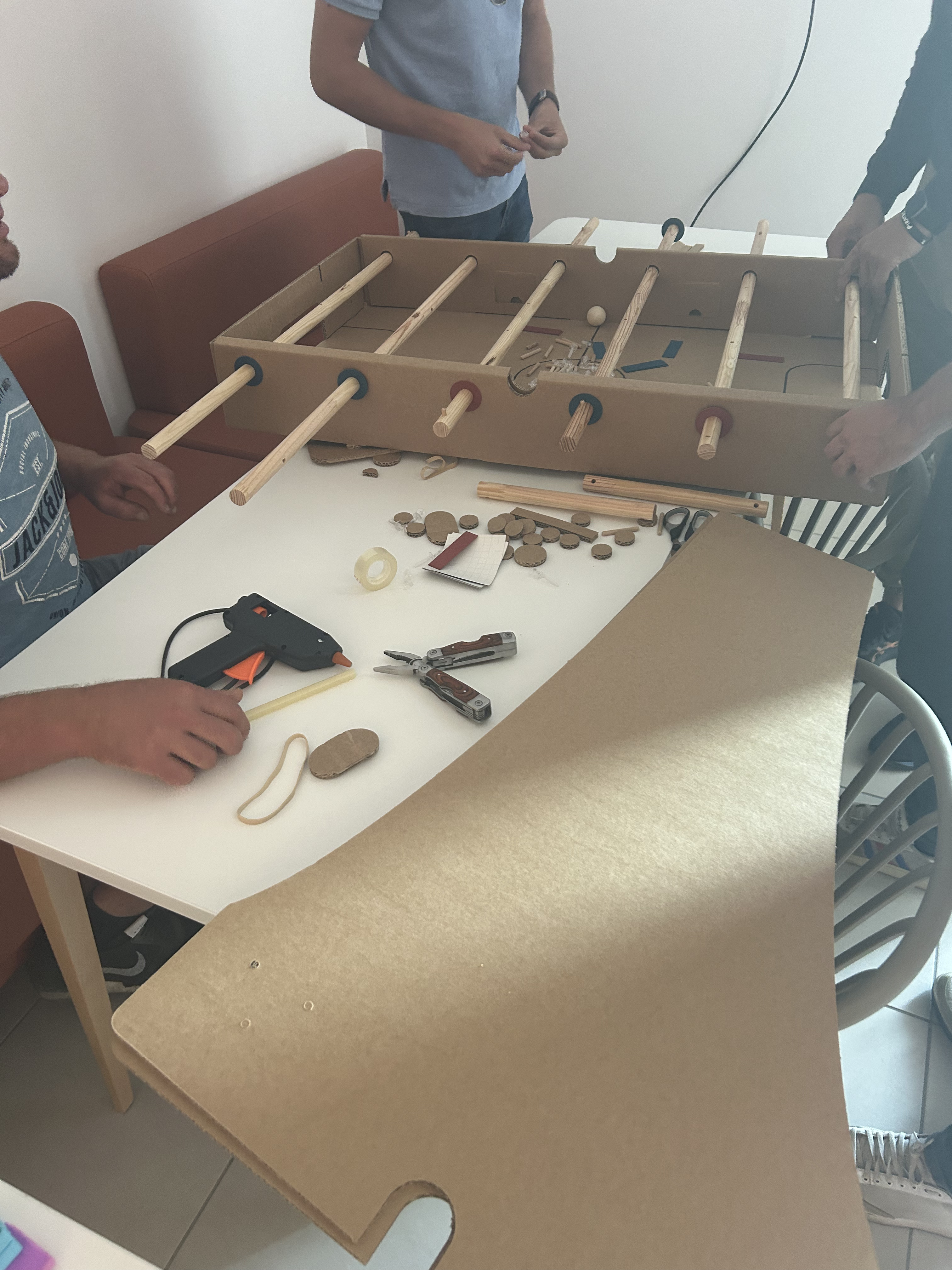
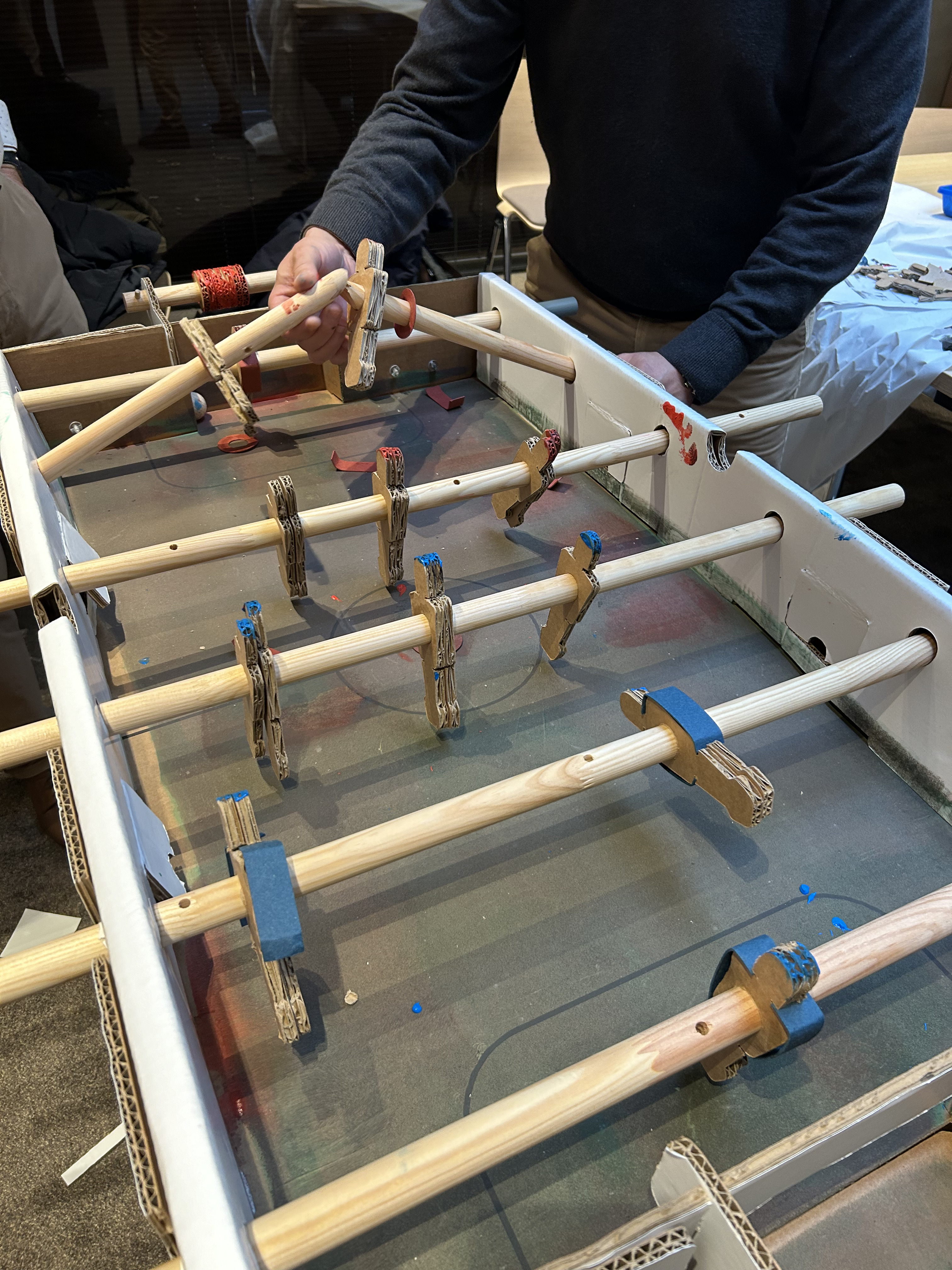
INNOV'events delivers a Build Your Own Foosball Workshop in Brussels for executive committees, HR and communication teams who want a concrete, time-boxed activity that produces a visible result. Typical formats work well from 10 to 200 participants, in plenary or in rotating groups. We handle the full chain: workshop design, on-site coordination, materials, safety, branding options, and post-event delivery of the finished foosball tables.
Sommaire
In a corporate event, entertainment is not a “nice-to-have”: it is a lever to create cross-silo collaboration, accelerate informal connections, and give leaders a shared reference point they can reuse after the event. A build workshop works because it moves teams from discussion to execution in less than two hours.
In Brussels, expectations are pragmatic: bilingual or multilingual facilitation, strict timing between meetings and trains, and an activity that respects image and safety standards. Companies also want an output they can display in the office, not just photos.
As an event agency in Brussels, INNOV'events works week-in/week-out with venues, suppliers and corporate stakeholders across the region. We plan with the reality of Brussels logistics in mind (loading constraints, parking permits, building access rules, and security procedures).
INNOV'events in Brussels: the numbers executives ask for
10–200 participants per session, with rotation setups to scale beyond 200 in half-day programmes.
60–120 minutes for the core workshop (plus 30–60 minutes for setup/teardown depending on the venue).
2–8 facilitators on-site depending on group size, with one designated floor manager for timing and stakeholder coordination.
0 incident is the target: PPE, tool briefing, controlled workstations and venue protection are built into our operating procedure.
Typical delivery lead time for the finished items: 24–72 hours within Brussels, once branding and final checks are validated.
Brussels references and recurring clients
We support organisations in Brussels that run high-stakes internal events: leadership kick-offs, transformation roadshows, onboarding days, client-facing receptions with an internal team component, and end-of-year moments where the CEO wants energy without losing control of the agenda. Many clients rebook because they know the operational side is handled: access slots, security checks, multi-floor venues, and last-minute changes in participant lists.
If you have internal reference requirements (procurement validation, HSE checks, insurance, or supplier onboarding), we are used to working through those steps early so the event does not get blocked two weeks before D-day. We can also align with internal communication teams for messaging, photo/video angles, and brand guidelines.
Share the company names you want us to mention as local references, and we will integrate them precisely (with the right context and what we delivered), keeping it credible and compliant with your communication policy.
 Besoin d’un devis rapide ?
Nous vous envoyons une première proposition sous 24h.
Why run a foosball build workshop in Brussels for management goals
A Build Your Own Foosball Workshop in Brussels is effective when you need collaboration to happen fast between people who do not naturally work together: business units, countries, or functions. Unlike a classic team game, the “build” element creates a shared operational problem: instructions, roles, trade-offs, quality control and time pressure. That is exactly what most organisations are living during growth, integration or transformation.
For executives, the workshop is useful because it is observable: you can see how teams allocate roles, manage bottlenecks, and communicate under constraints. For HR and internal comms, it provides a strong narrative (from parts to a working table) without forcing artificial storytelling.
Concrete collaboration under time constraints: teams must plan, assemble, test, and adjust; it mirrors project work and highlights coordination habits.
Inclusive engagement: participants who dislike “forced games” usually accept build tasks (assembly, quality checks, branding, documentation, testing) and still contribute.
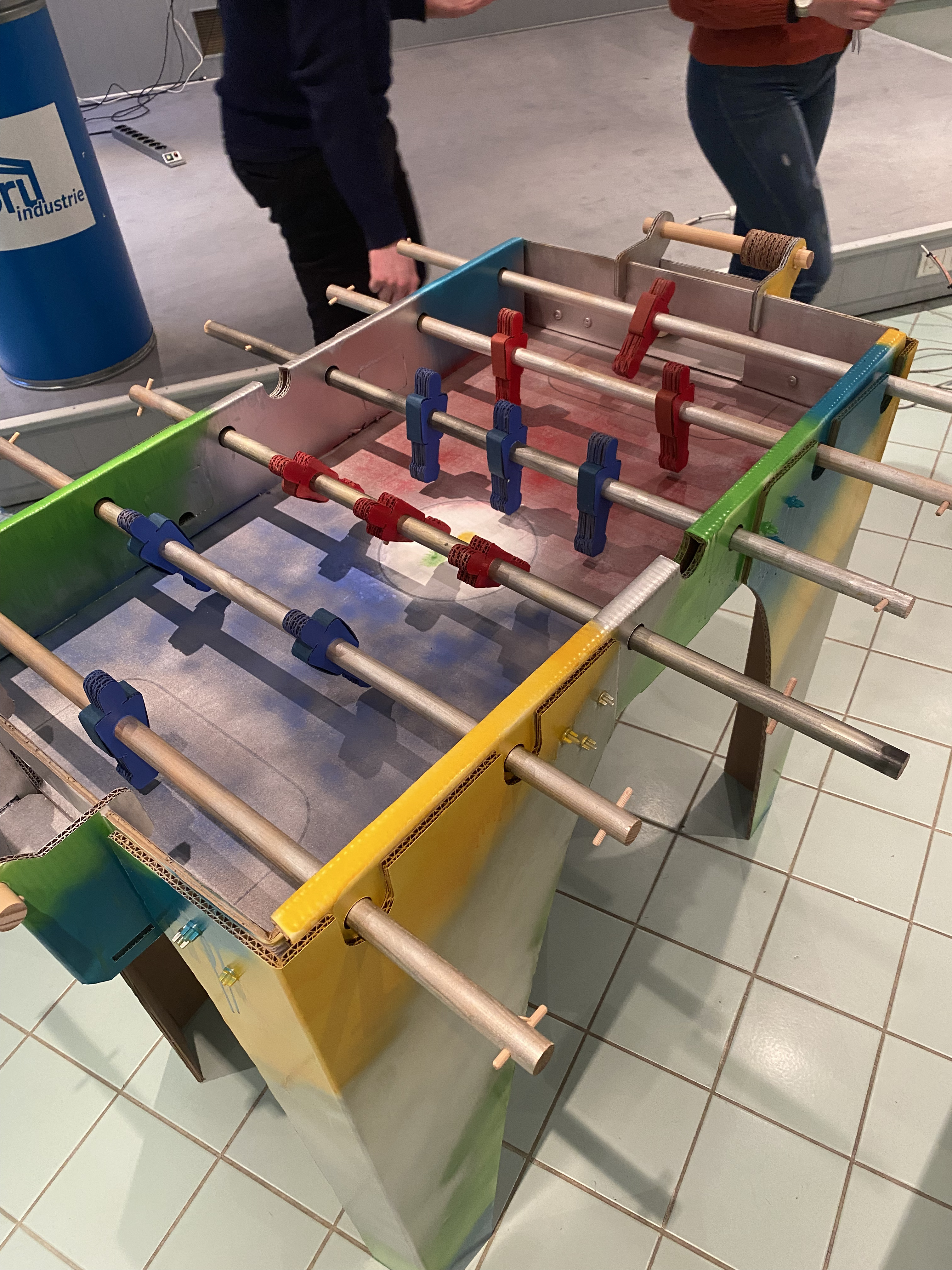
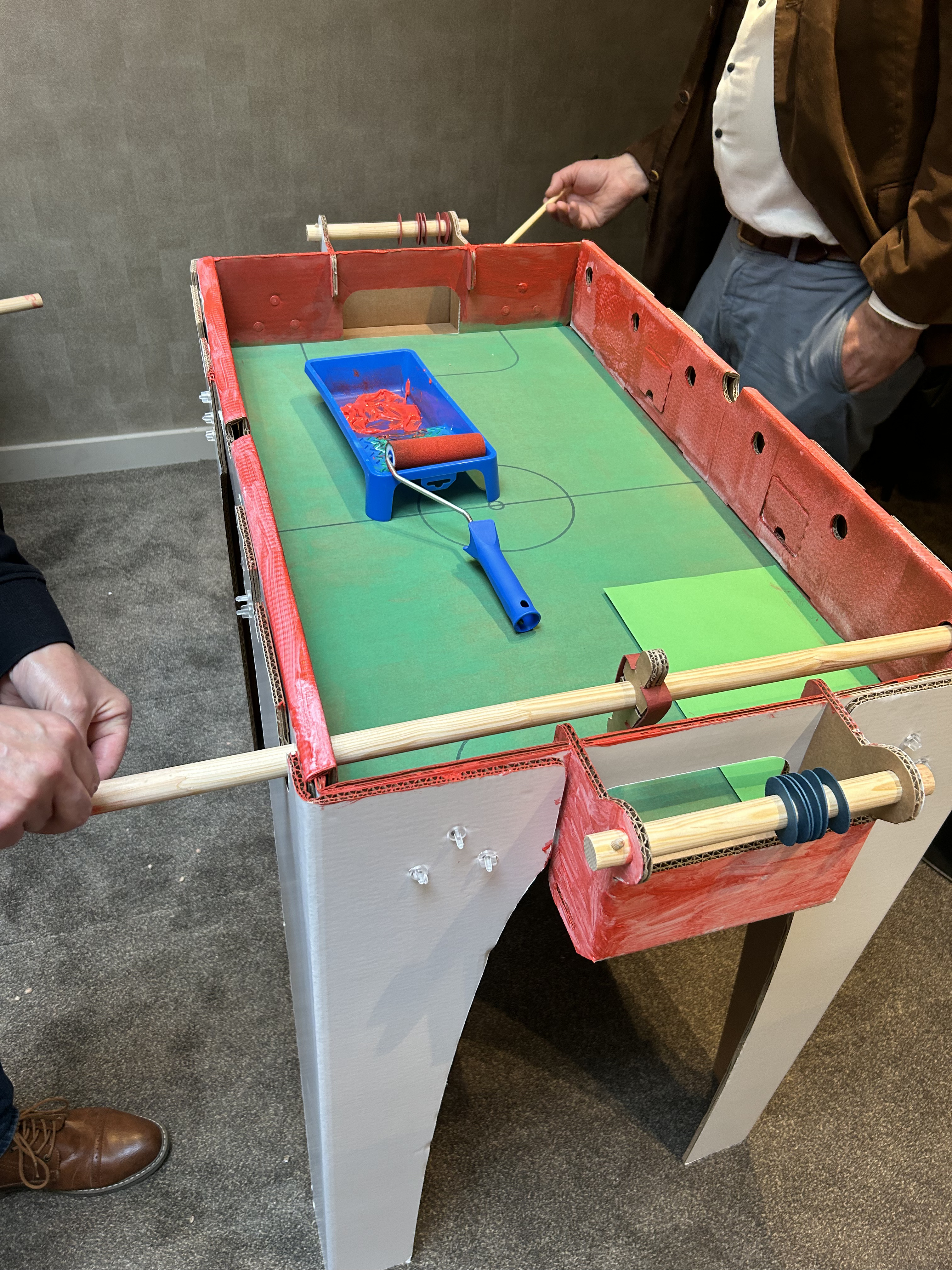
Visible output for your workplace: the finished foosball tables can be installed in a Brussels office, a break area, or a social space as a lasting asset.
Leadership visibility without speeches: executives can join a station for 10 minutes, unlock decisions, and show support in a natural way.
Cross-cultural dynamics handled: bilingual facilitation (FR/NL, and EN when needed) reduces friction and keeps the pace.
Brand and values activation: if your values include “quality”, “safety”, “customer focus” or “excellence”, we can build micro-moments into the workshop (quality gates, test protocols, role rotation) so it is experienced, not stated.
Brussels is a city where teams are often international, schedules are dense, and venues have strict operating rules. This format respects that reality: it is time-boxed, operationally controlled, and creates a product that fits modern workplace culture.
What Brussels companies expect from corporate event entertainment
In Brussels, corporate events rarely happen in a vacuum. People come from EU institutions, headquarters, and satellite offices across the region. That means arrival waves, late joiners, and a strong need for an activity that still works if a group is missing two people for the first 15 minutes. In our setup, roles are modular (assembler, parts manager, quality controller, tester, brand/finish lead), so teams can absorb arrivals without losing momentum.
Brussels venues also have operational constraints that impact workshop design: limited freight elevator access, fixed loading slots, strict floor protection requirements, and sound limits when you share a building with offices. We plan equipment cases, protective mats, and tool choices accordingly. If your event is in a city-centre hotel with narrow access, we plan lighter modules and keep the footprint compact; if you are in an industrial venue in the canal area, we can scale the build stations and add testing tournaments.
Finally, many Brussels organisations are sensitive to image and compliance. We provide clear safety briefings, controlled tool usage, and insurance documentation as needed. For HR teams, this reduces the “what if” conversations and makes approval easier. For communication teams, we define photo-friendly moments (team handover, quality check, first ball test) that look professional and aligned with your brand.
What to combine with your Brussels foosball build workshop
A build workshop becomes even more effective when it is integrated into a broader programme. In Brussels, many corporate days are hybrid: a plenary session, breakouts, and one high-energy moment to reset attention. We often position the build workshop after a strategic keynote or before a networking moment because it gives people an immediate shared subject to talk about.
Interactive animations in Brussels
Team rotation format: groups rotate through build, branding, and testing stations. This keeps energy high even when you have large headcounts and limited space in Brussels venues.
Quality-and-time challenge: a scoreboard that rewards both speed and quality (fewer defects, better alignment, successful final test). Executives like this because it mirrors performance trade-offs.
Role-based collaboration: assign roles that mimic business realities (project lead, procurement, quality, operations). Useful for onboarding or post-merger integration.
Art animations in Brussels
Brand finish station: colour accents, emblem placement, or panel design in line with brand guidelines. Communication teams appreciate having controlled visual identity rather than random decoration.
Live typographic personalisation: participant names or team values applied discreetly on the table panels, respecting corporate style constraints.
Innovative animations in Brussels
Timing-friendly catering: coffee and water stations positioned away from tools; bite-size options that do not create grease or crumbs near the build area (a common venue concern in Brussels hotels).
Belgian tasting corner: a short, controlled local touch (chocolate pairing or craft soft drinks) used as a reward after the quality gate, not as a distraction during assembly.
Gourmand animations in Brussels
QR-coded assembly sheets: digital instructions and checklists to reduce paper on the floor and allow fast language switching (EN/FR/NL).
Photo workflow for internal comms: defined shots and a short “moment map” so your comms team gets usable material in 20 minutes instead of chasing photos all afternoon.
Data capture for HR: optional, light-touch observation grid for facilitators (collaboration signals, role adoption) when the objective is team development—always agreed upfront to avoid discomfort.
Whatever you add around the workshop, the rule is alignment: the activity must match your company image, your risk policy, and your internal narrative. In Brussels, where audiences are often diverse and senior, clarity and control are what make the experience look premium.
Which Brussels venues fit a foosball build workshop best
The venue affects everything: setup time, participant comfort, safety, noise levels, and how “serious” the activity feels. For a build format, we prioritise practical access, enough ceiling height and circulation, and surfaces that can be protected easily. In Brussels, the biggest differences come from loading constraints and room flexibility rather than aesthetics.
| Venue type | For which objective? | Main strengths | Possible constraints |
|---|---|---|---|
| Hotel conference room (city centre) | Leadership offsite with tight agenda and easy attendee access | Professional setting, AV-ready, clear timing, staff support | Loading slots, strict floor protection, limited storage, sound constraints |
| Corporate office / HQ (Brussels) | Internal engagement, culture moment, onboarding, employer branding | No transfers, direct connection to workplace, easy post-event installation | Building access rules, lifts, security checks, limited parking for suppliers |
| Industrial / creative venue (canal area) | High-energy team day, large groups, strong visual impact | Space for multiple build stations, flexible layout, easier logistics | Acoustics, heating/comfort, additional furniture needs, transport planning |
We recommend a short site visit or, at minimum, a technical call with the venue manager in Brussels. It prevents the classic issues: a freight lift too small for cases, a room that cannot be protected properly, or a teardown window that clashes with another event.
Build Your Own Foosball Workshop pricing in Brussels: what drives cost
Budgeting for a Build Your Own Foosball Workshop in Brussels depends on operational parameters more than on “entertainment value”. A realistic budget considers the number of stations, the complexity of the build, branding requirements, on-site staffing, and logistics (access, delivery, time windows). We prefer to build a transparent quote line by line so procurement and finance can validate it quickly.
Headcount and flow: 10–40 participants can work in one or two stations; 80–200 requires multiple stations, more facilitators and more material redundancy to avoid delays.
Duration: 60, 90 or 120 minutes changes staffing and the level of finishing possible (e.g., extra quality checks, branding, testing rounds).
Branding level: from discreet logo plates to fully branded panels; the latter requires more production time and approval cycles with communication teams.
Venue constraints in Brussels: city-centre loading, parking, security badges, and restricted access hours can increase labour time and transport planning.
Delivery and installation: single-site delivery within Brussels vs. split deliveries across multiple offices; installation on a specific floor with lift constraints.
Risk management: additional floor protection, dedicated safety supervisor, or venue-specific insurance requirements.
From an ROI perspective, the value is in the combination of engagement and asset creation: you get a facilitated team moment and a tangible output that stays in your workplace. We also design the workshop so the time spent is predictable—critical for executives who run events between board meetings and operational deadlines.
Why choose a Brussels-based agency for this workshop
With build workshops, operational friction is what creates stress on the day. A local team reduces that risk because we know the venues, access patterns, and supplier realities in Brussels. When a loading slot changes, or when security asks for a last-minute name list, you do not want an external provider discovering these constraints at 08:00.
We also work in the same rhythm as Brussels corporate teams: short decision cycles, multilingual audiences, and strict brand expectations. Our job is to translate your objectives into a workshop that stays professional under pressure, and to protect your internal stakeholders (HR, comms, EA teams) from operational firefighting.
- Local logistics control: transport, access, parking, and supplier dispatch are planned for Brussels conditions, not generic assumptions.
- Venue relationships: we can align quickly with venue managers on protection, timing, storage and technical constraints.
- On-site responsiveness: if the schedule shifts, we adapt the flow without compromising safety or output quality.
- Executive-level facilitation: clear framing, controlled energy, and professional interaction with senior stakeholders.
From an ROI perspective, the value is in the combination of engagement and asset creation: you get a facilitated team moment and a tangible output that stays in your workplace. We also design the workshop so the time spent is predictable—critical for executives who run events between board meetings and operational deadlines.




Examples of Brussels corporate formats we deliver around build workshops
In Brussels, the workshop is often part of a broader corporate architecture, not a standalone activity. We deliver it as a mid-programme energiser between plenary blocks, as a closing moment that naturally leads into networking, or as a structured onboarding module during a full-day induction.
Typical real-life situations we handle: a leadership team that needs the workshop finished in 75 minutes because of a train schedule; a multinational audience where English is the base language but FR/NL support is necessary to keep everyone engaged; a venue with strict noise rules that requires us to design a quieter testing phase; or an internal comms team that needs specific visuals aligned with brand guidelines and approval workflows.
Our approach stays the same across formats: precise planning, clear roles, quality gates, and a clean delivery process for the finished tables. That consistency is what allows HR and comms to book the activity without fearing “event day surprises”.
Common mistakes in Brussels build workshops (and how we prevent them)
Underestimating venue access: no plan for loading bays, lifts, or parking permits in Brussels city centre, leading to late setup and a rushed start.
Too many participants per station: people become spectators, engagement drops, and executives conclude the activity is “just entertainment”.
No safety framing: tools without briefing, no PPE, and unclear workstation boundaries—this is a reputational risk for HR.
Weak timing control: an activity that overruns and disrupts plenary sessions creates tension with leadership and speakers.
No quality gates: teams reach the end with defects, the table is unstable, and the “output” becomes a problem instead of an asset.
Branding done too late: communication teams are asked for approvals last minute, creating delays and frustration.
Our role is to anticipate these risks early, document the decisions (flow, staffing, safety, branding, delivery), and run the workshop with the same discipline you expect from a supplier handling an executive event in Brussels.
Why Brussels clients rebook INNOV'events
Rebooking is rarely about the concept; it is about reliability under real corporate constraints. HR and communication teams come back when the programme runs on time, the venue is respected, and the internal stakeholders look good in front of leadership. We focus on making the workshop easy to approve, easy to run, and clean to report on afterwards.
Typical planning lead time: 2–6 weeks (faster is possible if branding is minimal and the venue is confirmed).
On-site cadence: facilitator ratio commonly 1 per 20–30 participants depending on station complexity.
Operational buffer: we plan 15–30 minutes of contingency for access or schedule shifts in Brussels.

Loyalty is a measurable signal: clients return when there are fewer escalations, fewer last-minute emails, and a clearer stakeholder experience. In Brussels, where many events are high-visibility and time-constrained, that reliability is what matters.
Our Brussels delivery process from brief to event day
👉 Scoping call in Brussels context (objectives, constraints, audience)
We run a structured call with HR/Comms/EA stakeholders: purpose of the event, participant profile, languages, timing, venue type, dress code, and any compliance constraints. We confirm success criteria (what must be true at the end: working table, branded finish level, photo deliverables, delivery location). You receive a clear recap that procurement and leadership can review.
👉 Technical validation and floorplan (venue, access, safety)
We validate access routes, loading times, lift dimensions, protection requirements and storage areas—typical pain points in Brussels. We translate this into a floorplan: number of stations, circulation, briefing zone, tools management, and testing area. If needed, we coordinate directly with the venue operations manager.
👉 Workshop design (stations, roles, timing, facilitation language)
We design a time-boxed run-of-show: briefing, build phases, quality gates, final test, and wrap-up. We define roles per team so everyone contributes. Facilitation can be EN with FR/NL support, or split by groups depending on your population. We also set up a clear escalation path for event day decisions.
👉 Branding, approvals and comms alignment
If branding is included, we agree on what is feasible within your timeline: logo placement, colour palette, panel visuals, and approval deadlines. We align with your communication team on photo moments, internal messaging, and any do’s/don’ts (e.g., no participant portraits, no client logos in the background).
👉 Event day execution and post-event delivery
We arrive with a defined setup schedule, protect the space, and run the workshop with controlled timing. After the final test, we manage packaging and removal. Delivery of the finished tables in Brussels is scheduled with your facilities team (time window, floor access, contact person). You get a short debrief on what worked, what to adjust, and any maintenance guidance.
FAQ sur l'organisation Build Your Own Foosball Workshop à Brussels
How long is a Build Your Own Foosball Workshop in Brussels?
Most corporate formats in Brussels run 60–120 minutes. For tight agendas, we recommend 75–90 minutes plus 30 minutes for setup and 30 minutes for teardown (variable by venue access).
For how many people does the Brussels workshop work best?
It works best for 10–200 participants in one time slot. Above that, we use rotations (e.g., two waves) so everyone stays active and stations do not become crowded.
Can you run it in a Brussels office with strict building access?
Yes. We plan around security badges, lift constraints, floor protection and noise rules. We typically request a short technical check (photos and measurements can be enough) and a confirmed loading time window with your facilities contact.
What budget range should we expect in Brussels?
Budgets vary with headcount, number of stations, branding and logistics. As a working range, many Brussels corporate projects fall between €2,500 and €12,000 excluding VAT. We provide a structured quote so you can see what drives the cost.
Do you deliver the finished foosball tables in Brussels after the event?
Yes. Delivery within Brussels is typically scheduled within 24–72 hours depending on branding validation and access windows. We coordinate with your office manager or facilities team for exact timing and floor delivery.
Request a Brussels quote with a clear operational plan
If you are comparing agencies, we suggest starting with a practical brief: headcount, preferred date, venue (or shortlist), languages, and what you want to do with the finished tables (on-site installation or delivery). INNOV'events will respond with a structured proposal for your Build Your Own Foosball Workshop in Brussels, including staffing, timing, safety approach and logistics assumptions—so you can validate internally without chasing details.
For Brussels calendars, earlier planning is safer: venues and access slots fill quickly, and branding approvals take time. Contact us to secure a date and lock a workshop format that fits your leadership agenda.
INNOV'events Brussels Agency
Justin JACOB is the manager of the INNOV'events Brussels office. Reach out directly by email at belgique@innov-events.be or via the contact form.
Contact the Brussels agencyToutes nos prestations & animations Brussels, Belgique
Découvrez nos prestations événementielles
Découvrez nos animations événementielles disponibles au Belgique
- Event Hostess in Brussels
- Escape Game in Brussels
- MasterChef Cooking Workshop in Brussels
- Magician in Brussels
- Marquee Rental in Brussels
- Color Analysis Workshop in Brussels
- Inflatable Games in Brussels
- Valet Parking Service in Brussels
- Football Simulator in Brussels
- LED Furniture Rental in Brussels
- Light Branding in Brussels
- Unique Dining Experience in Brussels
- Light Painting in Brussels
- Murder Mystery Party in Brussels
- Prize Contest in Brussels
- Promotional Displays (POS) in Brussels
- Virtual Reality in Brussels
- Molecular Gastronomy Workshop in Brussels
- Halloween Entertainment in Brussels
- Fireworks Show in Brussels
- Giant Games Challenge in Brussels
- Event Host / MC in Brussels
- Photo Booth Animation in Brussels
- Santa Claus Entertainment in Brussels
- Kids Entertainment in Brussels
- Guided Tour in Brussels
- Urban Rally in Brussels
- Ball Pit in Brussels
- Flight Simulator in Brussels
- Food Truck Rental in Brussels
- World Record Challenge in Brussels
- Surf Simulator in Brussels
- Wine Casino in Brussels
- Makeover Workshop in Brussels
- Perfume Creation Workshop in Brussels
- Acting Workshop in Brussels
- CSR Activities in Brussels
- Archery in Brussels
- Security Staff in Brussels
- Wine Tasting in Brussels
- Mime Performer in Brussels
- TV Game Show in Brussels
- Funfair in Brussels
- Crisis Management Workshop in Brussels
- Crisis Negotiation Workshop in Brussels
- Arcade Games in Brussels
- Indoor Skydiving Simulator in Brussels
- Ski Simulator in Brussels
- Racing Circuit Experience in Brussels
- Introductory Flight Experience in Brussels
- Tasting Experience in Brussels
- Build Your Own Foosball Workshop in Brussels
- 2CV Rally in Brussels
- LEGO Challenge in Brussels
- Casino Night in Brussels
- Interpreter / Translator in Brussels
- Promotional Giveaways in Brussels
- Shuttle Transport in Brussels