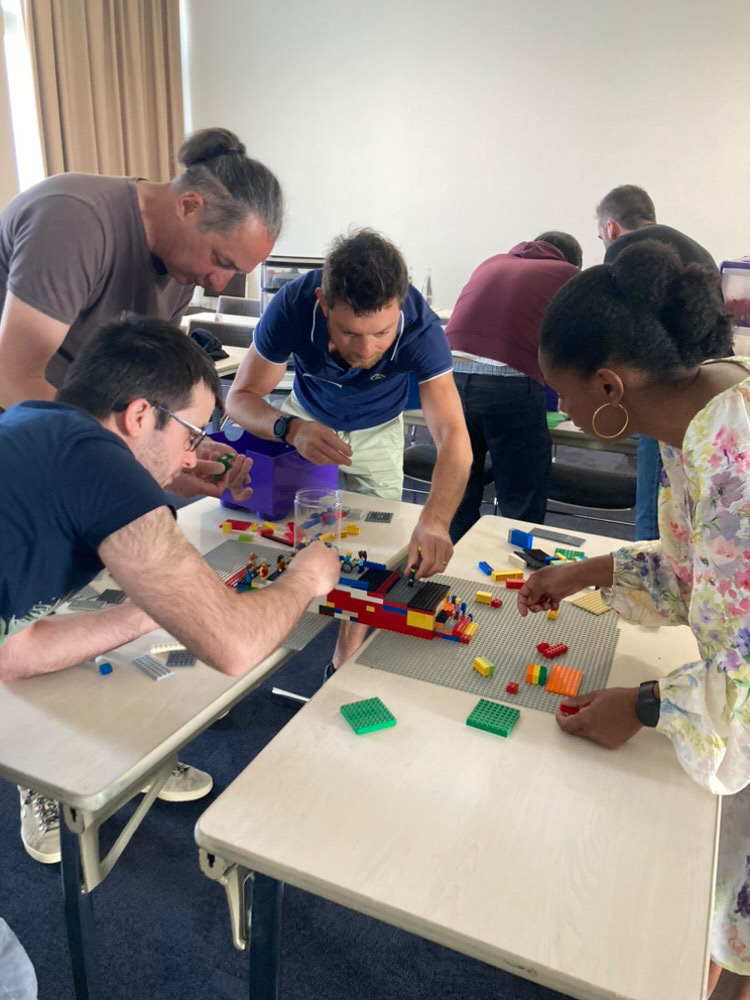
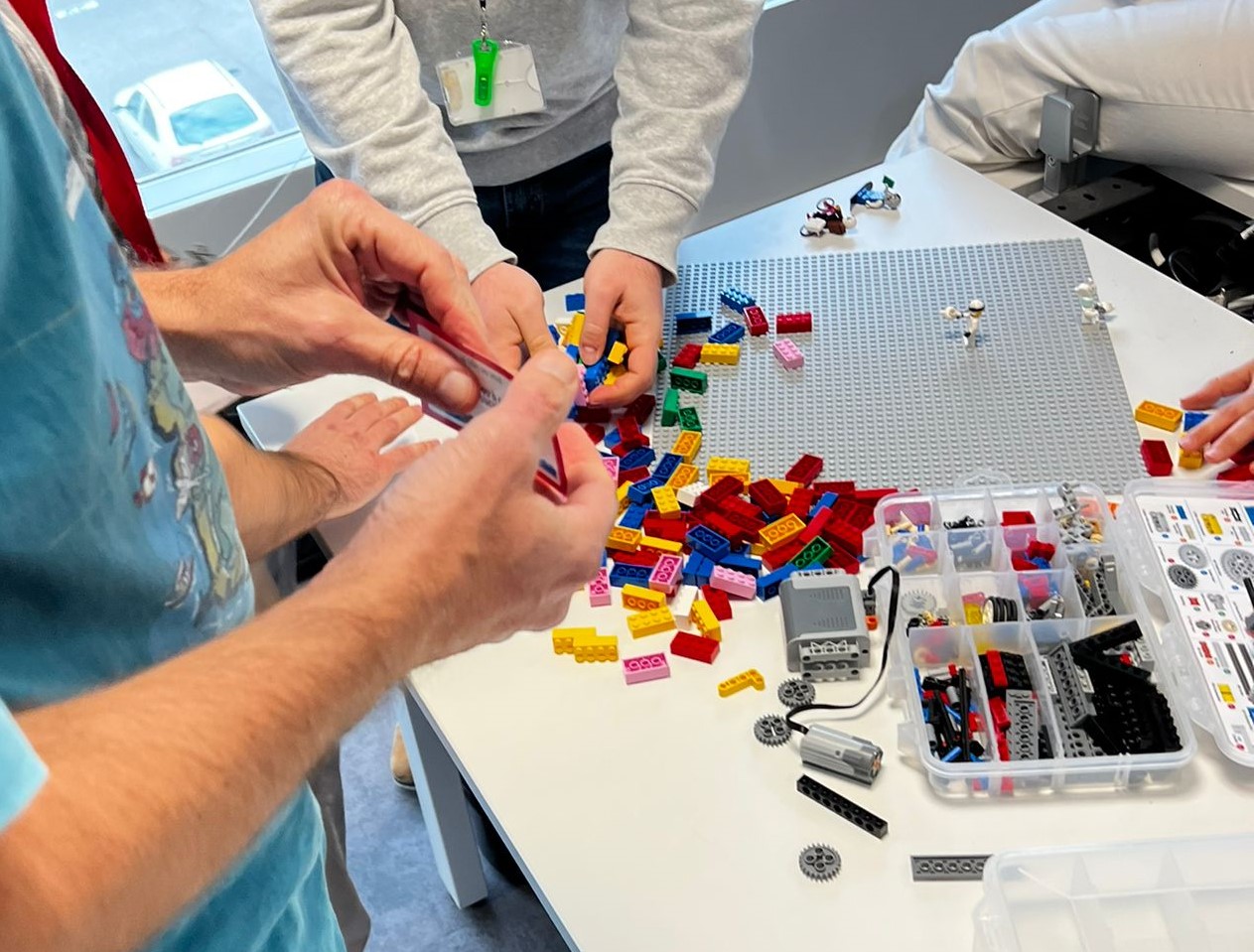
LEGO Challenge in Brussels for clearer collaboration under real constraints
INNOV’events designs and runs LEGO Challenge formats for corporate teams in Brussels, typically from 10 to 300 participants. We handle the full delivery: briefing design, materials, facilitation, scoring, timekeeping, and on-site logistics. Your teams get a structured challenge; you get predictable timing, controlled risk, and clean reporting for leadership.
Sommaire
At executive level, entertainment is not “nice to have”: it is a lever to make people collaborate when stakes are real—deadlines, interdependencies, and limited resources. A well-run LEGO Challenge gives you a controlled environment to observe decision-making, alignment, and execution discipline in under 90–180 minutes.
In Brussels, organisations expect tight schedules, multilingual facilitation, and zero disruption to brand image—especially when the event sits between board meetings, client sessions, or an all-hands. They also expect an activity that works for mixed seniority levels without putting anyone on the spot.
We are an event agency in Brussels with field experience across corporate venues, hotels, and office sites in the capital. Our approach is operational: clear run-of-show, defined roles (MC/facilitators/timekeeper), and a challenge design that serves your objective—onboarding, culture alignment, or cross-team coordination.
INNOV’events delivery capacity in Brussels in a few numbers
10–300 participants per session, with scalable staffing and identical quality standards.
45–180 minutes activity formats depending on agenda constraints (kick-off, plenary energiser, workshop, or evening segment).
2–8 facilitators deployed depending on group size, room layout, and the level of coaching expected.
1 dedicated production lead on-site to manage timing, client interface, and incident response (venue, AV, catering coordination).
Multilingual facilitation (EN/FR/NL) commonly required for corporate audiences in Brussels.
Who we support in Brussels year after year
We regularly deliver team challenges for corporate headquarters, European offices, and public-interest organisations based in Brussels—often with recurring formats aligned to annual rhythms (strategy kick-offs, leadership offsites, onboarding waves, and year-end moments). Many clients return because the operational constraints remain the same: tight venue access windows, high expectations on timing, and mixed audiences (executives, project teams, partners).
When a client repeats, it is rarely for “fun”; it is because the activity produced usable outcomes: clearer working agreements, better cross-functional communication, and faster alignment on priorities. We build that repeatability by documenting what worked (room setup, team composition rules, scoring model, debrief prompts) and by improving every iteration without changing what makes the format robust.
If you share the names of the companies you want referenced, we will integrate them here in a compliant and professional way (logo usage, wording, and approval workflow) consistent with Brussels corporate communication standards.
 Besoin d’un devis rapide ?
Nous vous envoyons une première proposition sous 24h.
Why organise a LEGO Challenge in Brussels for management goals
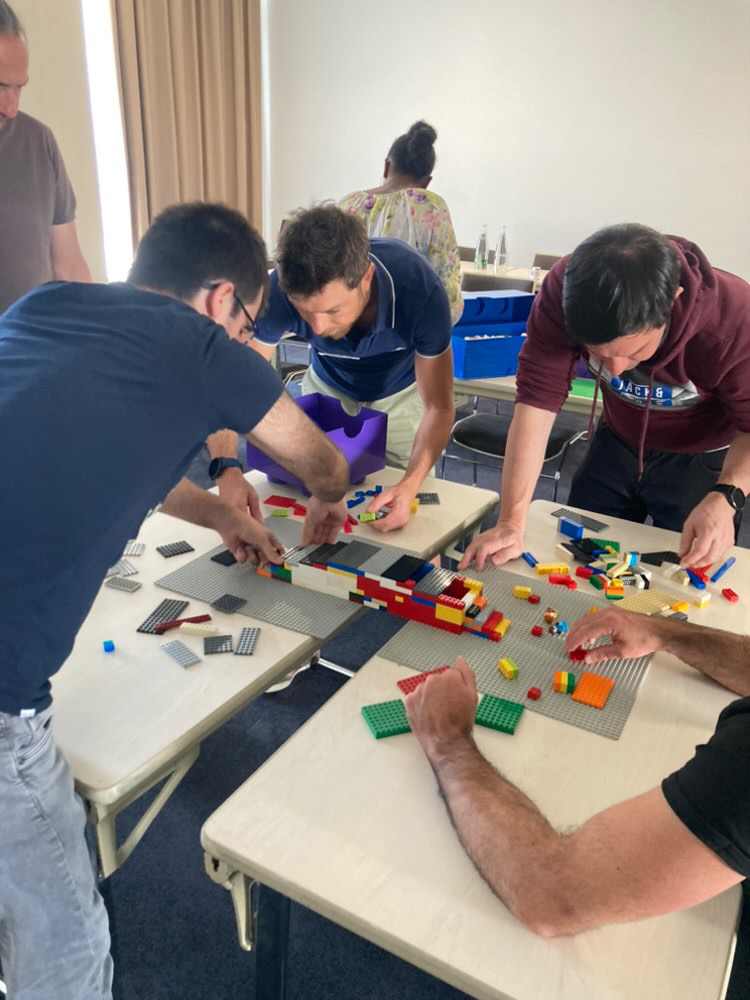
A LEGO Challenge in Brussels is most effective when positioned as a management tool, not an “animation”. It creates a short, observable cycle of planning → execution → review, under constraints that mirror corporate reality: limited time, incomplete information, competing priorities, and dependencies between teams.
Executives and HR teams use this format when they need a shared experience that generates language and facts for the months ahead (how we decide, how we escalate, how we coordinate). Communication teams appreciate it because it produces concrete narratives—collaboration, innovation, customer focus—without forcing scripted messaging.
Make silo issues visible without blaming: when teams build separate modules that must fit together, the “handoff” problems appear naturally (interfaces, assumptions, last-minute changes). It becomes a neutral debrief on process, not personalities.
Stress-test decision-making: we create moments where teams must choose between speed, quality, and risk. Leaders can observe how decisions are documented, who is consulted, and how trade-offs are communicated.
Accelerate onboarding in mixed audiences: new joiners collaborate quickly with long-tenured staff because the challenge is clear and structured. This is particularly useful in Brussels organisations with frequent international arrivals.
Reinforce working agreements: we translate observations into practical rules (meeting cadence, escalation paths, definition of done). The debrief is designed to end with a short “how we will work” list that can be reused.
Support leadership messaging with evidence: instead of generic statements about culture, you get examples from the room—where alignment failed, where coordination worked, and what enabled it.
Brussels has a strong culture of coalition-building—between languages, functions, and institutions. A well-designed LEGO Challenge fits that reality: it rewards clarity, collaboration, and respect for interfaces, exactly what high-performing teams need in the city’s economic ecosystem.
What Brussels organisations expect from corporate entertainment
In Brussels, the “event day” pressure is specific: you often host international colleagues, stakeholders from different entities, and decision-makers with limited time on site. The tolerance for improvisation is low. That is why we design corporate event entertainment in Brussels with production discipline: precise timing, controlled noise level, and facilitation that keeps engagement high without creating discomfort.
Three recurring constraints we see locally:
- Multilingual rooms: even when English is the working language, side conversations happen in FR/NL and people disengage if the activity pace is not inclusive. We handle this with bilingual facilitation, clear written instructions, and visual scoring boards.
- Venue and access rules: city-centre hotels and conference venues have strict load-in times, elevator limitations, and security procedures. We plan deliveries, staging, and pack-down accordingly to avoid disrupting your plenary flow.
- Mixed seniority and “no forced fun” culture: many Brussels teams include executives, specialists, and support functions in one room. We avoid childish framing; the challenge is positioned as a short simulation focused on coordination, prioritisation, and execution.
Finally, local employers are attentive to optics: sustainability, inclusivity, and brand coherence. We can adapt materials and logistics to reduce waste, plan for accessibility, and ensure the activity aligns with the level of formality expected by your organisation.
Which LEGO Challenge formats work best in Brussels events
A LEGO Challenge is versatile, but it only creates engagement if it matches your event’s purpose and the audience’s context. In Brussels, we typically recommend formats that balance energy with professional relevance—especially for executive audiences or mixed groups.
Interactive animations in Brussels
Cross-team city build (integration focus): teams build separate districts under shared rules (interfaces, budget, brand guidelines). The final assembly reveals coordination gaps immediately—useful after reorganisations or mergers.
Process simulation with change requests (project discipline): we introduce scope changes mid-way (new compliance rule, client request, time reduction). Teams must re-plan, communicate, and keep delivery on track—very close to day-to-day corporate reality.
Lean build with constraints (efficiency focus): limited bricks, limited time, mandatory quality checks. This is effective for operations, IT delivery, and service teams where handoffs and rework are pain points.
Art animations in Brussels
Brand narrative build (communication alignment): teams translate a strategic message into a model with a short pitch. We coach the pitch structure to keep it credible (problem, choice, proof), avoiding “creative for creative’s sake”.
Leadership symbol build (culture and values): executives build “what must not be lost” during change, then align on 3–5 non-negotiables. This is often used in Brussels organisations with matrix structures.
Innovative animations in Brussels
Challenge + coffee break flow: we schedule phases so they integrate cleanly with catering constraints (service times, room reset). This matters in Brussels venues where breaks are fixed and tight.
Debrief over standing reception: if your agenda includes networking, we design the scoring reveal and key learnings to happen before the reception, so conversations are anchored in shared insights rather than small talk.
Gourmand animations in Brussels
Data-driven scoring (for analytical cultures): we track time-to-first-prototype, iteration count, and compliance defects. The point is not surveillance; it is to make patterns visible and discuss them objectively.
Hybrid-friendly adaptations: for distributed teams, we can run parallel tables on-site and remote groups with guided constraints, then combine outputs in a shared debrief. This is often relevant for Brussels HQs with satellite offices.
Whatever the format, we align the mechanics with your brand image: level of formality, language, risk appetite, and the message you want people to take back to work. That is the difference between a pleasant activity and a strategic team intervention delivered through a LEGO Challenge.
Where to host a LEGO Challenge in Brussels for the right atmosphere
The venue strongly shapes how a LEGO Challenge in Brussels is perceived. In a premium setting, the activity must feel structured and purposeful. In an internal office environment, logistics and noise management become the priority. We advise venue types based on your objectives, agenda flow, and risk tolerance.
| Venue type | For which objective? | Main strengths | Possible constraints |
|---|---|---|---|
Conference hotel ballroom in Brussels | All-hands, leadership offsite, mixed audience with tight agenda | Professional AV, controlled environment, easy plenary-to-breakout flow | Strict load-in/out times, room turnover pressure, catering schedules to respect |
Corporate office site (meeting floor or cafeteria space) | Onboarding, culture workshops, cost-controlled internal events | High attendance reliability, no transport friction, strong internal branding | Security access, limited storage, acoustics and space planning required |
Dedicated event venue / creative space in the Brussels area | Cross-team collaboration day, transformation workshops | More flexible layouts, informal energy, good for working sessions | AV consistency varies, supplier coordination needed, sometimes limited parking |
We strongly recommend a short site visit or at least a technical call with photos and a floor plan. In Brussels, small constraints (access hours, elevators, corridor widths) can determine whether the activity runs smoothly or creates delays between plenary moments.
What budget to plan for a LEGO Challenge in Brussels
The price of a LEGO Challenge in Brussels depends on production scope, facilitation intensity, and the level of reporting expected. For decision-makers, the key is not “cheap vs expensive” but “controlled vs risky”: the cost of a poorly run segment is reputational (leadership credibility), operational (agenda delays), and cultural (people disengage).
As a practical range, corporate clients typically invest from €1,500 to €6,500 for standard formats, and up to €10,000+ when the session includes complex custom mechanics, higher staffing ratios, or multi-room deployments.
Number of participants and tables: staffing scales with facilitation needs. A 25-person session is not the same operationally as 180 participants across 18 tables.
Duration and agenda position: a 60-minute energiser requires punchy briefing and strict timekeeping; a 3-hour workshop needs deeper coaching and a more structured debrief.
Facilitation language requirements: multilingual delivery (EN/FR/NL) can influence staffing and prep time—common in Brussels environments.
Custom scenario design: adding compliance constraints, brand guidelines, or realistic change requests increases prep and testing time.
Venue logistics: city-centre access, parking, security, and load-in rules affect production planning and set-up crew time.
Output and reporting: if you want a leadership recap with observed patterns and recommended actions, we plan additional capture and synthesis time.
We frame ROI in operational terms: faster team alignment after reorganisation, improved cross-functional coordination, and reduced friction in day-to-day delivery. A LEGO Challenge that ends with actionable working agreements typically pays back quickly—especially for teams where meeting time is expensive and misalignment is recurrent.
Why choose a Brussels agency for a LEGO Challenge delivery
Running a LEGO Challenge in Brussels is not complicated conceptually; it is demanding operationally. A local agency reduces risk on the details that usually go wrong: supplier timing, access rules, room changes, and last-minute agenda updates from leadership.
Because we work locally, we plan with realistic buffers and we know how venues operate in practice (not only on paper). On the day, this translates into calm execution: smooth set-up, controlled energy in the room, and a clear interface for your internal stakeholders.
- Faster on-site response when agenda or room plans change (common with executive calendars).
- Local supplier coordination for AV, printing, and logistics—reducing dependency on long-distance shipments.
- Venue familiarity in Brussels: access, parking constraints, security, and practical load-in routes.
- Facilitation style adapted to Brussels audiences: inclusive, multilingual when needed, and professional in tone.
- Better control of reputational risk: predictable timing and quality protect leadership credibility on stage.
We frame ROI in operational terms: faster team alignment after reorganisation, improved cross-functional coordination, and reduced friction in day-to-day delivery. A LEGO Challenge that ends with actionable working agreements typically pays back quickly—especially for teams where meeting time is expensive and misalignment is recurrent.




What we have delivered in Brussels with LEGO Challenge mechanics
Our projects in Brussels typically fall into three categories, each with different success criteria.
1) Leadership and strategy days: the challenge is used as a mirror for governance and decision-making. We keep the format short and high-impact, with a debrief that links behaviours to strategic execution (prioritisation, escalation, clarity of ownership). The key constraint is timing: these agendas do not allow overruns, so we run strict timeboxing and a tight scoring reveal.
2) Transformation and cross-functional alignment: after reorganisations, teams often need a safe way to rebuild interfaces. Here we design dependencies between tables (shared resources, integration points, change requests) so the debrief surfaces concrete coordination improvements. We often see recurring issues: unclear handoffs, “hidden work”, and decision latency—exactly what the mechanics expose.
3) Onboarding and employer branding: for organisations hiring internationally into Brussels, the challenge accelerates relationships without forcing personal exposure. We integrate company context (values, customer focus, ways of working) and keep the tone respectful and inclusive. The deliverable is not just energy in the room; it is faster integration and a shared vocabulary for collaboration.
Across these use cases, our focus remains consistent: operational reliability, executive-grade facilitation, and a debrief that turns the activity into usable management input.
Common mistakes we prevent in Brussels LEGO Challenge events
Underestimating room layout: too tight spacing leads to noise, facilitator bottlenecks, and uneven participant experience. We plan table count, aisle width, and facilitator routing.
Ambiguous scoring: if criteria are unclear, discussions turn political (“our build is better”). We keep scoring transparent and aligned to your objective (quality, compliance, collaboration, delivery).
Wrong positioning for executives: if it feels childish, senior leaders disengage. We frame it as a short simulation of coordination and execution under constraints.
Ignoring multilingual dynamics: if instructions rely on fast spoken delivery only, some groups lose time. We use visual instructions and comprehension checks.
No real debrief: without debrief structure, the activity becomes a standalone moment with no organisational value. We use guided prompts and capture key takeaways.
Production gaps: late set-up, missing materials, or unclear roles create stress and reputational risk. We run checklists, spares, and a defined chain of command on-site.
Our role is to remove these risks so you can focus on your stakeholders and message. In Brussels, where agendas are tight and audiences are demanding, prevention is the difference between “it ran” and “it served the event’s purpose”.
Why Brussels clients renew with INNOV’events
Repeat business in Brussels is rarely emotional; it is operational. Clients come back when delivery is predictable, when leadership is protected from timing surprises, and when the activity produces outcomes that can be reused internally.
High repeat rate on annual cycles: many clients rebook a similar format for their next kick-off or onboarding wave because the mechanics are reliable and easy to integrate into a broader agenda.
Reduction in prep time over iterations: once your preferred format, scoring, and room standards are set, we can deploy faster while maintaining quality.
Consistent participant feedback patterns: the strongest signals we track are “clear instructions”, “good pacing”, and “debrief connected to our reality”—not generic satisfaction scores.

Loyalty is a consequence of quality control. For a LEGO Challenge in Brussels, that means: the room is ready on time, facilitation is firm but respectful, and the debrief leaves your teams with practical next steps.
How we build and run your LEGO Challenge in Brussels
👉 Step 1 — Brussels briefing call focused on outcomes
We start with a short working session with HR/Comms and the event owner: audience profile, business context, sensitivities, and the one behaviour you want to reinforce (e.g., escalation discipline, cross-team coordination, decision clarity). We also validate practical constraints in Brussels: venue, access times, agenda immovables, and languages.
👉 Step 2 — Challenge design and scoring model
We select the right mechanics (dependencies, change requests, quality checks) and define a scoring model that supports your objective. For executive groups, we keep scoring readable and defensible. For large groups, we prioritise speed of evaluation and fairness across tables.
👉 Step 3 — Production planning and risk controls
We produce the run-of-show with minute-by-minute timing, staffing plan (facilitators, timekeeper, production lead), and material checklist (including spares). We coordinate with the venue on load-in, room reset, and any security procedures typical in Brussels corporate environments.
👉 Step 4 — On-site setup, facilitation, and timekeeping
We arrive early enough to stage materials by table, test the briefing flow, and validate microphone/AV if used. During delivery, facilitation is structured: clear start, checkpoints, controlled energy, and strict timing so your agenda remains intact.
👉 Step 5 — Debrief and executive-ready wrap-up
We run a guided debrief connecting observations to day-to-day work (interfaces, assumptions, governance). If requested, we deliver a concise recap: what we observed, what it implies, and 3–5 recommended actions for the leadership team or HR.
FAQ sur l'organisation LEGO Challenge à Brussels
How long should a LEGO Challenge last in Brussels?
Most corporate sessions in Brussels run 90–120 minutes including briefing and debrief. For tight agendas, we can deliver a 45–60 minute energiser version; for transformation workshops, 150–180 minutes allows deeper coaching and a more useful debrief.
How many participants can you manage in Brussels venues?
We commonly run 10–300 participants in Brussels, depending on room size and layout. A good operational ratio is 1 facilitator per 25–35 participants for large groups; smaller leadership groups benefit from tighter coaching.
What budget range for a LEGO Challenge in Brussels?
Plan €1,500–€6,500 for standard deliveries in Brussels. More complex deployments (multi-room, heavier customisation, higher staffing, reporting) can reach €10,000+. We quote based on participants, duration, languages, and venue logistics.
Can you run the LEGO Challenge in Brussels in EN/FR/NL?
Yes. In Brussels, multilingual delivery is common. We can facilitate in English, French, and Dutch, and we rely on visual instructions and written scoring criteria to keep the pace consistent for everyone.
Does a Brussels LEGO Challenge fit executive audiences?
Yes—if it is framed and run as a short execution simulation, not a playful workshop. For executives in Brussels, we use clear constraints, governance roles, transparent scoring, and a debrief focused on decision-making, prioritisation, and cross-functional alignment.
Request a Brussels quote with a clear run-of-show
If you are comparing agencies, we suggest starting with operational facts: participant count, agenda slot, venue, languages, and what you want leadership to observe. Share those elements and we will propose a LEGO Challenge in Brussels format with a clear timing plan, staffing, and budget range.
For Brussels events, earlier planning reduces risk (venue access windows, room plan validation, and multilingual facilitation availability). Contact INNOV’events to schedule a short scoping call and receive a proposal that you can validate internally without guesswork.
INNOV'events Brussels Agency
Justin JACOB is the manager of the INNOV'events Brussels office. Reach out directly by email at belgique@innov-events.be or via the contact form.
Contact the Brussels agencyToutes nos prestations & animations Brussels, Belgique
Découvrez nos prestations événementielles
Découvrez nos animations événementielles disponibles au Belgique
- Event Hostess in Brussels
- Escape Game in Brussels
- MasterChef Cooking Workshop in Brussels
- Magician in Brussels
- Marquee Rental in Brussels
- Color Analysis Workshop in Brussels
- Inflatable Games in Brussels
- Valet Parking Service in Brussels
- Football Simulator in Brussels
- LED Furniture Rental in Brussels
- Light Branding in Brussels
- Unique Dining Experience in Brussels
- Light Painting in Brussels
- Murder Mystery Party in Brussels
- Prize Contest in Brussels
- Promotional Displays (POS) in Brussels
- Virtual Reality in Brussels
- Molecular Gastronomy Workshop in Brussels
- Halloween Entertainment in Brussels
- Fireworks Show in Brussels
- Giant Games Challenge in Brussels
- Event Host / MC in Brussels
- Photo Booth Animation in Brussels
- Santa Claus Entertainment in Brussels
- Kids Entertainment in Brussels
- Guided Tour in Brussels
- Urban Rally in Brussels
- Ball Pit in Brussels
- Flight Simulator in Brussels
- Food Truck Rental in Brussels
- World Record Challenge in Brussels
- Surf Simulator in Brussels
- Wine Casino in Brussels
- Makeover Workshop in Brussels
- Perfume Creation Workshop in Brussels
- Acting Workshop in Brussels
- CSR Activities in Brussels
- Archery in Brussels
- Security Staff in Brussels
- Wine Tasting in Brussels
- Mime Performer in Brussels
- TV Game Show in Brussels
- Funfair in Brussels
- Crisis Management Workshop in Brussels
- Crisis Negotiation Workshop in Brussels
- Arcade Games in Brussels
- Indoor Skydiving Simulator in Brussels
- Ski Simulator in Brussels
- Racing Circuit Experience in Brussels
- Introductory Flight Experience in Brussels
- Tasting Experience in Brussels
- Build Your Own Foosball Workshop in Brussels
- 2CV Rally in Brussels
- LEGO Challenge in Brussels
- Casino Night in Brussels
- Interpreter / Translator in Brussels
- Promotional Giveaways in Brussels
- Shuttle Transport in Brussels