
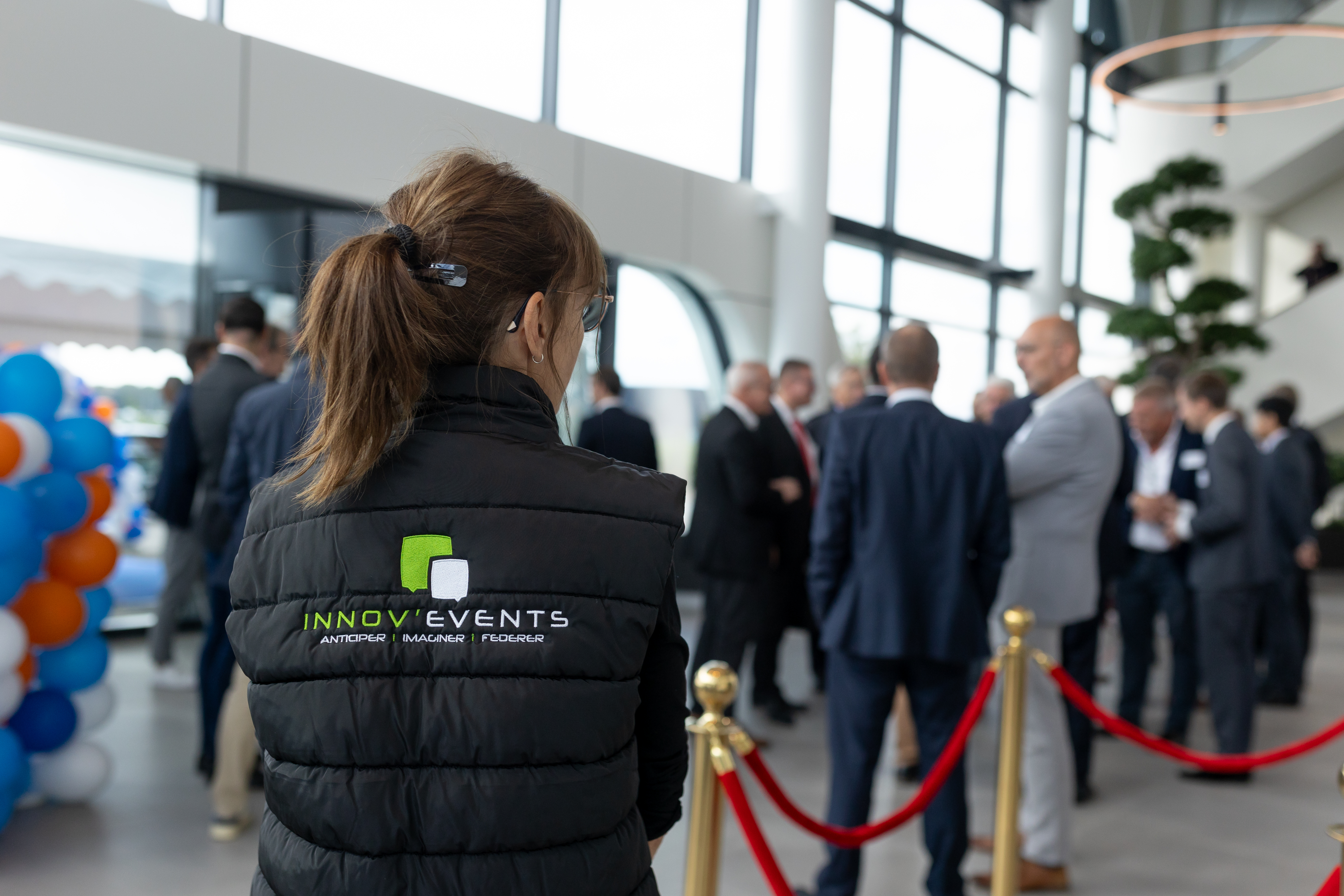
Event Hostess in Brussels for corporate events that must run on time
INNOV'events provides trained Event Hostess teams in Brussels for corporate events from 30 to 2,000+ attendees. We cover the full staffing chain: recruitment, briefing, scheduling, on-site supervision, guest-flow management and post-event reporting.
Whether it’s a board-level reception in the European Quarter, a product launch in Ixelles, or a staff event near Tour & Taxis, we ensure your front-of-house is consistent with your brand, compliant with venue/security constraints, and operationally reliable.
Sommaire
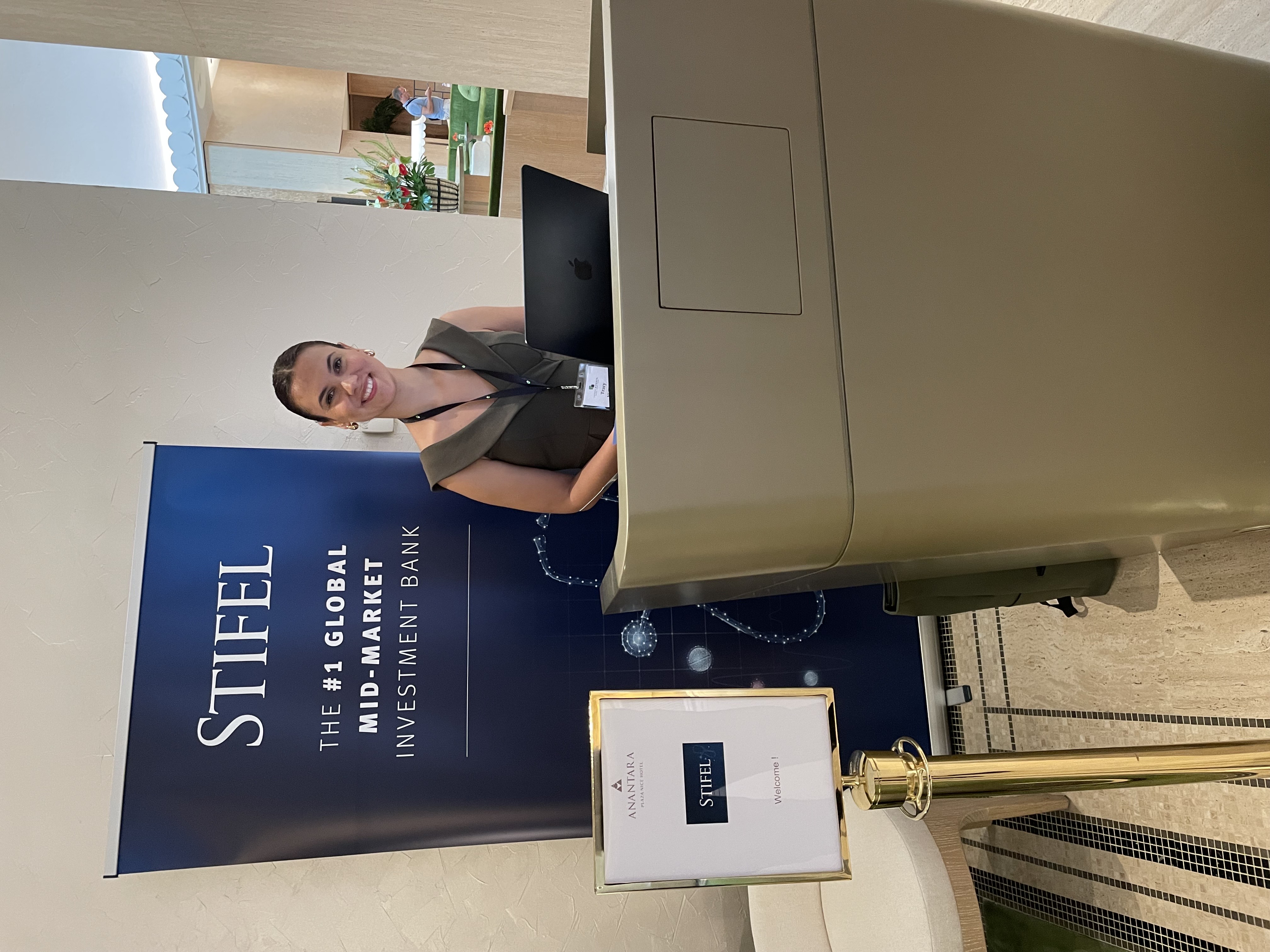
In a corporate event, the first operational “touchpoint” is rarely your CEO’s speech—it’s the welcome desk, badge pick-up, cloakroom and guest direction. A professional Event Hostess in Brussels team reduces friction at the door, protects VIP experience, and prevents small issues (queues, wrong room, missing badges) from becoming visible reputational problems.
Organizations in Brussels expect bilingual or trilingual interaction (FR/NL/EN), strict timing, and a calm approach under pressure—especially with mixed audiences: executives, public-sector partners, international guests and media. They also expect staff who understand access lists, security checks, GDPR for registration data, and protocol basics.
As an event agency in Brussels rooted locally, INNOV'events works with venues, suppliers and corporate sites across the city every week. We know how Brussels traffic, venue loading schedules, and last-minute speaker changes impact front-of-house operations—and we plan staffing accordingly.
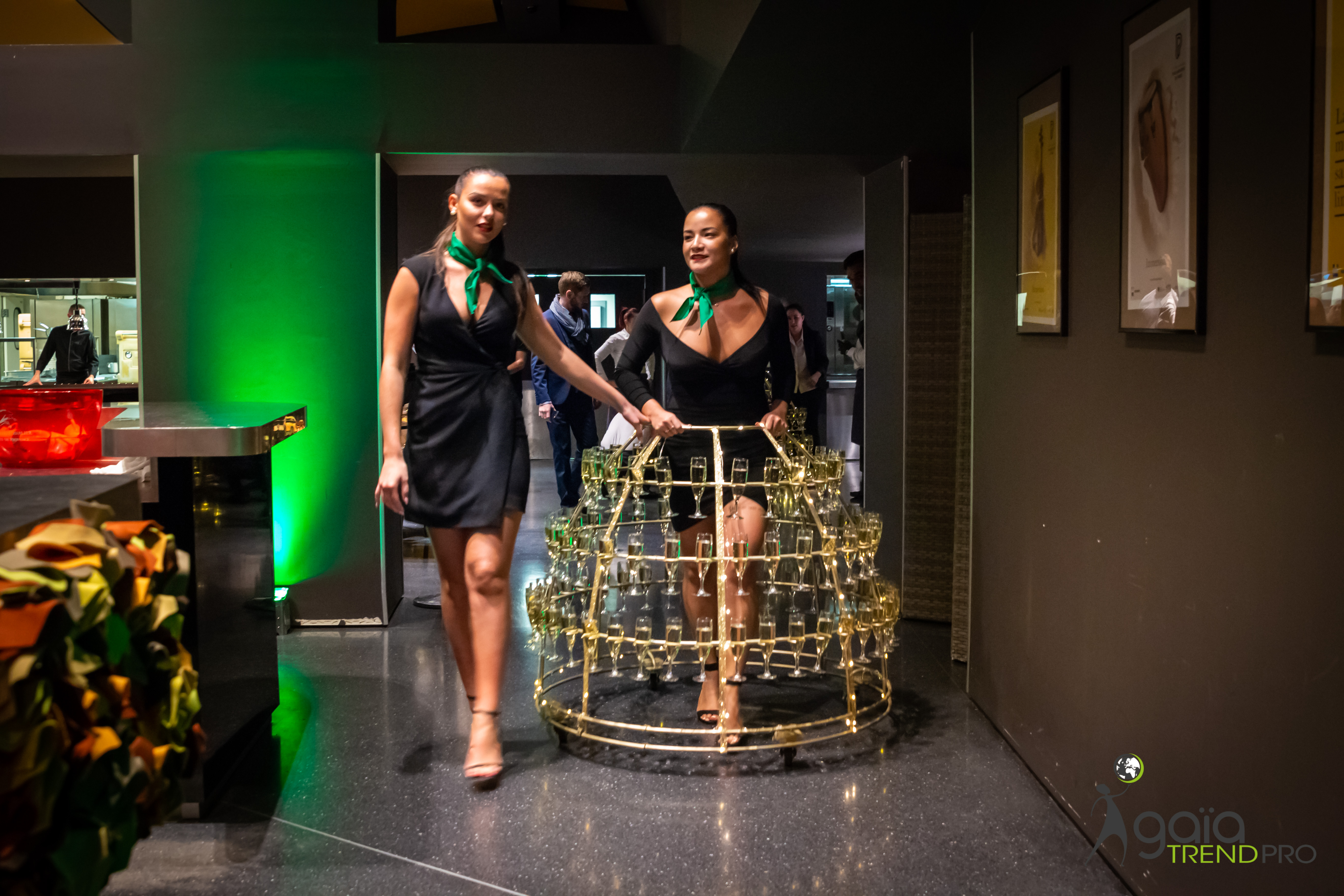
Brussels staffing credibility in a few numbers (1000)
48 hours: typical turnaround to propose profiles + staffing plan after a clear brief (event format, languages, dress code, schedules).
FR/NL/EN: bilingual and international hosting coverage, with language mapping by position (welcome desk, VIP, floor, speaker support).
1 on-site supervisor as standard for multi-hostess teams, to manage timing, breaks, and real-time adjustments without escalating to your internal team.
30–2,000+ guests: from executive breakfasts to congress-style registration with badge printing and queue management.
Companies we support year after year in Brussels (1000)
In Brussels, recurring events are where staffing quality truly shows: the same organization compares you to last year, and internal stakeholders expect fewer issues—not just “the same”. At INNOV'events, we support corporate clients who run repeated formats such as quarterly town halls, annual partner days, press moments and end-of-year receptions.
Because you did not provide specific company names in your brief, we will share relevant references during the quotation phase, aligned with your sector and event type (B2B, institutional, tech, finance, pharma) and under the appropriate confidentiality rules. What we can state upfront: several clients in the European Quarter, Louise district and the airport corridor work with us on a recurring basis because they value stable teams, consistent briefing standards, and predictable on-site supervision.
In practice, this means we build a “preferred roster” for your brand: we keep the same lead hostess, preserve your brand vocabulary (how to name your teams, products, internal departments), and we improve operational details over editions—welcome desk layout, signage wording, badge logic, cloakroom flow, VIP escort paths.
 Besoin d’un devis rapide ?
Nous vous envoyons une première proposition sous 24h.
What an Event Hostess team changes for your Brussels corporate event (1000)
For executives, HR and communication teams, a corporate event is rarely judged on the content alone. It is judged on how smoothly people enter, feel guided, and experience your organization in the first 5 minutes. A strong Event Hostess setup is a management tool: it reduces operational noise, protects leadership time, and creates a controlled environment for networking and messaging.
Protect executive time on the day: when registration, VIP handling and speaker support are managed by a trained team, your leadership is not pulled into operational micro-issues (missing badges, unclear seating, people asking directions).
Reduce queue risk and visible stress: we size staffing based on arrival peaks (e.g., 70% of guests arriving within 20 minutes), and we set a “plan B” (extra desk, manual check-in, pre-printed badges) to keep flow stable.
Reinforce brand discipline: hostesses are briefed on tone of voice, vocabulary, dress code, and escalation rules. That consistency matters in Brussels where audiences are often international and sensitive to protocol.
Support HR objectives: for internal events, a well-run welcome reduces friction and increases participation (people feel expected and guided), while cloakroom and room guidance prevent late arrivals and interruptions.
Improve stakeholder perception: partners and speakers notice operational maturity. When your event starts on time, rooms are correctly filled, and questions are routed, it signals governance and reliability.
Brussels is a dense business ecosystem: EU institutions, federations, HQs and international offices often share the same venues and suppliers. Operational quality is quickly compared. A well-structured hosting team helps you meet that local standard without overloading your internal teams.
Brussels constraints your hosting staff must handle (1000)
Delivering a consistent Event Hostess in Brussels service is not only about “smiling at the door”. The city brings very specific constraints that impact staffing decisions and on-site methods.
Language reality: even when your event language is English, guests often switch to French or Dutch for practical questions. We assign language coverage per position: welcome desk and VIP are prioritized for trilingual profiles; cloakroom and floor can be bilingual depending on your audience mix. This prevents the classic issue where the queue slows because guests must repeat themselves.
Security and access culture: in the European Quarter and many corporate buildings, security procedures are strict and vary by site (ID checks, bag control, visitor badges, pre-authorization lists). We integrate security into the guest journey: one line for pre-registered guests, one for issues, clear escalation to your security contact, and a “do not improvise” rule for exceptions.
Venues with tight loading windows: many Brussels venues impose short technical access slots. That affects where you can place registration desks, how early signage can be installed, and when staff can arrive for briefing. We plan the briefing as a timed sequence and keep the first positions staffed earlier than the rest.
Traffic and last-mile arrivals: taxis, ride-hailing, and public transport variability create arrival peaks. We use wave planning (e.g., staff reinforcement from 17:30 to 18:15) and we prepare a rapid reallocation plan (move one hostess from cloakroom to check-in if arrivals surge).
Mixed audience etiquette: Brussels events often mix corporate guests with institutional stakeholders and international visitors. Your hosting team must understand seating sensitivity, the difference between “VIP” and “speaker”, and how to discreetly manage access to reserved areas without creating visible tension.
Which hosting formats work best in Brussels corporate events (1000)
Hosting and “entertainment” are often conflated. For corporate events in Brussels, what creates engagement is usually not a stage gimmick—it’s removing friction and creating structured interaction: the right welcome, the right prompts, the right flow. Below are formats where an Event Hostess team actively improves experience and business outcomes.
Interactive animations in Brussels
Smart check-in with guided networking: hostesses assign color codes or table numbers at arrival based on departments, partner categories or interest topics. Practical effect: conversations start faster; you reduce the “standing with a drink” dead time.
Live session routing: for multi-room events, floor hostesses manage door control and capacity, redirect guests to overflow rooms, and synchronize with the AV team. This avoids late entries that disrupt speakers—common in Brussels venues with long corridors and multiple levels.
Q&A microphone management: trained staff handling roving microphones reduces awkward pauses and keeps the tone professional, particularly for leadership town halls where timing is tight.
Art animations in Brussels
Discreet live music for receptions: a duo or trio can raise perceived quality without increasing volume. Hostesses coordinate positioning to keep welcome and cloakroom intelligible—often overlooked.
Brand-safe performance cues: short, timed interventions (e.g., 2 x 10 minutes) rather than continuous performance, aligned with speeches and catering service. This is more compatible with corporate venues in Brussels where noise restrictions and neighbor constraints are real.
Innovative animations in Brussels
Guided tasting stations: hostesses manage queue discipline and pacing at coffee, chocolate or beer tastings. The operational benefit is clear: without flow control, tastings become crowded and slow down circulation.
Allergen and dietary management: for mixed international audiences, staff trained to confirm allergens and direct guests to correct stations reduces risk and protects your employer brand.
Gourmand animations in Brussels
Digital registration + real-time attendance dashboard: QR check-in enables accurate attendance numbers and helps comms/HR report participation. We set a fallback manual process to avoid downtime if connectivity drops.
Photo consent management: in corporate settings, GDPR and internal policies matter. Hostesses can manage consent indicators (lanyard colors or badge icons) and brief photographers on do/don’t zones.
Whatever format you choose, alignment with brand image is practical: dress code, vocabulary, signage tone, and escalation rules must match your corporate culture. A financial institution event in Brussels does not require the same hosting posture as a tech scale-up partner night—and your guests notice the difference immediately.
Which Brussels venues make Event Hostess logistics easier (1000)
The venue dictates guest flow: door width, security checkpoints, distances between registration and main room, cloakroom capacity, and where queues can form without blocking circulation. For an Event Hostess in Brussels operation, we evaluate venues primarily through a logistics lens—because it directly affects the guest experience and your team’s stress level.
| Venue type | For which objective? | Main strengths | Possible constraints |
|---|---|---|---|
| Conference centres (city centre / European Quarter) | High-volume registration, multi-room agendas, keynote sessions | Built-in flows, staff access points, signage infrastructure, AV readiness | Strict schedules, security procedures, limited flexibility for last-minute layout changes |
| Hotels with meeting floors | Executive events, board-level receptions, international guests | Clear service standards, cloakroom options, easy catering coordination | Arrival peaks can overload lobby; guest journey must be managed to avoid mixing with other hotel traffic |
| Industrial/event halls (e.g., redeveloped sites) | Brand launches, larger receptions, staff events | Space for wide registration and multiple stations; strong brand staging potential | Long walking distances; heating/acoustics; requires more floor staff for guidance |
In Brussels, a site visit is rarely optional: we verify queue zones, power points for badge printers, where VIP arrivals can be kept discreet, and how security will be handled. A 30-minute walkthrough often prevents the classic day-of issue: a welcome desk placed where the line blocks the main corridor.
What an Event Hostess costs in Brussels (1000)
Budgeting a Event Hostess in Brussels team is not just an hourly rate question. The true cost depends on risk level, arrival patterns, language needs, and supervision. For executives and HR teams, the correct approach is to budget for operational reliability: the cost of a queue, a missed VIP, or a delayed agenda is often higher than the difference between two staffing options.
Number of positions and peak timing: 2 hostesses for 200 guests can work if arrivals are staggered; it fails if 150 guests arrive in 15 minutes. We size on peak, not on total attendance.
Languages required: FR/NL/EN coverage impacts profile selection. We plan language by role rather than making every position trilingual, which controls cost while protecting the critical touchpoints.
Complexity of registration: QR scanning, badge printing on-site, payment desk, or access control lists increase staffing and tool needs.
Dress code and brand requirements: specific outfits, grooming standards, or product knowledge briefings require additional prep and sometimes fittings.
On-site supervision and reporting: for teams, supervision reduces your internal workload and prevents drift during long events (break coverage, punctuality, role discipline).
Schedule constraints: early call times, late finishes, split shifts, and venue-specific staff access rules can influence planning.
Return on investment is measurable: smoother arrivals protect agenda timing, improve attendance perception, and reduce internal effort from comms/HR on the day. If your leadership team spends the first hour solving queue issues, the event cost is already higher than the staffing line you tried to save.
Why choose a Brussels-based team for Event Hostess staffing (1000)
In corporate events, locality is operational. A Brussels-based agency reduces friction in ways that matter on event day: faster venue coordination, realistic arrival planning, and a talent pool accustomed to the city’s language mix and protocol culture. It also improves your risk management—because someone can be on-site quickly when conditions change.
INNOV'events works with Brussels venues, caterers, AV teams and security partners weekly. That translates into practical advantages: we know which venues require staff pre-registration, which loading docks are time-restricted, and how to position registration to comply with fire lanes and circulation rules.
- Local staffing reliability: fewer transport-related no-shows; better punctuality planning around Brussels traffic patterns.
- Venue-specific playbooks: we adapt check-in layout and signage placement to each venue’s real constraints, not generic diagrams.
- Faster decision loops: when a room changes or a speaker arrives late, our supervisor can coordinate instantly with venue and AV without escalating everything to your team.
- Cultural fluency: multilingual hosting and protocol awareness for international and institutional audiences common in Brussels.
Return on investment is measurable: smoother arrivals protect agenda timing, improve attendance perception, and reduce internal effort from comms/HR on the day. If your leadership team spends the first hour solving queue issues, the event cost is already higher than the staffing line you tried to save.






What we’ve delivered with Event Hostess teams in Brussels (1000)
Our Brussels operations cover a wide range of formats because corporate needs vary: HR wants smooth participation and a respectful tone; comms wants brand consistency and press readiness; executives want punctuality and controlled VIP moments.
Typical situations we manage on-site:
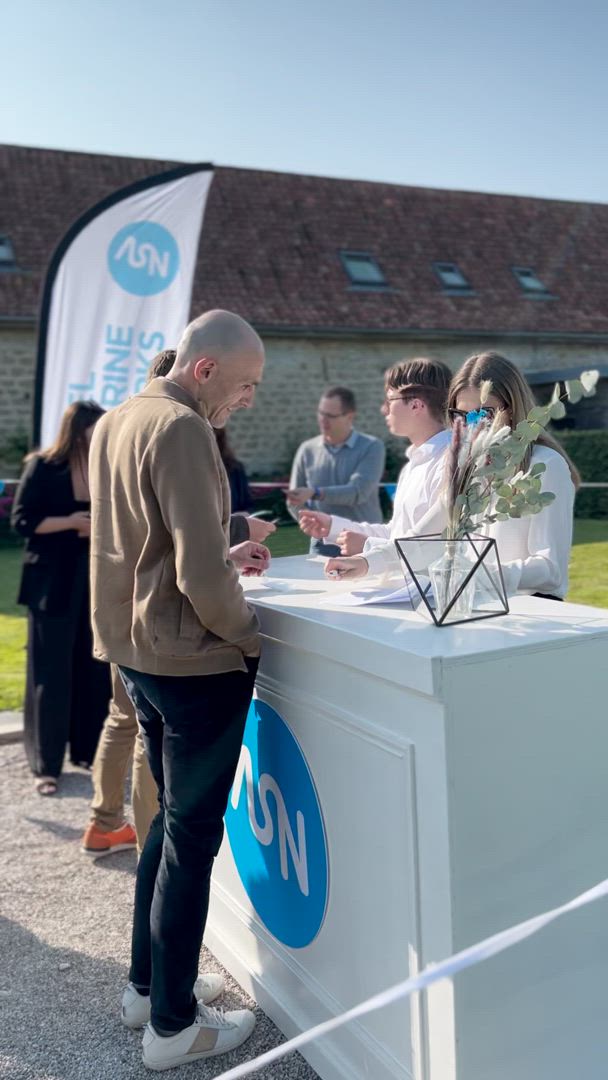
- Congress-style check-in with multiple arrival waves: we set two lines (pre-registered / issues), add a floating hostess to handle exceptions, and keep the main desk free for fast throughput.
- VIP and speaker handling: discreet escort from arrival point to backstage, coordination with stage manager for cue timing, and a clear rule: no ad-hoc access decisions at the door.
- Hybrid corporate events: a floor hostess coordinates with the streaming team to manage microphone passing, audience seating for camera angles, and late entry to protect the live feed.
- Internal town halls: we manage attendance scanning by department, direct staff to seating zones, and reduce noise during leadership messaging with door control and clear signage.
Across these formats, the objective is consistent: protect your agenda, protect your image, and keep your internal teams focused on stakeholders—not on operational troubleshooting.
Common Brussels hosting mistakes that create visible friction (1000)
Understaffing the arrival peak: planning based on total guests instead of arrival concentration creates queues that damage first impressions in minutes.
No escalation rules for exceptions: when someone is “not on the list”, staff improvisation creates inconsistency and potential security issues. We define who decides, how, and where the guest waits.
Ignoring bilingual reality: if the welcome desk cannot switch language quickly, throughput drops and frustration rises—especially with international guests asking practical questions.
Registration placed in the wrong spot: a desk positioned too close to doors or corridors blocks circulation and becomes a safety and comfort issue.
Unmanaged breaks: without supervision, you get empty positions at the worst moment (cloakroom rush, post-session transitions).
Vague dress code: “business attire” means different things. We specify color palette, footwear constraints, outerwear policy, and what to do when it rains—very relevant in Brussels.
Our role is to prevent these risks through planning, briefing, and on-site supervision—so your event is judged on its content and leadership, not on logistical noise.
Why Brussels clients keep the same Event Hostess partner (1000)
Long-term collaboration is not about “being nice”; it’s about predictable delivery under pressure. When a client repeats an event, they want fewer escalations, faster set-up, and staff who already understand the organization’s culture.
Preferred roster approach: we keep the same lead profiles when possible, so each new edition starts with experience rather than re-training.
Operational memory: we document what happened (arrival peaks, recurring questions, signage confusion) and integrate that into the next run sheet.
Consistent supervision: one accountable on-site lead reduces internal workload for comms/HR and avoids “too many cooks” on the day.

In Brussels, where many organizations run recurring stakeholder events, loyalty is a practical proof: it means the service is stable, the team is trustworthy, and the event day is calmer for your leadership.
Our Brussels process to staff Event Hostess teams without surprises (1000)
👉 Step 1 — Clarify your Brussels event constraints in a 20-minute call
We confirm format, guest profile, exact venue address, timing, arrival waves, languages, VIP handling, dress code, and any security/protocol rules. We also identify who in your team is the decision-maker for exceptions on the day (guest not on list, seating conflicts, press access).
👉 Step 2 — Build the staffing plan and role map for Brussels operations
We translate your agenda into roles (welcome, registration, cloakroom, floor, VIP, backstage, mic runners) with start/end times and reinforcement peaks. We propose profile types by position (language level, seniority, posture). If needed, we include tools: scanners, badge printers, signage, walkie-talkies.
👉 Step 3 — Select profiles and validate presentation standards
We select suitable hostesses/hosts based on your brand and audience: corporate posture, discretion, language, and ability to manage exceptions calmly. Where required, we align on dress code details (colors, shoes, hair, visible tattoos/piercings policy) to avoid last-minute misalignment.
👉 Step 4 — Deliver a written run sheet and briefing pack
You receive a concise run sheet: timeline, venue map, contact list, escalation rules, VIP handling, and contingency actions. This is the operational document your comms/HR team can trust on the day.
👉 Step 5 — On-site supervision in Brussels and real-time adjustments
Our supervisor checks positions, manages breaks, reallocates staff during peaks, and coordinates with venue/security/AV. Your internal team stays focused on stakeholders and messaging rather than staffing logistics.
👉 Step 6 — Post-event feedback and improvements for the next edition
We share a short debrief: arrival peak data, recurring guest issues, and 2–3 concrete improvements (layout, signage wording, staffing peaks). This is especially useful for recurring Brussels events where consistency is expected.
FAQ sur l'organisation Event Hostess à Brussels
How many hostesses do I need in Brussels for 300 guests?
For 300 guests in Brussels, a common baseline is 4 to 6 staff depending on arrival concentration and tasks. If you have badge printing or strict access control, plan closer to 6. If arrivals are staggered and check-in is simple, 4 can work with clear role separation (2 check-in, 1 cloakroom, 1 floor).
Do you provide bilingual FR/NL Event Hostess in Brussels?
Yes. We can staff FR/NL and FR/NL/EN roles in Brussels. We assign language coverage by position (welcome/VIP first) to protect guest flow and keep budget controlled.
What is the minimum booking time in Brussels for hostesses?
Most corporate bookings in Brussels are planned in 4-hour blocks, often with call time 60–90 minutes before guest arrival for briefing and set-up. For large registration or high-security venues, we recommend longer call times to avoid last-minute stress.
Can you handle VIP arrivals near EU Quarter Brussels venues?
Yes. We set a VIP arrival point, define escort paths, and coordinate with venue security—common requirements around the European Quarter in Brussels. We also set escalation rules for unplanned VIPs or schedule shifts so your leadership team is not interrupted.
How fast can I get a quote for Event Hostess in Brussels?
With a clear brief (date, venue area in Brussels, guest count, languages, schedule, tasks), we typically provide a structured proposal within 24–48 hours. For complex events (multi-room, badge printing, high security), we may ask for a short technical call first to avoid under-scoping.
Request your Event Hostess quote in Brussels (1000)
If your event has VIPs, tight timing, or a mixed international audience, hosting cannot be treated as an afterthought. Share your date, venue area in Brussels, estimated attendance, languages and agenda, and we will come back with a staffing plan that is operationally realistic—not optimistic.
Contact INNOV'events early when possible: the earlier we validate arrival peaks, registration method and security rules, the fewer last-minute compromises you’ll face. We can also propose a quick venue walk-through to confirm desk placement, queue zones and signage needs before you lock the final floor plan.
INNOV'events Brussels Agency
Justin JACOB is the manager of the INNOV'events Brussels office. Reach out directly by email at belgique@innov-events.be or via the contact form.
Contact the Brussels agencyToutes nos prestations & animations Brussels, Belgique
Découvrez nos prestations événementielles
Découvrez nos animations événementielles disponibles au Belgique
- Event Hostess in Brussels
- Escape Game in Brussels
- MasterChef Cooking Workshop in Brussels
- Magician in Brussels
- Marquee Rental in Brussels
- Color Analysis Workshop in Brussels
- Inflatable Games in Brussels
- Valet Parking Service in Brussels
- Football Simulator in Brussels
- LED Furniture Rental in Brussels
- Light Branding in Brussels
- Unique Dining Experience in Brussels
- Light Painting in Brussels
- Murder Mystery Party in Brussels
- Prize Contest in Brussels
- Promotional Displays (POS) in Brussels
- Virtual Reality in Brussels
- Molecular Gastronomy Workshop in Brussels
- Halloween Entertainment in Brussels
- Fireworks Show in Brussels
- Giant Games Challenge in Brussels
- Event Host / MC in Brussels
- Photo Booth Animation in Brussels
- Santa Claus Entertainment in Brussels
- Kids Entertainment in Brussels
- Guided Tour in Brussels
- Urban Rally in Brussels
- Ball Pit in Brussels
- Flight Simulator in Brussels
- Food Truck Rental in Brussels
- World Record Challenge in Brussels
- Surf Simulator in Brussels
- Wine Casino in Brussels
- Makeover Workshop in Brussels
- Perfume Creation Workshop in Brussels
- Acting Workshop in Brussels
- CSR Activities in Brussels
- Archery in Brussels
- Security Staff in Brussels
- Wine Tasting in Brussels
- Mime Performer in Brussels
- TV Game Show in Brussels
- Funfair in Brussels
- Crisis Management Workshop in Brussels
- Crisis Negotiation Workshop in Brussels
- Arcade Games in Brussels
- Indoor Skydiving Simulator in Brussels
- Ski Simulator in Brussels
- Racing Circuit Experience in Brussels
- Introductory Flight Experience in Brussels
- Tasting Experience in Brussels
- Build Your Own Foosball Workshop in Brussels
- 2CV Rally in Brussels
- LEGO Challenge in Brussels
- Casino Night in Brussels
- Interpreter / Translator in Brussels
- Promotional Giveaways in Brussels
- Shuttle Transport in Brussels