Indoor Skydiving Simulator in Brussels for team engagement without downtime
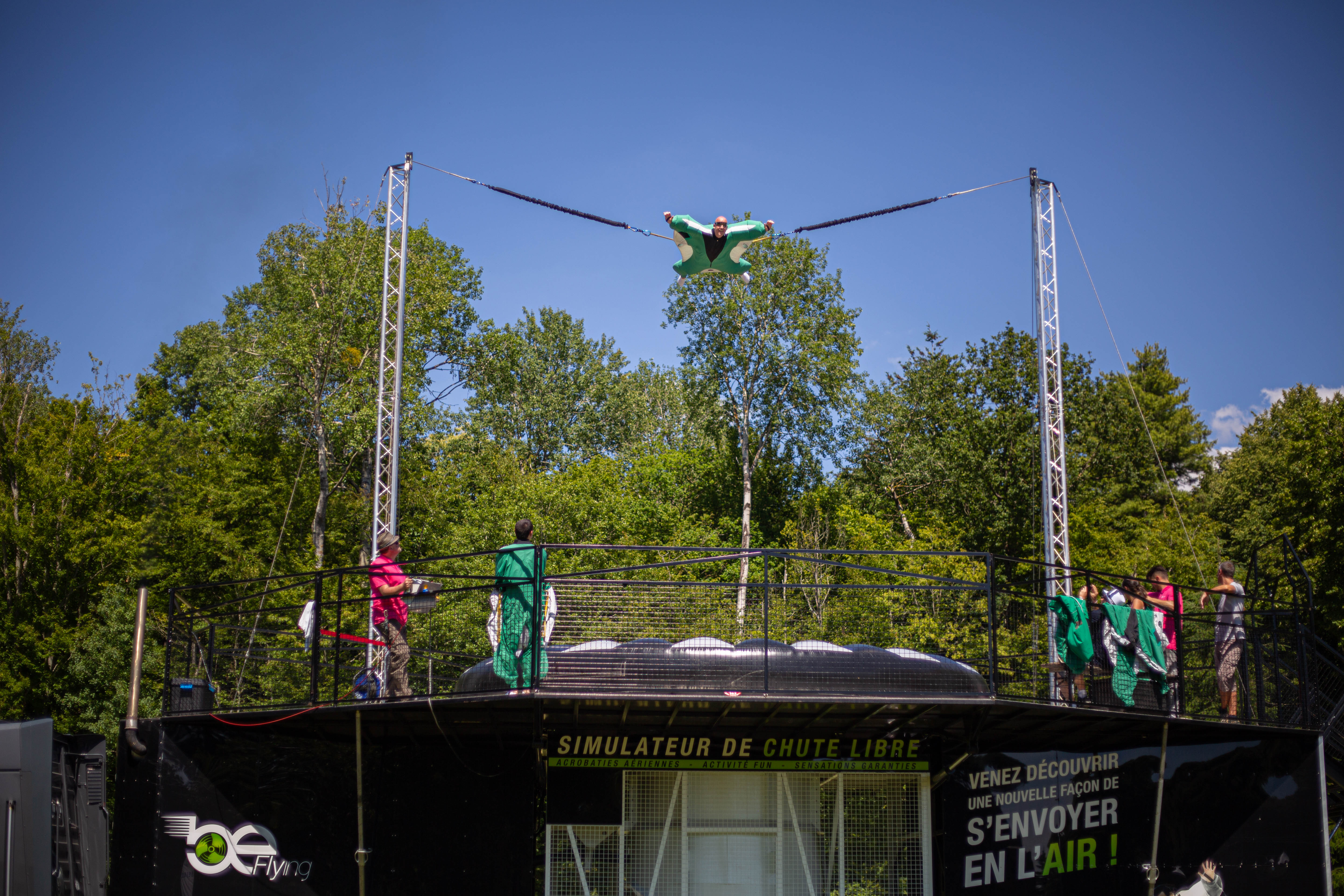
INNOV'events designs and runs Indoor Skydiving Simulator activations in Brussels for corporate events from 40 to 800 attendees. We handle the operational chain: venue fit, safety framework, rotation planning, staffing, and on-site coordination so your agenda stays on time.
Typical formats include employee engagement days, client evenings, leadership offsites, and end-of-year receptions where you need high impact while keeping control of flow, image, and risk.
Sommaire
In a corporate event, entertainment is not a “nice-to-have”: it is a lever to increase attendance, accelerate interactions between teams, and give leadership a credible moment of recognition. A Indoor Skydiving Simulator creates a shared experience quickly—without requiring a full-day offsite or complex travel.
In Brussels, organisations expect smooth execution: tight run-of-show, bilingual on-site communication (FR/NL, EN when needed), and a format that fits security constraints, venue rules, and the realities of after-work timing near the European quarter or business districts.
As an event agency in Brussels, INNOV'events brings field-tested operational methods: participant flow design, safety briefings adapted to corporate audiences, supplier coordination, and contingency planning that protects your brand and your schedule on event day.
Operational benchmarks we apply in Brussels projects
10+ years coordinating corporate entertainment and team moments across Belgium, with repeated delivery in Brussels venues and corporate sites.
Typical rotation design: 60–120 participants/hour depending on simulator model, briefing length, and photo/video add-ons (we calculate this before you commit).
Standard staffing ratio: 1 lead coordinator + 2–6 instructors + 1–2 hosts to keep flow, safety, and guest experience stable.
Lead time we recommend: 3–6 weeks for venues with strict access/security, 1–2 weeks for simple internal sites (subject to availability).
Companies that activate entertainment in Brussels year after year
We regularly support international organisations and Belgian headquarters that operate in Brussels, including teams that come back annually for internal celebrations, client touchpoints, or recruitment branding moments. These recurring collaborations usually happen because the event “just works” on the day: clear decisions upstream, transparent budgeting, and reliable execution under real constraints (building access, noise limits, security checks, time windows).
If you have specific company references you want us to align with (industry, compliance level, security environment), share them during the briefing: it helps us propose the right simulator setup, venue typology, and staffing model from the start.
 Besoin d’un devis rapide ?
Nous vous envoyons une première proposition sous 24h.
Why choose an Indoor Skydiving Simulator for a Brussels corporate event?
A Indoor Skydiving Simulator in Brussels is a practical choice when you need a strong, visible activation without turning your event into a logistical expedition. Unlike many “wow” ideas, the simulator can be integrated into an existing reception or seminar schedule with predictable cycles, controlled risk, and measurable participation.
For executives, HR, and comms teams, the value is not the thrill itself—it’s what it unlocks: interaction density, employer branding content, and a controlled narrative about agility, confidence, and shared challenge.
High participation with short time commitment: the experience can be designed as a 5–8 minute micro-journey per participant (check-in, briefing, flight time, exit), making it compatible with cocktail formats where not everyone is available at the same time.
Better cross-team mixing than passive entertainment: we structure queuing and groupings (by mixed tables, randomised time slots, or team colour codes) to avoid “department silos”—a common issue in Brussels HQ events.
Employer branding you can actually reuse: with a photo/video setup and consent flow, you get content designed for LinkedIn, internal comms, or recruitment campaigns—without improvising on the night.
Clear safety and inclusivity framework: we define eligibility rules (medical contraindications, age/height if relevant), propose alternatives on site (photo zone, VR wind tunnel demo, leadership challenge board), and keep the tone inclusive so no one feels forced.
Predictable run-of-show: we build rotations and buffers so keynote timings, awards, or leadership speeches are not compromised by “just one more flight.” This is where many self-managed activations fail.
Stakeholder-friendly concept: it is easy to explain to Works Council, HSE, or facility managers because the activity is controlled, supervised, and documented (risk assessment, insurance, method statement when required).
Brussels is a city where corporate events often blend local teams, expats, and visiting leadership. A simulator format creates immediate shared conversation—useful in a market where networking and cross-cultural interaction are part of the economic fabric.
What Brussels organisations expect from event execution
Running corporate entertainment in Brussels means dealing with real-world constraints that affect guest experience and your reputation internally. We plan for these constraints upfront, not on the day.
Access and security: many venues and office buildings require pre-registration lists, badge issuance, delivery windows, and freight elevator rules. For a Indoor Skydiving Simulator, this impacts installation timing, storage, and the number of technicians required.
Multilingual communication: if your audience includes both local staff and international teams, briefings need to be concise and adapted (FR/NL + EN). We often provide bilingual signage, scripted safety messages, and host prompts to keep flow consistent.
Neighbour and noise considerations: depending on the venue, we validate sound levels and propose mitigation (placement away from keynote room, acoustic drape, timing the activation outside critical speaking moments). This is especially relevant for central Brussels locations with strict venue policies.
Agenda pressure: Brussels corporate schedules are dense. Leadership will not accept a program that drifts by 20 minutes because of a bottleneck at an activation. Our approach is to design rotations with conservative assumptions and to protect the “non-negotiables” (speech slots, service, transport departures).
Brand image: local and international brands alike are sensitive to optics: safety posture, staff presentation, signage quality, and guest handling. We treat the simulator as a branded operational zone, not a fairground corner.
What entertainment pairs well with a simulator in Brussels?
Entertainment creates engagement when it is designed as part of the event journey—not a standalone gimmick. Around a Indoor Skydiving Simulator in Brussels, the best additions are those that solve practical needs: reduce waiting frustration, reinforce your message, and keep non-participants included.
Interactive animations in Brussels
Timed challenge board: participants earn a score (stability, posture, instructor rating). We display a live leaderboard that resets per hour to keep motivation high without discouraging late arrivals.
Team rotation scheduling: QR-code time slots linked to table numbers or departments. This reduces queue congestion and helps HR ensure cross-team mixing.
Photo & short-form video station: a dedicated corner with branded backdrop and a simple, fast consent flow. Deliverables can be 30–60 second highlight reels for internal channels within 48–72 hours.
Art animations in Brussels
MC with corporate rhythm: a bilingual host who keeps energy without turning the event into a show. Useful when leadership needs a controlled tone (investor-facing, institutional guests).
Ambient live music: small acoustic or jazz trio that supports networking while the simulator runs, helping cover operational sounds and maintaining premium perception.
Innovative animations in Brussels
Service synchronised with rotations: we time food stations so peaks do not collide with simulator peak times (a common bottleneck). A simple example: open the main food moment after the first 45 minutes, once the early queue is absorbed.
Brussels-led tasting corner: curated local beers or chocolate pairing with clear responsible service. It works well if flights are scheduled before tastings (we design the sequence accordingly).
Gourmand animations in Brussels
Wind science micro-talk: a short, optional explanation (2–3 minutes) on aerodynamics and control—surprisingly effective with engineering, consulting, and tech audiences in Brussels.
CSR-linked participation mechanic: each completed flight triggers a small donation to a local initiative. This helps communication teams justify the activation beyond “fun” and creates a clean internal story.
The best results come when the activation matches your brand posture. For a regulated industry, we keep the zone clean and professional (clear signage, calm hosts, structured rotation). For a creative brand, we can push visual identity and content production—without compromising safety or flow.
Which Brussels venues can host an Indoor Skydiving Simulator?
The venue determines feasibility, cost, and perceived quality. For a Indoor Skydiving Simulator, we validate ceiling height, floor load, power supply, access for delivery, and whether the venue accepts the sound profile and crowd management plan. In Brussels, these checks must be done early because many prime venues have strict technical riders.
| Venue type | For which objective? | Main strengths | Possible constraints |
|---|---|---|---|
Large conference venue / convention centre | High attendance, structured rotations, keynote + activation | Clear technical infrastructure, loading bays, staff used to HSE processes | Higher fixed costs, strict time slots for setup/teardown |
Hotel ballroom in central Brussels | Client evening, leadership dinner with a controlled “wow” zone | Premium perception, easy guest access, integrated catering | Access constraints for large equipment, sound limits, tighter circulation |
Corporate HQ atrium / on-site event space | Internal engagement, employer branding, “bring leadership to the floor” | Minimal travel, strong internal visibility, easier alignment with HR agenda | Building security, delivery windows, floor protection and insurance requirements |
We strongly recommend a site visit (or at minimum a technical call with photos, floor plans, and access details). In Brussels, what looks feasible on paper often changes once you factor in loading routes, lift dimensions, and venue policies. Our role is to confirm feasibility before you commit budget and communications.
What does an Indoor Skydiving Simulator cost in Brussels?
Pricing depends on configuration and operational conditions, not just “renting a simulator.” For corporate events in Brussels, the budget is mainly driven by throughput requirements, staffing, technical constraints of the venue, and the level of branding and content you expect.
As a working range for planning purposes, many corporate activations land between €6,000 and €20,000 excluding VAT, depending on duration, staffing, and complexity. We confirm a precise quote after a short technical and program call.
Duration on site: a 2–3 hour cocktail activation is not priced like a full-day engagement day. Setup and teardown time are often the hidden drivers in Brussels venues with tight access windows.
Expected participation volume: planning for 80 flights is different from planning for 300+. We dimension staffing and rotation mechanics accordingly.
Venue constraints: floor protection, dedicated power, access constraints, security procedures, and overtime costs can materially change the budget.
Staffing level: instructors, hosts, safety supervisor, and a dedicated coordinator. Under-staffing is the fastest way to create queues and reputational damage.
Branding and content: branded backdrop, signage, photo/video capture, editing, and delivery timeline. We can also integrate a GDPR-compliant consent workflow.
Insurance and compliance deliverables: depending on your sector, you may need method statements, risk assessment, or specific certificates.
Guest journey additions: booking tool for time slots, VIP fast lane, multilingual scripts, and on-site print materials.
ROI is usually visible in three places: participation rate (how many employees/clients actually engage), the quality of the content produced for internal/external communication, and the reduction of organisational friction on the day. We optimise for those outcomes rather than simply adding features.
Why appoint a Brussels agency for simulator entertainment?
When the activation involves equipment, staffing, venue constraints, and safety messaging, local execution matters. A Brussels-based team reduces uncertainty: faster site checks, easier coordination with venue technical managers, and realistic planning based on how events actually run here (access windows, staffing availability, traffic patterns, and multilingual audiences).
At INNOV'events, we do not “drop” an activation into your event. We integrate it into your run-of-show, your stakeholder expectations, and your brand posture—so your executive sponsor and your comms lead feel in control from the first briefing to the final guest departure.
- Local venue reflexes: we anticipate technical questions (loading, power, sound, floor protection) and align early with Brussels venue teams.
- Short decision loops: when an agenda change happens, you need an agency that can react within hours—not days—without compromising safety.
- Supplier accountability: we know which partners deliver consistent instructor quality and which setups perform well under high throughput.
- On-site authority: a local lead coordinator who can take operational decisions, protect your leadership time, and manage unexpected issues discreetly.
ROI is usually visible in three places: participation rate (how many employees/clients actually engage), the quality of the content produced for internal/external communication, and the reduction of organisational friction on the day. We optimise for those outcomes rather than simply adding features.




Examples of Brussels corporate scenarios where this works
We deploy Indoor Skydiving Simulator activations in Brussels when the client needs both impact and control. Typical scenarios include:
Post-merger integration evening: two cultures in the same room, high sensitivity around perception. We design mixed-team time slots, keep the tone professional, and produce a concise highlight video for internal comms the next week.
Client appreciation reception: VIP lane for key accounts, separate briefing cadence, and dedicated host to protect the commercial team from operational questions.
Recruitment / employer branding day: simulator as a high-energy touchpoint, paired with a content station and structured campus-style journey (welcome, challenge, conversations, close). We align messaging with HR and ensure inclusivity for candidates who prefer not to participate.
Leadership offsite closing moment: short, controlled activation after the final plenary, designed to avoid delays to dinner service and transport departures.
Across these formats, the common success factor is preparation: rotation modelling, staffing, and stakeholder alignment so the experience supports your objective instead of competing with it.
Common pitfalls we prevent on Brussels simulator activations
Underestimating throughput: assuming everyone can participate without modelling cycles creates queues, frustration, and negative internal feedback. We calculate capacity and design time slots.
No clear eligibility and consent rules: last-minute medical concerns, unclear age limits, or missing photo consent disrupt operations and create reputational risk. We document and communicate rules early.
Poor placement in the venue: placing the activation near speeches or catering creates noise conflicts and traffic jams. We validate placement with the venue and your run-of-show.
Insufficient staffing on peak moments: one instructor cannot brief and manage a corporate crowd. We staff to protect safety and pacing.
Branding that looks improvised: handwritten signs or inconsistent tone damages perception. We provide clean, branded signage and host scripts.
No contingency plan: VIP schedule changes, late arrivals, or a delayed keynote require a decision framework. We set it with you before the event.
Our role is to remove these risks from your team’s workload. You should be focused on your stakeholders and your message—not on queue management, technical constraints, or last-minute safety decisions.
Why Brussels clients repeat with INNOV'events
Repeat business is rarely about creativity alone. It is about predictability, transparency, and the ability to deliver under pressure. Many of our Brussels clients return because they know what they will get: a clear plan, reliable partners, and an agency that stays accountable on site.
1 single point of contact from briefing to event day, reducing internal coordination load for HR and comms.
Run-of-show discipline: we work with timing sheets, staffing plans, and decision chains approved in advance.
Post-event deliverables: participation numbers, operational feedback, and content delivery timelines agreed upfront.

Loyalty is a practical indicator: when a client re-books, it means the event met stakeholder expectations, respected the agenda, and avoided operational surprises. That is the standard we aim for in Brussels.
How we build your Indoor Skydiving Simulator project in Brussels
👉 Brussels briefing call focused on objectives and constraints
We start with a 20–30 minute call to clarify audience profile, event format, venue shortlist (or your office site), timing constraints, brand posture, and success metrics (participation, VIP handling, content, HR goals). We also identify stakeholders: HR, comms, facility, HSE, and an executive sponsor.
👉 Feasibility check and capacity modelling for Brussels venues
We verify the technical feasibility (space, power, access, floor protection) and model throughput based on your time window. You receive a recommended configuration with realistic participation numbers and a draft rotation plan.
👉 Proposal with transparent line items and options
We deliver a clear quote with operational assumptions: staffing, hours, setup/teardown, branding, content, and contingency options. We flag what may change the budget (e.g., overtime due to access windows or additional security requirements).
👉 Pre-event alignment with comms, HR, and venue teams
We provide briefing text for invitations/intranet, eligibility rules, and on-site signage. If needed, we join a technical call with the Brussels venue or your building manager to confirm access and safety documentation.
👉 Event-day delivery with run-of-show control
On site, our coordinator manages timing, queue flow, and stakeholder updates. Instructors run briefings and the activation; hosts manage check-in and guest journey. We protect key moments (speeches, service, departures) by pausing or rephasing rotations as planned.
👉 Post-event wrap and measurable outputs
Within agreed timelines, we deliver content assets (if included) and a short debrief: participation volume, peak times, what worked, and what to adjust for the next Brussels event.
FAQ sur l'organisation Indoor Skydiving Simulator à Brussels
How many guests can participate per hour in Brussels?
Plan for 60–120 participants/hour, depending on briefing length, the simulator model, and whether you add photo/video. We confirm capacity after reviewing your agenda and venue constraints in Brussels.
What is the budget range for Brussels corporate events?
Most projects fall between €6,000 and €20,000 excluding VAT. The main drivers are duration, staffing, venue access constraints, and branding/content options in Brussels.
Can we run it inside our Brussels office building?
Often yes, if the space, access route, and power supply are suitable. We typically need photos, dimensions, and building rules; sometimes a short site visit is required in Brussels to validate loading and floor protection.
How do you handle safety and contraindications in Brussels?
We provide written eligibility rules and a scripted briefing, and we keep an incident protocol on site. Common exclusions can include certain medical conditions; we also plan an alternative experience so no one is singled out at your Brussels event.
How much lead time do you need in Brussels?
Ideally 3–6 weeks for venues with strict access/security and 1–2 weeks for simpler internal sites, subject to availability in Brussels.
Request a Brussels quote with a realistic rotation plan
If you are comparing agencies, we suggest starting with operational clarity: expected participation volume, venue feasibility, and a run-of-show that protects your key moments. Share your date, venue (or shortlist), estimated headcount, and timing window, and we will come back with a proposal for a Indoor Skydiving Simulator in Brussels including staffing, capacity assumptions, and budget options.
For best results, contact us early—Brussels venues and high-quality instructor teams book quickly during peak corporate periods.
INNOV'events Brussels Agency
Justin JACOB is the manager of the INNOV'events Brussels office. Reach out directly by email at belgique@innov-events.be or via the contact form.
Contact the Brussels agencyToutes nos prestations & animations Brussels, Belgique
Découvrez nos prestations événementielles
Découvrez nos animations événementielles disponibles au Belgique
- Event Hostess in Brussels
- Escape Game in Brussels
- MasterChef Cooking Workshop in Brussels
- Magician in Brussels
- Marquee Rental in Brussels
- Color Analysis Workshop in Brussels
- Inflatable Games in Brussels
- Valet Parking Service in Brussels
- Football Simulator in Brussels
- LED Furniture Rental in Brussels
- Light Branding in Brussels
- Unique Dining Experience in Brussels
- Light Painting in Brussels
- Murder Mystery Party in Brussels
- Prize Contest in Brussels
- Promotional Displays (POS) in Brussels
- Virtual Reality in Brussels
- Molecular Gastronomy Workshop in Brussels
- Halloween Entertainment in Brussels
- Fireworks Show in Brussels
- Giant Games Challenge in Brussels
- Event Host / MC in Brussels
- Photo Booth Animation in Brussels
- Santa Claus Entertainment in Brussels
- Kids Entertainment in Brussels
- Guided Tour in Brussels
- Urban Rally in Brussels
- Ball Pit in Brussels
- Flight Simulator in Brussels
- Food Truck Rental in Brussels
- World Record Challenge in Brussels
- Surf Simulator in Brussels
- Wine Casino in Brussels
- Makeover Workshop in Brussels
- Perfume Creation Workshop in Brussels
- Acting Workshop in Brussels
- CSR Activities in Brussels
- Archery in Brussels
- Security Staff in Brussels
- Wine Tasting in Brussels
- Mime Performer in Brussels
- TV Game Show in Brussels
- Funfair in Brussels
- Crisis Management Workshop in Brussels
- Crisis Negotiation Workshop in Brussels
- Arcade Games in Brussels
- Indoor Skydiving Simulator in Brussels
- Ski Simulator in Brussels
- Racing Circuit Experience in Brussels
- Introductory Flight Experience in Brussels
- Tasting Experience in Brussels
- Build Your Own Foosball Workshop in Brussels
- 2CV Rally in Brussels
- LEGO Challenge in Brussels
- Casino Night in Brussels
- Interpreter / Translator in Brussels
- Promotional Giveaways in Brussels
- Shuttle Transport in Brussels