
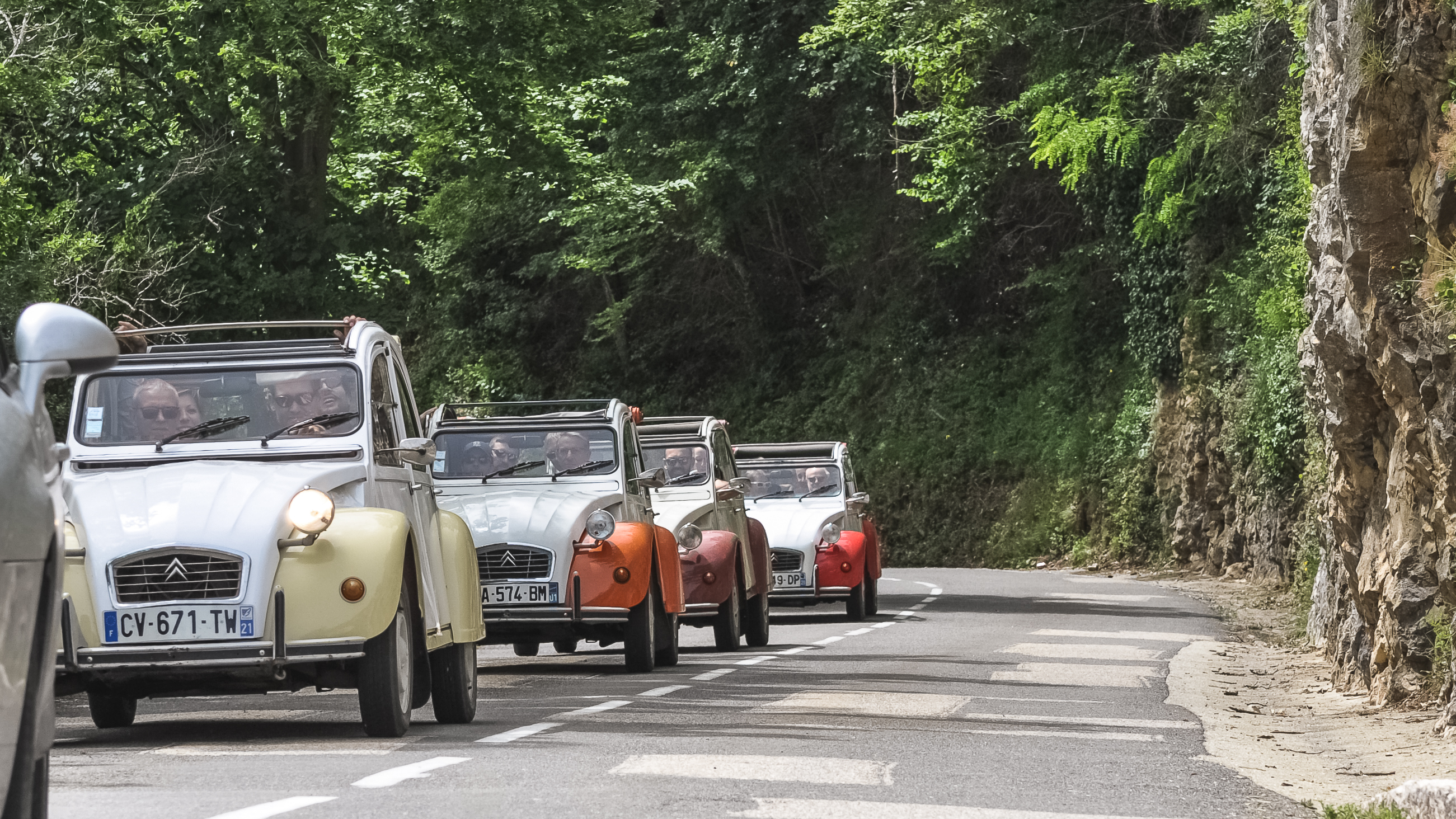
2CV Rally in Brussels that actually runs on time and on brand
INNOV'events designs and delivers 2CV Rally formats for executives, HR and Comms teams in Brussels, typically from 20 to 250 participants. We handle the end-to-end operational load: vehicles and partners, route engineering, permits and municipal coordination, safety, timing, and brand integration. You keep the objective and the message; we make the day run cleanly, including the “what if” scenarios.
Sommaire
In a corporate agenda, entertainment is not a “nice-to-have”: it’s a lever to move relationships and behaviours. A well-run 2CV Rally creates shared decision-making under time pressure, cross-team coordination, and informal access to leadership—outcomes that matter when you’re working on engagement, retention, or a post-merger culture reset in Brussels.
Local organisations expect more than a fun drive: they expect punctual starts, a safe and legal route, multilingual briefing (FR/NL/EN), a format that respects brand and CSR constraints, and a plan that won’t collapse if traffic, demonstrations, or a sudden weather shift hits the city. In Brussels, credibility is operational.
INNOV'events is on the ground in Brussels and used to working with strict corporate procurement, building management, and security procedures. We design rallies with realistic time buffers, clear roles, and a production approach that anticipates the city’s constraints instead of discovering them on event day.
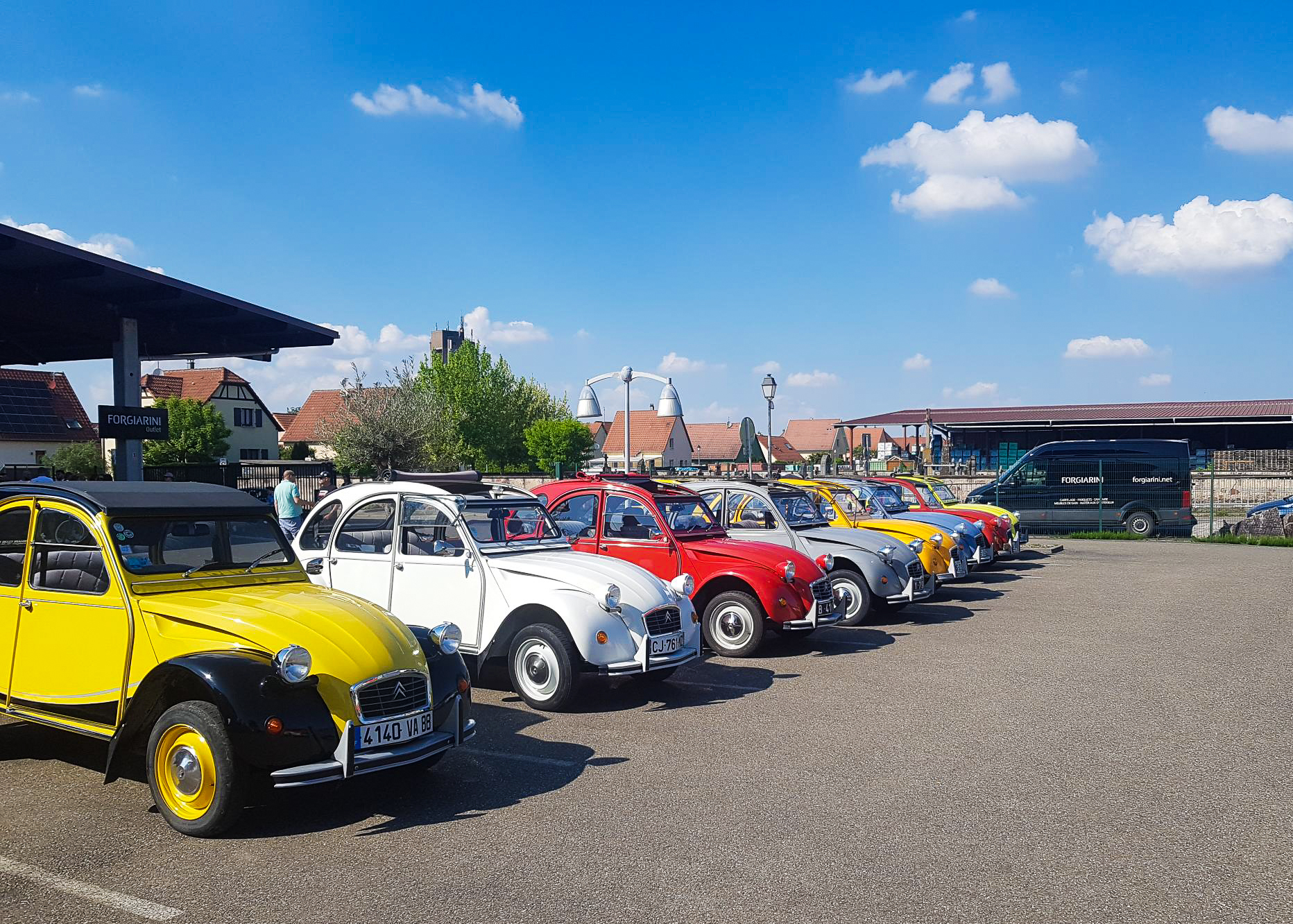
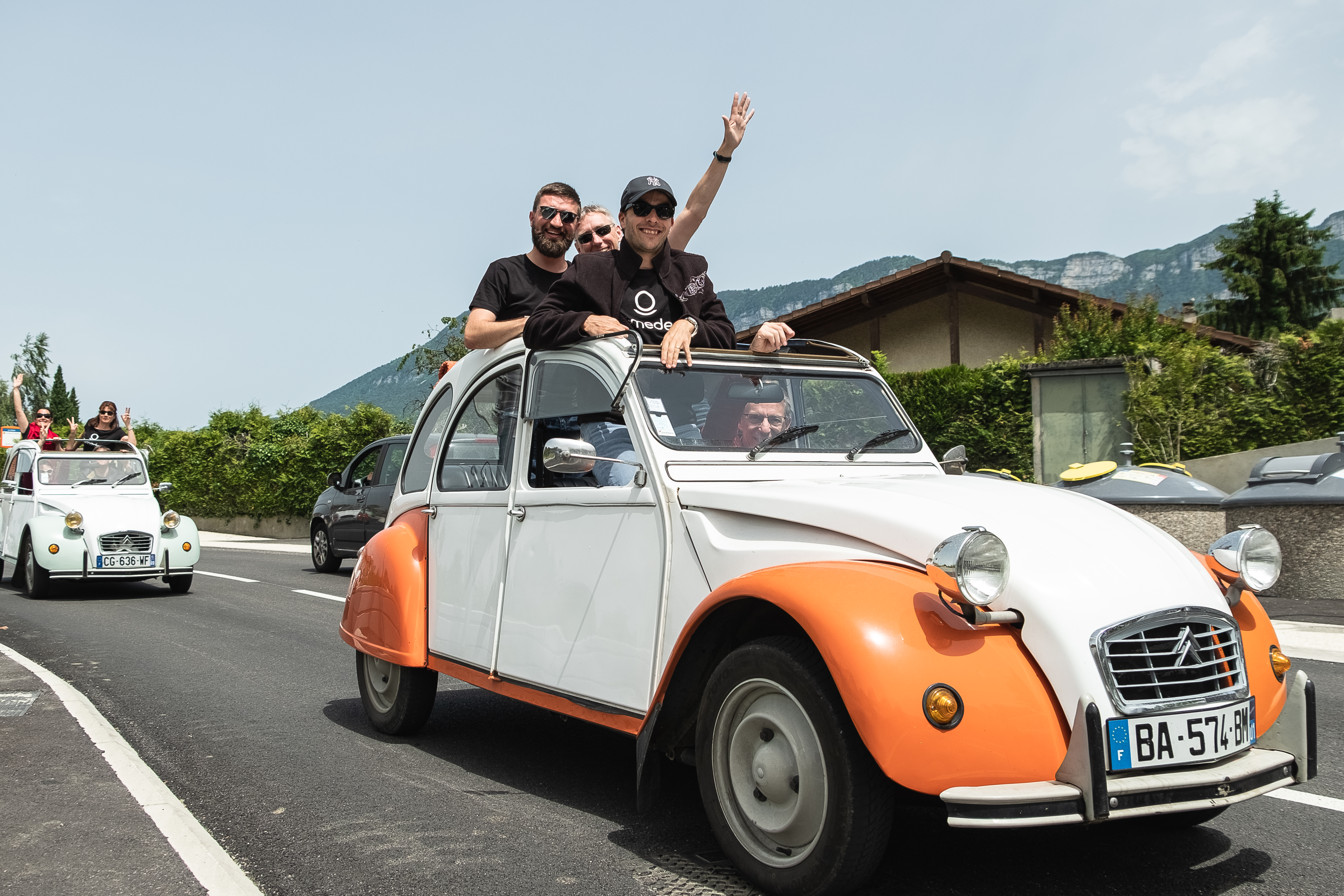
Brussels rally delivery in numbers decision-makers can benchmark
10+ years delivering corporate events across Belgium, with repeated logistics in Brussels (city centre and periphery).
Operational capacity from 20 to 250 participants on a single rally day, with staggered departures and real-time coordination.
1 point of contact for HR/Comms + 1 on-site production lead + 1 safety lead (no “handover gaps”).
Multilingual delivery: briefings and game materials in FR/NL/EN to match the reality of Brussels teams.
Standard production includes a documented risk approach: route notes, timing plan, call sheet, and escalation rules shared before go/no-go.
Brussels corporate references and repeat collaboration patterns
You mentioned company names to use as references, but they were not provided in your message. To keep this page accurate and compliant, we will only publish verifiable references once you confirm the list. In practice, many of our Brussels clients renew year after year for one simple reason: the rally becomes a reliable internal “tool” for leadership offsites, onboarding cohorts, or client hospitality—provided the logistics and safety are consistently controlled.
On the ground, repeat collaborations usually follow a similar pattern: a first edition to validate the format and stakeholder buy-in (HR, Comms, HSE, facilities), then a second edition with sharper messaging (values, employer brand, commercial narrative) and more structured outputs (photos, short videos, internal recap, learning points for managers). That’s the level of continuity we build for organisations based in Brussels.
 Besoin d’un devis rapide ?
Nous vous envoyons une première proposition sous 24h.
Why launch a 2CV Rally for your Brussels leadership and teams?
A 2CV Rally in Brussels is a management tool disguised as an activity. It puts teams in a constrained environment (time, navigation, tasks, public space rules) where leadership behaviours become visible quickly: who takes decisions, who listens, who coordinates, who loses the thread. Executives typically use it to accelerate trust, break silos, and create a shared memory that carries into Q3/Q4 execution.
For HR and Comms, the value is also narrative: you get content and stories that are authentic because people are genuinely doing something together—without turning the day into a brand stunt. The 2CV is a cultural object in Belgium; in Brussels, it’s also a diplomatic choice: friendly, accessible, and not associated with aggressive competition.
Cross-functional collaboration under realistic constraints: mixed teams from finance, ops, sales, IT and legal must plan, execute, and re-adjust—very close to how projects actually run.
Leadership visibility without a formal meeting: you’ll see decision patterns, delegation habits, and communication clarity in a way no workshop can replicate.
Employer brand and onboarding impact: a rally works well with new joiners in Brussels offices—especially when paired with a short intro from leadership and a structured debrief.
Client hospitality with controlled risk: the 2CV offers a premium “Belgian” feel without the reputational risk of high-speed motorsport; we keep the format compliant and calm.
Measurable engagement: simple scoring, participation rates, and post-event pulse questions give HR a usable read, not just anecdotes.
Brussels is a high-density economic ecosystem: EU institutions, international HQs, consultancies, associations, and fast-moving scale-ups coexist with strict protocols and image sensitivity. A rally that is well-briefed, well-timed, and respectful of the public space fits that culture: professional on the outside, human on the inside.
What Brussels organisations expect from a rally supplier
In Brussels, your event will be judged as much on its operational discipline as on the activity itself. Comms teams want reassurance that signage, staff behaviour, and photo outputs match brand guidelines. HR wants psychological safety, inclusion (not everyone is comfortable driving), and a format that works for mixed seniority levels. Executives want a day that starts and ends on time and doesn’t generate “noise” they have to manage on Monday.
Local constraints are real: traffic patterns change quickly, certain areas are sensitive due to demonstrations or official delegations, and venue access windows can be narrow. We design routes with buffers, avoid fragile “single-point” segments, and build a plan that stays enjoyable even if one checkpoint becomes inaccessible.
Finally, Brussels is multilingual and multicultural. A rally can fail if instructions are ambiguous. We therefore standardise short, unambiguous briefs, visual roadbooks, and a staff approach that supports FR/NL/EN participants without slowing down the flow.
Which 2CV Rally challenges work best for Brussels teams?
Engagement comes from progression: teams need a mix of quick wins and tasks that require coordination. For a 2CV Rally in Brussels, we favour challenges that are playful but operationally safe and respectful of the city: short stop-and-go tasks, observation challenges, and partner-based checkpoints. The goal is to build energy without creating public-space friction or schedule drift.
Interactive animations in Brussels
Navigation & timing modules: teams use a simplified roadbook + clue-based navigation to reach checkpoints within a tolerance window (e.g., ±10 minutes). It rewards planning, not speed.
Brussels observation challenges: photo missions and detail-spotting tasks designed around architecture, street art, and neighbourhood identity—validated to avoid sensitive sites and to keep groups moving.
Corporate scenario cards: short decision cases (procurement trade-off, crisis comms choice, stakeholder alignment) tied to your business reality; answered on-site in 3–5 minutes at checkpoints.
Team role rotation: driver/navigator/timekeeper roles rotate at defined points to ensure inclusion and prevent “one person doing everything.”
Art animations in Brussels
Live sketch reporting at the finish: an illustrator captures key moments and messages during the debrief; practical for internal comms in Brussels offices where attention is scarce.
Guided micro-performances at controlled checkpoints (acoustic duo, small brass trio): short, scheduled interventions that support atmosphere without disrupting the route.
Photo direction with brand discipline: if your brand is sensitive, we set a shot list and designate a single approval contact, avoiding the usual “random images everywhere” problem.
Innovative animations in Brussels
Checkpoint tastings with Belgian partners: structured, portion-controlled formats to keep timing (e.g., 10-minute tasting windows) rather than open-ended grazing.
Finish-line food concept aligned with your schedule: seated lunch for leadership offsites, or standing walking dinner if you need networking and shorter speeches.
Dietary and allergy management: we collect constraints upstream and label outputs on-site; in Brussels, mixed international teams expect this as standard.
Gourmand animations in Brussels
QR-based scoring and live ranking: simple, reliable tools that reduce disputes and keep teams engaged without forcing them into complex apps.
Audio briefings per checkpoint: reduces language ambiguity; participants can replay instructions if needed.
CSR add-on module: optional mission tied to a local association (collection or awareness) with clear boundaries so it remains respectful and not performative.
Whatever the challenge set, the non-negotiable is alignment with your image. A regulated, diplomatic organisation in Brussels needs a different tone than a scale-up celebrating a funding round. We adjust language, visuals, staff posture, and scoring to match your brand and the audience you’re hosting.
Which Brussels venue types fit a 2CV Rally start or finish?
The venue frames the rally. In Brussels, a start zone that is too tight creates immediate delays; a finish venue with poor access kills the debrief and the networking. We choose locations based on vehicle logistics, arrival flow, indoor backup capacity, and how the venue reflects your positioning (corporate, creative, institutional, premium).
| Venue type | For which objective? | Main strengths | Possible constraints |
|---|---|---|---|
| Business hotels with meeting rooms (Brussels) | Leadership offsite + rally as a mid-day activation | Reliable AV, catering, clear timings, indoor backup if weather shifts | Limited outdoor space for staging multiple 2CVs; strict access windows and noise policies |
| Event venues with courtyard / loading access (Brussels region) | Strong start/finish moment + networking | Vehicle-friendly access, branding opportunities, smoother guest flow | Availability, higher rental costs; requires precise parking and security plan |
| Corporate HQ parking / campus sites (Brussels periphery) | Internal team day with minimal transfers | Full control, easy check-in, reduces coach/shuttle complexity | Need internal approvals, security protocol, and a clean plan for neighbours and traffic |
We strongly recommend a site visit for any 2CV Rally in Brussels. Photos do not show turning radiuses, access barriers, or how guests actually flow from registration to briefing. A 60–90 minute technical recce typically prevents hours of last-minute improvisation.
What budget to plan for a 2CV Rally in Brussels?
Pricing for a 2CV Rally depends less on “the idea” and more on the production reality: number of vehicles, start/finish infrastructure, staffing, route complexity, and the level of brand and content output expected by your Comms team. In Brussels, access constraints and timing buffers are often a key cost driver because they require more coordination and staff coverage.
As a planning reference, corporate clients typically see complete programmes ranging from €250 to €650 per person (excl. VAT) depending on the scope. A compact half-day with minimal catering and simple scoring sits at the lower end; a full-day with premium venues, content production, and multiple staffed checkpoints moves upward.
Participants and vehicles: number of 2CVs, allocation per team (often 3–4 people per car), and whether you need standby vehicles.
Route design and staffing density: a route with 3–6 checkpoints requires staffing, briefings, materials, and timing control.
Start/finish production: registration, signage, briefing area, PA system, parking marshals, indoor fallback, and catering format.
Branding and content: roadbooks with your identity, crew clothing, on-site photographer/videographer, editing turnaround (e.g., 24–72 hours).
Risk and compliance: insurance alignment with partners, safety briefings, and contingency logistics appropriate to Brussels conditions.
Languages and facilitation: bilingual or trilingual hosts, translated materials, and facilitation for mixed seniority groups.
We frame the budget with ROI logic: what business result is expected (alignment, retention, client loyalty, employer brand content) and what production level is required to deliver it without operational risk. The cheapest plan is rarely the least expensive when it generates delays, safety issues, or reputational friction in Brussels.
Why choose a Brussels agency for your 2CV Rally?
A rally is a moving production. When something shifts—traffic, access constraints, a venue delay—your agency must react in minutes, not in “we’ll check and come back to you.” Being based in Brussels means we can do rapid recces, coordinate with venues and local partners, and deploy staff without long travel dependencies.
It also means we understand the stakeholder environment: security procedures in office towers, procurement expectations, multilingual audiences, and image sensitivities common to Brussels corporates and institutions. If you are comparing agencies, ask how they manage route contingencies and who holds decision authority on-site; that’s where local production maturity shows.
If you need a broader view of how we operate across formats, you can also see our positioning as an event agency in Brussels and how we structure production for demanding corporate environments.
- Faster problem-solving: quicker site visits, quicker partner alignment, quicker replacement resources if needed.
- Better route realism: we design around actual city conditions, not assumptions.
- Partner ecosystem: vehicle providers, venues, caterers, and technicians used to corporate standards in Brussels.
- On-site accountability: clear leadership on the ground with escalation rules agreed in advance.
We frame the budget with ROI logic: what business result is expected (alignment, retention, client loyalty, employer brand content) and what production level is required to deliver it without operational risk. The cheapest plan is rarely the least expensive when it generates delays, safety issues, or reputational friction in Brussels.






What Brussels rally projects typically look like in real life
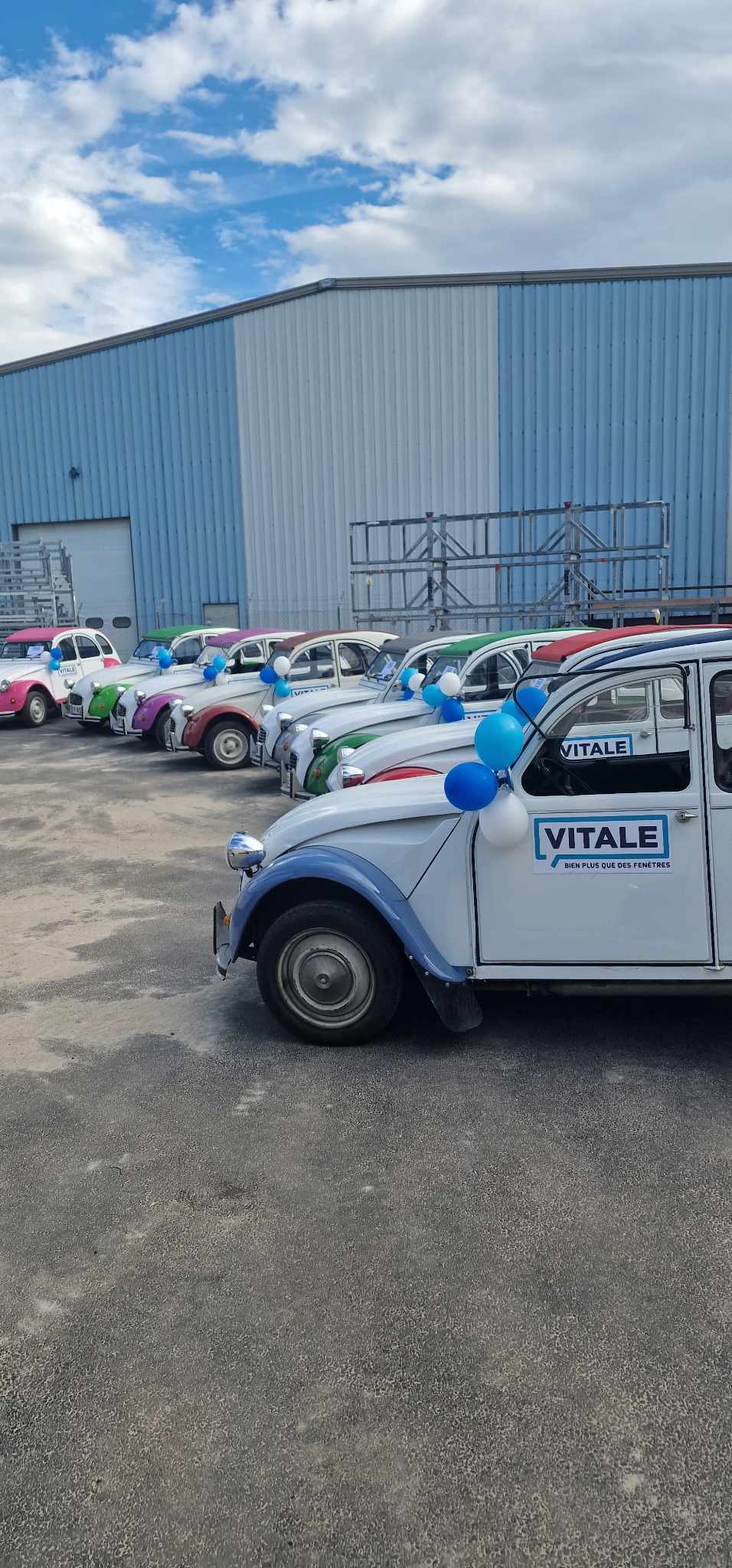
In practice, we deliver several recurring rally configurations in Brussels. One common format is the leadership offsite: morning plenary in a meeting venue, a structured 2CV Rally midday to trigger informal dialogue, then an afternoon debrief that converts observations into action points. Another frequent scenario is the client day: a clean arrival experience, a guided rally with comfort breaks that feel premium, and a finish designed for conversation (not a rushed awards moment).
We also run internal “culture reset” days after organisational changes. In those cases, we integrate small, well-calibrated prompts into checkpoints: values in action, decision principles, customer promise. The rally becomes a controlled environment where people discuss sensitive topics more naturally than in a boardroom.
Across these projects, our adaptability is less about changing the theme and more about adjusting the operational levers: pacing, checkpoint density, facilitation style, inclusion options for non-drivers, and the level of brand visibility that feels appropriate in Brussels.
Which Brussels rally risks we actively prevent
Over-ambitious routing that ignores traffic and access constraints, leading to cascade delays and missed checkpoints.
Start zone bottlenecks: too few staff for check-in, unclear team allocation, or insufficient space to stage vehicles safely.
Unclear rules that create disputes (scoring, time penalties, task validation) and damage the atmosphere.
Inclusion oversights: no plan for participants who cannot or do not want to drive, or teams built without considering language balance.
Brand inconsistency: uncontrolled visuals, improvised signage, or content that cannot be used by Comms afterwards.
Weak contingency plan: no alternative checkpoint, no indoor fallback, no escalation chain when something changes in Brussels.
Our role is to absorb operational risk so your internal stakeholders don’t have to. That means a written run-of-show, a staffed route, and decisions made proactively—before the issue becomes visible to your guests in Brussels.
Why Brussels clients rebook their rally with INNOV'events
Repeat business in Brussels is earned by being predictable in the best way: clear budgets, transparent trade-offs, and a day that runs to plan. Many of our clients return because internal stakeholders trust the production: HR knows inclusion is covered, Comms knows the brand will be respected, and executives know timing will be protected.
Rebooking also happens because we document what worked. After the event, we provide a structured debrief: what participants enjoyed, where timing tightened, what to adjust for next edition, and what content is available for internal communication.
Most multi-year collaborations start with a controlled first edition (30–80 participants) before scaling.
Common rebook cadence in Brussels: annual team day, biennial client event, or onboarding cohorts every 6–12 months.
Typical decision timeline: 6–10 weeks lead time for standard formats; 10–14 weeks for larger groups or complex venue needs.

Loyalty is not about habits; it’s proof that the operational basics were right the first time. In Brussels, where reputational tolerance is low, that’s what matters.
How we build your Brussels 2CV Rally from brief to delivery
👉 Brussels scoping call and stakeholder mapping
We run a focused call with HR/Comms and the business owner: purpose, audience mix, languages, internal constraints (procurement, security, alcohol policy), success criteria, and non-negotiables. We also identify who must approve what (brand, legal, building management) to avoid late-stage blockers in Brussels.
👉 Route and format design for a Brussels reality check
We propose a rally architecture: start/finish concept, recommended vehicle count, checkpoint density, task types, pacing, and buffers. We validate feasibility with venue access and partner capacity, and we include contingency options (alternative checkpoint, shortened loop) suitable for Brussels.
👉 Budget build and option structuring
We present a clear budget with options (catering level, content production, number of checkpoints, premium vs standard venues). Each option is explained in operational terms: what it changes in staffing, timing, and guest experience. This is designed to support executive approval and procurement in Brussels.
👉 Production planning and compliance pack
We lock the run-of-show, staffing plan, roadbook, scoring rules, and risk measures. We align with partners on arrival windows, signage, parking, and guest flow. You receive practical documents that your internal teams can trust: call sheet, contact list, escalation rules, and briefing scripts in relevant languages for Brussels.
👉 Event day delivery and controlled debrief
On the day, we manage check-in, briefings, staggered departures, checkpoint operations, and finish sequence. We track timing in real time and adjust with pre-agreed rules. We close with a short debrief format that turns the rally into business value, then we coordinate content delivery and a post-event review for your next edition in Brussels.
FAQ sur l'organisation 2CV Rally à Brussels
How long should a 2CV Rally take in Brussels?
Most corporate formats in Brussels run 3 to 6 hours for the rally itself. Add 45–60 minutes for welcome + briefing and 45–90 minutes for finish + awards/debrief depending on your agenda.
What group size works best for a Brussels 2CV Rally?
The sweet spot is usually 24 to 120 participants (roughly 6 to 30 cars with 3–4 people per vehicle). Above that, we use staggered waves and more checkpoint staffing to keep the flow clean in Brussels.
Can non-drivers participate in a Brussels rally?
Yes. We design team roles so driving is optional: navigator, timekeeper, photo lead, or challenge lead. We can also plan rotations so no one feels forced to drive in Brussels traffic.
What is a realistic budget per person in Brussels?
Plan a working range of €250 to €650 per person (excl. VAT) in Brussels, depending on duration, venue, checkpoint staffing, catering, and content production. We provide option tiers so you can arbitrate with procurement.
How far in advance to book a 2CV Rally in Brussels?
For a standard corporate rally in Brussels, book 6–10 weeks ahead. For peak dates, larger groups, or premium venues, 10–14 weeks is safer to secure vehicles, staff, and the right access windows.
Request a Brussels 2CV Rally proposal with a clear budget and timeline
If you need a 2CV Rally in Brussels that is punctual, safe, and aligned with your internal standards, we can propose a route and production plan quickly—based on your group size, venue preferences, and the message you want teams to take back to the office.
Send us your date window, estimated headcount, and whether this is for HR (team engagement), Comms (brand content), or client hospitality. We will return a structured proposal with 2–3 format options, a realistic budget range, and the key decisions required to secure the production in Brussels.
INNOV'events Brussels Agency
Justin JACOB is the manager of the INNOV'events Brussels office. Reach out directly by email at belgique@innov-events.be or via the contact form.
Contact the Brussels agencyToutes nos prestations & animations Brussels, Belgique
Découvrez nos prestations événementielles
Découvrez nos animations événementielles disponibles au Belgique
- Event Hostess in Brussels
- Escape Game in Brussels
- MasterChef Cooking Workshop in Brussels
- Magician in Brussels
- Marquee Rental in Brussels
- Color Analysis Workshop in Brussels
- Inflatable Games in Brussels
- Valet Parking Service in Brussels
- Football Simulator in Brussels
- LED Furniture Rental in Brussels
- Light Branding in Brussels
- Unique Dining Experience in Brussels
- Light Painting in Brussels
- Murder Mystery Party in Brussels
- Prize Contest in Brussels
- Promotional Displays (POS) in Brussels
- Virtual Reality in Brussels
- Molecular Gastronomy Workshop in Brussels
- Halloween Entertainment in Brussels
- Fireworks Show in Brussels
- Giant Games Challenge in Brussels
- Event Host / MC in Brussels
- Photo Booth Animation in Brussels
- Santa Claus Entertainment in Brussels
- Kids Entertainment in Brussels
- Guided Tour in Brussels
- Urban Rally in Brussels
- Ball Pit in Brussels
- Flight Simulator in Brussels
- Food Truck Rental in Brussels
- World Record Challenge in Brussels
- Surf Simulator in Brussels
- Wine Casino in Brussels
- Makeover Workshop in Brussels
- Perfume Creation Workshop in Brussels
- Acting Workshop in Brussels
- CSR Activities in Brussels
- Archery in Brussels
- Security Staff in Brussels
- Wine Tasting in Brussels
- Mime Performer in Brussels
- TV Game Show in Brussels
- Funfair in Brussels
- Crisis Management Workshop in Brussels
- Crisis Negotiation Workshop in Brussels
- Arcade Games in Brussels
- Indoor Skydiving Simulator in Brussels
- Ski Simulator in Brussels
- Racing Circuit Experience in Brussels
- Introductory Flight Experience in Brussels
- Tasting Experience in Brussels
- Build Your Own Foosball Workshop in Brussels
- 2CV Rally in Brussels
- LEGO Challenge in Brussels
- Casino Night in Brussels
- Interpreter / Translator in Brussels
- Promotional Giveaways in Brussels
- Shuttle Transport in Brussels