
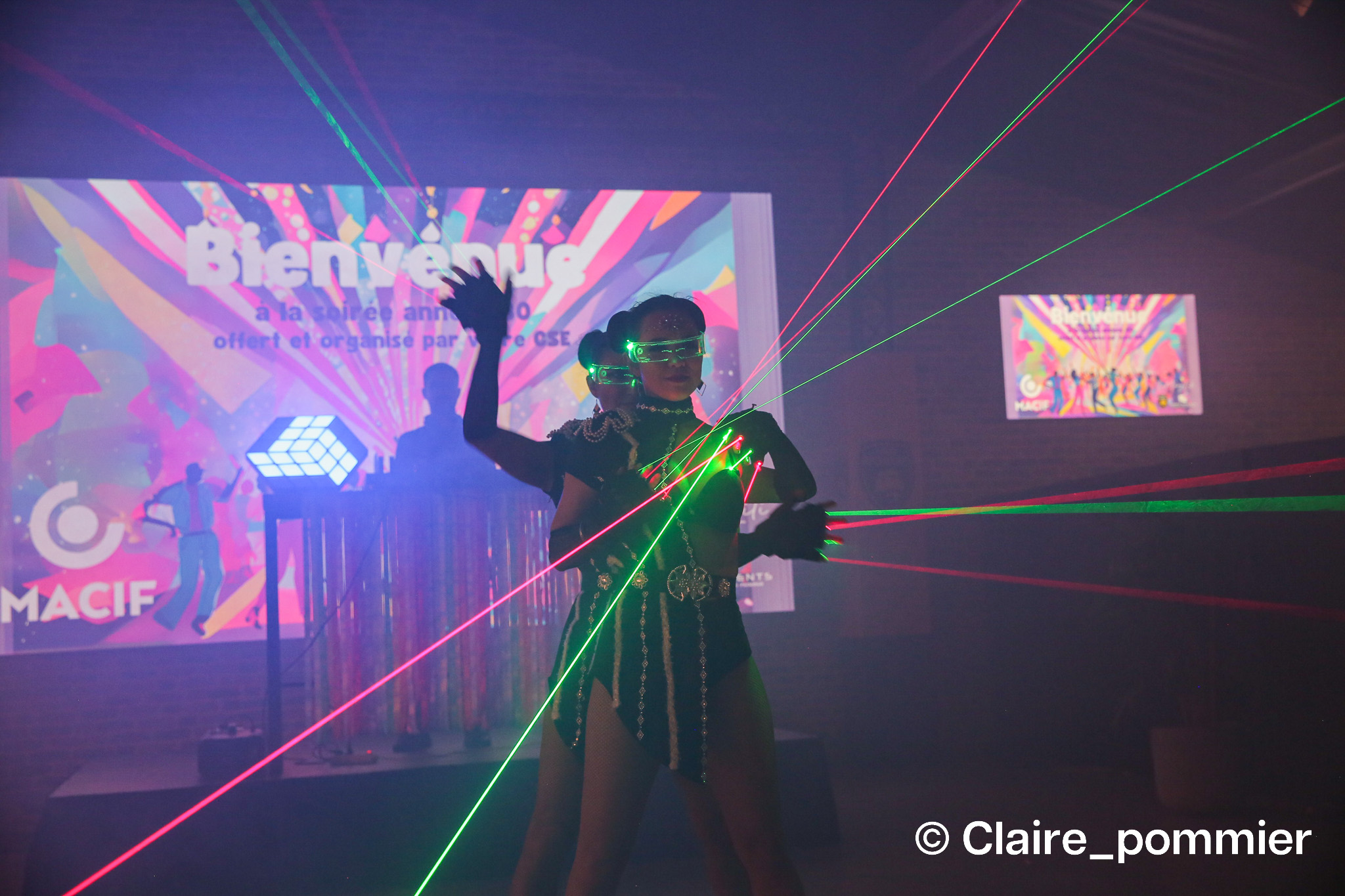
Sound & Lighting Production in Brussels that keeps your programme on time
INNOV'events delivers Sound & Lighting Production for corporate events in Brussels, from 30-person leadership briefings to 2,000-guest ceremonies. We handle technical design, rigging, show calling, rehearsals, and on-site operations so your speakers are heard, your brand looks consistent, and your schedule holds.
Table of contents
In a corporate event, audio and lighting are not “nice-to-haves”: they directly affect message retention, speaker credibility, and the perceived professionalism of your organisation. When a CEO microphone drops out or screens are washed out, the room stops listening—even if the content is strong.
Brussels audiences are demanding and diverse: multilingual content, hybrid attendance, strict venue rules, and zero tolerance for delays. HR and Comms teams also need consistent brand rendering on camera and in the room, not just a “good vibe”.
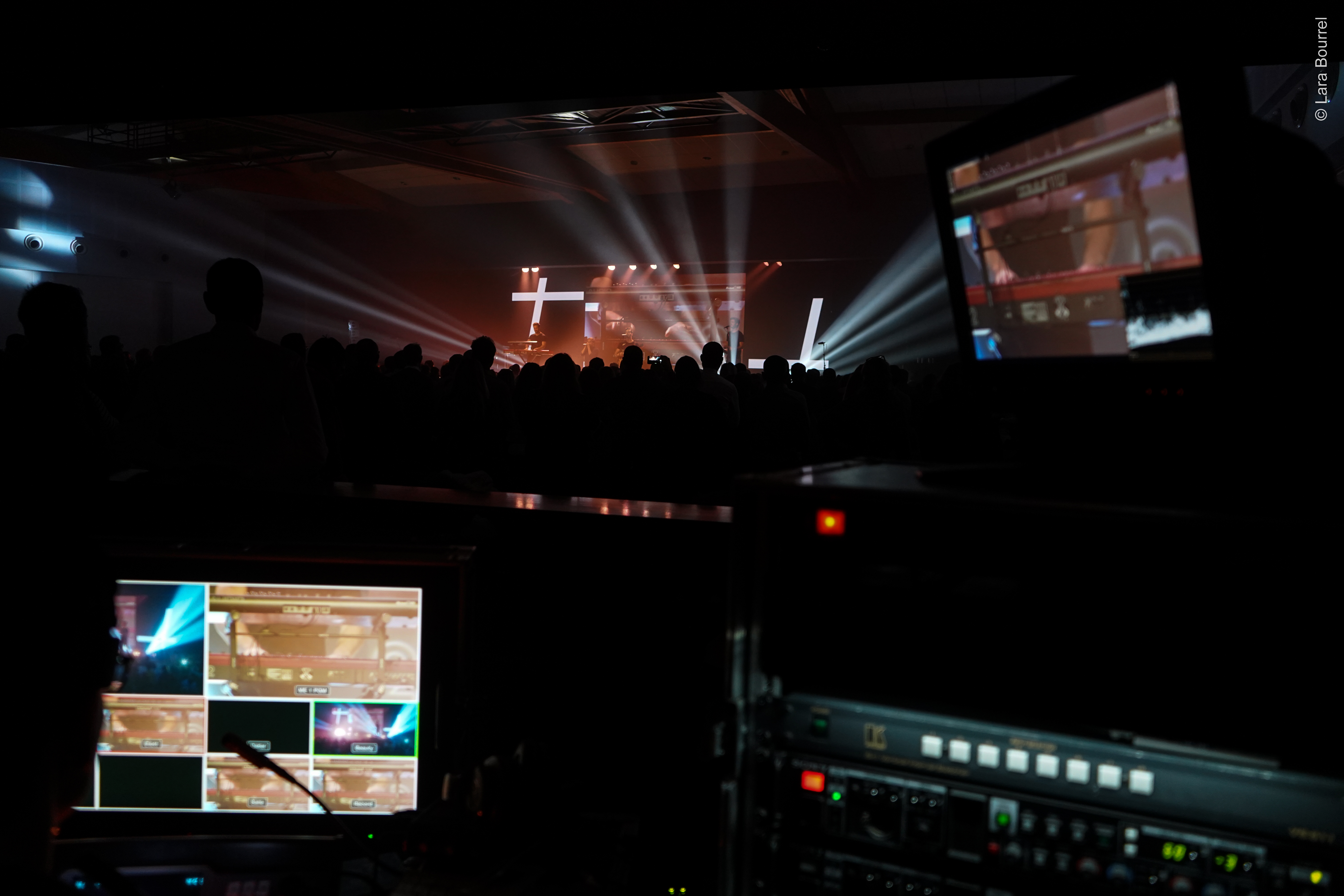
Our Brussels-based team plans and operates the full technical chain: site surveys, power and rigging checks, RF coordination, cue sheets, and contingency planning. You get one accountable production lead, clear documentation, and a crew sized to your programme—not to our inventory.
Brussels production numbers executives can rely on
10–15 minutes: standard on-site response time target for critical audio issues once doors are open, thanks to pre-positioned spares (wireless capsules, receivers, DI boxes, cables) and a documented troubleshooting workflow.
2 languages minimum (often 3): we routinely design mic plans and stage management for bilingual and trilingual programmes (FR/NL/EN), including interpreter audio feeds and separate monitoring needs.
30 to 2,000 attendees: scalable systems—from boardroom-grade speech reinforcement to line-array or distributed PA for large halls, with lighting plots adapted to camera and live audience.
1 production lead accountable end-to-end: one point of contact for HR/Comms/Executive Office, coordinating venue, suppliers, and crew call times with written run-of-show and cueing.
How to organize a professional event in Brussels?
- Define the objective (cohesion, announcement, fidelity, performance).
- Set date, format and size (20–1 000 people).
- Secure the venue and accommodation according to seasonality.
- Lock down technical, suppliers and logistics.
- Drive the day J (timing, scene, entrance, flow).
Brussels references and recurring corporate partners
We support organisations across Brussels that run high-stakes moments: executive town halls, employer-brand events, press-facing announcements, and year-end celebrations where timing and image matter. Many clients work with us year after year because they want predictable outcomes: consistent audio intelligibility, clean lighting on faces, and a stage that looks like the brand guideline—not a generic setup.
When a company repeats an annual event, we maintain production files (stage plots, patch lists, RF allocations, venue constraints, lessons learned) so the next edition starts with a proven baseline. That continuity is especially valuable for HR and Comms teams who change internally while the event expectations stay high.
If you share the company names you want included as references, we will integrate them here in a compliant, professional way (with the right level of detail and approvals). In the meantime, we can already structure your quote around comparable Brussels realities: multilingual speakers, tight venue access windows, and hybrid streaming requirements.
We send you a first proposal within 24h.
Why invest in Sound & Lighting Production in Brussels for leadership events
In Brussels, a corporate event often brings together headquarters, European stakeholders, and international teams. The production standard becomes part of the message: it signals operational maturity, respect for people’s time, and confidence in your strategy.
Message clarity for executives: speech intelligibility is measurable. With the right mic choice, tuning, and speaker coverage, people stop straining and start engaging—especially in reflective rooms and large venues.
Risk reduction for HR and Comms: rehearsals, redundant playback, and backup mics prevent “public failure” moments that can undermine employer brand and internal trust.
Programme discipline: a show caller running cues (walk-on music, video playback, lighting states) helps keep panels and awards on schedule, which executives care about more than any special effect.
Brand consistency: lighting temperature, intensity, and camera exposure influence how your colours, stage backdrop, and speaker faces appear in photos and video. We align lighting with your brand look and any broadcast needs.
Better engagement metrics: in Q&A-heavy formats, good RF management and audience mic strategy increase participation. When people can be heard instantly, they speak up more.
Brussels’ economic culture is fast, international, and detail-oriented. A technically disciplined event reflects that culture—and protects the reputation of the leaders and teams who put their name on it.
What Brussels venues and stakeholders expect from your technical partner
Local constraints in Brussels are practical and non-negotiable: loading bays with limited time slots, strict noise policies in certain districts, and venues that require certified rigging points, specific power distribution, or approved access routes. A good technical partner anticipates these constraints before you sign off the venue and before your Comms team publishes the agenda.
We regularly encounter programmes where the content evolves late (a ministerial guest joins, a CEO adds a video, a panel becomes bilingual). In Brussels, that’s normal—but it only works if the production has headroom: spare RF channels, flexible playback routing, a lighting console with pre-built looks, and a crew briefed to adjust without drama.
Stakeholders are also more numerous: internal security, building management, venue technical staff, and sometimes European-level protocols. We produce concise technical documentation that these stakeholders can approve quickly: power needs, rigging plans, noise expectations, equipment lists, and on-site contacts with exact call times.
Which Brussels event formats benefit most from upgraded sound and lighting
Entertainment and engagement don’t have to mean a “show”. In corporate contexts, the most effective engagement is often about pace, clarity, and interaction. Strong production turns a standard agenda into a programme that feels controlled and intentional—without distracting from your content.
Interactive animations in Brussels
Town hall Q&A with roaming microphones: we deploy coordinated wireless handhelds or aisle mics, with clear staff roles, so questions move quickly and remain audible across the room.
Live polling with on-screen results: requires clean playback routing, latency control, and lighting that keeps the audience visible enough for camera shots without washing out screens.
Panel discussions with mix-minus monitoring: for hybrid or recorded panels, we can provide tailored monitoring so speakers hear remote participants clearly without echo.
Art animations in Brussels
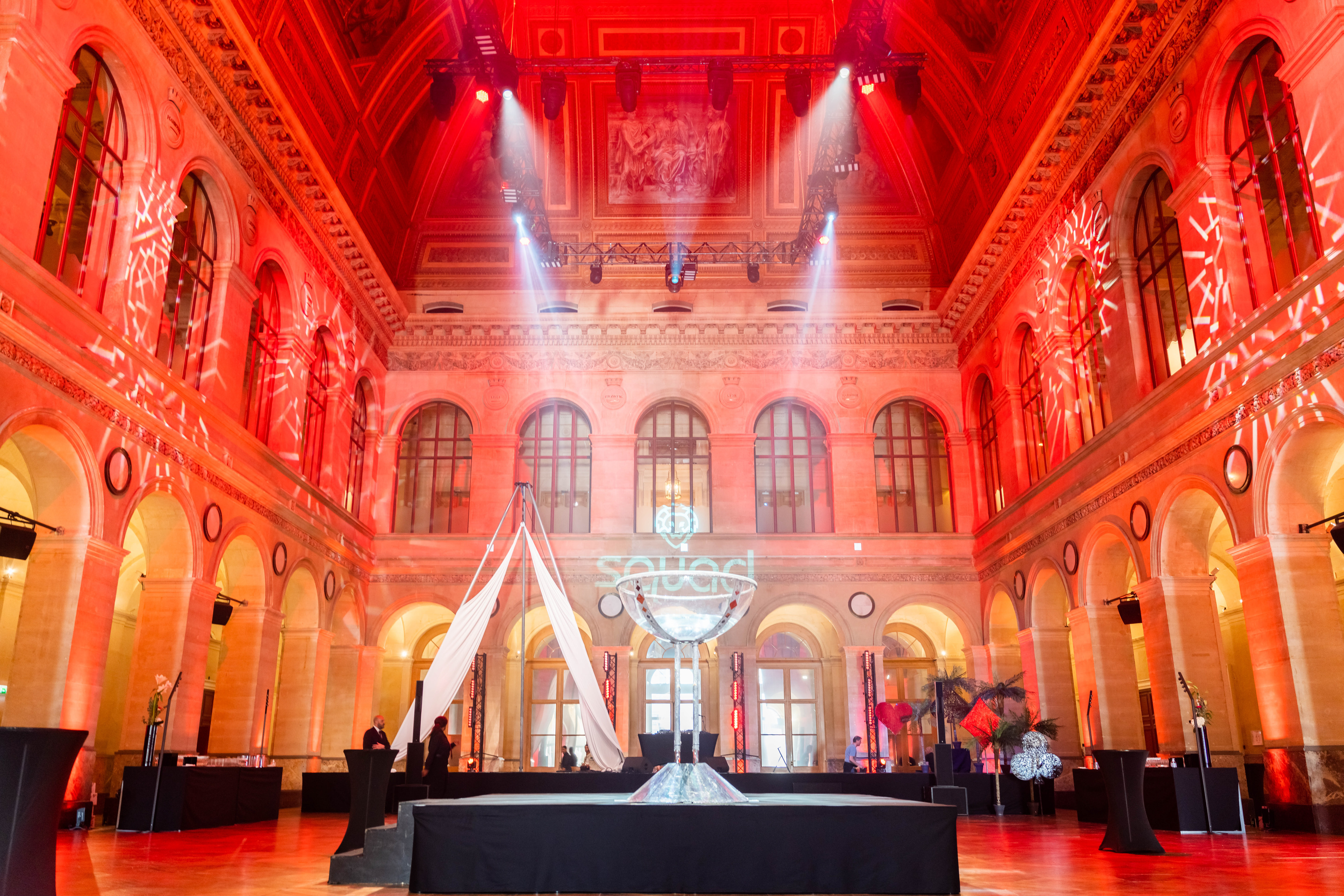
Brand-consistent stage looks: subtle architectural lighting, gobos with your logo, and calibrated colour palettes so photos look like your corporate identity—useful for Comms deliverables.
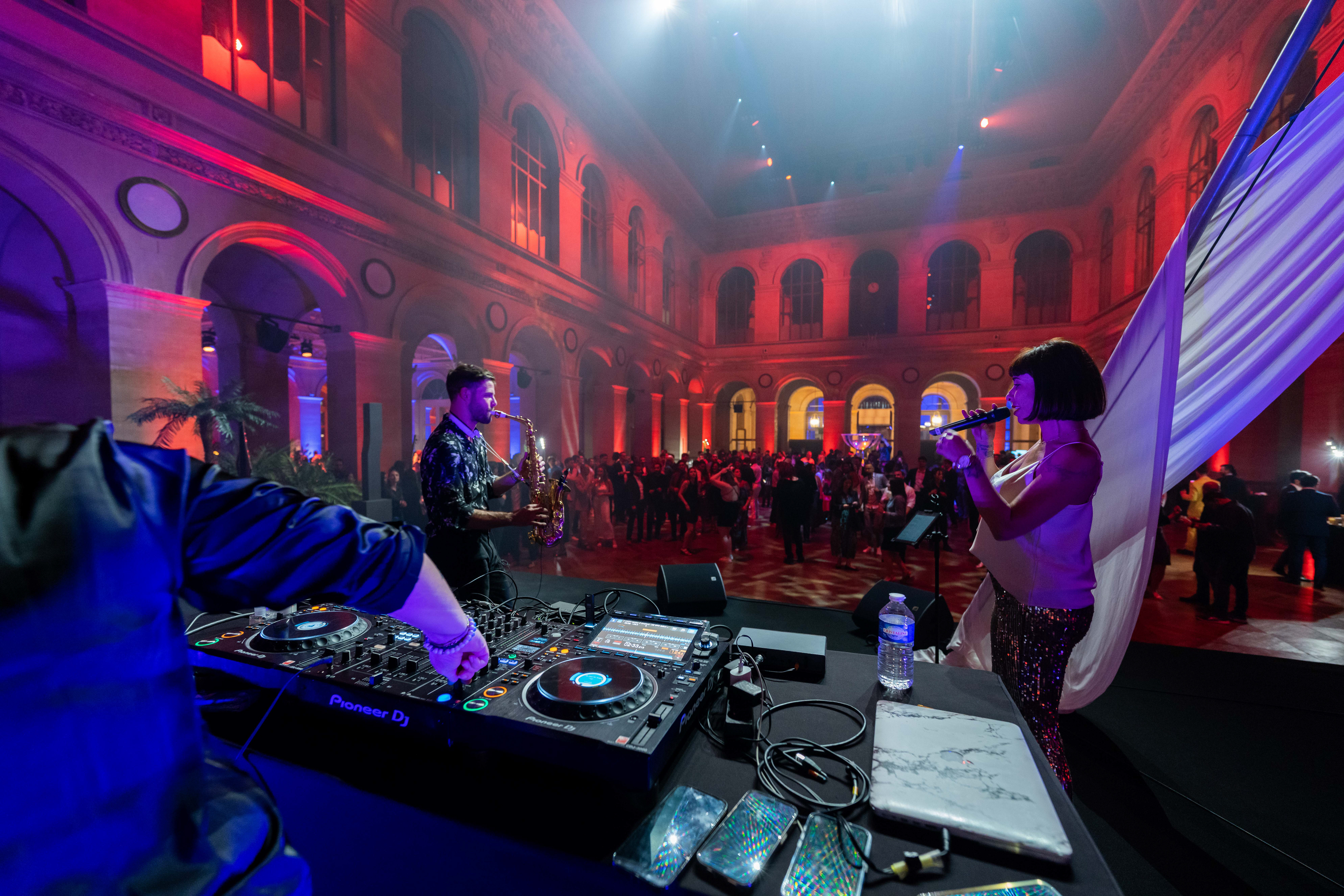
Short musical interludes: a pianist, jazz trio, or DJ set can work when scheduled as a programme transition. We plan SPL expectations, stage footprint, and changeover time to avoid delays.
Awards moments with cue-driven lighting: walk-up music, spotlighting, and photo-friendly lighting states create rhythm while keeping the event tight.
Innovative animations in Brussels
Chef station moments with controlled announcements: if you’re doing live service moments, we use localized sound zones or carefully tuned reinforcement so announcements are heard without turning dinner into a conference.
Tasting or pairing workshops: small-group formats often fail due to room noise. We can add discreet reinforcement and timed lighting cues so facilitators don’t have to shout.
Gourmand animations in Brussels
Hybrid keynote with broadcast-style lighting: when your message must reach remote staff, we light for camera (consistent exposure, clean backgrounds) and manage audio routing for stream, recording, and in-room PA separately.
Silent conference moments: for venues with strict noise constraints, we can deploy wireless headphone systems for breakouts, with controlled channel switching and straightforward user support.
Immersive scenography with projection and lighting integration: we coordinate colour, brightness, and cue timing so projection mapping and stage lighting support each other rather than compete.
The common thread is alignment: entertainment elements should reinforce the tone of your organisation. We validate what “on-brand” means for you (formal, warm, high-energy, premium, discreet) and then engineer the sound and lighting choices so the experience matches that intent in the room and on camera.
How to choose a Brussels venue that won’t limit your production
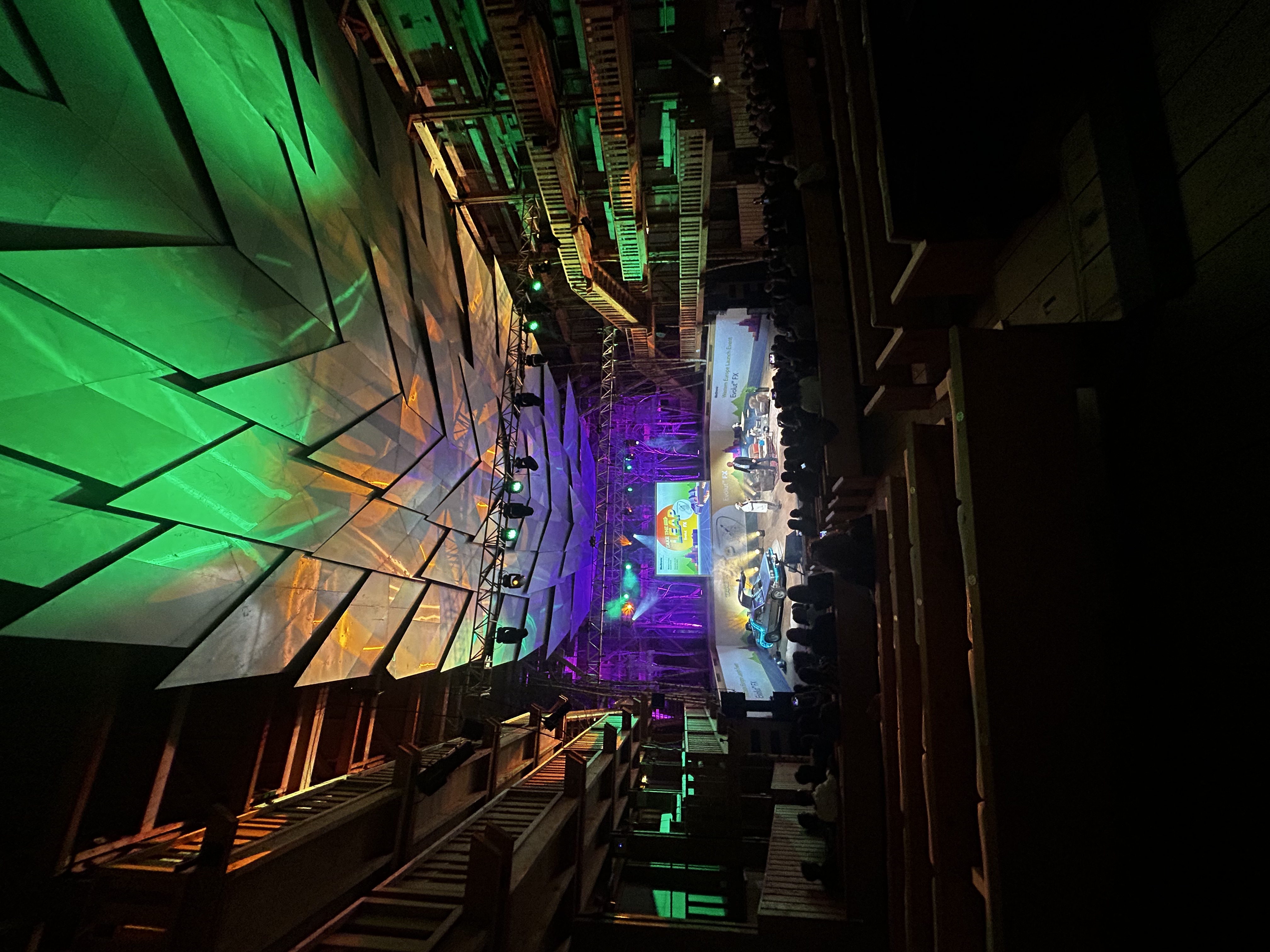
The venue determines what is feasible: rigging points, ceiling height, ambient noise, power availability, and load-in routes. For Sound & Lighting Production, a venue that looks impressive can still be operationally restrictive if access is tight or if rigging is limited. We recommend a technical check before final confirmation, especially for programmes with video, multiple speakers, or hybrid capture.
| Venue type | For which objective? | Main strengths | Possible constraints |
|---|---|---|---|
Conference hotels in Brussels | Executive conferences, town halls, awards with dinner | Built-in event teams, predictable access, basic power and acoustics usually manageable | House AV may be limited; rigging points and control over lighting often restricted; union or preferred supplier rules can apply |
Industrial/warehouse-style spaces (Brussels region) | Brand launches, large gatherings, immersive scenography | Creative freedom, high ceilings, strong visual impact with proper lighting design | Often requires full power distribution, additional heating/cooling, more rigging engineering, longer build time |
Auditoriums and theatres in Brussels | Keynotes, thought leadership, speaker-led formats | Excellent sightlines, professional stage infrastructure, good baseline acoustics | Strict technical rules, limited load-in windows, fixed lighting positions, complex coordination with venue crew |
We insist on a site visit (or at minimum a technical recce call with venue plans) because it is the fastest way to avoid budget creep and day-of compromises. A 45-minute walkthrough can save hours of troubleshooting and prevent last-minute changes that affect speaker confidence and programme timing.
What Sound & Lighting Production costs in Brussels (and what drives it)
Pricing depends on measurable parameters: audience size, room acoustics, stage design, cue complexity, rehearsal time, and whether the event is in-person only or hybrid. We quote transparently, line by line, so you understand what you’re paying for and what the operational risks are if you reduce scope.
Audience size and coverage design: a 150-person ballroom needs a different system than a 900-person hall; sometimes distributed speakers provide better clarity at lower volume, but require more planning and cabling.
Microphone count and type: a keynote with 2 wireless mics is not the same as a panel with 6 headsets, audience Q&A mics, and interpreter feeds. More RF channels means more coordination and testing.
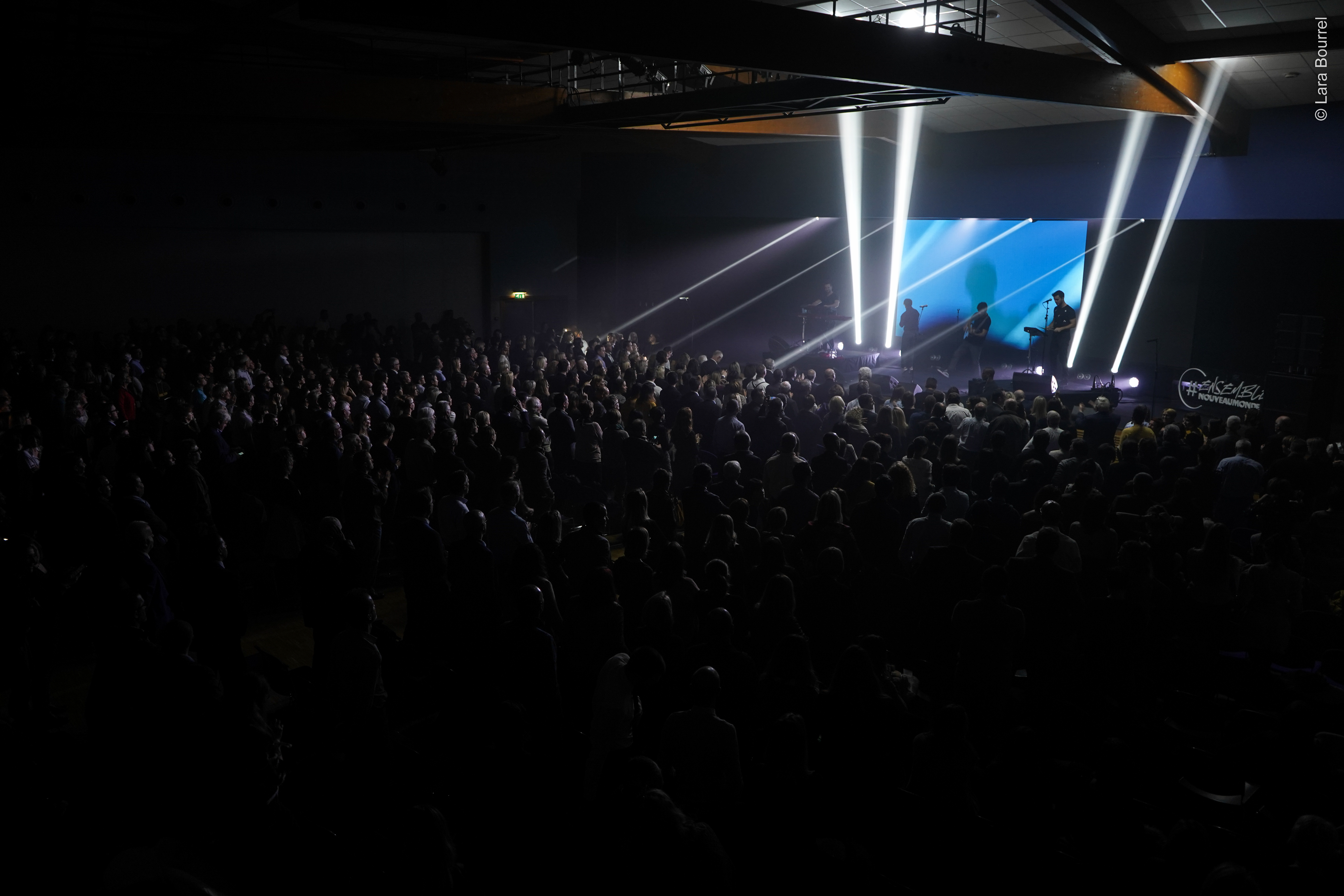
Lighting ambition: basic stage wash vs. broadcast-ready key lighting with colour-controlled backlight and scenic elements. Camera-friendly lighting often increases fixture count and programming time.
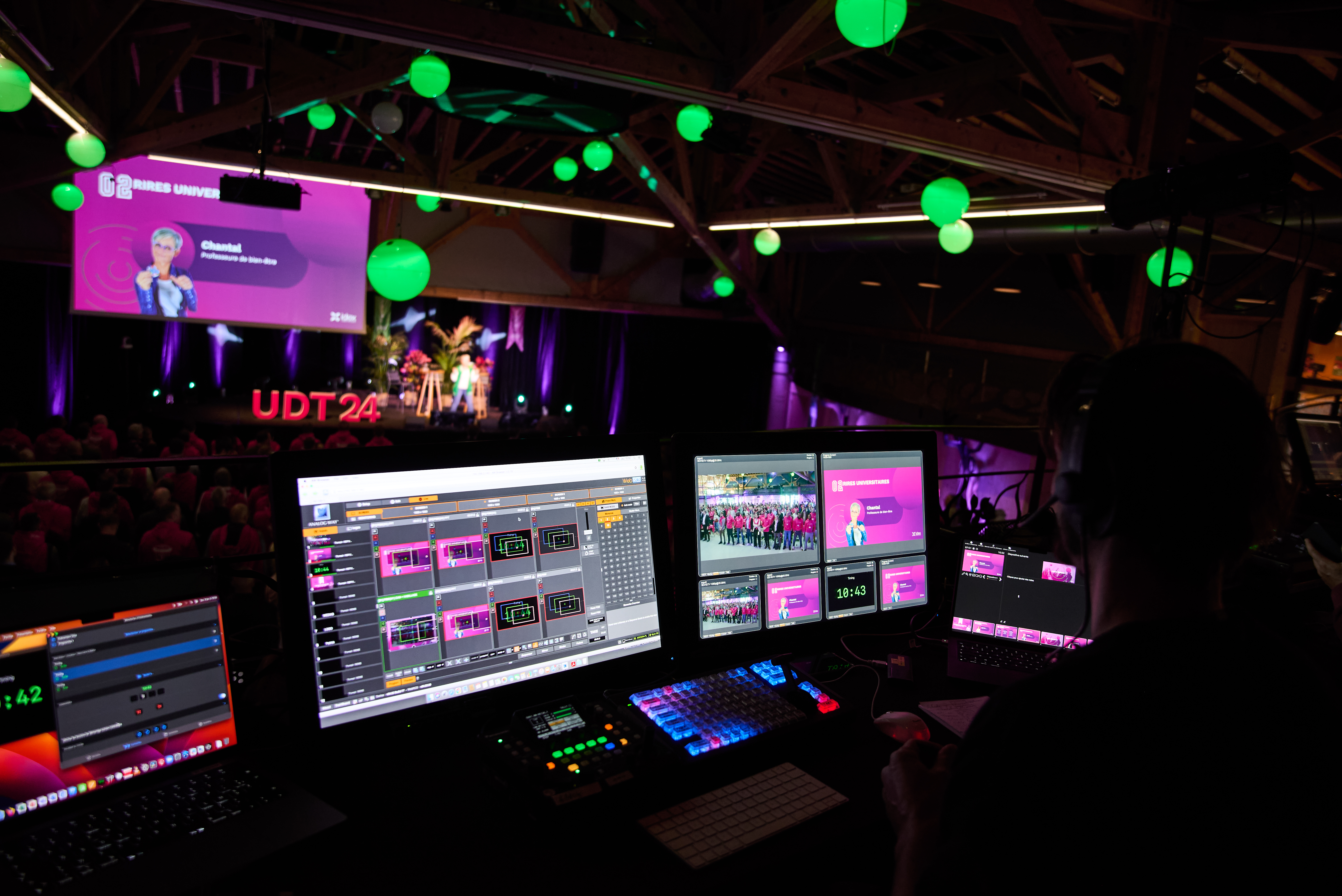
Video playback and show control: multiple videos, walk-on music, stings, and timed transitions require a cueing system, rehearsal, and dedicated operators.
Venue constraints in Brussels: difficult load-in, limited elevator access, restricted hours, or mandatory venue crew can increase labour time even if the equipment list is unchanged.
Hybrid streaming: separate audio mixes for the room and the stream, comms/headsets, and redundancy planning add staffing and gear.
From an ROI standpoint, production is insurance for your agenda: it protects leadership credibility, reduces the likelihood of delays, and improves the quality of content you can reuse internally (recordings, highlight reels, employer branding). We can propose options in tiers so you can align spend with what is truly at stake.
Why a Brussels-based production partner reduces day-of risk
Choosing a local team is less about geography and more about operational control. In Brussels, venues and suppliers have specific rules, traffic and access constraints are real, and last-minute stakeholder changes are common. A local partner can do quick recces, coordinate directly with venue tech managers, and deploy the right crew without relying on long-distance logistics.
As an event agency in Brussels, we integrate production with the broader event reality: guest flow, stage timing, security constraints, and brand deliverables. That means fewer handovers and fewer “grey zones” where problems hide until the event is live.
- Faster site surveys and technical alignment: we validate rigging, power, and backstage logistics early, so the plan matches the venue—not assumptions.
- Reliable Brussels crew network: qualified sound engineers, lighting operators, stagehands, and riggers who are used to corporate pace and protocol.
- Practical contingency planning: spares, alternate routing, and a documented escalation path when something changes (speaker order, extra video, added VIP).
- Clear accountability: one production lead responsible for results, not a chain of subcontractors with fragmented responsibility.
From an ROI standpoint, production is insurance for your agenda: it protects leadership credibility, reduces the likelihood of delays, and improves the quality of content you can reuse internally (recordings, highlight reels, employer branding). We can propose options in tiers so you can align spend with what is truly at stake.








Examples of Brussels Sound & Lighting Production we deliver in practice
We operate across corporate formats where the pressure is real and the tolerance for improvisation is low. Typical Brussels projects include leadership town halls with bilingual moderation, award ceremonies where walk-ups must be perfectly cued, and strategy kick-offs where the CEO’s keynote is recorded for internal distribution the same day.
In practice, our work is often about solving the “hidden” constraints that make corporate events fail: a room with heavy reverberation where speech becomes muddy, a stage design that blocks key light, or a programme with back-to-back speakers who need different microphone setups. We anticipate these issues by building a detailed mic plan (who wears what, where it is stored, who fits it), a lighting plot matched to camera positions, and a run-of-show with cue responsibilities.
We also adapt quickly when priorities change. A common real-life scenario: the executive office confirms a last-minute external guest, requiring an additional wireless channel and a revised stage entrance. With proper RF planning and spare capacity, we integrate the change without adding stress to your team or delaying doors open.
Brussels production mistakes that create avoidable reputational risk
Relying on venue “included AV” without a technical audit: house systems can be fine for background music but insufficient for keynote clarity or hybrid routing. We verify specs, not promises.
No rehearsal time allocated: even 30–45 minutes of cue and mic checks can prevent a CEO walking on stage with the wrong mic or a video starting without audio.
Underestimating RF complexity: Brussels has dense RF environments. Without frequency coordination, you risk dropouts exactly when Q&A starts.
Lighting designed for the room, not for cameras: faces look flat, colours shift, and recordings become unusable for Comms. We plan lighting for both live perception and capture.
No redundancy for critical playback: a single laptop for videos is a single point of failure. We build backup playback and clear switching methods.
Unclear cue ownership: when “someone” is supposed to start music or advance slides, it often happens late. We assign roles and run show calling for complex programmes.
Our role is to prevent these risks with planning, documentation, and disciplined on-site operations—so your leadership team can focus on content and stakeholder management, not technical firefighting.
Why Brussels clients renew production with the same partner
Long-term partnerships happen when the event day becomes predictable. For HR and Comms, predictability is a competitive advantage: it reduces internal workload, limits stakeholder stress, and protects brand standards across multiple events per year.
Production files kept and updated: stage plots, patch lists, RF allocations, cue sheets, and venue notes are maintained so each new edition starts faster and safer.
Consistent crew briefing: the same operational methods on every event (line checks, comms protocols, cue confirmation) reduce mistakes and speed up troubleshooting.
Post-event debrief in writing: we provide what worked, what didn’t, and what to adjust next time—useful for internal reporting and budget planning.

Loyalty is not about habit; it’s proof that the technical result held up under pressure, on time, and in line with what leadership expected in Brussels.
Our Brussels production process from brief to show calling
👉 Brussels discovery call and programme mapping
We start with your objectives, agenda, audience profile, and constraints (languages, VIP protocol, hybrid needs). We translate that into an initial production outline: mic count and types, speaker positions, lighting approach, cueing needs, and staffing. You receive a structured set of questions that helps internal stakeholders decide quickly.
👉 Brussels site survey and technical validation
We confirm the realities that drive budget and risk: access routes, loading times, ceiling heights, rigging points, power distribution, acoustics, and FOH placement. If the venue has in-house tech, we align responsibilities and confirm what is fixed vs. flexible.
👉 Technical design, documentation, and quote options
We deliver a clear proposal with options (for example: speech-first setup vs. broadcast-ready setup). Documentation typically includes a high-level stage plan, equipment scope, staffing, and timeline assumptions. For complex shows, we add a run-of-show template and cueing method so Comms can validate the flow.
👉 Pre-production coordination with speakers and content
We coordinate slide and video specs (formats, aspect ratios, audio levels), establish a content deadline, and set up a reliable handover process. For executive speakers, we offer a discreet mic fitting plan and a short on-stage confidence check to reduce stress.
👉 Build, line check, rehearsal, and show operation in Brussels
On site, we build to plan, run line checks, tune the system, and test all RF channels. We execute rehearsal time efficiently: walk-ons, video playback, lighting looks, Q&A flow. During the show, we operate with comms headsets, cue confirmation, and a clear escalation path—so issues are handled before the audience notices.
👉 De-rig and post-event debrief
We de-rig within venue constraints, manage checklists, and provide a short debrief: what to keep, what to improve, and what to budget for next time. If recordings were part of the scope, we align on delivery timelines and file formats for internal and external communication.
FAQ sur l'organisation Sound & Lighting Production à Brussels
What does Sound & Lighting Production cost in Brussels?
For corporate events in Brussels, budgets commonly range from €2,500–€7,500 for a speech-focused setup (small to mid-size room) and €8,000–€25,000+ for larger stages, advanced lighting looks, multiple wireless channels, and show calling. The main drivers are venue constraints, cue complexity, rehearsal time, and hybrid needs.
How many microphones do we need for a Brussels town hall?
Typical town halls in Brussels use 2–4 mics for hosts/speakers, plus 2–6 mics for Q&A (roaming handhelds or aisle stands). Add 1–2 spare channels as backup. If you have interpreters, plan separate feeds and monitoring in addition to the on-stage mics.
Do we need a rehearsal for an event in Brussels?
Yes, for executive programmes we strongly recommend at least 30–60 minutes for a technical rehearsal (mic fit, walk-ons, video audio checks, and cue timing). For complex shows (awards, multiple videos, hybrid), plan 2–4 hours or a dedicated half-day, depending on the venue access window.
Can you handle hybrid audio and lighting in Brussels venues?
Yes. We separate the in-room mix from the stream/record mix, manage IFB or speaker monitoring if needed, and light for both audience perception and camera exposure. We also plan redundancy for critical playback and provide a cueing workflow so online and on-site timing stay aligned.
How early should we book Sound & Lighting Production in Brussels?
For standard corporate events, book 4–8 weeks ahead to secure crew and confirm venue constraints. For peak periods (September–December) or larger formats with rigging/hybrid, aim for 8–12 weeks. If your venue has strict access rules, earlier is better because the technical plan affects staffing and build time.
Request a Brussels production quote with clear specs and options
If you’re planning a corporate event in Brussels, contact INNOV'events early—before the agenda and venue lock in choices that increase risk and cost. We’ll come back with a structured proposal: equipment scope, staffing plan, timeline, and practical options depending on what matters most (speech clarity, brand rendering, hybrid capture, or programme pace).
Send us your date, venue (or shortlist), audience size, languages, and a draft run-of-show. We’ll reply with targeted questions and a quote that reflects real operational constraints—not generic packages.
INNOV'events Brussels Agency
Justin JACOB is the manager of the INNOV'events Brussels office. Reach out directly by email at belgique@innov-events.be or via the contact form.
Contact the Brussels agencyAll our services & entertainment Brussels, Belgique
Discover our event services
Discover our event entertainment available in the Belgique
- Event Hostess in Brussels
- Escape Game in Brussels
- MasterChef Cooking Workshop in Brussels
- Magician in Brussels
- Marquee Rental in Brussels
- Color Analysis Workshop in Brussels
- Inflatable Games in Brussels
- Valet Parking Service in Brussels
- Football Simulator in Brussels
- LED Furniture Rental in Brussels
- Light Branding in Brussels
- Unique Dining Experience in Brussels
- Light Painting in Brussels
- Murder Mystery Party in Brussels
- Prize Contest in Brussels
- Promotional Displays (POS) in Brussels
- Virtual Reality in Brussels
- Molecular Gastronomy Workshop in Brussels
- Halloween Entertainment in Brussels
- Fireworks Show in Brussels
- Giant Games Challenge in Brussels
- Event Host / MC in Brussels
- Photo Booth Animation in Brussels
- Santa Claus Entertainment in Brussels
- Kids Entertainment in Brussels
- Guided Tour in Brussels
- Urban Rally in Brussels
- Ball Pit in Brussels
- Flight Simulator in Brussels
- Food Truck Rental in Brussels
- World Record Challenge in Brussels
- Surf Simulator in Brussels
- Wine Casino in Brussels
- Makeover Workshop in Brussels
- Perfume Creation Workshop in Brussels
- Acting Workshop in Brussels
- CSR Activities in Brussels
- Archery in Brussels
- Security Staff in Brussels
- Wine Tasting in Brussels
- Mime Performer in Brussels
- TV Game Show in Brussels
- Funfair in Brussels
- Crisis Management Workshop in Brussels
- Crisis Negotiation Workshop in Brussels
- Arcade Games in Brussels
- Indoor Skydiving Simulator in Brussels
- Ski Simulator in Brussels
- Racing Circuit Experience in Brussels
- Introductory Flight Experience in Brussels
- Tasting Experience in Brussels
- Build Your Own Foosball Workshop in Brussels
- 2CV Rally in Brussels
- LEGO Challenge in Brussels
- Casino Night in Brussels
- Interpreter / Translator in Brussels
- Promotional Giveaways in Brussels
- Shuttle Transport in Brussels