Escape Game in Brussels to align teams without losing a minute
INNOV'events designs and runs Escape Game formats in Brussels for executive committees, HR teams and communication departments, from 10 to 500 participants.
We handle the full operational chain: scenario selection, logistics, facilitators, timing, scoring, and post-activity feedback—so you keep focus on your people and your message.
Sommaire
In a corporate event, entertainment is not “extra”: it is the most efficient lever to create real interaction across silos (functions, languages, seniority) in a controlled time window. A well-run Escape Game in Brussels makes collaboration visible, measurable (decision-making, communication, prioritisation) and directly usable in debriefs.
Local organisations expect punctuality, smooth multilingual facilitation (FR/NL/EN), and a format that respects agendas—especially when teams come from European districts, Zaventem or the North of the city. In Brussels, the bar is high: participants compare everything to EU-level standards of organisation.
INNOV'events is an event agency in Brussels with field teams used to corporate constraints: strict access rules, brand image requirements, and venues with complex loading/unloading. We design corporate event entertainment in Brussels that stays professional under pressure, including last-minute attendee changes and security checks.
Operational benchmarks in Brussels (1000) before you compare agencies
10–500 participants handled on the same day, with multi-room rotations and central timing.
3 languages available (FR/NL/EN) with briefing scripts aligned to your internal wording (values, compliance, safety).
24–48h to deliver a first budget range + feasibility check (venue, timing, staffing) once we have your date and headcount.
On-site lead + facilitator ratio typically 1 per 12–20 participants depending on complexity and space.
Brussels-ready logistics: parking/load-in constraints, badge access, and “silent” set-up options for offices and conference centres.
Brussels references that renew year after year (1000)
In Brussels, our work is often “repeat business”: when the activity runs smoothly and supports a management objective, organisations tend to keep the same partner for quarterly offsites, annual kick-offs or employer-branding events. We support local and international teams based around the European Quarter, Louise, Arts-Loi, and the business corridors connected to Gare du Nord and Schuman.
We regularly collaborate with companies and institutions that operate with tight schedules and strong reputation constraints—where a 10-minute delay impacts plenary sessions, catering slots and VIP availability. Our references include recurring collaborations with multinational HQ teams, consulting firms, and public-sector stakeholders in the capital. If you share the names you want us to highlight, we can integrate them in this section with the right tone and the right context (objective, audience, format, and venue type) without breaching confidentiality.
What matters for decision-makers is not the “logo list” but the execution reality: participant flow, punctual start, clear briefings, consistent facilitation, and a debrief you can actually reuse for HR or leadership messaging. That is the standard we apply on every Escape Game in Brussels.
 Besoin d’un devis rapide ?
Nous vous envoyons une première proposition sous 24h.
Why run an Escape Game in Brussels for leadership and HR?
A corporate Escape Game is useful when you need a shared experience that reveals team dynamics quickly—without forcing people into artificial role-play. Executives and HR often choose it because it produces observable behaviours in 45–90 minutes: how people share information, handle stress, resolve disagreement, and decide under time constraints.
In Brussels, where teams are frequently international and hybrid, the format helps create a common baseline: the same rules, the same constraints, and the same objective—regardless of job title or language. That is why it works well for integration, transformation programmes, and cross-department alignment.
Accelerate collaboration across functions: finance, legal, sales and operations must coordinate fast; the activity makes bottlenecks visible (approval loops, over-control, missing ownership).
Strengthen leadership habits: you can observe delegation, listening, and decision clarity—especially when time pressure increases in the last 10 minutes.
Create a shared vocabulary for debrief: “information hoarding”, “parallel conversations”, “role confusion” become concrete examples you can reference afterwards in workshops.
Support HR objectives: onboarding cohorts, reorg after mergers, psychological safety signals (who speaks, who is ignored, who facilitates).
Reinforce communication priorities: values, ethics, cybersecurity, or customer focus can be integrated into puzzles and choices without turning the game into a lecture.
Manage energy on event day: as a mid-programme module, an Escape Game in Brussels re-engages participants who have spent the morning in plenary sessions or training blocks.
The economic culture in Brussels is pragmatic: teams expect activities that justify the time invested and respect the constraints of a capital city (traffic, security, multilingual groups, mixed seniority). When designed with those realities in mind, an Escape Game is not a “fun break” but a productive managerial tool.
What Brussels companies really expect from corporate entertainment (1000)
In Brussels, the quality threshold is influenced by the presence of European institutions, international headquarters and a dense ecosystem of consultancies. This translates into concrete expectations on event day: punctual start, clear participant instructions, and a format that does not look amateur on LinkedIn photos or internal communications.
We frequently see mixed groups: FR/NL/EN in the same team, plus different corporate cultures (local entity + regional HQ + global functions). A strong Escape Game must therefore avoid language-heavy riddles and instead rely on logic, observation, and collaborative tasks where facilitation ensures everyone can contribute. When the activity is too text-driven, participants disengage or one bilingual person “solves everything,” which defeats the HR objective.
Operational constraints are also very Brussels-specific: access badges, security checks, restricted elevators, and venues where load-in is time-boxed. If the agency does not plan for that, the result is late starts, noise during plenary transitions, or an overwhelmed venue team. Our approach is to treat the activity like a mini-production: timing plan, room plan, back-up materials, and an on-site lead empowered to decide quickly if something changes.
Which Escape Game formats work best in Brussels corporate events?
Entertainment creates engagement when it produces structured interaction: a clear objective, shared constraints, and feedback (score, time, or qualitative debrief). In Brussels, the best results come from formats that respect diversity (languages, roles) and integrate seamlessly into a professional agenda.
Interactive animations in Brussels
On-site room-based Escape Game: ideal for groups of 10–60 with rotations. Strong immersion and clear team dynamic observation. Requires stable room access and a strict timing plan.
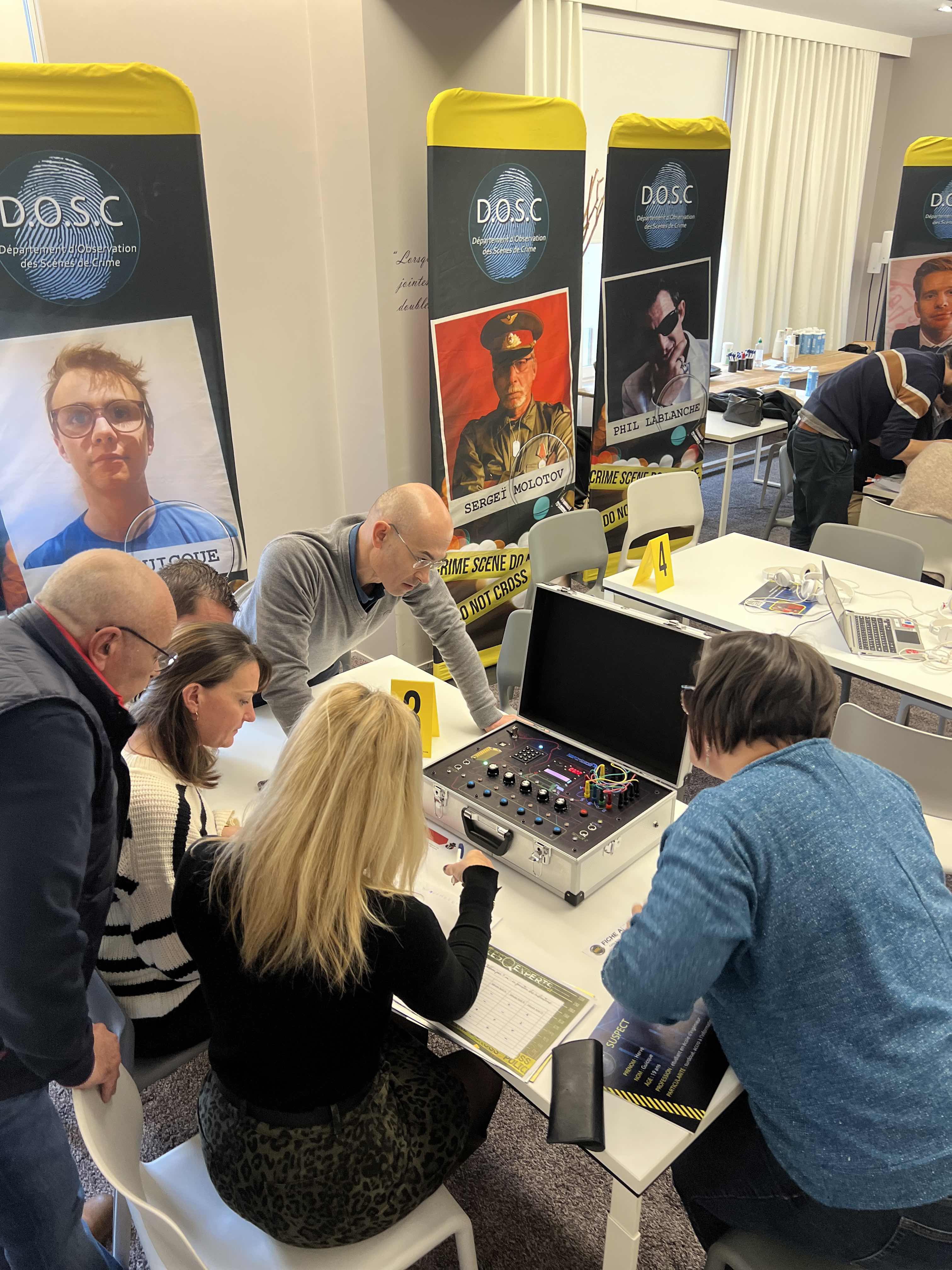
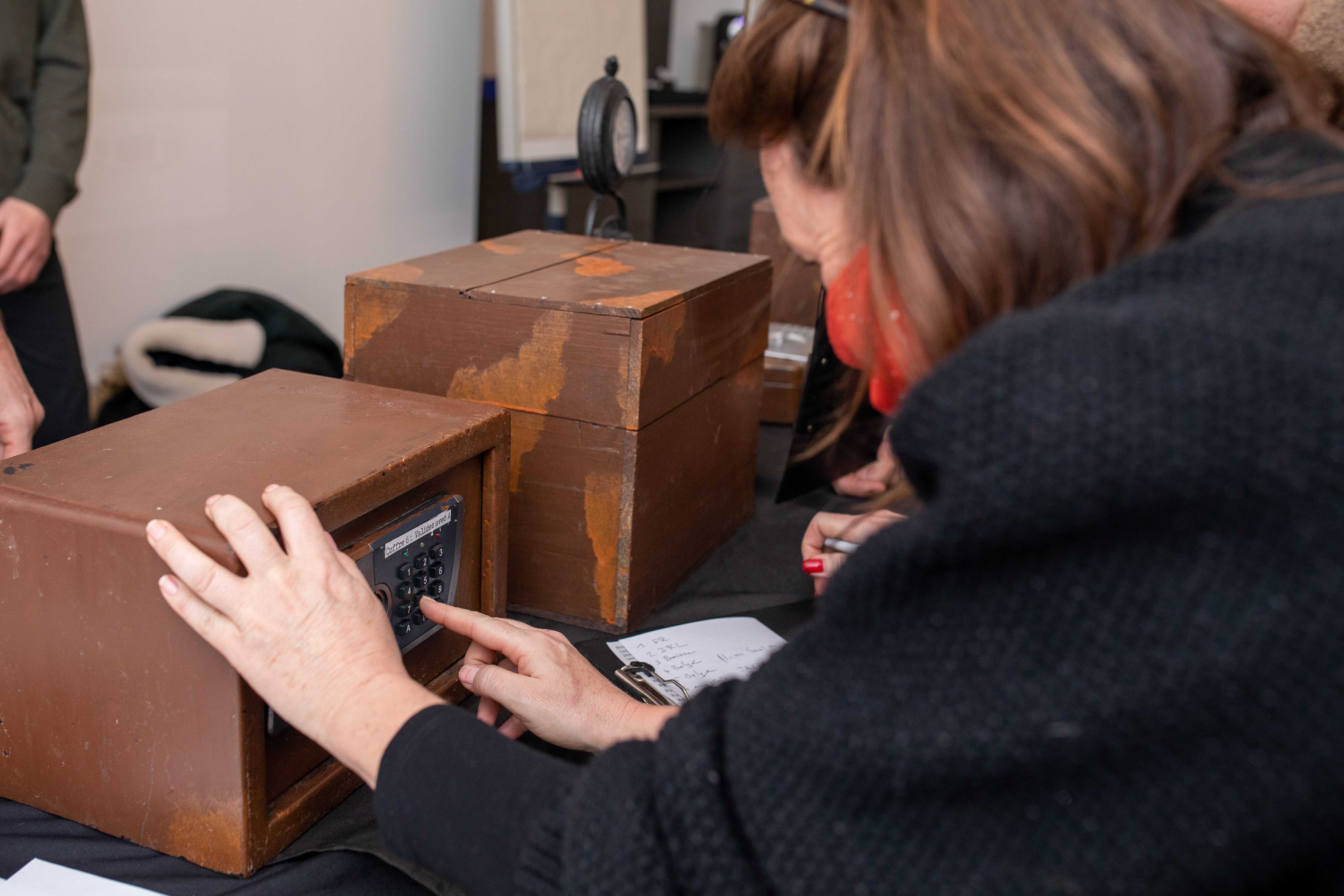
Mobile “briefcase” Escape Game (table-top): suited to conference venues and corporate offices in Brussels where room transformation is limited. Works well for 30–200 participants in parallel teams.
City or venue “investigation” challenge: a structured route (indoors/outdoors) with QR checkpoints and facilitator control. Good for cross-department networking, provided we manage permits, weather alternatives and mobility constraints.
Digital-assisted Escape Game: useful when you need fast scoring, multilingual prompts and real-time leaderboard display during a plenary session. We ensure the tech is robust and provide offline fallbacks.
Art animations in Brussels
Actor-led narrative (light theatrical facilitation): adds presence and helps participants take the scenario seriously without turning it into a show. Recommended for executive events where energy is low after long meetings.
Brand-consistent scenography: subtle visual cues aligned with your corporate identity (colours, typography, tone) used to reinforce internal communication objectives while keeping the activity credible.
Innovative animations in Brussels
Gourmet clue stations: puzzles unlocked by tasting or smell-based cues (allergen-safe and clearly labelled). Useful in Brussels where catering is often a highlight and you want networking to continue naturally.
“Chocolate & logic” modules: short rounds combining Belgian chocolate tasting with micro-puzzles. Works as a pre-dinner activation for international guests; we keep it professional with clear flow and minimal mess.
Gourmand animations in Brussels
Cybersecurity or compliance Escape Game: scenario-driven choices (phishing, access control, data handling) adapted to corporate policies. Strong for HR/communications because it avoids passive training.
Hybrid teams (on-site + remote participants): useful for organisations with dispersed teams. Requires careful role design to avoid remote guests becoming spectators; we assign remote-only tasks that are genuinely decisive.
Scored debrief for managers: not a “personality test” but a structured observation grid (communication, planning, adaptability) summarised at team level for learning purposes.
Whatever the format, we align it with brand image and internal messaging: tone, difficulty, and facilitation style. In Brussels, many audiences are senior and time-poor; we avoid childish props and focus on elegant, well-paced mechanics that feel credible in a corporate setting.
Where to host an Escape Game in Brussels (1000) for the right impact
The venue directly affects perceived quality and operational comfort. For an Escape Game in Brussels, the key is control: room access, noise management, participant circulation, and the ability to brief and debrief without losing the group. We help you choose a setting that matches the objective (networking, learning, celebration) and the constraints (security, catering, timing).
| Venue type | For which objective? | Main strengths | Possible constraints |
|---|---|---|---|
| Corporate offices (meeting rooms, boardrooms) | Internal alignment, leadership offsite segments, onboarding cohorts | Zero travel time; easy brand control; can connect debrief to real work context | Access badges; noise constraints; limited storage and set-up time between meetings |
| Conference centres / hotels in Brussels | Kick-offs, town halls, mixed audiences with plenary + breakouts | Professional infrastructure; controlled timing; catering and AV support on-site | Strict loading schedules; room turnover; higher costs for extra breakouts |
| Dedicated Escape Game venues | Team bonding with strong immersion and clear narrative | High immersion; tested rooms; minimal set-up | Capacity limits; less flexibility for branding; travel coordination across the city |
| Industrial/creative venues (lofts, galleries) | Comms/brand events, client evenings, product narratives | Strong atmosphere; photo-friendly; flexible layouts for stations | Permits, acoustics, and logistics to secure; requires stricter production management |
We strongly recommend a site visit (or at least a detailed venue tech call) before confirming the format. In Brussels, small constraints—elevator size, security desk procedures, street access—can affect the entire run-of-show. A 30-minute visit often prevents 2 hours of stress on event day.
What does an Escape Game in Brussels cost for a company (1000)?
Pricing for a corporate Escape Game in Brussels is driven by production reality: staffing, format, duration, complexity, and venue constraints. For decision-makers, the relevant question is not “cheap vs expensive” but “what level of operational reliability and learning value do we need for this audience?”
In practice, budgets vary widely because a 20-person activity in one room is not the same as a 200-person rotation with multilingual facilitation, scoring, AV integration and debrief. We provide transparent line items so you can arbitrate intelligently.
Headcount & parallelisation: 10–30 participants can run with a small facilitator team; 80–500 often requires multiple rooms or station-based design, plus a central timekeeper.
Duration: 45, 60, 90 minutes changes the number of puzzle loops and the intensity of facilitation.
Venue constraints in Brussels: access windows, loading restrictions, security, and room availability can increase staffing hours and set-up complexity.
Languages: bilingual or trilingual delivery impacts facilitator profiles, briefing materials and hint systems.
Customisation level: light branding (visuals, naming) vs scenario adaptation to internal topics (e.g., compliance, transformation). We recommend keeping customisation functional and not decorative.
AV and scoring: live leaderboard, microphones, screen displays, and integration with plenary segments require rehearsal and a technical lead.
Debrief depth: a simple wrap-up vs a structured managerial debrief with observation grid and deliverable.
When the activity is used as a management tool—supporting onboarding, leadership behaviours, or cross-silo collaboration—the ROI is typically in time saved after the event: fewer misunderstandings, faster coordination, and a shared reference point for managers. We help you choose the level of production that matches the stakes and avoids over-spending where it adds no value.
Why choose a Brussels agency (1000) for your Escape Game?
Running a corporate Escape Game is a logistics and facilitation exercise under time pressure. Having an agency established in Brussels reduces risk in concrete ways: we know the common venue constraints, we can visit sites quickly, and we have a local network of facilitators and technical profiles who understand corporate codes.
For executives and HR, the local advantage is not “proximity” in theory—it is response time and operational control. If the venue changes a loading slot, if a key room becomes unavailable, or if a VIP joins last minute, the solution often depends on local capacity: extra staff, quick printing, material replacement, and an on-site lead who can decide.
- Faster feasibility checks: venue access, room plan, sound limitations, and circulation validated early.
- Local staffing: facilitators who are comfortable with FR/NL/EN audiences and executive-level posture.
- Vendor coordination: alignment with catering, AV, security and reception teams—critical in Brussels multi-tenant buildings.
- Backup capacity: spare materials and last-minute replacements without jeopardising the schedule.
- City logistics experience: traffic patterns, parking restrictions, and realistic load-in timing.
When the activity is used as a management tool—supporting onboarding, leadership behaviours, or cross-silo collaboration—the ROI is typically in time saved after the event: fewer misunderstandings, faster coordination, and a shared reference point for managers. We help you choose the level of production that matches the stakes and avoids over-spending where it adds no value.











Escape Game in Brussels: examples of corporate use cases (1000)
Our Escape Game in Brussels projects vary because corporate objectives vary. A few typical situations we handle:
- Leadership offsite: a 60-minute game embedded between strategy workshops. We design the debrief to highlight decision-making patterns (who drives, who blocks, how consensus is reached) and connect it to the afternoon action plan.
- Onboarding day for international hires: mixed teams with different languages and seniority. We use mechanics that avoid culture-specific references and ensure each role is needed. The outcome is faster integration and better cross-team contact networks.
- Transformation programme: the scenario mirrors change constraints (limited information, evolving rules). We pay special attention to facilitation so the experience is perceived as relevant—not as a “game forced on adults.”
- Client event: a lighter, polished format where brand image matters. We manage pacing, aesthetics, and staff posture so it feels like a premium corporate module, not a public entertainment session.
Across these projects, the constant is operational discipline: clear run-of-show, facilitator brief, tested materials, and a decision point plan if something changes. That is what senior stakeholders expect in Brussels.
Common Escape Game mistakes we prevent in Brussels (1000)
Choosing a scenario before defining the objective: you end up with an activity that is fun but irrelevant, with no usable debrief for HR or leadership.
Underestimating multilingual reality in Brussels: language-heavy puzzles create dominance by a few participants and reduce inclusion.
Poor timing discipline: late start, unclear brief, and overlong wrap-up that disrupts catering, plenary and speaker slots.
Not planning for venue constraints: security checks, limited loading bays, elevator access and room turnover create chaos if not prepared.
Inconsistent facilitation: different teams receive different hints or rules; participants perceive unfairness and credibility drops.
No Plan B: missing materials, tech failure, or a room change without a fallback version of the game.
Ignoring executive optics: props or tone that feel childish can damage engagement with senior audiences; we calibrate the experience to your culture.
Our role is to absorb these risks before they reach your guests. In Brussels, where schedules and standards are demanding, prevention is what protects your credibility on the day.
Why Brussels clients renew with INNOV'events (1000)
Loyalty in corporate events is earned through predictable delivery. Many of our clients in Brussels come back because they want the same confidence each time: the activity starts on time, the facilitation is consistent, and the on-site lead solves issues without escalating stress to internal stakeholders.
We work in a “no-surprises” logic: clear assumptions, written run-of-show, staffing plan, and a final confirmation call before event day. For HR and communication teams, this reliability is often more valuable than adding more “features.”
Repeat cycles: many teams run an Escape Game as part of annual kick-offs or onboarding cohorts, with scenario rotation to avoid repetition.
Multi-format continuity: clients often start with a table-top format for 30–80 and scale to 150–300 in a conference setting once internal stakeholders are reassured.
Stakeholder retention: once we align with your venue, security and AV constraints, the next edition gains time and reduces internal coordination load.

In practice, loyalty is proof that the activity is not only enjoyable but operationally safe and managerially useful. That is the standard we aim for in every Escape Game in Brussels.
How we deliver an Escape Game in Brussels from brief to debrief (1000)
👉 Brussels discovery call: objective, constraints, and success criteria
We start with a 20–30 minute call focused on your reality: audience profile (executives, mixed teams, new hires), headcount, languages, venue status, and the moment in the agenda. We clarify what “success” means for you (networking, behaviour observation, energy, messaging) and what must not happen (delays, noise, off-brand tone).
👉 Format proposal and run-of-show aligned to Brussels venue constraints
We propose 1–2 formats with clear timing (brief/game/debrief), staffing levels, and a space plan. If the event is in Brussels with access constraints, we include load-in timing, security procedures, and a plan for participant flow to avoid congestion in corridors or reception areas.
👉 Scenario calibration, multilingual briefing, and fairness rules
We calibrate difficulty and hint policy so teams progress without frustration. For multilingual groups, we design instructions and materials to minimise language bias. We define fairness rules (same hint allowance, same scoring logic) so participants perceive the process as professional.
👉 Pre-event checks: room validation, materials, and contingency plans
Before event day, we confirm room access, furniture layout, power availability if needed, and noise constraints. We prepare spare materials and a contingency version (e.g., if a breakout room is lost, we can switch to a station-based or table-top setup).
👉 Event-day delivery in Brussels: on-site lead, facilitation, and timing control
We deploy an on-site lead responsible for timing and stakeholder liaison, plus trained facilitators. We manage briefings, game flow, hinting, and scoring. If your programme includes plenary moments, we synchronise the finish and ensure participants are back on time.
👉 Debrief and optional deliverables for HR and executives
We close with a concise debrief: what patterns were observed, what worked, and what to take back into day-to-day collaboration. On request, we provide a short written summary at team level (no individual profiling) that HR or managers can reuse in follow-up workshops.
FAQ sur l'organisation Escape Game à Brussels
How long should an Escape Game in Brussels last?
Plan 60–90 minutes total. Typical split: 5–10 min briefing, 45–60 min gameplay, 10–20 min debrief. For executive agendas in Brussels, we recommend a hard stop and a buffer of 10 minutes for transitions.
What group size works best for Brussels corporate Escape Games?
Best team size is 4–6. For groups of 30–200, we run parallel teams with synchronised timing. For 200–500 in Brussels, station-based or table-top formats are usually the most reliable to keep flow and schedule.
Can you run an Escape Game in Brussels in 3 languages?
Yes. We typically deliver in FR/NL/EN. The key is not only translation: we design puzzles to reduce language dependency and we brief facilitators with consistent scripts so instructions and hinting remain fair across teams.
Do you need a dedicated venue in Brussels for an Escape Game?
No. We can run it in your offices, a hotel, or a conference venue in Brussels. Dedicated Escape Game venues bring immersion but can limit capacity and branding. Offices and conference spaces often work better when timing and brand control are priorities.
How much does a corporate Escape Game in Brussels cost?
It depends mainly on headcount, format, duration, and staffing. As a working range in Brussels, corporate budgets often start around €1,500–€3,000 for small groups and can reach €8,000–€25,000+ for large audiences with multiple facilitators, rotations, AV/scoring and a structured debrief. We provide a transparent breakdown so you can arbitrate.
Request an Escape Game quote in Brussels (1000) with a clear run-of-show
If you are comparing agencies, we can help you decide quickly with concrete inputs: recommended format, staffing level, realistic timing, and the constraints we foresee for your Brussels venue. Share your date, estimated headcount, venue (or shortlist), and languages—then we will respond with a structured proposal and budget range within 24–48h.
For senior audiences, early planning is what protects your agenda and your image. Contact INNOV'events to secure availability and lock the operational details of your Escape Game in Brussels before the rest of the event programme is fixed.
INNOV'events Brussels Agency
Justin JACOB is the manager of the INNOV'events Brussels office. Reach out directly by email at belgique@innov-events.be or via the contact form.
Contact the Brussels agencyToutes nos prestations & animations Brussels, Belgique
Découvrez nos prestations événementielles
Découvrez nos animations événementielles disponibles au Belgique
- Event Hostess in Brussels
- Escape Game in Brussels
- MasterChef Cooking Workshop in Brussels
- Magician in Brussels
- Marquee Rental in Brussels
- Color Analysis Workshop in Brussels
- Inflatable Games in Brussels
- Valet Parking Service in Brussels
- Football Simulator in Brussels
- LED Furniture Rental in Brussels
- Light Branding in Brussels
- Unique Dining Experience in Brussels
- Light Painting in Brussels
- Murder Mystery Party in Brussels
- Prize Contest in Brussels
- Promotional Displays (POS) in Brussels
- Virtual Reality in Brussels
- Molecular Gastronomy Workshop in Brussels
- Halloween Entertainment in Brussels
- Fireworks Show in Brussels
- Giant Games Challenge in Brussels
- Event Host / MC in Brussels
- Photo Booth Animation in Brussels
- Santa Claus Entertainment in Brussels
- Kids Entertainment in Brussels
- Guided Tour in Brussels
- Urban Rally in Brussels
- Ball Pit in Brussels
- Flight Simulator in Brussels
- Food Truck Rental in Brussels
- World Record Challenge in Brussels
- Surf Simulator in Brussels
- Wine Casino in Brussels
- Makeover Workshop in Brussels
- Perfume Creation Workshop in Brussels
- Acting Workshop in Brussels
- CSR Activities in Brussels
- Archery in Brussels
- Security Staff in Brussels
- Wine Tasting in Brussels
- Mime Performer in Brussels
- TV Game Show in Brussels
- Funfair in Brussels
- Crisis Management Workshop in Brussels
- Crisis Negotiation Workshop in Brussels
- Arcade Games in Brussels
- Indoor Skydiving Simulator in Brussels
- Ski Simulator in Brussels
- Racing Circuit Experience in Brussels
- Introductory Flight Experience in Brussels
- Tasting Experience in Brussels
- Build Your Own Foosball Workshop in Brussels
- 2CV Rally in Brussels
- LEGO Challenge in Brussels
- Casino Night in Brussels
- Interpreter / Translator in Brussels
- Promotional Giveaways in Brussels
- Shuttle Transport in Brussels