Wine Casino in Brussels for sharper networking and measurable engagement
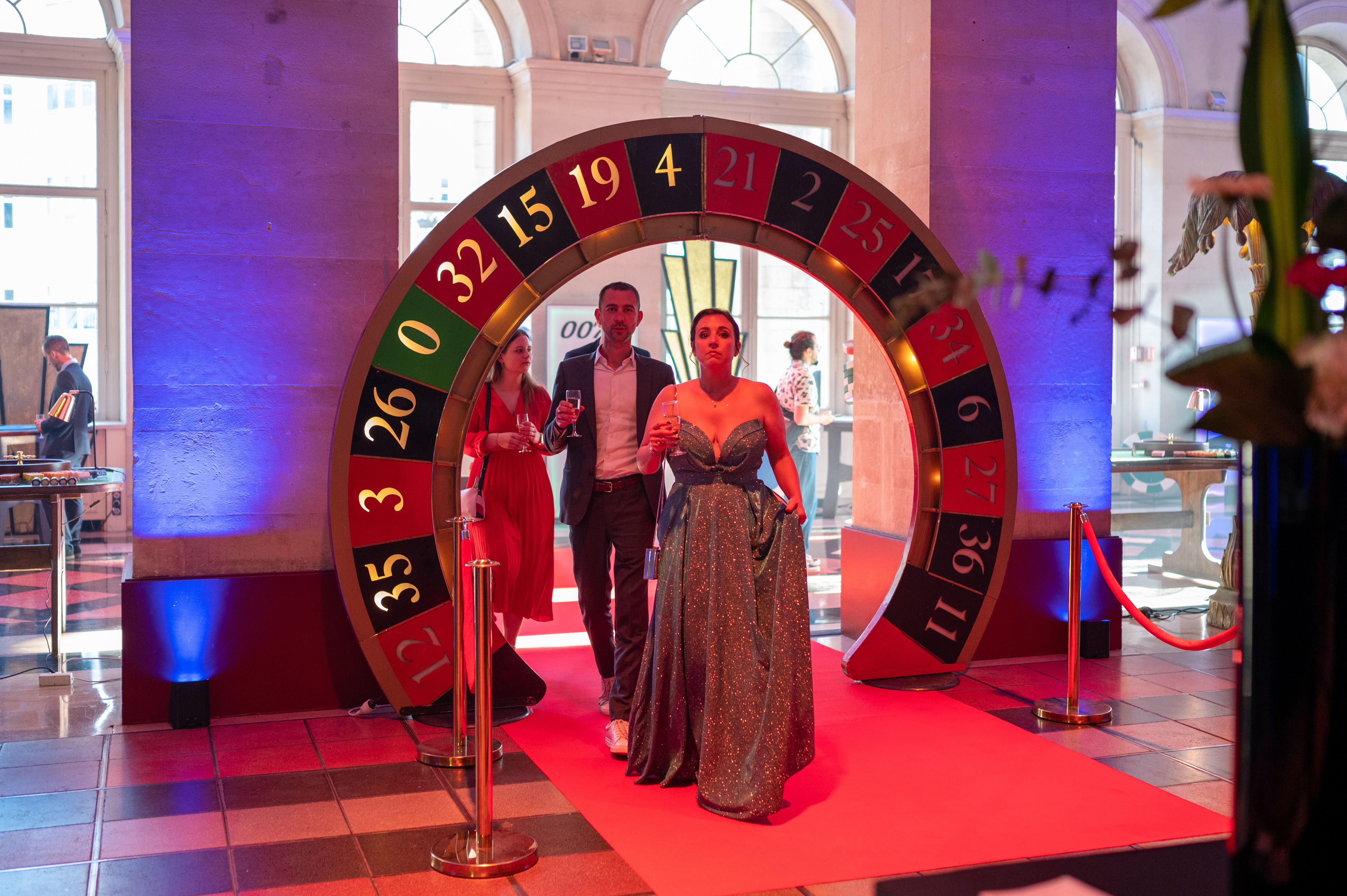
INNOV’events delivers Wine Casino formats across Brussels for executive events, HR moments and client evenings, typically from 30 to 500 attendees. We handle the full chain: venue fit, sommelier dealers, tasting kits, compliance, timing, and on-site production so your teams stay focused on guests.
The result is a structured social dynamic: people rotate, talk to new contacts, and remember key messages—without the chaos of an open bar or a passive tasting.
Sommaire
In Brussels corporate events, entertainment is not “extra”; it is what protects your agenda. A well-run Wine Casino in Brussels creates movement between departments and tables, reduces “same-people-same-corner” behavior, and gives leaders a simple framework to welcome VIPs without improvising all evening.
Local organizations expect operational discipline: clear start/stop times (often after work, 18:30–22:30), multilingual facilitation (FR/NL/EN), and venues with strict technical and catering rules. They also expect a wine activity that is inclusive—engaging for enthusiasts, but comfortable for non-drinkers and light drinkers.
Based in Brussels, INNOV’events runs this format in hotels, corporate HQs, and event venues across the region. We build a controlled experience: professional “dealer-sommeliers”, a scoring mechanism, and a production plan aligned with your internal communication goals and brand standards.
Key figures for Brussels decision-makers
10+ years delivering corporate event entertainment in Belgium, with repeat programs for HR and Communications teams.
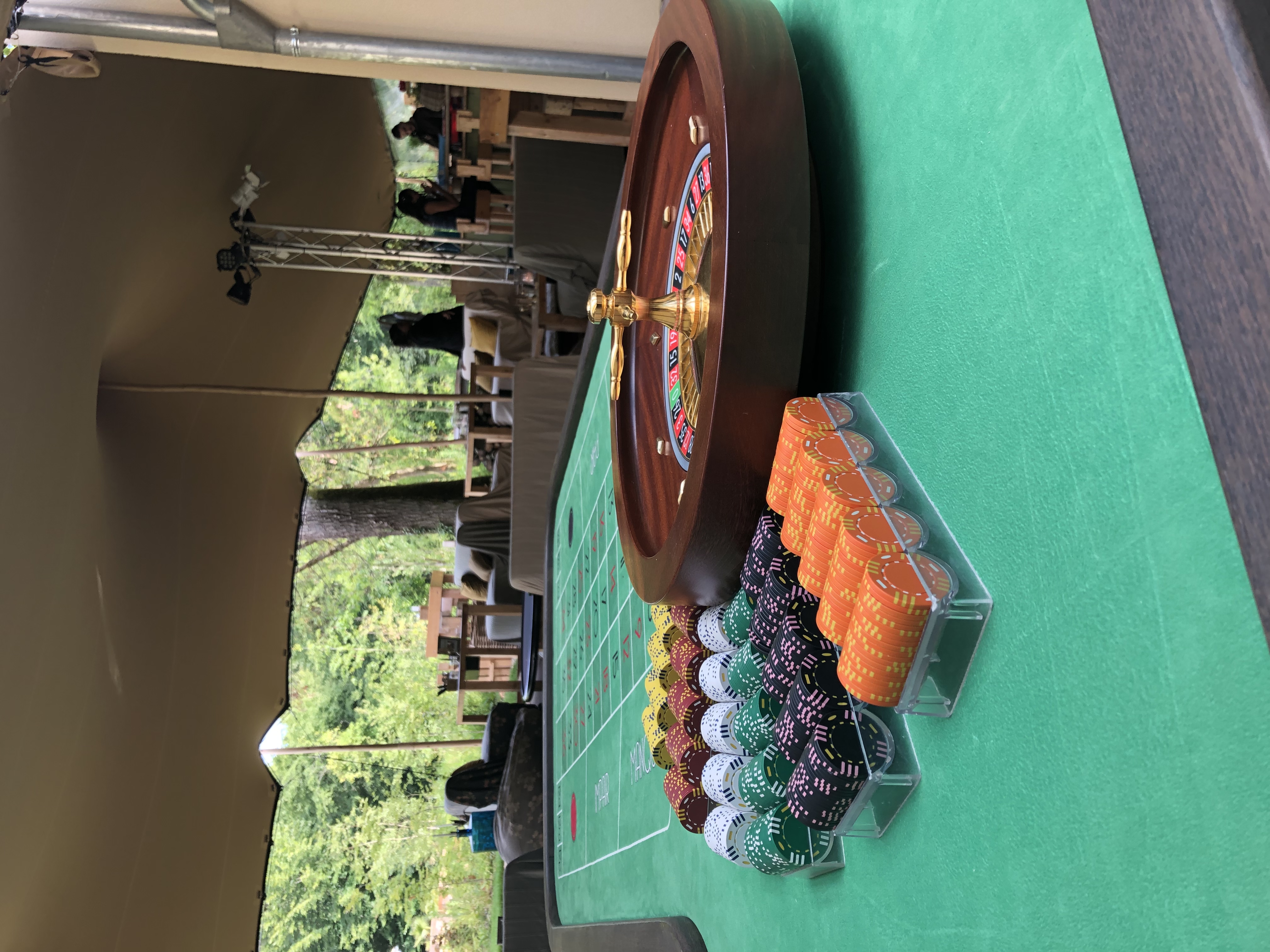
Typical Wine Casino setups: 3 to 8 tables and 30 to 500 guests, with scalable staffing and bar logistics.
Operational benchmarks: 45–90 minutes setup depending on venue access; 60–120 minutes game time; 15–30 minutes awards + wrap-up.
Multilingual facilitation: teams available in French, Dutch and English for mixed Brussels audiences.
Brussels field reality: built for mixed audiences and tight schedules
We regularly support organizations operating in Brussels—from European-facing companies to Belgian HQs that host internal or client moments several times per year. Many of our collaborations are recurring because the needs are recurring: onboarding cohorts every quarter, leadership offsites, end-of-year receptions, or client portfolio evenings where the brand must be protected.
In practice, what makes a partner “repeatable” is not the concept; it is the ability to deliver the same level of service across different venues, different internal stakeholders, and different constraints (security badges, restricted loading docks, noise limits, venue union rules, timing after board meetings, etc.). A Wine Casino in Brussels works when the flow is controlled and the team is trained—so your executives can host instead of troubleshooting.
If you share the company references you want us to mention, we will integrate them accurately in this section (with the correct legal names and context) so your page remains credible and compliant.
 Besoin d’un devis rapide ?
Nous vous envoyons une première proposition sous 24h.
What a Wine Casino changes for teams in Brussels
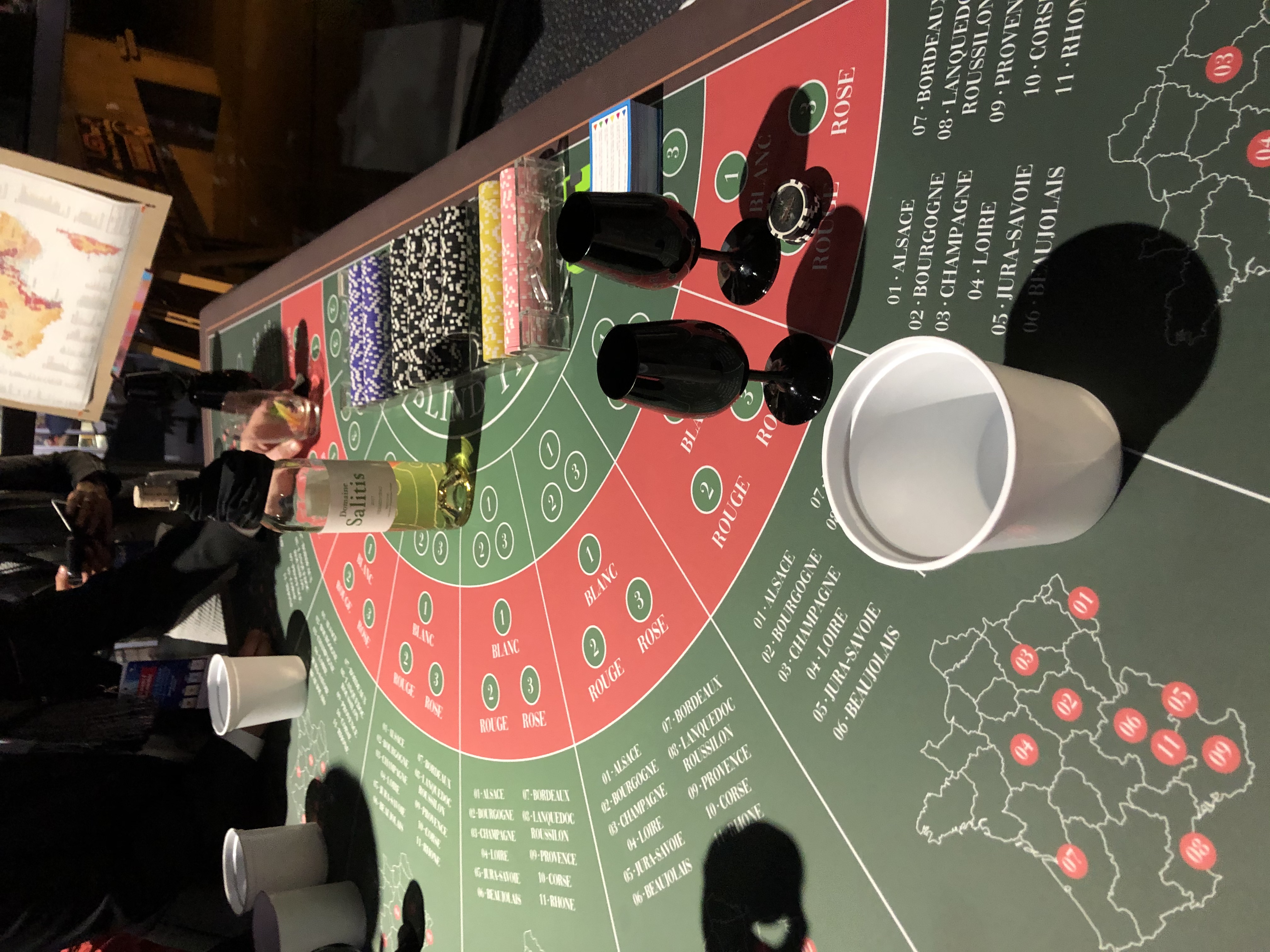
A Wine Casino is a structured social format: guests “bet” with chips, taste, answer questions, compare notes, and move. For executive sponsors, HR and Comms, the interest is simple: it creates circulation and conversation while keeping the evening on rails.
Better cross-team mixing in Brussels offices: the table rotations reduce silo behavior that often happens at receptions (Finance together, Sales together, newcomers isolated). You get more cross-functional contacts without forcing icebreakers.
A safe hosting framework for executives: leaders can spend 2–3 minutes per table to welcome VIPs because the activity gives them a natural opening (“What are you tasting? What’s your bet?”) and a predictable rhythm.
Useful content for Communications: a tasting game creates photo moments and micro-stories (scores, “most surprising grape”, team winners) without over-staging. We can align questions with your product, values or CSR topics—carefully, so it stays elegant.
HR-friendly engagement: for onboarding or internal recognition, the format is inclusive when designed properly: we add non-alcoholic pairings, clearly label allergens, and avoid any “drinking contest” feel.
Time control: in Brussels many guests arrive late due to traffic, public transport, or back-to-back meetings. The game can start with rolling entries and still deliver a clean closing and awards moment.
Brand protection: unlike open tastings where guests can self-serve and dynamics drift, the “dealer-sommelier” model keeps pours, tone and messaging under control—important for client-facing evenings.
In Brussels, where audiences are often international and expectations are high, the most valued events are the ones that feel effortless to the guest and effortless to the host. A well-produced Wine Casino in Brussels delivers that balance: social, premium, and operationally disciplined.
Brussels constraints you need to anticipate before booking
Brussels events have a specific operational context. Venues frequently have strict access windows, limited freight elevators, or shared loading bays with hotels and congress activity. When a wine activity is planned, you also need to consider glassware management, temperature stability, and service rhythm—details that become visible the moment they are wrong.
We typically design a Wine Casino with Brussels realities in mind:
- Multilingual audience management: table briefings and game mechanics must be understood immediately. We prepare bilingual or trilingual instructions and ensure hosts can switch language without breaking the rhythm.
- Compliance and duty of care: clear alcohol management policies, water stations, and food pairing planning. For internal events, HR often asks for a balanced approach (including non-alcoholic options) to respect different cultures and personal choices.
- Venue rules and catering coordination: some Brussels venues have exclusive caterers, glassware restrictions, or limitations on external alcohol. We align early with the venue and your catering partner to avoid last-minute renegotiations.
- Timing discipline: corporate guests in Brussels frequently have early next-day commitments (EU institutions, client travel, train schedules). Ending on time is part of the experience.
This is why we push for a production plan, not just a concept: staffing ratios, table placement, sound levels, and a clear run-of-show that respects your internal agenda.
Which Wine Casino formats work best in Brussels corporate events?
Entertainment creates engagement when it solves a real event problem: low mixing, passive audiences, or limited time with VIPs. A Wine Casino in Brussels works because it is both guided and social, and because it can be adapted to your constraints (venue, timing, audience maturity, compliance).
Interactive animations in Brussels
Blind Tasting Casino: guests taste 3–6 wines blind and bet chips on grape/region/aroma families. Best for: client evenings where you want lively conversation without loud music.
Team vs Team Table League: guests register in teams (departments, project squads, mixed tables). We run rotations and keep a scoreboard. Best for: internal cohesion after a strategic announcement or reorg in Brussels HQs.
Speed Networking + Wine Casino: short structured introductions followed by betting rounds. Best for: multi-site companies bringing together Brussels + regional teams.
Executive Table Challenge: a dedicated VIP table with a slightly more advanced round and a short guided commentary. Best for: board dinners followed by a larger reception.
Art animations in Brussels
Discrete live jazz duo between rounds: keeps energy up without blocking conversation (important in Brussels venues with noise constraints).
Branded calligraphy for winners’ cards: subtle premium touch for client gifting, aligned with luxury or professional services positioning.
Innovative animations in Brussels
Cheese & pairing stations: we design pairings that support the game (salty/fatty/umami) and manage allergens clearly—often requested by HR.
Chocolate pairing round: a short “bonus” table that is easy for novices and creates strong sensory contrast; useful when the audience is diverse in wine knowledge.
Non-alcoholic pairing path: premium juices, kombucha or alcohol-free sparkling options, scored with the same mechanics so no one is sidelined.
Gourmand animations in Brussels
Digital scoring (optional): QR-based forms for answers and bets, reducing paper and speeding up awards. Useful in Brussels corporate environments that want clean data and fast wrap-up.
Wine & business narrative round: we craft 5–8 short questions that mirror your context (risk appetite, decision-making under uncertainty, market signals). It remains a wine game, but with a leadership-friendly angle.
CSR-aware setup: reusable materials, controlled waste flow, local sourcing where it adds value. We align with your sustainability reporting without turning the event into a lecture.
The most important point is alignment with your brand image. A law firm reception in Brussels does not require the same tone as a tech scale-up party. We calibrate the vocabulary, pacing, wine selection and host style so the activity supports your positioning rather than competing with it.
Where to host a Wine Casino in Brussels for the right impression
Venue choice changes how guests interpret the evening: premium, relaxed, confidential, or high-energy. For a Wine Casino in Brussels, the venue also impacts practical execution—table spacing, lighting for wine color, acoustic comfort for explanations, and storage for glassware and bottles.
| Venue type | For which objective? | Main strengths | Possible constraints |
|---|---|---|---|
| Hotel conference & reception spaces (Brussels) | Client evenings, international guests, post-meeting format | Professional service culture, easy access, AV support, predictable logistics | Exclusive catering rules, limited load-in windows, corkage policies to validate early |
| Corporate HQ / office event space (1000 area) | Internal cohesion, leadership communication, cost control | Brand-controlled environment, simpler guest flow, easier executive hosting | Security access, elevator limits, acoustic constraints, glassware & cleaning planning |
| Dedicated event venues in Brussels (lofts, galleries) | Brand experience, premium positioning, press/content moments | Strong atmosphere, flexible layouts for tables, photogenic setting | Technical coordination needed (lighting/sound), neighbor noise limits, staffing to match premium expectations |
We strongly recommend a site visit or at least a technical call with photos, floor plans and access details. In Brussels, the difference between a smooth setup and a stressful one often comes down to loading logistics, storage space, and how the room handles sound during explanations.
What budget to plan for a Wine Casino in Brussels (1000)
The cost of a Wine Casino in Brussels depends on format, staffing, wine selection, and venue constraints. For executive stakeholders, what matters is not only the number: it is cost predictability and the avoidance of last-minute add-ons (extra staff, missing glassware, extended venue hours).
Number of guests and tables: most setups run from 3 to 8 tables. More tables require more trained hosts and more glassware, and they also change the floor plan needs.
Wine range and number of tasting rounds: 3 wines vs 6 wines is not linear; it impacts timing, replenishment, storage, and educational content. Premium bottles also require careful temperature management.
Staffing level: dealer-sommeliers, a floor manager, logistics support (glass, water, waste), and potentially a bilingual lead. Understaffing is the main cause of poor guest experience.
Venue constraints in Brussels: access hours, exclusive supplier rules, corkage fees, security procedures, and the distance from loading to room all affect production time and labor.
Technical and branding elements: signage, table theming, printed game cards vs digital scoring, microphones for briefings, awards moment staging.
Risk management: insurance, compliance with responsible service, contingency stock for glassware and consumables.
When the objective is networking or client loyalty, the ROI is rarely in “entertainment value”; it’s in time well spent: more meaningful interactions per hour, better VIP hosting, and a controlled brand experience. We build proposals with clear options (baseline / enhanced / premium) so you can arbitrate budget with concrete trade-offs.
Why choose an event partner based in Brussels
For corporate stakeholders, the risk is not the idea—it is the day-of execution. Working with a team established in Brussels reduces friction: faster site visits, familiarity with venue operating modes, and access to trained local staff who can step in when schedules change.
INNOV’events operates as your production partner: we challenge the brief when needed, we coordinate with venue and catering early, and we protect timing on-site. If you are comparing agencies, ask who is actually on the floor during the event and who carries responsibility for guest flow and compliance. That’s where outcomes are decided.
As an event agency in Brussels, we also know the rhythm of the city: peak traffic patterns, venue access constraints, and the expectations of international audiences—so your corporate event entertainment in Brussels feels controlled rather than improvised.
- Shorter reaction time: site visits, rehearsals, and last-minute adjustments are easier when your partner is local.
- Venue literacy: we anticipate what venues will accept or refuse (alcohol policies, glassware, noise constraints) and avoid late surprises.
- Local staffing depth: trained hosts who can deliver in FR/NL/EN and match your brand tone.
- Operational accountability: a Brussels-based project lead on site with decision authority.
When the objective is networking or client loyalty, the ROI is rarely in “entertainment value”; it’s in time well spent: more meaningful interactions per hour, better VIP hosting, and a controlled brand experience. We build proposals with clear options (baseline / enhanced / premium) so you can arbitrate budget with concrete trade-offs.











Examples of Wine Casino use cases in Brussels companies
We run Wine Casino formats for different corporate realities in Brussels, and the design always starts with the business context.
- Post-plenary networking: after a half-day conference, guests often default to their usual contacts. We use table rotations every 12–15 minutes with a clear audio cue, ensuring each person meets new peers while the catering team serves seamlessly in the background.
- Client portfolio evening with VIP management: we set a VIP arrival path, reserve a first table for early arrivals, and give executives a “hosting map” so they know where to be at key moments. The wine narrative is kept premium and discreet—no gimmicks.
- Onboarding and employer brand: for new joiners, the game becomes a light social structure. We include a non-alcoholic track and design questions that encourage people to share personal preferences rather than job titles, which helps integration across Brussels teams.
- Cross-border audience: in Brussels, it’s common to host mixed Belgian and international participants. We standardize briefing language, avoid culturally loaded jokes, and ensure instructions are instantly clear—because confusion kills engagement.
Across these projects, what clients value most is consistency: the same professional tone from the first email to the last guest departure, and a production setup that anticipates the venue and the audience rather than reacting to them.
Common Wine Casino mistakes we prevent in Brussels events
Rules that are too complex: if guests need 5 minutes to understand the mechanics, you lose the room. We keep it simple and visible at each table.
Underestimating glassware logistics: not enough glasses or rinse points leads to queues and frustration. We plan quantities, cleaning flow, and backup stock.
Uncontrolled service rhythm: inconsistent pours or “free-pour” energy can create reputational risk. We use trained hosts and controlled pacing.
No integration with speeches and agenda: if the CEO message interrupts mid-round, you lose momentum. We build a run-of-show that respects your internal sequence.
Ignoring non-drinkers: in Brussels corporate audiences, inclusivity is expected. We propose alcohol-free pairings with equal participation mechanics.
Venue approval left too late: corkage, alcohol authorization, and caterer conditions must be validated early to avoid last-minute budget and scope changes.
Our job is to remove these risks before they surface. That means asking the “uncomfortable” operational questions early, building a realistic plan, and putting a senior lead on site to protect your event day.
Why Brussels clients renew with us year after year
Recurring clients rarely come back for a concept; they come back for predictability. In corporate life, your constraints change every quarter—new leadership priorities, new compliance rules, new venue choices, new audience mixes. Our role is to keep delivery stable while adapting the format.
Repeat patterns we see in Brussels: the same client runs a yearly reception but changes venue; an HR team repeats onboarding sessions for cohorts of 30–80; a Sales team hosts quarterly client evenings for 80–200.
Operational expectation: one point of contact, a clear production file, a named on-site lead, and documented run-of-show.
Quality indicators clients track: start on time, no queues, consistent host tone, and an awards moment that ends the night cleanly.

Loyalty is earned through execution: fewer surprises, clearer decisions, and a partner who can say “no” when a request creates risk. That is what long-term relationships in Brussels are built on.
Our production process for Brussels Wine Casino events
👉 Scope and success criteria in Brussels
We start with a short working session with the sponsor (Exec/HR/Comms): objective (networking, client loyalty, internal culture), audience profile, languages, constraints, and what “success” means in observable terms (e.g., rotations completed, VIP hosted, speeches delivered on time). We also confirm duty-of-care expectations and the role of non-alcoholic options.
👉 Format design and wine selection for Brussels audiences
We propose 1–3 formats with clear trade-offs: number of tables, duration, wine rounds, difficulty level, and optional food pairings. Wine selection is built to create contrast and conversation, not to show off. We validate allergens, glassware plan, and service rhythm with the caterer or venue.
👉 Venue and logistics validation in Brussels
We confirm access times, loading route, storage, table layout, acoustics, and any restrictions (exclusive catering, corkage, security). We produce a floor plan showing tables, water points, waste flow, and an awards zone. This is where most “event day stress” is prevented.
👉 Run-of-show and stakeholder alignment
We lock the timing: guest arrival, briefing, round rotations, speech windows, awards, and closing. We share a concise production sheet with responsibilities (who approves what, who speaks, who confirms headcount) so HR and Comms are not chasing information during the final week.
👉 On-site delivery and quality control in Brussels
A lead producer arrives early, runs setup, briefs hosts, and coordinates with venue/catering. During the game, we manage timing, guest flow, and service discipline. After awards, we handle breakdown and ensure the venue handover is clean—important for Brussels venues with strict end-of-night rules.
👉 Post-event feedback and next-step planning
If useful, we capture practical feedback: what worked, where guests clustered, which rounds were strongest, and what to adjust next time. For recurring Brussels programs, this becomes a simple playbook that saves time and protects quality.
FAQ sur l'organisation Wine Casino à Brussels
How long should a Wine Casino last in Brussels?
Plan 60–120 minutes for the game itself, plus 15 minutes briefing and 15–30 minutes awards/closing. For after-work events in Brussels, a common window is 19:00–21:30 within a broader reception.
How many tables for a Wine Casino in Brussels offices?
As a rule: 1 table for 15–25 guests depending on rotation design. Example: 80 guests = 4 tables; 150 guests = 6–7 tables. The goal is to avoid queues and keep rotations smooth.
Can you run a Wine Casino in Brussels with non-drinkers?
Yes. We include an alcohol-free track (premium juices, alcohol-free sparkling, or fermented options) with the same betting and scoring mechanics. In Brussels corporate audiences, this is often requested by HR for inclusivity and duty of care.
What budget range for a Wine Casino in Brussels (1000)?
Most corporate setups fall between €2,500 and €12,000 depending on headcount, number of tables, wine level, staffing, and venue constraints. For 150 guests with 6 tables and professional hosts, clients often plan €6,000–€9,500 excluding venue rental and catering.
Do Brussels venues allow external wine for this activity?
It depends on the venue policy. Hotels and some venues may require using their beverage list or charging corkage; corporate HQs are usually simpler but may have internal compliance rules. We validate this early with the venue in Brussels to avoid last-minute changes.
Plan your Wine Casino in Brussels with a clear, controlled setup
If you are planning a leadership event, HR moment or client reception in Brussels, we can propose a Wine Casino in Brussels format that fits your venue, your audience mix and your brand standards—without improvisation on the day.
Share your date, estimated headcount, venue (if known), and the role of the evening (networking, onboarding, client loyalty). We will come back with a structured proposal: table count, staffing, timing, wine rounds, and a transparent budget with options. For Brussels calendars, we recommend securing key resources 4–8 weeks in advance (earlier for year-end peaks).
INNOV'events Brussels Agency
Justin JACOB is the manager of the INNOV'events Brussels office. Reach out directly by email at belgique@innov-events.be or via the contact form.
Contact the Brussels agencyToutes nos prestations & animations Brussels, Belgique
Découvrez nos prestations événementielles
Découvrez nos animations événementielles disponibles au Belgique
- Event Hostess in Brussels
- Escape Game in Brussels
- MasterChef Cooking Workshop in Brussels
- Magician in Brussels
- Marquee Rental in Brussels
- Color Analysis Workshop in Brussels
- Inflatable Games in Brussels
- Valet Parking Service in Brussels
- Football Simulator in Brussels
- LED Furniture Rental in Brussels
- Light Branding in Brussels
- Unique Dining Experience in Brussels
- Light Painting in Brussels
- Murder Mystery Party in Brussels
- Prize Contest in Brussels
- Promotional Displays (POS) in Brussels
- Virtual Reality in Brussels
- Molecular Gastronomy Workshop in Brussels
- Halloween Entertainment in Brussels
- Fireworks Show in Brussels
- Giant Games Challenge in Brussels
- Event Host / MC in Brussels
- Photo Booth Animation in Brussels
- Santa Claus Entertainment in Brussels
- Kids Entertainment in Brussels
- Guided Tour in Brussels
- Urban Rally in Brussels
- Ball Pit in Brussels
- Flight Simulator in Brussels
- Food Truck Rental in Brussels
- World Record Challenge in Brussels
- Surf Simulator in Brussels
- Wine Casino in Brussels
- Makeover Workshop in Brussels
- Perfume Creation Workshop in Brussels
- Acting Workshop in Brussels
- CSR Activities in Brussels
- Archery in Brussels
- Security Staff in Brussels
- Wine Tasting in Brussels
- Mime Performer in Brussels
- TV Game Show in Brussels
- Funfair in Brussels
- Crisis Management Workshop in Brussels
- Crisis Negotiation Workshop in Brussels
- Arcade Games in Brussels
- Indoor Skydiving Simulator in Brussels
- Ski Simulator in Brussels
- Racing Circuit Experience in Brussels
- Introductory Flight Experience in Brussels
- Tasting Experience in Brussels
- Build Your Own Foosball Workshop in Brussels
- 2CV Rally in Brussels
- LEGO Challenge in Brussels
- Casino Night in Brussels
- Interpreter / Translator in Brussels
- Promotional Giveaways in Brussels
- Shuttle Transport in Brussels