
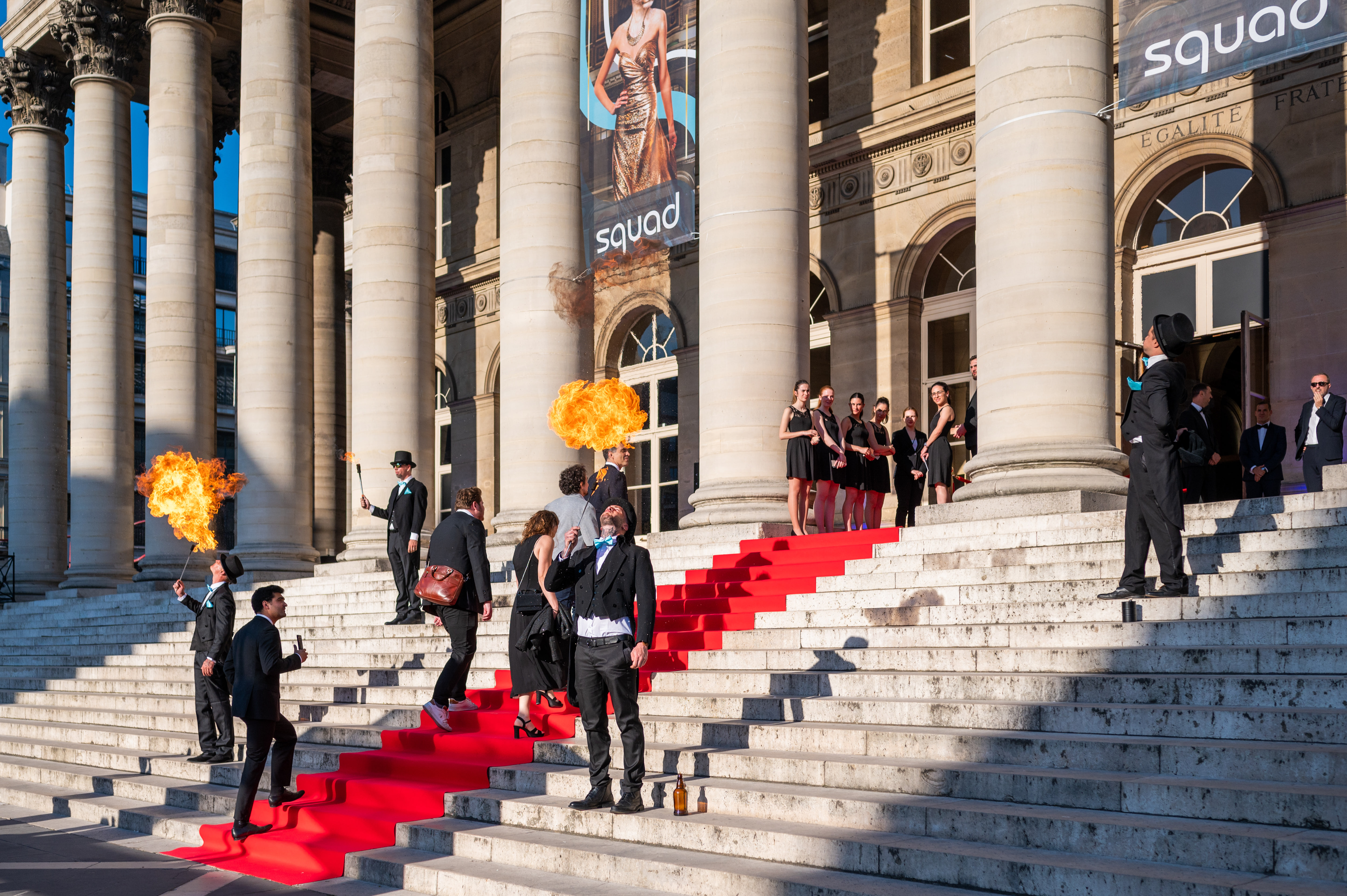
Event Security Guard in Brussels for corporate events that cannot afford incidents
INNOV'events provides Event Security Guard services in Brussels for corporate events from 30 to 3,000 attendees. We plan staffing, access control, bag checks where relevant, VIP routes, emergency procedures, and on-site coordination with venue teams.
You get a clear security plan, properly briefed guards, and a single point of contact who manages the day-of reality: arrivals, peak flows, alcohol service, and last-minute changes.
Sommaire
In a corporate event, “security” is not a box-ticking exercise: it protects your people, your executives’ time, and your brand. One uncontrolled entrance, one aggressive guest, or a poorly managed queue can derail a keynote, a product launch, or a high-stakes client evening in minutes.
Organizations in Brussels expect discreet, professional presence: guards who know how to enforce rules without escalating, who can communicate in English/French/Dutch as needed, and who understand corporate etiquette (VIPs, partners, media, suppliers).
From EU district venues to hotels near Gare du Midi and event spaces around Tour & Taxis, we operate locally with established field routines. INNOV'events brings operational discipline: written briefs, staffing matrices, and real-time coordination so your teams stay focused on hosting—not managing incidents.
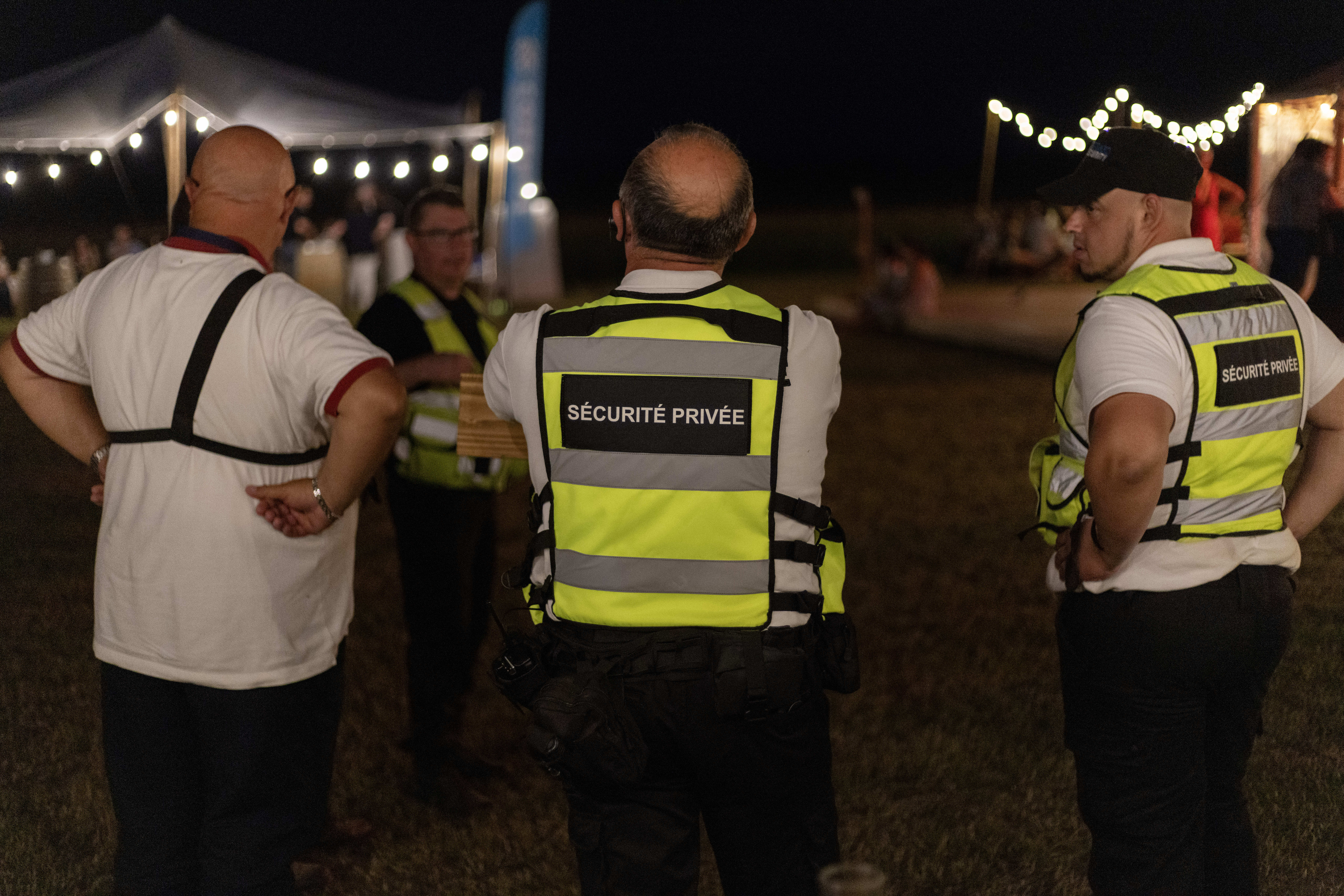
Security delivery benchmarks in Brussels you can audit
10+ years coordinating corporate event operations in Brussels, including security staffing, access management, and vendor control.
Typical deployment capability: from 2 to 35+ guards depending on venue layout, guest profile, and program rhythm (arrivals, speeches, afterparty).
On-site command structure: 1 lead supervisor per event, plus post leaders for entrances, VIP, backstage, and roaming teams.
Standard deliverables: security brief, post orders, staffing schedule, incident escalation tree, and a short post-event report on issues and corrective actions.
Brussels continuity: teams that return because it runs smoothly
INNOV'events supports companies and institutions active in Brussels that repeat events year after year—board dinners, leadership offsites, HR townhalls, investor breakfasts, and partner receptions. When an internal comms team is under pressure (tight timing, VIP attendance, external suppliers), they need a partner who understands how Brussels venues work in practice: loading bays, neighbor constraints, security desk procedures, and peak traffic patterns.
We typically collaborate with international HQs, Belgian subsidiaries, and federations that require the same standard at every event: calm entrance flow, polite but firm filtering, and no surprises for executives. If you share the venue and guest profile, we can propose a staffing matrix based on what we see every week in the city.
 Besoin d’un devis rapide ?
Nous vous envoyons une première proposition sous 24h.
Why invest in event security guards in Brussels for corporate events?
Executives usually call us for security when they have “one non-negotiable”: the event must run on time and nothing should damage trust. In Brussels, where international audiences and high-visibility locations are common, the security layer is often the difference between an event that feels controlled and one that feels improvised.
Protect executive focus and agenda: VIP routing, controlled backstage access, and a buffer against disruptions (late guests, press at the wrong door, uninvited participants).
Reduce HR and duty-of-care exposure: clear procedures for aggressive behavior, harassment, intoxication, medical incidents, and evacuation—documented and briefed.
Preserve brand image: guards trained for corporate environments—no excessive posture, no unnecessary confrontation, consistent messaging at every checkpoint.
Improve guest experience: a well-managed queue and clear wayfinding feel like hospitality; security becomes “invisible” while still effective.
Secure supplier operations: controlled loading, credential checks for technicians/caterers, and protection of technical areas (sound desk, lighting, backstage storage).
Brussels’ economic culture blends corporate diplomacy with tight schedules: people arrive from meetings, airports, and trains, often with little tolerance for delays. A structured Event Security Guard in Brussels plan supports punctuality, calm, and accountability—exactly what decision-makers expect.
What Brussels-based companies expect from event security teams
Security in Brussels is rarely about “heavy presence.” It is about control, discretion, and the ability to handle mixed audiences. A typical corporate audience can include internal staff, board members, external partners, press, VIPs, and technical crews—each with different access rights. Without a precise credentialing approach, you end up with confusion at doors, people wandering into restricted areas, and last-minute escalations that distract your organizers.
We also see recurring local constraints: multi-tenant buildings where the reception desk has its own rules; hotels with strict fire capacity and limited backstage; venues with neighbors sensitive to noise; and peak traffic windows around the inner ring and European Quarter. On event day, the bottleneck is often not the room—it is arrivals: taxis stopping where they shouldn’t, guests searching for the right entrance, and queues forming in public areas. A professional Event Security Guard team anticipates those friction points and positions posts accordingly.
Finally, Brussels events are frequently multilingual. A guard who can’t give a clear instruction in English (and ideally in French or Dutch) can turn a simple checkpoint into a conflict. We staff accordingly and brief language expectations per post (main entrance vs. VIP vs. backstage).
How security in Brussels supports entertainment and guest experience
In corporate events, entertainment works only if the room feels safe and controlled. When entrances are chaotic, guests arrive stressed; when backstage is uncontrolled, speakers lose focus; when the bar area becomes congested, teams stop networking. A professional Event Security Guard in Brussels setup protects the conditions that make your program effective.
Interactive animations in Brussels
Access-controlled interactive zones: photo booths, VR demos, or product test areas often need queue management and equipment protection. We position a guard to support flow and prevent theft/damage without intimidating guests.
Badge-based gamification: when you use QR badges for activities, we align checkpoints with your registration provider so scanning does not create lines at peak times.
Art animations in Brussels
Stage and backstage protection: for keynote-heavy events, we control backstage entrances, manage speaker call times, and keep technical areas clear so the show runs on cue.
Artist arrival protocol: if you host performers, we secure load-in, dressing rooms, and equipment paths—especially in venues with shared corridors.
Innovative animations in Brussels
Bar and catering flow: alcohol service changes risk dynamics. We coordinate with catering on cutoff times, glass policy, and a clear approach to intoxication management that protects HR and avoids public scenes.
Allergen and kitchen access control: in some formats, we keep kitchens and storage restricted to prevent cross-traffic and contamination risks.
Gourmand animations in Brussels
Discreet VIP routing: for executives, speakers, or public figures, we design a low-friction route from arrival to green room to stage, minimizing exposure in public zones.
Incident logging: we capture time-stamped incidents (refusals, medical events, conflicts) so HR/Comms have facts if questions arise after the event.
Entertainment should reinforce your message, not create operational noise. We align the security posture to your brand: discreet for premium board events, more visible for public-facing formats, always consistent with corporate standards in Brussels.
Which Brussels venues require which security setup?
The venue dictates your security model: number of entrances, public vs. private areas, proximity to public streets, shared lobbies, and emergency exits. In Brussels, two venues with the same capacity can require very different staffing because of layout and access points. We always translate your venue plan into post orders: who stands where, doing what, at which times.
| Venue type | For which objective? | Main strengths | Possible constraints |
|---|---|---|---|
Hotel conference floors (EU Quarter / city center) | Executive meetings, townhalls, speaker-led conferences | Clear reception standards, existing procedures, easy guest orientation | Shared lobby with other guests, limited backstage, strict fire capacity and loading schedules |
Industrial event spaces (e.g., large halls in Brussels) | Product launches, large staff events, multi-zone activations | High capacity, flexible zoning, strong staging possibilities | Multiple access points to secure, long walking distances, higher need for perimeter control |
Corporate HQ / office buildings in Brussels | Internal leadership events, investor breakfasts, client receptions | Brand control, familiar environment, easier confidentiality management | Multi-tenant rules, building reception protocols, evacuation constraints, limited parking/drop-off |
We recommend a short site visit (or at minimum a technical walk-through) before confirming staffing. In Brussels, a single door that “should be closed” but is used by smokers can change the whole plan—and it is better discovered two weeks before than at 18:30 when guests are arriving.
What does an Event Security Guard cost in Brussels (1000)?
Security pricing in Brussels depends on staffing volume, timing, and complexity—not just headcount. A board dinner with one entrance and no alcohol can be simpler than a 300-person reception with multiple access points and a DJ set. We quote based on a post plan: roles, schedules, responsibilities, and supervision.
Number of posts and hours: arrivals peaks typically require more staff for 45–90 minutes; later the plan can shift to fewer roaming posts.
Access complexity: single guest list vs. multiple categories (staff/press/VIP/suppliers), and whether you need badge printing or QR scanning at doors.
Venue constraints: multiple entrances, shared lobbies, public street exposure, required fire marshals or venue-mandated staffing.
Risk profile: alcohol service, late-night programming, high-profile speakers, previous incidents, or sensitive topics that can attract protest.
Supervision level: for medium/large events we include a lead supervisor to manage radios, breaks, and decisions—this is often what prevents escalation.
Coordination with stakeholders: liaison with venue security, building management, and if needed local authorities; plus pre-event briefings with your HR/Comms.
From an ROI perspective, the cost of professional security is small compared to the impact of one serious incident: a keynote delayed, a VIP exposed, a harassment situation mishandled, or a social media narrative you cannot control. Our goal is predictable operations and documented decisions, so your leadership team can focus on outcomes.
Why choose a Brussels security partner rather than an out-of-town provider?
For corporate events, the difference is rarely the uniform—it is coordination. A local partner in Brussels understands venue realities, traffic patterns, and how to integrate with building security and facility management. We know where congestion happens, how taxi drop-offs behave in practice, and which venues have strict loading windows or shared public areas.
As an event agency in Brussels, INNOV'events also coordinates the full operational ecosystem: registration providers, catering, technical suppliers, and venue teams. That matters for security because most issues are operational (wrong door, missing badge, supplier arriving late) rather than “security threats.” When we can align the whole chain, security becomes lighter, more discreet, and more effective.
- Faster decision loops: on-site supervisor who can validate changes immediately with your lead organizer.
- Better staffing fit: language requirements, corporate etiquette, and role clarity per post (entrance vs. VIP vs. backstage).
- Local stakeholder liaison: easier coordination with venue security, building management, and local services when required.
- Practical prevention: we design away the problems we see repeatedly in Brussels—queue spillover, door misuse, shared lobby confusion.
From an ROI perspective, the cost of professional security is small compared to the impact of one serious incident: a keynote delayed, a VIP exposed, a harassment situation mishandled, or a social media narrative you cannot control. Our goal is predictable operations and documented decisions, so your leadership team can focus on outcomes.






Examples of Brussels security scenarios we handle on corporate events
Executive roundtable in a city-center hotel: We set a two-layer access plan—main entrance filtering for invited guests and a separate VIP route from drop-off to meeting room. A common issue is “I’m with the CEO” arrivals without registration; our post orders define a fast verification loop to the client host, keeping the lobby calm and avoiding public debate.
Internal townhall with 800 staff: The real risk is not aggression—it is congestion. We design queue lanes, time arrivals by department when possible, and position guards at choke points (stairs, corridor turns, lift halls). We also secure technical zones (sound desk, backstage) to avoid well-meaning employees interrupting operators during the keynote.
Partner reception with open bar: We align with catering on glass policy, define the approach to intoxication, and station a roaming post near the bar area. Our goal is early, discreet intervention: offering water, redirecting a guest to a quiet area, contacting the internal host if needed. The outcome is reputational protection with minimal visibility.
Multi-supplier setup with tight load-in: In Brussels, suppliers often share loading bays with other tenants. We control supplier access lists, time windows, and backstage routes to prevent cross-traffic and protect stored equipment. This is where a supervisor with a radio plan makes the difference: the team adapts as trucks arrive early/late without blocking emergency paths.
Common security mistakes we see in Brussels corporate events
Understaffing the first 60 minutes: arrivals concentrate in a short window; one guard cannot manage guest list, questions, badges, and crowd flow simultaneously.
No written decision tree: “not on the list” situations become improvised negotiations at the door, often in front of VIPs.
Ignoring supplier access: unbadged technicians wandering through guest areas create both security and brand-image issues.
Unclear VIP and backstage boundaries: speakers and executives lose time; confidential conversations happen in public corridors.
Overly aggressive posture: corporate audiences expect respect and discretion; the wrong tone creates complaints and escalations.
No escalation structure: when an incident happens, everyone calls everyone; minutes are lost and accountability is unclear.
Our role is to prevent these risks with a concrete post plan, a trained supervisor, and coordination with your venue and suppliers. The objective is not “security presence”—it is predictable operations in Brussels, with minimal disruption and documented handling of issues.
Why Brussels clients keep the same security team for years
Repeat clients are not looking for novelty—they want reliability. In corporate environments, the cost of changing a critical supplier is high: new teams need to learn your culture, your VIP expectations, and your internal escalation paths. When security is consistent, your organizers can focus on content and stakeholder management.
Many clients request the same lead supervisor for recurring events in Brussels, because that person knows the venue habits, the client’s tone, and the “non-negotiables” (privacy, punctuality, discretion).
For recurring formats (quarterly townhalls, annual partner evenings), we maintain a living security file: guest flow notes, door plans, incident history, and improvements implemented each edition.

Loyalty is not a slogan; it is a sign that the event day feels controlled for leadership and comfortable for guests. That is the standard we aim for with every Event Security Guard deployment in Brussels.
How we deploy Event Security Guard teams in Brussels from brief to day-of
👉 Step 1 — Brussels scoping call and risk mapping
We start with a short, structured call with your project lead (and HR/Comms if relevant): audience profile, VIP presence, sensitive topics, alcohol service, venue type, and program timings. We identify the real risk points: entrance congestion, mixed access rights, backstage exposure, and supplier overlap.
👉 Step 2 — Post plan, staffing matrix, and access logic
We translate the venue plan into posts (main entrance, secondary entrance, VIP, backstage, roaming, loading). We define credential rules and the decision tree for common scenarios: not on list, badge lost, speaker early, supplier late, guest refusing checks. This becomes the operational reference for the team.
👉 Step 3 — Coordination with venue and suppliers in Brussels
We align with venue security/building management on doors, fire routes, alarmed exits, and any mandatory staffing. We also sync with registration, catering, and technical leads so security supports operations: queue lanes, supplier access lists, timing of load-in/strike.
👉 Step 4 — Team briefing, radios, and on-site supervision
On event day, the lead supervisor briefs posts with clear objectives, tone, and escalation rules. We run a radio plan (channels, call signs if needed), schedule breaks, and keep a decision-maker on the floor so your organizers are not pulled into door issues.
👉 Step 5 — Incident handling and post-event feedback
If incidents occur, we handle them discreetly, document key facts, and communicate only what your leadership team needs to know. After the event, we provide a short summary: what happened, how it was resolved, and what to adjust next time (posts, signage, credential rules, timings).
FAQ sur l'organisation Event Security Guard à Brussels
How many security guards do I need in Brussels?
For corporate events in Brussels, a common range is 2 to 12 guards. It depends on number of entrances, VIP needs, supplier load-in, and peak arrival timing. We propose a post plan rather than a simple headcount.
Can you manage VIP protection in Brussels discreetly?
Yes. We define a separate VIP route, a minimal-visibility post plan, and a clear escalation chain. For executive formats in Brussels, discreet control usually means 1 supervisor + 1–3 dedicated posts depending on exposure and venue layout.
Do Brussels events need bag checks and metal detection?
Not automatically. Bag checks are used when the audience is public-facing, the venue is high-exposure, or the client’s risk profile requires it. We advise case by case in Brussels to avoid unnecessary friction at entry while meeting duty-of-care expectations.
How early should I book security guards in Brussels?
Ideally 3–6 weeks before the event for a proper site review and staffing. For large dates (end-of-year, major conference weeks), booking 8–12 weeks ahead in Brussels helps secure the right team and supervisor.
What information do you need to quote in Brussels?
Venue address and floor plan (if available), date and hours (including load-in/strike), estimated attendance, guest profile (internal/external/public), VIP presence, alcohol service, and number of access points. With that, we can return a clear quote and staffing plan for Brussels.
Request your Brussels security staffing plan and quote
If your event has executives, partners, or a brand reputation at stake, security should be designed early—not added the week before. Share your venue, timing, and guest profile, and we will propose a concrete Event Security Guard in Brussels plan: posts, schedules, access logic, and supervision.
Contact INNOV'events to secure availability and avoid last-minute compromises on staffing, language capability, and on-site leadership.
INNOV'events Brussels Agency
Justin JACOB is the manager of the INNOV'events Brussels office. Reach out directly by email at belgique@innov-events.be or via the contact form.
Contact the Brussels agencyToutes nos prestations & animations Brussels, Belgique
Découvrez nos prestations événementielles
Découvrez nos animations événementielles disponibles au Belgique
- Event Hostess in Brussels
- Escape Game in Brussels
- MasterChef Cooking Workshop in Brussels
- Magician in Brussels
- Marquee Rental in Brussels
- Color Analysis Workshop in Brussels
- Inflatable Games in Brussels
- Valet Parking Service in Brussels
- Football Simulator in Brussels
- LED Furniture Rental in Brussels
- Light Branding in Brussels
- Unique Dining Experience in Brussels
- Light Painting in Brussels
- Murder Mystery Party in Brussels
- Prize Contest in Brussels
- Promotional Displays (POS) in Brussels
- Virtual Reality in Brussels
- Molecular Gastronomy Workshop in Brussels
- Halloween Entertainment in Brussels
- Fireworks Show in Brussels
- Giant Games Challenge in Brussels
- Event Host / MC in Brussels
- Photo Booth Animation in Brussels
- Santa Claus Entertainment in Brussels
- Kids Entertainment in Brussels
- Guided Tour in Brussels
- Urban Rally in Brussels
- Ball Pit in Brussels
- Flight Simulator in Brussels
- Food Truck Rental in Brussels
- World Record Challenge in Brussels
- Surf Simulator in Brussels
- Wine Casino in Brussels
- Makeover Workshop in Brussels
- Perfume Creation Workshop in Brussels
- Acting Workshop in Brussels
- CSR Activities in Brussels
- Archery in Brussels
- Security Staff in Brussels
- Wine Tasting in Brussels
- Mime Performer in Brussels
- TV Game Show in Brussels
- Funfair in Brussels
- Crisis Management Workshop in Brussels
- Crisis Negotiation Workshop in Brussels
- Arcade Games in Brussels
- Indoor Skydiving Simulator in Brussels
- Ski Simulator in Brussels
- Racing Circuit Experience in Brussels
- Introductory Flight Experience in Brussels
- Tasting Experience in Brussels
- Build Your Own Foosball Workshop in Brussels
- 2CV Rally in Brussels
- LEGO Challenge in Brussels
- Casino Night in Brussels
- Interpreter / Translator in Brussels
- Promotional Giveaways in Brussels
- Shuttle Transport in Brussels