Arcade Games in Brussels for corporate events that actually engage teams
INNOV'events is an event agency in Brussels specializing in Arcade Games for corporate events from 30 to 800 attendees. We handle delivery, installation, staffing, flow management, and venue coordination so your entertainment runs smoothly from the first guest to teardown.
Whether it’s an HR engagement moment, a client reception, or an internal celebration, we design the arcade zone to fit your agenda, your space, and your brand constraints—without disrupting catering, speeches, or security.
Sommaire
In a corporate event, entertainment is not “extra”: it is the tool that creates movement in the room, opens informal conversations, and prevents the classic split between “networkers” and “spectators”. A well-run Arcade Games zone gives you measurable outcomes: higher participation, better cross-team mixing, and a more positive post-event sentiment.
In Brussels, expectations are pragmatic: punctual delivery, multilingual facilitation (FR/NL/EN), respect of venues with strict access rules, and entertainment that does not look like a trade fair gimmick. Executives and HR teams want a solution that supports their message, not something that competes with it.
Our teams operate weekly across Brussels and the wider region. We know the realities of loading bays, elevator restrictions, noise constraints, and the pace of corporate run-of-shows. That local operational experience is what makes the difference on event day.
Arcade delivery benchmarks in Brussels (1000) executives can verify
10+ years of corporate event operations across Belgium, with recurring accounts in Brussels-based HQs.
30–800 guests covered on a single program, from compact afterworks to multi-activity annual parties.
1 dedicated on-site lead per event to coordinate venue, AV, catering and our operators—no “floating responsibility”.
Setups in 60–180 minutes depending on access, floor plan and number of machines; teardown typically 45–120 minutes.
FR/NL/EN facilitation available for mixed audiences typical of Brussels headquarters.
Brussels references that come back year after year
We support organizations that operate daily in Brussels: headquarters teams, European-facing offices, and fast-growing Belgian scale-ups. Many clients return because arcade entertainment is repeatable when it is curated correctly: rotate game types, adjust the format to the venue, and keep the operational quality consistent.
You mentioned you have company names to use as references; once you share them, we will integrate them here in a professional, factual way (e.g., “annual staff party”, “client reception at HQ”, “end-of-year celebration”), without overpromising or disclosing confidential details.
What we can already state clearly: in Brussels, repeat business is earned through reliability—respect of time slots, strict venue rules, and a guest experience that stays fluid even when the room fills up quickly after speeches or dinner.
 Besoin d’un devis rapide ?
Nous vous envoyons une première proposition sous 24h.
Why choose Arcade Games for a Brussels corporate event?
Arcade Games in Brussels work especially well for corporate audiences because they create immediate, low-pressure participation. Unlike activities that require long explanations or athletic commitment, arcade formats let guests join in seconds, drop out when they want, and re-enter later—perfect for events with speeches, awards, or staggered arrivals.
For executives, HR, and communication teams, the question is not “is it fun?”, but “does it support what we need to achieve in this room?”. Arcade zones can be designed for that: encouraging cross-silo conversations, providing inclusive participation, and giving a visual identity to the event without taking over the space.
Higher engagement without forced participation: guests self-select games, which reduces resistance and increases genuine involvement—useful for mixed seniority audiences.
Better circulation and networking: arcade stations naturally create micro-groups and rotation, avoiding the static “table island” effect after dinner.
Inclusive for diverse profiles: from finance teams to engineers, from interns to directors—arcade participation is not age- or language-dependent.
A controlled brand image: machines and signage can be aligned with your guidelines; we also avoid game choices that create reputational risk (violent visuals, questionable themes).
Operational predictability: compared with live shows, arcade zones are easier to run around tight agendas (speeches, awards, product moments) and can remain open as background engagement.
Useful internal communication content: with the right layout and lighting, you get photo and video content that looks structured (not messy) and supports your employer branding narrative.
Brussels events often bring together multiple entities (HQ + EU teams + international visitors). Arcade formats provide a shared, culturally neutral activity that helps people connect fast—without requiring everyone to share the same language or internal codes.
What Brussels venues and corporate HQs expect from Arcade Games
Delivering Arcade Games in Brussels is rarely about the machines alone; it is about how the entertainment behaves inside a controlled corporate environment. Many Brussels venues enforce strict rules: predefined access windows, mandatory floor protection, power load limits, noise management, and security checks for external suppliers.
On the corporate side, HR and Comms teams typically want three things: (1) a clean guest journey, (2) a professional on-site presence, and (3) zero surprises. We therefore plan for real constraints we repeatedly see in Brussels: limited loading docks, shared elevators with catering teams, narrow corridors in office buildings, and venues where the only available setup time is during business hours.
Brussels audiences are also highly mixed. You may have FR/NL/EN speakers in the same group, with international guests who did not attend the internal pre-brief. That changes how we staff and sign the arcade zone: simple rules, clear call-to-action, and operators who can intervene quickly without “over-hosting”.
Finally, Brussels corporate events often sit under higher brand scrutiny (public sector proximity, European institutions ecosystem, or highly visible employer brands). We take that seriously: no messy cables, no improvised signage, no “market stall” look. The arcade zone must feel like part of your event design.
Which Arcade Games formats work best in Brussels corporate events?
Engagement comes from immediacy and variety. In Brussels, the most effective arcade setups are the ones that combine quick-play stations (high throughput) with a few “anchor” experiences that attract attention and structure the room. We also recommend aligning the format to your audience: executive-heavy receptions do not behave like a 25–35 afterwork crowd.
Interactive animations in Brussels
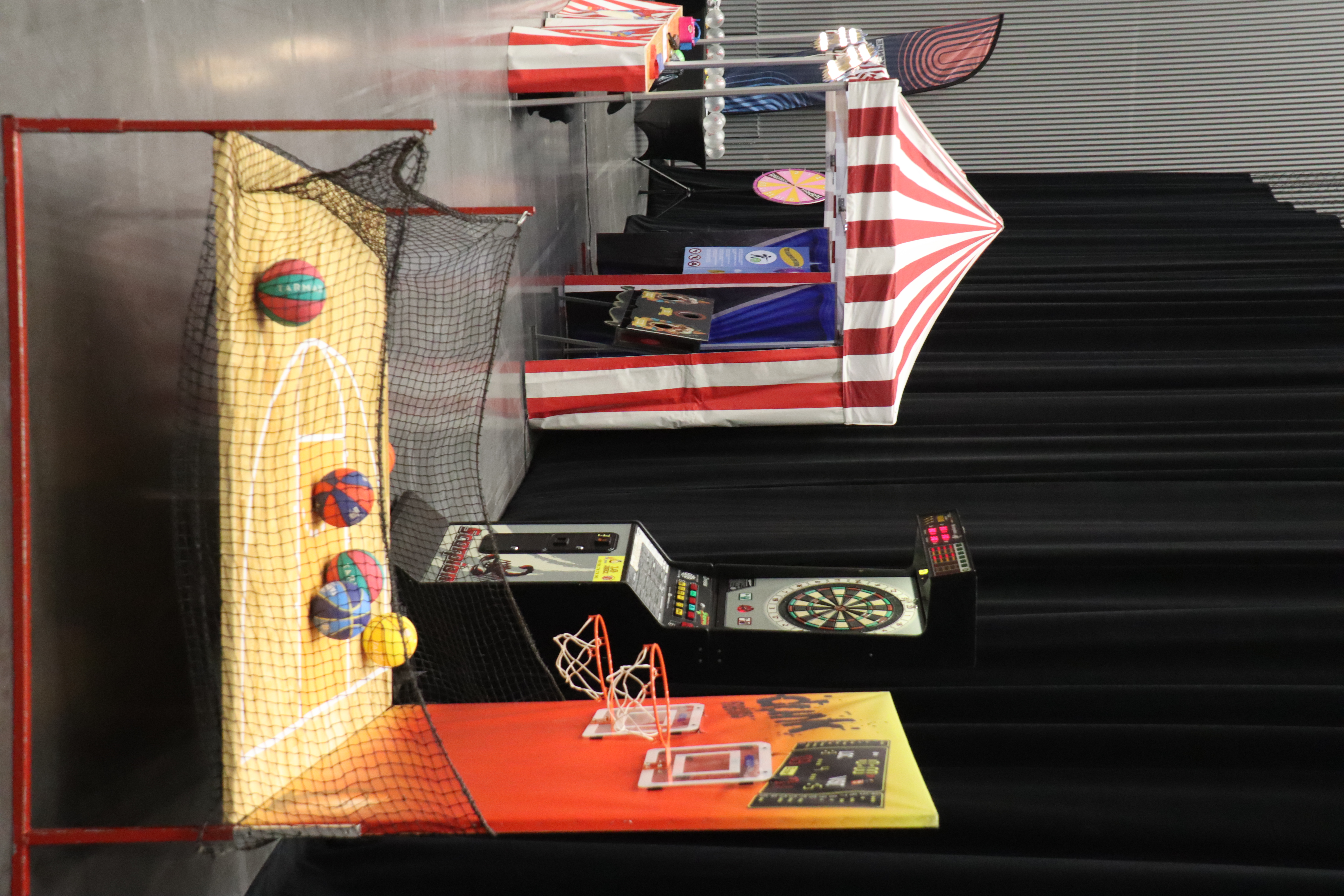
Retro arcade stations (classic joystick/button games) for quick participation and strong nostalgia. Ideal near the bar/cocktail area because rounds are short and guests can rotate easily.
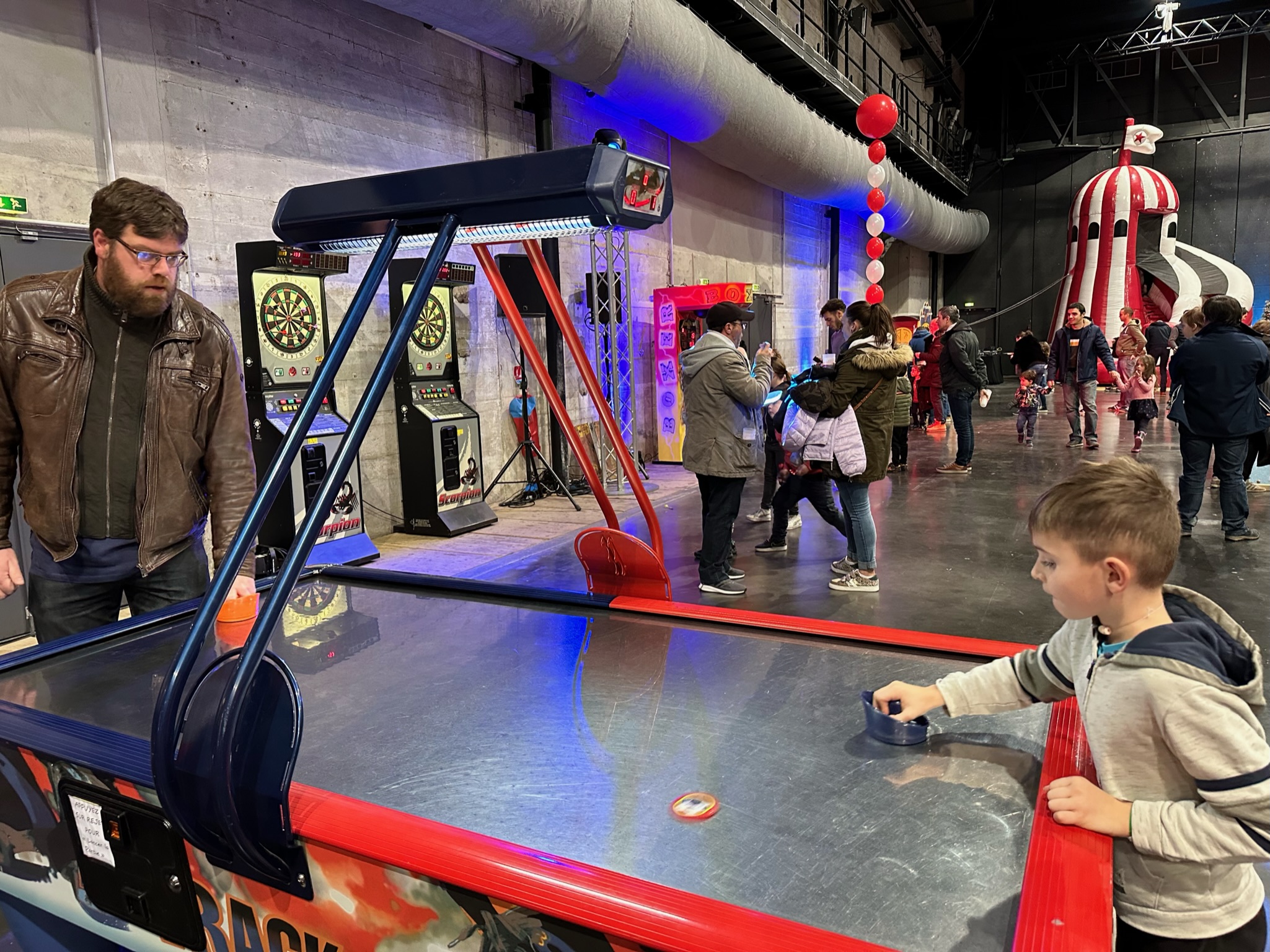
Racing simulators as a high-visibility anchor. We position them to avoid blocking circulation and manage queues with an operator and a clear “next player” system.
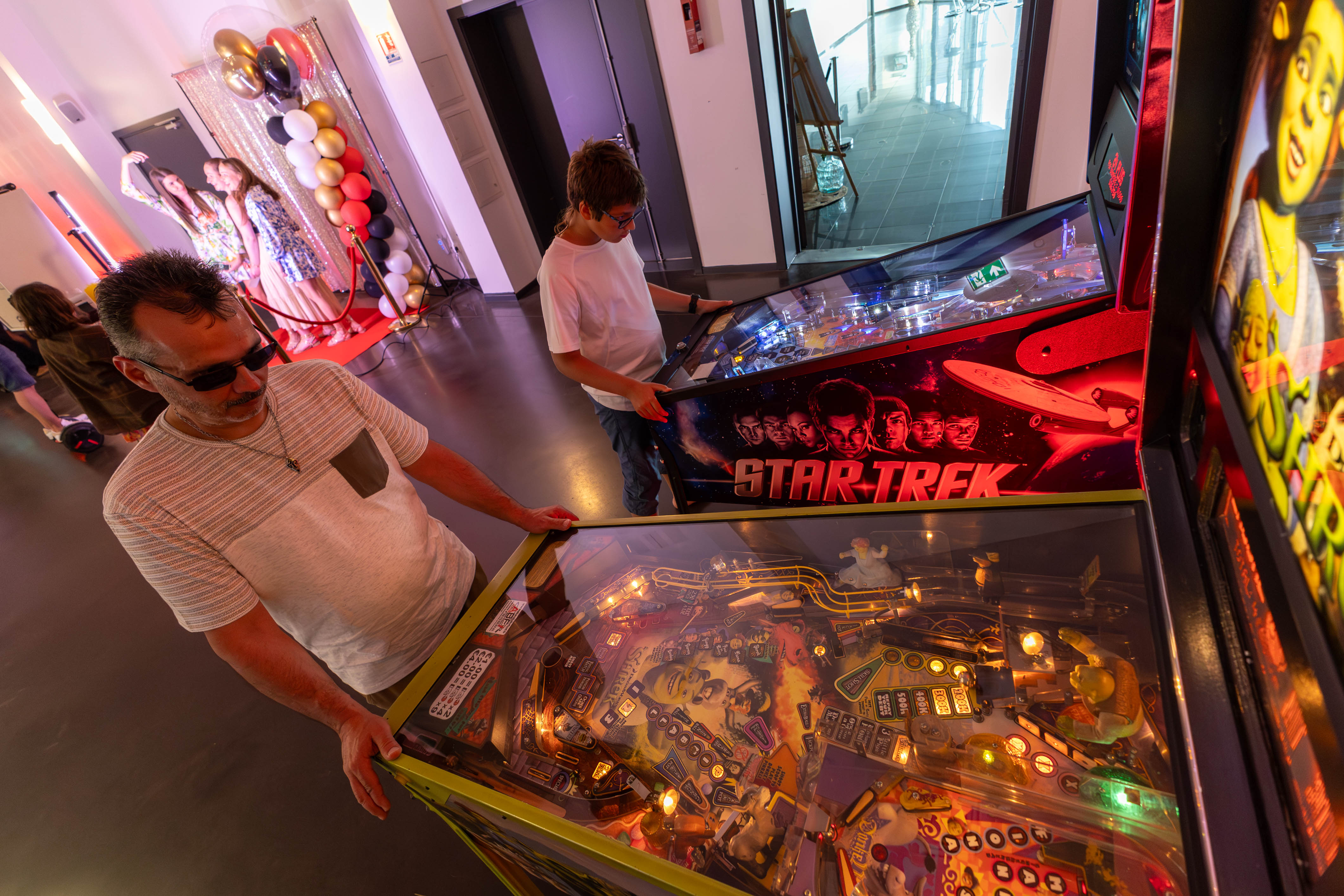
Pinball corners for a calmer, executive-friendly dynamic. Pinball works well in Brussels receptions where guests want to talk while playing.
Table football as a social accelerator. It creates team mixing in seconds; we often use it as the “first touch” activity for guests who hesitate.
Art animations in Brussels
Arcade + light scenic design: not a full stage show, but controlled lighting around the arcade zone to make it look intentional and premium in photos (important for internal comms).
Branded scoreboards displayed on screens (when the venue AV allows it) to give structure without turning the evening into a tournament that excludes late arrivals.
Innovative animations in Brussels
Arcade + compact food stations: pairing the zone with finger food timing (e.g., late-night snacks) keeps traffic balanced and avoids the “everyone queues at once” issue common in Brussels venues with a single buffet line.
Alcohol-free options near the games: for duty-of-care and inclusivity, especially when you have early-morning meetings the next day or guests driving back outside Brussels.
Gourmand animations in Brussels
Short-format challenges (3–5 minutes): we create a rotation plan that keeps throughput high during peak moments, with operators logging scores when you want a light competitive layer.
Hybrid participation: if you have multiple sites (Brussels HQ + regional offices), we can structure a simple cross-site leaderboard using standardized games and time windows.
Accessibility planning: we propose at least one station that works for guests with reduced mobility and ensure passage widths remain compliant with the venue’s safety plan.
Whatever the lineup, the key is alignment with your image: a law firm reception in Brussels requires a different selection and layout than a tech scale-up party. We advise on game choices, sound levels, visual design, and hosting style so the entertainment reinforces your brand rather than contradicting it.
Where to install Arcade Games in Brussels for the right impact
The venue determines everything: perception, flow, noise tolerance, setup constraints, and even participation rate. For Arcade Games in Brussels, we look first at access (loading, elevators, time slots), then at power availability, then at the guest journey: can guests see the zone quickly, and can they circulate without creating bottlenecks?
| Venue type | For which objective? | Main strengths | Possible constraints |
|---|---|---|---|
Corporate HQ (lobby, atrium, large meeting floor) in Brussels | Employee engagement, internal milestone, employer branding content | Controlled environment, easy brand integration, low transport risk, strong participation when placed on main circulation paths | Strict building security, limited setup windows, elevator size limits, power circuits shared with office infrastructure |
Hotel conference spaces (Brussels city center and EU quarter) | Client reception, conference break activation, evening cocktail entertainment | Professional logistics, existing AV, good accessibility for international guests | Noise constraints near meeting rooms, predefined supplier rules, premium time slots for access/loading |
Industrial or event venues (large open spaces around Brussels) | High-energy parties, end-of-year events, large capacity formats | Space for multiple stations, easier queue management, strong visual impact | Longer setup/teardown, power distribution planning required, sometimes more complex guest transport and parking |
We strongly recommend a site visit (or at minimum a detailed technical call with photos and plans). In Brussels, two venues that look similar on a brochure can have completely different realities: loading bay height, night access, or power capacity. A short pre-check prevents the classic event-day stress of “we thought it would fit”.
What does Arcade Games rental cost in Brussels (1000)?
Pricing for Arcade Games in Brussels depends on the number of stations, the staffing level, the access complexity, and the run time. A compact setup for an afterwork is not priced like a multi-zone annual party with long operating hours and strict venue procedures.
To give decision-makers a workable frame: for corporate events in Brussels, budgets often start around €1,200–€2,500 for a small arcade corner (delivery, setup, basic support) and can go to €6,000–€15,000+ for larger multi-machine installations with several operators, anchor simulators, and extended operating time. Exact pricing requires a venue and agenda check.
Number and type of machines: retro cabinets and pinball have different logistics and maintenance requirements than racing simulators.
Operating duration: a 2-hour activation during a conference break is not the same as a 6-hour evening event with continuous supervision.
Staffing ratio: for smooth flow we typically plan 1 operator per 4–6 stations, plus a lead on larger setups.
Access conditions in Brussels venues: distance from truck to room, lift availability, time restrictions, and security checks impact labor time.
Technical environment: power distribution, cable management, floor protection, and potential need for silent operation planning.
Branding and reporting: optional signage, score tracking, and post-event participation insights for HR/Comms add value but also preparation time.
From a return-on-investment perspective, arcade entertainment pays off when it reduces “dead time”, increases participation in internal moments, and strengthens the atmosphere without extra stage production. For HR, the ROI is often seen in higher attendance, better cross-team interaction, and stronger internal content—provided the setup is professionally managed.
Why choose a Brussels agency for Arcade Games logistics?
With arcade entertainment, the operational risk is real: late delivery, missing adapters, underestimated elevator constraints, machines placed in the wrong area, or a queue that blocks catering. A team established in Brussels reduces these risks because we are familiar with local venue procedures and typical access constraints, and we can react faster if something changes at the last minute.
As your event agency in Brussels, we also speak the same operational language as venues and corporate facility teams: time slots, security protocols, insurance documents, and safety obligations. This is what protects your internal event owner from spending their day negotiating logistics instead of hosting stakeholders.
- Faster site coordination: practical decisions taken with venue teams before event day (access, power, noise, floor protection).
- More reliable staffing: local operators who arrive on time and understand corporate standards of behavior and dress code.
- Contingency capacity: realistic backup plans for Brussels traffic, last-minute room changes, or venue-imposed adjustments.
- Brand and compliance awareness: we align with corporate policies (supplier check-in, safety briefings, duty of care).
From a return-on-investment perspective, arcade entertainment pays off when it reduces “dead time”, increases participation in internal moments, and strengthens the atmosphere without extra stage production. For HR, the ROI is often seen in higher attendance, better cross-team interaction, and stronger internal content—provided the setup is professionally managed.





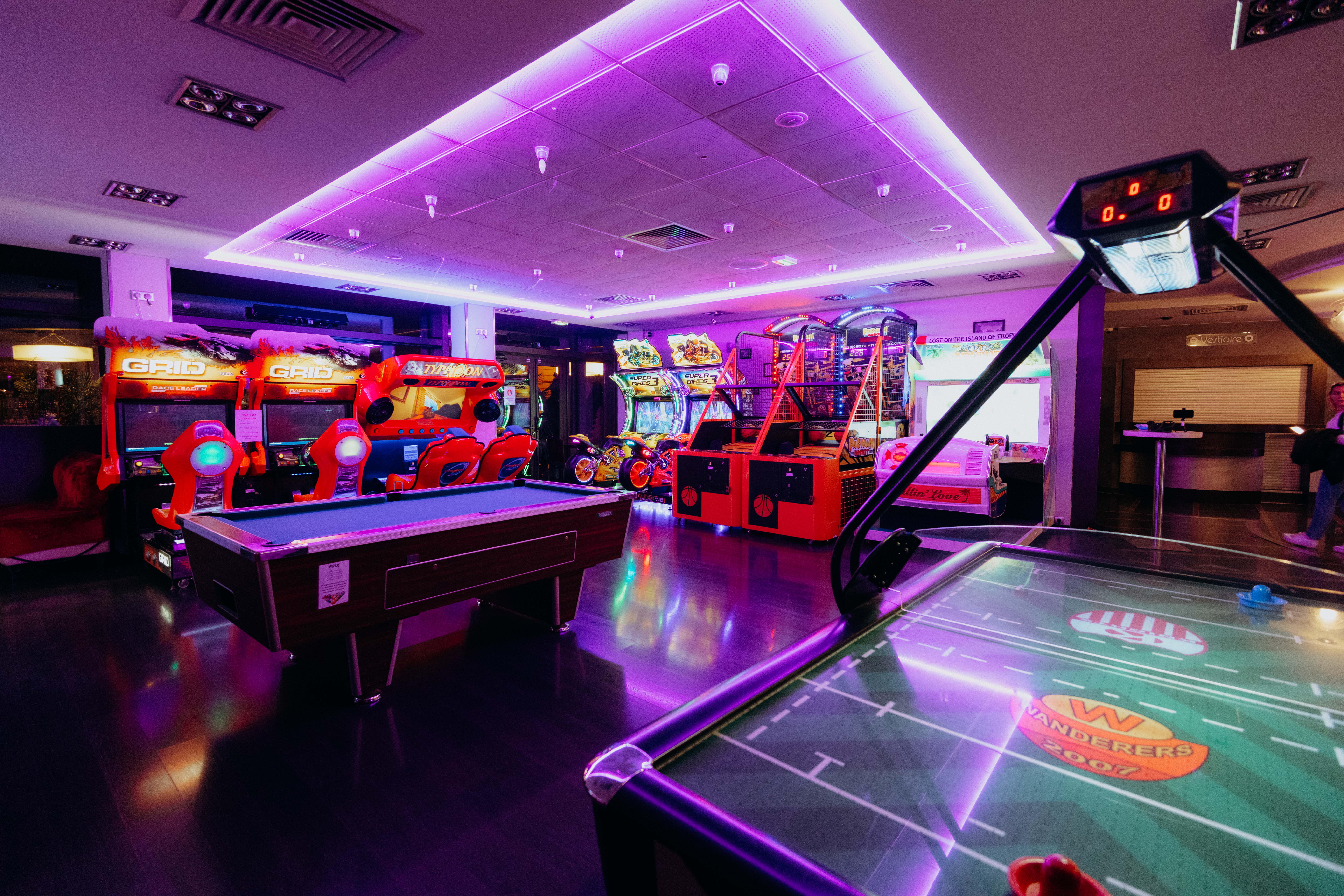
Examples of Arcade Games projects delivered in Brussels
Our projects vary because corporate objectives vary. For an end-of-quarter internal celebration in Brussels, the priority is often throughput and social mixing: we build a compact arcade zone near the cocktail flow with fast-play games and one anchor station to draw attention. The operational focus is on queue management and avoiding congestion near catering.
For a client reception or leadership offsite, we typically choose quieter stations (pinball, tabletop games) and a more discreet hosting style. The goal is to support conversation, not dominate it. We plan the positioning so that guests can play while continuing discussions—an approach appreciated by senior audiences.
For large annual parties, we often structure the entertainment into “pockets” across the venue: a high-energy corner (simulators), a social corner (table football), and a calmer corner (pinball/retro). This distribution reduces bottlenecks and makes the room feel larger—especially useful in Brussels venues where architectural constraints create natural choke points.
Across all formats, we adapt to real-life constraints: strict access windows, shared loading with décor teams, last-minute agenda changes, and the need to keep the zone presentable throughout the evening (cable discipline, quick cleaning, machine resets). That is where event delivery becomes a professional service rather than a simple rental.
Common Arcade Games mistakes we prevent in Brussels events
Underestimating access time: in Brussels, a “simple delivery” can become complex due to security, elevators, and long corridors. We plan buffers and confirm access routes.
Wrong machine mix for the audience: too many slow-play stations creates queues; too many loud machines can damage the networking atmosphere.
Poor placement: putting games in a dead corner reduces participation; putting them on a main corridor blocks circulation. We map guest flow and peak moments.
No operator = no control: without facilitation, machines get monopolized, guests hesitate to join, and small issues become visible problems.
Neglecting power and cable management: messy cables look unprofessional and can become a safety concern. We plan power distribution and keep runs clean.
Forgetting brand sensitivity: visuals, sounds, and the “tone” of the zone must match corporate standards, especially for client-facing events in Brussels.
Our role is to remove these risks from your internal workload. You should not be negotiating queue rules, power problems, or placement changes during your own event. We anticipate, document, and execute—so your team stays focused on stakeholders and messaging.
Why Brussels clients rebook Arcade Games with INNOV'events
Repeat business is rarely about having “more games”. It is about consistent delivery: clear preparation, clean installation, professional staff behavior, and a zone that keeps running without drawing negative attention. That is why Brussels clients come back—because the entertainment supports the event instead of adding uncertainty.
Year-on-year rebookings are common for internal celebrations: clients keep the format and rotate the lineup to maintain novelty while preserving reliability.
Operator-led flow management reduces complaints and increases participation, especially during peak moments (post-speeches, after dinner).
Predictable timelines: we confirm setup/teardown windows, access constraints, and technical needs early, which reduces last-minute escalations for HR and Comms.

Loyalty is a practical proof point: if teams in Brussels trust us again with their annual milestones, it is because the operational reality matched what was promised—on time, on brand, and without unpleasant surprises.
Our Arcade Games delivery process in Brussels (1000)
👉 Brussels needs assessment: audience, agenda, and success criteria
We start with your constraints and objectives: number of guests, audience profile (executives, mixed teams, clients), event timing (speeches, dinner, awards), and what “success” means internally (participation rate, networking, employer branding content, client satisfaction). This prevents choosing machines that look good on paper but fail in the room.
👉 Venue and access validation in Brussels
We confirm access routes, loading slots, elevator dimensions, room plan, floor protection requirements, power availability, and any supplier documentation needed by the venue or your facility team. When possible, we do a site check; otherwise we work with photos, plans, and a technical call to avoid surprises.
👉 Arcade lineup and layout design
We propose a coherent lineup (quick-play + anchor stations) and a layout designed for circulation and queue control. We consider noise and proximity to catering/AV. If you want light competition, we define a simple scoring method that does not exclude late arrivals.
👉 Production planning and staffing
We schedule transport and crew, define operator roles, and plan contingencies (traffic, room changes, delayed access). For corporate standards, we also brief staff on dress code, guest interaction level, and how to escalate issues discreetly.
👉 On-site delivery, setup, and testing
We deliver within the agreed window, install with clean cable management, test every machine, and coordinate with your event lead and the venue manager. Before opening, we run a quick operational check: signage, queue logic, and safety points (stable placement, passage widths).
👉 Live operation during the event
Operators facilitate without over-animating: quick explanations, fair rotation, troubleshooting, and keeping the zone presentable. We can also time micro-challenges around your run-of-show so the entertainment supports, rather than competes with, speeches or announcements.
👉 Teardown and venue handover
We dismantle efficiently, protect floors and walls, and respect venue rules for exit routes and timing. Your internal team should not have to manage supplier departure; we handle the handover and leave the space clean.
FAQ sur l'organisation Arcade Games à Brussels
How many Arcade Games do we need in Brussels?
As a rule of thumb: 1 station per 10–15 guests for high participation at peak times, or 1 per 20–30 guests if arcade is a background activity alongside a DJ and networking. For 150 guests in Brussels, a practical setup is often 6–10 stations depending on your agenda and space.
What setup time should we plan in Brussels venues?
Plan 60–180 minutes for setup depending on access complexity and number of machines. If the venue has strict security check-in or long transport distances from truck to room, we add buffer time. Teardown usually takes 45–120 minutes.
Can Arcade Games work for a Brussels executive reception?
Yes, if the lineup and hosting style are adapted. We prioritize quieter stations (e.g., pinball, selected retro cabinets), keep the layout spacious, and avoid overly loud simulators near networking areas. The objective is “conversation-friendly engagement”, not a tournament atmosphere.
Do you provide operators for Arcade Games in Brussels?
Yes. For corporate standards in Brussels, we recommend staffed operation: typically 1 operator per 4–6 stations, plus an on-site lead for larger setups. Operators manage flow, explain quickly, and resolve issues discreetly.
What information do you need to quote in Brussels?
We need: guest count, date and time window, venue name/address in Brussels, floor/room plan if available, access constraints (loading, elevators, security), and your event format (cocktail, seated dinner, conference). With this, we can propose a lineup and an accurate budget range within 24–72 hours.
Request an Arcade Games quote in Brussels (1000)
If you are comparing agencies, we can work in a practical, decision-ready way: a proposed lineup, a clear staffing plan, realistic setup timings, and a budget range aligned with your venue constraints in Brussels.
Send us your date, venue (or shortlist), and estimated headcount. The earlier we validate access and power, the more we can optimize cost and reduce event-day risk—especially for Brussels venues with tight supplier windows.
INNOV'events Brussels Agency
Justin JACOB is the manager of the INNOV'events Brussels office. Reach out directly by email at belgique@innov-events.be or via the contact form.
Contact the Brussels agencyToutes nos prestations & animations Brussels, Belgique
Découvrez nos prestations événementielles
Découvrez nos animations événementielles disponibles au Belgique
- Event Hostess in Brussels
- Escape Game in Brussels
- MasterChef Cooking Workshop in Brussels
- Magician in Brussels
- Marquee Rental in Brussels
- Color Analysis Workshop in Brussels
- Inflatable Games in Brussels
- Valet Parking Service in Brussels
- Football Simulator in Brussels
- LED Furniture Rental in Brussels
- Light Branding in Brussels
- Unique Dining Experience in Brussels
- Light Painting in Brussels
- Murder Mystery Party in Brussels
- Prize Contest in Brussels
- Promotional Displays (POS) in Brussels
- Virtual Reality in Brussels
- Molecular Gastronomy Workshop in Brussels
- Halloween Entertainment in Brussels
- Fireworks Show in Brussels
- Giant Games Challenge in Brussels
- Event Host / MC in Brussels
- Photo Booth Animation in Brussels
- Santa Claus Entertainment in Brussels
- Kids Entertainment in Brussels
- Guided Tour in Brussels
- Urban Rally in Brussels
- Ball Pit in Brussels
- Flight Simulator in Brussels
- Food Truck Rental in Brussels
- World Record Challenge in Brussels
- Surf Simulator in Brussels
- Wine Casino in Brussels
- Makeover Workshop in Brussels
- Perfume Creation Workshop in Brussels
- Acting Workshop in Brussels
- CSR Activities in Brussels
- Archery in Brussels
- Security Staff in Brussels
- Wine Tasting in Brussels
- Mime Performer in Brussels
- TV Game Show in Brussels
- Funfair in Brussels
- Crisis Management Workshop in Brussels
- Crisis Negotiation Workshop in Brussels
- Arcade Games in Brussels
- Indoor Skydiving Simulator in Brussels
- Ski Simulator in Brussels
- Racing Circuit Experience in Brussels
- Introductory Flight Experience in Brussels
- Tasting Experience in Brussels
- Build Your Own Foosball Workshop in Brussels
- 2CV Rally in Brussels
- LEGO Challenge in Brussels
- Casino Night in Brussels
- Interpreter / Translator in Brussels
- Promotional Giveaways in Brussels
- Shuttle Transport in Brussels