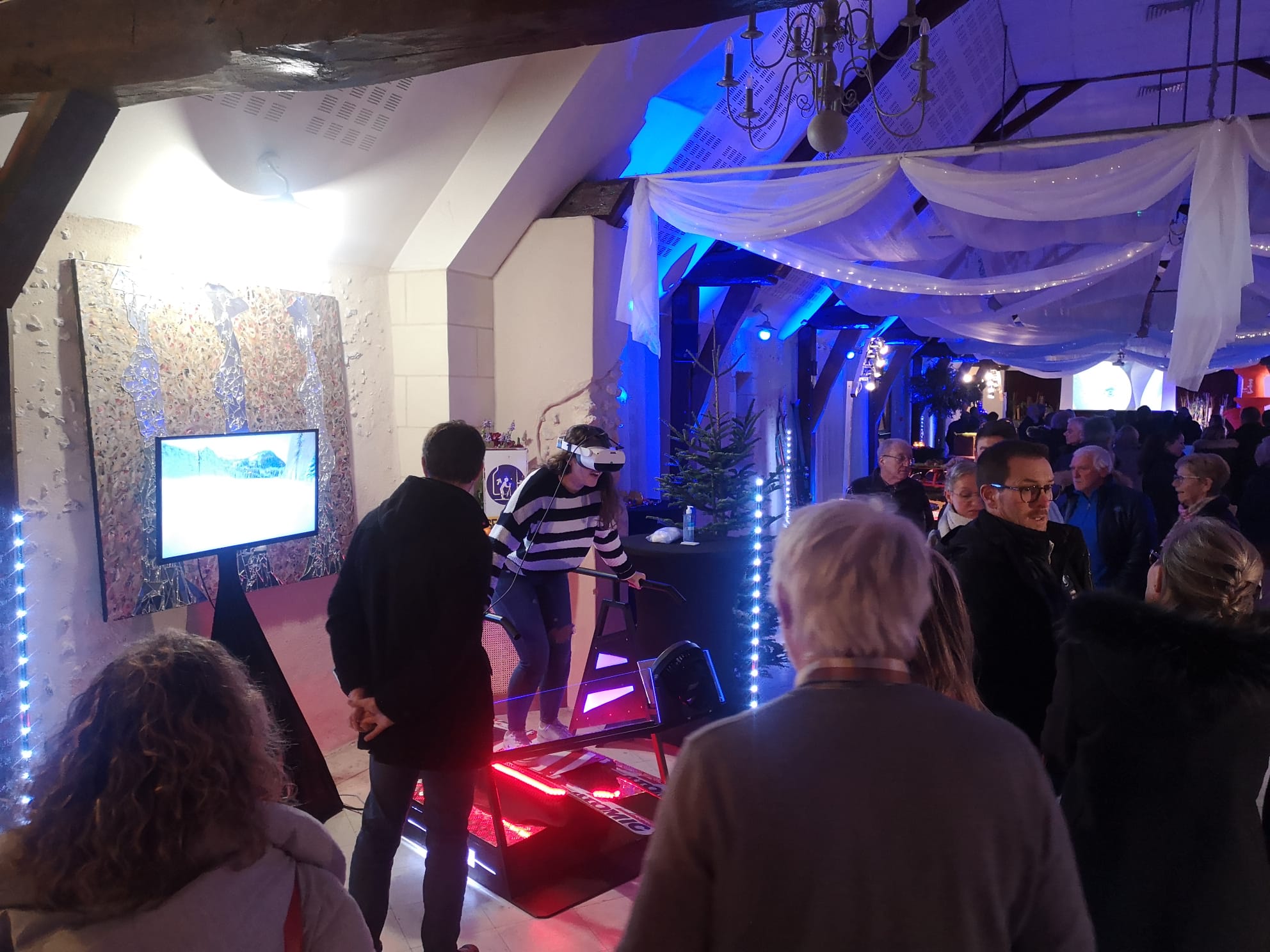
Ski Simulator in Brussels for corporate events with measurable engagement
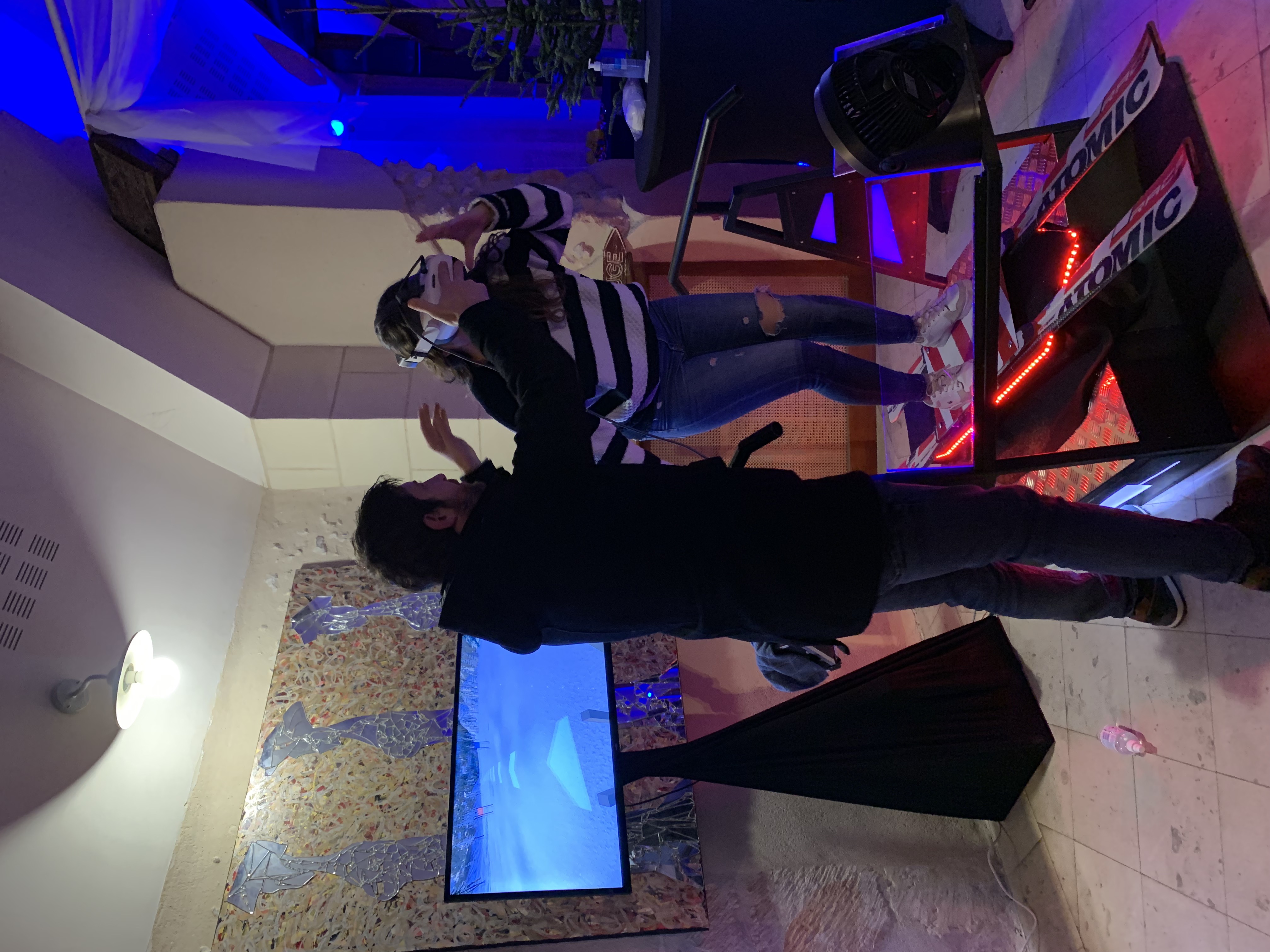
INNOV'events delivers and operates a Ski Simulator for corporate events across Brussels, typically for 30 to 800 attendees. We handle venue checks, power requirements, setup, staffing, safety briefings, score tracking and event-day coordination—so your teams can focus on hosting.
Whether it’s a winter party, a product launch or a leadership offsite, we structure the animation to fit your run-of-show, your brand constraints and your venue realities in Brussels (loading docks, timing windows, noise limits, crowd flow).
Sommaire
At executive level, entertainment is not “nice to have”: it is a lever to increase participation, reduce social friction between departments, and create an observable moment of cohesion that supports your internal communication goals. A Ski Simulator gives you a clear, shared challenge—short cycles, immediate feedback, visible progress—ideal when you need people to interact without forcing it.
In Brussels, organizations often expect flawless logistics: strict access slots, multi-lingual audiences, and venues where every square meter counts. Your HR and comms teams need an animation that starts on time, runs continuously, and can be paused or accelerated depending on speeches, awards or VIP arrivals.
INNOV'events is a Brussels-based team used to corporate constraints: security badges, building managers, last-minute agenda shifts, and brand compliance. We bring field-proven operating methods (crowd management, rotation system, timing, and safety checks) so the simulator remains a high-value touchpoint, not a risk.
Key numbers for Brussels decision-makers who need reliability
10+ years operating corporate entertainment formats in Belgium, including high-traffic activations with strict timing.
150+ corporate events per year supported through our partner network (technicians, venues, caterers, AV teams) across Belgium, with recurring projects in Brussels.
30 to 800 participants per event: we scale the Ski Simulator with staffing, rotation rules and scoreboard formats adapted to your attendance curve.
60–90 minutes typical end-to-end setup window on site once access is granted (depends on venue constraints and floor protection requirements).
0 tolerance approach to safety: mandatory briefing, operator supervision at all times, and clear maximum throughput to avoid crowding around the module.
Brussels references that reflect how corporates actually work here
We support companies and institutions active in Brussels that run events with high expectations on image, punctuality and internal stakeholder alignment. Many of our clients repeat year after year because they need a partner who understands the local operating reality: access authorizations, unionized technical crews in certain venues, security desk procedures, and the pace of international teams.
You mentioned providing company names as references; we can integrate them exactly as agreed (case-by-case validation is standard in Brussels corporate procurement). In the meantime, what we can state transparently is our working context: headquarters receptions in the European Quarter, end-of-year gatherings around the Pentagon, and brand activations near major conference hotels—often with short load-in windows and strict noise management.
If your procurement process requires proof points, we can share on request: risk assessment template, operator checklists, technical datasheet for the Ski Simulator in Brussels, and a sample run-of-show for a 200-person evening format.
 Besoin d’un devis rapide ?
Nous vous envoyons une première proposition sous 24h.
Why book a Ski Simulator for a Brussels corporate event
A Ski Simulator works particularly well for corporate events because it combines three elements that leaders look for: fast onboarding, visible engagement, and a structure that encourages mixed-group participation. In Brussels, where audiences are often multilingual and cross-functional, the “rules” must be intuitive. Skiing movement is universal: you demonstrate once, people understand immediately, and you can launch rotations without long explanations.
From a management standpoint, it creates a controlled competitive dynamic. You can formalize it into a mini-challenge (best run of the hour, team league, department bracket) without turning the event into a sports day. HR teams appreciate that it activates both confident and quieter profiles: people can either ride, cheer, take photos for internal comms, or help colleagues improve their score.
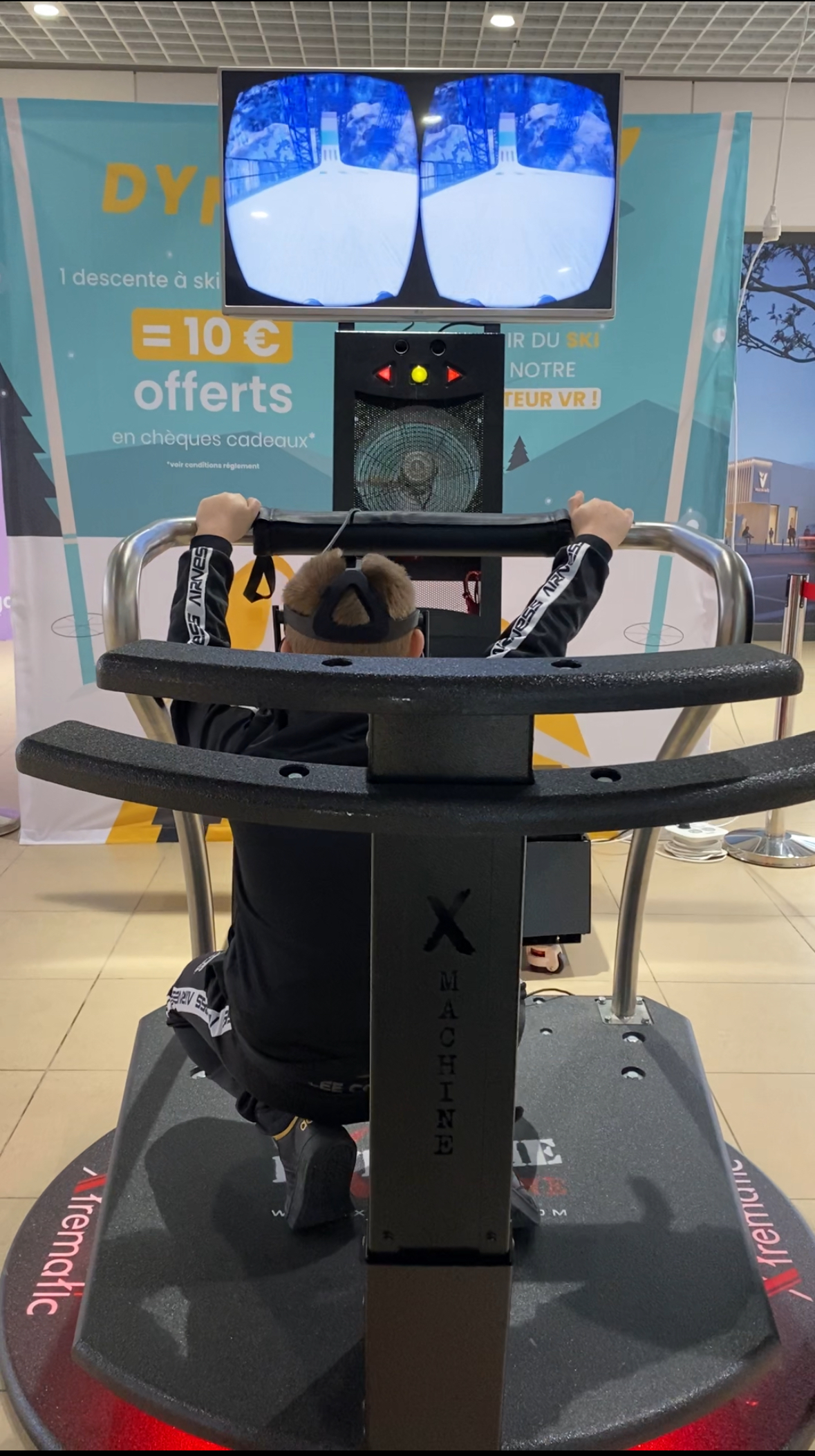
Higher participation without forcing networking: short turns (typically 45–90 seconds) keep the queue moving and reduce social barriers.
Natural cross-team mixing: a rotation system pairs colleagues who do not normally collaborate (finance with sales, HQ with field teams) without awkward facilitation.
Clear content for internal communications: scoreboard moments, team photos, and “top 10” highlights are easy to capture and reuse on intranet/Teams.
Agenda-friendly format: we can run continuous mode during cocktails, or punctuate key moments (after a CEO speech, before awards, between plenaries).
Brand control: we integrate your visual identity on signage around the module and adapt the tone (sporty challenge vs. elegant winter theme) to your brand guidelines.
Risk-managed engagement: with operator supervision, floor protection and crowd flow rules, it stays fun while meeting corporate safety expectations.
Brussels corporate culture values professionalism and smooth logistics: people notice when timing slips or when a venue gets congested. A well-operated Ski Simulator in Brussels fits that culture because it is structured, efficient, and easy to integrate into a run-of-show that includes speeches, protocol moments or international guests.
What Brussels venues and corporate stakeholders typically demand
Running a Ski Simulator in Brussels is not just about delivering equipment. The city’s event ecosystem has specific constraints that directly affect your risk profile and attendee experience. We design the setup around these realities from the first call.
Access and timing windows are a recurring topic in Brussels: limited loading zones, shared docks with other tenants, and strict “silent” periods in mixed-use buildings. We plan for precise load-in, protection of corridors and elevators, and we anticipate the time needed for security registration of technicians.
Space management is another local factor. Many Brussels corporate venues offer beautiful reception areas but with columns, design furniture, and circulation paths that cannot be blocked. We define a footprint that includes not only the simulator, but also safe waiting space, a clear entry/exit route, and an operator zone. Without that, queues spill into catering lines and your F&B service suffers.
Audience profile in Brussels is often international and multi-level (executives, middle management, junior talents, external partners). We adapt the facilitation style: bilingual briefing (EN/FR/NL if needed), inclusive challenge mechanics, and optional “soft” difficulty settings so participation remains broad.
Compliance and brand image matter. Many Brussels HQs require documentation: insurance proof, risk assessment, and technical sheet (power draw, noise level, floor pressure). We provide these early so your internal validation (HSE, building manager, procurement) does not block you a week before the event.
Which corporate entertainment options work best in Brussels with a Ski Simulator
Entertainment creates engagement when it is designed as part of the event system—not an add-on. In Brussels, the most effective setups are those that respect venue constraints, keep guest flow smooth, and give HR/Comms usable outputs (photos, rankings, participation metrics).
Below are combinations we often recommend around a Ski Simulator, depending on whether your priority is team bonding, client hospitality, employer branding, or internal communication.
Interactive animations in Brussels
Timed league format: departments or tables accumulate points across the evening, with a short prize moment at the end. Works well for 150–400 guests when you need structure without a full tournament.
Executive vs. teams challenge: a short, well-framed “leadership run” early in the evening sets the tone and encourages participation. We keep it tasteful: no forced stage moments, just a curated time slot and a simple scoreboard.
Photo-ready leaderboard corner: a branded ranking board (digital or physical) with clear privacy rules. Comms teams in Brussels appreciate this because it creates content without chasing people for testimonials.
Art animations in Brussels
Ambient DJ + controlled peaks: music energy is essential, but in many Brussels venues you need to avoid overpowering conversation. We coordinate sound levels so the simulator zone feels lively while networking zones remain comfortable.
Roaming host: a bilingual host (EN/FR, or EN/NL when needed) who manages the queue and encourages participation without “game show” behavior. This is particularly effective for mixed audiences with clients and internal teams.
Innovative animations in Brussels
Winter-themed bar pairing: hot chocolate station or winter cocktail corner positioned near—but not inside—the simulator queue. This increases dwell time and makes the activity a natural meeting point.
Compact catering strategy: we advise using pass-around bites during peak participation. If you place heavy buffet service next to the simulator, queues collide; we plan zones to protect both.
Gourmand animations in Brussels
Real-time KPI tracking: participation count, average score, top performers by team. HR teams use this as a light engagement indicator, and comms teams turn it into a post-event recap.
Brand-safe content capture: pre-defined photo angles and a small “capture window” so you get clean visuals without congesting the riding area. In Brussels, venues can be strict about tripod placement and circulation.
Whatever the mix, alignment with your brand image is non-negotiable. In Brussels, where many companies host international stakeholders, the difference between “fun” and “off-brand” is often about details: operator tone, signage design, queue discipline, and how prizes are announced. We plan these elements upfront so your corporate event entertainment in Brussels supports your message instead of distracting from it.
How to choose a Brussels venue that fits a Ski Simulator setup
The venue determines what is operationally possible: access, floor protection rules, power distribution, and guest flow. For a Ski Simulator in Brussels, we look beyond the room size and validate the full path from truck to final position (doors, elevators, corridors, turning angles), because that is where many last-minute surprises happen.
| Venue type | For which objective? | Main strengths | Possible constraints |
|---|---|---|---|
| Conference hotel in Brussels | Client hospitality, plenary + cocktail with structured entertainment | Professional staff, predictable AV, clear security processes, easy add-ons (catering, cloakroom) | Strict load-in/out slots, floor protection requirements, noise limits near other events |
| Corporate HQ / office reception area in Brussels | Internal engagement, employer branding, afterwork activation | High attendance from employees, minimal travel, strong brand ownership, easy comms adoption | Elevator/corridor constraints, building manager approvals, limited power points, tight timing after office hours |
| Event venue / industrial-style space in Brussels | Large-scale end-of-year party, high-energy atmosphere | More flexibility on layout, higher ceilings, better crowd distribution, creative staging options | Requires stronger technical coordination, sometimes additional heating, access may be complex for trucks |
A site visit (or at minimum a detailed technical walk-through with photos and a floor plan) prevents 90% of event-day stress. As an event agency in Brussels, we are used to moving quickly: verifying access routes, mapping safe cable runs, and confirming where queues can form without impacting emergency exits or catering service.
What a Ski Simulator costs in Brussels and what drives the price
Pricing for a Ski Simulator in Brussels depends on the configuration, staffing level, event duration and venue constraints. The responsible way to budget is to separate the equipment rental from operational requirements (transport, setup, operators, and any venue-specific constraints such as limited load-in times).
For corporate events in Brussels, most projects fall in a range of €1,450 to €3,900 excl. VAT for a standard half-day to evening activation including delivery, installation and an operator. Larger formats, extended hours, premium branding, multi-lingual hosting, or complex access conditions can increase the budget.
Duration on site: a 2–3 hour activation during a cocktail is not priced like a full-day conference with breaks and plenary constraints.
Staffing model: 1 operator is sufficient for controlled flow; adding a host/queue manager improves throughput and guest experience for 200+ attendees.
Access complexity in Brussels: long carry distances, restricted delivery hours, or security registration can add logistics time and therefore cost.
Branding requirements: signage, leaderboard design, photo corner, or integration into your scenography (while staying compliant with venue rules).
Floor protection and risk controls: specific venues require protective layers and defined cable routing, which adds material and handling time.
Throughput objectives: if you need maximum participation, we may propose complementary activities to reduce queue pressure—often more cost-effective than trying to “push” unsafe throughput.
We approach budget with a return-on-investment lens: fewer operational incidents, better participation rate, usable internal communication content, and a smoother guest journey. In Brussels corporate environments, that operational reliability is often what protects your event’s perceived quality more than any single decorative element.
Why choose a Brussels partner to manage your Ski Simulator
Booking a Ski Simulator is easy; operating it professionally in Brussels—with your venue rules, your internal stakeholders and your brand constraints—is where a local agency makes a measurable difference. We know how Brussels venues operate on event days: where time is lost, what building managers typically require, and how to avoid friction with catering and AV teams.
For executive sponsors, the key advantage is reduced uncertainty. You get clear answers on feasibility, a realistic participation plan, and a team that can react on-site without escalating every micro-decision back to your internal organizer.
- Faster feasibility checks thanks to local venue experience and a pragmatic approach to access, power and floor constraints.
- Better coordination with local suppliers (AV, catering, furniture) so the simulator fits into the overall setup rather than competing for space and timing.
- On-site responsiveness: when the schedule shifts, we adapt the operating mode (tournament vs. open play) without compromising safety.
- Stakeholder management: we speak the language of HR, comms, facilities and procurement, and we deliver the documentation they need early.
We approach budget with a return-on-investment lens: fewer operational incidents, better participation rate, usable internal communication content, and a smoother guest journey. In Brussels corporate environments, that operational reliability is often what protects your event’s perceived quality more than any single decorative element.





Brussels use cases that show what “well run” looks like
In Brussels, we often deploy the Ski Simulator in three recurring corporate contexts—each with different constraints. First, end-of-year parties in conference hotels where timing is tight: speeches, awards, and dinner service require an animation that can run continuously, then pause instantly for protocol moments. Here, our focus is queue discipline, sound coordination with the DJ, and keeping the simulator zone visually attractive without blocking service routes.
Second, HQ activations for employer branding: afterwork formats where employees arrive in waves. The operational challenge is managing peaks (immediately after office hours) and then sustaining engagement. We typically propose a “best run of the hour” mechanic and a compact photo/leaderboard corner that your comms team can use the next day.
Third, client events or partner receptions: the animation must feel premium and controlled. We use a softer facilitation style, ensure the waiting area is comfortable, and prioritize clean branding and discreet safety management. In these settings, the value is not volume of riders, but quality of interaction and the perception of professionalism.
Across these projects, what makes the difference is not the machine—it is the operating method: briefing, rotation cadence, crowd flow, and coordination with the venue’s constraints in Brussels.
Common mistakes we prevent on Brussels Ski Simulator events
Underestimating footprint: planning only for the simulator and forgetting the queue, operator zone and safe circulation.
Ignoring access constraints: discovering too late that the elevator is too small or that the venue has a strict load-in window.
Overpromising participation: setting unrealistic expectations (e.g., “everyone will try”) without calculating safe throughput.
Placing it next to catering bottlenecks: queues collide, service slows down, and guests blame the organization.
No clear rules: without a short, consistent briefing, you get longer ride times, more falls, and frustration in the line.
Weak ownership on event day: when nobody coordinates between venue, DJ, and animation operator, the experience becomes chaotic.
Our role is to remove these risks before they appear: feasibility checks, documented operating plan, clear throughput logic, and on-site coordination. That is how a Ski Simulator in Brussels becomes a controlled engagement tool rather than an operational headache.
Why Brussels clients renew with INNOV'events year after year
Renewal happens when the event team feels safe: they know the partner will deliver on time, communicate clearly, and avoid last-minute surprises. In Brussels, many event organizers work under tight governance—multiple validators, procurement constraints, brand guidelines, and sometimes international HQ oversight. They come back when the process is smooth and defensible internally.
Repeat formats: many clients rebook the same core animation year after year, updating only the theme and scoring logic to keep it fresh.
Planning comfort: once a venue is validated and the operational plan is documented, future editions require fewer meetings and fewer approvals.
Stable teams: using trained operators and consistent checklists reduces variability—often the main hidden cost in corporate events.

Loyalty is the most concrete proof we can offer in the Brussels market: it means the animation delivered engagement, the logistics were under control, and the internal organizer did not spend the night firefighting.
How we deliver a Ski Simulator project in Brussels from brief to event day
👉 Step 1 — Brussels brief and success criteria
We start with your objective and constraints: audience profile, event format (cocktail, dinner, plenary), desired participation rate, brand sensitivity, and venue shortlist in Brussels. We clarify what success means for you: maximum riders, leadership visibility, content creation, or simply a controlled “icebreaker”.
👉 Step 2 — Technical feasibility and risk controls in Brussels
We validate footprint, power, access route and floor protection requirements. If needed, we request photos, floor plans, and loading instructions. We confirm operator positioning, cable routing, and safety perimeter. This step prevents last-minute “it doesn’t fit” situations that are common in Brussels buildings with tight circulation.
👉 Step 3 — Operating plan, staffing and throughput calculation
We define ride duration, briefing script, queue management rules and scoring logic. We recommend staffing (operator only vs. operator + host) based on your attendance and the time window. We also plan how the simulator pauses for speeches and how it reopens without creating a rush.
👉 Step 4 — Branding and communication pack for Brussels stakeholders
We align visuals (signage, leaderboard, photo corner) with your brand guidelines. For internal communication, we can propose a simple content plan: when to capture photos, what messages to display, and how to avoid privacy issues. This is often decisive for comms teams in Brussels who need clean, usable assets.
👉 Step 5 — Delivery, setup, live operations and strike
On event day, we coordinate with the venue for access and timing, install with floor protection, run a safety check, and brief your key contact. During the event, the operator runs the animation continuously, manages difficulty, and enforces safe behavior. After the final run, we strike efficiently within the venue’s load-out constraints and leave the area clean.
FAQ sur l'organisation Ski Simulator à Brussels
How much space do I need in Brussels for a Ski Simulator?
Plan for 20–35 m² including the simulator, safety perimeter, operator zone and a small queue. In Brussels venues with tight circulation, the queue space is often the deciding factor—not the module itself.
What is the typical price range for a Ski Simulator in Brussels?
Most corporate projects in Brussels fall between €1,450 and €3,900 excl. VAT, depending on duration, staffing, access complexity and branding. We provide a clear quote line-by-line so procurement can validate quickly.
How many guests can ride per hour at a Brussels event?
Typically 30–60 riders/hour. The range depends on ride duration (45–90 seconds), briefing style and difficulty level. If you need higher participation, we design a strict cadence and/or add a complementary activity to protect guest experience.
Can you operate the Ski Simulator bilingually in Brussels?
Yes. We can brief and facilitate in EN/FR as standard, and add NL depending on the audience. The goal is short, consistent instructions so throughput stays smooth.
How early should we book a Ski Simulator in Brussels?
For peak periods (November–December and major spring conference weeks), we recommend 4–8 weeks lead time. For simpler afterworks with a confirmed venue, it can be done in 2–3 weeks, subject to availability and venue approvals.
Request a Brussels quote with a realistic operating plan
If you are comparing agencies, we suggest a pragmatic next step: share your date, venue (or shortlist), estimated attendance and the event format (cocktail/dinner/plenary). We will confirm feasibility for Brussels, propose an operating plan (throughput, staffing, timing), and provide a clear budget range for the Ski Simulator option.
Early planning is what protects your event-day experience: access approvals, floor protection requirements and run-of-show integration are easier to solve upfront than one week before. Contact INNOV'events to secure availability and get a quote you can defend internally.
INNOV'events Brussels Agency
Justin JACOB is the manager of the INNOV'events Brussels office. Reach out directly by email at belgique@innov-events.be or via the contact form.
Contact the Brussels agencyToutes nos prestations & animations Brussels, Belgique
Découvrez nos prestations événementielles
Découvrez nos animations événementielles disponibles au Belgique
- Event Hostess in Brussels
- Escape Game in Brussels
- MasterChef Cooking Workshop in Brussels
- Magician in Brussels
- Marquee Rental in Brussels
- Color Analysis Workshop in Brussels
- Inflatable Games in Brussels
- Valet Parking Service in Brussels
- Football Simulator in Brussels
- LED Furniture Rental in Brussels
- Light Branding in Brussels
- Unique Dining Experience in Brussels
- Light Painting in Brussels
- Murder Mystery Party in Brussels
- Prize Contest in Brussels
- Promotional Displays (POS) in Brussels
- Virtual Reality in Brussels
- Molecular Gastronomy Workshop in Brussels
- Halloween Entertainment in Brussels
- Fireworks Show in Brussels
- Giant Games Challenge in Brussels
- Event Host / MC in Brussels
- Photo Booth Animation in Brussels
- Santa Claus Entertainment in Brussels
- Kids Entertainment in Brussels
- Guided Tour in Brussels
- Urban Rally in Brussels
- Ball Pit in Brussels
- Flight Simulator in Brussels
- Food Truck Rental in Brussels
- World Record Challenge in Brussels
- Surf Simulator in Brussels
- Wine Casino in Brussels
- Makeover Workshop in Brussels
- Perfume Creation Workshop in Brussels
- Acting Workshop in Brussels
- CSR Activities in Brussels
- Archery in Brussels
- Security Staff in Brussels
- Wine Tasting in Brussels
- Mime Performer in Brussels
- TV Game Show in Brussels
- Funfair in Brussels
- Crisis Management Workshop in Brussels
- Crisis Negotiation Workshop in Brussels
- Arcade Games in Brussels
- Indoor Skydiving Simulator in Brussels
- Ski Simulator in Brussels
- Racing Circuit Experience in Brussels
- Introductory Flight Experience in Brussels
- Tasting Experience in Brussels
- Build Your Own Foosball Workshop in Brussels
- 2CV Rally in Brussels
- LEGO Challenge in Brussels
- Casino Night in Brussels
- Interpreter / Translator in Brussels
- Promotional Giveaways in Brussels
- Shuttle Transport in Brussels